Should You Kill Tomato Hornworms? A Simple Rule
Should you kill tomato hornworms? Use this practical rule to read the damage, spare parasitized worms, and stop active feeders before they strip your plant.
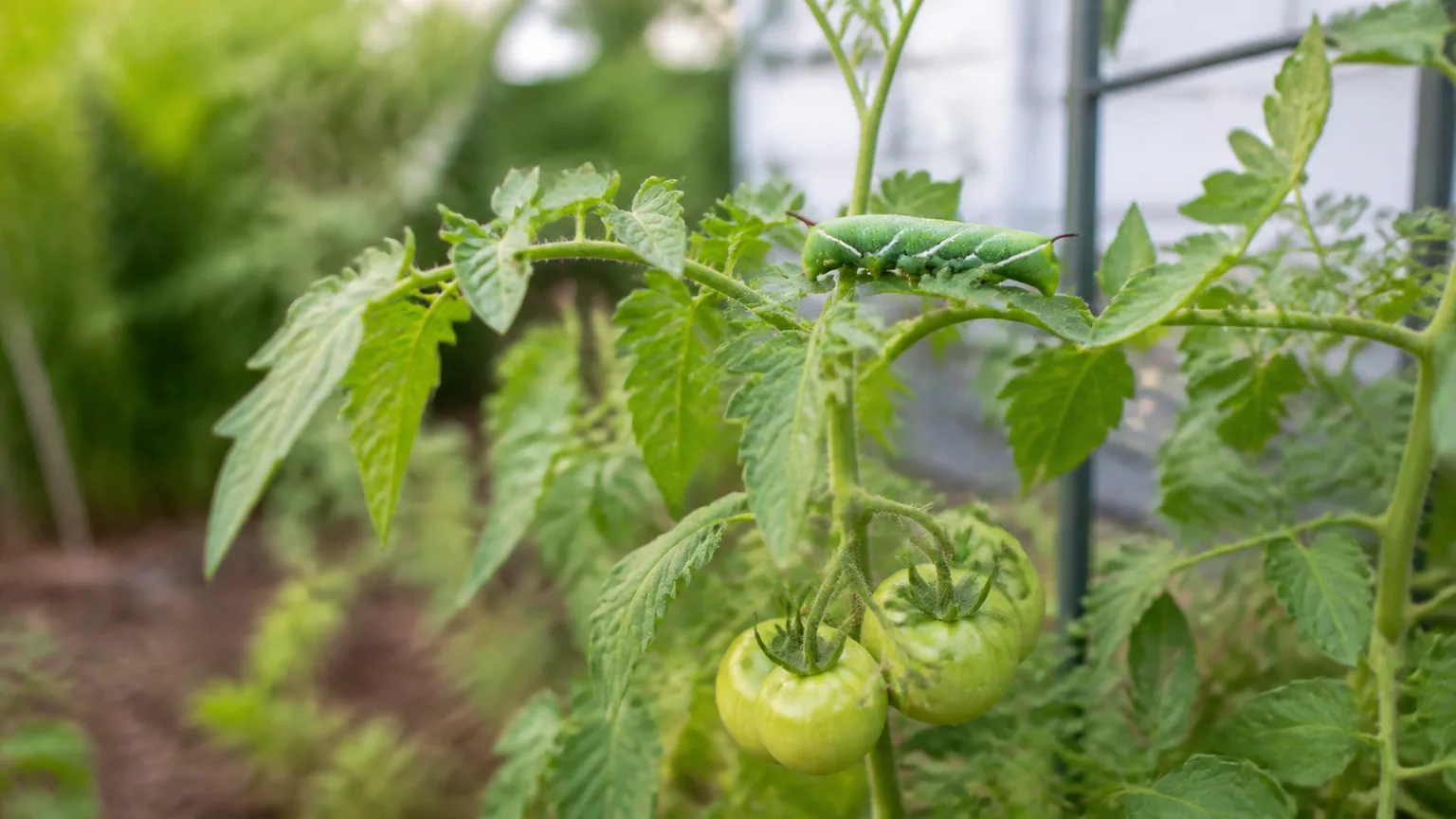
If a tomato hornworm is actively eating your plant, remove it. If it is covered in small white, rice-like cocoons, leave it where it is: those are usually parasitoid-wasp pupae, and the caterpillar has already become a nursery for one of your garden’s most useful allies.
That one visual check prevents two opposite mistakes. You do not have to tolerate a caterpillar that is stripping leaves and chewing fruit, but you also do not want to destroy a parasitized hornworm and lose the wasps that could find other caterpillars. The right response depends on what the hornworm is doing, how much damage the plant has sustained, and whether it has been attacked by natural enemies.
The short answer: remove active feeders, spare parasitized ones
Tomato hornworms are not dangerous to people. The horn is a harmless rear-end projection, not a stinger, and the caterpillar does not bite gardeners. It is, however, a serious chewing pest of tomatoes and other nightshades when several larvae feed on the same plant.
For a home garden, the practical rule is simple:
- Active hornworm with fresh damage: handpick it now.
- Hornworm covered in white cocoons: leave it alone.
- One small hornworm on a large, leafy plant: remove it, then monitor rather than spraying automatically.
- Several hornworms, a young plant, severe defoliation, or fruit feeding: act the same day and consider a labeled caterpillar treatment if handpicking cannot keep up.
This is a damage-based decision, not a moral judgment about whether the insect is “good” or “bad.” A hornworm has ecological value as prey and host for other insects, but that does not make an active feeder harmless to a tomato crop.
What a tomato hornworm looks like
The tomato hornworm (Manduca quinquemaculata) is a large green caterpillar that can reach about 4 inches long. It blends into tomato foliage remarkably well, so its size does not guarantee that you will spot it during a quick daytime glance. University of Minnesota Extension lists tomato, potato, pepper, and eggplant as common host plants, and notes that older larvae can also damage fruit (University of Minnesota Extension’s identification guide).
Look for a smooth, pale-green body, a horn at the rear, and pale V-shaped or chevron-like markings along the sides. The horn looks dramatic but cannot sting. A large caterpillar that is nearly the same green as the leaves may be easier to diagnose from the damage and dark frass below it than from its body.
Tomato hornworm vs. tobacco hornworm
The tobacco hornworm (Manduca sexta) often appears on the same crops and is managed the same way, so exact species identification is not essential for control. Still, the markings help when you want to know what you found: tomato hornworms generally have eight pale chevrons and a dark horn, while tobacco hornworms have diagonal white stripes and a red horn.
UC Statewide IPM describes both species as larvae that feed for roughly three to four weeks before burrowing into soil to pupate. The adults are strong-flying hawk moths, and in many regions the insects produce two generations in a season, with the most noticeable larval activity in midsummer and sometimes a smaller late-summer peak (UC Statewide IPM’s tomato hornworm guidance). Warm inland areas can see heavier pressure, while the exact timing depends on climate and the crop calendar.
What hornworm damage looks like before you see the caterpillar
Hornworms remove tissue quickly, and their camouflage means the first clue is often not the insect. Check the plant when you notice any combination of:
- large sections of leaf missing rather than many tiny pinholes;
- stems or upper branches that look stripped;
- flowers or green fruit with fresh chewing damage;
- dark green or black, pellet-like frass on leaves or on the soil below;
- a healthy plant that suddenly looks thin, wilted, or sun-scalded because too much foliage has disappeared.
Frass is especially useful because it gives you a direction. Start at the droppings and inspect the leaves and stems immediately above them; the caterpillar is often close to the feeding site. Look under leaves and along the underside of stems, not just at the outside of the plant.
Do not diagnose every hole as a hornworm. Small shot-hole damage can point to flea beetles, silvery trails suggest leafminers, and holes bored directly into fruit may come from other caterpillars. If you have missing leaves but no large frass and no large caterpillar after a careful inspection, broaden the search instead of spraying the whole plant.
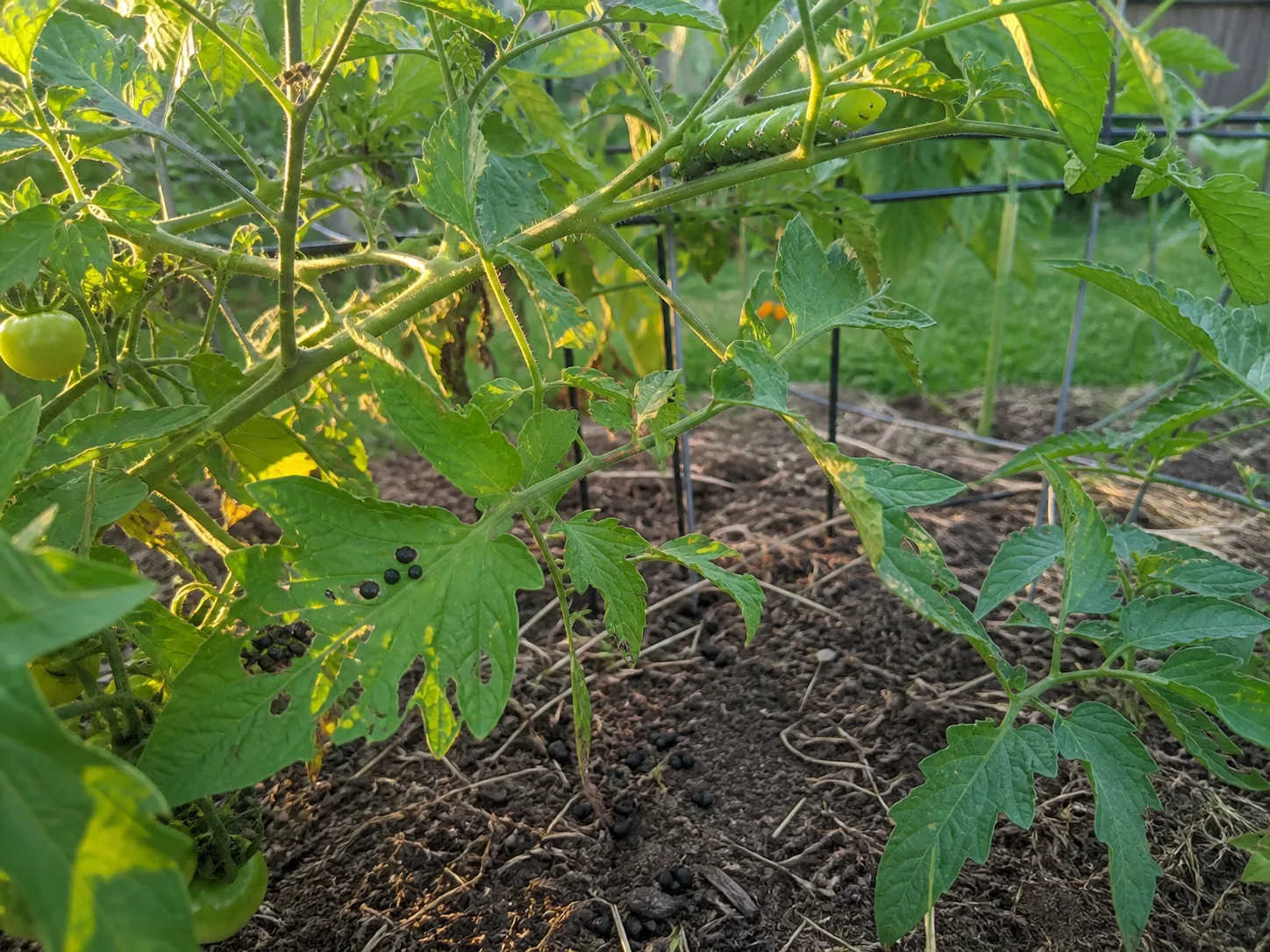
Large dark frass beneath damaged leaves can lead you to a hornworm that is almost invisible in the foliage.
Why white cocoons change the answer
The white objects that look like grains of rice on a hornworm’s back are not the caterpillar’s eggs. They are the cocoons of parasitoid wasp larvae that have fed inside the hornworm and emerged to pupate on its body. In a home garden, these cocoons are a clear sign that the caterpillar has already been attacked by natural biological control.
N.C. Cooperative Extension advises gardeners to leave a hornworm with white oval bumps alone. Once the wasp larvae have taken over, the hornworm is no longer feeding normally, and the tiny adult wasps can go on to search for other hosts (N.C. Cooperative Extension’s tomato hornworm control note).
What happens after a wasp parasitizes the hornworm
A parasitoid is different from a harmless hitchhiker. The wasp uses the hornworm as a living host for its developing young, and the process eventually kills the caterpillar. That sounds unpleasant, but it is one of the garden’s built-in ways to reduce caterpillar pressure without a broad spray.
Leave the parasitized hornworm on the plant if it is safely reachable and not creating a separate problem. Avoid picking it into a bucket, crushing it, or spraying that part of the plant. The white cocoons are the useful signal; a hornworm that is merely pale, dusty, or covered with bits of soil is not automatically parasitized.
You do not need to wait for every cocoon to open before checking the rest of the plant. Inspect nearby tomatoes, peppers, and eggplants for active feeders, and remove those. Sparing one parasitized caterpillar does not mean surrendering the crop; it means keeping a natural enemy in place while you control the caterpillars that are still eating.
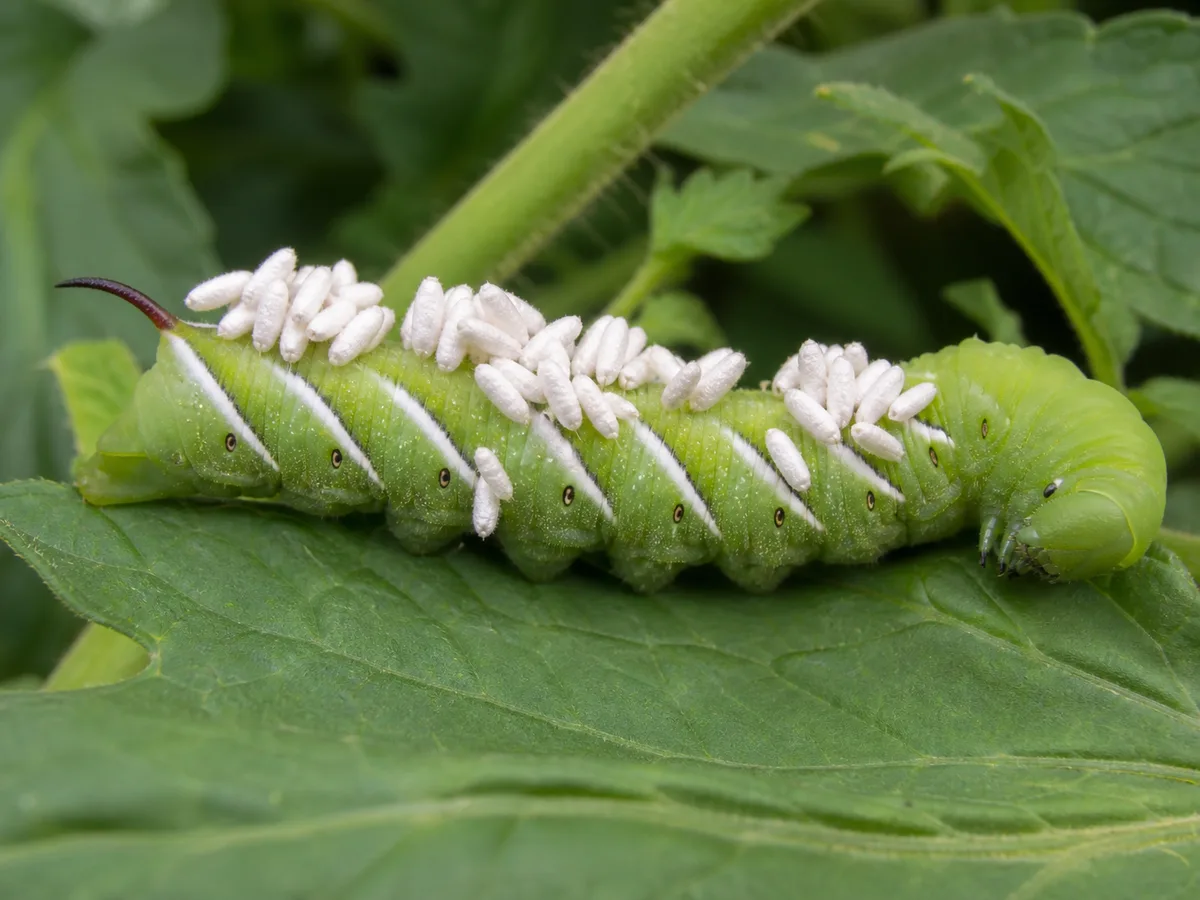
White, rice-like cocoons across the back are the reason to leave this hornworm alone.
Decide what to do with the hornworm you found
The same insect deserves different treatment in different situations. Use the plant’s condition and the caterpillar’s behavior as your threshold.
One worm and light damage on an established plant
Handpick the hornworm and check the rest of the plant. One active larva on a large, vigorously growing tomato rarely justifies a whole-plant insecticide, especially if you can find it and the damage is limited to a few leaves.
After removal, look at the newest growth and fruit clusters. If the plant still has a full canopy and no additional frass appears, return to routine scouting. If fresh frass shows up, you probably missed another caterpillar rather than facing a treatment failure.
Several worms, a young plant, or fruit damage
Escalate quickly when a seedling or recently transplanted plant is losing a meaningful share of its leaves. Young plants have less foliage to spare and less time to recover before flowering and fruit set. Several active caterpillars can turn a manageable problem into a bare-stemmed plant in a few days.
Fruit feeding also changes the decision. UC IPM recommends treatment when hornworms are causing extensive foliage damage or feeding on fruit, and suggests spot-treating affected sections rather than treating an entire field by default. In a home garden, that translates to removing every active caterpillar you can find, then using a labeled caterpillar product only if the population is too large for handpicking.
If the plant is already badly defoliated, protect the remaining growing tips and fruit clusters first. Do not remove healthy leaves just to make the caterpillars easier to see; use the damage as a reason to inspect more carefully and act sooner.
How to find and remove active tomato hornworms
Handpicking is usually the fastest, least disruptive method for a small number of plants. The challenge is not strength—it is locating a green caterpillar that has evolved to disappear against green foliage.
Scan at dusk and follow the frass
Start with the plants showing the most damage. Check late afternoon, dusk, or early evening, when hornworms are more likely to be exposed and feeding. Run your eyes along stems, leaf undersides, and the top of the canopy; then look down to the soil for fresh pellets.
Use a flashlight at an angle so the caterpillar’s body casts a small shadow. Some gardeners use a UV flashlight because hornworms can stand out under ultraviolet light; treat that as a scouting aid, not a cure, and never stare into the light. A normal flashlight and a methodical search work just as well when you follow the frass.
Inspect every night or every other day for a week after finding one. If you prefer a fixed routine, twice-weekly checks through the warm season are a sensible baseline, with extra checks after you see fresh damage or the first hornworm moths in the garden.
Handpick, contain, and dispose
Wear gloves if you dislike the texture or want to avoid the dark fluid some caterpillars release when disturbed. Gently grasp the hornworm from the side of the body and drop it into a container of soapy water. You can also move an active hornworm far from edible crops if your goal is to reduce damage without killing it, but do not relocate a parasitized one away from the plant—the wasps need that host to complete their cycle.
After removal, check the plant again from the opposite side. A single hornworm can be hidden behind a stem, and frass below one branch does not prove that only one caterpillar is present. Dispose of the contents away from the bed, wash your hands, and keep the container out of reach of pets and children.
If handpicking is not enough
When the plant is large or the infestation is widespread, a selective caterpillar treatment can reduce the time between discovery and recovery. Choose the least disruptive option that fits the situation, and read the product label every time: formulations, permitted crops, protective equipment, reapplication intervals, pollinator warnings, and harvest intervals differ.
When Bt makes sense
Bacillus thuringiensis var. kurstaki (Bt) is most useful against small, newly hatched caterpillars. UC IPM notes that timing is essential because Bt works best when young larvae eat treated foliage; it is much less dependable once hornworms are large and have already consumed substantial leaf area (UC IPM’s management table).
That makes Bt a scouting-and-timing tool, not a rescue spray for a giant hornworm. Apply only a product labeled for the crop and pest, cover the foliage the caterpillars will eat, and follow the label for reapplication after rain or new growth. Do not assume that “organic” means risk-free or that a product labeled for one vegetable is automatically legal on another.
Spinosad and broad-spectrum sprays
Spinosad can control hornworms, but it should not be treated as a harmless general-purpose spray. UC IPM lists it as an option and emphasizes label directions, timing, and the relative effects of pesticide choices on natural enemies and bees. Avoid spraying open flowers or blooming weeds where bees are foraging, apply only when the label allows, and observe the stated preharvest interval.
Broad-spectrum insecticides are a poor first response to one visible caterpillar. They can kill parasitoid wasps and other natural enemies that are already suppressing hornworms, and they may create a new pest problem after the beneficial insects disappear. If you must treat, spot-treat the affected plant or section when the label permits rather than automatically coating the entire vegetable garden.
Neem oil and insecticidal soap are often suggested for garden pests, but they are not reliable substitutes for handpicking a large hornworm. Contact products need to reach the pest, and a caterpillar hidden inside dense foliage can avoid coverage. Keep the decision tied to the actual pest and the product label rather than reaching for a familiar bottle.
Reduce repeat outbreaks with integrated pest management
Hornworms spend much of their life cycle away from the part of the plant you are watching. After feeding, mature larvae drop into the soil and pupate; adult moths later emerge and lay eggs on host plants. The most durable plan combines regular scouting, selective removal, habitat for natural enemies, and reasonable end-of-season cleanup.
Attract natural enemies without trusting “repellent plant” promises
Flowering dill, parsley, cilantro, yarrow, fennel, sweet alyssum, and other nectar-rich plants can help make a garden more useful to parasitoid wasps and other beneficial insects. Gardening Know How describes these plants as food and habitat for natural enemies, while also acknowledging that companion-planting claims are not governed by hard rules (Gardening Know How’s hornworm companion-planting guide).
Treat companion plants as habitat, not insurance. Basil, marigolds, nasturtiums, and dill may be useful additions for scent, flowers, harvest, or trap-crop experiments, but they do not guarantee that moths will avoid every tomato plant. Give the plants enough space, keep flowers blooming through the period when hornworms are active, and do not crowd the tomato canopy in pursuit of a “natural repellent” effect.
The most important beneficial-insect habit is restraint. Leave parasitized hornworms in place, avoid unnecessary broad-spectrum sprays, and provide a mix of flowers rather than buying or releasing insects without a plan. Natural enemies work best as part of a monitored garden, not as a replacement for looking at the plants.
Manage weeds, crop rotation, and shallow soil disturbance
Remove troublesome nightshade-family weeds around the vegetable bed when practical. They can act as alternate hosts, although weed removal alone will not prevent moths from arriving from elsewhere. Keep tomatoes, peppers, eggplants, and potatoes in a rotation when your space allows, recognizing that rotation is a population-management tool rather than a guarantee.
After the season, remove spent plants and fallen fruit, then consider shallow cultivation if it already fits your soil-management approach. Hornworm pupae are in the soil, so disturbing the upper layer can kill or expose some of them; deep tilling solely for hornworms can also damage soil structure and overwintering organisms. In a small garden, the best compromise is usually cleanup, rotation, and a return to early scouting next season.
Conclusion
The best answer to “Should you kill tomato hornworms?” is sometimes—and the white cocoons tell you when not to. Remove active caterpillars, especially when they are stripping leaves, eating fruit, or attacking a young plant. Leave a hornworm covered in parasitoid-wasp cocoons so those emerging allies can continue the biological-control cycle.
Start with frass-led scouting, handpick what is still feeding, and escalate to a labeled Bt or other treatment only when damage and numbers justify it. A few minutes of inspection twice a week, combined with flowers for beneficial insects and sensible end-of-season cleanup, usually protects the harvest without turning the whole garden into a pesticide zone.



