23 Types of Pink Flowering Shrubs
Compare 23 pink flowering shrubs by bloom season, USDA zone, sun needs, and mature size—plus cultivar picks and invasive-plant warnings before you buy.
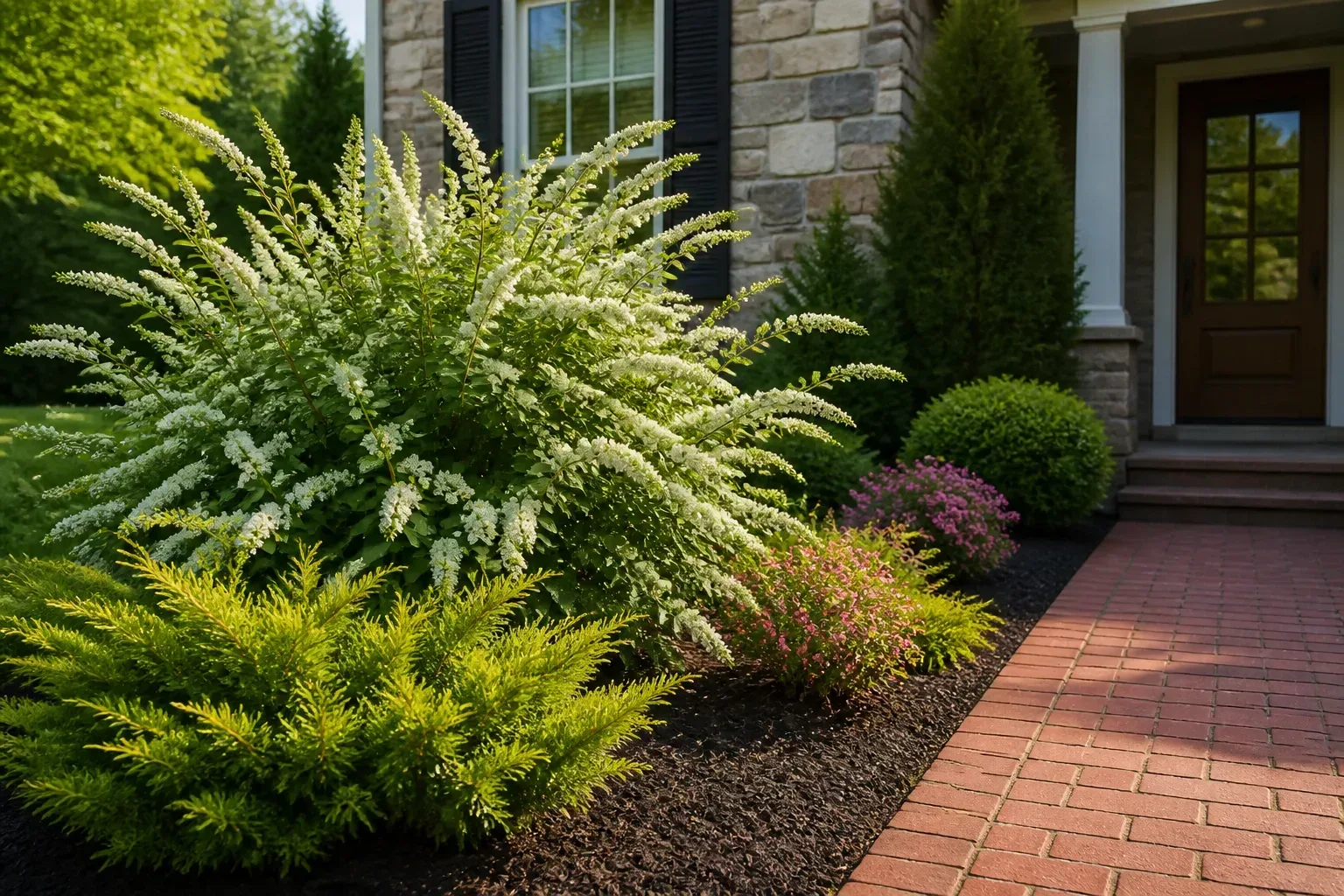
Pink flowering shrubs are the fastest way to add structure and color that returns year after year—without replanting annuals every spring. The catch is that pink covers everything from pale blush to hot magenta, and a shrub that blooms beautifully in Georgia may die back to the ground in Minnesota or never flower in deep shade. The twenty-three shrubs below are the ones landscapers and extension educators reach for most often when homeowners ask for reliable pink bloom. Each profile includes zones, realistic mature size, light needs, standout cultivars, and the maintenance trade-off that tag lines usually skip.
Before the plant list, use the decision filters below. They save more money than any single “best” pick.
How to Choose the Right Pink-Flowering Shrub
Start with hardiness zone and mature width, not flower photos. A crepe myrtle that matures 20 feet wide cannot live in a 5-foot foundation strip, and a sun-loving weigela planted under a maple will bloom sparsely forever. Measure the planting bed, note how many hours of direct sun hit the site between 10 a.m. and 4 p.m., and decide whether you need evergreen screening, spring-only drama, or summer-long color.
Match Hardiness Zone and Mature Size Before You Shop
USDA zones tell you whether a shrub survives winter; they do not guarantee bloom. Borderline plants—camellias in zone 6, crepe myrtles in zone 6 without a protected microclimate—may live but flower inconsistently. When tags list a range like “zones 5–9,” look up your specific cultivar; dwarf azaleas, reblooming hydrangeas, and sterile butterfly bush series often have narrower limits than the genus.
Size matters twice: at planting and ten years out. Small-space picks include ‘Pink Elf’ bigleaf hydrangea (about 18 inches tall), Yuki Cherry Blossom deutzia (roughly 2 feet), and ‘Pink Micro Chip’ butterfly bush (18–24 inches). Large-property anchors include lilacs to 15 feet, smoke bush to 15 feet, and bougainvillea trained as a vine to 40 feet wide in frost-free climates.
Use Bloom Season and Sun Exposure as Your Next Filter
Pink shrubs bloom from late winter through fall depending on species. If you want color across the calendar, combine early performers (flowering quince, Korean spice viburnum), mid-spring stars (azalea, lilac, spirea), summer workhorses (hydrangea, rose of Sharon, crepe myrtle), and cool-season camellias in warm zones. Most pink-flowering shrubs want full sun to partial shade; only camellias, daphne, and some rhododendrons tolerate meaningful shade, and even those bloom heavier with morning sun.
Deer resistance is partial, not absolute. Daphne, weigela, rose of Sharon, smoke bush, and many spireas are often left alone; hydrangea, rhododendron, and roses are frequently browsed. If deer pressure is high, site vulnerable plants inside a fenced courtyard or behind a deer-resistant front row.
Pink Shrubs by Bloom Season
| Bloom window | Pink shrubs to shortlist |
|---|---|
| Late winter–early spring | Flowering quince, daphne, camellia (warm zones) |
| Early–mid spring | Korean spice viburnum, azalea, rhododendron, lilac, spirea, deutzia, tree peony |
| Late spring–early summer | Weigela, elderberry, may bush |
| Summer | Hydrangea, rose of Sharon, butterfly bush, crepe myrtle, smoke bush, abelia, bougainvillea (warm zones), bottlebrush (zones 9–10) |
| Fall–winter | Camellia, reblooming hydrangea cultivars |
This calendar is how you avoid a yard that looks great for two weeks in May and flat the rest of the year.
Early Spring: Quince, Viburnum, and Daphne
Flowering quince (Chaenomeles speciosa) pushes cup-shaped pink, white, orange, or red flowers on bare branches from late winter into mid-spring—sometimes before the last hard frost in mild climates. Cultivars like ‘Double Take Pink Storm’ and ‘Pink Lady’ deliver saturated pink without the old tangled look of legacy varieties. Plants reach 3–10 feet tall and wide, tolerate heat once established, and work as thorny barrier hedges. After the brief bloom show, foliage is ordinary; plant quince where the spring display matters most, not as a year-round focal point. Prune immediately after flowering because next year’s buds form on old wood.
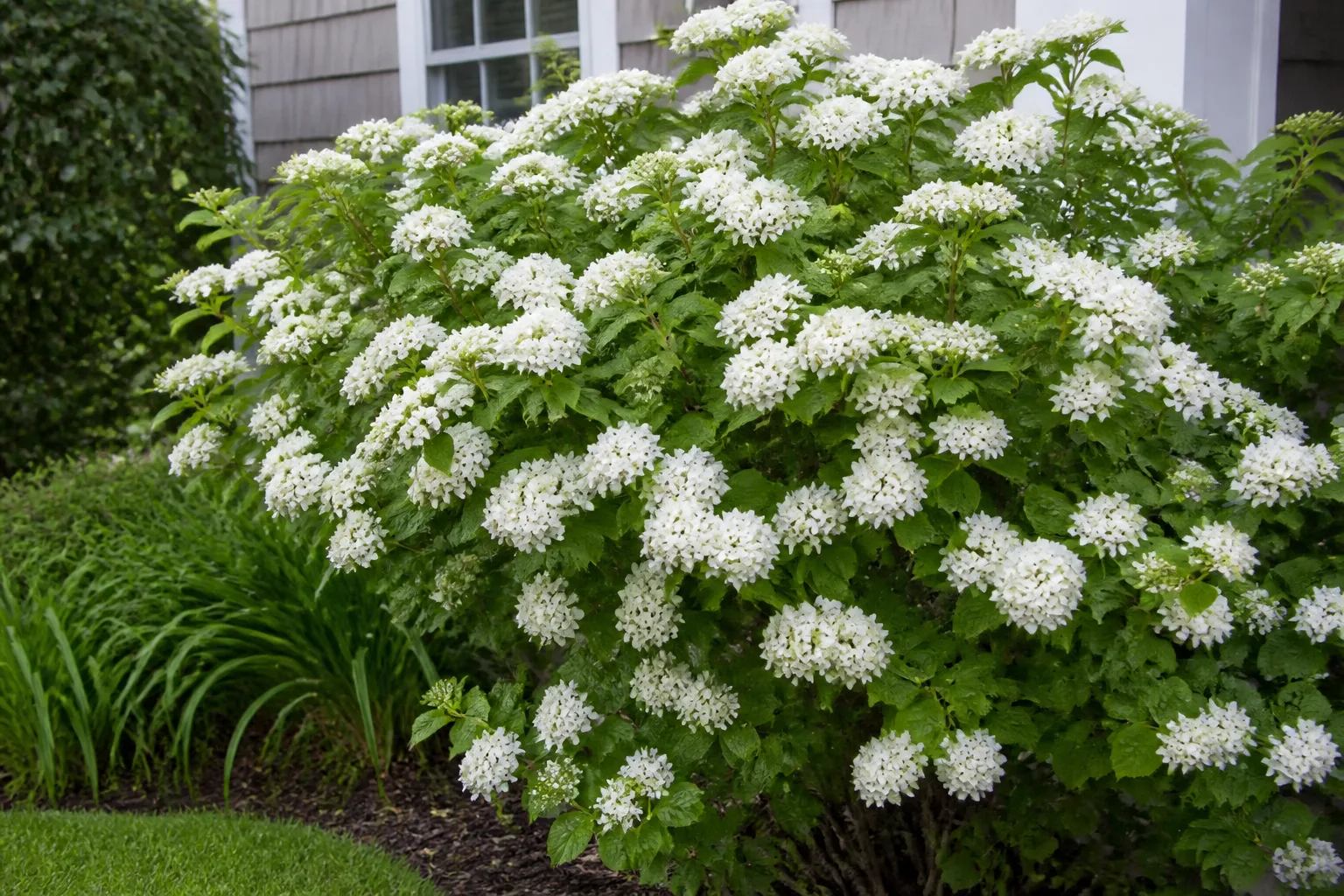
Korean spice viburnum (Viburnum carlesii) opens pink buds that expand into white clusters with pink edges and a clove-like scent in early to mid-spring. At 4–6 feet tall, it fits entry beds and mixed borders in zones 4–7. NC State Extension notes high drought tolerance once established and strong deer resistance—rare for a fragrant spring shrub. For more viburnum options, see our guide to viburnum species.
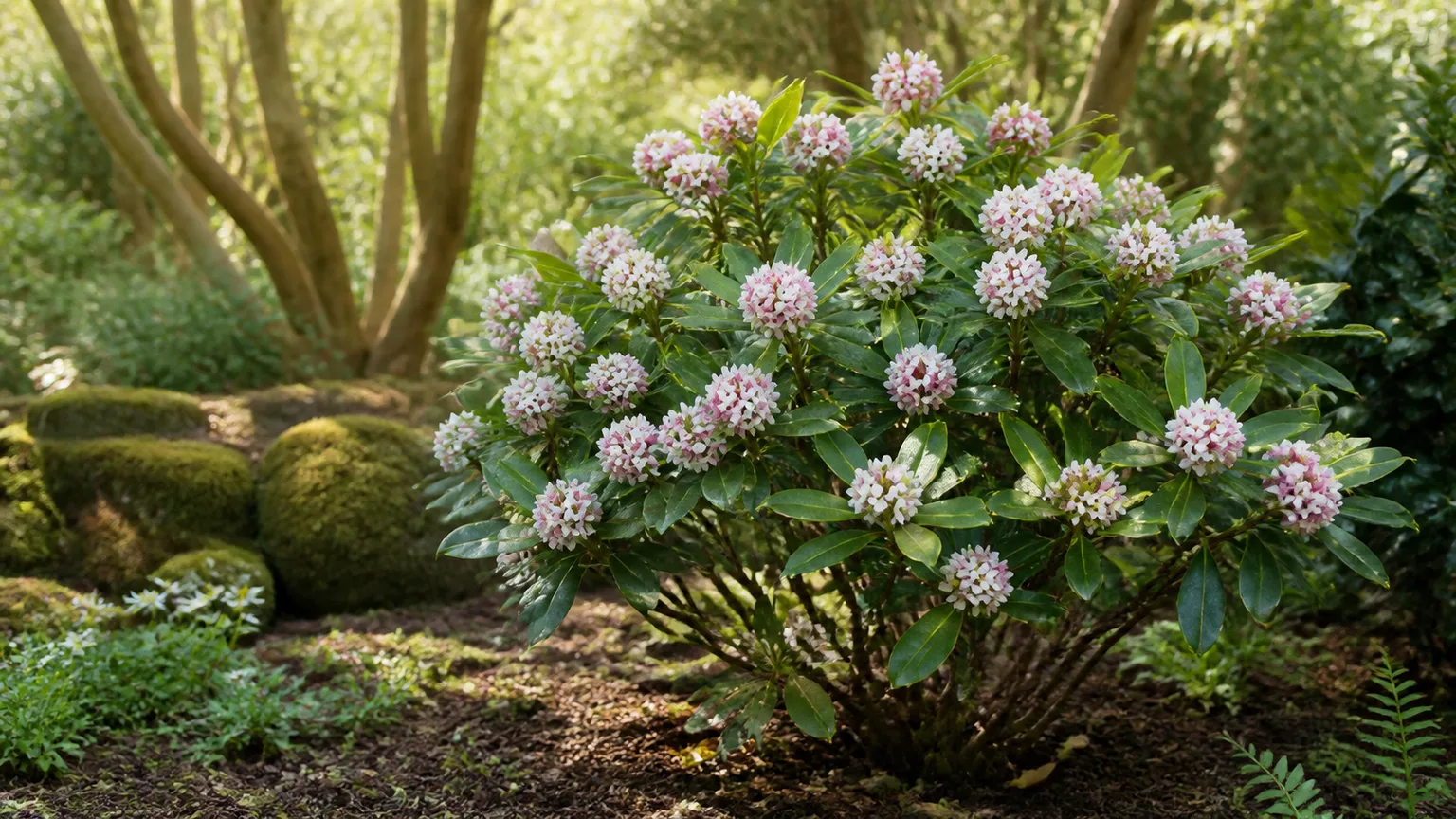
Rose daphne (Daphne cneorum) and hybrids like ‘Carol Mackie’ (D. × burkwoodii) offer intensely fragrant pink flowers on evergreen or semi-evergreen mounds roughly 1–3 feet tall. Daphne demands excellent drainage and resents root disturbance—plant it once in partial shade with compost-amended soil and leave it alone. Worth the fuss near a doorway where you will catch the scent in April.
Mid-to-Late Spring: Azaleas, Lilacs, Rhododendrons, and Spireas
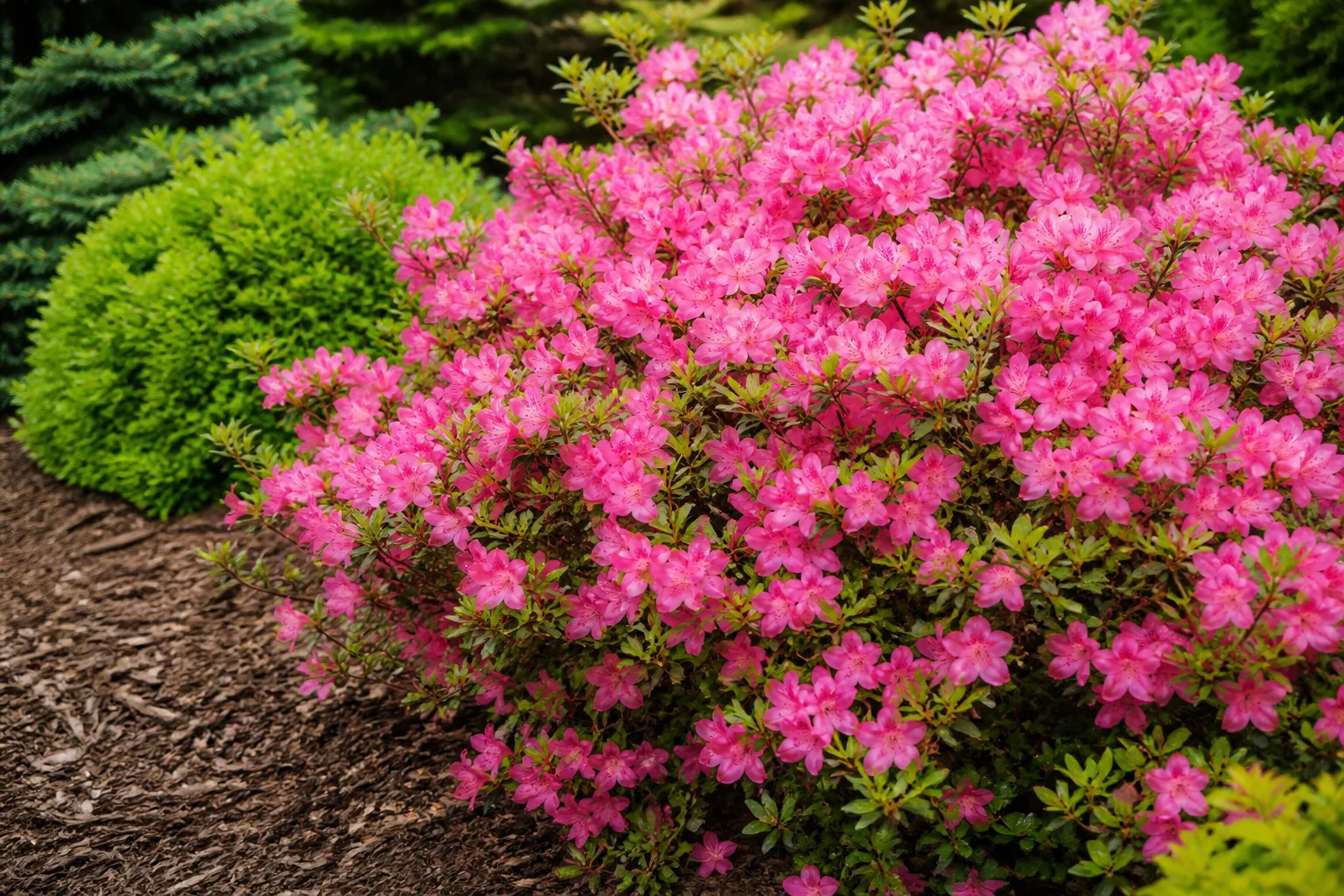
Azaleas (now classified within Rhododendron) are the defining pink shrubs of the Southeast and Pacific Northwest spring. Evergreen types like ‘Gumpo Pink’ stay near 2 feet; taller Kurume and Southern Indica hybrids reach 6–10 feet. They need acidic, well-drained soil and filtered sun—deep shade reduces bloom, and afternoon scorch browns leaves. Bloom time runs early to mid-spring depending on group and climate. Our azalea care guide covers soil prep and post-bloom care in detail.
Common lilac (Syringa vulgaris) is not only purple. Cultivars ‘Maiden’s Blush’ (soft pink, 12–15 feet), ‘Marie Frances’ (single pink on a 5–7 foot frame), and ‘Lucie Baltet’ (pink, 8–10 feet) prove lilac belongs on pink-shrub lists for zones 3–7. All want full sun and neutral to alkaline soil. Prune right after flowers fade—midsummer pruning removes next year’s wood.
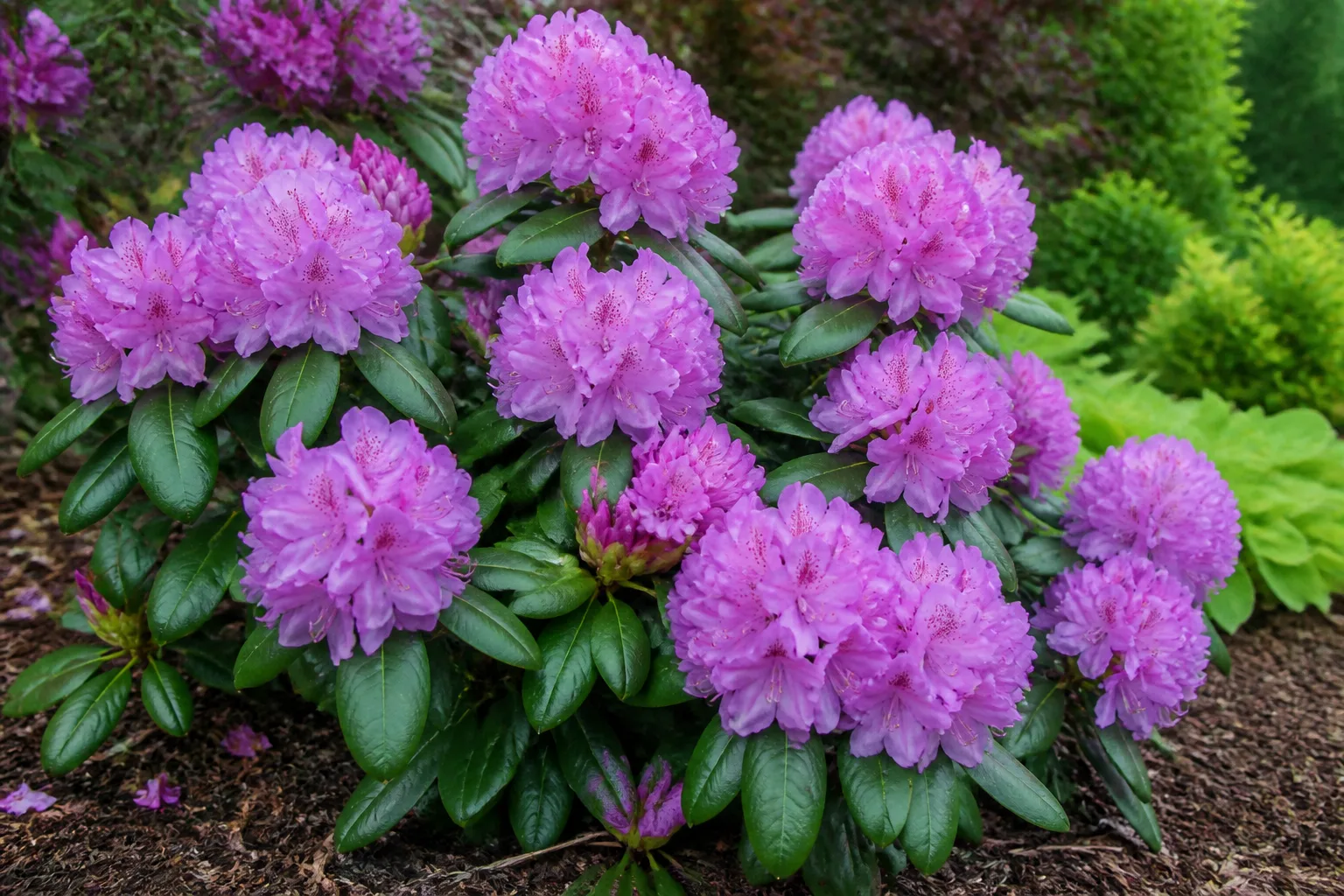
Rhododendrons with pink to magenta trusses include ‘Pink Walloper’ and the Walloper group bred for oversized flowers and foliage. Expect 4–8 feet for many landscape hybrids, partial shade, and acidic soil rich in organic matter. Deer browse them readily. For placement ideas, read how to use rhododendron in landscaping.
Japanese spirea (Spiraea japonica) covers itself in pink clusters in late spring and often reblooms lightly if deadheaded. ‘Goldflame’ and ‘Gold Mound’ add chartreuse foliage; ‘Neon Flash’ pushes electric pink flowers on a 3–4 foot mound. Full sun, zones 3–8, and easy pruning make spirea one of the most forgiving pink shrubs for beginners.
Deutzia and may bush (Spiraea cantoniensis) round out late-spring foam. Deutzia Yuki Cherry Blossom (‘NCDX2’) stays near 2 feet with bright pink flowers—ideal for small beds. May bush forms arching 4–6 foot fountains of pink or white clusters in May; NC State Extension documents heat, drought, and salt tolerance plus easy transplanting.
Tree peony (Paeonia suffruticosa) is a woody shrub, not an herbaceous perennial. Dinner-plate pink, red, or white blooms appear for roughly seven to ten days in mid- to late spring on a 3–5 foot framework. Site in full sun to light shade with wind protection—heavy rain destroys open flowers. Slow to establish, decades-long lived.
Summer Peak: Hydrangeas, Rose of Sharon, Crepe Myrtle, and Smoke Bush
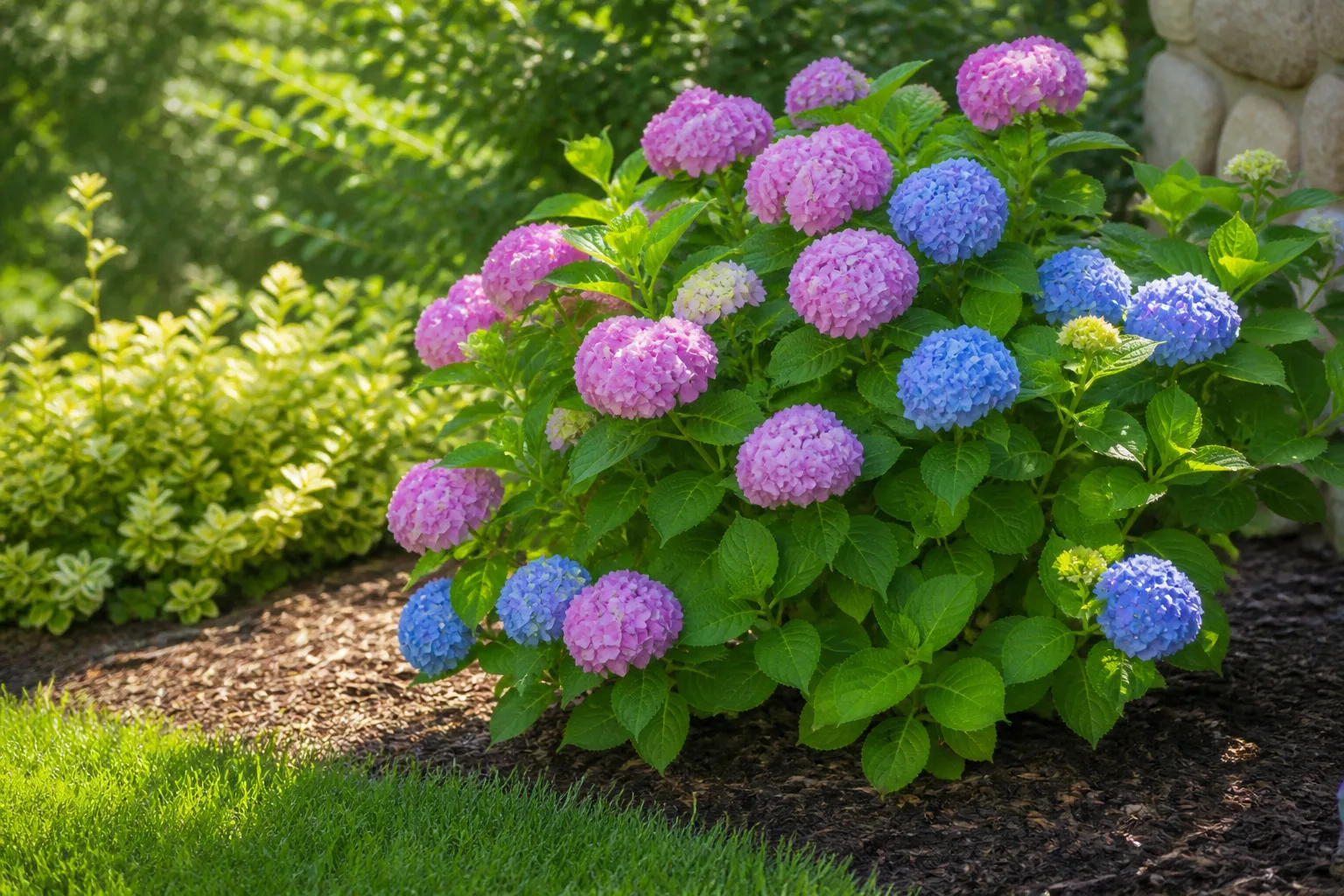
Bigleaf hydrangea (Hydrangea macrophylla) is the summer pink shrub most gardeners already know—and the one most often planted wrong. On many mophead and lacecap cultivars, flower color shifts with soil chemistry: acidic soils with available aluminum tend toward blue; alkaline soils push pink and red. NC State Extension notes that aluminum sulfate can acidify soil while lime raises pH for pinker tones—but only on color-changeable cultivars. Series like Invincibelle Spirit and dwarf ‘Pink Elf’ bloom pink regardless of soil. Reblooming types such as ‘Endless Summer’ flower on old and new wood, extending color into fall. Expect 3–5 feet for modern dwarfs and up to 6 feet for older mopheads. Morning sun with afternoon shade prevents wilt in hot climates. See our bigleaf hydrangea care guide for watering and pruning timing.
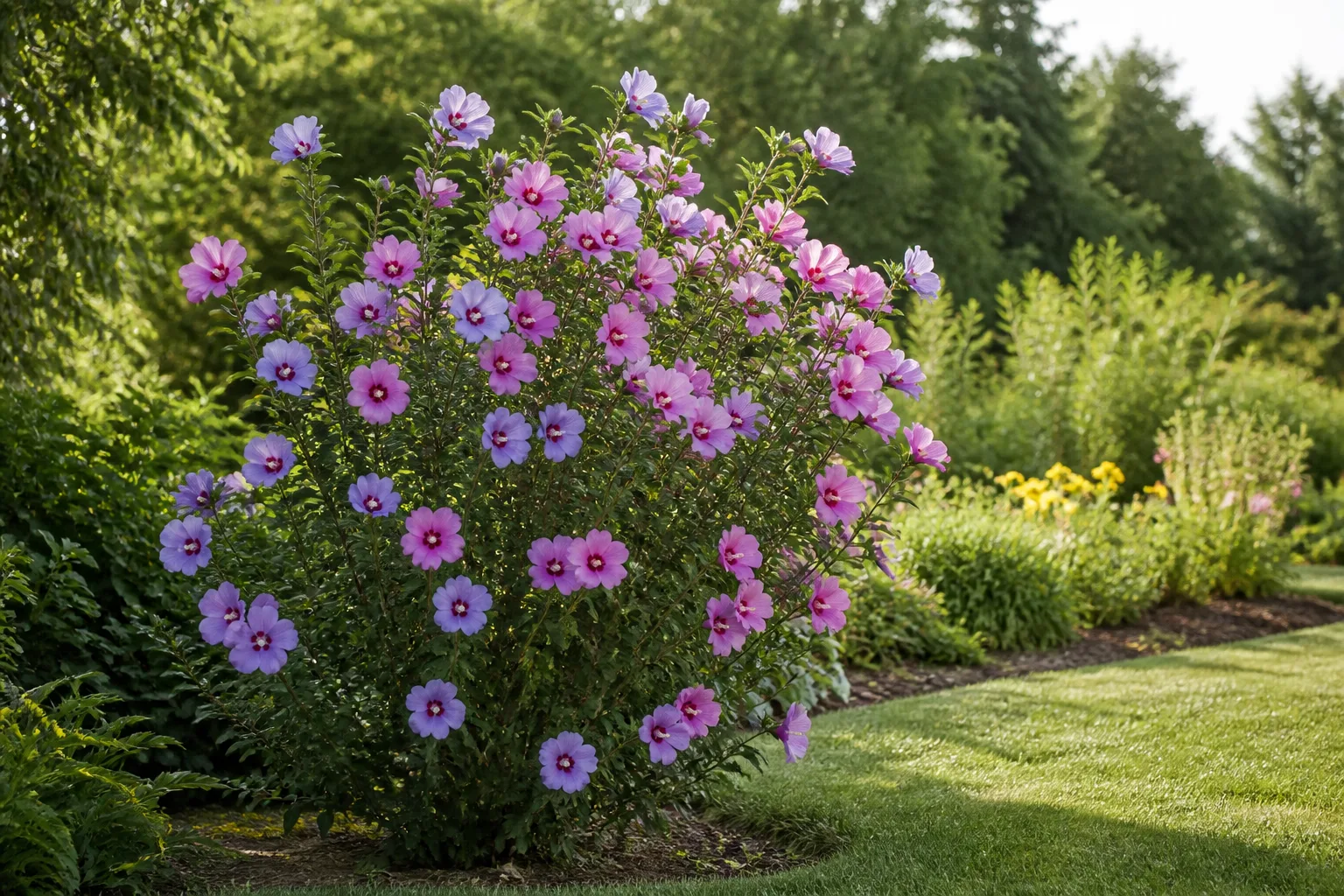
Rose of Sharon (Hibiscus syriacus) fills the late-summer gap when spring shrubs are done. ‘Sugar Tip’ offers variegated foliage with pink blooms; ‘Woodbridge’ delivers solid pink on an 8–10 foot plant. Full sun, zones 5–9, and tolerance for heat and drought once established. Flowers attract hummingbirds and butterflies without the invasiveness issues of old butterfly bush seed strains.
Crepe myrtle (Lagerstroemia indica and hybrids) blooms July through September in zones 6–9 (cultivar-dependent), with pink cultivars from soft shell to hot pink. Mature size ranges from 3-foot dwarfs to 25-foot tree forms—read the label before digging. Exfoliating bark and fall leaf color add off-season interest. If blooms fail, troubleshoot with our crepe myrtle blooming guide.
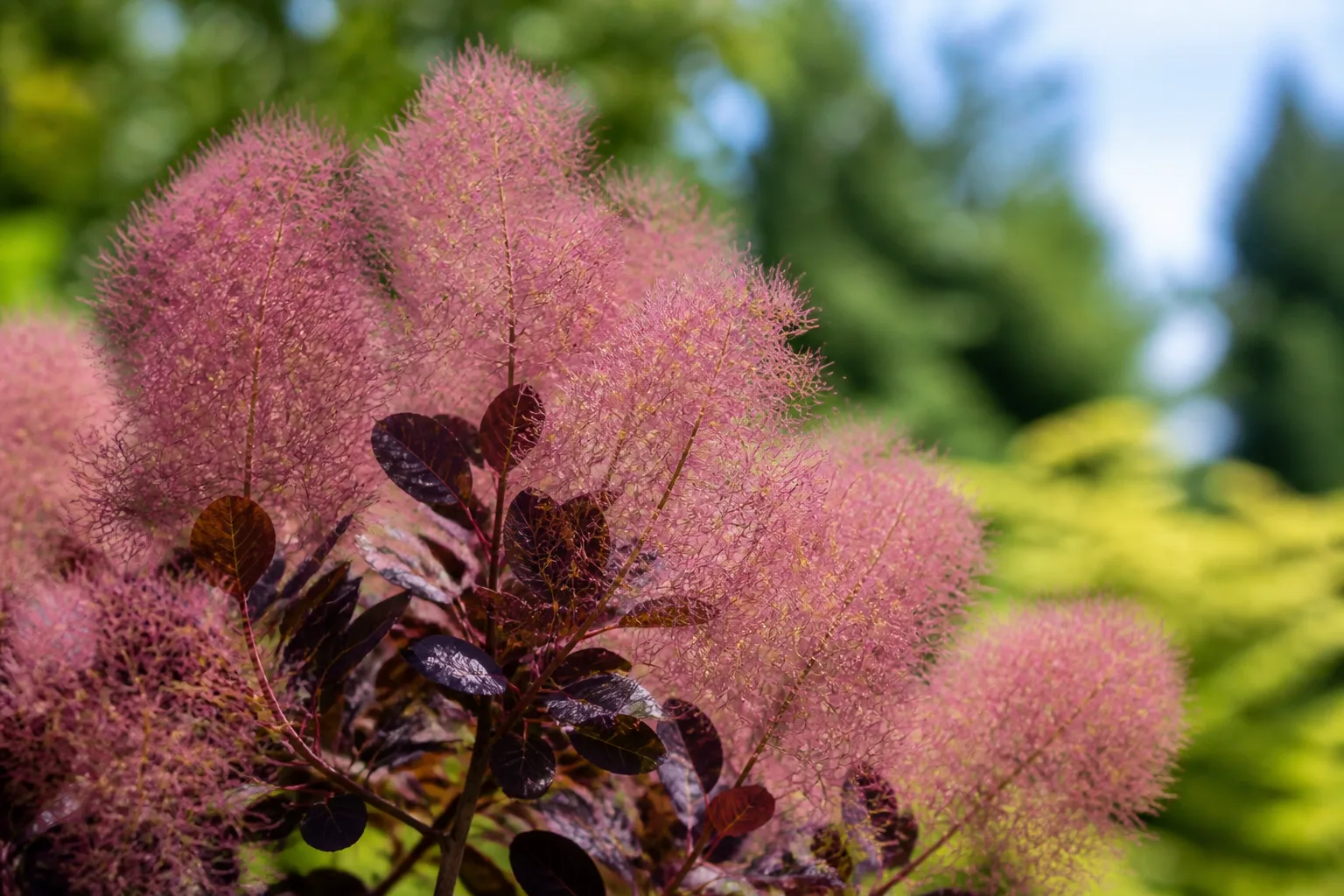
Smoke bush (Cotinus coggygria) produces airy pink to purple smoke-like inflorescences in late spring and early summer atop 10–15 foot rounded plants. ‘Grace’ and green-leaved forms read pink; purple-leaved cultivars push toward wine tones. Drought tolerant, deer resistant, and dramatic as a single specimen. Prune in late winter if you want fewer, larger puffs of “smoke.”
Black Lace elderberry (Sambucus nigra ‘Eva’) pairs near-black lacy foliage with pale pink summer flower plates, followed by edible-style black berries on pollinated plants. Six to eight feet tall, zones 4–7, best in moist soil and full sun to partial shade. Birds love the fruit—plant away from patios if mess bothers you.
Warm-Climate and Year-Round Interest: Bougainvillea, Loropetalum, and Camellia
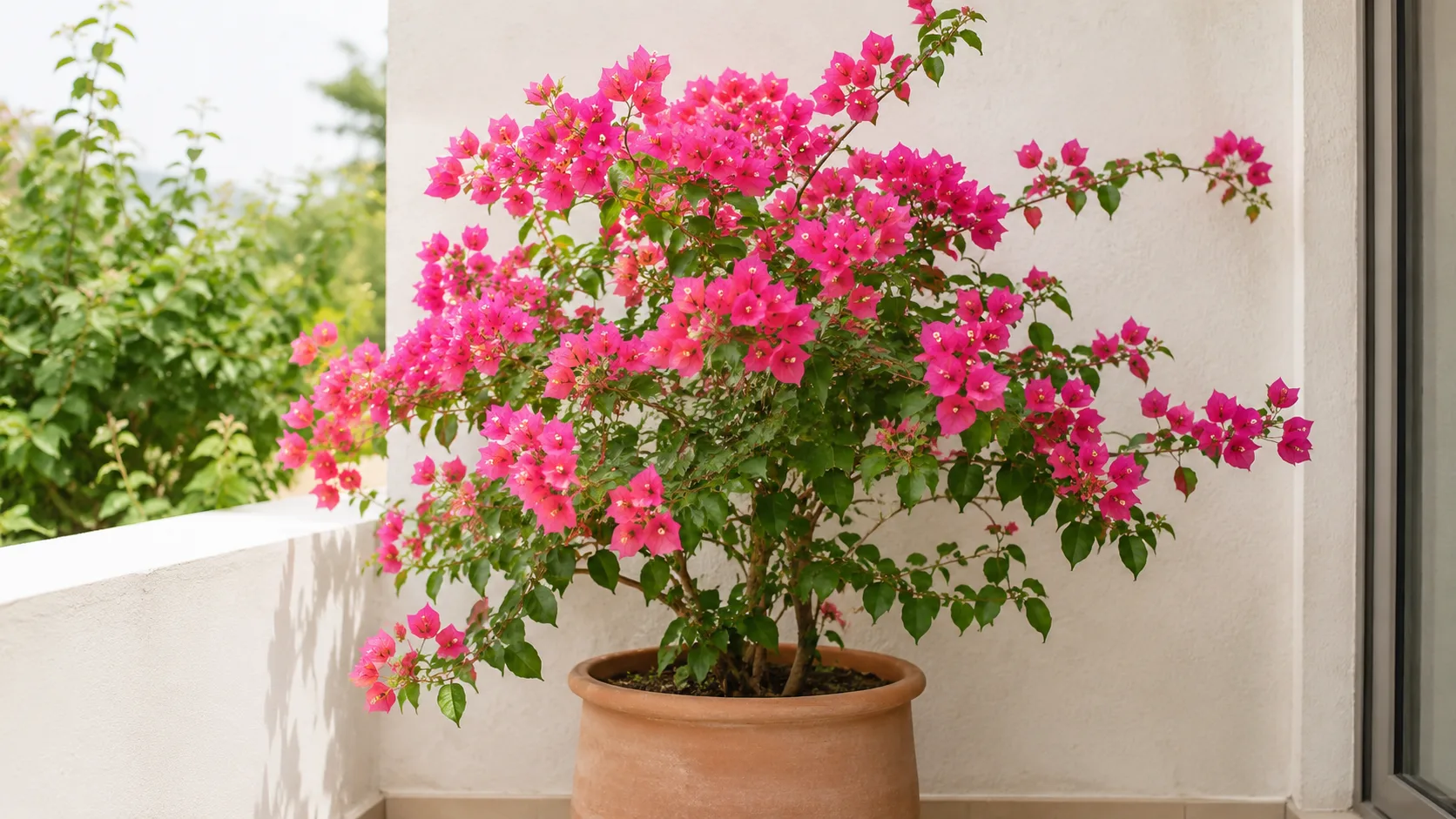
Bougainvillea color comes from papery bracts, not true petals—still reads as screaming pink, magenta, or coral in zones 9–11. Grow as a shrub, vine, or container plant wheeled indoors for winter in colder regions. Full sun and sharp drainage are non-negotiable; wet roots kill plants faster than frost. Our bougainvillea care guide covers container culture for northern gardeners.
Chinese fringe flower (Loropetalum chinense var. rubrum) offers strap-petaled pink to burgundy flowers on evergreen plants 6–12 feet tall in zones 7–10. Foliage runs from burgundy to green depending on cultivar. Full sun intensifies leaf color; partial shade is acceptable in hot climates.
Bottlebrush (Callistemon spp.) carries true pink, red, or yellow cylindrical flowers in zones 9–10. Drought-tolerant and sun-loving—northern gardeners should treat it as a seasonal container plant, not a permanent shrub.
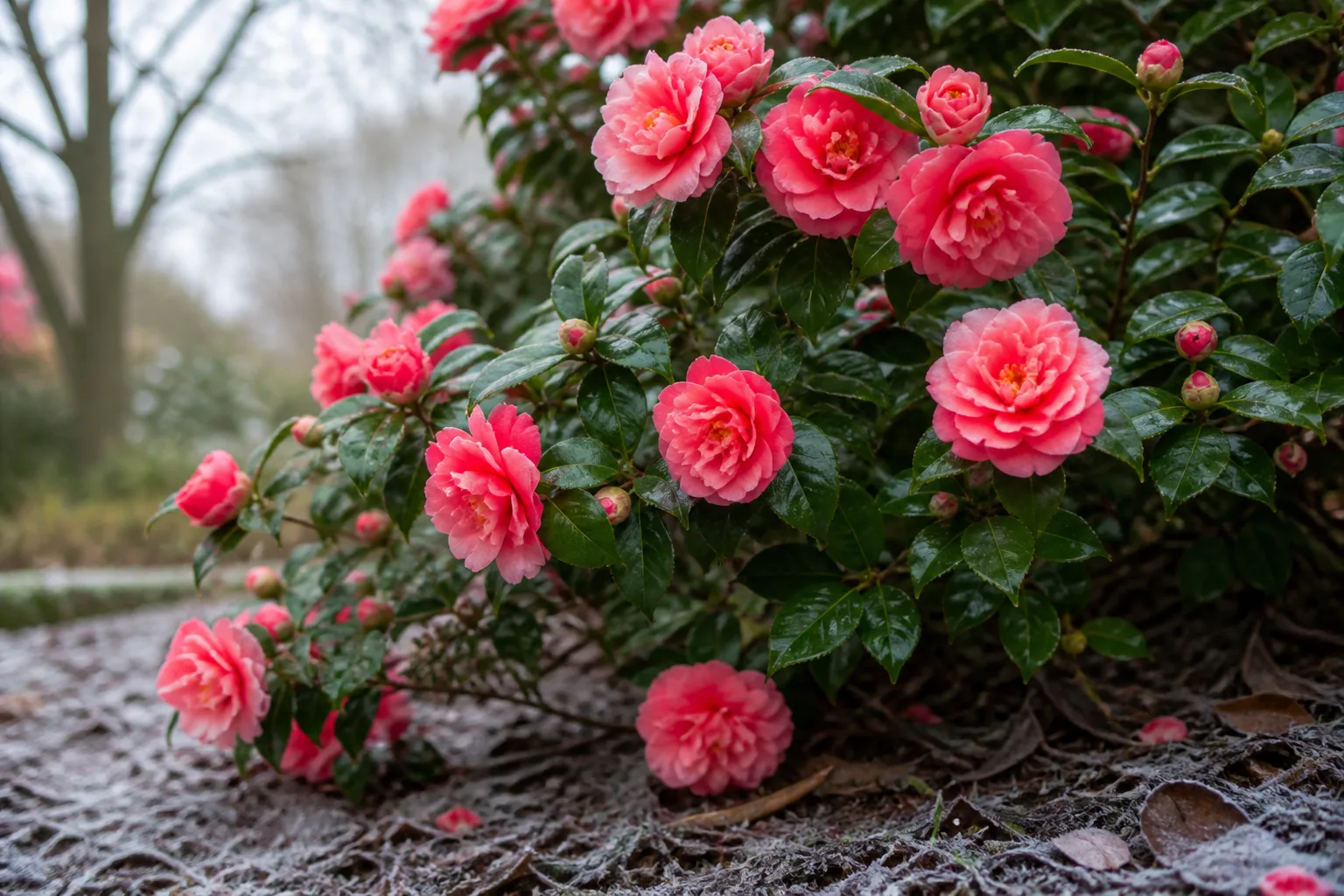
Camellia (Camellia japonica and C. sasanqua) delivers pink, white, or red formal flowers from fall through spring in zones 7–9 (some hybrids to zone 6 with protection). Slow growth, long life, and partial-shade tolerance make camellias the winter-bloom anchor where winters are mild. ‘Fragrant Pink’ and ‘Elfin Rose’ are proven pink cultivars. Avoid planting under competing tree roots; camellias need even moisture and acidic soil.
23 Pink-Flowering Shrubs Worth Knowing
The profiles below condense the species already introduced plus the remaining high-value picks from the list. Use them as a shopping shortlist after you have matched zone, sun, and size.
Foundation and Entryway Favorites
Weigela (Weigela florida and hybrids) carries trumpet-shaped pink flowers in late spring, often with a light repeat in summer. Mature plants reach 6–10 feet, but dwarf series like ‘My Monet’ stay under 3 feet. Full sun maximizes bloom; hummingbirds visit regularly. Prune after the first flush if you need to control height.
Abelia (Abelia × grandiflora and hybrids) blooms pink, white, or peach from late spring through fall on semi-evergreen to deciduous frames 2–10 feet tall depending on cultivar. ‘Kaleidoscope’ and ‘Edward Goucher’ are landscape staples in zones 6–9. Tolerates heat and partial shade better than many summer bloomers.
Daphne, Korean spice viburnum, and dwarf azalea remain the best fragrant entryway trio for cold and temperate climates—keep them near paths where scent and early color register daily.
Hedge and Border Workhorses
Rose of Sharon, weigela, and spirea shear into informal hedges if you accept that heavy shearing reduces flower count. For a pink flowering screen that also feeds pollinators, a row of ‘Pink Delight’ or sterile Lo & Behold butterfly bush cultivars (where legally sold) spaced 4–6 feet apart fills faster than boxwood ever will—check local invasive-plant lists first.
Flowering quince makes a thorny security hedge with a fierce two-week spring show. Loropetalum builds an evergreen burgundy-pink screen in the South.
Pollinator Magnets and Long Bloomers
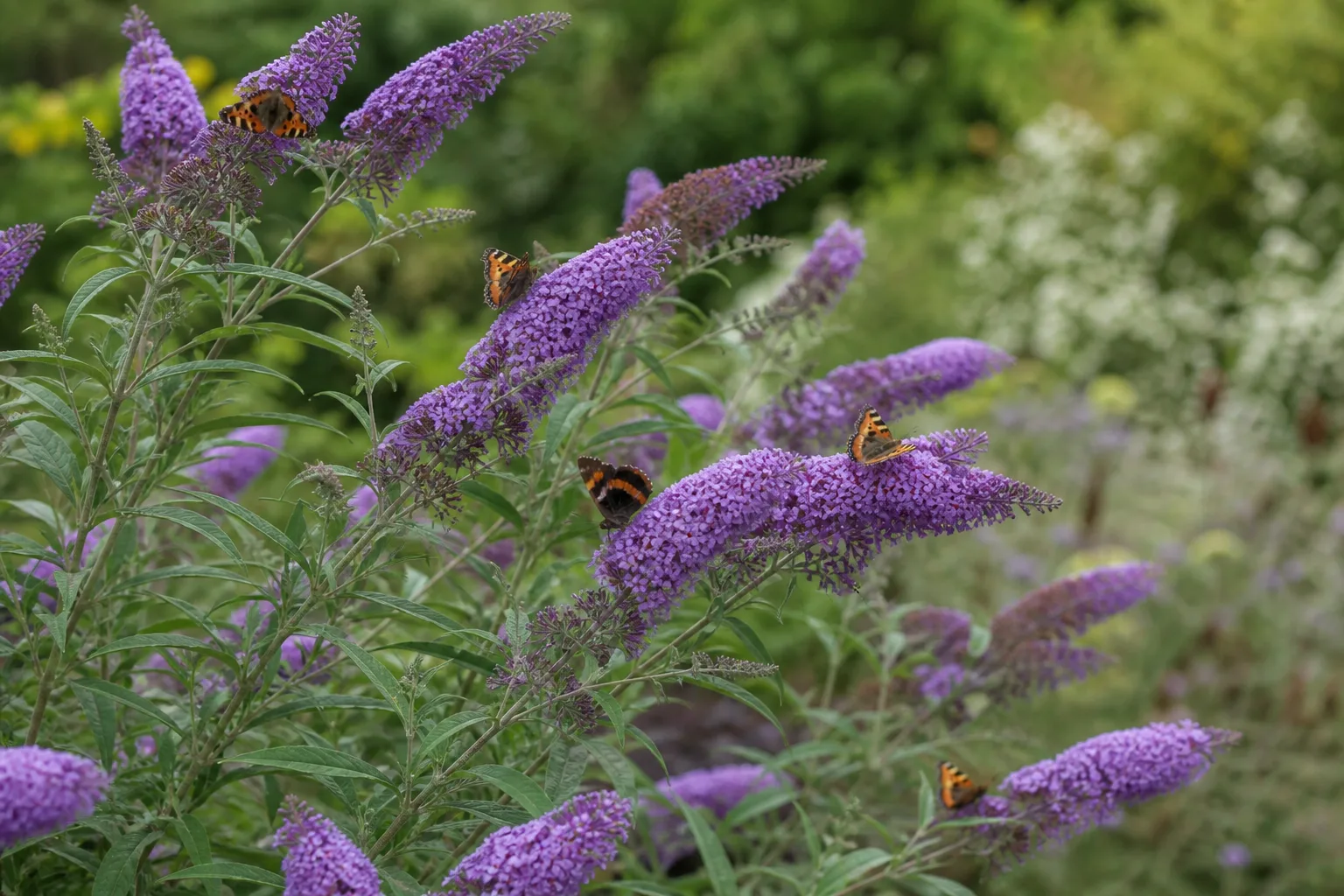
Butterfly bush (Buddleja davidii) earned its name—summer panicles pull in butterflies, bees, and hummingbirds. The problem is seed. NC State Extension documents up to 40,000 seeds per flower spike, wind dispersal, and invasive spread across the Mid-Atlantic, Pacific Northwest, and Mountain/Piedmont North Carolina. Do not plant seeding strains where local lists restrict them. Choose verified sterile series such as Lo & Behold or Flutterby and still monitor for self-sown seedlings. Pink cultivars include ‘Pink Delight’ (6–8 feet), ‘InSpired Pink’ (4–6 feet), and ‘Pink Micro Chip’ for pots.
Pink rose shrubs (Rosa spp.) belong on any pink list. For low maintenance, look to Rosa rugosa, ‘Pink Supreme Flower Carpet’, and ‘Oso Happy Smoothie’—repeat bloom, disease resistance, and full sun. Roses want air circulation; cramming them into a foundation bed guarantees black spot.
Specimen Shrubs for Drama
Smoke bush, tree peony, Black Lace elderberry, and mature crepe myrtle standards act as focal points. Give each room to reach mature width without yearly hacking. Underplant with spring bulbs or low perennials so the ground layer does not sit bare after leaf drop.
Chinese fringe flower and bougainvillea on a south wall deliver tropical texture where winters allow. In zone 8 and colder, grow bougainvillea in a large pot and overwinter it frost-free.
Shrubs to Plant Carefully (or Skip)
Invasive and Aggressive Spreaders
Never plant Himalayan balsam (Impatiens glandulifera) for pink flowers. The Invasive Species Centre classifies it as a prohibited invasive in parts of Canada; it spreads aggressively by seed along waterways in cool climates. Plenty of legitimate pink shrubs exist—this is not one of them.
Seed-setting butterfly bush is restricted or discouraged in Oregon, Washington, and much of the eastern U.S. Verify your state and county noxious-weed list before purchase. Sterile cultivars are the only responsible choice where the species is flagged.
Japanese spirea (Spiraea japonica) is invasive in parts of the Northeast and Midwest. If your local cooperative extension lists it, choose native or non-invasive alternatives such as Virginia sweetspire (Itea virginica)—white, not pink, but ecologically safer—or contain spirea where it is not listed and deadhead before seed set.
Design Tips for Mixing Pink Shrubs in the Landscape
Layer by height and bloom week, not random tag colors. Tall crepe myrtle or rose of Sharon goes to the back; mid-height hydrangea and weigela fill the middle; dwarf azalea, deutzia, and spirea edge paths. Pair hot pink with deep green or burgundy foliage—loropetalum, smoke bush, or Black Lace elderberry—to keep the composition from reading sugary.
Repeat one pink tone twice in a bed and contrast it with white or yellow elsewhere. All-pink borders fatigue the eye by July. White ‘Snowmound’ spirea, white camellia, or a white reblooming hydrangea resets the palette.
Space for mature width. A 3-foot azalea planted 2 feet from the foundation becomes a pruning chore by year five. Mulch 2–3 inches, keep mulch off trunks, and water deeply the first two summers—establishment drought kills more pink shrubs than winter cold.
Conclusion
The best pink flowering shrub is the one that matches your zone, sun, soil, and patience for pruning—not the prettiest photo online. Shortlist two or three species from different bloom seasons and you can carry pink from late winter camellias (where hardy) through spring lilacs and azaleas into summer hydrangeas, rose of Sharon, and crepe myrtle. Check invasive-plant lists before you buy butterfly bush or spirea, confirm hydrangea cultivars will stay pink in your soil if that matters, and measure the bed before you fall for a 15-foot lilac. Get those filters right and any of the twenty-three shrubs here will outperform a random nursery impulse buy for years.