Skyrocket Juniper Care: Planting, Size, and Pruning
Learn how to plant and care for a Skyrocket juniper, set spacing for a screen, water during establishment, prune without bare patches, and avoid root rot.
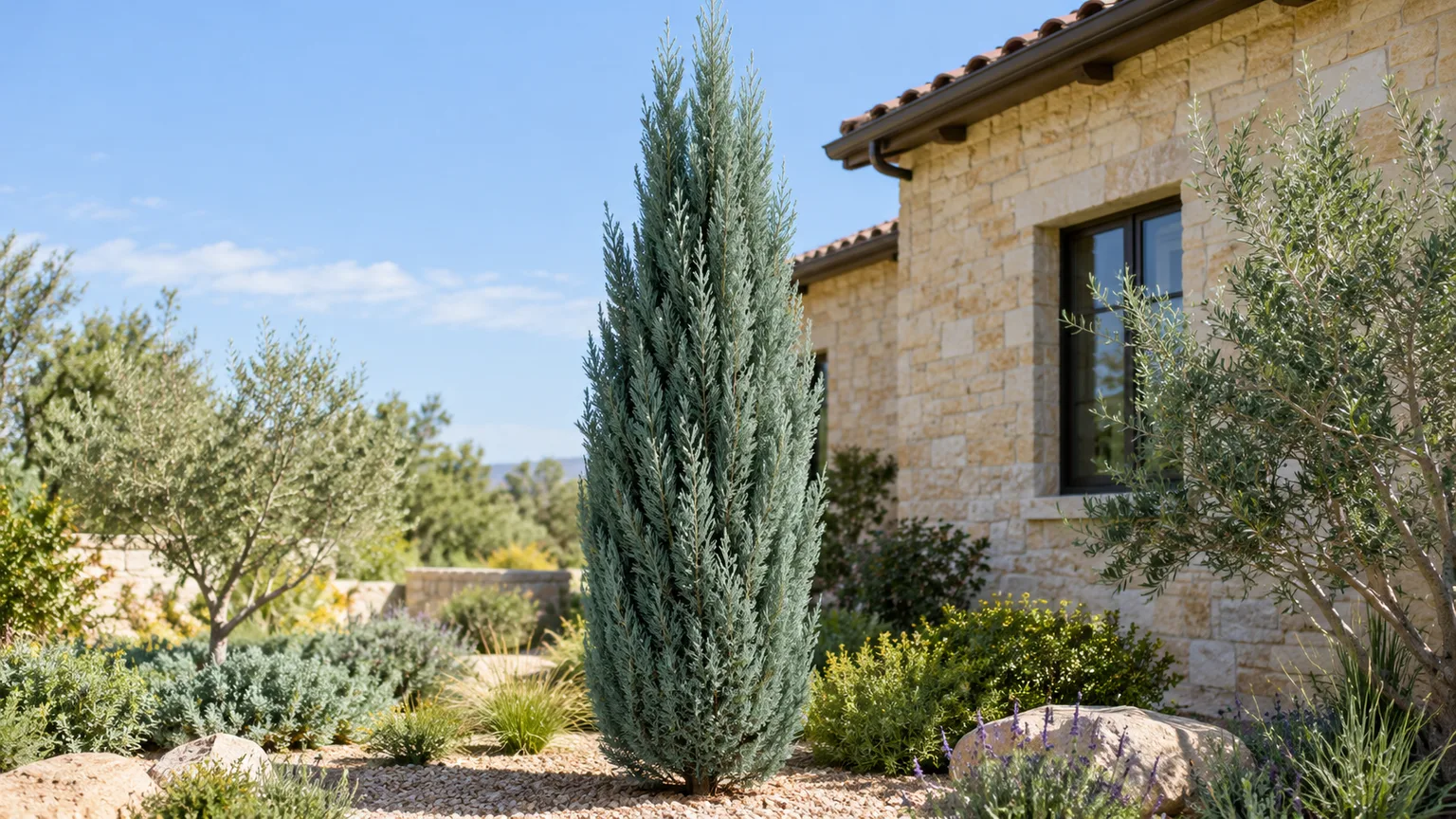
Skyrocket juniper is a strong choice when you want an evergreen vertical accent that takes up little ground space. Its narrow outline can make a small yard feel taller, but that same silhouette is easy to ruin with wet soil, crowding, or a pruning cut into bare wood. Choose the site and spacing for the full-sized tree; after establishment, most of its care is simply avoiding the conditions it dislikes.
One distinction clears up much of the advice online: ‘Skyrocket’ is a named cultivar of Rocky Mountain juniper (Juniperus scopulorum), not the common name for every plant in that species. The species can grow into a much larger, broader tree, so species-level descriptions should not be used as a precise prediction for a nursery-labeled cultivar.
Understand ‘Skyrocket’: a cultivar, not a size guarantee
Rocky Mountain juniper is a native evergreen conifer from western North America. It has scale-like foliage, reddish-brown bark that peels in narrow strips, and blue, berry-like seed cones. ‘Skyrocket’ was selected for a much more upright, columnar habit and silvery blue-green foliage; the RHS cultivar profile describes a narrow evergreen that can reach 4–8 meters tall and 0.5–1 meter wide, with maturity measured in decades.
Those figures are a planning range, not a guarantee for every garden. The American Conifer Society’s profile describes a representative tree around 15 feet tall and 2 feet wide after ten years, and notes that older plants can spread beyond the often-advertised 2–3 feet; the RHS gives a broader height range at maturity. Age, climate, soil, and the exact plant sold all matter, so use the tag attached to your tree as a starting point and leave extra clearance.
| Trait | Practical expectation |
|---|---|
| Botanical name | Juniperus scopulorum ‘Skyrocket’ |
| Plant type | Evergreen conifer cultivar |
| Habit | Very narrow, upright column |
| Typical landscape role | Specimen, vertical accent, windbreak, or closely spaced screen |
| Light | Full sun is best; some references allow partial shade |
| Soil | Sandy, loamy, rocky, or clay soil if water drains away |
| Water | Regular checks while establishing; infrequent irrigation once established |
| Main failure risks | Saturated roots, humid wet weather, ice loading, and harsh pruning |
Before buying, measure the planting strip and look overhead. The tree can outgrow the clearances beside a foundation, narrow walk, fence gate, roofline, or utility line even though its trunk occupies little ground at the start. If a low-maintenance evergreen is the goal but your yard has hot, humid summers or soil that stays wet, select a locally adapted narrow conifer instead of trying to compensate with extra pruning.
Check whether it fits your climate and site
‘Skyrocket’ is easiest to grow where summers are not persistently muggy, winter soil does not remain waterlogged, and the planting spot receives direct light. Rocky Mountain juniper is adapted to dry, open western landscapes; NC State Extension notes its tolerance of dry soil, erosion, salt spray, and air pollution, alongside poor tolerance of wet soils, high humidity, and high night temperatures.
That is a useful fit test, not an absolute boundary. A sheltered garden in a warmer region might keep one alive if its roots drain well and air moves through the foliage, but a prolonged humid summer raises the odds of tip blight and gradual dieback. Gardening Know How’s cultivar guide also flags high humidity and wet soil as poor conditions for ‘Skyrocket’. A plant that repeatedly browns in the same climate is not asking for more fertilizer; it may be the wrong plant for that site.
Give it sun and respect its climate limits
Aim for an open spot with at least six hours of direct sun. More sun helps the crown keep its dense, upright habit and blue-gray color; shade from a building or large tree can leave one side thin, especially when nearby plants compete for light. A little afternoon shade can be useful for a recently planted tree in a very hot, dry location, but permanent deep shade is a poor trade for a cultivar chosen for its narrow form.
Cold hardiness and summer suitability are separate questions. Utah State University’s profile lists zones 3–7 for the species, but winter tolerance does not make it adapted to a hot, humid summer or a site where warm rain keeps the crown damp for days. If your local extension office routinely recommends eastern red cedar or another regional evergreen for humid conditions, ask whether ‘Skyrocket’ has performed reliably nearby before you plant a whole row.
Also consider storm exposure. The tight vertical branches can collect heavy wet snow or glaze ice, which may bend or split them; NC State identifies ice as a limitation for the species. Avoid planting where snow slides off a roof onto the crown, and do not assume that tying branches tightly every winter will prevent damage without creating rubbing or constriction.
Make drainage the soil test that matters
Do not reject a site only because its soil is clay, chalky, sandy, or rocky. The more important question is what happens to water after a soaking rain. If a puddle remains over the root zone into the next day, the ground stays sticky for long stretches, or a downspout sends runoff past the trunk, the planting spot needs correction or replacement.
Dig a test hole about as deep as the expected root ball and fill it with water. Let it drain, fill it a second time, and observe how quickly the water level falls; a hole that remains full for much of the day signals a persistent drainage problem. This is only a field screen, not a formal soil test, but it can keep you from putting a drought-adapted juniper into a bathtub-shaped pocket of compacted ground.
In dense soil, plant on a naturally raised area or choose another location rather than adding gravel to the bottom of the hole. Gravel does not create an outlet, and extensive amendments confined to the planting hole can leave roots sitting in a wet pocket surrounded by drier soil. If drainage is marginal, a raised bed or broad mound that lets water move sideways is more useful than a small pile of compost at the trunk.
Plant it at the right depth and season
Container-grown and balled-and-burlapped specimens can both establish well when the root ball is sound and the planting depth is correct. In regions with cold winters, spring or early fall gives roots time to connect with surrounding soil before weather becomes extreme; in mild climates, plant when temperatures are moderate and you can reliably check moisture. Avoid transplanting into frozen ground, heat-wave conditions, or a soggy site.
Choose a sound nursery plant
Look for foliage with even color and flexible branch tips, and inspect the trunk and interior for broken leaders, extensive browning, pests, and soft or decaying roots. A little interior shedding is not necessarily a crisis on an evergreen, but patches of dead outer growth or one-sided thinning can be hard to hide in a naturally narrow cultivar. Check the cultivar name on the label; a generic Rocky Mountain juniper may not keep the same tight column as ‘Skyrocket.’
For a container plant, slide it out enough to see whether roots circle thickly around the outside. Gently loosen a few roots at the edge if they are matted, but do not tear apart a fragile root ball. For balled stock, keep the root ball moist during handling and follow local extension guidance on removing synthetic ties or coverings; burlap and wire practices vary by material and nursery packing.
Settle the root ball and establish roots
Dig a hole two to three times as wide as the root ball, with a firm base and depth no greater than the distance from the root flare to the bottom. Set the top of the root flare at or slightly above finished grade so settling does not bury the trunk. UF/IFAS Extension’s planting guidance likewise recommends a wide, shallow planting hole and keeping the trunk flare level with or just above the soil surface; use the surrounding soil as backfill instead of creating a heavily amended pocket.
Backfill in layers, firming gently so the tree stands straight without packing the soil into a hard pan. Water slowly enough to wet the whole root ball and the soil immediately around it, then apply two or three inches of organic mulch over the root zone, leaving several inches of bare ground around the trunk. A narrow mulch ring is less helpful than a broad, shallow layer that reduces grass competition while keeping the trunk dry.
Stake only if the root ball rocks in wind or the site is unusually exposed. If staking is needed, use flexible ties and remove them once the root system holds the tree; a permanent tight tie can girdle the trunk or abrade bark. Keep irrigation emitters or lawn sprinklers from soaking the crown every day, since continually wet foliage and saturated ground solve none of the plant’s establishment needs.
Plan a screen around mature width, not pot size
Measure from trunk center to trunk center and use the mature spread on the local nursery label, not the current branch width. For a dense visual screen, approximately 2.5–3 feet on center is a reasonable starting layout for trees expected to mature around 2–3 feet wide; this will create a close row and should not be used if you want each plant’s outline to remain clearly separate. For individual columns with room for air and maintenance access, space them farther apart and accept that gaps will remain visible between crowns.
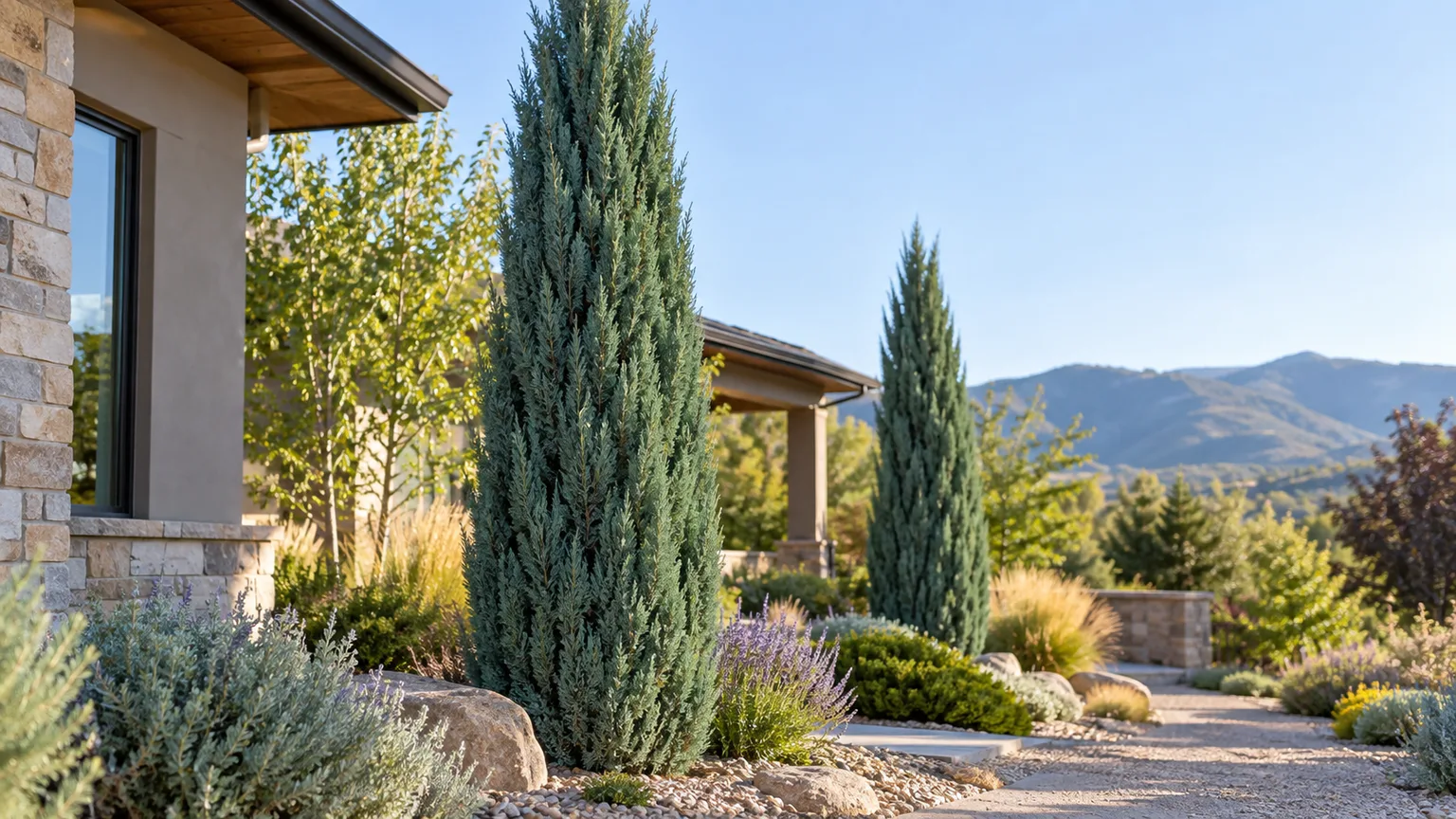
Use mature crown width and the access you want between plants to set row spacing.
Spacing is also a time trade-off. Plants placed farther apart need years to knit into a screen; placing them too close makes lower foliage harder to inspect and can increase competition for water and air circulation as crowns expand. If immediate privacy matters, combine a staggered fence or trellis with young trees rather than forcing a hedge into a spacing that will crowd its mature form.
Allow access for pruning and snow removal, and check local utility-locate rules before digging. Do not plant directly under overhead wires, in front of a window you expect to keep bright, or where a mature crown will press against siding. Narrow above ground does not mean roots are confined to the same narrow strip, so keep a sensible buffer from drains, foundations, and paving that you cannot repair easily.
Water and feed with restraint
Watering needs change sharply between the first seasons and a mature tree. In year one, the roots occupy a small nursery-sized volume, so the plant can wilt or dry even while nearby soil looks damp; after establishment, that same tree is vulnerable to root decline if irrigation keeps the soil saturated. Treat the soil and root ball as the gauge rather than obeying a universal weekly schedule.
Adjust watering to the root zone and weather
After planting, soak the root ball and adjacent soil slowly. Every few days during the first hot stretch, check moisture inside the original root ball and several inches into nearby soil; if both are drying, water deeply enough to wet the whole root zone. If the root ball is still cool and moist or recent rain reached it, wait. Sandy soil, wind, and heat can shorten the interval, while heavy soil, shade, and cool weather lengthen it.
Continue regular checks through the first growing season and the following dry spells while roots spread outward. A newly planted tree may need supplemental water for more than a few months, especially if planted in late spring or exposed to wind. The useful signal is whether the root ball is drying between soakings, not whether seven days have passed on a calendar.
Once established, ‘Skyrocket’ can tolerate dry conditions and usually needs irrigation only during an extended drought. Water slowly at the outer root zone rather than splashing the trunk or foliage; a long, infrequent soak encourages deeper moisture than a quick surface sprinkle. The Epic Gardening cultivar guide also recommends waiting until soil has dried a few inches down before watering. If the soil stays wet after irrigation, fix the amount, emitter location, or drainage before adding more water to brown foliage.
Mulch lightly and fertilize only for a reason
Keep a two- to three-inch mulch layer over as much of the root area as practical, but pull it away from the trunk so bark can dry and air can circulate. UF/IFAS recommends roughly a three-inch layer and a clear gap around the trunk; replace decomposed mulch gradually rather than adding a new thick layer each season. Grass right up to the trunk competes for water and makes it harder to see the soil, while a mulch volcano creates a damp collar that can encourage bark problems.
Skip routine fertilizer if the tree has healthy color and steady seasonal growth. If growth is weak, first check planting depth, sunlight, root-ball moisture, drainage, and root damage; those conditions are more common explanations than a lack of plant food. A soil test can show whether a nutrient is actually low, and a measured, slow-release tree fertilizer in early spring is preferable to repeated high-nitrogen applications that push soft, lanky growth.
Prune without losing its columnar shape
Most ‘Skyrocket’ junipers need only cleanup pruning. Remove a dead, broken, rubbing, or storm-split branch back to its point of origin or to a healthy side branch, using clean sharp pruners. For a small shape correction, shorten only the current green tip growth and keep live foliage beyond the cut.
Never shear the plant into a narrow shell or cut deep into leafless interior wood to make it shorter. Junipers do not reliably push new foliage from old bare branches, so a hard cut can leave a permanent brown hole. The Epic Gardening pruning guide also cautions against cutting past leafy growth; removing the central leader will change the natural upright outline and may create competing tops rather than a shorter, tidy tree.
The easiest time to remove damaged branches is when you can see the injury clearly and avoid cutting during extreme heat or drought. For planned structural shaping, prune lightly in late winter or early spring before new growth extends, and step back between cuts to preserve the narrow profile. If the tree is taller than you can safely reach, hire an insured arborist instead of climbing a ladder with pruning tools.
Know what to expect from cones and pollination
Junipers are conifers, so their round blue structures are seed cones, not botanical berries. Rocky Mountain juniper is dioecious: male and female cones form on separate plants, and Utah State University Extension notes that the fleshy blue cones take roughly two years to mature. The American Conifer Society lists ‘Skyrocket’ as a female selection, so it can bear cones when male pollen is available; fruit is not guaranteed on a young tree or where no male juniper is flowering nearby.
Do not buy a second tree solely to obtain cones unless fruit is an important goal. The small cones are ornamental and can be eaten by birds and small mammals, but fruit set is not required for the tree to stay healthy or keep its columnar form. A nursery can sometimes identify a cultivar’s sex, though young plants may not yet show reliable cone production.
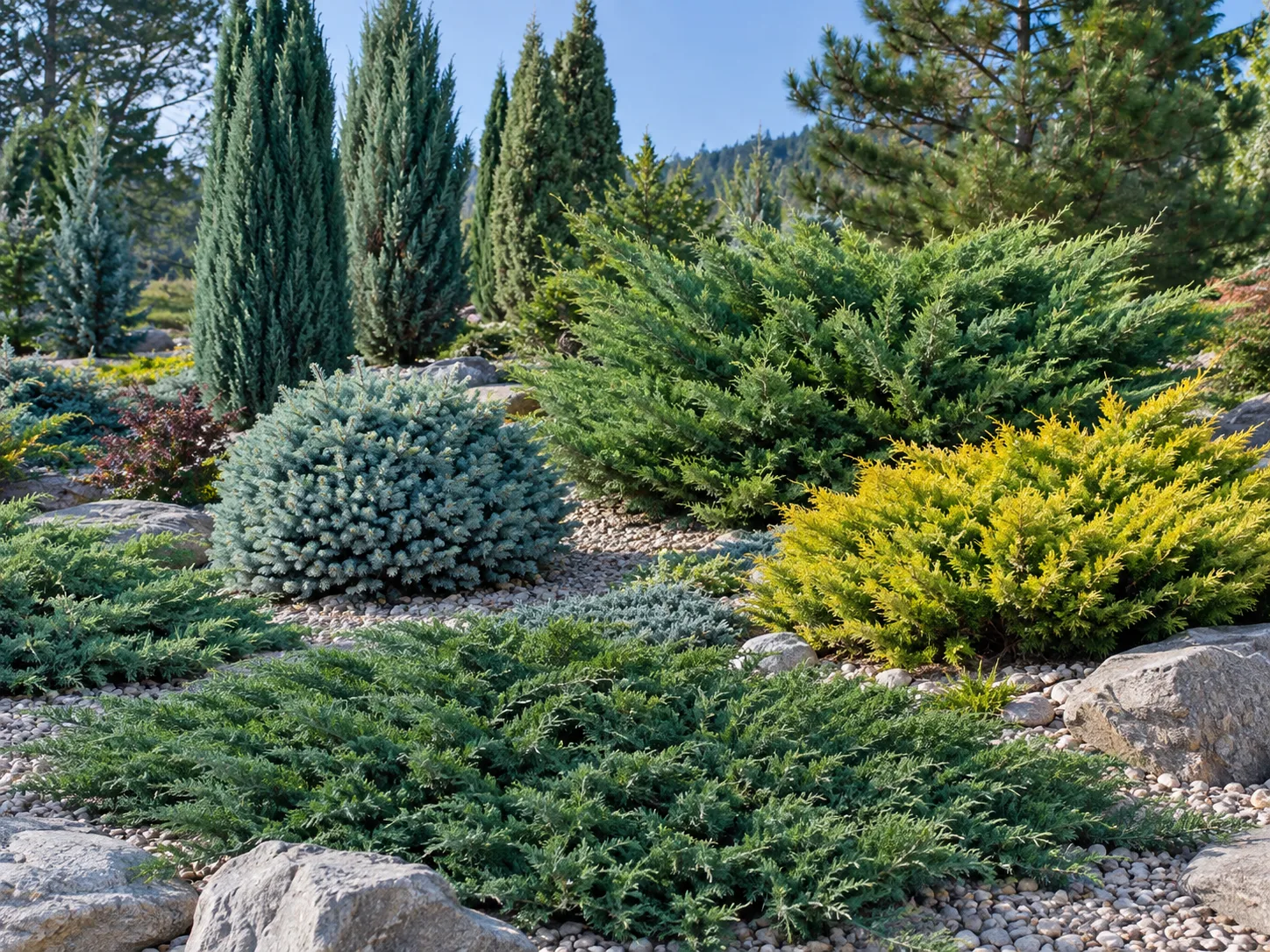
Blue foliage and narrow habit help distinguish ‘Skyrocket’ from broader or ground-hugging junipers.
Propagate the cultivar accurately
Seed can produce a Rocky Mountain juniper, but it will not reliably produce a plant identical to the named ‘Skyrocket’ cultivar. Seedlings inherit a mix of traits and may grow broader, greener, or less upright than the parent. If the exact shape and color matter, buy a correctly labeled plant or use vegetative propagation.
The RHS profile lists semi-hardwood cuttings as the propagation route. Take healthy current-season shoots from a plant that is known to be true to name, then root them under controlled, humid conditions while the medium remains airy rather than waterlogged. Rooting success and timing vary with the stock plant and cutting conditions, so expect a slower project than buying a nursery-grown specimen; do not mistake a fresh cutting that stays green for a rooted plant.
For most home gardeners, one or two trial cuttings are more practical than trying to create a full screen from cuttings. Keep new roots protected from drying, pot up only after the cutting resists a gentle tug, and grow it on until it can handle outdoor conditions. A purchased plant is the more dependable choice when you need consistent spacing, predictable cultivar identity, or privacy within a specific number of years.
Troubleshoot browning, dieback, and pests
When foliage turns brown, inspect where the damage begins before reaching for fertilizer or pesticide. Note whether browning affects one branch, the exposed side, the tips across the whole crown, or the whole plant; then check soil moisture within the original root ball, drainage after rain, recent pruning, storm injury, and nearby irrigation. A single symptom rarely identifies a single cause.
Separate water stress from twig blight
Uniform drying after a hot, windy period can point to a root ball that became too dry, especially during the first year. Conversely, brown tips after weeks of rain or frequent irrigation suggest that the roots or shoots are staying too wet; established roots in poorly drained soil may develop root rot. Brown foliage that does not recover is dead tissue, so correct the cause and remove dead branches only after confirming they are fully dead.
Wet spring weather can also favor twig blights. If only shoot tips die back while older foliage remains green, look for a boundary between healthy and affected tissue and prune a small affected shoot several inches below visible dieback into healthy growth. Disinfect tools between cuts and discard infected clippings rather than leaving them under the plant; if dieback advances through the crown, ask a local extension office to identify the disease before applying anything.
The fix for a soggy planting is not simply less water for one week if the site itself drains poorly. Redirect a downspout, repair a leaking irrigation line, pull back water-retaining mulch, or plan to replace a tree that is repeatedly declining in saturated ground. A well-drained replacement site is often more successful than years of trying to manage root rot symptoms.
Check for rust galls and insect activity
Brown rounded growths on twigs that produce bright orange, gelatinous projections during wet spring weather may be a rust fungus, not ordinary browning. Rocky Mountain juniper can be affected by cedar-apple rust and related rusts, but those diseases have different alternate hosts and management considerations; the NC State plant profile lists rust among the species’ potential diseases. If you see galls, photograph them and consult local extension guidance before pruning extensively or treating the tree.
Aphids, scale insects, mites, bagworms, or twig borers may occasionally appear, but do not treat on sight alone. Look for live insects, sticky residue, webbing, feeding damage, or small bags attached to branches, and identify the pest before choosing control. If only a few insects are present on an otherwise vigorous tree, monitoring or hand removal may be enough; a widespread decline can have a root or weather cause instead.
Conclusion
Plant ‘Skyrocket’ where its full height has room, the crown will receive sun, and rainwater can leave the root zone. Give new trees careful moisture checks as their roots establish, then reduce irrigation rather than keeping a drought-adapted juniper continuously wet.
Plan a screen from mature width and desired density, preserve the natural leader, and keep every pruning cut in green growth. If your summers are persistently humid or the soil stays saturated, choosing a better-adapted evergreen is the simplest and most reliable care decision.



