Squash Leaves Turning Yellow: 6 Causes and Fixes
Learn why squash leaves turn yellow, how to separate overwatering from drought, and what to do about mildew, viruses, squash bugs, and borers.
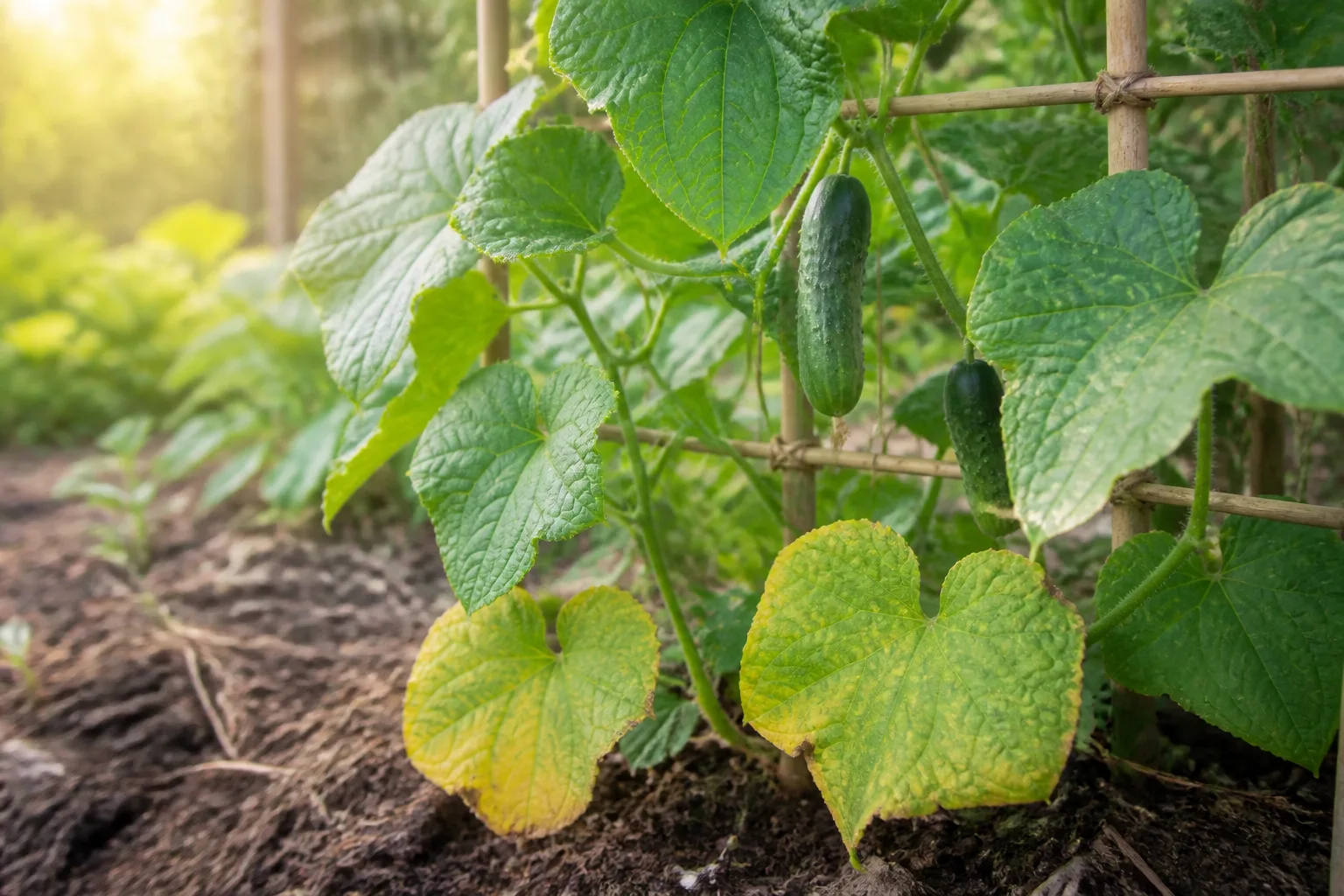
Yellow squash leaves are a stress signal, not a diagnosis. A plant can look pale because its roots are too dry, because wet soil has killed part of the root system, because nutrients are unavailable, or because an insect or disease is damaging the leaves faster than the plant can replace them.
Start with the pattern instead of reaching for fertilizer. Check the soil at root depth, look at the top and underside of a few leaves, inspect the main stem, and note whether the problem began after drought, heavy rain, a heat wave, or a burst of new growth. Those observations usually point to the right first fix.
Start With a Two-Minute Diagnosis
Walk around the whole plant before removing anything. Is the yellowing limited to the oldest leaves at the base, scattered across the canopy, or concentrated on new leaves? Are the leaves soft and limp, dry and crisp, mottled between the veins, or marked with distinct spots?
Then dig a finger or narrow trowel about 2 inches into the soil near the root zone. A dry surface is not proof that the roots are dry, and a wilted plant is not proof that it needs water. The Missouri Botanical Garden notes that waterlogged roots lose the oxygen they need, die back, and then stop supplying both water and nutrients—so overwatering can look like drought from above (Missouri Botanical Garden).
Use the Leaf Pattern and Root Zone Together
Use this quick read as a starting point, not a substitute for looking closely:
| What you see | Most likely direction | First check |
|---|---|---|
| Older leaves fade evenly, soil is dry, edges turn crisp | Underwatering or drought | Moisture 2–4 inches down and recent heat |
| Leaves are yellow and limp while soil stays wet | Overwatering, poor drainage, or root injury | Drainage, smell, and roots near the crown |
| New leaves are yellow while veins remain green | Nutrient availability or pH problem | Soil test, pH, and recent fertilizer history |
| Yellow spots have angular, brown, or gray centers | Foliar disease | Leaf undersides, wet weather, and airflow |
| Fine stippling, sticky residue, bugs, or webbing | Sap-feeding pest | Undersides of leaves and tender shoots |
| Yellow-and-green mosaic with curling or stunting | Viral disease | Insect pressure, distorted growth, and fruit symptoms |
Squash is a fast-growing, warm-season crop with a large leaf area and a relatively shallow active root zone. The University of Georgia recommends about 1 inch of water per week during production, while Oklahoma State notes that the crop needs supplemental irrigation during hot, dry weather and benefits from drip irrigation that keeps foliage dry (University of Georgia Cooperative Extension, Oklahoma State University Extension). Treat those numbers as a starting point; sandy beds, containers, wind, and extreme heat can change how quickly the root zone dries.
When Yellowing Is Normal
One or two lower leaves can turn yellow as the plant ages, especially after the canopy has become dense and those leaves receive little light. Older leaves may yellow, weaken, and drop without the rest of the plant being in trouble.
Natural aging is more likely when the yellowing is slow, limited to leaves close to the soil, and unaccompanied by wilting, spots, stunting, or a change in new growth. It is less likely when several leaves yellow in a week, the newest leaves are pale, or the plant is losing vigor while the soil stays wet or dry.
Do not strip every older leaf just to make the plant look green. Squash needs foliage to power fruit production, and unnecessary pruning creates wounds and exposes more tissue to splash-borne disease. Remove leaves that are completely dead, touching wet soil, or clearly diseased, but keep healthy green leaves in place.
Watering Swings and Root Stress
Watering is the most common place to start because squash needs steady moisture but cannot tolerate roots that remain saturated. A plant can also experience both problems in the same week: a heavy rain saturates compacted soil, then a hot, windy day dries the upper bed while damaged roots can no longer keep up.
Underwatering and Drought Stress
A thirsty squash plant usually wilts during the hottest part of the day, then may recover overnight. If the dry spell continues, leaves become limp, pale, and eventually crisp at the margins. Flower drop, small fruit, and blossom-end rot can appear because drought interrupts the steady movement of water and nutrients into developing fruit.
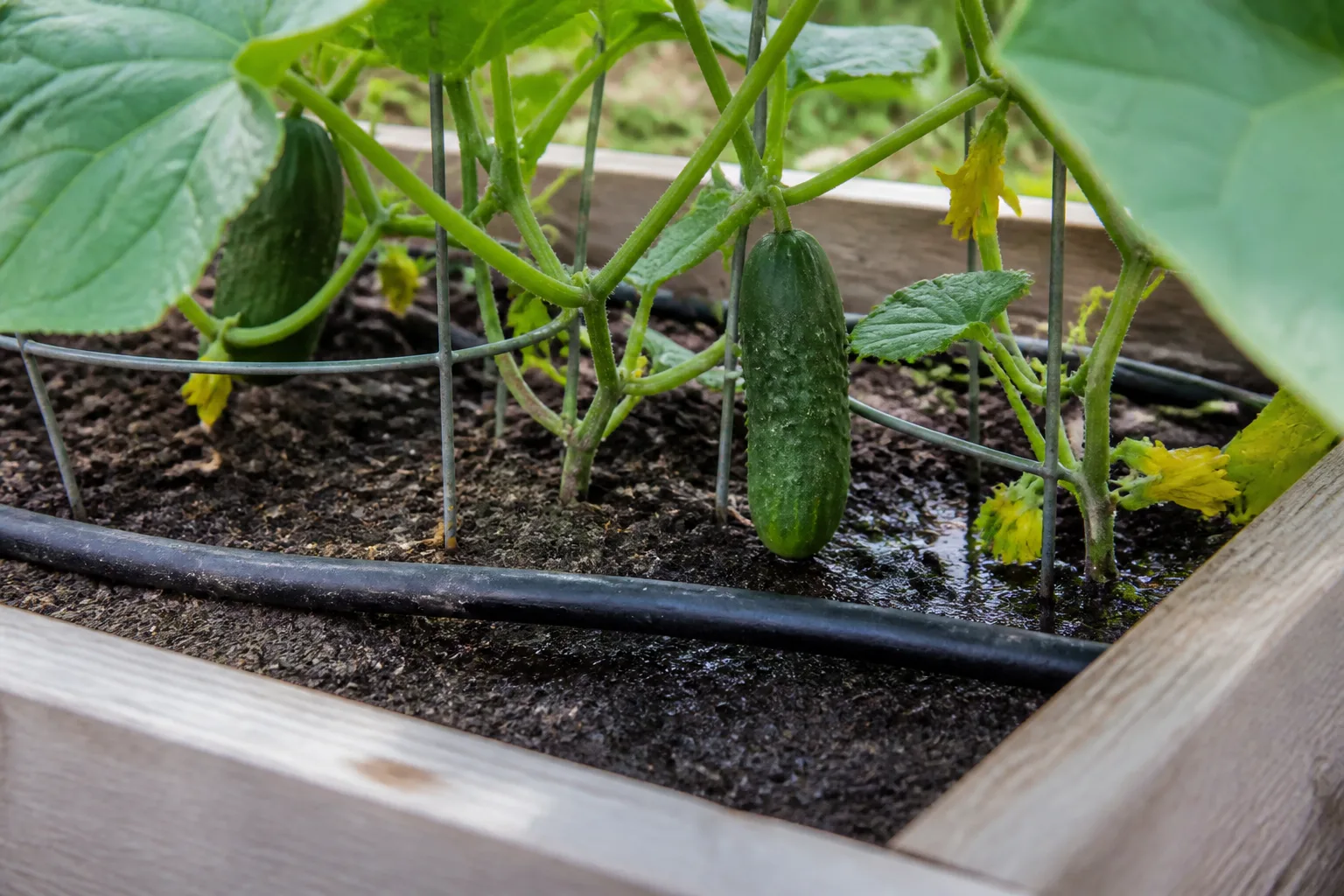
Check moisture below the mulch and below the surface crust. If the root zone is dry, water slowly at the base until the soil is wet several inches down; a brief sprinkle that only wets the top will encourage shallow roots. In a raised bed or sandy soil, split the weekly amount into more frequent applications. In a container, water until it drains from the bottom, then empty the saucer.
Mulch 2 to 3 inches deep around—not against—the stem to slow evaporation and reduce the temperature swings that stress roots. Do not use a rigid calendar if the weather has changed. Let the plant and soil tell you when to water.
Overwatering and Poor Drainage
Overwatered squash may have yellow, drooping leaves while the soil remains wet. Growth slows, new leaves can be smaller, and the crown or lower stem may turn dark or soft. A sour smell after digging is a serious clue that the root zone has stayed without enough oxygen for too long.
Stop adding water while the soil is saturated. Check whether a low spot, compacted clay, leaking hose, or blocked container hole is keeping the crown wet. If the plant is in a pot, move it out of standing water and confirm that drainage holes are open. For an in-ground plant, improving the bed or diverting runoff is more useful than simply changing the watering schedule.
Do not fertilize a waterlogged plant to “replace” nutrients. Damaged roots may not be able to absorb the fertilizer, and soluble salts can add another stress. Let the root zone drain, then judge recovery by new growth; a fully yellow leaf will not become healthy again.
Nutrient Deficiency or pH Lockout
Squash is a heavy-feeding crop, but yellow leaves do not automatically mean the plant needs more fertilizer. Nitrogen shortage tends to show as a general paling that begins on older leaves and is paired with slow growth. A high-pH or otherwise imbalanced soil can make iron or other nutrients unavailable, producing yellow tissue between green veins—often most visibly on new leaves.
The most useful next step is a soil test, especially if the crop is in the same bed every year or has received repeated applications of one fertilizer. Oklahoma State lists a preferred soil pH range of about 6.0 to 6.8 for squash and warns that excessive nitrogen can produce lush vegetative growth while delaying flowering and fruit set (Oklahoma State University Extension). The University of Georgia also recommends testing soil pH and fertility rather than guessing at a correction (University of Georgia Cooperative Extension).
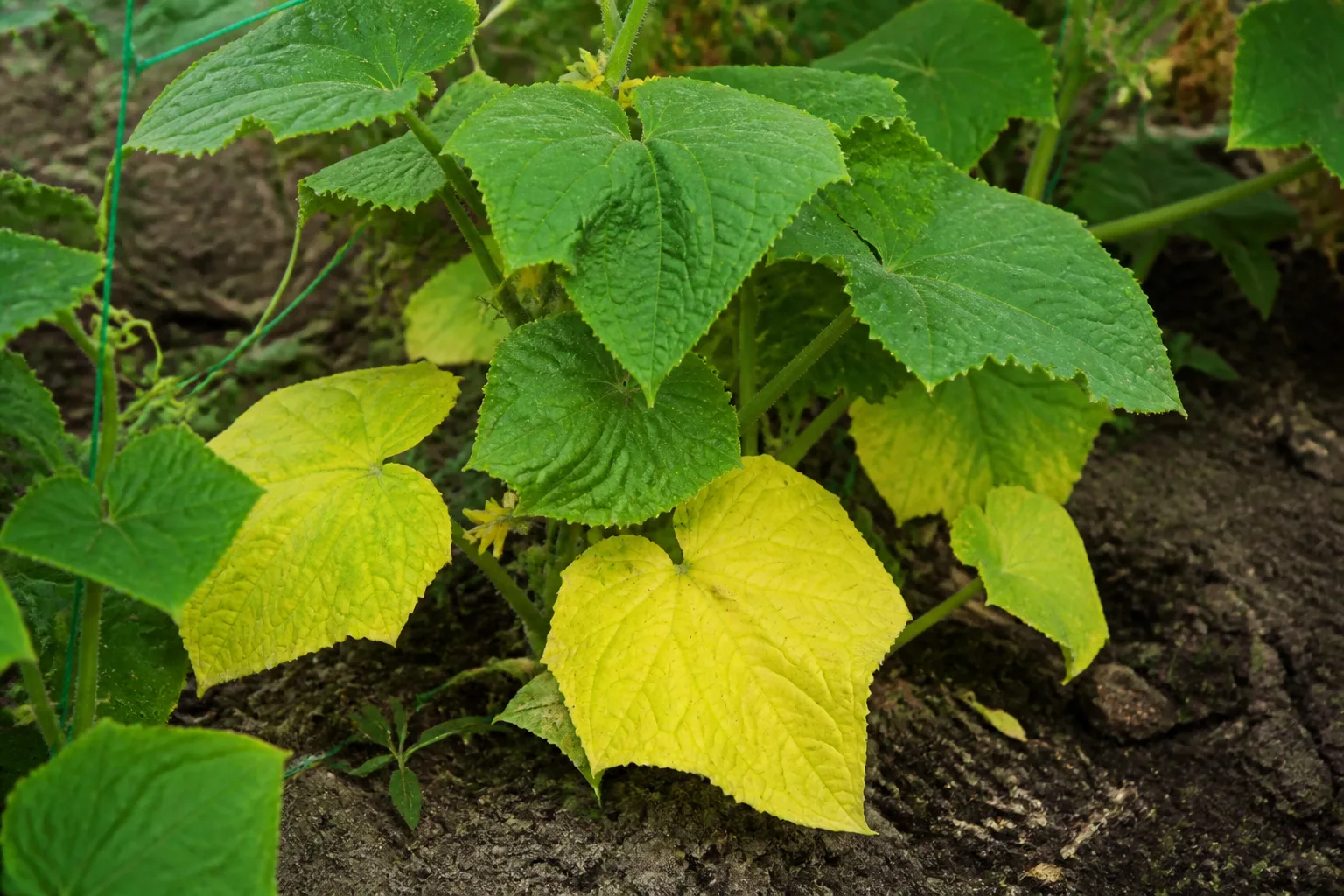
If a test confirms low nitrogen, use a fertilizer labeled for vegetables at the rate on the package and water it into the root zone. Do not double the dose because the leaves look dramatic. If pH is the problem, correct it gradually with a test-based amendment; adding random lime, sulfur, Epsom salt, or eggshells can move the soil farther from what squash needs.
Yellowing caused by a nutrient problem may improve only on new leaves after the root zone is corrected. Older leaves that have already lost chlorophyll generally stay yellow. If the plant is also wilted, waterlogged, or heavily infested, stabilize that more immediate stress before feeding.
Too Little Sun, Heat, or Crowding
Squash grows best in full sun, with enough room for air to move through its broad leaves. A shaded plant may be pale green, stretched, slow to flower, and less productive without showing a clear disease pattern. Nearby trees, a fence, or a crowded bed can shade the lower canopy and keep leaves wet after rain.
Heat creates a different pattern. Leaves may wilt at midday but recover in the evening; exposed margins can turn yellow-brown, and fruit may suffer sunscald if the plant has lost too much canopy. Do not move a large, vining squash in the middle of the season just to chase light—the roots and vines are easy to damage. Instead, remove nearby competition where practical, improve irrigation consistency, and preserve enough healthy foliage to shade developing fruit.
Space plants according to the variety rather than forcing a sprawling winter squash into a small bed. Oklahoma State advises raised beds where drainage is poor and emphasizes airflow and dry foliage as disease-prevention tools. A dense canopy is not automatically unhealthy, but leaves that stay wet and touch each other for hours create a better environment for foliar disease.
Fungal and Viral Diseases
Disease becomes more likely when yellowing is paired with spots, angular lesions, powdery growth, rapid spread after wet weather, or a distorted plant. The exact disease may vary by region and cultivar, so avoid treating every yellow spot as the same fungus.
Downy Mildew, Leaf Spots, and Powdery Mildew
Downy mildew often begins as small yellow areas on the upper surface, followed by brown or irregular lesions; gray growth may appear on the underside in moist conditions. Penn State’s PlantVillage describes downy mildew management around the same practical checks: avoid overcrowding, keep irrigation off the foliage, and reduce long periods of leaf wetness (PlantVillage by Penn State).
Alternaria, angular leaf spot, and other leaf diseases can also begin as yellow-brown or water-soaked spots that expand and merge. Powdery mildew is easier to recognize because it looks like white flour dust on the upper leaves and stems. Savvy Gardening’s practical squash guidance also emphasizes airflow, resistant varieties, and keeping leaves from staying wet as the season progresses (Savvy Gardening).
Remove leaves that are severely damaged and bag them rather than composting them if disease is suspected. Water at the soil line early in the day, improve spacing and airflow, and clean pruners between plants. If you use a fungicide, select one labeled for the crop and disease in your area, follow the label exactly, and protect bees by avoiding sprays when flowers are open and pollinators are active.
Mosaic Viruses and Yellow Stunting
Mosaic viruses produce a different look: irregular yellow-and-green mottling, vein banding, blistering, curling, smaller leaves, stunting, or malformed fruit. Aphids and cucumber beetles can spread some viruses, and PlantVillage lists several cucurbit viruses whose symptoms include mosaic patterns, chlorosis, distorted foliage, and poor fruit development.
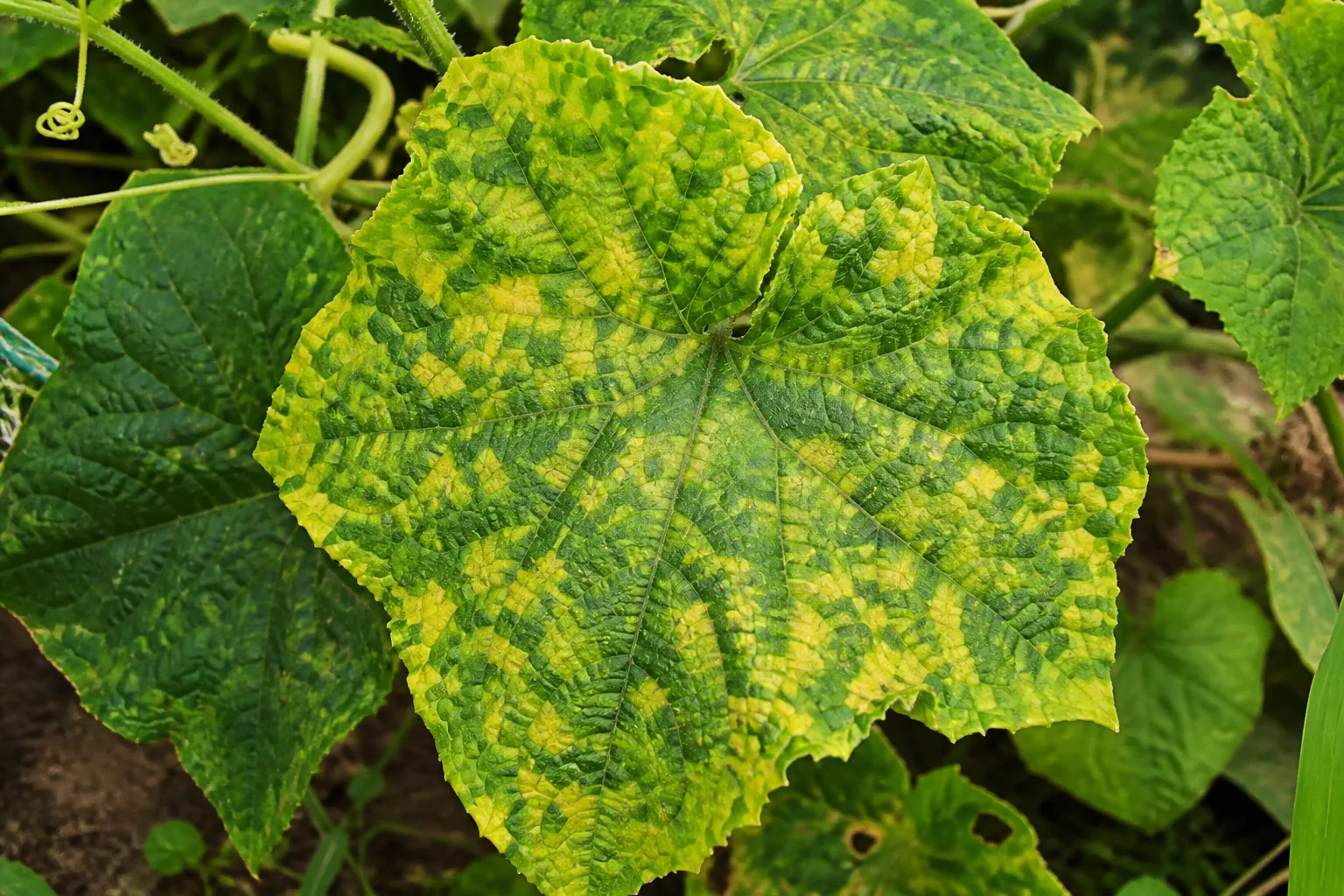
There is no spray that turns a virus-infected squash plant healthy again. Remove a severely affected plant, bag it, and discard it according to local guidance; do not save seed or use the debris as mulch. Wash tools after handling it and control weeds and volunteer cucurbits that can shelter insect vectors. If only one plant has a strong mosaic pattern while its neighbors are normal, removal can protect the rest of the bed.
Squash Bugs, Cucumber Beetles, Mites, and Borers
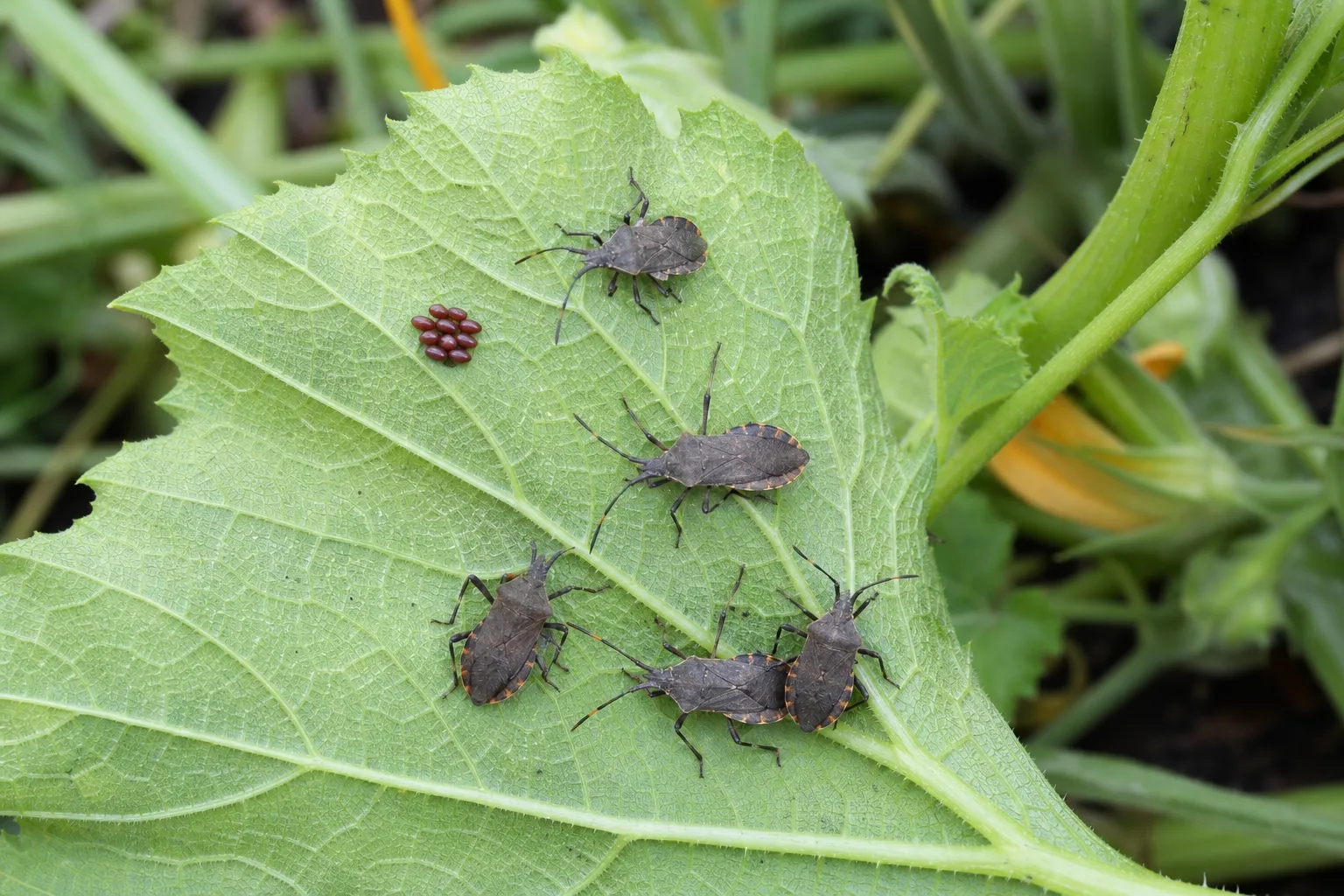
Insects often leave clues that a watering problem does not. Squash bugs are flat, gray-brown insects that cluster around stems and leaf undersides; their egg masses are commonly laid in groups. Aphids gather on tender growth and produce sticky honeydew, while spider mites cause fine yellow stippling and sometimes webbing in hot, dry weather.
Inspect the Undersides and Main Stem
Turn over several leaves rather than inspecting only the top. Look for aphids, egg masses, cast skins, webbing, and small beetles. A few insects do not always justify spraying; hand removal, a firm water stream directed at the undersides, row covers on young plants, and removing nearby weeds can reduce pressure while preserving beneficial insects.
Squash vine borer damage usually shows up as sudden wilt in one runner or one side of the plant, yellowing beyond the damaged section, or a small hole with sawdust-like frass at the stem base. The larva tunnels inside the stem, so spraying the leaf surface after it has entered is unlikely to solve the problem. The most useful defense is prevention: cover young plants with floating row cover before moths lay eggs, remove covers when flowers need pollination, and monitor the stem closely.
Cucumber beetles deserve attention because they chew foliage and can spread bacterial wilt. PlantVillage describes bacterial wilt as rapid, severe wilting and notes that cucumber beetles transmit it; if an entire plant collapses quickly despite adequate moisture, remove it rather than repeatedly watering or feeding it. Protect open flowers and pollinators whenever you manage insects, and follow the crop label if a pesticide is truly necessary.
What Yellow Leaves Reveal About Fruit Problems
Yellow foliage can be a warning about the harvest, but the fruit often tells you which warning you are seeing. Small fruit that turns yellow and shrivels may reflect poor pollination, drought, root damage, or a virus rather than a leaf-only disorder. A dark, leathery patch at the blossom end points toward blossom-end rot, a nutrient-uptake disorder associated with uneven water supply, root damage, salinity, or excess nitrogen—not simply a lack of calcium in the soil.
Too much nitrogen can create a giant green canopy with few female flowers, while drought or root injury can cause flowers and young fruit to abort. Epic Gardening’s summer squash guide also links poor fruit set to pollination and explains that common pests and diseases can appear alongside yellowing or wilt (Epic Gardening). If the leaves look healthy but fruit production is poor, inspect flowers and pollinator activity before applying more fertilizer.
The Recovery Sequence When Causes Overlap
When several leaves are yellow, resist the urge to make five changes at once. Use this order so you can tell which action helped:
- Check root-zone moisture and drainage. Correct genuinely dry soil with a deep soak; pause on genuinely wet soil and find the drainage problem.
- Inspect the underside of leaves and the main stem. Record pests, eggs, webbing, holes, frass, spots, and any soft area near the crown.
- Read the newest growth. Green veins on new leaves suggest a nutrient-availability issue; mosaic, distortion, or stunting suggests a virus; uniform older-leaf fading may be aging or nitrogen stress.
- Remove only tissue that is clearly dead or diseased. Keep useful green leaves, bag suspect disease material, and clean tools between plants.
- Make one targeted correction. Adjust water, improve airflow, use a test-backed fertilizer, or start pest prevention. Give the plant several days of stable conditions before adding another treatment.
Yellow leaves already present usually will not recover. Measure success by firm stems, stable or improving new growth, healthy flowers, and the absence of new spots—not by waiting for an old yellow leaf to turn green. If the entire plant wilts permanently, the crown is soft, a virus pattern is spreading, or the diagnosis remains unclear, remove the plant or send a sample to your county extension office before the problem moves through the bed.
Prevention for Greener Squash Foliage
Give squash the conditions that prevent several problems at once: full sun, well-drained soil rich in organic matter, steady moisture, and enough space for air movement. Use drip irrigation or a soaker hose where possible, and water early enough that any accidental splash dries before night. Keep mulch off the stem and remove diseased debris at the end of the season.
Rotate cucurbits away from the same bed when practical, especially if you have recurring soil-borne disease or heavy pest pressure. Start scouting when plants are young, inspect undersides weekly, and use row covers before squash vine borers and cucumber beetles build up. Remove covers when flowers open or hand-pollination is needed.
Do a soil test before making a major fertility or pH correction. Feed according to the result and the product label, not according to how alarming a single leaf looks. Finally, plant more than one succession if your season is long enough: squash naturally declines under late-season disease and insect pressure, and a healthy later planting can be more productive than trying to rescue a plant whose crown or vines are already failing.
Conclusion
Squash leaves turn yellow for six broad reasons: normal aging, uneven watering, nutrient or pH problems, light and heat stress, disease, and insect damage. The most reliable diagnosis comes from combining the leaf pattern with root-zone moisture, the underside of the leaf, the main stem, and the weather that preceded the change.
Start with the lowest-risk checks, correct one cause at a time, and judge recovery by new growth rather than old leaves. With full sun, drained soil, steady water, good airflow, and early scouting, yellow leaves become useful information—not the end of your squash harvest.



