Strawberry Plant Wilting: 5 Causes and Fixes
Strawberry plant wilting can mean dry roots, soggy soil, heat, disease, or pests. Learn the fastest checks and how to save the plant without overwatering.
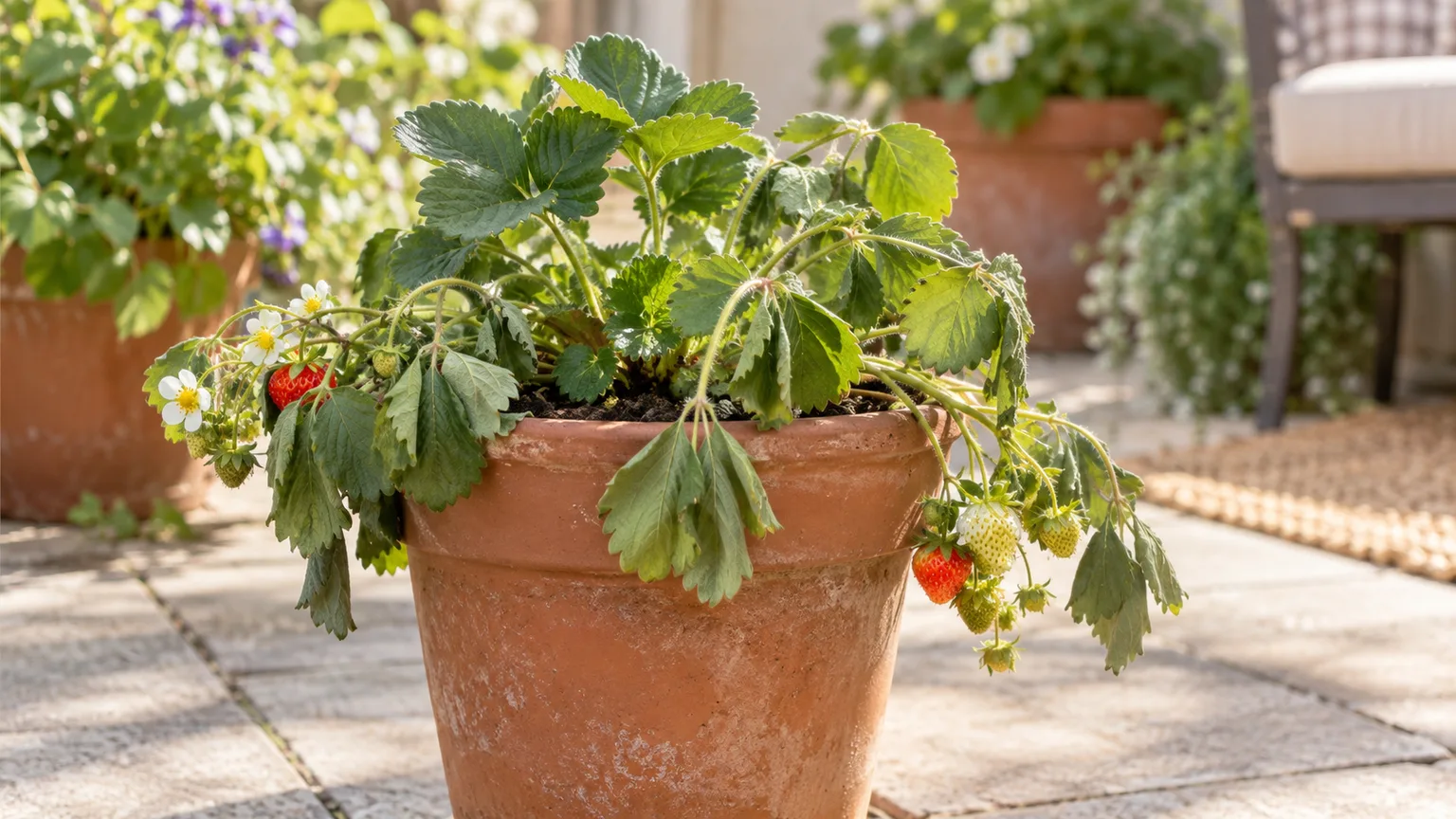
A wilted strawberry plant is asking for a diagnosis, not automatically another drink. Strawberry leaves droop when water leaves the foliage faster than the roots can replace it, but that can happen because the soil is bone dry, the soil is waterlogged, the day is unusually hot, roots are damaged, or a pest or disease is interrupting water transport. Adding water without checking the root zone is how a thirsty plant becomes a suffocating one.
The fastest way to save it is to work from the least invasive check to the most revealing one: note when the wilting happens, feel the soil several inches down, check the pot or bed for drainage, inspect the crown and growing point, and only then look for insects or disease. If the crown is firm and the center leaves are still emerging, the plant has a better chance of recovery than a plant with a soft, brown crown and collapsing roots.
Start With This 60-Second Wilting Check
Do this check in the morning or during the coolest part of the day. Midday leaves can look dramatic even when the plant is managing heat normally, so timing is useful evidence.
First, look at the whole plant. Are only a few older leaves limp, or are the newest leaves and flower stems collapsing too? A plant that droops in the afternoon and lifts again after sunset may be heat- or wind-stressed. A plant that is wilted at breakfast, stays wilted overnight, and worsens over several days needs a closer root or crown inspection.
Next, check the soil rather than the surface. Push a finger or a narrow stick 2 to 3 inches into the root zone. In a container, also lift the pot if you can: an unusually light pot suggests the mix is dry, while a heavy pot that stays wet for days suggests poor drainage. Do not rely on a calendar alone. Rainfall, temperature, pot size, mulch, and the plant’s growth stage all change how quickly a strawberry bed dries.
| What you notice | First interpretation | Best first action |
|---|---|---|
| Dry soil several inches down; pot feels light | Underwatering or rapid water loss | Water the root zone slowly and deeply |
| Wet soil, sour smell, standing water, or blocked holes | Oxygen-starved roots or root rot risk | Stop watering and correct drainage |
| Droop appears in hot afternoon and eases when cool | Temporary heat or wind stress | Shade the plant during the worst heat and reassess |
| Wilt persists all day; center growth is weak | Root, crown, vascular, or severe pest problem | Inspect the crown and roots; do not keep guessing |
| Leaves have stippling, webbing, spots, or chewed edges | Pest or foliage disease | Inspect leaf undersides and identify the cause before treating |
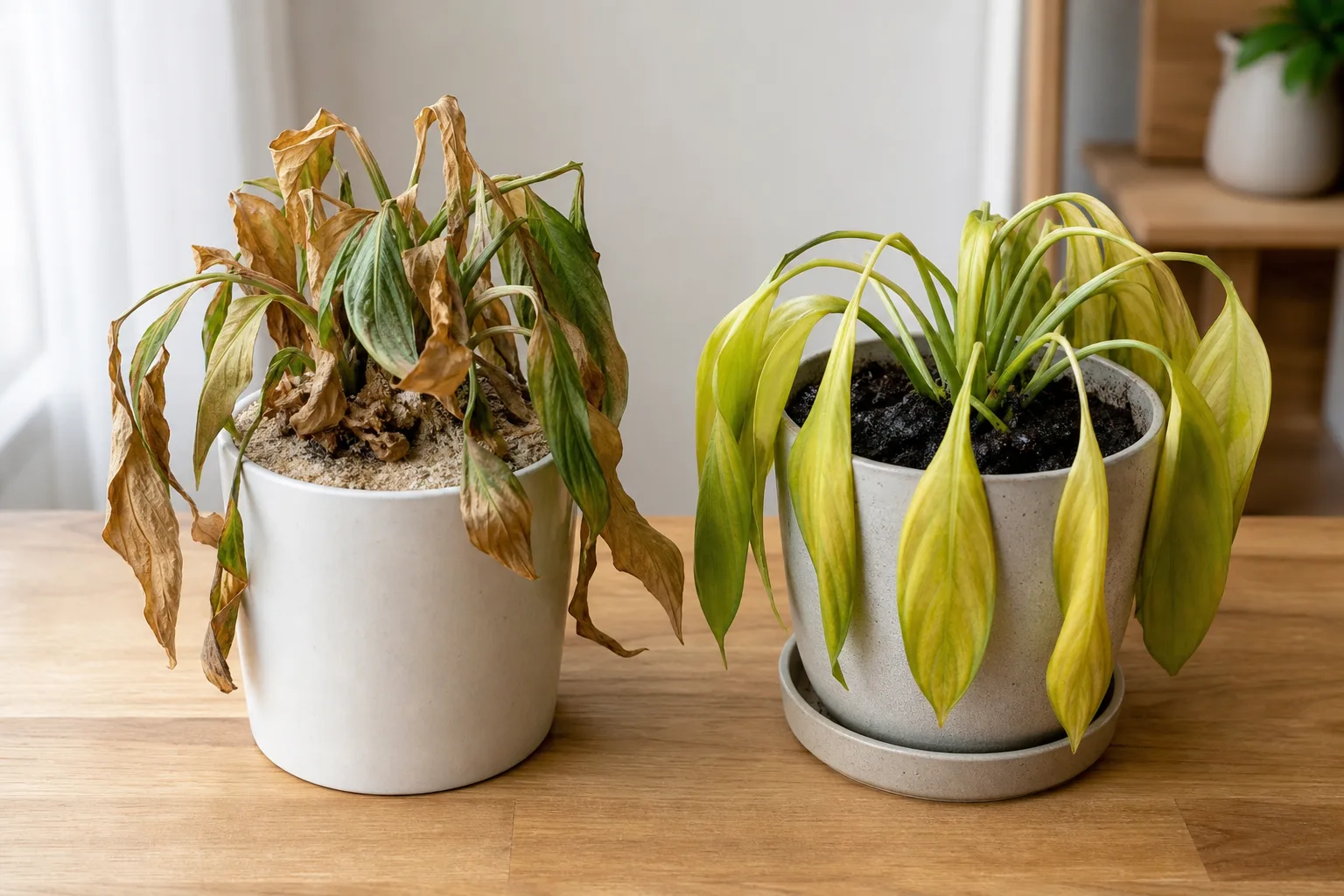
Strawberries have a shallow root system, so the top few inches matter. At the same time, a shallow root system does not mean the plant should sit in a permanently wet saucer or puddle. Penn State Extension’s strawberry growing guide explains the plant’s crown-and-root structure and why consistent, optimal soil moisture matters.
Use soil moisture and timing together
A dry soil reading is a reason to water; a wilted leaf by itself is not. If the root zone is dry, apply water slowly at the base until the soil is evenly moist. In a container, keep going until a little water exits the drainage holes, then empty any saucer so the roots do not remain submerged. In a bed, water deeply enough to moisten the root zone rather than wetting only the top dusting.
A common starting benchmark for fruiting strawberries is about 1 inch of water per week from rain plus irrigation, but treat that as a planning estimate, not a prescription. Sandy beds, raised beds, small pots, hot weather, and fruit production can require more frequent checks. Heavy clay or a compacted container can remain wet after a storm while the plant still wilts because damaged roots cannot take up water.
If the soil is already moist, wait before watering again. Move a container out of reflected heat, open a blocked drainage hole, or pull back mulch that is pressed against the crown. Check the plant again after the air cools. The practical heat-wilt guidance from Growing in the Garden also recommends checking below the surface and watering early rather than reacting to every midday droop.
Look at the crown, roots, and growing point
The crown is the short, thickened stem between the roots and leaf stalks. It should sit at the soil line: not buried deeply and not suspended above dry soil. The central growing point should feel firm, and the newest leaves should be green or actively unfolding. Old outer leaves can be sacrificed during stress; a firm crown with healthy center growth is a good recovery sign.
Gently brush soil away from one side of an in-ground plant, or slide a container plant out without pulling the foliage. Healthy roots are generally light-colored and firm. Brown, soft, hollow, or badly reduced roots point to a root-zone problem. Do not rip apart an entire bed on the first check. Inspect one representative plant, photograph what you see, and compare it with the surrounding plants.
The University of Minnesota Extension’s strawberry diagnostic guide notes that several unrelated problems can produce stunting, wilting, and collapse. That is why the crown, roots, soil history, and symptom pattern are more useful together than any single drooping leaf.
Cause 1: The Root Zone Is Too Dry
Underwatering is the simplest cause of strawberry plant wilting and the one most likely to improve quickly. Strawberries lose water rapidly through their leaves on hot, dry, windy days, while shallow roots have a limited reserve. Plants in small hanging baskets, dark nursery pots, raised beds, or newly filled containers can dry out before a nearby in-ground plant does.
Other clues include dry mix pulling away from the sides of a pot, a light container, crispy leaf edges, limp flower stems, and leaves that improve after thorough watering. If the plant is fruiting, berries may stay small or shrivel because the plant prioritizes survival over filling fruit.
How to rehydrate without shocking the plant
Water at the base in two passes. Apply enough to dampen the surface, wait a few minutes for the mix to accept it, then water again until the root zone is evenly moist. A single fast pour can run down a gap beside a dry root ball and leave the center dry. If water immediately races out of a container, check whether the mix has become hydrophobic or whether roots have filled the pot.
For a bed, use a soaker hose or drip line when possible. Overhead sprinkling wets leaves and fruit, can splash soil onto foliage, and often gives a shallow drink. Water in the morning so leaves and the surface have time to dry. Mulch can slow evaporation, but leave a small open ring around the crown and do not bury the growing point.
Do not compensate for one dry day with constant watering for the next week. Recheck the soil each morning and adjust to the weather. A thirsty plant can still develop root problems if its container has no usable drainage or if the next several irrigations happen before the soil has absorbed and partially dried.
Cause 2: The Soil Is Too Wet or the Roots Are Failing
Wet soil can cause the same limp appearance as drought. Roots need oxygen as well as water. When a pot stays saturated or a bed collects runoff, roots become less effective at taking up water and nutrients. Over time, water molds and fungi can damage the roots or crown, so the leaves wilt even though the soil feels damp.
Look for standing water, a blocked or missing drainage hole, a saucer that never empties, a sour smell, algae on the surface, slow growth, yellowing, and a plant that remains wilted after cool nights. A low spot, compacted clay, excessive mulch, or repeated strawberry planting can make the problem more likely. University of Wisconsin–Madison Horticulture describes the common pattern: damaged roots and crowns can produce slow growth, stunting, and wilting above ground.
Inspect the roots before you repot
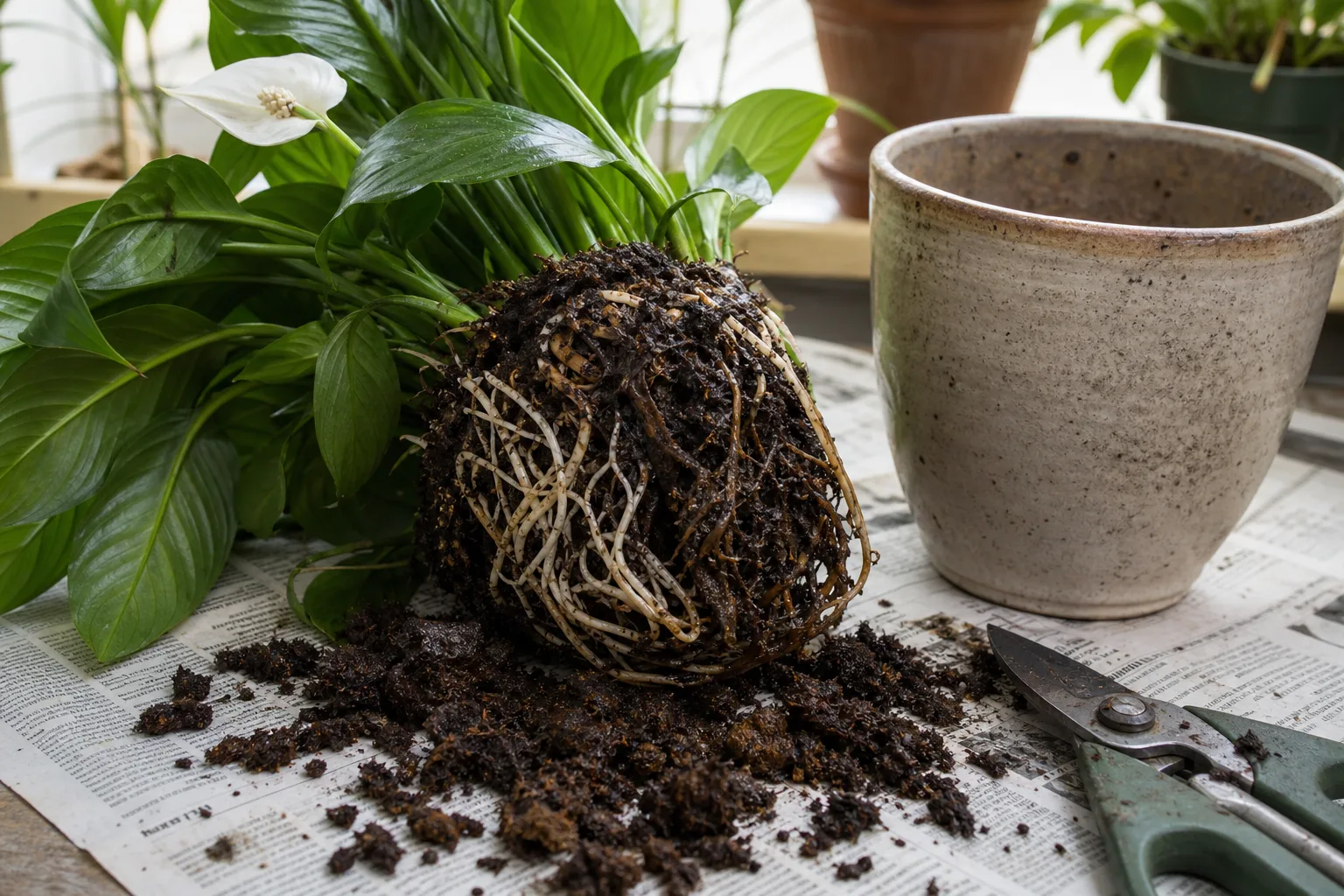
For a container plant, remove it from the pot and examine the outer root ball. Healthy roots hold their shape. Rotten roots are often brown and soft, and the plant may have very few fine feeder roots. Do not automatically repot every wilted strawberry plant: disturbing dry but healthy roots during heat stress can add another shock.
If only a small section is damaged and the crown is firm, trim away clearly rotten tissue with a clean tool, move the plant into a clean pot with an open drainage hole, and use fresh, airy mix. Do not place the recovering plant into a much larger pot, where extra wet mix can prolong the problem. Hold fertilizer until new growth appears.
For an in-ground plant, lifting one plant can confirm the problem, but repotting is not the real fix. Improve the site by redirecting runoff, raising the bed, opening compacted soil with appropriate organic matter, or moving future strawberries to a well-drained location. Adding a little sand to heavy clay rarely solves compaction and can make the texture worse. Never cover the crown with soil while trying to stabilize the plant.
If the crown is soft, brown, or easily pulled apart, recovery is unlikely. Do not move soil, runners, or tools from a suspicious plant to a healthy bed without cleaning them. Root and crown pathogens can persist in soil, and symptoms alone cannot always identify which organism is responsible. The safest response is to isolate the problem, remove badly affected material, and ask a local extension office or plant clinic for a diagnosis before applying a product.
Cause 3: Heat, Wind, Cold, or Transplant Shock
Heat and wind can create temporary water imbalance even when the soil is moist. Leaves lose water faster in hot, dry air, and a container sitting on concrete or beside a heat-reflecting wall can become much hotter than the surrounding garden. New transplants can also wilt because their roots have not yet re-established contact with the surrounding soil.
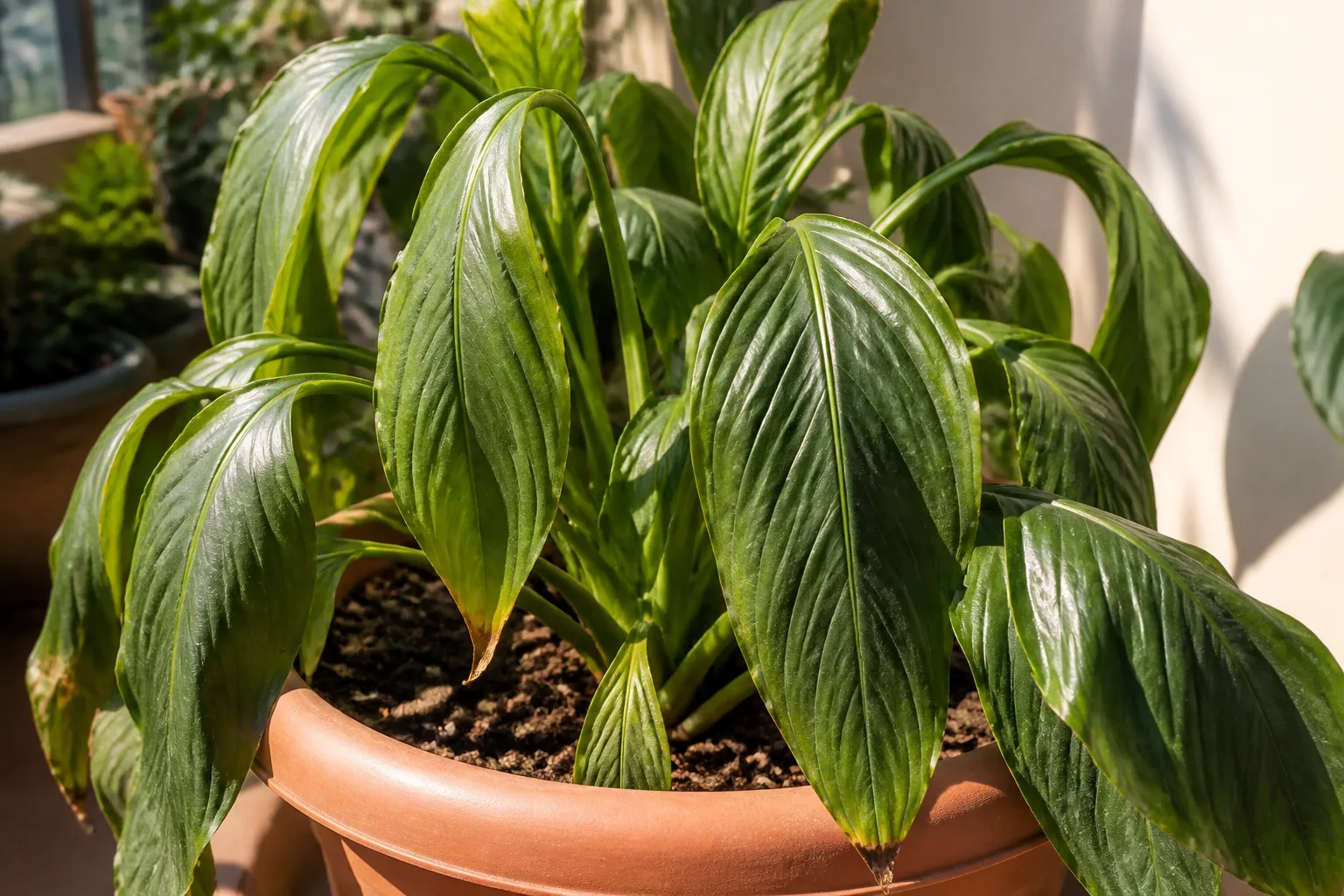
Cold creates a different pattern. Chilled plants may droop or discolor, and winter injury can damage crowns and petioles without being a contagious disease. Do not water frozen soil in an attempt to perk up a plant. Protect the crown according to your region’s strawberry recommendations and wait for active growth before judging the final damage.
Separate temporary afternoon droop from lasting damage
Check a wilted plant at three times: early morning, the hottest part of the afternoon, and the following morning. If the leaves are firm in the morning, droop during heat, and lift again after cooling, the plant may be regulating water loss rather than failing. Give afternoon shade during a heat wave, move a container to a cooler bright location, group pots to reduce wind, and keep the root zone evenly moist.
If the plant is still limp the next morning, inspect the soil and crown instead of assuming more shade will solve it. A transplant may need close attention for the first several days: water when the root zone begins to dry, shield it from harsh afternoon sun and wind, and remove flowers or damaged fruit only when the plant cannot support them. Avoid fertilizer while the roots are settling. Heat-stress guidance from Gardening Know How similarly emphasizes morning watering, checking soil before irrigating, temporary protection, mulch, and patience while new growth forms.
Cause 4: Crown, Root, or Vascular Disease
Disease moves higher on the list when wilting is progressive, lasts all day, affects one plant more severely than its neighbors, or appears in a bed with poor drainage or a history of strawberries. A plant can have plenty of water around its roots and still wilt when a damaged crown or vascular system interrupts transport.
Several diseases overlap above ground. Verticillium wilt may begin with older outer leaves drooping, yellowing, browning, or developing reddish margins while the plant becomes stunted. Phytophthora problems are associated with wet sites and can produce wilt, collapse, a discolored crown, or a darkened center in a cut root. Red stele can affect roots in cool, wet soil, with a red or dark core visible when a root is cut lengthwise. Anthracnose crown rot can show red-and-white marbling inside the crown along with sudden wilt or collapse. These are clues, not a home test.
Read disease clues and know when to test
To inspect a crown, choose one symptomatic plant, clean a knife, and cut the crown lengthwise. Work carefully and avoid spreading soil from the suspect plant. Look for a firm, pale interior versus soft decay, streaking, or red-brown discoloration. Inspect roots for missing fine hairs, soft tissue, or the characteristic rat-tail appearance described for some strawberry root diseases.
Do not diagnose a pathogen from a single color. Penn State Extension’s strawberry disease identification guide explains that whole-plant collapse can result from root rot, crown rot, or vascular wilt, often without a visible sign of the pathogen. If the plant matters or several plants are affected, submit a sample to a plant clinic or contact your extension service. A lab diagnosis is more useful than cycling through fungicides.
For a severely collapsed plant, remove it with surrounding soil if practical, bag it, and dispose of it according to local guidance. Do not compost suspicious crowns or leave infected debris beside the bed. Clean tools between plants, avoid reusing contaminated potting mix, keep irrigation from splashing soil into neighboring crowns, and improve drainage. For Neopestalotiopsis-like symptoms, Ohio State University Extension emphasizes sanitation, removal of infected tissue, reducing splash, and following current local product labels rather than assuming one universal treatment.
The best disease prevention starts before symptoms: buy healthy plants, keep crowns at the soil line, avoid chronically wet sites, rotate beds when possible, and do not plant strawberries immediately after crops that share certain soilborne disease risks. The Southern Region Small Fruit Consortium notes that soilborne wilt and root-rot symptoms can be difficult to connect to one pathogen and become more challenging after repeated years in the same soil.
Cause 5: Pests, Leaf Disease, or Salt Stress
Not every wilted strawberry plant has a root disease. Pests can reduce the plant’s ability to replace water, and damaged leaves can lose water unevenly. Check both sides of the leaves, the crown, runners, and the soil surface before spraying.
Spider mites can cause fine pale stippling, bronzing, and sometimes webbing, especially during hot, dry weather. White grubs are C-shaped, pale larvae with brown heads that feed on roots; they are more likely where strawberries follow a lawn or grassy planting. Chewed crowns, severed roots, or a plant that pulls up easily point to a different pest pattern than a leaf disease. Remove one plant carefully and inspect the root zone rather than treating a whole bed on a guess.
Leaf spot diseases can create small purple, tan, or brown lesions that expand or develop pale centers. Powdery mildew can produce white growth, distorted leaves, or upward leaf curling. These problems may weaken a plant but do not always explain a whole plant that is suddenly limp. If only a few old leaves are spotted while the crown and new growth are healthy, remove the worst leaves, improve airflow, and keep irrigation at the soil.
Salt buildup from fertilizer, hard irrigation water, or repeated feeding can burn leaf edges and damage roots. A white crust on the soil or pot rim supports that possibility, but it is not proof. Stop fertilizer, test the soil and water if the issue repeats, and do not flush a container that has poor drainage. More fertilizer is not a rescue treatment for a wilted plant; it adds salt while roots are already stressed.
The most useful rule is to identify the pest or disease before choosing a control. Product registrations, harvest intervals, and safe application methods vary by crop and location. Follow the label and local extension advice, especially for anything applied to edible fruit.
A Seven-Day Recovery Plan for a Wilting Strawberry Plant
Once you have a likely cause, make one or two targeted changes and give the plant time to respond. Changing watering, repotting, fertilizing, spraying, and moving the plant all at once makes it difficult to tell what helped and can add stress.
What to do in the first 24 hours
- Photograph the plant and mark its location. Record whether it was wilted morning, afternoon, or both, and whether nearby plants show the same pattern.
- Check the soil below the surface. Water slowly only if it is dry. If it is saturated, pause irrigation and correct the drainage or standing-water problem.
- Reduce environmental load. Give a heat-stressed container afternoon shade and wind protection. Do not place it in deep darkness, which slows recovery.
- Check the crown and center leaves. Keep the crown at soil level and clear mulch or mud away from it. A firm crown deserves time; a mushy crown needs removal and diagnosis.
- Remove only clearly dead or diseased tissue. Use clean snips and discard suspicious material. Leave green leaves that are still contributing energy.
- Skip fertilizer and routine pesticide sprays. Wait until you have identified a nutrient or pest problem and the plant is stable.
What improvement should look like
Over the next two days, a drought-stressed plant should stop worsening after the root zone is rehydrated. Heat-stressed leaves may lift during the next cool period. A plant recovering from transplant shock may remain a little limp while new roots form. Do not expect a leaf with a crispy edge or a collapsed petiole to become perfect again; judge recovery by the crown and new growth.
By days three through seven, look for a firm center, less daily spread of wilt, unfolding leaves, and a return of normal flower or runner growth. If soil moisture is appropriate but the plant continues to decline, lift a container plant or inspect one in-ground plant’s crown and roots. If several plants decline together, think site, irrigation, weather, or a shared pathogen rather than five separate watering mistakes.
If the plant is stable but not pretty, leave it in place. Strawberries can replace damaged leaves when the crown and roots survive. Keep the routine boring: morning checks, targeted irrigation, protection from extreme heat, and no repeated rescue products without a diagnosis.
How to Prevent Strawberry Plants From Wilting Again
Prevention is mostly about giving shallow roots a consistent, breathable root zone. Choose a sunny site with good drainage, but adapt exposure to your climate. Strawberries commonly need several hours of sun for fruiting; in a very hot climate, protection from the harshest late-afternoon heat can prevent repeated leaf wilt.
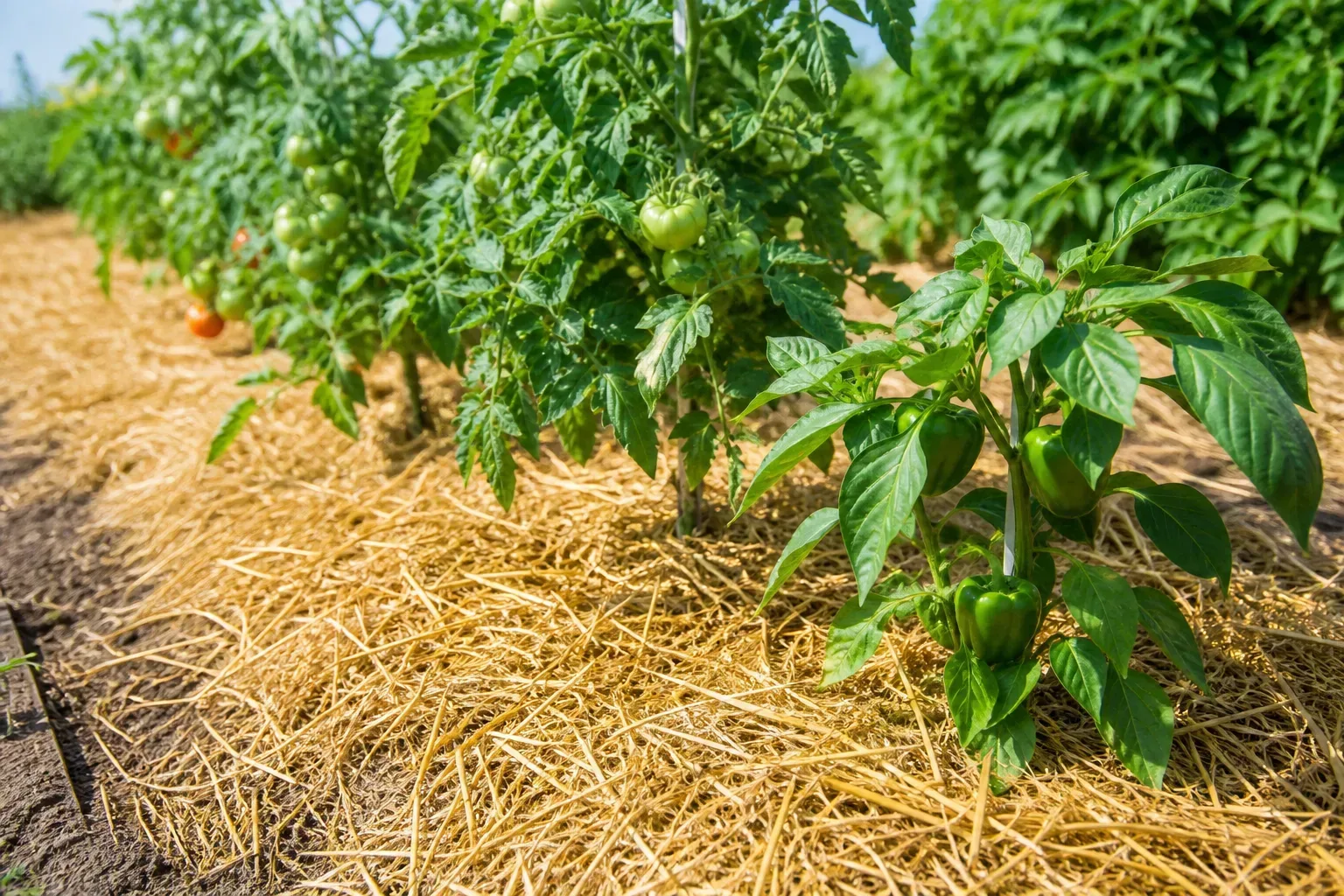
Plant the crown exactly at the soil line. A buried crown stays damp and can rot; a crown sitting too high dries out and exposes roots. Space plants so leaves dry and air moves through the row. Use drip irrigation or a soaker hose, check moisture below the surface, and water in the morning. A clean straw mulch layer can reduce evaporation and keep fruit off wet soil, but keep it loose around the crown and growing point rather than packed against them.
Rotate planting areas when you can, especially if the same bed has had repeated wilt, crown rot, or root decline. Remove old diseased debris, clean tools between suspicious plants, and avoid moving soil from a problem area into a new container or raised bed. Start with reputable, healthy stock and choose cultivars with resistance that matches diseases known in your region.
Build a bed or container that drains and holds moisture
For containers, use a pot with a real drainage hole and enough volume that the root ball does not dry within hours. Set it where runoff can escape, not inside a permanently full cachepot. A loose, moisture-retentive mix is better than either dense garden soil or an extremely coarse mix that dries immediately.
For beds, correct low spots and compaction before planting. Incorporate mature organic matter where appropriate, raise the planting area if water collects, and keep irrigation lines from flooding the crown. Mulch helps moderate swings between dry and wet, but it cannot compensate for a blocked drainage path. If you must choose between adding another treatment and fixing a puddling bed, fix the bed first.
When to Remove a Plant and Replant
Save a plant when the crown is firm, some roots are healthy, and the center is still growing—even if outer leaves are damaged. Remove it when the crown is soft or extensively discolored, most roots are gone or rotten, the plant collapses progressively despite correct moisture, or a plant clinic confirms a serious soilborne problem.
Bag and discard a plant that may carry a crown or root pathogen rather than composting it. Clean tools and footwear that contacted suspicious soil, and do not use runners from the affected plant as replacement stock. If the bed has a disease history, improve drainage and rotate before replanting; otherwise, the next plant may fail for the same reason.
When replacing it, choose healthy plants from a reliable source and match the cultivar to your region. Set the new crown at soil level, water the root zone, and protect it from immediate heat and wind. Replacement is not a failure when the original plant has a damaged crown: it is often the step that stops one sick plant from becoming a bed-wide problem.
Conclusion
Strawberry plant wilting has five broad explanations: a dry root zone, saturated or failing roots, heat, wind, cold or transplant stress, crown or vascular disease, and pests, leaf disease, or salt stress. Start with timing and soil moisture, then inspect drainage, the crown, roots, and leaves. Water only when the root zone needs it, protect a heat-stressed plant, and avoid fertilizer or random sprays while the cause is unclear.
A firm crown and emerging center leaves are reasons to give a plant time. A soft, discolored crown, mostly rotten roots, or progressive all-day collapse is a reason to remove it and protect the rest of the bed. That simple triage keeps a quick watering correction from turning into a root problem—and helps you spend your effort on plants that can actually recover.