How to Grow Sweet Autumn Clematis: Care and Control
Sweet autumn clematis grows fast and flowers on new wood, but its seeds travel. Learn how to identify, manage, prune, or remove this vigorous vine safely.
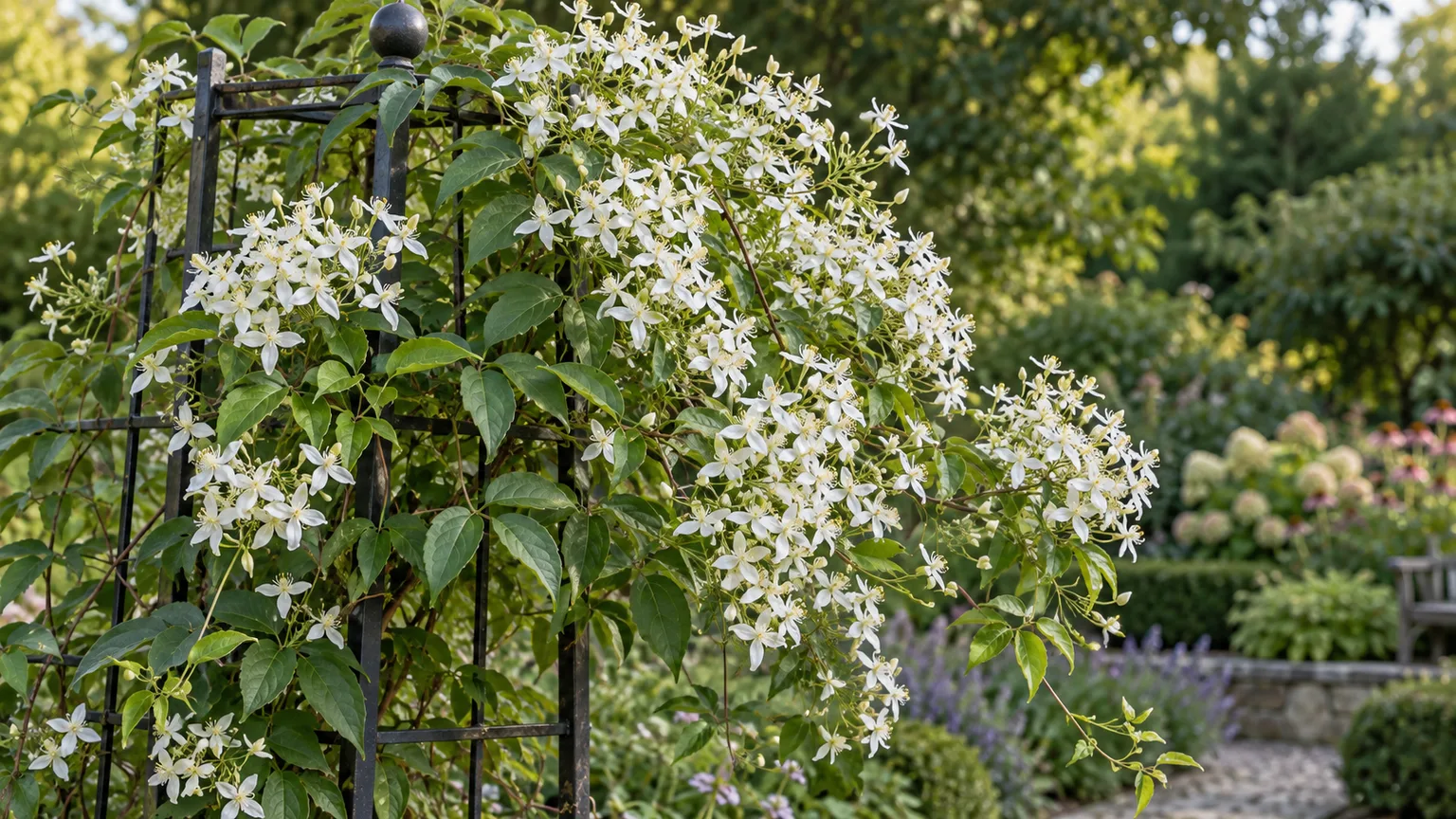
Sweet autumn clematis (Clematis terniflora) earns its name with a froth of small, fragrant white flowers near the end of summer. It also grows vigorously, can spread by wind-carried seed and vegetative growth, and is considered invasive in many parts of the eastern United States. North Carolina State Extension goes further and advises against planting it in any garden. Before planning a trellis or buying a vine, check your local invasive-plant guidance and consider a native alternative. North Carolina State Extension’s plant profile and Clemson Extension’s invasive-plant guidance explain why its ornamental appeal comes with a real containment cost.
If a mature plant is already on your property, practical care means managing or removing it—not giving it room to seed and climb into nearby vegetation. Where local guidance supports keeping an existing vine, plan on frequent inspection, early removal of every spent flower cluster, sturdy support, and pulling seedlings before they root deeply. A late-winter haircut can control a tangle, but it is too late to prevent seed dispersal if feathery seed heads have already formed.
First, Decide Whether to Keep or Plant It
The decision is regional, but the safest default is not to plant C. terniflora. The vine is native to parts of East Asia; it has naturalized in many areas of the United States, particularly the East and Midwest. It can cover forest edges, roadsides, stream margins, and other disturbed sites with dense growth that shades underlying plants. UF/IFAS classifies it as a high invasion risk in Florida, while state assessments elsewhere differ. That variation is why a nursery tag or a hardiness-zone rating is not enough: check the current list from your state extension, native-plant society, or invasive-species council before buying or relocating it. UF/IFAS’s assessment is one example of a regional status tool.
There is a legitimate horticultural reason people keep it: a young vine can cover a fence or an unsightly structure quickly. Garden writer Jacki Kellum documented using one as a privacy screen, while also warning that it can get out of control. That is an individual garden example, not a recommendation for general planting. The same speed that fills a screen means ongoing seed removal, seedling patrols, and the possibility of the vine escaping beyond the fence. GRO Big Red’s horticulture team also emphasizes that an attractive ornamental can still be an ecological problem.
Identify the Vine Before Pruning
Common names are unreliable. “Sweet autumn clematis,” “Japanese clematis,” and “sweet autumn virginsbower” usually refer to C. terniflora, but related species may be labeled with similar names. Confirm the botanical name on the tag or get an extension office to identify a plant before removing it; native clematis species can look similar and should not be destroyed by mistake.
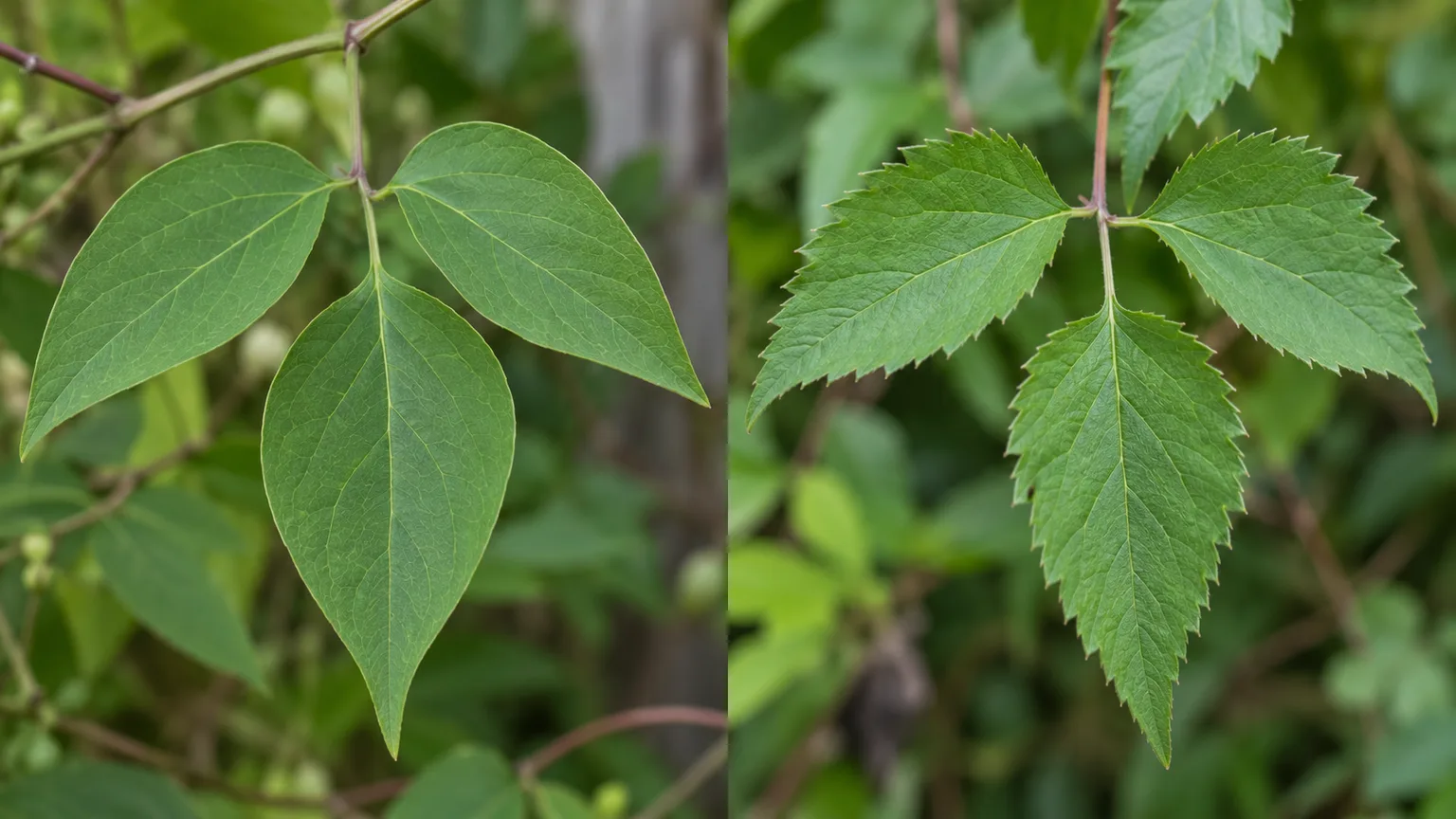
A useful clue is the leaflet edge. Mature C. terniflora leaflets are generally smooth-edged, while native Clematis virginiana usually has toothed or serrated leaflet margins. Clemson Extension illustrates that distinction, but it is not a perfect test: NC State notes that C. terniflora leaflets can be toothed on young plants and entire, or smooth-edged, as they mature. Use several clues together—leaflet shape and margins, flower and seed-head form, growth habit, and location—and do not rely on a photo app or one leaf alone.
What It Looks Like Through the Seasons
This is a woody perennial vine in the buttercup family, not a shrub that stays within a neat outline. It climbs by wrapping leaf stalks around nearby support; it does not produce adhesive pads like ivy. With a trellis, fence, or neighboring shrub to climb, it can reach roughly 15 to 30 feet and spread broadly. Individual gardens vary with climate, light, water, and the structure available, but “fast-growing” should be read as a management warning, not a low-maintenance advantage. NC State describes the species as rapid-growing and spreading by seed, layering, and runners.
The small four-sepal flowers are typically white and fragrant, opening in branching clusters in late summer into fall; timing shifts by climate and exposure. After flowers fade, the vine develops conspicuous silky, feathery seed clusters. Those plumes are attractive in a winter garden, but they are a sign that seed dispersal is imminent. If you are containing an existing plant, the useful point to act is when petals fade and before the seed head dries and releases its achenes.
Choose a Site With Light and Room
If local guidance allows an existing plant to remain, give it full sun for the best bloom display. NC State defines full sun as six or more hours of direct light and lists partial shade as tolerated; a Nebraska Extension horticulture article also notes that the species can flower in partial shade. Less sun may mean fewer flowers, but it does not make the vine safe or slow. A shaded fence line beside a wooded lot can actually create an easy route into surrounding vegetation.
The bigger site question is what the vine can reach. Avoid letting it climb living trees, shrubs, boundary hedges, or an unmanaged woodland edge. It can trail down one support and climb another, so a vine that begins on a small arbor may spread into a tree or neighboring thicket. Keep the base visible and accessible, and leave room to inspect the root crown and remove volunteers. If you cannot reach the flowering growth to deadhead it safely, the support is too high or the plant is not a good candidate to keep.
Give It Well-Drained Soil
Sweet autumn clematis tolerates ordinary garden soil as long as water drains away; NC State lists both clay and loam textures but specifies good drainage. A rich, consistently moist soil can support rapid growth, so do not treat “fertile” as an unqualified benefit. If a site stays waterlogged after rain, improve drainage or choose another planting rather than trying to solve it with a fertilizer or a heavy watering routine.
Check soil by touch an inch or two below the surface, especially during establishment. Soil that is cool and lightly moist needs no extra water; soil that is dry several inches down needs a slow soak. A soil test is more useful than guessing about pH or adding amendments by habit. If you are removing a vine, remember that improving the soil will not eliminate dormant roots or seedlings; those require follow-up inspection.
Plant Carefully and Protect the Root Zone
For an established plant you have chosen to retain, plant in spring or fall when the soil is workable and not waterlogged. Dig a hole no deeper than the root ball and several times wider, loosen circling roots, backfill with the excavated soil, and water enough to settle it. A thin layer of mulch helps buffer soil temperature, but keep it a few inches away from the crown so stems remain visible and do not sit in wet material.
Clematis advice often says to shade the roots while letting the vine reach light. A small, shallow-rooted groundcover or a light mulch can reduce heat and evaporation without hiding new shoots. Avoid planting an aggressive groundcover that becomes another control problem. Because this vine itself can layer and send up new growth, do not cover its base so deeply that you miss runners or seedlings. In a region where it is invasive, choose a replacement instead of following these planting steps.
Build Support It Cannot Overtake
A mature vine needs a strong support; a flimsy tomato cage or narrow obelisk can bend under years of stems and foliage. Use a stable trellis, arbor, or fence with a grid or wires narrow enough for the leaf stalks to grasp. When a new shoot reaches the structure, guide it across the support and loosely tie it with soft garden twine if needed. Do not cinch ties around the stem; leave room for growth and inspect them during the season. The Royal Horticultural Society’s clematis growing guide explains how the plant’s leaf stalks attach and why guiding stems improves coverage.
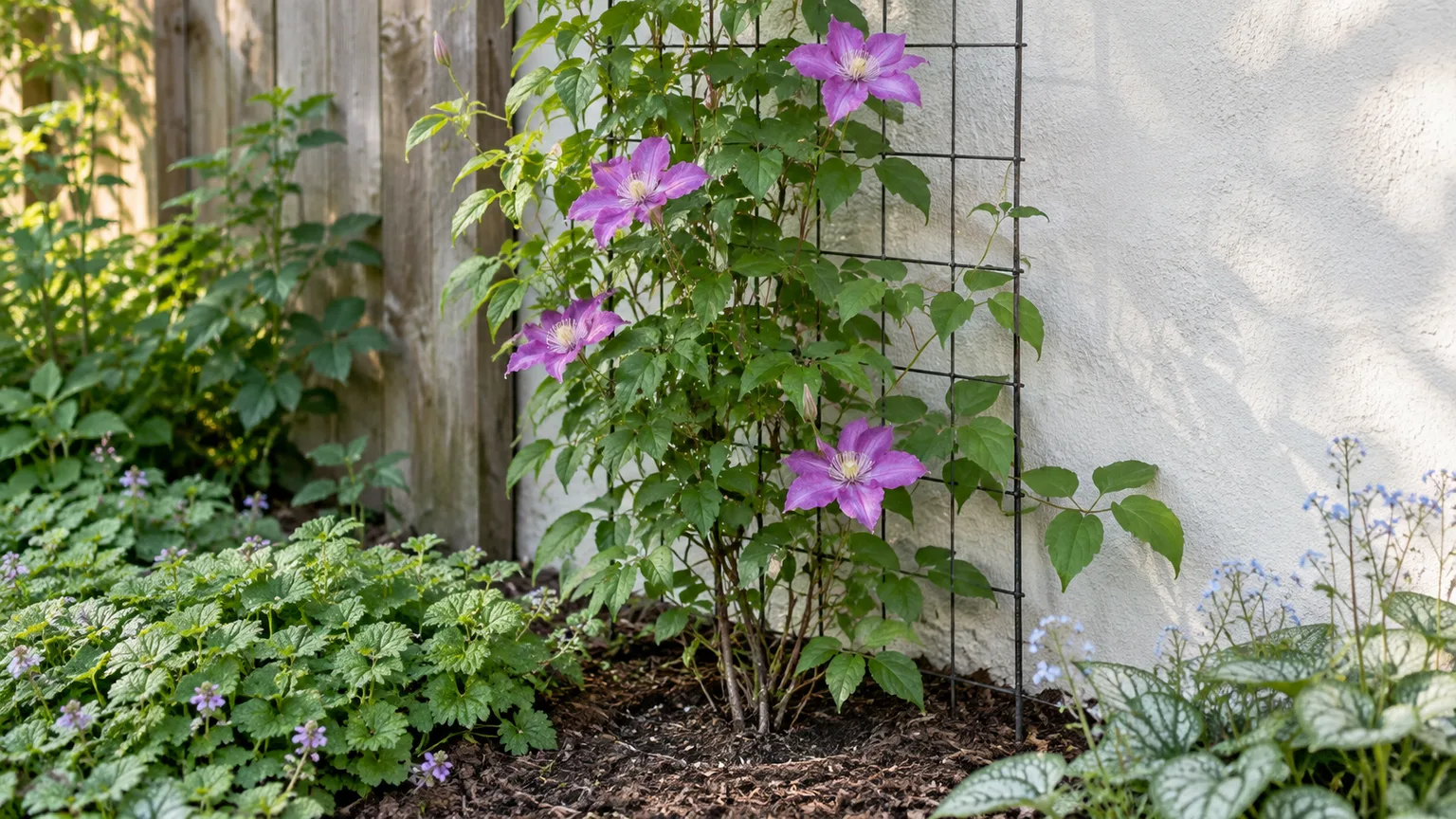
Keep the support separate from tree trunks and valuable shrubs. Letting a vine climb a tree can hide where the vine enters the soil, which makes removal harder, and the dense foliage can cover or shade the host. If the only available support is a tree, redirect the vine to a freestanding structure or remove it. A vertical support should make inspection and seed-head removal easier, not create a screen that is impossible to maintain.
Water to the Weather and Soil
Newly planted vines need regular moisture while roots establish, but the target is even moisture rather than saturated soil. Water deeply at the base, then let excess drain. Once established, the plant is fairly adaptable; irrigate during a prolonged dry spell when the root zone becomes dry instead of following a fixed weekly schedule regardless of rainfall. A rain gauge and a quick soil check are more useful than watering by calendar.
Container-grown vines dry faster because the pot holds less soil, so check them more often in hot or windy weather. Water until it drains through the holes, then empty any saucer. Persistent wilting in wet soil suggests a drainage or root problem; wilting in dry soil calls for a thorough soak. Do not respond to every wilt with more water: clematis stems can also wilt from injury, slug feeding, disease, or stress from heat and shallow soil.
Feed Lightly, If at All
A vigorous vine in reasonably fertile ground rarely needs repeated high-nitrogen fertilizer. Excess nitrogen can push soft leafy growth and make an already fast plant harder to contain, while it does not correct poor drainage, deep shade, or a damaged root system. If growth is weak, first check the light, moisture, soil drainage, and whether the roots are restricted or disturbed.
If a soil test or clear nutrient deficiency supports feeding, use a balanced product at its label rate in spring and stop well before the vine’s late-season flowering period. Avoid routine feeding every few weeks simply because a calendar says to; container plants may need more regular nutrients, but that is another reason a pot does not make the species low-maintenance. For an established vine, an annual surface mulch of finished compost can improve soil structure without encouraging the abrupt flush that a heavy soluble feed can cause. RHS guidance similarly notes that clematis in fertile ground need not be fed routinely.
Follow a Practical Seasonal Care Calendar
In early spring, inspect the crown, support, and last year’s stems. If keeping the vine where permitted, remove dead or tangled growth and cut it back hard enough to manage its size; late-flowering clematis generally flower on current-season growth. This is also the time to pull small seedlings before they develop strong roots. Do not wait until young vines have climbed through shrubs.
From late spring through summer, guide shoots onto the support, check ties, and water according to soil moisture. During flowering, inspect the whole vine at least weekly. Remove spent flower clusters before they form dry, feathery seed heads, and place cut material directly into a bag rather than leaving it on the ground. After the last flowers, continue checking for missed seed heads and new seedlings. The calendar is flexible across regions: warmer climates may see bloom earlier or later than cooler gardens, so use the plant’s stage—not a fixed date—to time containment.
Understand Bloom Time and Flowering Wood
The main display usually arrives in late summer or early fall, often from August into October depending on climate. Flowers are small individually but numerous, with four petal-like sepals and a sweet scent. The vine blooms on new growth produced during the current season, so pruning the previous winter does not usually remove all that year’s flowers. Late-summer clematis commonly fall in pruning group 3; the RHS guide describes this group as blooming on new shoots.
Too few flowers usually reflect a mismatch in conditions or timing, not a need for stronger fertilizer. Deep shade can reduce bloom; drought, waterlogged roots, or a hard prune after new shoots are already developing can delay growth. Check that the plant has enough light and that the root zone drains, then wait for the current season’s shoots to mature. If bloom is good but the vine is seeding everywhere, the answer is not more fertilizer or a more distant trellis—it is timely flower-cluster removal or replacement with a locally appropriate native vine.
Prune for Seed Control and Size
Pruning has two different jobs here. To limit spread, remove each spent flower cluster after flowering but before it becomes a dry, silky seed head. Do this while the vine is still flowering, since bloom can continue over several weeks. Use clean, sharp pruners, wear gloves, and carry a bag with you so the cuttings and developing seeds do not drop on the soil or travel in compost.
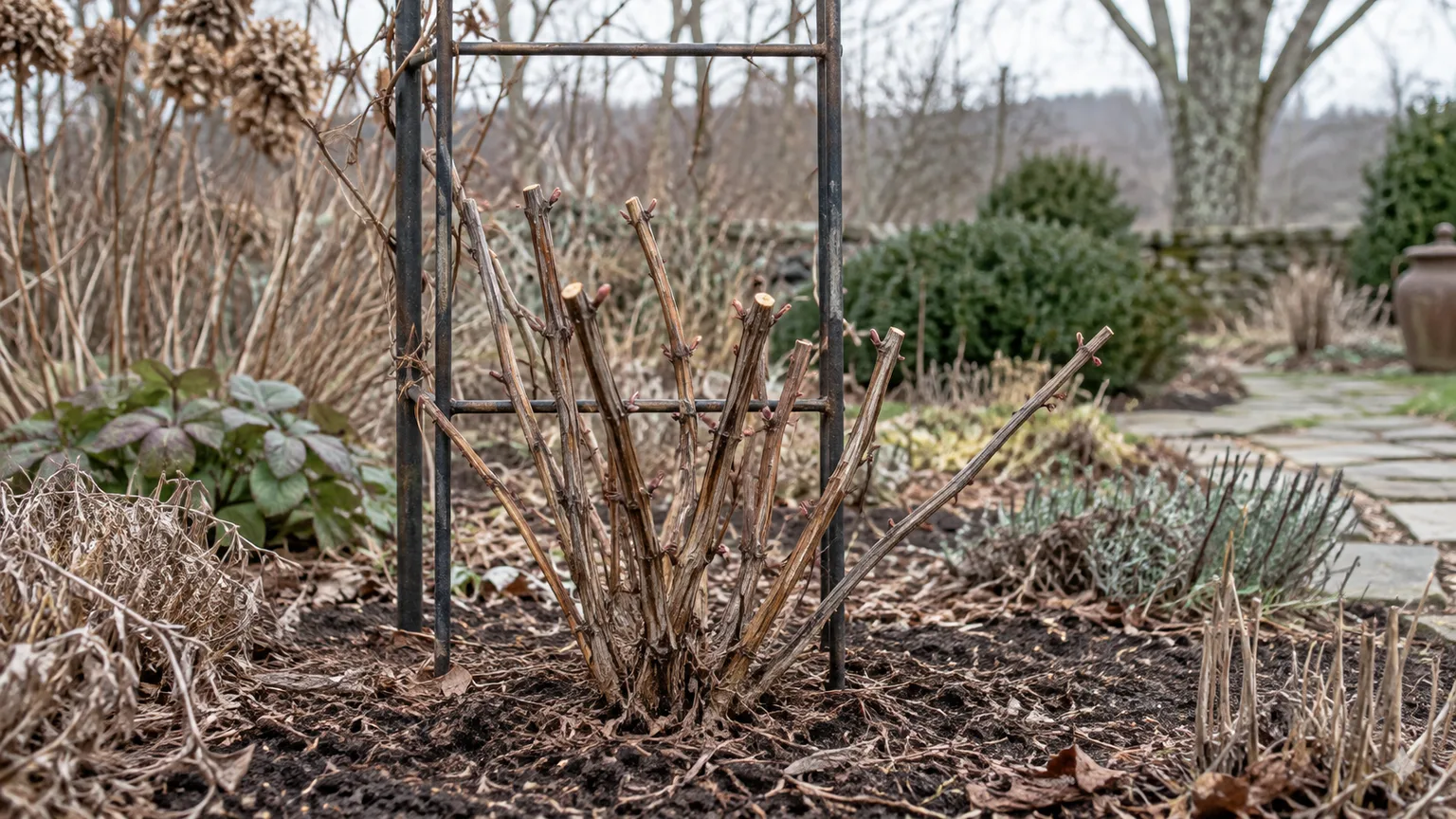
To reduce the tangle and encourage fresh growth, cut the remaining stems back in late winter or early spring, before strong new shoots start. You can leave a short framework if it is secure, or cut most stems close to the base when the vine is badly overgrown. Because flowers form on new wood, a hard dormant-season cut is compatible with bloom later that year. It is not a substitute for seed-head removal: dormant pruning occurs after late-season seeds may already have blown away. If the vine is on a tree, trace each stem back to the ground before cutting so you do not leave rooted sections hidden elsewhere.
Deadheading means removing flower clusters to stop them from developing seed; it is the containment step. Hard pruning means removing a large amount of vine growth to manage height, restore access to a support, or reset an old tangle. A plant may need both. Simply shearing the outer surface may leave flower clusters tucked inside the canopy, so part the stems and inspect the entire vine.
If the vine has already formed fluffy seed heads, bag them before moving or cutting the stems. Do not shake them loose, put them in an open yard-waste pile, or assume that a hard trim will catch every seed. Some state agencies discourage transporting or disposing of this species with ordinary compost and yard waste. Follow local waste guidance; sealed trash disposal is often the simplest route when allowed. In future seasons, begin checking as soon as flowering starts to fade.
Containers and Propagation Do Not Prevent Escape
A large pot with drainage holes and a sturdy trellis can technically support the vine, but a container does not neutralize the main risk. Seed heads can release seed into wind, onto nearby garden beds, or into stormwater. Stems that touch soil may layer, and roots can escape through drainage openings or cracks. A pot also dries faster than a garden bed and requires more frequent inspection in hot weather.
Do not use container culture as a workaround where the species is invasive or prohibited. If you already have a potted plant in a permitted area, keep it away from open ground and natural areas, remove every flower cluster before seed formation, clear any dropped or escaped fragments, and check beneath the pot and support for rooted stems. For a new container, a locally native clematis gives the same vertical effect with fewer ecological concerns, though even native vines need space and pruning.
Sweet autumn clematis can spread by seed and vegetative means, including layering. That makes collecting seed, rooting cuttings, dividing rooted stems, or giving seedlings away a poor choice. A piece of stem is not automatically a viable cutting, but a rooted node or a layered section can become a new plant; do not discard viable plant parts where they can contact soil. North Carolina State’s profile lists seed, layering, and stem cuttings as possible propagation strategies, but it also advises against landscaping with the species.
If you find a volunteer seedling, pull it while the soil is moist and remove the root as completely as you can. Bag seed-bearing debris and do not move it to a new property or a natural area. If you bought the plant accidentally, ask the nursery or local extension office about return or disposal options rather than giving it to another gardener. Where a region has an invasive plant disposal program, follow its instructions over general advice.
Winter Care for Established and Potted Vines
In-ground plants generally overwinter without special protection across much of their reported hardiness range. Stems may die back or lose leaves in colder places, while warmer areas can retain foliage longer. Keep the base accessible so you can see new shoots in spring, and remove dry seed heads before winter winds disperse them. Do not leave a seed-bearing vine standing just to preserve its winter silhouette.
A container exposes roots to colder temperatures than the ground, so an existing potted vine may need insulation around the pot in a cold climate. Keep it outdoors in a sheltered location rather than moving it into a warm room, where it may break dormancy prematurely. But if the plant is invasive locally, winterizing it merely preserves next season’s escape risk. Plan to replace it with a suitable native plant and dispose of the clematis under local guidance.
Diagnose Pests, Disease, and Poor Flowering
Aphids, vine weevils, leaf spots, stem rot, and powdery mildew can affect clematis; inspect stems and leaf undersides before choosing any treatment. A light coating of mildew or a few spotted leaves does not automatically mean the whole plant is dying. Improve airflow, avoid soaking foliage late in the day, remove heavily affected debris, and identify the cause before using a pesticide or fungicide. Follow the product label and local rules if a treatment is genuinely necessary.
Sudden wilting deserves a closer look. Check whether the root zone is dry or waterlogged, inspect stems for chewing or breaks, and look for blackening or lesions. Clematis wilt is associated most strongly with large-flowered hybrids; in a species clematis, drought, root stress, stem injury, or slugs can also produce drooping. RHS guidance cautions that wilt symptoms may have environmental or pest causes, so do not diagnose from the word “clematis” alone. If the entire vine declines, take a clear sample or photos to a local extension service before treating.
Remove the Vine and Monitor Regrowth
For a manageable plant, work in sections. First, identify the root crown, then cut vines into short lengths and lower them carefully rather than pulling a long tangled mass through shrubs or trees. Bag flowers, seed heads, and any material that can root. Next, dig out the crown and as much of the root system as practical. UF/IFAS notes that cut plants can send up root suckers, so a single cut is not a complete removal.
Return to the site throughout the growing season and again the following spring. Pull small resprouts while they are easy to remove and search around nearby supports, under mulch, and where vines touched soil. If the plant has climbed a tree, do not yank it down; cut the vine near the ground and let the upper growth die and fall on its own if that is the safest approach. UF/IFAS’s plant directory notes that cut plants may sucker from roots and need follow-up. For a large infestation or a protected natural area, ask local extension or invasive-species staff for a site-specific plan. Herbicide use depends on location, plant size, nearby desirable plants, and product label; do not improvise a concentration or spray into a canopy.
Choose a Native Alternative
In much of eastern North America, Clematis virginiana—often called virgin’s-bower or woodbine—is the closest look-alike. Its mature leaflets are toothed rather than smooth, and it produces small white flowers in late summer or fall. It can thrive in sun to shade and supports pollinators, according to NC State Extension. In the right region, it offers the seasonal flower effect without importing an Asian species into native habitats.
Native does not mean miniature or maintenance-free. Virginia’s-bower can reach about 15 to 20 feet, spreads along supports, and may self-seed; male and female plants differ in whether they produce seed heads. Give it space and choose a planting location that fits its mature size. North Carolina State Extension’s plant profile for virgin’s-bower describes its size and growth habits. Outside its native range, or if you want another flower color or growth habit, ask a local native-plant nursery or extension office for vines appropriate to your region. North Carolina State lists native clematis species such as C. crispa and C. viorna as alternatives in some landscapes, but regional suitability matters more than a generic national list.
Keep Pets and Children Away From Cuttings
ASPCA Animal Poison Control lists Clematis species as toxic to dogs, cats, and horses, with protoanemonin identified as the irritant principle; reported signs include salivation, vomiting, and diarrhea. Keep pets from chewing leaves, flowers, and prunings, and do not leave cuttings where children or animals can handle or mouth them. Wear gloves while pruning and wash your hands afterward, especially if you have sensitive skin. ASPCA’s clematis entry advises contacting a veterinarian or poison-control service if a pet may have eaten the plant. Do not induce vomiting or try a home remedy unless a veterinary professional tells you to.
Conclusion
Sweet autumn clematis is easy to grow partly because it is vigorous, but that same trait can turn a fragrant fall screen into an invasive plant-control project. The best care decision is to verify the species and its local status before planting; in many regions, choose a native alternative instead. If an existing vine remains where local guidance allows it, keep it on a reachable support, water according to soil conditions, skip routine heavy feeding, remove every spent flower cluster before seed heads dry, and inspect for seedlings and rooted stems throughout the season. If you are removing it, dig the crown where practical and monitor for regrowth. The flowers are beautiful; the responsible choice is making sure their seeds do not leave your garden.



