How to Grow Texas Star Hibiscus: Complete Care Guide
Learn where Texas star hibiscus thrives, how wet its soil should stay, when to prune it, and why winter dieback is normal for this tall perennial.
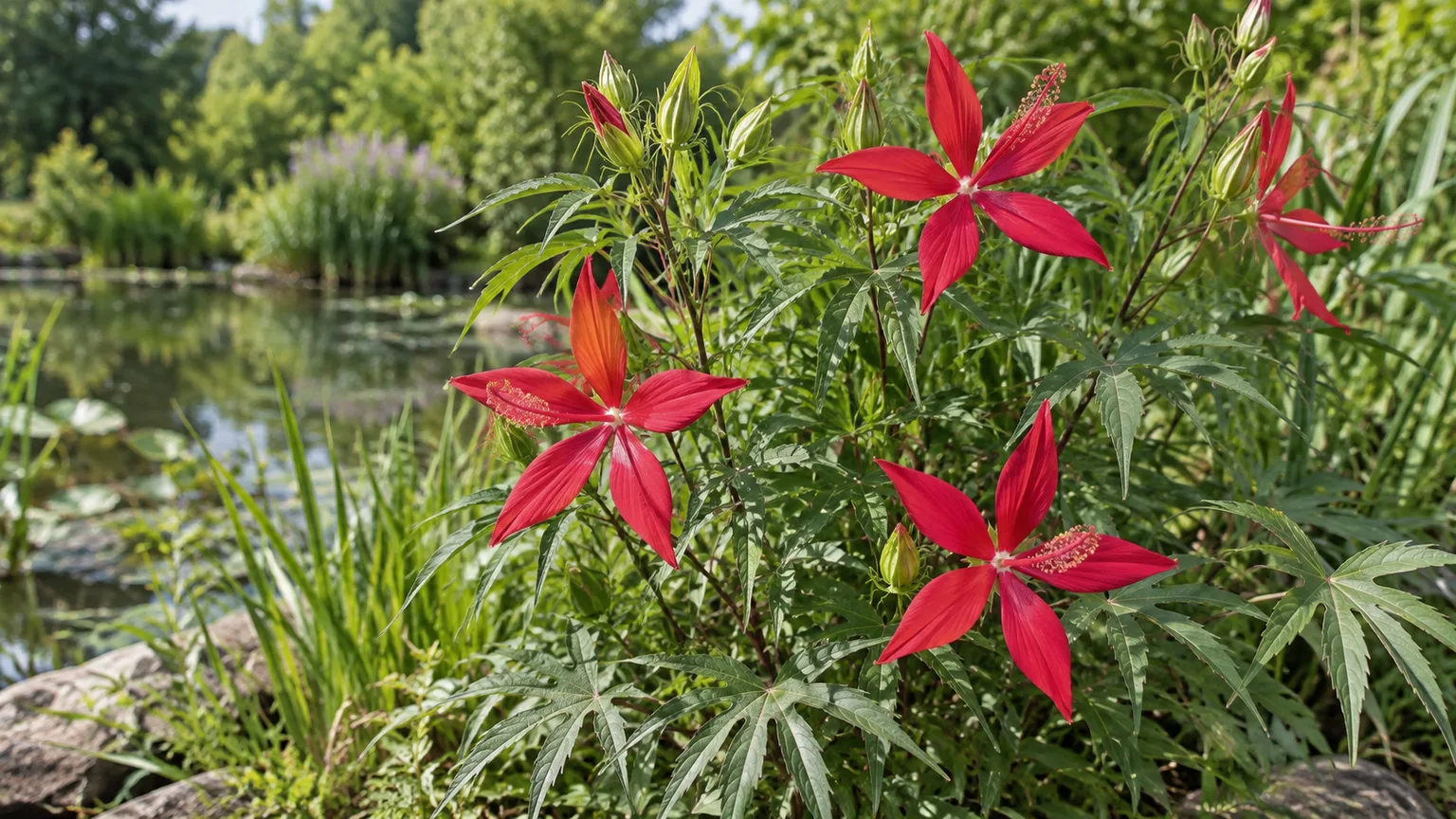
Texas star hibiscus is a tall, red-flowered perennial for gardeners with a sunny spot that stays moist longer than an ordinary flower border. The common name sounds Texan, but NC State Extension and the USDA Plants Database place this native in the southeastern United States, where it grows around marshes and other wet sites. Its botanical name is Hibiscus coccineus, though NC State’s Plant Toolbox now lists the species as Muenchhusia coccinea and records H. coccineus as a former name. Nursery labels may use either name.
The most useful care rule is simple: give it strong light and dependable moisture, then let the plant follow its natural seasonal cycle. The stems die back after frost, new growth starts late in spring, and the red flowers open on that season’s stems. A gardener who expects an evergreen shrub or a hibiscus that tolerates dry soil may mistake normal behavior for failure.
Identify Texas Star Hibiscus Before You Plant
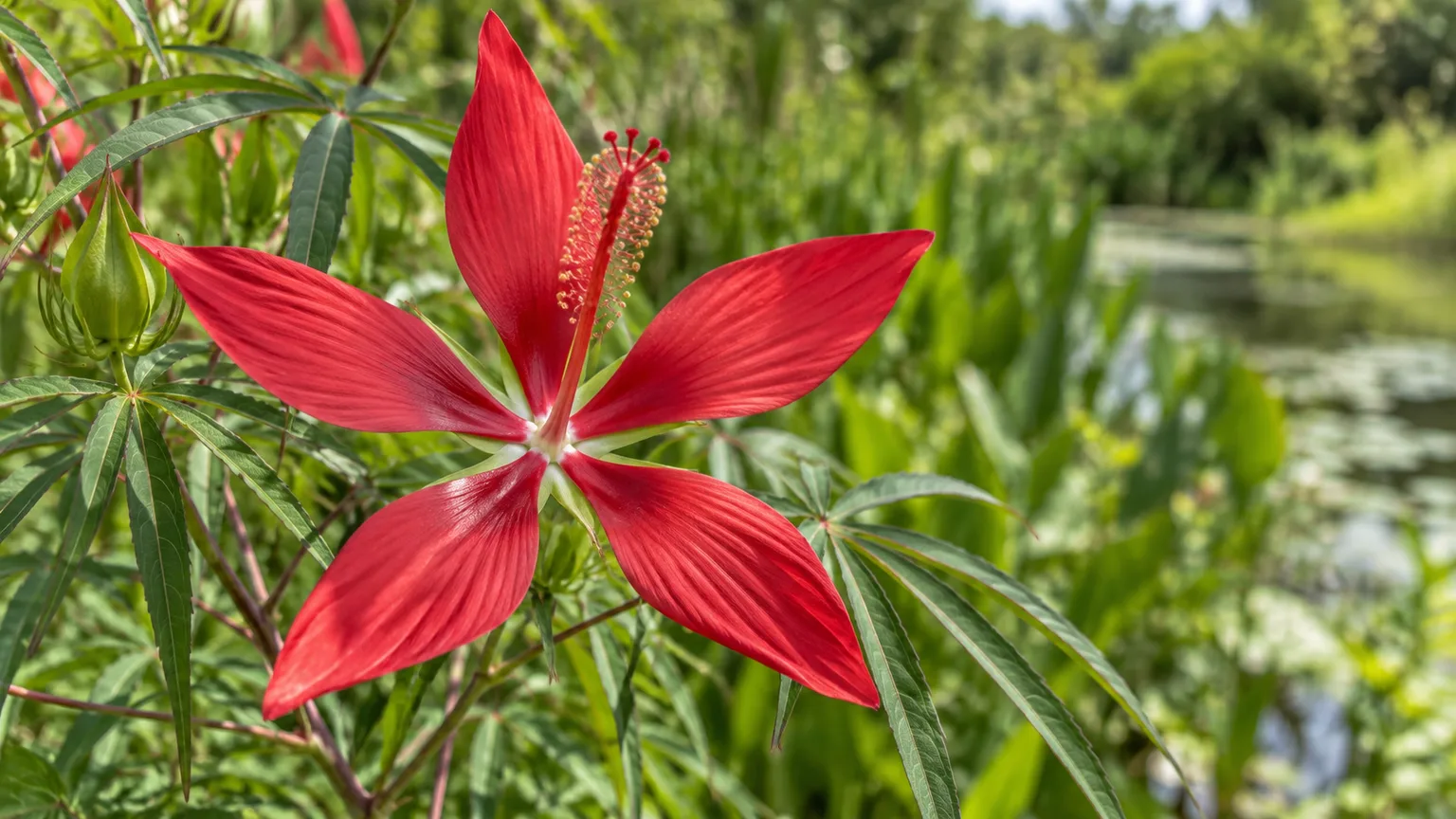
Texas star hibiscus is also sold as scarlet rosemallow, swamp hibiscus, or water hibiscus. It is an upright, herbaceous perennial in the mallow family, not a woody tropical shrub. Plants commonly reach about 4 to 8 feet tall, with a narrower footprint of roughly 2 to 3 feet, though moisture, sun, climate, and cultivar affect the final size. Its deeply divided, toothed leaves and large, widely spaced red petals make it easier to recognize once it is in bloom.
The show is made up of many short-lived flowers rather than a single flower that lasts all week. Each bloom generally lasts about a day, but fresh buds continue to open through the season. Extension descriptions place the main display in mid to late summer, while the exact start and finish depend on local heat, frost dates, and how quickly the plant establishes.
Texas star, swamp hibiscus, and other hibiscus are not interchangeable
Common names can lead to a mismatched plant. “Hardy hibiscus” often means Hibiscus moscheutos, a related perennial usually selected for broad, dinner-plate flowers; tropical hibiscus is typically H. rosa-sinensis, a frost-sensitive woody plant with a different overwintering routine. Texas star hibiscus is the narrow-petaled, star-shaped H. coccineus. Clemson Cooperative Extension and the UF/IFAS species profile distinguish it from larger-flowered and tropical species.
| Label or species | Habit | Quick visual cue | Main planting implication |
|---|---|---|---|
| Texas star / scarlet rosemallow (H. coccineus) | Herbaceous perennial | Narrow, separated petals; usually deep red | Moist to occasionally wet soil; stems die back in winter |
| Hardy hibiscus (H. moscheutos) | Herbaceous perennial | Broad, rounded “dinner-plate” flowers | Also moisture-loving, but cultivar size and color vary |
| Tropical hibiscus (H. rosa-sinensis) | Woody, frost-sensitive shrub | Many colors and single or double blooms | Needs a warm climate or protected winter conditions |
If the tag only says “hibiscus,” check the botanical name before choosing a site or expecting it to return after winter. A useful wider comparison is available in the guide to hibiscus types, but the care below is specific to H. coccineus.
Choose a Site That Matches Its Wetland Roots
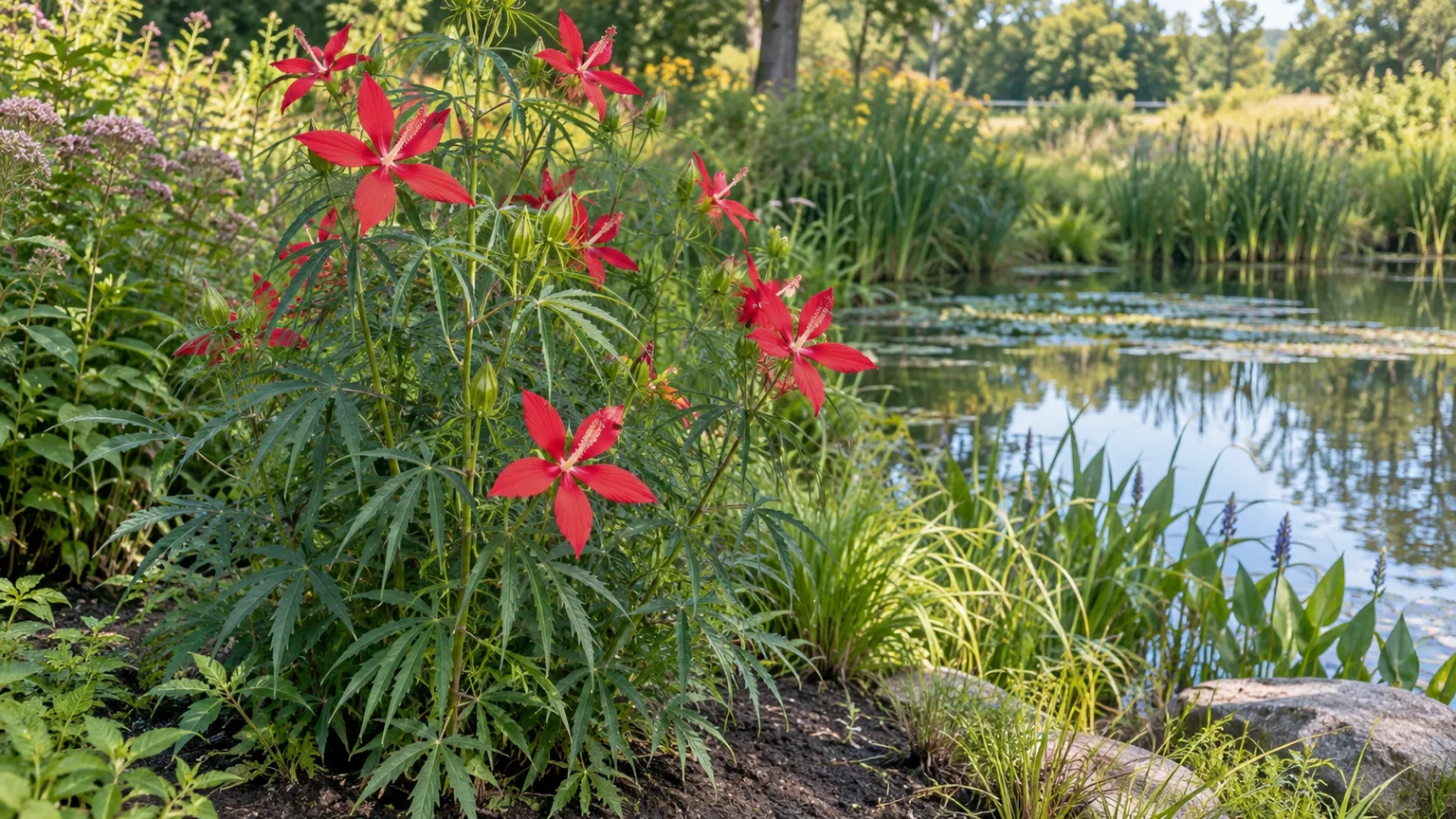
The right location solves most long-term care problems before they start. Texas star hibiscus suits a pond margin, rain garden, streamside bed, low spot that stays damp, or the back of a sunny border near a downspout. It can grow in ordinary garden soil too, but then the gardener must supply moisture during dry spells. It is not a good choice for a hot, dry slope that cannot be irrigated or a cramped foundation bed where a 6-foot plant would block windows.
Sun, shelter, and room for tall stems
Aim for at least six hours of direct sun when you want sturdy stems and the fullest bloom. The plant tolerates some partial shade, but shade often reduces flowers and encourages stems to stretch or lean toward the light. In a very hot inland garden, light afternoon shade can reduce stress if the soil remains moist; deep shade is not a shortcut to easier care.
Leave enough lateral room for the clump and the air around it. A fence, hedge, or wall can shelter tall stems from strong wind, but avoid putting the plant in a wind tunnel or directly under a roof edge that alternates between flooding and severe drying. Stake only if stems actually lean or the site is exposed; install a discreet support while growth is still young so you do not pierce established roots later.
Moist soil without burying the crown
This species tolerates moist and occasionally wet soils, which makes it valuable where many ornamental perennials struggle. That does not mean every part of it should be submerged. In a regular bed, keep the root zone consistently damp and allow excess water to move away after storms; at a pond, use a shallow shelf or a stable container rather than placing the crown under deep standing water. UF/IFAS and NC State Extension describe its tolerance for moist or wet sites, while Pond Informer’s species-specific pond guidance distinguishes shallow marginal planting from deeper water.
Texture is less important than moisture and site behavior. Sandy soil may need frequent irrigation and organic mulch; clay can hold enough water but should not be compacted into a sealed basin around the crown. A 2- to 3-inch mulch layer helps even out drying, especially in hot weather. Keep the mulch slightly away from the stems so the crown is not buried and stays easy to inspect.
Plant Texas Star Hibiscus at the Right Time and Depth
In cold-winter areas, plant in spring after the last hard frost, once the soil is workable. This gives the roots a full growing season to establish before winter. In milder climates, fall planting may work, but spring is the safer default if you do not know how the plant handles your local winter. Choose a nursery plant with firm stems and healthy growth at the base; do not reject a dormant plant solely because it has been cut back.
Set the root ball at the same level it sat in its pot, with the crown at the soil surface. Avoid burying the stem base, especially in a damp bed. Loosen circling roots gently, backfill with the site’s native soil, water slowly to settle it, and apply mulch without piling it against the crown. Space plants about 3 feet apart for a dense grouping; allow more room if you want each clump to read as a separate specimen.
For a rain garden, place it where water collects briefly and then drains or infiltrates rather than at the deepest point that stays flooded for long periods. A sunny downspout outlet can work if runoff is dispersed and the soil does not erode around the roots; Weekand’s species-specific care article also identifies rain gardens and downspout runoff as suitable settings. If your only available site stays saturated for days after every rain, grow it in a stable pot on the pond or basin edge so you can control crown depth.
Water by Soil Condition, Not a Fixed Calendar
Keep the root zone evenly moist from spring through flowering. In a naturally damp garden, rainfall may do most of the work; in ordinary soil, check moisture below the surface and water deeply when the root zone begins to dry. During hot, windy weather, check more often, especially in the first year. A light sprinkle over the leaves does little for roots and can leave foliage wet without replenishing the soil.
Containers dry much faster than in-ground beds, so they need more frequent checks. Water until excess drains from the pot, then check again before watering; do not let a saucer or pond shelf keep the crown submerged. If you are unsure whether yellowing comes from drought or excess water, feel the soil 2 to 3 inches down before adding more. Moist soil is the target; chronically stagnant, airless soil in a pot is a different condition from a wet garden bed.
Feed Lightly and Only When the Site Needs It
Texas star hibiscus is vigorous when it has sun, room, and moisture, so fertilizer is not a substitute for fixing a dry or shaded site. In fertile soil amended with compost or regularly mulched, skip routine feeding at first. If growth is weak and a soil test or the bed’s history suggests low fertility, use a balanced, slow-release product at the label rate in spring. Avoid heavy nitrogen feeding late in the season, which can favor soft leafy growth over sturdy stems.
Container plants lose nutrients as water drains through the mix, so a modest feeding during active growth may help. Follow the product directions for ornamental plants and do not combine multiple fertilizers to compensate for poor flowering. If the plant is lush but produces few buds, check sunlight and watering consistency before increasing the dose.
Control Height Without Sacrificing Flowers
The plant’s height is a feature in the right place and a maintenance problem in the wrong one. It can form a strong vertical backdrop, but stems may need support in exposed sites or after heavy rain. A loose ring or several stakes set early is less conspicuous than tying mature stems upright after they have flopped. Avoid crowding it between shorter plants that need the same space and light.
Flowers form on new-season growth. If you want to reduce height or encourage a fuller clump, prune in late winter or early spring before new shoots lengthen. You can also pinch or lightly cut back soft stems early in the growing season, but repeated late pruning delays or reduces the flowers you are waiting for. Remove dead or broken stems whenever you see them; routine shaping is optional.
Deadheading is mainly a tidiness and seed-control choice. Removing spent flowers before seed capsules mature can limit self-sowing, but it will not make an individual flower last longer. Leave some seed heads if you want seedlings or food for wildlife, and pull unwanted volunteers while they are small.
Understand the Bloom Season and One-Day Flowers
Expect the main display in summer and early fall, not necessarily on the same calendar date in every region. A mature plant may open many flowers in succession even though each bloom fades quickly. The bold red flowers and long stamens attract hummingbirds and other pollinators, and the plant’s scale makes it more effective as a background specimen or pond-edge anchor than as a tiny front-border accent.
If buds are forming but flowers seem to disappear quickly, that is usually normal. If the plant has healthy foliage but few buds, assess direct sun first, then moisture during hot weather, then whether the clump is still establishing. Do not assume a particular fertilizer or a hard midsummer pruning will solve it. Clemson Extension notes that individual blooms last only a day while new ones continue through summer and fall.
Prepare for Winter Dieback and Spring Resprouting
After frost, the aboveground stems naturally brown and die back. This is the expected behavior of an herbaceous perennial, not proof that the roots are dead. Mark the plant’s location before cutting anything so you do not dig into the crown during winter, and wait until late winter or early spring to tidy it if you want to preserve standing stems through the cold season.
Hardiness estimates vary. Clemson Extension commonly places the species in Zones 6–9, while NC State’s Plant Toolbox lists a broader range reaching Zone 5b and 9b. Treat the colder edge as site-dependent: winter drainage, snow cover, wind, establishment, and the plant’s exact source can matter as much as the zone number. In borderline climates, mulch the crown after the ground cools, keep winter mulch loose, and pull it back as shoots emerge.
There is a wildlife trade-off in fall cleanup. NC State Extension’s species profile notes that native bees use hollow dead stems, and its pollinator garden-cleanup guidance recommends leaving perennial stems standing through the first winter, then allowing them to decay or cutting them to a short height in spring. If you prefer a tidy winter bed, cut stems later rather than immediately after flowering, and leave a portion of the stems where practical. Do not confuse dead tops with a dead crown; if spring is slow, wait for consistently warm weather before deciding the plant has failed.
Propagate by Seed, Cuttings, or Division
Texas star hibiscus can be multiplied from seed or stem cuttings, and established multi-crown clumps can be divided in spring. Seedlings may vary from the parent, especially if the plant is a selected form or has cross-pollinated with another hibiscus. Use cuttings when you want a closer copy of a particular plant; choose division when an older clump is crowded and already has several crowns.
Collect seed and manage self-sowing
Let a few flowers form seed capsules if you want to save seed. Wait until capsules turn brown and begin to dry before collecting them; green pods are immature and may not store well. Keep the dry seed in a labeled envelope in a cool, dry place until you are ready to start it. Clemson Extension reports that scarlet rosemallow often self-seeds, so remove extra capsules before they split if you want to keep the planting contained.
Start seed indoors roughly six to eight weeks before your typical last frost, or sow outdoors once frost danger has passed and the soil has warmed. If germination is slow, lightly nick or abrade the hard seed coat and soak seeds in warm—not boiling—water overnight. Sow in a clean seed-starting mix, keep it evenly moist and warm, and give seedlings bright light after they emerge. Pot them on once they have several true leaves and harden them off gradually before planting outdoors.
Root cuttings and divide established clumps
Take soft, healthy stem cuttings in late spring or early summer when the plant is actively growing. Use clean pruners, select a nonflowering tip, remove the lower leaves, and place the cutting in a moist, airy rooting medium. Keep it warm and humid in bright indirect light while roots form; direct midday sun can wilt an unrooted cutting quickly. Once it resists a gentle tug and begins new growth, acclimate it to outdoor conditions before planting.
Divide a mature clump in spring as new shoots begin to appear. Lift only what you can replant promptly, separate sections that have both roots and viable buds, and keep them evenly moist while they recover. Division disturbs the parent plant more than taking a small cutting, so do it when the clump is crowded or you have a clear reason to move it rather than as routine annual maintenance.
Diagnose Yellow Leaves, Few Flowers, and Pests
Start with the site and root zone rather than reaching for a spray or fertilizer. Texas star hibiscus is resilient, but it can show stress when a previously wet site dries out, when a pot stays waterlogged, when shade increases, or when stems are crowded. A quick check of soil moisture, recent weather, and direct-sun hours will often narrow the cause more effectively than treating the leaf color alone.
Check light and moisture before reaching for fertilizer
- Yellow leaves with dry soil: water deeply and reassess the bed or container’s drying rate. Add mulch in an exposed bed; do not make a shallow daily sprinkle the permanent fix.
- Yellowing with persistently soggy potting mix: check drainage holes, empty standing water, and inspect the crown for soft or dark tissue. A wet garden soil is tolerated better than a pot that never drains.
- Tall, weak stems with few flowers: improve light if possible, reduce excess nitrogen, and support the plant before wind or rain pushes stems over.
- No shoots after winter: confirm the planting spot and wait until warm spring weather is established. The perennial may emerge later than nearby shrubs; avoid digging up the crown too early.
- Chewed leaves or buds: inspect for grasshoppers, Japanese beetles, and deer browsing. Use physical exclusion or hand removal where practical, and identify the pest before choosing a treatment.
NC State Extension and Clemson Cooperative Extension list aphids, whiteflies, Japanese beetles, deer, and fungal problems such as rust or leaf spot among possible issues. For a small aphid cluster, a firm stream of water can dislodge insects; check the undersides of new leaves again a few days later. Remove badly affected leaves and clear fallen debris, and water at the soil rather than repeatedly wetting foliage late in the day. If a labeled pesticide becomes necessary, follow its directions and avoid spraying open flowers or pollinators.
Grow It in a Container or at a Pond Edge
You can grow Texas star hibiscus in a large outdoor container, but the pot needs more attention than an in-ground planting. Choose a stable, wide container with drainage holes and enough volume for a tall perennial; a small lightweight pot dries quickly and can topple in wind. Use a moisture-retentive potting mix that still drains, position the plant in full sun, and check moisture frequently during heat. A container is useful for controlling spread or moving the plant in a cold-edge climate, but it does not guarantee winter survival if the root ball freezes solid.
At a pond, place the container on a shallow shelf or set the crown above the waterline so the roots stay wet without the stem base being continuously submerged. The species is associated with wetlands, but pond depth and water level can change; a pot makes it easier to adjust placement if the crown sits too low. Pond Informer describes shallow planting and container placement as practical ways to anchor water hibiscus at pond margins. In a rain garden, choose the moist basin or lower slope, not a deep pocket that remains flooded after every storm.
Conclusion
Texas star hibiscus is a strong choice for a sunny, moisture-retentive garden that can accommodate a tall plant. Identify it by the label Hibiscus coccineus (or the newer Muenchhusia coccinea name), plant the crown at soil level, keep the root zone evenly moist, and allow the stems to die back naturally after frost. Give it enough sun and space before adding fertilizer or pruning for shape.
Expect one-day flowers to arrive in succession, leave room for spring regrowth, and use local hardiness guidance if your winters are severe. With the right site, this southeastern native can turn a damp corner, pond edge, or rain garden into a late-season display without needing the dry-soil routine used for many ordinary border perennials.