Small-Space Vegetable Gardening Tips for More Harvests
Learn how to grow more food in less space with smart crop choices, containers, trellises, succession planting, watering, and harvest tips.
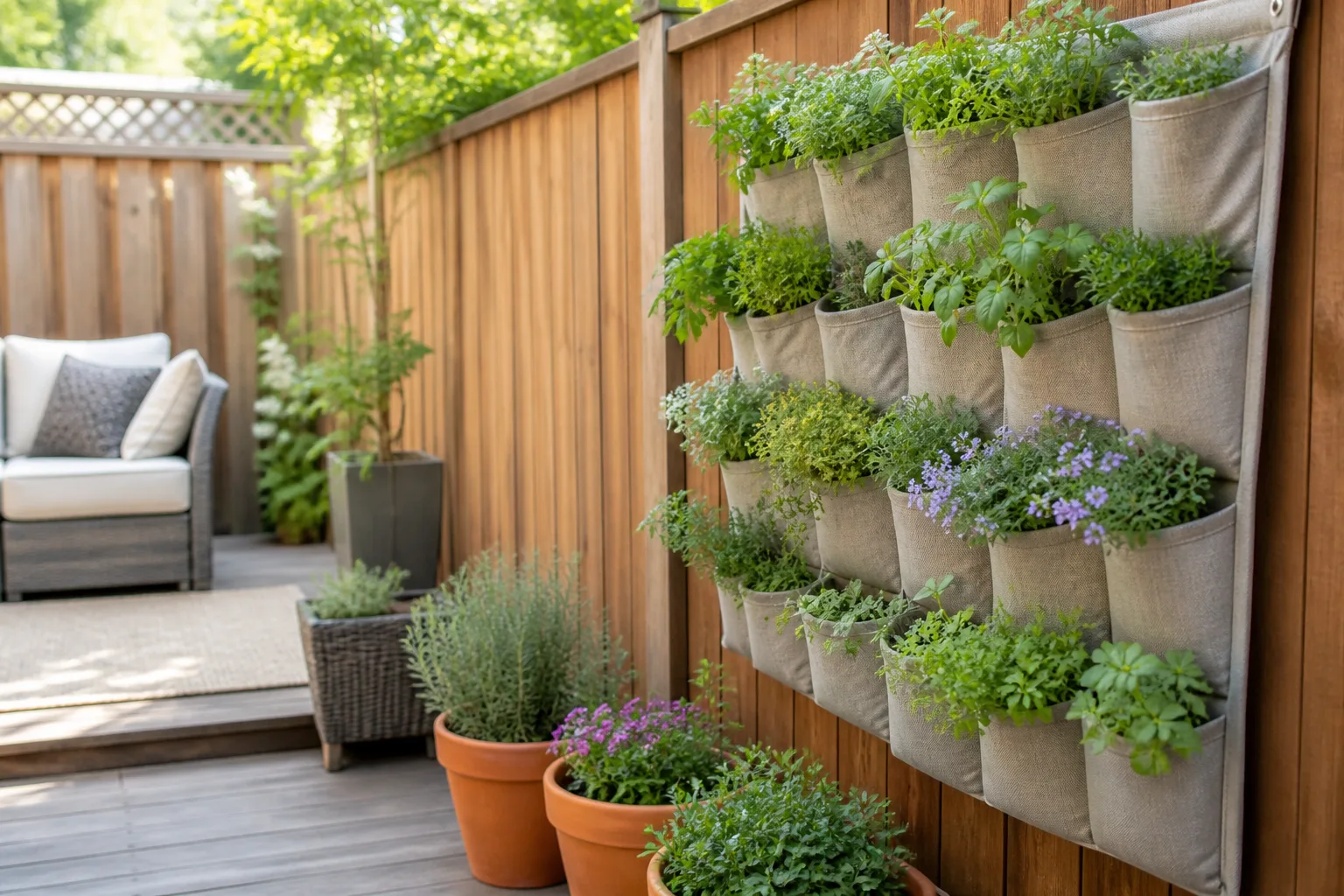
Small-space vegetable gardening works best when you stop trying to fit a full farm into a tiny footprint. The winning approach is to grow a short list of crops you will actually eat, give each one enough light and root room, use height when it genuinely saves floor space, and plan what will replace a crop after harvest.
That sounds simple, but small gardens expose every mismatch. A tomato in a shallow pot can need constant rescue. A beautiful vertical planter can dry out faster than you can water it. A crowded bed may look productive in May and become a humid, diseased tangle by July. Use the steps below to make your space more productive without making it harder to manage.
Start with the space you have, not the crops you want
Before buying seeds or building a planter, make a one-day site audit. The most valuable information is not the square footage; it is how many hours of direct light reach the growing area, how quickly the wind dries it, where water can drain, and whether you can comfortably reach every plant.
Audit sun, wind, water, and access
Watch the space in the morning, around midday, and in late afternoon. Trace the sun across the season if possible, because a balcony that is sunny in spring may be shaded by a neighboring building once the sun is higher or lower. Fruit-producing crops such as tomatoes, cucumbers, squash, peppers, and eggplant need the brightest position. Leafy greens and many root crops are more forgiving, although more light usually means stronger growth.
Extension guidance commonly uses eight hours of direct sun as a strong target for most vegetables. NC State Extension notes that fruiting crops need at least eight hours and perform better with more, while Virginia Tech gives a practical lower threshold of about six hours for fruiting vegetables and says eight to ten is better. Treat those numbers as a planning range, not a promise: six filtered hours beside a hot reflective wall is not the same growing environment as six bright hours in an open garden. NC State Extension’s vegetable gardening guide and Virginia Tech’s container vegetable guidance both emphasize matching the crop to the light available.
Check wind as carefully as sun. Wind increases water loss, can topple tall containers, and turns a trellis into a sail. A sheltered patio corner may suit a pepper or determinate tomato, while a high, exposed balcony may be better for low herbs, lettuce, radishes, and chard until you add a secure windbreak. Do not block all airflow with a solid wall of plants; you want protection from damaging gusts without creating a stagnant pocket around wet foliage.
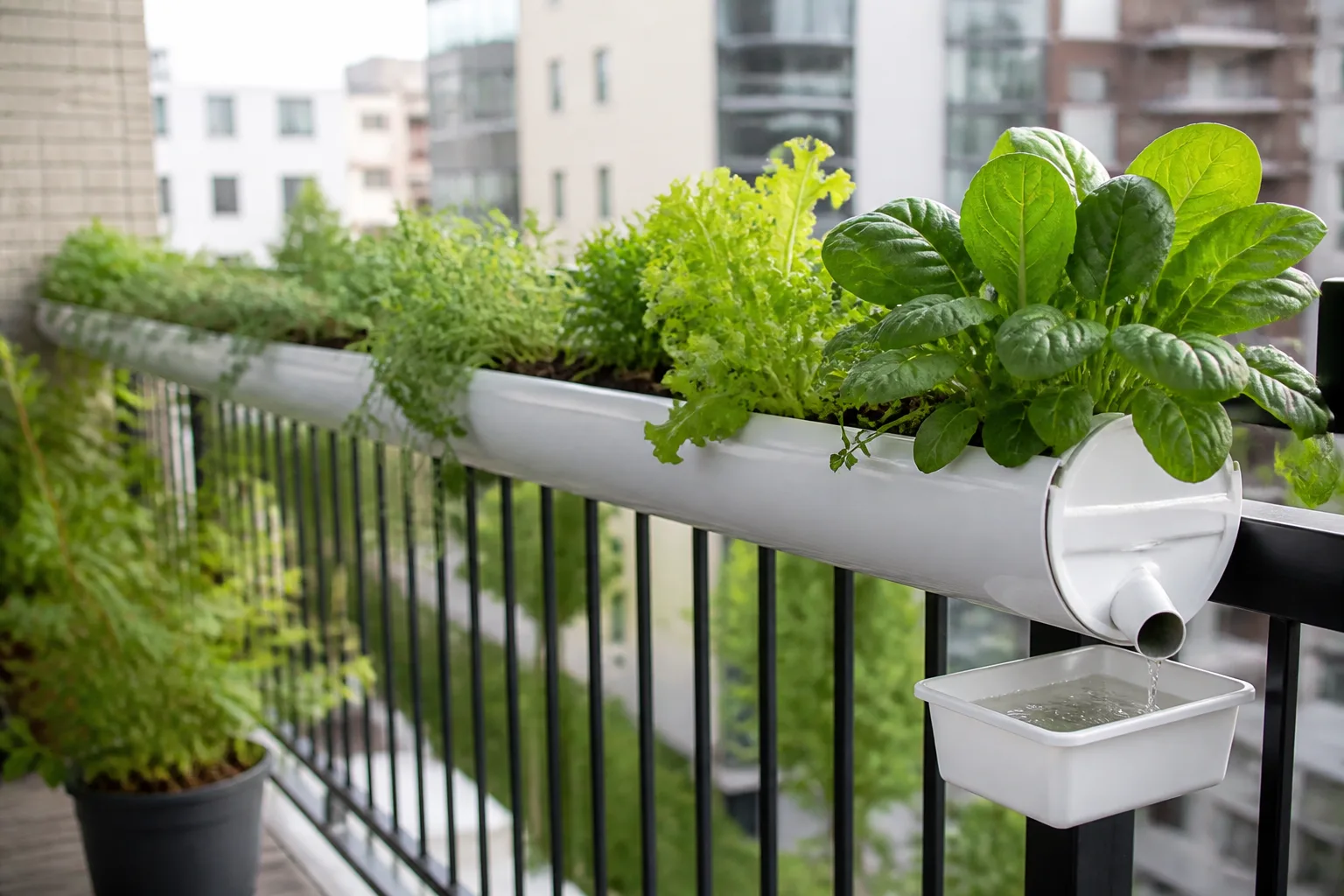
Put the garden near a water source and somewhere you will pass often. A garden that requires carrying buckets through the house or dragging a hose around furniture will eventually be watered late or unevenly. For a balcony, decide where excess water goes before planting. Use saucers or a drainage channel that keeps water off the building façade and the neighbor’s space, and check any building, rental, or balcony rules before placing heavy wet containers near an edge.
Choose a footprint you can maintain
The right size is the amount you can inspect, water, weed, and harvest without resenting it. A narrow bed with a path on one side may produce more usable food than a larger bed you cannot reach without stepping into the soil. Likewise, four large containers grouped near the kitchen can outperform twelve small pots scattered around a patio because the larger setup is easier to water consistently.
For a first season, choose a clear unit: one raised bed, one sunny balcony rail plus two floor pots, or a windowsill box. Leave room to stand, turn a watering can, tie a vine, and remove a failing plant. Space is not wasted when it makes daily care possible; access is part of the growing system.
Choose vegetables by harvest value, not novelty
In a small garden, every plant should earn its footprint. Before choosing a variety, ask five questions: Do you enjoy eating it? Does it produce over a long window or only once? Can it use vertical space? Does its mature size fit the container or bed? Is it difficult or expensive to buy fresh where you live?
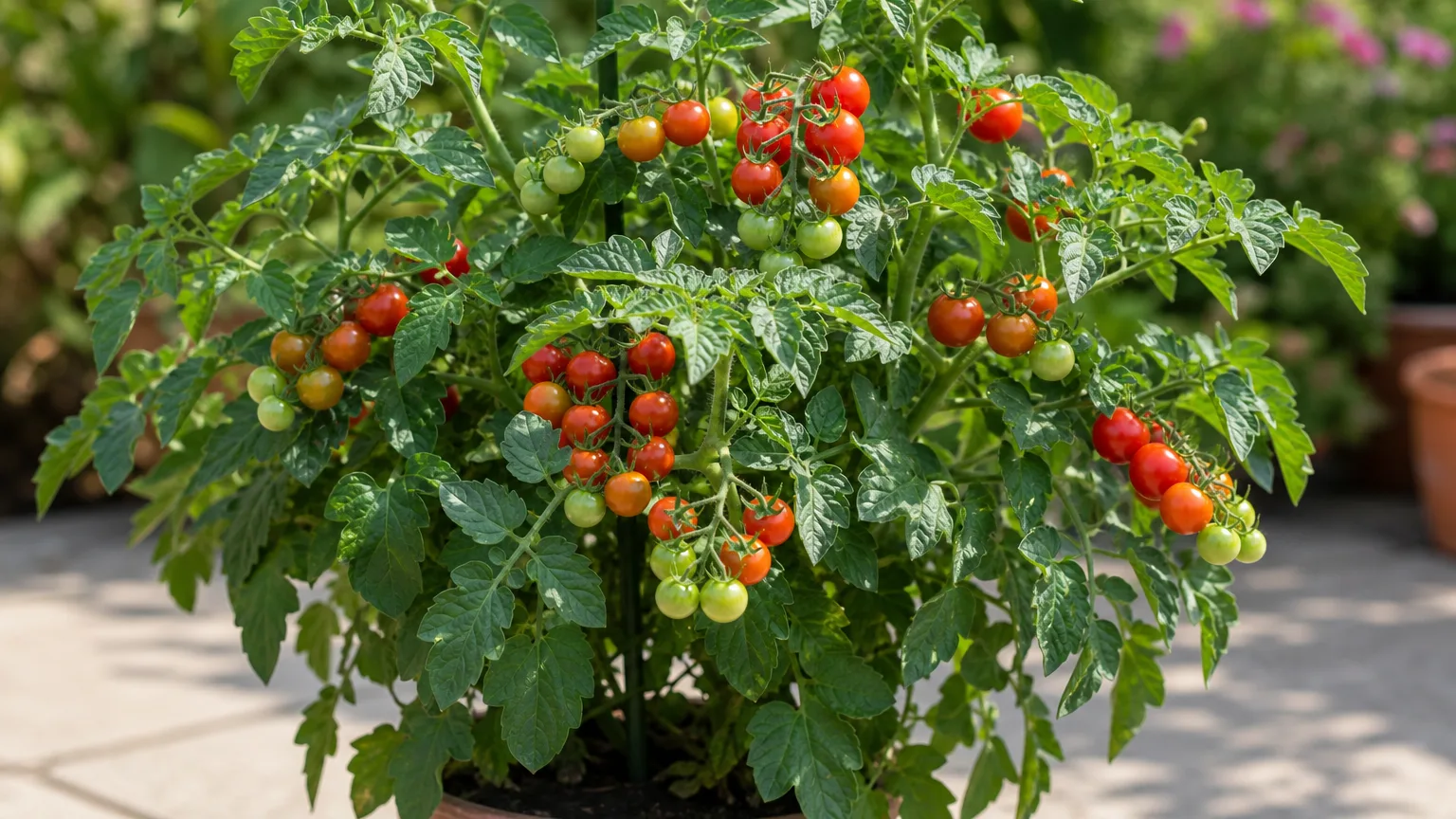
This filter usually favors cut-and-come-again greens, herbs, radishes, carrots, bush or pole beans, peppers, and cherry tomatoes. Penn State PlantVillage’s discussion of productive crops for limited space also highlights cherry tomatoes, beans, lettuce, chard, spinach, and succession planting as strong ways to turn a small area into repeated harvests. The principle is more useful than any universal “best vegetable” list: a crop you harvest weekly has more value than a large plant that gives you one meal.
Best crops for containers, beds, and narrow spaces
Choose leafy greens when you want fast, repeated picking. Leaf lettuce, spinach, kale, Swiss chard, mustard greens, and arugula can fit in shallow boxes, and you can harvest outer leaves while the plant continues growing. Radishes provide a quick root crop in a modest container. Small-rooted carrots work when the container is deep enough, but do not choose them if the only available pot is a shallow window box.
Use beans to turn a small horizontal footprint into a longer harvest. Pole beans occupy vertical space and can keep producing for much of a season when supported well. Bush beans are shorter and easier to protect or replace in a container, but they tend to give a more concentrated harvest. Peas are useful in cool weather and can climb a small trellis before a summer crop takes over the same space. A practical Savvy Gardening guide to starting a vegetable garden likewise recommends choosing a short list of crops and using succession planting rather than trying to grow everything at once.
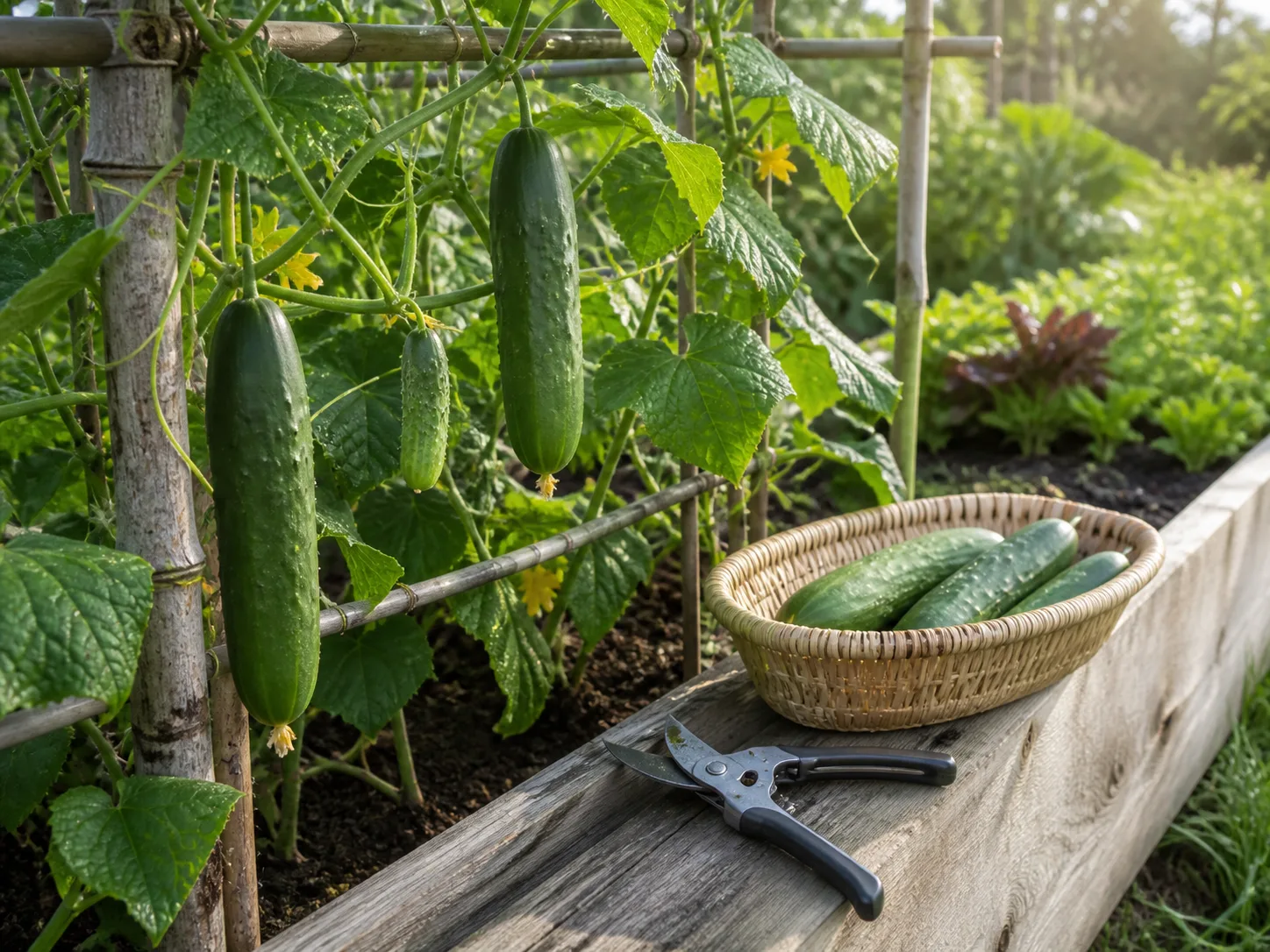
For fruiting crops, select plants that match the site rather than chasing the smallest label. Cherry tomatoes, patio tomatoes, peppers, and compact eggplants can be rewarding in large containers with strong light. Cucumbers can work vertically, but they are not automatically a low-space crop: their leaves, roots, and water demand remain substantial even when the vines climb.
Herbs are excellent space fillers when you cook with them. Basil, parsley, chives, thyme, and cilantro can share a sunny container if their watering needs are compatible. Mint is better kept in its own pot because it spreads aggressively. Place frequently harvested herbs at hand height, not behind a tall tomato where you will forget to cut them.
When compact varieties help—and when they do not
Words such as patio, dwarf, bush, mini, and compact are useful clues, not guarantees. Read the mature height, spread, days to maturity, and support requirements on the seed packet or plant tag. A dwarf plant may fit a small pot but produce less overall than a standard plant, while a variety specifically bred for container culture may perform surprisingly well when its water and nutrition are maintained.
Determinate tomatoes are often easier in a limited garden because they have a defined bushier growth habit and a shorter main harvest period. Indeterminate tomatoes can produce for longer, but they need a bigger root zone, a more substantial support, and regular tying or pruning decisions. Do not buy an indeterminate variety simply because the fruit sounds appealing if you do not have somewhere safe to train it.
The same distinction applies to squash and cucumbers. A compact bush squash can be easier to contain but still take a wide footprint. A vining type may save ground space on a trellis, yet it needs a strong structure and a plan for supporting heavy fruit. If a crop is too vigorous for the site, replacing it with greens or beans is not giving up; it is improving the harvest per hour of care.
Build a layout that uses height and time
Small-space design has two dimensions: vertical space and calendar space. A bed can carry a climbing bean above lower greens, and the same square can carry radishes in spring, a tomato in summer, and fall lettuce later. The best layouts leave enough room for light, airflow, roots, and hands.
Put tall crops where they will not steal light
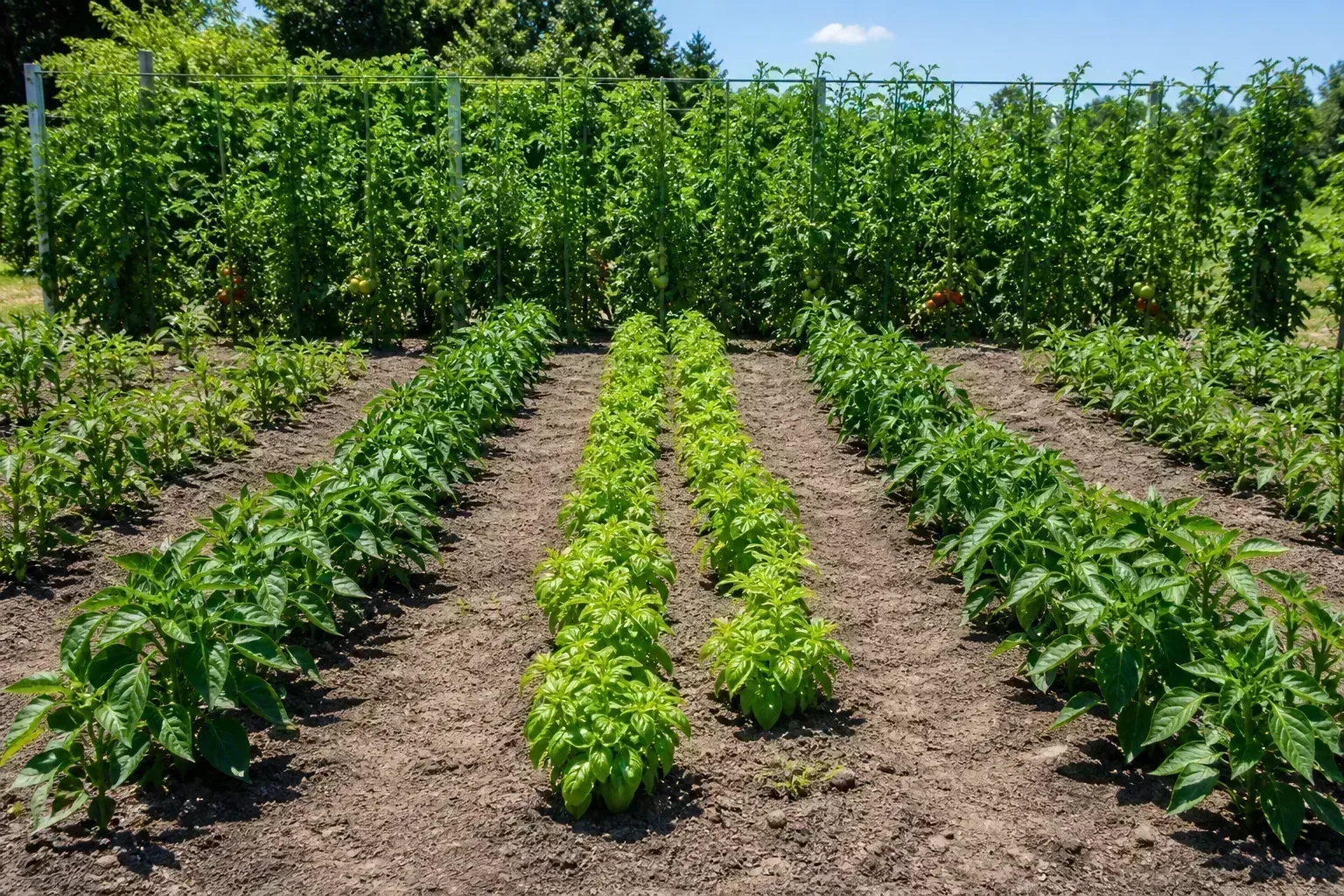
Put tall crops and trellises where they cast the least damaging shade. In a conventional bed, that often means placing them on the north side so the sun can reach shorter plants. In a narrow balcony or against a wall, orientation is less predictable, so watch the shadow at the times your low crops need light. A trellis that saves floor space but shades your only sunny area may reduce the total harvest.
Install vertical supports before planting
Put stakes, cages, trellises, or a mesh panel in place while plants are small. Adding support later can disturb roots, break stems, or force you to wrestle a mature vine through a structure. The support must be anchored to the bed, pot, wall, or railing; a light decorative trellis may look adequate empty and fail once it is covered in wet foliage.
Good vertical candidates include pole beans, peas, cucumbers, and some small-fruited squash. Train vines upward loosely, check tie points as stems thicken, and leave a way to reach the interior for harvesting. A simple teepee, cattle panel, strong mesh, or sturdy netting can be more useful than a complicated planter system. Savvy Gardening’s bean-tunnel account is a helpful practical example because it describes reinforcing a flexible structure after it began to bow under the crop.
Vertical growing also changes watering and maintenance. The top of a wall or trellis may be hotter and windier than the base, so a plant that looked evenly placed on paper may dry out first at the top. The RHS describes this trade-off in its wall-container trial: height added productive space, but upper containers were more exposed to drying winds and less convenient to reach. Keep the most frequently harvested crops at a comfortable height and reserve hard-to-reach positions for plants that need less daily picking.
Use containers without creating a daily watering trap
Containers are often the most flexible small-space solution because they let you control the growing medium, move plants toward light, and avoid poor ground soil. They are not maintenance-free. A pot has a small reservoir, a limited nutrient buffer, and more exposed sides than a garden bed, so it can go from moist to dangerously dry faster than a gardener expects.
Match container depth and volume to the crop
Think in terms of the mature root system, not the seedling you are holding. Shallow boxes suit salad greens, herbs, and radishes. Carrots need enough depth for the selected root length. Tomatoes, cucumbers, peppers, eggplant, beans, and larger greens need more soil volume and a stable base. Virginia Tech notes that most plants need at least six to eight inches of depth for adequate root growth, while larger crops need containers sized for their mature form; its crop table lists five-gallon containers for crops such as cucumbers and eggplant.
A 12-inch pot can grow a useful salad crop, especially when you sow several lettuce plants and harvest leaves rather than waiting for large heads. It is not a universal vegetable container. A tomato in that same pot may survive with diligent care but will dry quickly and become unstable as it grows. Use the largest practical container for a large crop, and choose several smaller boxes for quick greens instead of cramming a tomato, cucumber, and herbs together.
Wide, heavy containers are usually steadier than tall, narrow ones. If you need mobility, place the pot on a wheeled platform before it becomes heavy. When a container must sit on a balcony, deck, or roof surface, protect the surface, keep drainage controlled, and avoid a top-heavy arrangement that could shift in wind.
Use potting mix, drainage, and safe placement
Use a quality potting mix made for containers rather than filling a pot with garden soil. Garden soil can compact in a container, hold too much water around roots, and leave too little air space. NC State Extension recommends a container medium rather than straight garden soil; it also emphasizes that roots need moisture and air at the same time.
Every container needs open drainage holes. A layer of gravel at the bottom does not repair a pot with no drainage and can reduce the usable soil depth. Keep the mix below the rim so water can soak in rather than run over the sides, and check that holes are not blocked by a saucer or the surface beneath the pot.
Water slowly until some water exits the drainage holes, then empty a saucer that remains full. The goal is a thoroughly moistened root zone followed by drainage, not a permanently saturated pot. Virginia Tech advises checking containers at least daily and more often during hot, dry, or windy weather; twice-daily checks may be necessary for established plants in small pots on a hot surface.
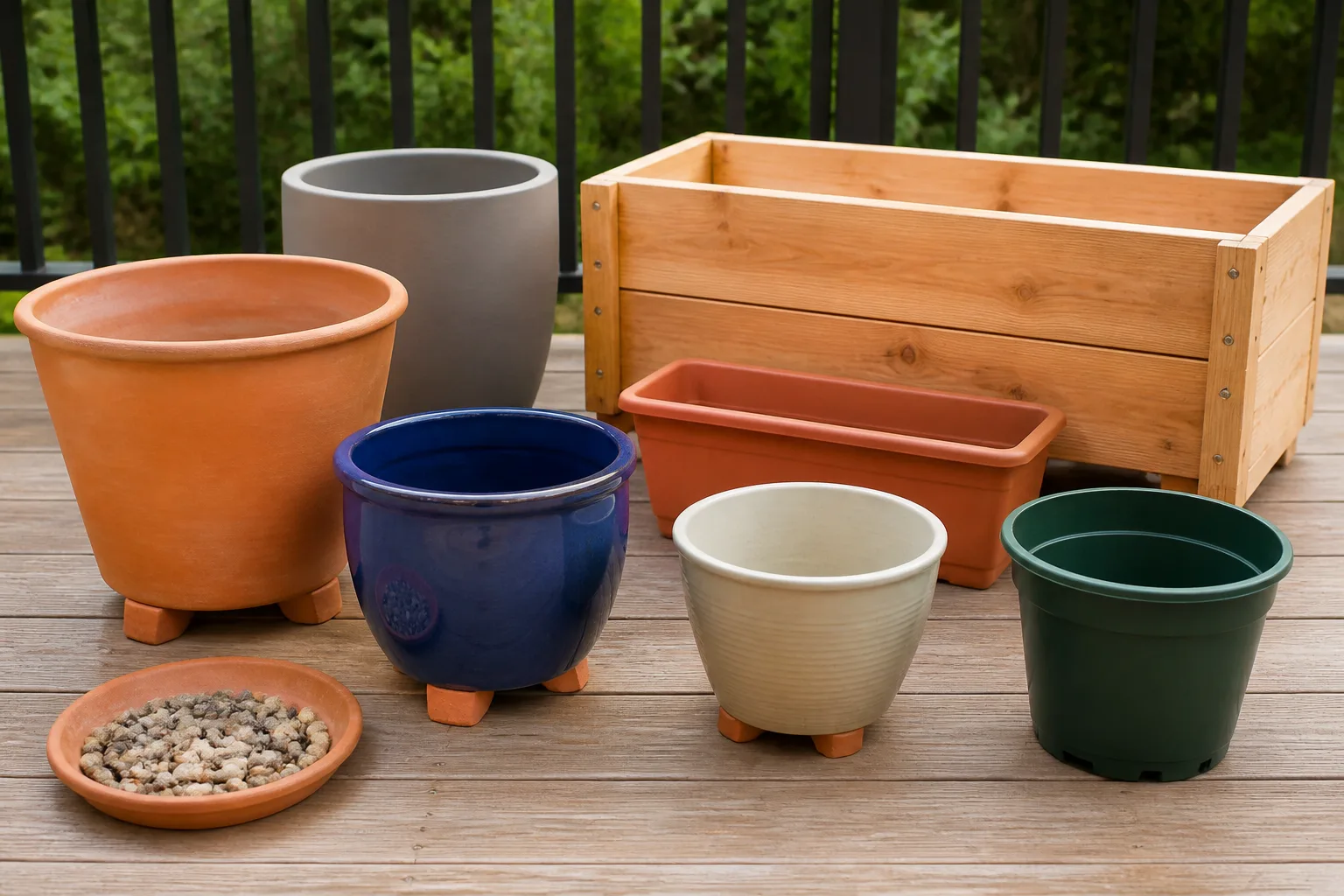
Feed according to the crop, the potting mix, and the label. A container mix that already contains fertilizer may carry a crop for several weeks, but long-season tomatoes and peppers eventually need additional nutrition. More fertilizer is not more harvest: excess salts can burn roots and lush, soft growth can attract problems. If leaves yellow or growth stalls, check moisture, roots, light, and the label rate before adding another product.
Make a small garden productive with succession planting
Succession planting means deliberately using the same footprint more than once. You can stagger sowings of a quick crop, replace a crop as it finishes, or pair a cool-season crop with a warm-season crop that will not need the space until later. This is one of the strongest small-garden techniques because it increases harvest time without increasing the footprint.
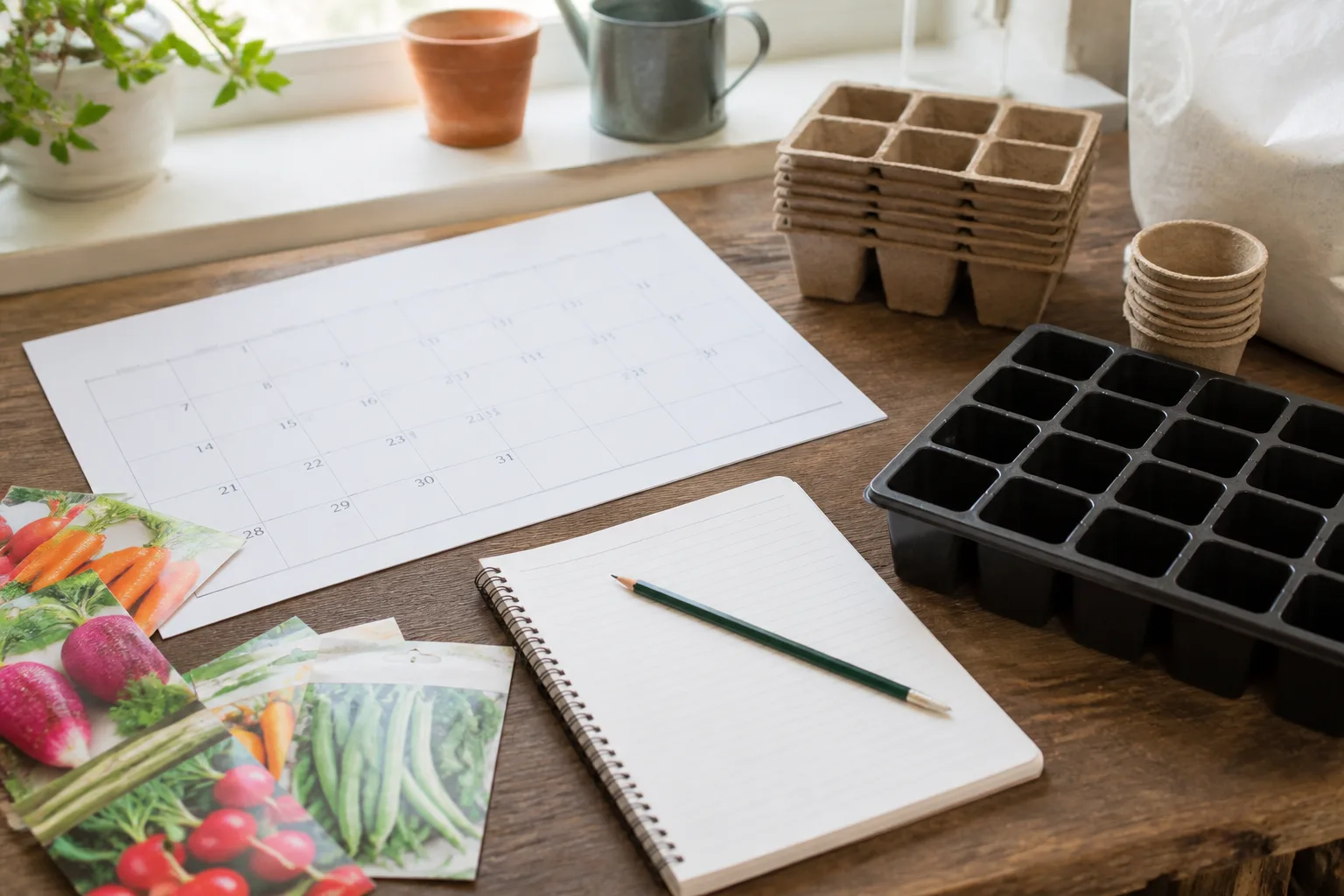
Start with the days to maturity on the seed packet and your local frost dates. Write the sowing date, expected first harvest, likely final harvest, and replacement crop on a calendar. A small garden benefits from this simple record because you can see when a bed or pot will become available instead of discovering the empty space after a crop collapses.
Pair fast crops with slow crops
Plant radishes, baby lettuce, spinach, or peas early, then follow them with beans, basil, cucumbers, or a summer tomato after the weather and soil are warm enough. In late summer, clear exhausted warm-season plants and sow kale, chard, lettuce, mustard greens, or winter radishes if your climate allows. NC State Extension recommends staggering plantings and replanting an area as each crop is harvested; its advice is especially useful for small beds where there is no spare row waiting.
You can also stagger the same crop. Instead of sowing every lettuce seed at once, sow a small amount every one or two weeks while conditions remain suitable. That gives you a steady supply of tender leaves rather than a pile of mature heads that bolt together. The same principle works for bush beans and radishes, although temperature and local season length determine how many rounds are realistic.
Interplant with intention, not as an excuse to crowd. A tomato can shade lettuce during hot weather, but the lettuce still needs airflow and enough light to grow. A trellised cucumber can share a bed with low herbs, but its roots and leaves should not smother them. Leave a planned removal route: when the fast crop finishes, pull it cleanly so the slower crop has room to expand.
Grow in less sun with the right crop
Partial shade is not a dead end, but it changes what success looks like. If a space gets around four to six hours of direct sun, use it for lettuce, spinach, kale, chard, mustard greens, parsley, cilantro, mint in a pot, and some root crops. These plants may grow more slowly, and leafy crops can still bolt in heat, but they are a better match than trying to ripen a heavy crop of tomatoes behind a wall.
Fruiting vegetables need more light because flowering and fruit development take more energy. If a tomato produces tall, thin growth and few flowers, moving it to richer soil will not solve the basic shortage of light. Move the pot to the brightest safe location, choose a smaller fruiting variety for the next planting, or use the space for greens and herbs.
Bright reflected light is not the same as direct sun. A pale wall can make a patio feel bright while the plant receives only a short period of usable direct light. Use your own observation: compare growth on the sunny and shaded sides of the space, and rotate containers only if doing so does not disrupt their support or cause a plant to lean repeatedly.
Keep windowsill and indoor harvests realistic
A windowsill is excellent for herbs, lettuce, small radishes, and a few compact crops when it receives strong light. Indoor conditions are usually less windy and may dry containers more slowly, but warm rooms can still create dry air and weak, stretched growth. Keep leaves from touching cold glass, provide airflow, and avoid placing edible plants where they can be splashed by cleaning products or contaminated water.
Tomatoes and peppers are much more demanding indoors than herbs. They need strong light, warmth, enough root volume, and pollination support. Virginia Tech notes that fruiting vegetables grown indoors may need supplemental light, particularly in winter, and that inadequate light produces spindly growth and poor flowering or fruit set. If you do not have a bright window or grow light, choose a reliable harvest of herbs and salad greens instead of judging indoor gardening by a tomato that never sets fruit.
Water, feed, harvest, and scout on a small-space routine
The most productive small garden is usually the one you visit. Check the soil with a finger or moisture tool, look under leaves, tie new growth, remove damaged foliage, and harvest what is ready. Do not use a fixed watering calendar as a substitute for observation: a large shaded pot, a small terracotta pot in wind, and a raised bed after rain all have different needs.
For in-ground or raised-bed vegetables, a general starting point is about one inch of water per week from rain and irrigation combined, adjusted for soil, heat, crop, and local conditions. Water the soil around the root zone rather than repeatedly wetting foliage. Mulch with a thin, loose layer of clean organic material to slow evaporation and suppress weeds, keeping it away from stems so the base stays ventilated.
Harvest often, especially from beans, cucumbers, summer squash, leafy greens, herbs, and cherry tomatoes. Overmature fruit can shift the plant toward finishing its reproductive cycle, while regular picking keeps food coming to the kitchen. NC State Extension specifically recommends frequent harvest for fast-producing crops and notes that an easy-to-see, accessible garden is more likely to be harvested at the right time.
Prevent crowding, pests, and disease
Crowding is the small garden’s most common self-inflicted problem. Follow the seed packet or plant tag spacing, even when the young plants look lonely. Plants need air movement, light on their leaves, and enough root-zone volume; squeezing in extra seedlings often produces smaller plants and creates a humid canopy where foliar disease spreads quickly.
Inspect leaves, stems, and the undersides of foliage every day or two. Look for chewed edges, sticky residue, distorted new growth, webbing, spots, and wilt that does not recover overnight. Identify the problem before treating it. A few holes from a caterpillar call for a different response than a virus-like pattern, root damage, or a plant that is simply dry.
Use the least disruptive response that fits the diagnosis: remove a small number of pests by hand, improve spacing and airflow, isolate a diseased container, or remove a failing plant before it becomes a source of spread. Avoid spraying flowering crops when pollinators are active, and follow the label for any product approved for edible plants. Healthy plants with adequate light, moisture, and nutrition are not pest-proof, but they are better able to recover.
If you cannot rotate a small in-ground bed, rotate crop families as far as your layout allows and remove diseased debris rather than leaving it in place. For containers, empty and clean pots after a serious disease, refresh old mix instead of endlessly topping it up, and do not reuse a potting mix that carried a known root or soil-borne problem without a sensible sanitation plan. NC State Extension recommends multi-year rotation where space permits; in a tiny garden, sanitation and crop selection become the practical substitutes.
Conclusion
The best small-space vegetable gardening plan is not the one with the most plants. It is the one that puts the right crop in the right light, gives large plants enough root room, turns strong supports into vertical growing space, replaces harvested crops on a calendar, and keeps every pot accessible for watering and picking.
Start with one measured footprint. Grow a few high-value crops—perhaps lettuce and radishes for quick harvests, pole beans or a cucumber on a secure trellis, and one cherry tomato or pepper in a large pot. Visit often, record what dries out or gets shaded, and let that evidence choose your next crop. A small garden becomes productive when you design for the harvest you can actually sustain.