Turtle Vine Care: Light, Water, Soil & Propagation
Turtle vine care starts with bright filtered light, steady moisture, and fast drainage. Learn watering, pruning, propagation, pet safety, and outdoor limits.
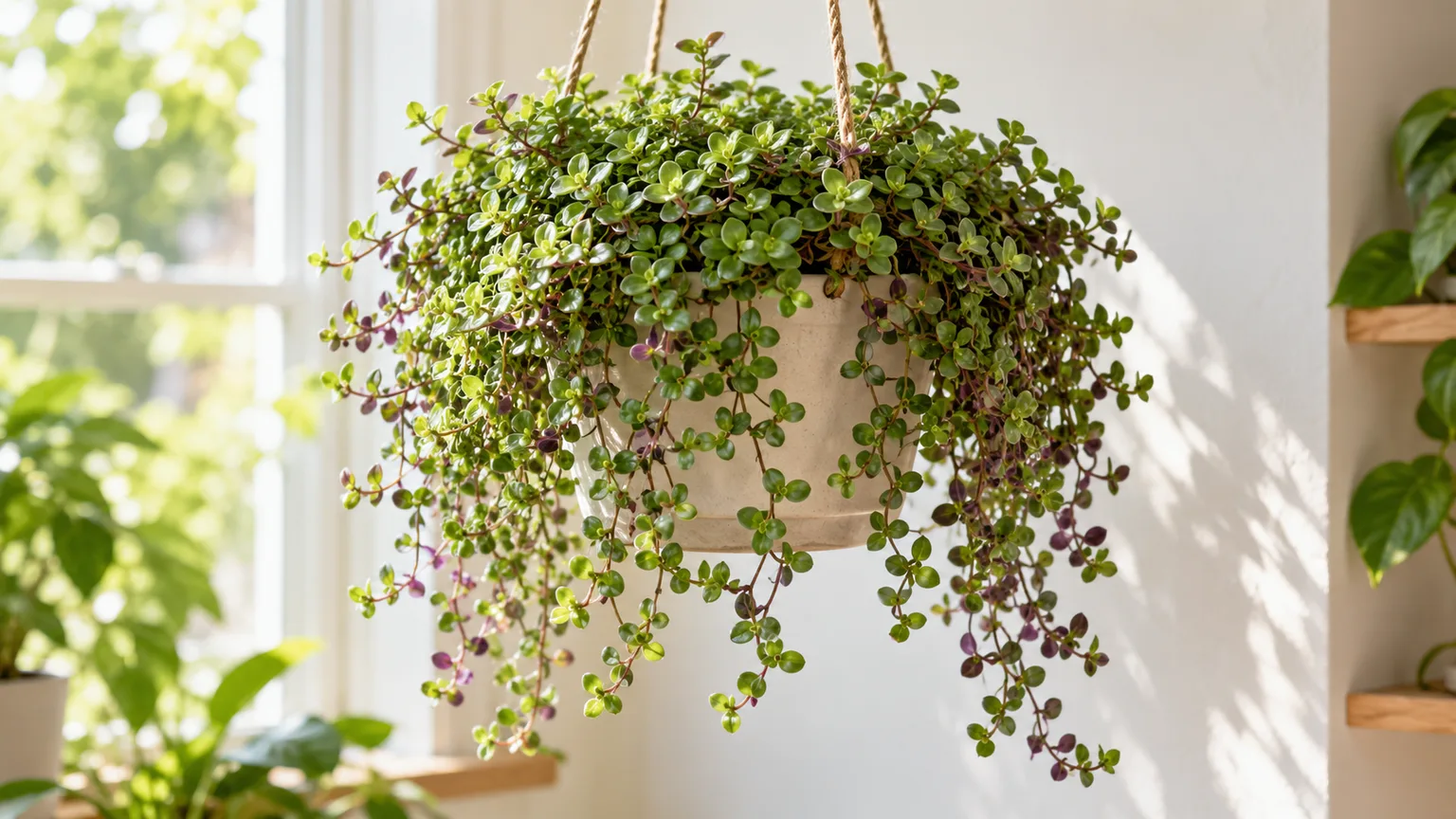
Turtle vine is a fast-growing, small-leaved trailing plant that can make a hanging basket look full without asking for elaborate care. The trick is to treat it as a moisture-loving foliage plant with semi-succulent stems, not as a desert succulent that should dry bone-dry between every drink. Give it bright filtered light, a pot that drains, and watering guided by the mix in front of you, and it usually rewards you with dense growth that is easy to trim and share.
Turtle vine care at a glance
| Care factor | Practical starting point |
|---|---|
| Light | Bright, indirect light indoors; partial shade outdoors |
| Water | Water thoroughly when the top inch or so begins to dry; drain the saucer |
| Soil | Light, moisture-retentive mix amended with perlite or pumice |
| Pot | A container with open drainage; avoid a much-too-large pot |
| Temperature | Aim for a warm room around 60–80°F; protect it from frost and cold nights |
| Humidity | Average indoor humidity is usually workable; good airflow matters more than misting |
| Feeding | Half-strength balanced liquid fertilizer about monthly in active growth |
| Pruning | Pinch or cut just above a node; root healthy trimmings to fill the pot |
| Main risks | Soggy soil, harsh direct sun, cold exposure, pests, and pet access |
Use the table as a starting point, then read the plant’s response. A basket near a warm, bright window may dry in a few days, while a shaded pot in winter may still be damp a week later. The same calendar cannot fit both; checking moisture and new growth prevents the two common extremes of letting stems shrivel or keeping roots continuously wet.
What is turtle vine?
Turtle vine is the common name for Callisia repens, a member of the spiderwort family, Commelinaceae. NC State Extension describes it as a trailing, mat-forming succulent native from southeastern Texas through tropical parts of the Americas; the stems branch close to the ground and can root where nodes touch soil. In a pot, those same stems spill over the rim, which is why the plant works well on a shelf or in a hanging basket.
Its small oval leaves sit closely along slender stems and may show purple coloring underneath. Forms sold as ‘Bianca,’ ‘Pink Panther,’ or ‘Gold’ add pink, cream, or yellow-green variegation, while the standard form is mostly green. The exact look and vigor depend on the cultivar and growing conditions, so a plant that arrives more green than its nursery photo may simply need brighter filtered light or time to settle in.
The word “succulent” can mislead new owners. Turtle vine’s fleshy leaves and stems buffer a short dry spell, but its roots still grow best in a mix that holds a little moisture while excess water drains freely. That middle ground—lightly moist, never waterlogged—is more reliable than applying a generic cactus watering schedule.
Choose light and display position
Bright, filtered light keeps turtle vine compact and supports leaf color without exposing tender foliage to hours of scorching sun. Indoors, place it near a bright east- or west-facing window, or a little back from a strong south-facing window where a sheer curtain softens direct rays. If the only available spot is dim, move the plant closer to the light source or add a grow light; turning up fertilizer will not correct stretched growth caused by darkness.
Watch the newest stems for feedback. Long gaps between leaves, small pale leaves, or growth reaching strongly in one direction usually point to insufficient light, while bleached or crisp patches on the window-facing side suggest too much direct sun or an abrupt move. Make changes gradually over several days so the plant can adjust rather than switching from deep shade to hot afternoon sun all at once.
Variegated forms generally benefit from a bright position because the lighter parts of their leaves have less green tissue to capture light. Keep them out of harsh midday rays, though; the aim is bright ambient light, not heat against the glass. Rotate a basket or pot a quarter turn every week or two if growth is lopsided, and avoid a display position directly above a heater or in an air-conditioning draft.
Water for steady moisture without soggy roots
Check the top inch of mix with a finger before watering. When it feels dry there but the lower root zone is not bone-dry, water slowly until it runs from the drainage hole, then empty the saucer or cachepot. If the pot still feels heavy and the soil below the surface is cool and damp, wait; watering by weekday instead of by soil condition is a common path to yellow leaves and soft stem bases.
Turtle vine tolerates a brief missed watering better than many thin-leaved houseplants, but repeated complete drying can cause lower leaves to drop and stems to thin. At the other extreme, constantly wet compost deprives roots of air and encourages rot. The goal is a useful wet-to-dry cycle: thorough watering, free drainage, then a short dry-down near the surface before the next watering.
Light, temperature, pot material, and plant size all change the interval. Terracotta dries faster than plastic, and a crowded basket may use water more quickly in warm weather than a small newly potted cutting. During winter or a cloudy stretch, growth and evaporation slow, so check less often and water less frequently without letting the entire root ball repeatedly turn dust-dry.
If water runs around the edge without wetting the center, the mix may have become hydrophobic or compacted. Water in two slow passes a few minutes apart, then check whether moisture reached the root zone; if it still channels away, repot into fresh mix. Do not leave the pot soaking in a full saucer as a routine fix, because prolonged standing water can suffocate roots.
Select a soil mix and pot that drain well
A good turtle vine mix holds enough water for its shallow roots but does not stay saturated. Start with two parts quality peat-free houseplant mix or coco-coir mix and one part perlite or pumice; a similar airy mix with coarse horticultural grit also works. NC State Extension recommends moist, sandy, well-drained soil or a potting mix amended with perlite, while the Royal Horticultural Society lists well-drained conditions and a mix amended with grit.
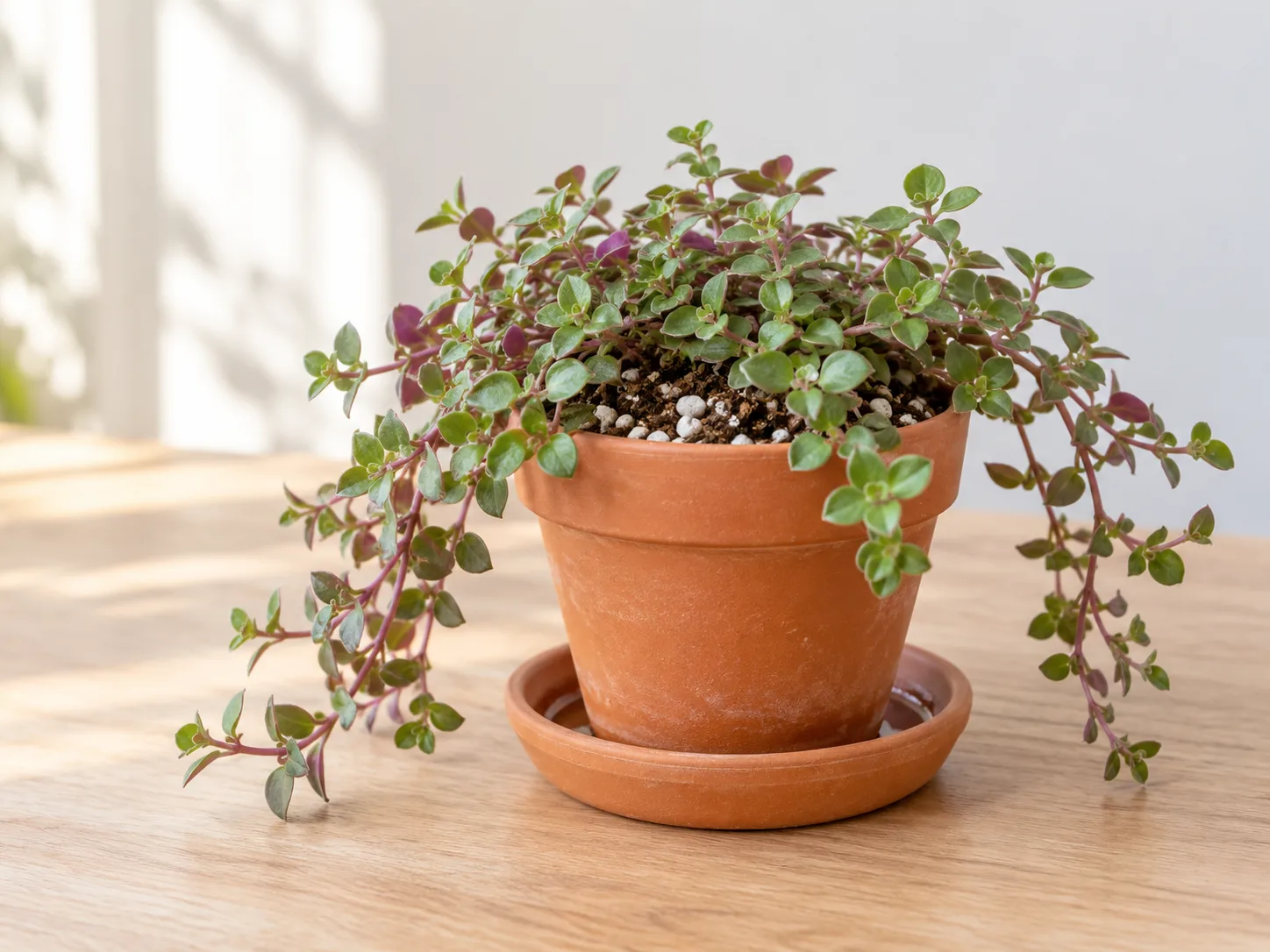
Choose a pot with an unobstructed drainage hole and only a little extra room around the root mass. A very oversized container contains more wet mix than the plant can use, which can make drying slow and uneven. Terracotta can help a mix dry faster, while plastic holds moisture longer; neither material is automatically best if you adjust watering to how quickly the pot dries.
Avoid adding a layer of gravel to the bottom of a pot as a substitute for drainage. It reduces the depth of usable soil without making the mix above it drain better. If you use a decorative cachepot, keep the growing pot inside it but lift it out to water or empty all runoff promptly.
Keep temperature warm and humidity moderate
Turtle vine grows best in ordinary warm indoor conditions, roughly 60–80°F, and should be protected from frost. The RHS plant profile says it can be grown outside where winter temperatures do not fall below about 10°C (50°F); in colder climates, use it as a houseplant or a warm-season container plant and bring it inside before nights get chilly. Do not wait until leaves are visibly damaged to move it away from a cold window.
Average household humidity is generally sufficient when the plant receives good light and the soil is managed well. Extra humidity may help in an exceptionally dry room, but misting is a poor substitute for watering the roots and can leave foliage wet without changing room humidity for long. A room humidifier is more effective if humidity is persistently low; maintain airflow so dense stems do not remain damp.
Keep the plant away from heating vents, cold drafts, and glass that becomes very cold overnight. A sudden temperature change can stress growth even when the thermometer never reaches freezing. If moving a basket between indoors and a patio, make that transition gradually and reverse it before autumn nights fall near the plant’s cold limit.
Fertilize lightly during active growth
A turtle vine in fresh, reasonably fertile potting mix may grow well without frequent feeding. For a potted plant that is actively producing new leaves in spring and summer, use a balanced liquid houseplant fertilizer diluted to half the label rate about once a month. Follow the product label, apply it to already moist soil, and stop feeding when growth slows in autumn and winter.
More fertilizer does not make a plant fuller if it is short on light or trapped in wet soil. Excess salts can burn leaf tips and produce weak, overly soft growth, especially in a small container where minerals accumulate. If a white crust forms at the soil surface or pot rim, pause feeding and flush the mix thoroughly with water that can drain away; resume at a lower dose only after the plant is growing steadily.
Prune for a fuller basket and repot when needed
Pinch or snip a stem just above a leaf node—the point where leaves attach to the stem—to encourage branching below the cut. Trim long or bare sections back in small stages, keeping enough healthy foliage on the plant to support new growth. Spring and summer are convenient times for shaping because the plant can replace leaves quickly, but a few small corrective trims are fine whenever a stem becomes damaged or awkward.
The best shortcut to a dense pot is to return rooted cuttings to the same container. A mature turtle vine can look full at the rim but sparse at its center; trimming a few tips, rooting them, and planting them around bare areas restores coverage more reliably than feeding heavily. Clean scissors reduce the chance of spreading pests or disease between plants.
Repot when roots fill most of the container, growth stalls despite good light and watering, or the mix has collapsed and no longer drains predictably. Move up only one pot size, loosen tightly circling roots gently, and refresh the old mix. After repotting, water once to settle the medium and let excess run out; avoid adding fertilizer immediately because fresh mix may already contain nutrients and disturbed roots need time to recover.
Propagate turtle vine from stem cuttings
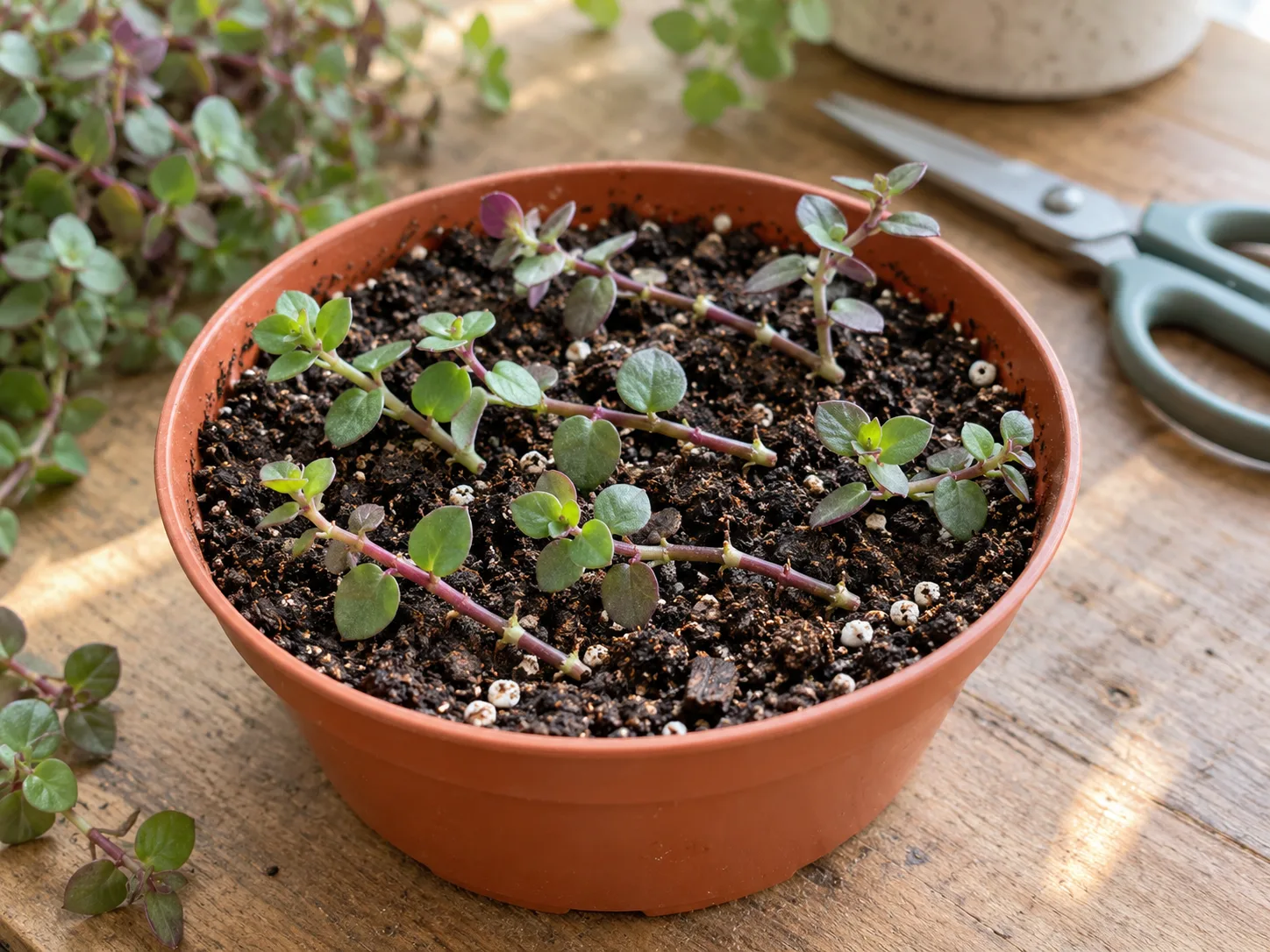
Turtle vine is straightforward to propagate because roots can form at nodes along its trailing stems. Take several healthy cuttings rather than relying on one, especially if you are filling a hanging basket; if one cutting fails, the others can still establish. NC State Extension and the RHS both list stem or softwood cuttings as suitable methods, and the RHS recommends potting several cuttings together when you want dense coverage.
Choose water, soil, or layering
Water propagation lets you see roots forming and can be reassuring for a first attempt, but it adds a transition from water roots to potting mix. Soil propagation skips that transition and is convenient when the goal is a fuller pot. For either approach, keep leaves above the rooting medium, place at least one node where roots can form, and give the cuttings bright indirect light.
Layering is the lowest-disturbance option: leave a healthy trailing stem attached to the parent plant, lay one or more nodes on the soil surface, and pin the stem gently with a bent paper clip or small plant pin. Keep that section lightly moist while it roots. Once the node holds in place when nudged, cut the connecting stem and let the new rooted section grow on its own.
Root a cutting step by step
Gardeners’ World and Empress of Dirt cover practical softwood-cutting technique; their advice on clean tools and fresh, non-woody stems is useful background for this species. For turtle vine, adapt those general methods to its small stems and easy rooting at nodes:
- Select a healthy stem. Choose a firm, leafy section with several nodes, avoiding any part that is yellowing, mushy, or covered in pests.
- Cut just below a node. Use clean, sharp scissors and make a cutting about 3–4 inches long. The node is the point to keep in the soil or water because roots form from the stem there.
- Remove leaves from the lowest node. Strip only the leaves that would sit below the surface or in water; leaves buried in wet mix are more likely to decay.
- Root in water or mix. For water, submerge a bare node and keep leaves above the waterline. For soil, insert a node into lightly moist mix and firm it gently so the cutting stays upright.
- Keep conditions steady. Put the pot or glass in bright indirect light, check the moisture often enough to prevent full drying, and avoid direct hot sun or a sealed, soggy cover.
- Pot water-rooted cuttings with care. Once you can see a small cluster of roots, move the cutting into a small draining pot and keep the mix lightly moist while new growth resumes.
There is no dependable exact day when every cutting roots. Warmth, light, stem maturity, and season all matter, so look for fresh growth or resistance to a gentle tug instead of repeatedly lifting cuttings to inspect them. If a cutting turns translucent or soft, remove it, trim away damaged tissue with a clean blade, and start again in cleaner, less wet medium.
Choose among turtle vine varieties
The standard green Callisia repens is a reliable choice if you want vigorous trailing growth and a simple foliage texture. Cultivars sold as ‘Bianca’ or ‘Pink Panther’ usually show a mix of green, cream, and pink, while ‘Gold’ has more yellow-green foliage. Names can vary between growers, so compare the actual leaf pattern on the plant rather than relying on a label alone.
Variegated leaves often look brightest in stronger indirect light, but their pale sections can scorch in direct afternoon sun. If a pink or cream plant gradually turns mostly green, increase light gradually and assess new leaves over time; old leaves may not regain their former coloration. A slower or less compact cultivar may need more frequent pinching to keep a basket evenly filled.
Troubleshoot turtle vine problems
Start with the soil and the pattern of symptoms before changing several care factors at once. A single old leaf can drop naturally, whereas widespread yellowing, soft stems, or rapid decline suggests a root-zone problem that needs prompt attention. Note where damage appears, how quickly it spread, and whether the pot feels dry or heavy; those clues help distinguish environmental stress from pests.
Leaf drop, yellowing, and brown patches
If lower leaves fall after the mix has been dry for an extended period, water the plant thoroughly and adjust your checks so the root ball does not keep drying completely. If leaves yellow while the soil is wet or stems feel soft near the base, hold off on watering and inspect drainage and roots. Yellowing alone is not a diagnosis; light, cold, old foliage, and root damage can look similar.
Dry brown patches on the sun-facing side point toward scorch, especially after a move outdoors or closer to a window. Shift the plant to filtered light and remove only badly damaged leaves; scorched tissue will not turn green again. Brown tips without sun exposure may come from inconsistent moisture or fertilizer salts, so check the watering pattern and pause feeding before assuming tap water is the cause.
Leggy growth, soft stems, and root trouble
Long bare internodes and sparse growth usually reflect low light, lack of pinching, or both. Move the pot to a brighter filtered location gradually, trim the longest stems above nodes, and root healthy tips back into the pot. Avoid a hard haircut during a cold, dim period when the plant is not actively replacing growth.
Mushy, dark stem bases or a sour smell from persistently wet soil are more urgent than mild drooping. Remove the plant from its pot if those signs appear, trim clearly rotted roots with a clean tool, discard waterlogged mix, and repot into an airy medium in a clean draining pot. Do not “rescue” rotting roots with extra fertilizer or routine misting; restore airflow and let the root zone dry at a reasonable pace.
Check for common pests
Inspect crowded leaf joints and the undersides of stems for webbing or stippling from spider mites, cottony clusters from mealybugs, and small groups of aphids on fresh growth. NC State Extension lists spider mites, aphids, and mealybugs among the pests to monitor on turtle vine. Dense growth can hide an early infestation, so check the plant when you prune and isolate it from other houseplants if you find insects.
For a light infestation, rinse foliage and stems thoroughly, wipe off visible pests, and recheck the plant every few days. If you use an insecticidal soap or another product, confirm it is labeled for the plant and pest, test a small area first, and follow the label; tender foliage can react to sprays, especially in bright sun. Correcting dusty, crowded conditions and inspecting nearby plants helps prevent the problem from returning.
Keep turtle vine away from pets and children
NC State Extension flags turtle vine as a plant that can be toxic if ingested and notes that the sap may irritate skin. Keep the basket or pot out of reach of pets and young children, and wash your hands after pruning if your skin is sensitive. Hanging the plant high can reduce casual access, but it does not make an inquisitive cat safe if stems trail within reach.
If a pet or child chews the plant, remove any remaining pieces from the mouth, identify the plant as Callisia repens, and contact a veterinarian, poison-control service, or medical professional for situation-specific advice. Do not induce vomiting or try a home remedy unless a qualified professional tells you to. If you are unsure which plant was eaten, take a clear photo or keep a cutting for identification.
Use outdoor plantings cautiously
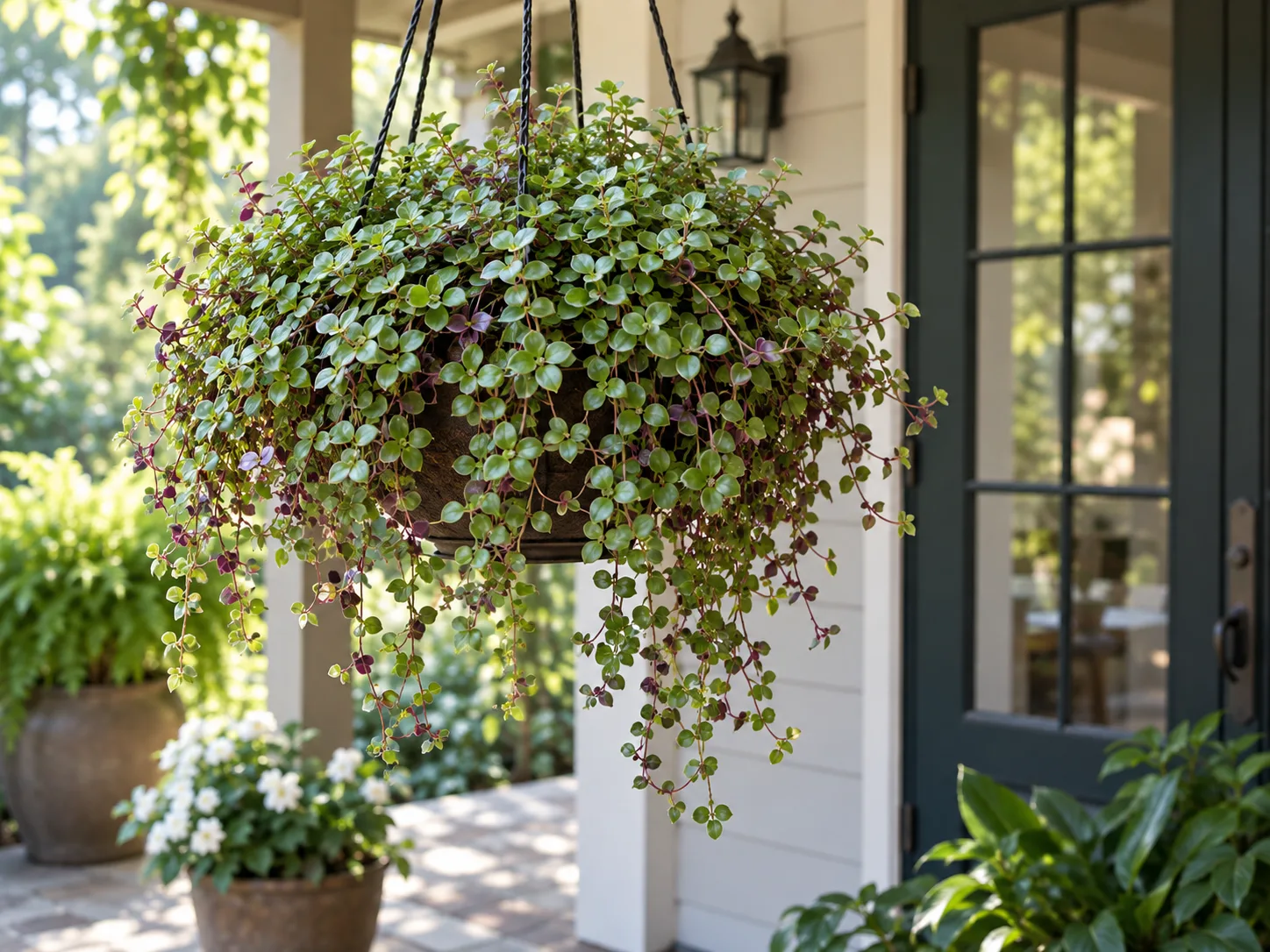
Turtle vine can work in a warm, sheltered container outdoors where it gets partial shade and the growing mix drains between rains. Move it outside after temperatures are reliably warm, acclimate it to brighter conditions over several days, and bring it back indoors before cold nights approach 50°F (10°C). A container gives you more control over moisture and makes it easier to prevent stems from rooting into nearby soil.
In warm, humid regions, stems that touch damp ground can root and spread beyond their intended space. NC State Extension notes that the plant is listed as invasive in some places and can smother weaker plants when grown as groundcover; local restrictions and invasive-species lists vary. Before planting it in the landscape, check with your local extension service or invasive-plant authority, and keep it in a container if its status is uncertain.
Conclusion
Turtle vine stays attractive when its roots receive air, its soil does not repeatedly dry to dust, and its stems get enough filtered light to branch. Check the upper layer of mix before watering, use a draining pot, and prune just above nodes when the plant begins to thin; healthy cuttings can fill bare areas or start a second container.
Keep the plant warm, contain outdoor growth, and place it where pets and children cannot chew it. Those few choices address the most common failures—soggy roots, stretched stems, cold damage, uncontrolled spread, and unsafe access—while letting Callisia repens do what it does best: grow into a full, easy-to-shape trailing plant.