When to Fertilize Houseplants: A Seasonal Guide
Learn when to fertilize houseplants, how to adjust feeding by season and plant type, and how to prevent salt buildup and root burn.
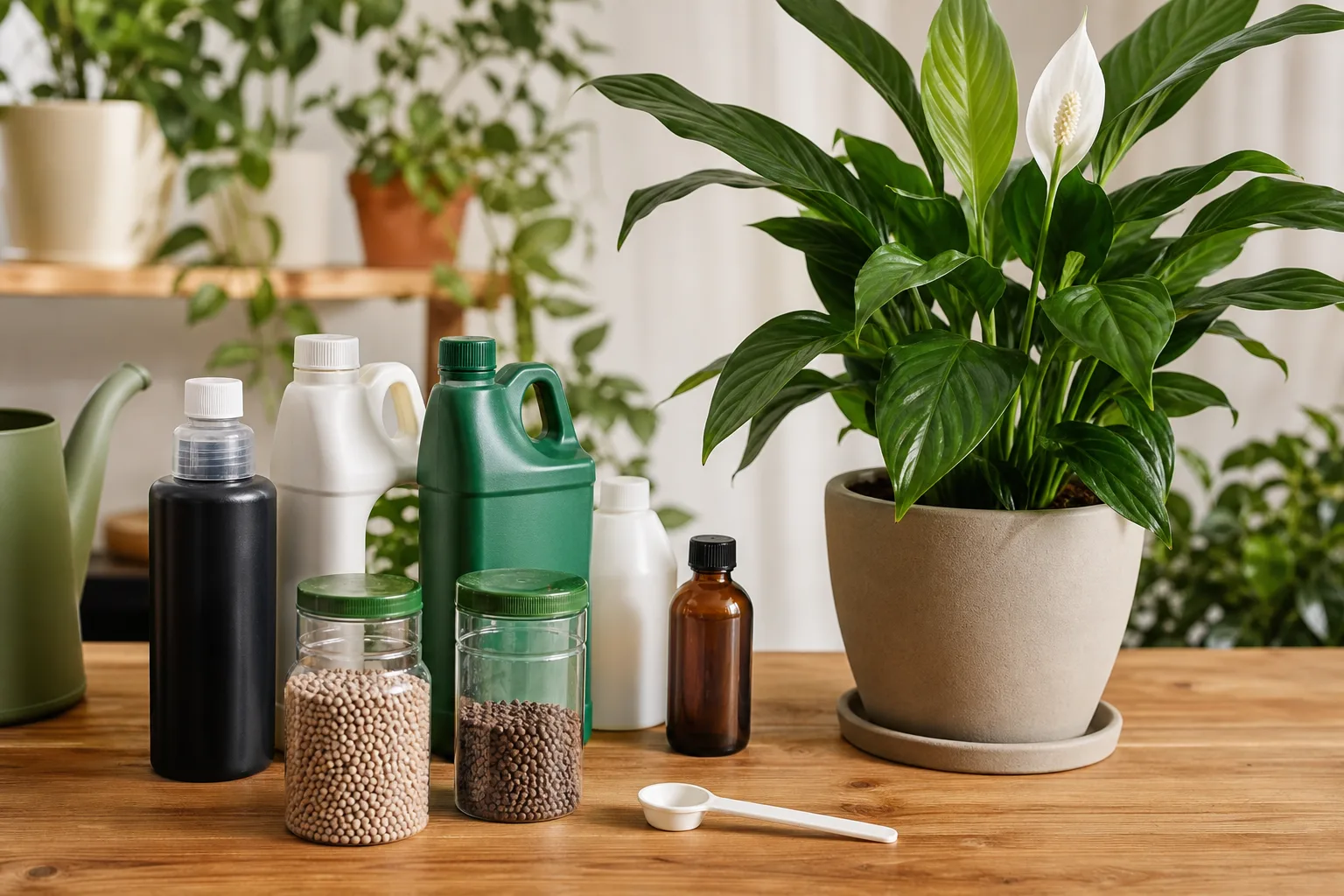
Spring is usually the best time to begin fertilizing houseplants because longer, brighter days tell many indoor plants to resume active growth. New leaves, fresh stems, developing flower buds, and faster water use are signs that the plant can make use of additional nutrients. Fertilizer is not a wake-up call for a plant that is still dormant; it is a supplement for growth already underway.
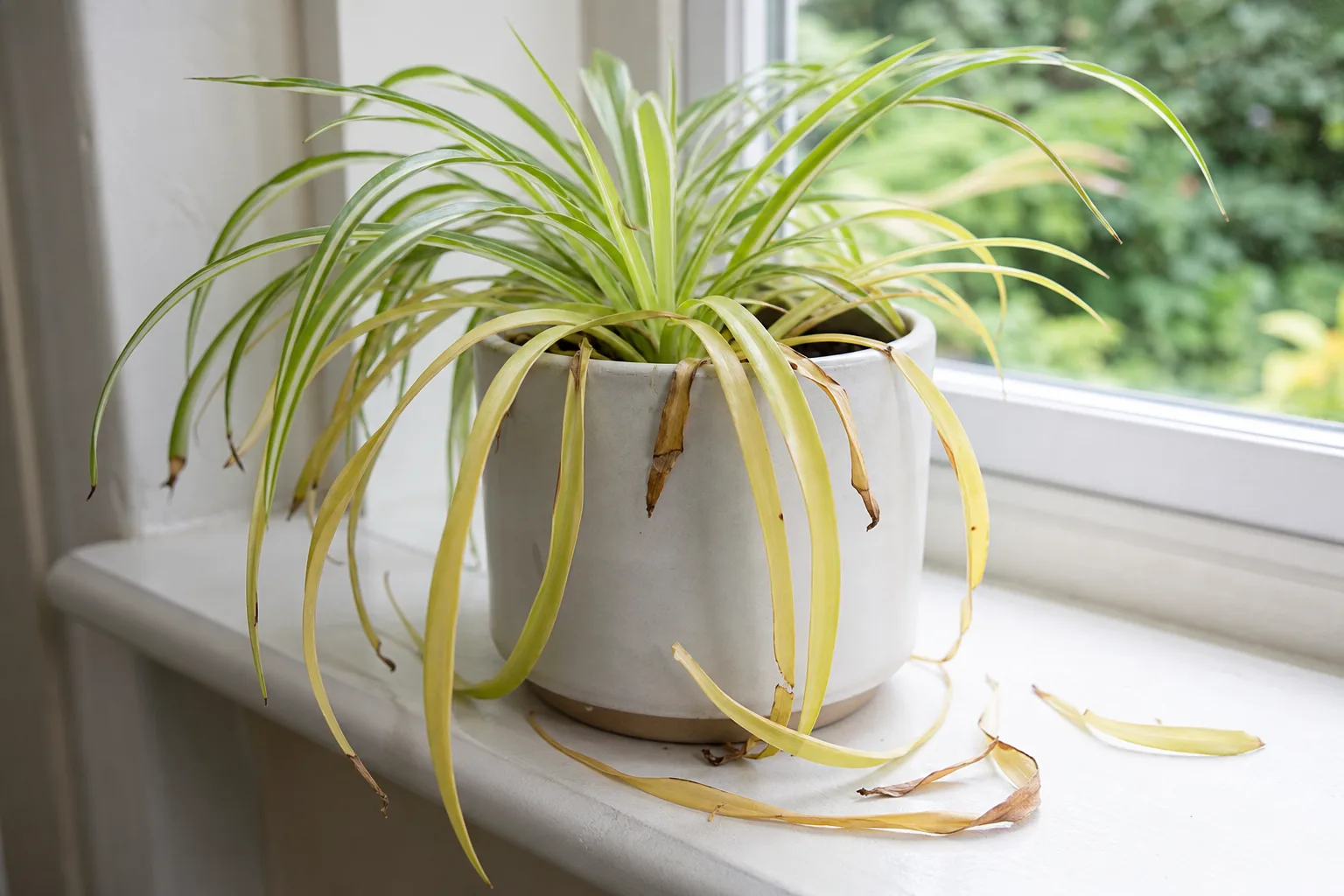
That distinction prevents the most common feeding mistake: adding fertilizer to a plant that is struggling for another reason. A plant in dim light, waterlogged soil, pest trouble, root damage, or transplant shock cannot turn extra nutrients into healthy growth. The safest schedule combines the calendar with what the plant is doing, how much light it receives, and how quickly its potting mix dries.
Why spring is the natural feeding reset
Houseplants do not experience spring exactly as outdoor plants do, but indoor light still changes. A plant near a bright window may receive substantially more usable light in March or April than it did in December. Tropical foliage plants respond with new leaves, while herbs and many flowering plants may produce new stems or buds. Fertilizer supports that work by supplying mineral nutrients the potting mix may no longer provide in sufficient amounts.
Growth matters more than the calendar
Use new growth as the primary signal and the month as a helpful prompt. Start with a light feeding when you can see a new leaf, elongating stem, or resumed growth point, provided the roots are healthy and the soil is draining normally. A plant kept under a strong grow light may continue growing in winter and need a reduced feeding program; a plant in a dark corner may need no fertilizer even in June.
The Royal Horticultural Society describes houseplant feeding as part of the growing-season routine and emphasizes following the product label because different fertilizers have different strengths and release patterns. (Royal Horticultural Society houseplant care) That is the useful middle ground between two bad rules: “fertilize every week” and “never fertilize indoors.”
The pre-fertilizer check: light, water, roots, and stress
Before mixing anything, take two minutes to inspect the plant. First, look for active growth and confirm that the plant is receiving enough light for its species. Fertilizer cannot compensate for a leaf that is pale because the plant is photosynthesizing too little, and extra nitrogen may produce weak, stretched growth in a dim room.
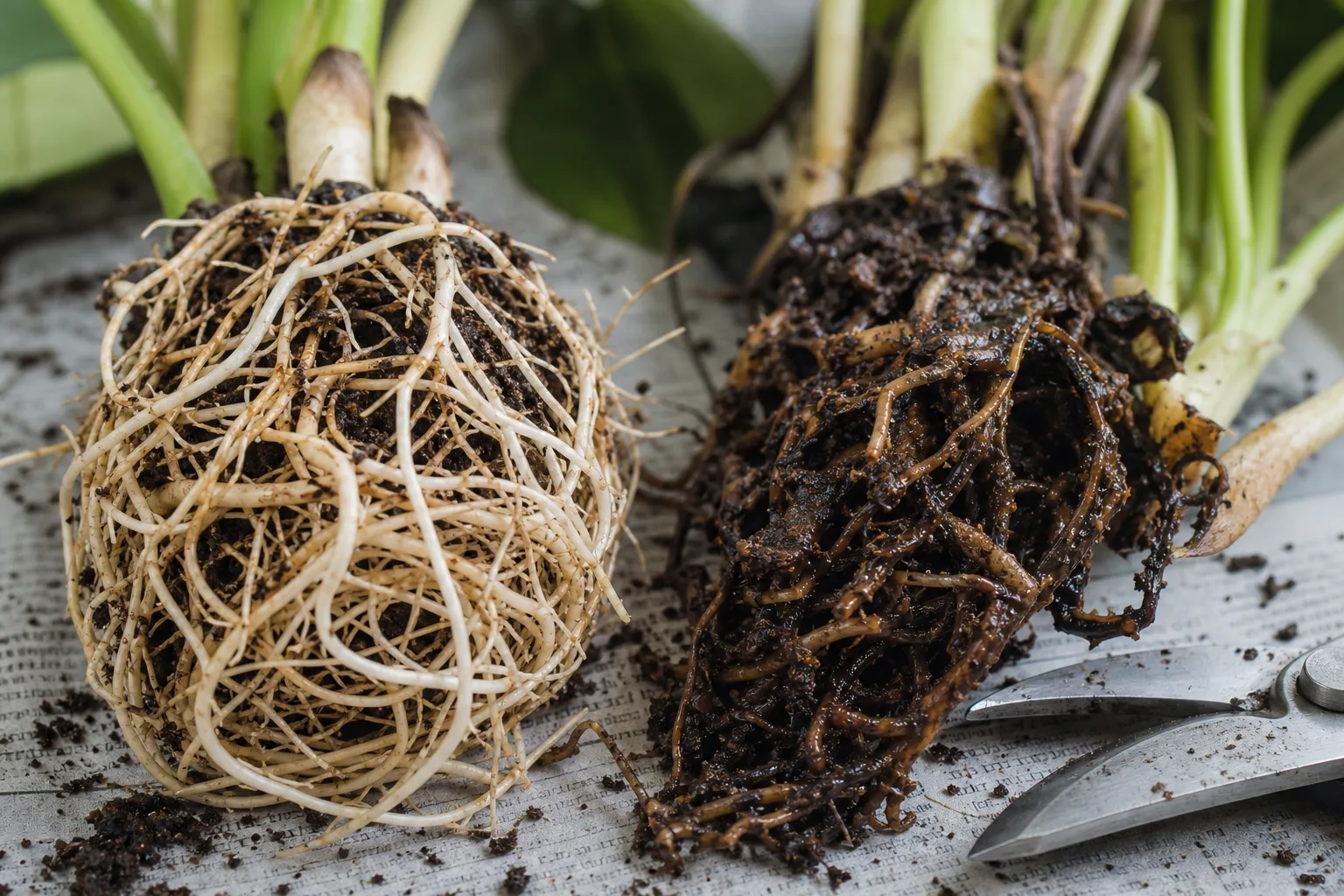
Next, check the root zone. The pot should have drainage, the mix should not smell sour, and the plant should not be sitting in a saucer of old water. Fertilize after the soil has been watered normally—not into a bone-dry root ball—and never use fertilizer water to rescue a severely wilted plant. Rehydrate first, let excess water drain, then feed at a later watering if the plant has recovered.
Pause if the plant has recently been repotted, divided, propagated, or moved into a dramatically different light level. Fresh potting mix often contains starter nutrients, and damaged roots are more vulnerable to concentrated salts. A common starting point is to wait several weeks after repotting, then follow the mix and fertilizer instructions rather than automatically adding food on moving day.
Do not use fertilizer as the first response to sudden yellow leaves, drooping, brown tips, or black roots. Those symptoms can come from overwatering, underwatering, cold drafts, pests, compacted soil, poor light, or root rot. Diagnose the growing conditions before adding a product that could make the root zone more stressful.
A practical spring-to-fall houseplant fertilizer schedule
Most indoor plants that grow actively in spring and summer can be fed from roughly March or April through late summer, then reduced or stopped as light and growth decline. The exact months depend on your latitude, window exposure, heating and cooling, and whether you use grow lights. Treat the schedule below as a framework to adjust, not a universal prescription.
Spring: restart gently
Begin with the lowest label rate that fits the plant and product, especially after a long winter without feeding. A liquid or water-soluble fertilizer is useful for this first application because it gives you control and makes it easy to observe the plant before repeating. Water the potting mix first if it is dry, apply the diluted solution evenly around the soil, and let excess drain completely.
Do not jump from months of no fertilizer to a strong weekly routine. Watch for two to four weeks of healthy new growth, stable leaf color, and normal drying before deciding whether the next application should be the same, lighter, or skipped. Spring is a reset, not a race to force the largest possible leaves.
Summer: maintain growth without overfeeding
In bright, warm conditions, many tropical foliage plants and herbs can use nutrients regularly. A common pattern is a monthly application at the label rate for a general houseplant fertilizer, or more frequent feeding only when the label specifically allows a weaker dilution. Never convert a “weekly at quarter strength” instruction into “weekly at full strength”; concentration and frequency work together.
Summer heat does not automatically mean a plant needs more fertilizer. If a pot dries quickly because of sun, a small container, or air movement, it needs a sound watering routine first. Repeatedly feeding a plant that is thirsty, heat-stressed, or root-bound can leave salts behind faster than the roots can use them.
Fall and winter: pause or reduce
As days shorten, plants near windows often slow down. Most houseplants should be fed less frequently or not at all during this low-light period, especially if they are not making new growth. Fertilizing dormant roots adds salts to a pot that may be using little water, which increases the chance of accumulation.
Plants under an effective grow light are an exception, but the light must actually support active growth. If a plant is producing leaves year-round under bright supplemental lighting, continue a conservative program based on growth and the product label. A warm room alone is not enough; warmth without light can create soft, weak growth rather than a healthy growing season.
How often to fertilize different houseplants
The right frequency depends on growth rate, light, potting mix, plant age, and fertilizer formulation. Fast-growing plants in bright light generally use nutrients sooner than a cactus in a small pot, but even vigorous plants can be harmed by an aggressive routine. When uncertain, underfeeding briefly is usually easier to correct than overfeeding.
Tropical foliage and indoor herbs
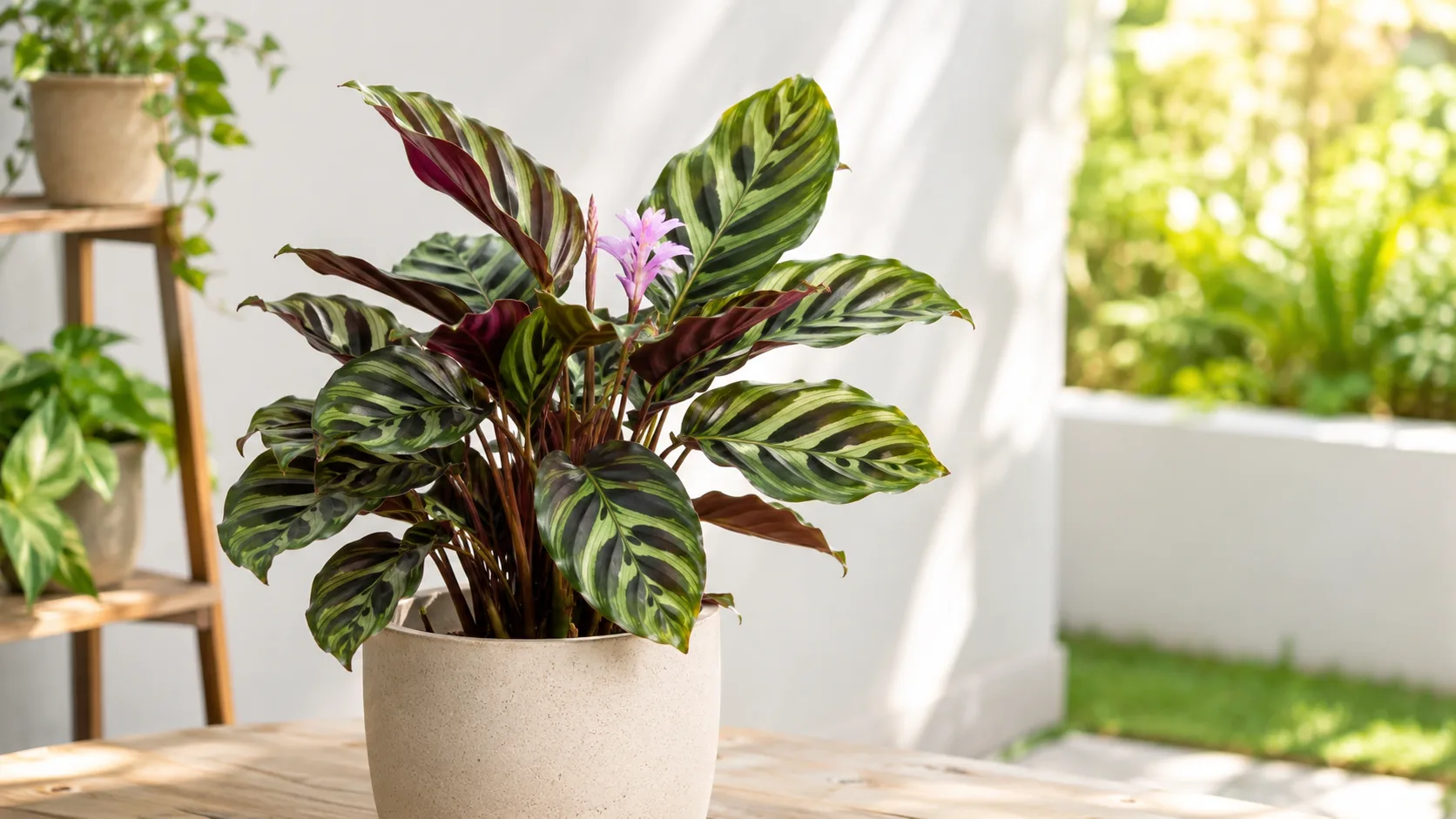
Monstera, pothos, philodendron, spider plants, ficus, palms, and many indoor herbs typically grow most strongly when light and temperature are favorable. During active growth, a complete houseplant fertilizer used according to its label every few weeks to monthly is a reasonable starting pattern. Plants in very bright light or large containers may need the upper end of the label range; plants in medium light may need less.
Herbs deserve a closer look because harvesting encourages new shoots, but their feeding needs still depend on light. Basil, mint, parsley, and similar plants grown in a sunny window may appreciate regular nutrition, while a leggy herb in weak light needs better light before more fertilizer. For edible plants, use a product labeled for the intended crop and follow its directions rather than treating all houseplant formulas as interchangeable.
Flowering and fruiting plants
Orchids, African violets, Christmas cactus, anthuriums, indoor citrus, and other flowering or fruiting plants have species-specific rhythms. Some need feeding during vegetative growth before blooming; others are sensitive to excess salts or respond best to a fertilizer formulated for their group. “Bloom booster” products are not magic substitutes for sufficient light, correct watering, pollination, temperature, or a mature plant.
For orchids, the American Orchid Society recommends feeding lightly and regularly during active growth while avoiding fertilizer accumulation in the potting media. (American Orchid Society fertilizing guidance) The practical lesson is to use a controlled routine and periodically water thoroughly with plain water, not to keep increasing the dose when flowers do not appear.
Indoor citrus and other fruiting plants usually need very bright light and more sustained nutrition than a slow-growing succulent. If leaves are pale and fruit drops, check light, watering, pollination, temperature, and pests before assuming the plant needs a stronger fertilizer.
Succulents, cacti, and slow growers
Succulents and cacti generally need less fertilizer because they grow more slowly and often experience a seasonal rest. Feed only during clear active growth, commonly once in spring and perhaps once or twice more in summer depending on the species and product directions. Use a diluted, balanced fertilizer or one labeled for cacti and succulents; never assume that a full-strength general formula is safer because the plant stores water.
Overfeeding these plants can produce soft, elongated growth that is less attractive and less resilient. If a cactus is etiolated, move it toward appropriate light before feeding. If a succulent is losing leaves or turning mushy, inspect the roots and moisture level instead of adding nutrients.
Choose a fertilizer and read the label
The three numbers on a fertilizer label describe the relative percentages of nitrogen, phosphate, and potash. Nitrogen supports leafy growth, phosphorus participates in energy transfer and reproductive development, and potassium supports many aspects of plant function. A balanced formula is a sensible general option, but the numbers do not tell you the full strength, release rate, or suitability of the product.
Use the label as the controlling instruction. Two products with the same N-P-K ratio can require very different amounts because their concentrations differ. Look for application frequency, dilution volume, whether the product is intended for indoor containers, storage and handling directions, and any warning about sensitive plants.
Liquid, water-soluble, and slow-release options
Liquid concentrates and water-soluble powders are the easiest to adjust. They suit mixed collections because you can feed a hungry tropical plant and skip a dormant cactus in the same week. Their downside is that an incorrect measuring error reaches the roots immediately, so use a marked tool and mix only what you need.
Slow-release granules and spikes reduce the number of applications, but they are less adjustable once placed in a pot. Release depends on moisture and temperature, and it can be easy to forget when the last application was made. Keep a dated note on the pot or plant-care log, and do not add liquid fertilizer on top of a fresh slow-release application unless the label or a knowledgeable source supports that combination.
Organic fertilizers can be useful, but “organic” does not mean risk-free or automatically gentle. They still contribute soluble salts, can smell indoors, and may work differently depending on microbial activity in the potting mix. Choose the product for the plant and setting, not the marketing language alone.
How to apply fertilizer without burning roots
Start with a plant that is hydrated but not sitting in water. Follow these steps:
- Read the label and measure the product accurately; do not estimate concentrated liquid with a kitchen spoon.
- Use the stated dilution, or a weaker dilution only when you have a reason and can maintain a consistent schedule.
- Apply to the potting mix rather than piling dry product against the stem or crown.
- Let excess solution run from the drainage holes, then empty the saucer.
- Wipe splashes from leaves and nearby surfaces unless the product is specifically labeled for foliar use.
- Record the date and product so you do not accidentally double-feed.
Fertilizing in the morning is convenient because you can watch the plant drain and catch spills, but the important safeguards are correct dilution, moist roots, drainage, and avoiding repeated applications to a pot that never dries. Keep fertilizer and mixed solutions away from children and pets. The ASPCA advises keeping gardening products and plant-care chemicals secured because exposure can be dangerous even when the plant itself is not the problem. (ASPCA poison control guidance)
When not to fertilize
Skip fertilizer when a plant is dormant, severely wilted, freshly repotted, newly purchased and still acclimating, or affected by root rot. Also pause when the potting mix is waterlogged, the plant is infested, or the leaves are showing a sudden unexplained decline. Feeding is not a treatment for a broken root system.
Avoid fertilizing immediately before moving a plant into much stronger light or heat. First stabilize the environment so you can tell whether improvement came from light and watering changes. Do not feed a plant just because its leaves are yellow: chlorosis can indicate iron availability, pH, root damage, or overwatering, and adding more general fertilizer may worsen salt stress.
Newly bought plants are another common trap. Commercial growers may have already fed them, and the plant may be adjusting from a greenhouse to a home. Give it appropriate light, inspect for pests, and wait until it shows stable growth before starting your own routine.
Fertilizer burn, salt buildup, and recovery
Fertilizer burn is usually a root-zone problem caused by excess soluble salts, though symptoms can appear as brown leaf margins, crispy tips, wilting despite moist soil, slowed growth, or a white crust on the mix or pot. A plant can show these symptoms after one strong application or after many normal applications without enough plain-water flushing.
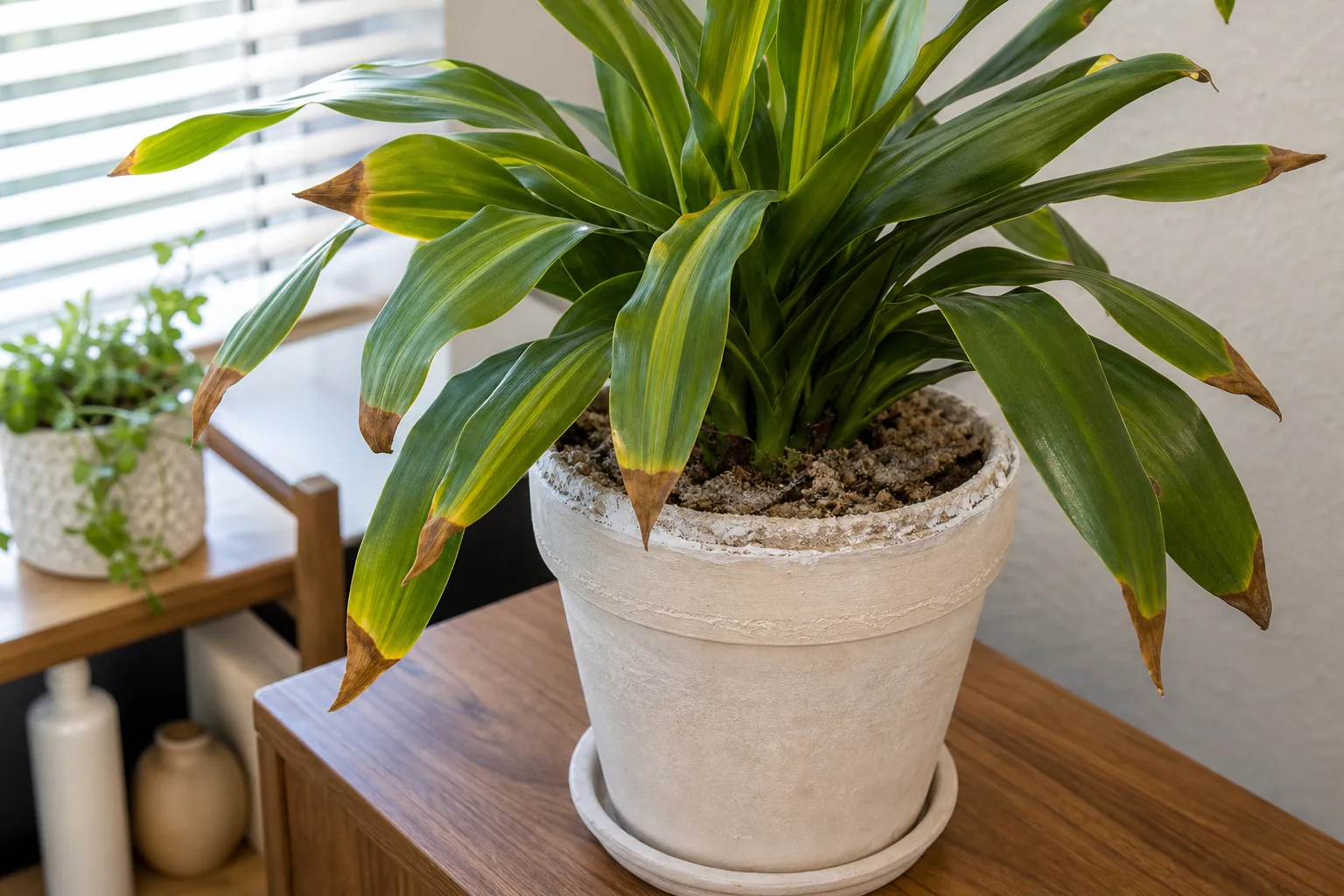
If the plant is otherwise viable, stop feeding and flush the pot with room-temperature water. Place it where it can drain freely, slowly run several volumes of water through the mix, and empty the saucer repeatedly. This is not a substitute for repotting when the mix is compacted, contaminated, or poorly draining, but it can reduce soluble salt accumulation in a healthy container.
Let the pot drain and return to its normal light and watering pattern. Remove badly damaged leaves only when they are mostly dead, and wait for new growth before resuming fertilizer at a conservative rate. If roots are black, mushy, or foul-smelling, address root rot and repot into an appropriate fresh mix rather than relying on leaching alone.
Yellow leaves are not always a fertilizer problem
Nutrient deficiency often appears as a pattern of pale or yellow leaves, but patterns matter. Older leaves turning uniformly pale can have a different cause from new leaves with green veins. Yellow leaves on a plant whose soil stays wet point toward root stress more readily than hunger, while pale, stretched growth near a dark window points toward insufficient light.
Check four basics before feeding: when the plant was last watered, how long the mix stays wet, how much light reaches the leaves, and whether pests are hiding under leaves or around nodes. Then inspect the roots if the symptoms do not fit the watering and light history. Only after those checks should fertilizer become the next experiment.
Soil pH can also affect nutrient availability. If a plant repeatedly shows deficiency symptoms despite good light, sensible watering, and a complete fertilizer, consider the potting mix, irrigation water, and species needs. A stronger dose does not correct a nutrient that is unavailable because of the growing medium.
Conclusion: feed the growth you can see
Spring is the best general time to restart a houseplant fertilizer routine because brighter days and active growth increase the plant’s ability to use nutrients. Begin gently, follow the product label, and adjust by light, species, soil moisture, and growth rather than feeding every plant on the same calendar day.
The most reliable routine is deliberately unexciting: inspect first, water correctly, dilute accurately, allow drainage, record the application, and pause when the plant is dormant or stressed. Feed healthy growth; do not try to fertilize a plant out of a lighting, watering, pest, or root problem.