When to Harvest Habanero Peppers
Learn when to harvest habanero peppers by color, sheen, firmness, variety, and weather—plus how to cut, store, freeze, dry, and save seeds.
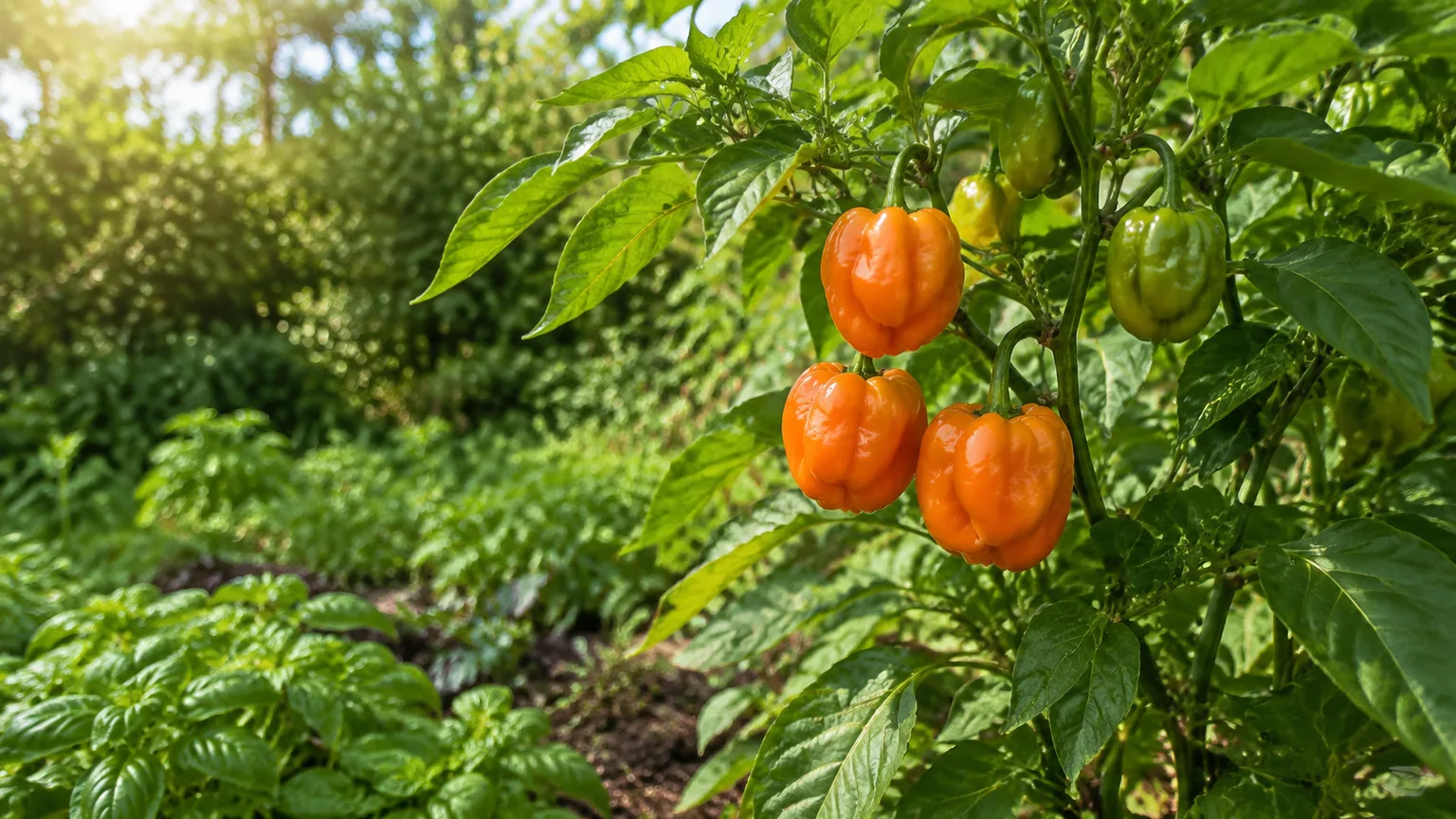
The fastest way to decide if a habanero is ready
Pick a habanero when it has reached the final color for its cultivar, looks glossy rather than dull, and feels firm with a taut skin. A fully orange Orange Habanero is ready; a Chocolate Habanero is not waiting to turn orange, and a red variety is not finished simply because it has reached full size.
The practical order is color first, surface second, texture third. Find the variety’s expected mature color on the seed packet or plant label, wait until green has mostly or entirely disappeared, then check that the fruit is firm and free of soft spots. If those signs disagree, leave it attached for another day or two and check the same fruit again.
That rule is more reliable than counting from sowing or transplanting. Habaneros are warm-season peppers in the species Capsicum chinense, which also includes Scotch bonnet types; the species distinction matters because fruit shape, final color, and time to maturity vary widely. BBC Gardeners’ World Magazine lists C. chinense as the species that includes habaneros and emphasizes that chillies need a long, warm growing season (BBC Gardeners’ World Magazine).
Identify the cultivar’s true ripe color
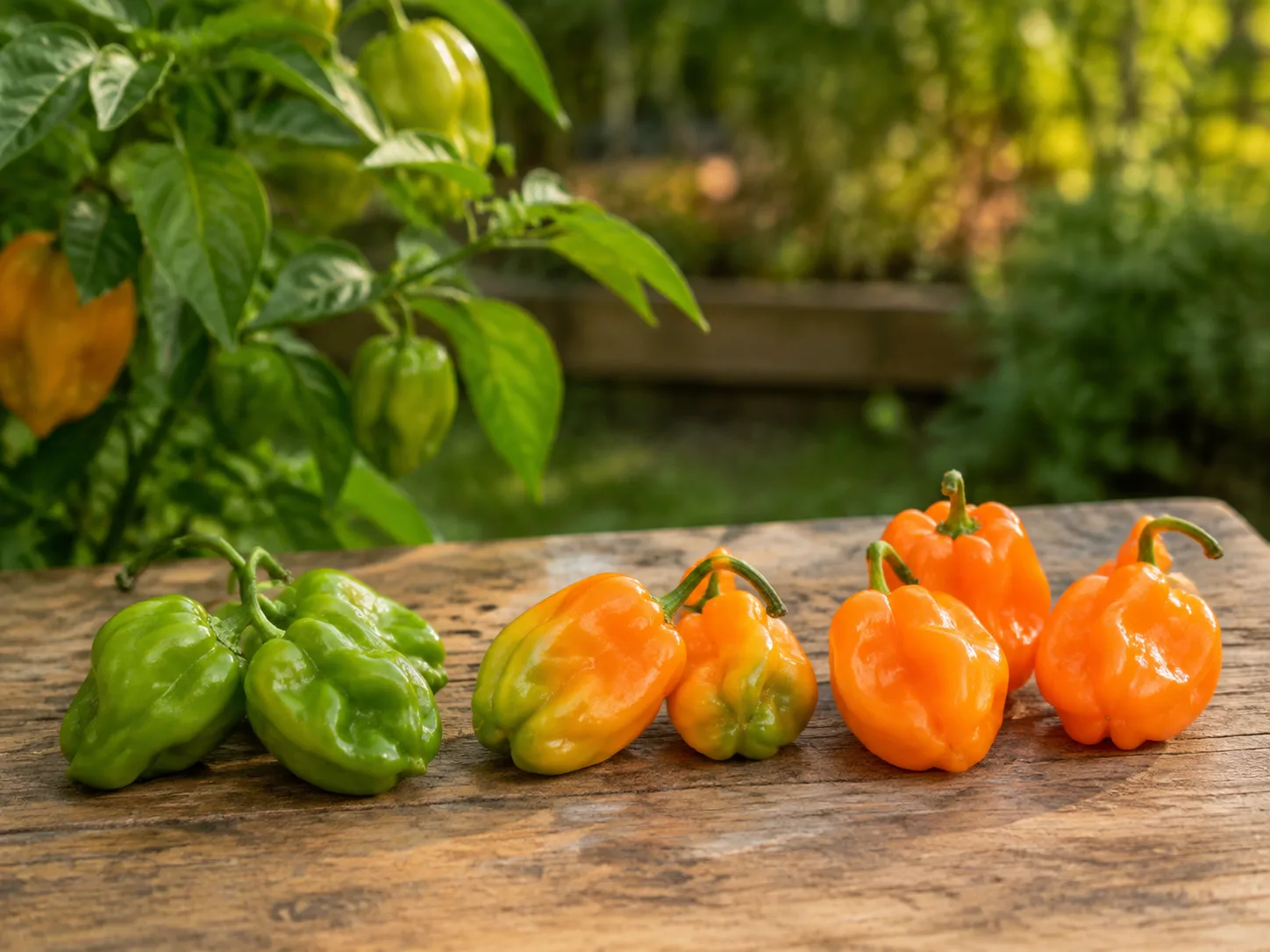
Orange is the familiar harvest color, not a universal finish line. Habaneros may ripen to orange, red, chocolate brown, golden yellow, peach, cream, or another named color, and some pass through more than one shade on the way. The label’s description is your best reference because a pepper can be perfectly ripe while looking “wrong” next to the orange fruits in a catalog photo.
| Habanero type or color name | What to wait for | What not to mistake for ripeness |
|---|---|---|
| Orange Habanero | Even orange across the fruit, usually with a bright sheen | A green fruit with only a small orange shoulder |
| Red, Red Savina, or Caribbean Red | Uniform red, with firm walls and no green patch | A red blush over a still-green lower half |
| Chocolate Habanero | A saturated brown or chocolate tone that has replaced green | A dusty, soft brown spot caused by damage or rot |
| Golden or yellow Habanero | Even golden yellow or yellow-orange, depending on the strain | Pale stress color on an undersized fruit |
| Peach or cream types | The cultivar’s full peach, ivory, or cream color | A fruit that is merely faded from sun or age |
NC State Extension’s plant toolbox shows why a single color rule fails: pepper fruits can vary among green, gold/yellow, orange, and red/burgundy across cultivars (NC State Extension). Use that broader pepper reference as a reminder to identify the plant you actually grew, not the pepper you expected to grow.
Use color change as the primary signal
Most habaneros begin green, swell toward their mature size, and then enter a color-break stage in which one part of the skin changes first. The first blush is useful because it tells you ripening has started, but it is not the same as full maturity. A fruit with a small orange, red, or brown patch is a good candidate for another inspection—not necessarily today’s harvest.
Look at the side hidden by leaves as well as the side facing the sun. A pepper can appear ripe from the path while its underside remains green, especially when several fruits hang in a cluster. Turn the fruit gently without twisting the stem, or view it from more than one angle, and judge the least-colored area.
The exception is a weather-driven harvest. If a freeze is approaching, a fully sized green pepper may be worth picking even though it is not at peak habanero flavor. That is a risk-management decision, not proof that the green fruit is ripe. Mark those peppers separately so you know which ones to use first.
Confirm size, shape, sheen, and firmness
Size helps you reject an immature fruit, but it cannot prove ripeness. Many habaneros fall somewhere around 1 to 3 inches long, yet a compact peach strain and a larger chocolate strain may have different mature dimensions. Compare several fruits on the same plant and use the variety description rather than a universal ruler; Grow Hot Peppers gives a practical range of 75 to 110 days after transplanting and 1 to 3 inches for several common habanero types (Grow Hot Peppers).
The mature fruit should look full for its shape, with the lantern-like lobes developed and the skin generally glossy or waxy. Gloss is a helpful supporting clue because a dull, collapsing surface often means dehydration, chilling, injury, or overmaturity. A little natural wrinkling can occur on some ripe hot peppers, but deep wrinkles paired with softness or dark leaking spots mean the fruit has moved past its best fresh stage.
Use a light touch. A ready pepper should be firm, not rock-hard and not squishy. If the skin gives easily, the fruit has a soft patch, or the stem end is wet and discolored, harvest it immediately for inspection and discard it if rot has entered. Do not keep questionable fruit on the plant just to make the color more impressive.
Treat days to maturity as a check-in date
The number of days printed on a seed packet is a reason to start looking, not an appointment to harvest every pepper. Seed-grown plants have to pass through germination, transplant recovery, flowering, fruit set, sizing, and color change; a nursery transplant starts partway through that sequence. Weather, light, container size, and plant stress can move the finish date by weeks.
For a transplant, many habanero growers begin checking seriously around 75 days and continue watching through roughly 110 days, depending on cultivar. That range describes a scouting window, not a promise. If your plant spent a cold spring recovering from transplanting, or if a container dried out repeatedly during fruit set, it may produce full-sized green fruit that needs more warm days before it colors.
Use the calendar in three passes. First, write down the transplant date. Second, note when the first fruits reach their expected size. Third, begin a every-two- or three-day inspection as soon as one pepper shows its first color break. This turns “How many days has it been?” into a useful observation record: you will know whether the plant is coloring steadily or stalled.
The broader pepper guidance from UGA Extension gives a similar planning lesson: peppers are usually ready for harvest about 70 to 85 days after transplanting, but hot peppers other than jalapeños should be allowed to ripen on the bush and harvested at their final mature color (University of Georgia Cooperative Extension). Habaneros can take longer than that general range, so read the plant label and watch the fruit.
What green habaneros mean for flavor and use
A green habanero is not useless; it is simply at a different stage. Green fruit usually has a fresher, more vegetal flavor and may be less complex than the same cultivar after full color develops. Its heat is not predictable enough to treat green as “mild,” so taste or handle it with the same respect as a ripe pepper.
The best choice depends on what you are making. Use green fruit when you want a sharper, greener note in salsa, relish, marinade, or a cooked dish, or when the season is ending and waiting would risk losing the crop. Use fully colored fruit when you want the characteristic floral, fruity, or smoky notes associated with the variety and a more developed sweetness.
Do not pick a whole plant green merely because one pepper has started to color. Habanero plants often carry flowers, tiny green fruit, color-breaking fruit, and ripe fruit at the same time. Harvest the individual fruit that has met your chosen target and leave the rest to continue sizing.
Pick green only for a deliberate reason
There are three legitimate reasons to pick a green habanero: an impending frost, a damaged or cracking fruit, or a recipe that specifically wants green flavor. A fourth reason is a large batch that you cannot process while every pepper finishes; even then, select fully sized green-ripe fruit rather than tiny fruit that has not developed its mature shape.
Partly colored peppers are the best candidates for finishing off the plant because they have already entered the ripening process. Put them in a warm, dry place out of direct heat, check them daily, and use them promptly if the color does not continue. Fully green fruit may change somewhat after picking, but it is less likely to develop the same depth as a pepper that completed its final color on the plant.
Keep green and ripe fruit in separate containers. This small habit prevents you from accidentally using an early-picked pepper when you intended a ripe batch for hot sauce, and it makes it easier to judge whether an off-plant pepper is actually changing or simply beginning to wrinkle.
How ripeness changes flavor and heat
Ripening is more than a paint job. As a habanero moves from green to its mature color, the flavor usually becomes rounder and more distinctive, while the fruit’s heat may increase or feel more concentrated. The exact heat level still depends on genetics and growing conditions, so do not promise yourself that every orange pepper will be hotter than every green one.
That uncertainty is a reason to taste by batch, not a reason to ignore the color signal. If you grow the same variety in two containers, differences in sun, water consistency, temperature, and crop load can produce noticeably different flavor even when the fruits look similar. Label your harvest by plant if you are experimenting with sauces or seed saving.
The ripeness target should also match the use. A ripe fruit is usually the better choice for fresh salsa, fermented sauce, or a dish where the habanero’s aroma must stand out. A green fruit can be useful in a cooked sauce where its vegetal character will blend with onion, tomato, herbs, or vinegar.
Be especially cautious about “stress for heat” advice. Letting a plant wilt, starving it, or injuring stems may change the plant’s performance, but it can also reduce yield and invite other problems. Consistent moisture during fruit development is a sounder base for a healthy harvest; UGA Extension specifically notes that consistent watering is critical for fruit set and development (University of Georgia Cooperative Extension).
Let weather set your final harvest decision
Warm, bright weather helps a late green pepper finish, while cool nights and shortening days can slow the process. A pepper that seems unchanged for a week is not necessarily deficient; the plant may simply be running out of the heat it needs to complete its last color change.
If the forecast remains warm, leave color-breaking fruit attached and check it every few days. If the forecast turns cold, switch from a perfect-ripeness goal to a crop-preservation goal. The plant’s survival is less important than getting edible fruit off before frost because peppers are frost-tender warm-season plants (University of Georgia Cooperative Extension).
Make a plan before the first frost
About a week before the first likely frost, sort the crop visually. Harvest fully colored peppers first, then partly colored peppers, then only the largest green fruit that you are willing to use early. Leave the smallest fruit only if you have a realistic warm-weather or protected-growing plan; tiny fruit picked in a panic usually offers the least flavor and the shortest useful window.
If the plant is in a pot, move the container to a warm, bright, sheltered location only if you can provide enough light and inspect it for pests. A protected porch may buy time, but a cold, dark room does not create ripening conditions. For a longer-term indoor move, follow a deliberate pepper overwintering routine rather than carrying outdoor pests into the house; our guide to how to winterize pepper plants covers that separate decision.
Do not wait for a frost to “sweeten” habaneros. Cold injury can make fruit water-soaked, dull, or soft, and a damaged pepper can deteriorate quickly after harvest. Harvest before the freeze and choose the best use for each stage.
Diagnose fruit that refuses to color
When a habanero stays green, check the conditions in this order:
- Confirm the variety. A Chocolate, Peach, or Yellow type is not waiting for orange or red.
- Check the fruit’s age and size. If it is still enlarging, it may not have entered color break.
- Look at night temperatures. Cool nights can pause ripening even when afternoons feel warm.
- Assess light. Dense foliage or a shaded container can slow the final stage.
- Inspect the plant’s roots and water pattern. Repeated drought, soggy mix, or recent transplant shock can delay a crop.
- Check for damage. A soft spot, cracking, insect injury, or disease is a harvest-now signal, not a reason to wait for perfect color.
If several full-sized fruits are healthy but unchanged, patience is usually safer than adding a random fertilizer or forcing drought. Habaneros need a long season, and the solution may be warmth, light, or simply a different expectation for that cultivar.
Harvest habaneros without injuring the plant
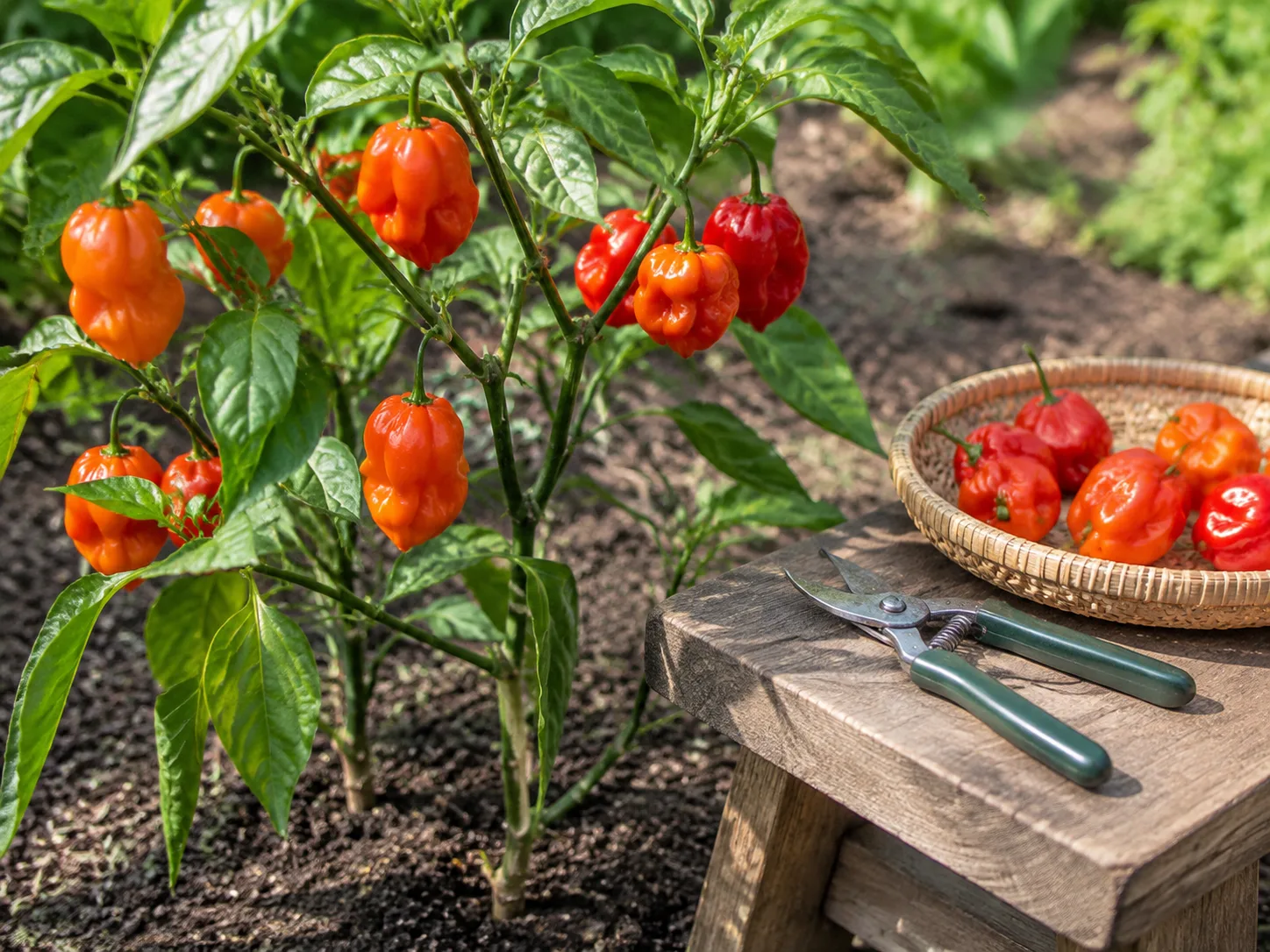
Harvest on a dry morning when the foliage is cool, or at another cool part of the day. Wear nitrile or similar disposable gloves, keep your hands away from your face, and use a small basket that will not crush the fruit. Capsaicin can irritate skin and eyes, especially if a pepper is cut or cracked; never assume that handling a small fruit is harmless.
Support the branch with one hand and use clean, sharp snips to cut the short stem above the pepper. UGA Extension recommends cutting pepper stems instead of pulling them because pulling can break branches (University of Georgia Cooperative Extension). Leave a small piece of stem attached to the fruit and avoid cutting into the main branch or a nearby flower node.
Use gloves and clean snips
Before you begin, wash and dry the snips, then inspect the plant for ripe fruit hidden under leaves. Work from the outside of the plant inward so you do not knock loose the peppers you have already found. If fruits are clustered, cut one at a time while holding the branch steady; do not twist a whole cluster until every stem has released.
Use this five-step harvest sequence:
- Put on gloves and place the basket within reach.
- Confirm the fruit’s final cultivar color from two or more angles.
- Hold the supporting branch or pedicel, not the pepper’s tip.
- Snip the stem cleanly, leaving a short stem attached.
- Set the fruit in shade and separate fully ripe, color-breaking, green, and damaged peppers.
If a pepper splits while you are picking, handle the exposed flesh as a capsaicin source and keep it away from your eyes. Remove gloves carefully, wash your hands with soap, and do not touch your face until your hands and tools are clean. If exposure causes persistent or severe pain, follow local poison-control or medical guidance rather than relying on a kitchen remedy.
Sort the crop for eating, storage, and preservation
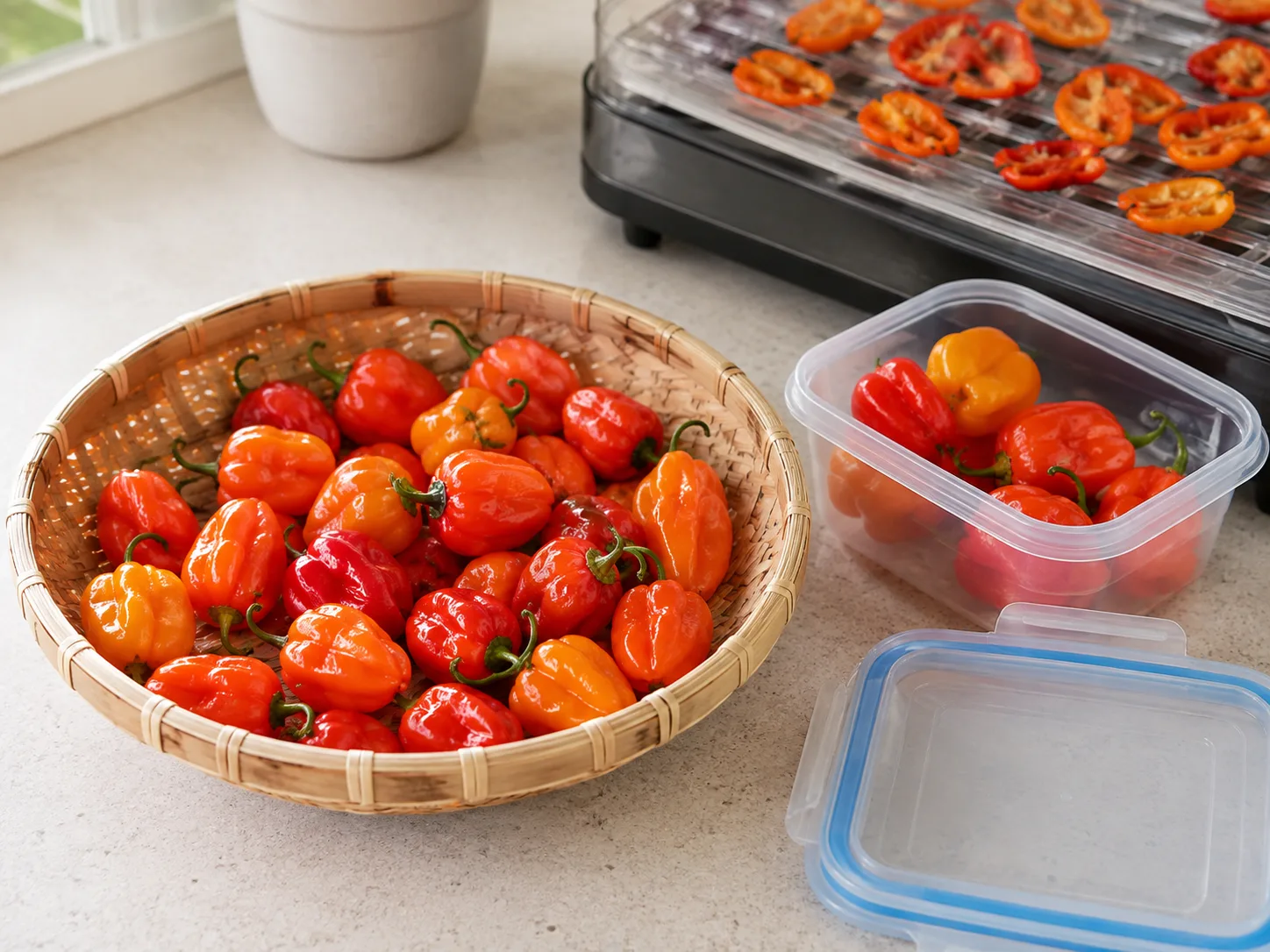
The best post-harvest decision is made before you wash anything. Sort peppers while they are dry: fully colored and firm fruit for fresh use, partly colored fruit for quick use or short ripening, green fruit for deliberate cooking, and damaged fruit for immediate inspection.
Keep stems attached when possible and avoid piling peppers deeply. Habaneros have relatively thin walls, so bruises may not look serious at first but can become soft spots quickly. Do not seal warm, wet fruit in an airtight container; surface moisture and trapped heat shorten the useful window.
Refrigerate the best fresh fruit
Refrigerate clean, dry, unwashed peppers in a breathable bag or a container that does not trap condensation. Use the ripest fruit first, especially if the stem was lost or the skin was nicked. A sound harvest can last around two weeks under good refrigerator conditions, but quality depends on the temperature, humidity, age at harvest, and how much the fruit was handled.
Wash only the peppers you are about to use. If one pepper develops a soft or leaking spot, remove it from the group immediately and inspect the neighboring fruit. Refrigeration slows deterioration; it does not reverse bruising, rot, or a pepper that was harvested past its best.
Freeze or dry a surplus
Freeze whole or chopped habaneros when texture is not the priority. Frozen peppers retain much of their heat and aroma but soften after thawing, which makes them excellent for cooked sauces, soups, marinades, and blended hot sauce. Portion them before freezing so you do not repeatedly thaw a large bag.
Dry peppers when you want flakes or powder and have a dependable dehydrator or drying method. Dry only sound fruit, follow the appliance instructions, and make sure the peppers are completely dry before storing them in an airtight jar in a cool, dark place. Dried pepper dust can irritate the eyes and airways, so ventilate the area and avoid breathing directly over the trays or grinder.
For shelf-stable sauce, pickles, or other canned products, use a current tested recipe from a reliable food-preservation authority. Do not improvise acid levels or processing times because a hot pepper’s heat does not make an untested canning method safe.
If you regularly grow peppers in containers, growing peppers in pots can help you create a more predictable warm, sunny harvest zone, but a larger container cannot override a cultivar’s maturity schedule or a sudden cold snap.
Save seeds from fully mature peppers
Choose a fully colored, healthy pepper for seed saving. Cut it open with gloves, scrape the seeds onto a clean plate, and let them dry in a well-ventilated place out of direct sun until they are hard and no longer tacky. Store dry seeds in a labeled airtight container in a cool, dark location.
Seeds from a green pepper may be immature and less dependable. The more important point is that saved seed may not produce fruit identical to the parent if the plant was a hybrid or if insects cross-pollinated it with another pepper. That is not a failure, but it is a reason to label the seed with the parent plant, year, fruit color, and nearby varieties.
Do not save seeds from a pepper with rot, unexplained lesions, or disease symptoms. A ripe color alone does not make a sick fruit a good seed source. If your priority is preserving a named cultivar exactly, purchase reliable seed or prevent cross-pollination according to that cultivar’s seed-saving guidance.
Conclusion
The right time to harvest a habanero is not a single day on the calendar. It is the point when the fruit has reached its own final color, developed a healthy sheen, and remains firm, with weather acting as the tie-breaker when frost is close.
Check each pepper separately, harvest ripe fruit with clean snips, and leave green fruit attached when the season still offers warmth. When cold is coming, protect the crop rather than chasing perfect color: pick the largest fruit, use partly colored peppers first, and preserve the fully ripe harvest while it is still glossy and sound.