When to Plant Perennials: The Frost-Date Rule
Find the best time to plant perennials from seeds, pots, or bare root, plus a practical planting method and first-six-weeks care plan.
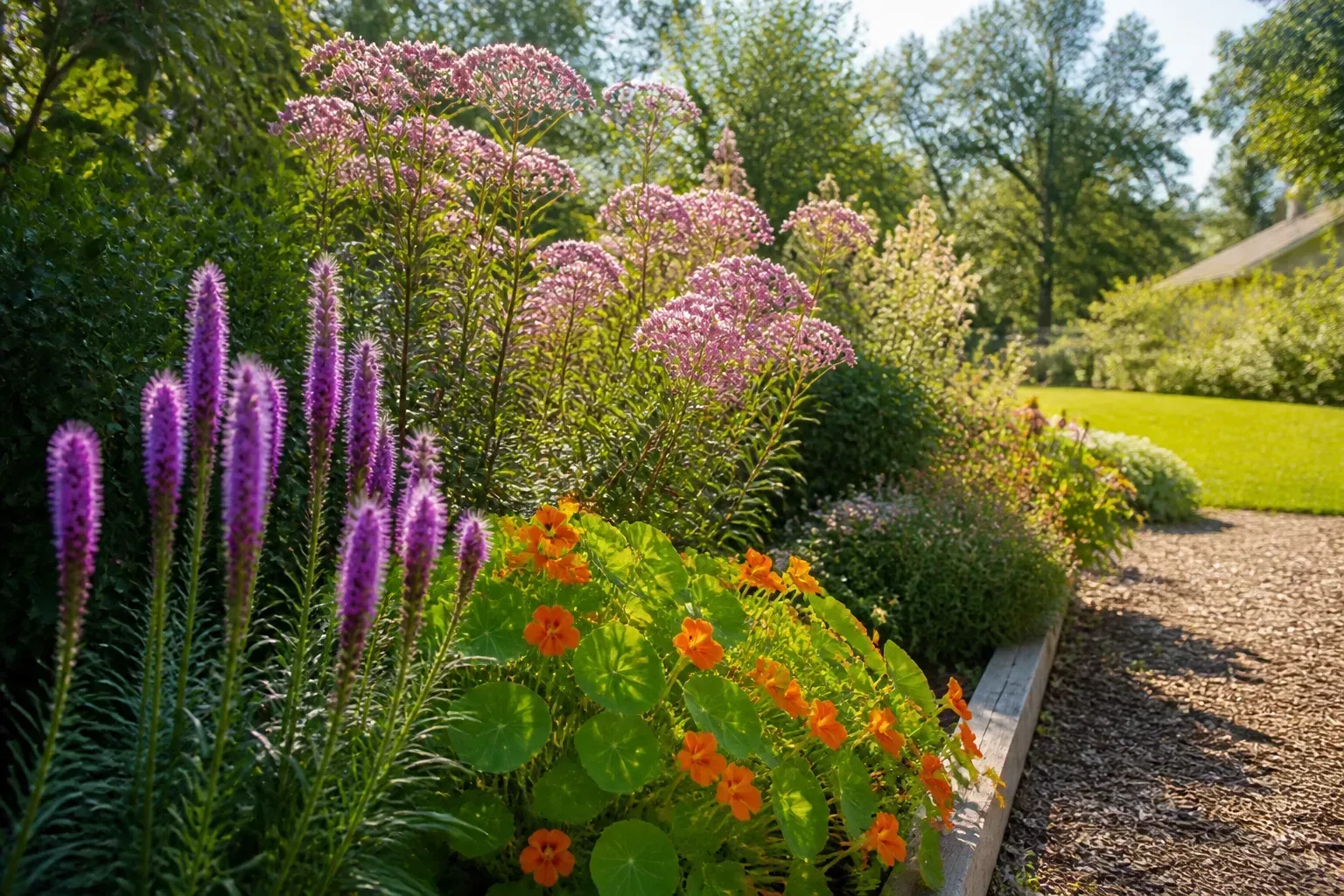
The best time to plant perennials is usually spring or fall, but that answer is only useful when it is tied to your weather and the form of the plant you bought. A potted perennial needs time to replace disturbed roots before a heat wave or hard freeze; a dormant bare-root plant follows a different calendar; a seed may need weeks or months before it is ready to go outside.
Use this practical rule: plant when the soil is workable, the weather is relatively mild, and the plant has a realistic runway before its next major stress. In spring, that usually means the ground has thawed and the last serious frost has passed. In fall, it means planting early enough for roots to settle before the first hard freeze, not simply planting on the first cool day.
The exact date varies with species, elevation, exposure, soil, and the way the plant was grown. Your local average frost dates are guardrails, not appointments. If the bed is waterlogged, the forecast calls for extreme heat, or the plant is marginally hardy in your area, wait for better conditions or move the plant into a protected container temporarily.
The real rule: plant between extremes, not by a calendar
Perennial roots keep working when the soil is cool enough to avoid heat stress but warm enough to support growth. That is why the shoulder seasons are so reliable: spring offers a long growing season ahead, while fall offers warm soil, cooler air, and often more dependable moisture. Neither season is automatically right if the ground is frozen, saturated, or baking dry.
When gardeners ask for the best month, they are usually trying to replace a local decision with a universal date. A better question is, “How much time will this plant have to establish before the next difficult stretch?” A sturdy, dormant division planted into cool, workable soil can behave very differently from a leafy greenhouse perennial planted into the same bed during a hot, dry week.
This is also why a hardiness zone is useful but incomplete. A zone describes typical winter cold, while it does not tell you whether your site is windy, poorly drained, exposed to reflected heat, or likely to experience an early freeze. Read the plant tag for hardiness and cultural needs, then combine it with the weather in front of you.
Spring or fall? Use the season that gives roots a runway
The two seasons solve different problems. Spring planting gives a new plant a full season to grow before winter and often provides the widest nursery selection. Fall planting can be easier on actively growing transplants because roots can establish while the top growth is slowing down, reducing the amount of water lost through leaves.
| Situation | Usually better choice | Why | Main caution |
|---|---|---|---|
| Cold region with an early autumn freeze | Spring | More time remains before winter | Do not plant into frozen or muddy soil |
| Warm region with an early summer heat surge | Fall | Roots can establish in cooler air | Finish before hard freeze and keep watering |
| Dormant bare-root perennial | Early spring in many cold climates | The plant is ready to wake as soil warms | Follow the supplier’s planting window |
| Flowering perennial available only in a pot | Either mild season | Container plants are flexible once acclimated | Summer requires much closer watering |
| Seeds needing cold stratification | Late fall outdoors or a planned indoor process | Cold helps break dormancy for some species | The seed packet controls depth and timing |
Choose spring when the ground is thawed and summer is still distant
Spring is the safer choice when your fall season is short. If the average first frost arrives soon after nursery stock becomes available, a new plant may not have enough time to produce anchoring roots. In cold regions, spring also avoids the risk of an unestablished crown being repeatedly heaved by freeze-and-thaw cycles.
Plant actively growing greenhouse perennials after the danger of severe frost has passed, then give them a gradual transition to outdoor light and wind. “After the last frost” is a useful starting point for tender foliage, but a frost-hardy perennial may be planted earlier if the soil is workable and the plant has been acclimated. The plant tag and local extension advice take priority over a generic date.
Spring also makes sense when you need a specific cultivar, want to divide a plant as new shoots emerge, or want the longest possible season for a small transplant to size up. The trade-off is that roots must compete with rising temperatures and increasing water demand as summer approaches, so spring planting is not an excuse to plant and forget.
Choose fall when mild soil and cool air come before hard freeze
Fall is excellent for many hardy, container-grown perennials because the soil may remain warm while the air becomes less demanding. A plant can devote energy to roots instead of trying to support a large flush of leaves and flowers. Clemson Cooperative Extension recommends finishing fall planting at least six weeks before hard-freezing weather, while other extension guidance uses a shorter minimum for hardy plants; use the longer window when you are unsure. A useful comparison from Epic Gardening’s spring-versus-fall planting guide reaches the same practical conclusion: the best season depends on zone, plant type, availability, and the stresses most likely at your site.
Count backward from your area’s average first frost date, then check the actual forecast and the plant’s hardiness. A first frost is not the same as the ground freezing solid, and averages can be early or late in any particular year. If you are already inside the normal establishment window, plant promptly; if the ground is cold and the forecast is turning sharply colder, spring is often the better plan.
Fall is not ideal for every perennial. Plants that are marginally hardy, newly divided too late, or particularly sensitive to winter wet may need spring planting. Avoid planting a water-loving plant on a winter-wet slope or a drought-adapted plant in a bed that stays soggy simply because the calendar says fall is best.
Treat summer as an exception, not a deadline
You can plant potted perennials in summer, but the margin for error is smaller. A plant in active growth loses water through leaves while its disturbed roots are still making contact with surrounding soil. A heat wave, dry wind, or dark container sitting on hot pavement can turn a manageable transplant into a wilted one within hours.
If summer planting is necessary, choose a cool, cloudy day or plant in the evening, water the pot before removing it, and prepare the hole first so the roots spend as little time exposed as possible. Provide temporary shade during the hottest part of the day, mulch the root zone without touching the crown, and check moisture frequently. Delay planting if the soil is too hot to handle comfortably, the plant is severely wilted, or a run of extreme heat is forecast.
Match the date to the planting material
The phrase “plant a perennial” can describe three very different jobs. A seed is a dormant package with its own germination requirements. A bare-root plant is alive but usually dormant and vulnerable to drying. A container-grown plant already has leaves and a root ball, so it needs careful transition and immediate aftercare.
Container-grown perennials
Container plants are the most flexible. They can often be planted throughout the growing season if the soil is workable and you can keep the root ball from drying out, though spring and fall remain easier. A plant that has been living in a greenhouse may need several days of hardening off before it goes into full sun or a windy bed.
Inspect the plant before buying. Healthy roots are firm and light-colored rather than mushy, black, or strongly circling the container. A root-bound perennial is not automatically a lost cause, but its roots need to be loosened so they can enter the surrounding soil instead of continuing to spiral.
Bare-root plants and dormant divisions
Bare-root perennials arrive without a pot and most of their soil, often while dormant. They may look unimpressive, but dormancy is an advantage for shipping and handling because the plant is not trying to maintain a large canopy. The danger is allowing the roots to dry out, overheat, or sit in water while you wait.
Open bare-root stock as soon as it arrives and follow the supplier’s instructions. If hydration is recommended, soak the roots for the stated time—often a few hours, not overnight—then plant promptly. Keep the roots cool and damp while preparing the bed, never exposed in sun or left submerged for days.
In colder climates, early spring is often the most forgiving season for bare-root perennials because the plant can wake as the soil warms. In milder climates, fall can work for hardy dormant stock if the supplier allows it and the bed drains well. A dormant division from your own garden should be replanted quickly; letting its roots dry is more damaging than choosing a perfect-looking date.
Seeds, cold stratification, and hardening off
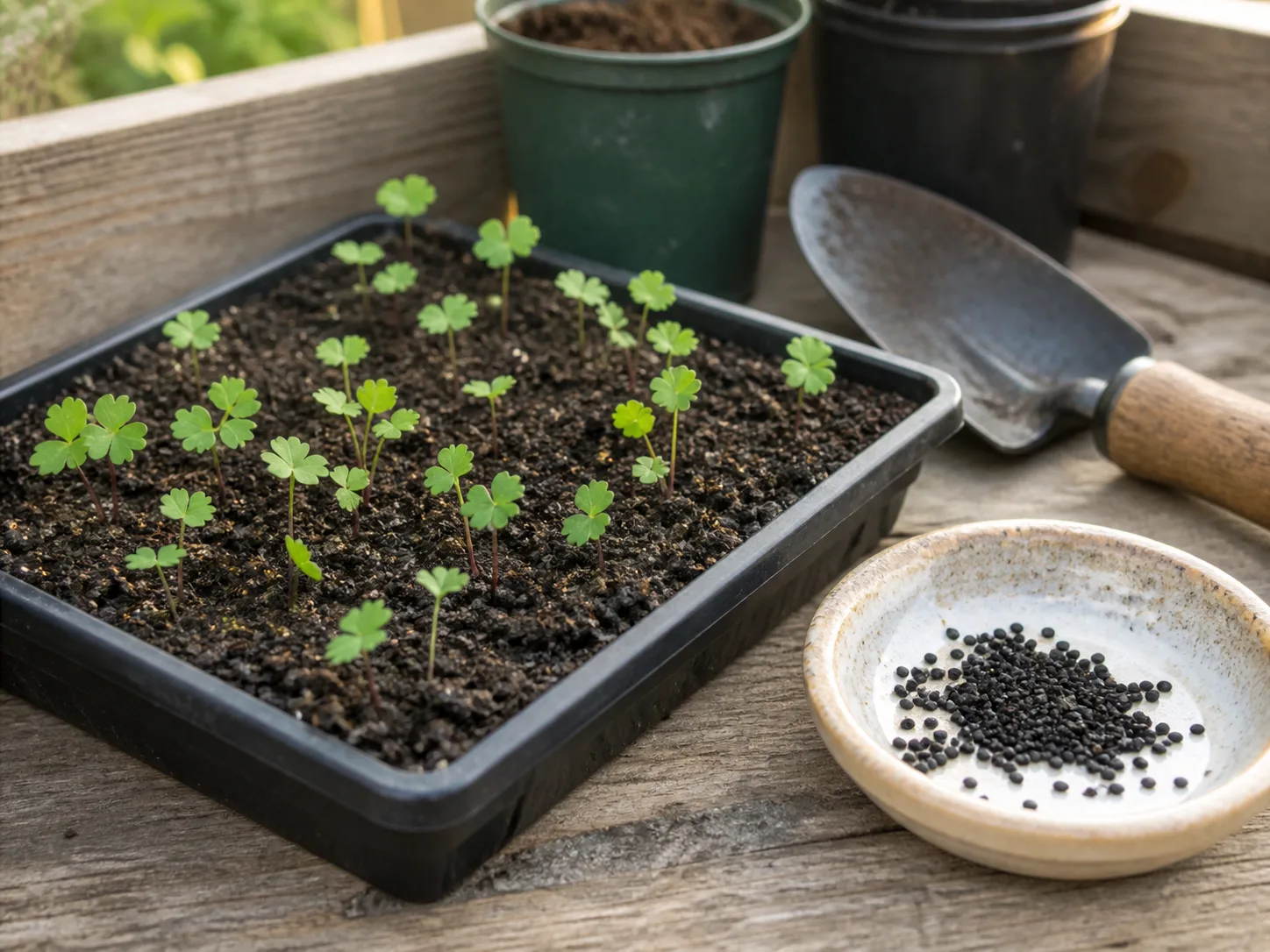
Growing from seed is economical, but it is rarely the fastest route to a flowering clump. Some perennial seeds germinate readily when sown in a controlled mix, while others need cold stratification—a period of moist chilling that helps break dormancy. Read the packet for whether the seed should be chilled, surface-sown, covered lightly, or sown directly outdoors.
For spring planting, many seeds are started indoors about six to eight weeks before the local last frost, but that is a planning estimate rather than a universal rule. A seedling grown in a warm room is not ready for immediate outdoor exposure just because it has true leaves. Move it outdoors gradually, increasing light and wind exposure over about a week so its leaves and stems can adapt.
Direct sowing in late fall can be useful for hardy species that naturally experience winter conditions. Sow after the soil has cooled enough that the seed will not germinate immediately, mark the spot clearly, and protect the bed from being disturbed. Do not apply a thick mulch over a tiny-seeded species unless the packet or local guidance recommends it; a heavy cover can block light or smother seedlings.
Gardens Illustrated’s seed-starting guidance notes that germination can take anywhere from a couple of weeks to a couple of months depending on the plant, which is why “plant now for blooms this season” is an unreliable promise for perennials. Choose transplants when immediate size or dependable first-year color matters; choose seed when cost, variety, and the process of raising plants matter more.
Prepare the site before you buy or dig
The planting date cannot rescue a perennial that is in the wrong place. Walk the site at different times of day, notice how long direct sun reaches it, and identify where rain collects after a storm. A plant that wants sharp drainage will fail in a low pocket even if the planting itself is flawless; a moisture-loving plant will struggle on a dry, exposed slope.
Match light, moisture, mature size, and hardiness
Start with the conditions you have rather than trying to force a favorite plant into them. Group plants with similar water needs so you are not irrigating a drought-tolerant yarrow as often as an astilbe. Colorado State University Extension’s perennial-garden guidance describes this grouping as hydrozoning and also emphasizes considering wind, soil, irrigation, mature dimensions, and bloom sequence before planting.
Check the mature width as carefully as height. Crowding reduces air movement and makes it harder to water the root zone without wetting foliage. It also creates a maintenance problem: a bed that looks sparse on planting day may be packed tight two seasons later.
Think in layers and seasons. Combine early flowers, summer performers, late-season asters or goldenrods, and foliage plants that still look good after flowers fade. Native species or regionally adapted cultivars are often a strong starting point for wildlife value and resilience, but “native” does not mean “right for every spot”; verify the plant’s sun, soil, moisture, size, and spread before buying.
Improve the whole bed, then test drainage
Perennials may occupy the same bed for years, so improve the planting area rather than creating a tiny pocket of amended soil around each root ball. Remove grass and persistent roots, loosen compacted soil, and mix mature organic matter through the bed according to a soil test or local extension recommendations. Too much rich amendment in one hole can encourage roots to stay in that pocket instead of exploring the native soil.
Drainage matters more than a perfect fertilizer blend. Dig a test hole, fill it with water, and watch whether it drains within a reasonable period; if water remains for a long time, choose plants that tolerate wet conditions, build a raised bed, or correct the drainage before planting. Do not put gravel in the bottom of a planting hole as a shortcut for poor drainage; it does not replace a properly draining soil profile.
How to plant a perennial without burying the crown
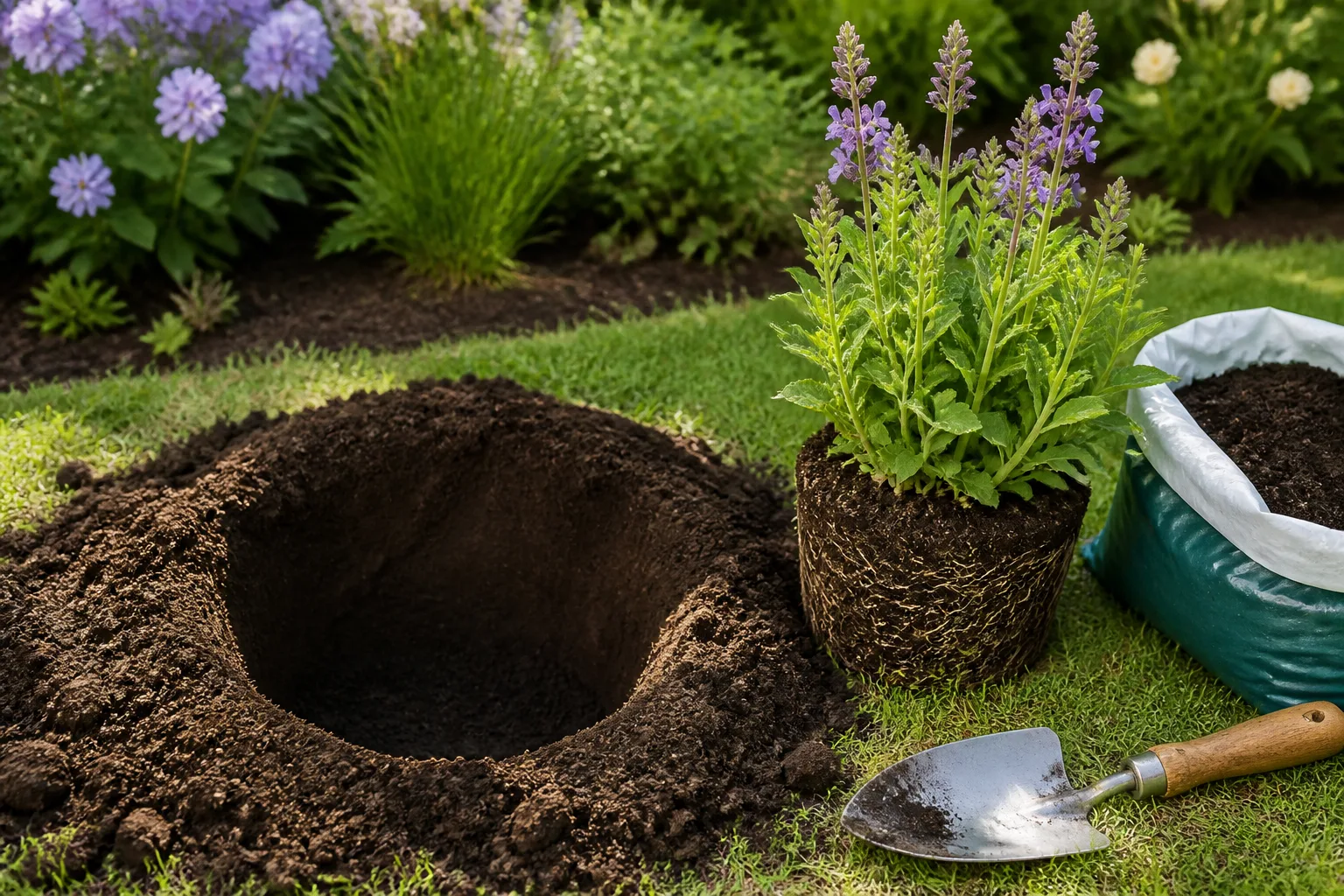
Have the hole, water, mulch, and labels ready before removing the plant from its pot. A simple sequence prevents most avoidable damage:
- Water the container. Moisten the root ball thoroughly so it holds together while you handle it. For bare-root stock, hydrate only as directed and keep roots shaded.
- Dig wide, not deep. Make the hole about twice the width of the root ball and no deeper than the root system needs. The finished soil level should match the plant’s previous level.
- Inspect the roots. Gently loosen circling roots on the sides and bottom. If the outer mat is dense, make a few shallow cuts or tease it apart; do not shred the entire root ball.
- Set the crown correctly. Place the plant so the crown—the junction of roots and stems—is even with the surrounding soil. A buried crown can stay wet and oxygen-starved; a root ball sitting high can dry out and suffer winter exposure.
- Backfill with the excavated soil. Firm it gently to remove large air pockets, but do not compact it into a hard layer. Water slowly until the soil settles, then add more soil if the root ball has sunk.
- Mulch and label. Add a light layer of organic mulch over the root zone, leaving a bare ring around stems and crowns. Label the plant with its name and planting date, especially if it is dormant or slow to emerge.
The Clemson Cooperative Extension guide to growing perennials recommends a hole wider than it is deep, planting the crown at the soil surface, watering thoroughly, and avoiding overly heavy mulch. Those details are simple, but they are the difference between roots that move into the bed and a crown that remains stressed in a pocket of wet soil.
The first six weeks: water deeply and protect the root zone
Planting is not finished when the soil is backfilled. The plant has to make new root connections outside its original container, and that process is easily interrupted by alternating drought and saturation. Watch the plant and the soil together: wilt alone does not tell you whether the root zone is dry, waterlogged, or simply reacting to disturbance.
Read the soil instead of following a rigid watering schedule
Water deeply after planting so the entire root ball and nearby soil are moist. During the first few weeks, check the soil every day or two in sunny, windy weather; a new planting may need water about every couple of days, depending on temperature, soil, rainfall, and plant size. As roots expand, shift toward deeper, less frequent watering rather than constant shallow sprinkles.
Push a finger into the soil near—but not directly against—the root ball. If the top inch or two is dry and the plant is newly planted, water slowly at the base until the soil is moist below the surface. If the soil is already cool and wet, do not add more just because the leaves look droopy; inspect drainage and give the roots air.
Sandy soil drains and dries quickly, while clay soil can remain wet under a dry-looking surface. Drip irrigation or a soaker hose keeps water near the roots without repeatedly wetting foliage, but any system still needs adjustment after rain. The PlantTalk Colorado perennial planting guidance recommends more frequent watering during the first weeks and then longer intervals as roots expand into surrounding soil.
Fall plantings still need water. Cool air lowers evaporation but does not eliminate it, and evergreen perennials can lose moisture during dry winter weather when the ground is not frozen. Water deeply before the ground freezes if the soil is dry, and in mild, dry spells water only when conditions are above freezing and the soil actually needs it.
Mulch lightly and delay routine fertilizer
Mulch moderates soil temperature, slows evaporation, and reduces competition from weeds. Use roughly 1 to 2 inches around a new perennial, keeping the material away from the crown and stems. A mulch volcano traps moisture against the plant and can invite crown or stem rot, especially in heavy soil.
Routine fertilizer is rarely the first thing a new perennial needs. A soil test can show whether nutrients or pH correction are warranted, but adding strong nitrogen fertilizer by habit can push soft top growth when the plant should be making roots or preparing for dormancy. In a fall planting, avoid forcing a flush of tender leaves just before cold weather.
Do not use pre-emergence herbicide around newly planted perennials unless the product label and a qualified local recommendation specifically allow it; some products can interfere with root growth. Hand-pull weeds while they are small, keep them from shading the transplant, and reserve heavier maintenance for once the plant is established.
Common timing mistakes that cost a season
Planting by month instead of conditions. “May is always safe” or “fall is always best” ignores microclimates, late freezes, heat waves, and soil moisture. Use a frost-date window, then confirm that the actual bed and forecast are suitable.
Planting too close to hard freeze. A perennial may survive a late planting, but survival is not the same as good establishment. If the root ball has not had time to knit into surrounding soil, winter heaving and drying can expose it; mulch helps, but it cannot create weeks that are not available.
Planting into saturated soil. Working wet clay destroys pore spaces and leaves roots in an oxygen-poor mass. Wait until the soil crumbles rather than smearing when squeezed, or improve the bed before planting.
Burying the crown. This is one of the quietest causes of decline because the plant may look fine for weeks before rot or weak growth appears. Set the crown at the same level it occupied in the pot unless the plant’s specific instructions say otherwise.
Watering the leaves instead of the root zone. A quick spray can make foliage look refreshed without wetting the root ball. Soak slowly at the base and check the soil before watering again.
Assuming a wilted plant always needs more water. Transplant shock, root damage, heat, wind, and waterlogged soil can all produce wilt. Feel the soil, inspect the stem and crown, and look for a pattern over the next day rather than flooding a stressed plant.
Expecting a full first-year display. Many perennials spend their first season establishing roots and may flower lightly or not at all. Peonies and other slow-to-mature plants can take several years to bloom heavily; that is a growth pattern, not proof that the planting date failed.
Crowding plants for instant fullness. Close spacing can make a new bed look finished, but mature plants need air and root room. Follow the tag’s mature spread, accept some temporary bare soil, and fill early gaps with annuals if you want color while perennials grow.
Choosing a plant because it is labeled a wildflower. Some plants spread aggressively or are poorly adapted outside their native range. Check your state or local extension recommendations, avoid known invasive species, and prefer a native or well-behaved alternative that matches the site.
Choose perennials for a garden that keeps working
Timing matters, but selection determines whether the bed will still be satisfying after the novelty of planting wears off. Choose at least one plant for each major condition in the bed, then build a sequence of bloom, foliage, seed heads, and structure. A garden with only a short burst of flowers can look empty for most of the year even if every plant was installed perfectly.
Use a simple selection filter before purchasing: What is the light at the plant’s mature height? Does the soil drain after heavy rain? How much supplemental water can you provide in July? What width will the plant occupy in three years? Does it remain attractive after flowering, and will it spread where you do not want it?
For a sunny, average-drainage bed, coneflower, black-eyed Susan, yarrow, bee balm, salvia, asters, and liatris may offer different heights and bloom periods, but each species and cultivar still needs a local hardiness and moisture check. For shade or damp soil, consider plants such as astilbe, ferns, or woodland phlox only where their moisture and light requirements match the site. Lavender and other Mediterranean plants need sharper drainage than a generic “full sun” label communicates.
Include plants that support more than a flower photograph. Seed heads can provide winter structure and food for birds, dense foliage can cover soil, and late-season flowers can support pollinators after spring blooms have finished. Colorado State University Extension recommends planning for texture, mature size, water needs, bloom period, and maintenance—not just color—because those are the traits that keep a perennial garden coherent over time.
The best planting day is therefore a decision, not a date on a poster. If you have workable soil, a suitable plant, mild weather, and enough time before the next extreme, plant. If one of those pieces is missing, waiting a week, changing the season, or choosing a better-adapted perennial is often the more skillful gardening move.
Conclusion
Plant perennials in spring or fall, but let frost, soil, plant form, and weather decide the window. Spring is the safer choice when winter arrives early or you are planting bare-root and dormant stock; fall is often easier on hardy container plants when several mild weeks remain before hard freeze. Summer can work for established potted plants only when you can protect them from heat and keep the root zone evenly moist.
Prepare the bed first, set the crown at the correct depth, water deeply, mulch lightly, and judge progress by new root establishment rather than instant flowers. When you match a perennial to the light, moisture, hardiness, mature size, and maintenance you can actually provide, the timing decision becomes much simpler—and the plant has a far better chance of returning for years.



