7 Reasons Tomatoes Aren't Turning Red
Tomatoes staying green? Diagnose heat, cold, variety, maturity, water, nutrition, and plant stress, then learn when to harvest and ripen fruit indoors.
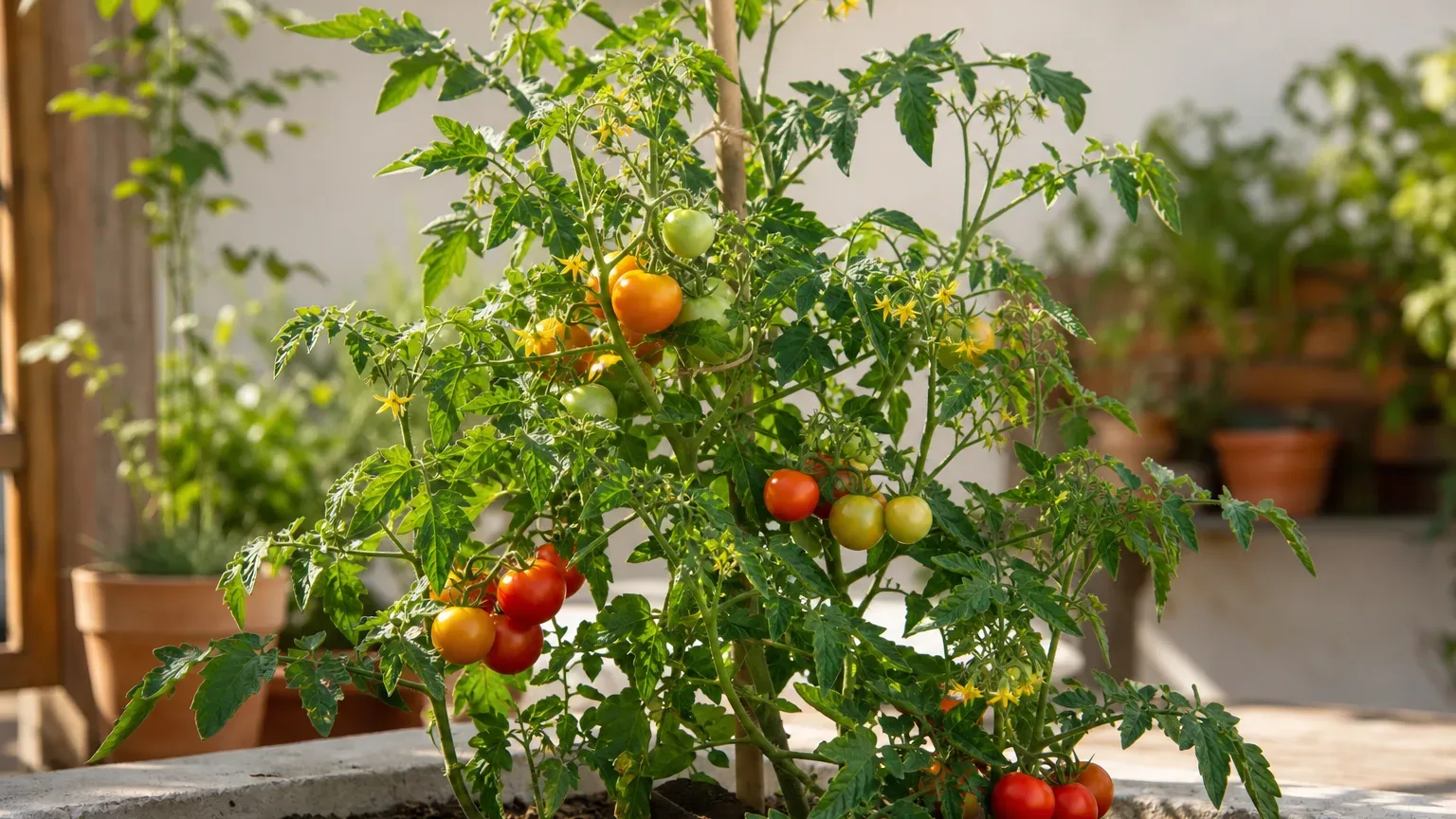
You have full-size tomatoes, healthy vines, and a lot of green fruit that seems frozen in time. The most likely explanation is not that the plant has forgotten how to ripen. Tomato color is a temperature-sensitive process, and a fruit can pause in the green stage when the weather is too hot or too cold, when the cultivar is naturally orange or pink, or when the fruit has not reached the maturity stage at which it can finish off the vine.
Start by looking at the fruit, the weather, and the variety together. If days have been above about 85°F, heat is the first suspect. If nights are repeatedly below the mid-50s, cold may be the bottleneck. If the fruit is full-sized and beginning to lose its hard green sheen, it may already be ready to pick even though it has not turned red.
Start with a 60-second diagnosis
Pick one representative fruit only if it is full-sized and looks healthy. Compare its color with the description on the seed packet or plant tag, press it gently, and look at the weather log for the last week. A hard, small fruit after a cold spell is a different problem from a full-sized fruit that is pale orange in a heat wave.
Use this quick sequence:
- Check the expected color. ‘Cherokee Purple’ will not become fire-engine red, and yellow, orange, pink, green-when-ripe, and striped cultivars can look “unripe” when they are ready.
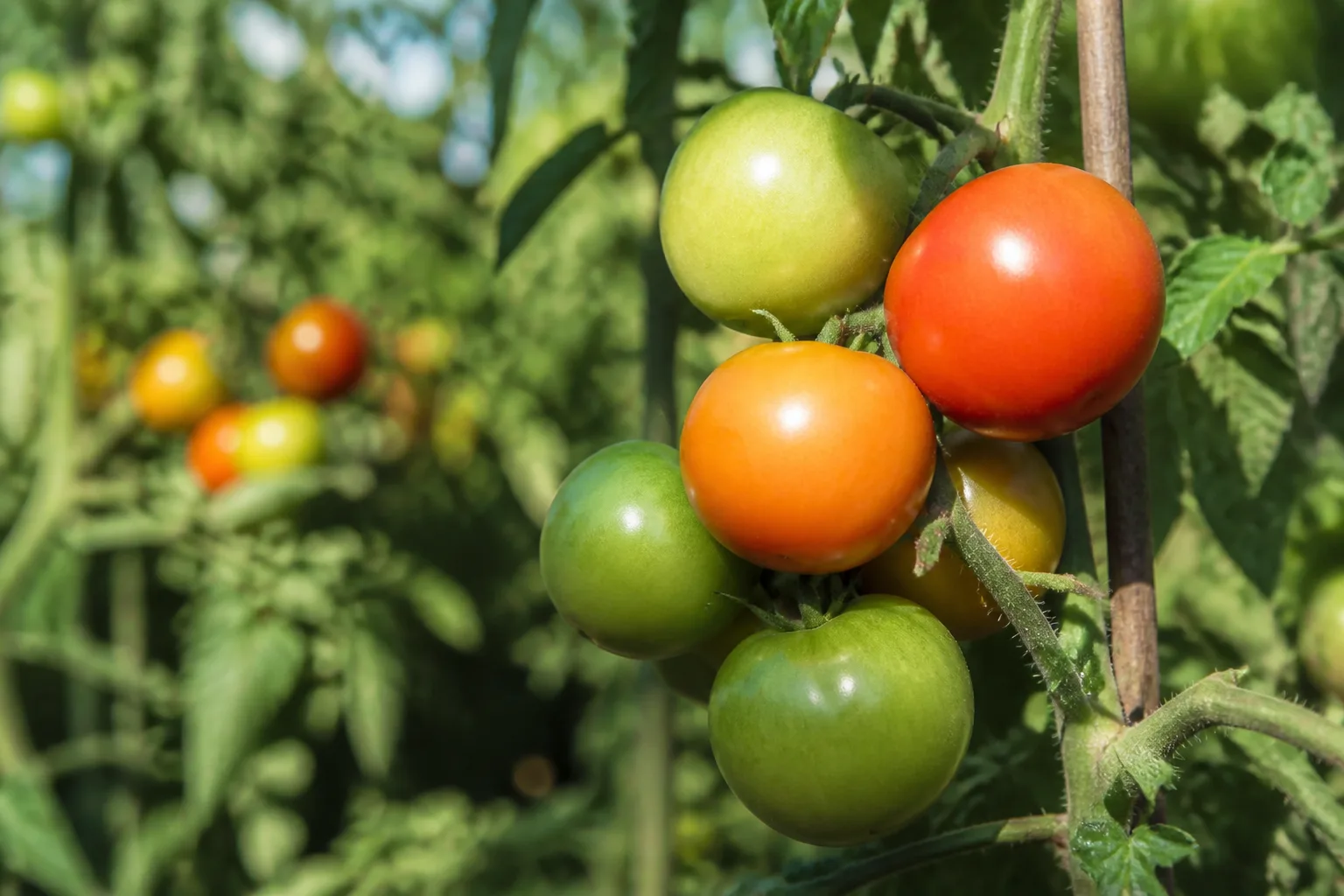
- Check fruit maturity. A mature green tomato is close to full size, has a glossy or slightly whitish cast rather than a juvenile matte green, and often shows a cream-colored area near the blossom end.
- Check temperature at the fruit, not just the forecast. A dark fruit in direct afternoon sun can become much hotter than the surrounding air.
- Check for a color change. A faint yellow, orange, pink, or red blush means the ripening sequence has started; the fruit may finish indoors.
- Check damage. Insect feeding, disease lesions, sunscald, cracks, and soft spots change the decision from “make it ripen” to “use or remove it promptly.”
The seven reasons green tomatoes stall
Heat is blocking color development
This is the most common explanation during midsummer. Tomato fruit can continue enlarging in hot weather while its color development slows. Lycopene, the carotenoid largely responsible for the familiar red color, is produced best in a moderate temperature range. Cornell Cooperative Extension places the practical optimum around 70–75°F and reports that sustained temperatures above 85–90°F can slow or stop production of the red and orange pigments (Cornell Vegetable Program).
That creates a frustrating visual mismatch: the vine looks vigorous, the fruit is large, and nothing turns red. The delay is not necessarily a lack of sunlight or a shortage of fertilizer. Often, the plant is waiting for cooler conditions. When the heat breaks, fruit that is already mature can resume coloring, although fruit exposed to prolonged stress may soften before it develops a deep, even red.
During a heat wave, protect the root zone with mulch and keep moisture steady. If afternoons are brutally hot, temporary 20–40% shade cloth over the fruiting area can reduce heat load; it should not turn the whole plant into a dark, stagnant tunnel. Fine Gardening likewise recommends afternoon protection and cautions against excessive nitrogen during hot weather (Growing Tomatoes in the Heat of Summer).
Cold nights are slowing the ripening system
Tomatoes are warm-season plants, and ripening does not simply continue at a slower, predictable pace as temperatures fall. Cool nights can delay the chemistry of color development, especially after a run of chilly evenings. Penn State Extension says mature green tomatoes ripen best around 63–70°F and do not ripen normally when held above 80°F or below 55°F (Tomato Production).
This matters at the end of summer. A plant may have plenty of green fruit, but if the forecast has shifted to cool nights, leaving every tomato on the vine is not always the best way to get an edible harvest. Once a fruit reaches mature green or breaker stage, bringing it indoors can give it a steadier temperature than the garden.
Do not confuse a cool evening with a single chilly night. One mild dip rarely ruins a crop. Repeated nights below about 50–55°F, however, can slow growth and make late-season fruit more vulnerable to chilling injury and decay. If frost is expected, harvest healthy mature-green and partially colored fruit before the plant freezes.
The variety may not ripen red
“Green” is not a maturity diagnosis unless you know what the cultivar should look like. Tomatoes can ripen red, crimson, pink, orange, yellow, purple-brown, striped, or green. Some have green shoulders that remain darker even when the lower portion is fully ripe; others are deliberately bred to stay green.
Read the seed packet, nursery tag, or cultivar description. Also check the days-to-maturity estimate, remembering that it usually starts at transplanting for nursery plants and at germination for some seed listings. The estimate is a planning guide, not a countdown that overrides heat, cool weather, transplant shock, or fruit load.
Color alone is also a poor test for dark or heirloom varieties. A ripe fruit usually gives slightly to gentle pressure and may detach with a light lift, but softness varies by type. When in doubt, sacrifice one fruit: slice it and inspect the seed chambers. A mature fruit has developed jelly around the seeds; a very young fruit has pale, easily cut seeds and firm, dry flesh.
The fruit is not mature enough to finish
A tomato can be green and still be harvestable, but it must first reach physiological maturity. University of Alaska Fairbanks describes mature green fruit as nearly full-sized, with tougher skin and jelly-like pulp around the seeds; very immature fruit with soft white seeds is unlikely to ripen well and may shrivel instead (A Harvest of Green Tomatoes).
This is the key distinction between mature green and merely unripe. Mature green tomatoes have begun the internal changes that allow them to respond to their own ethylene and finish coloring away from the plant. A tiny fruit that fell after a storm has not necessarily reached that stage, even if it is technically a tomato.
If the fruit is still undersized, leave it attached while conditions remain safe. If it is full-sized, glossy, and beginning to show a pale cast or blush, it is a candidate for indoor finishing—particularly if extreme heat, disease, or frost threatens the vine.
Too much direct heat, not too little light
Tomatoes need strong light to grow and set a good crop, but the fruit itself does not need direct sun shining on its skin in order to turn red. In fact, direct afternoon sun can heat the fruit enough to inhibit pigment development and can cause sunscald, a pale, papery, or bleached patch that may later turn brown.
That is why stripping leaves around green fruit is a risky “ripening trick.” Leaves help shade the fruit and keep the plant’s temperature moderated. Remove yellow, diseased, or badly crowded foliage, but do not scalp a healthy plant to expose every tomato. The RHS notes that excessive light and temperature can contribute to greenback and whitewall, while aggressive de-leafing can upset the balance around ripening (Tomato fruit ripening problems).
Good air movement still matters. Tie sprawling stems, remove only foliage that is blocking circulation, and keep fruit from resting on hot paving or dark plastic. The target is bright, ventilated growth with protection from the fiercest afternoon heat—not deep shade.
Water swings are stressing the plant
Tomatoes need a dependable supply of water while they are growing and filling fruit. Erratic moisture—bone dry, then flooded—can cause cracking, soft growth, and uneven development. It is not a reliable strategy to abruptly stop watering so the plant “rushes” to ripen. A stressed plant may stop functioning well, and dry soil followed by heavy irrigation can split fruit.
Water when the root zone is drying, applying it slowly at soil level so the moisture reaches the main roots. Mulch helps smooth the peaks and valleys. The exact frequency depends on soil, container size, rainfall, wind, and plant size, so a calendar rule is less useful than checking the soil several inches down and watching the plant in the morning.
Near the end of the season, you can reduce irrigation if cool, wet weather is keeping fruit from drying and the plant is naturally winding down, but do it gradually and do not allow a heavily fruited plant to collapse from drought. A plant that is wilted every afternoon is dealing with a water problem before it is dealing with a color problem.
Nutrition or plant stress is disrupting color
Nutrition can affect fruit quality, but fertilizer is often blamed too quickly. Excess nitrogen encourages leaves and stems rather than helping already mature fruit turn red. Adding a high-phosphorus product to a plant that is simply hot will not override the temperature ceiling on lycopene production.
If the plant has pale foliage, weak growth, poor fruit set, or a history of depleted soil, a soil test is more useful than guessing from an NPK label. Potassium supports normal fruit development, but excessive potassium can interfere with magnesium uptake and create another imbalance. Apply a tomato fertilizer only according to the label and the soil-test need; never use repeated “ripening” feeds as insurance.
Also consider total plant stress: root damage, a cramped container, severe pruning, overcrowding, or a heavy fruit load can slow the whole plant. Determinate tomatoes may set a large crop in a short window, while indeterminate plants keep producing new flowers and fruit. A plant trying to support several generations at once may color fruit unevenly, especially in poor weather.
Read the fruit before you change the plant
The best intervention depends on the fruit’s stage. Use this comparison rather than treating every green tomato alike:
| Fruit stage | What you may see | Best decision |
|---|---|---|
| Immature green | Small for the cultivar; hard; seeds and pulp not developed | Leave it on a healthy plant; it may not finish well if picked |
| Mature green | Nearly full size; firm; glossy or pale cast; jelly around seeds | Leave on the vine in moderate weather or harvest before frost |
| Breaker | First definite yellow, orange, pink, or red color at the blossom end | Harvest if heat, rain, pests, or frost threaten; finish indoors |
| Pink/light red | Noticeable color over much of the fruit; still firm | Harvest for consistent quality and let it finish indoors |
| Fully colored | Cultivar’s final color; slight give; aromatic | Eat soon or store briefly in a cool, suitable place |
Color stages are more reliable than the phrase “green tomato.” Commercial postharvest guidance from UC Davis places mature-green fruit in controlled storage around 55–60°F and lists about 68°F as an optimum ripening temperature, with good airflow and high humidity (Tomato Produce Facts). In a home, a ventilated countertop at roughly 65–70°F is usually a practical compromise.
A practical action plan for this week
What to do during a heat wave
First, stop trying to force color. Keep the soil evenly moist, mulch the root zone, and protect fruit from the hottest afternoon sun with temporary shade cloth or natural filtered shade. Do not remove healthy leaves, drench the plant with fertilizer, or flood dry soil.
Inspect fruit every day or two. Pick tomatoes that have reached breaker or pink stage if they are softening in the heat, cracking after irrigation, or being attacked by pests. They can finish at room temperature, where the temperature is more favorable and the fruit is less exposed to sunscald.
What to do as frost approaches
Harvest all healthy fruit that is mature green, breaker, or partially colored before a killing frost. Bring them inside, sort by stage, and separate any fruit with disease lesions, leaking cracks, or insect-damaged soft tissue.
For slower ripening, keep mature-green tomatoes in a cool but not cold location, around 55–65°F, with airflow. For faster ripening, use a warmer room around 65–70°F. Never store them in a refrigerator while you are trying to develop flavor and color: temperatures below about 50°F can cause chilling injury and poor subsequent ripening.
How to ripen harvested tomatoes indoors
Choose only mature, clean fruit. Wipe off dry soil, but do not store wet fruit in a sealed container. Place tomatoes in a single layer, stem-side up if the stem is attached, with space for air circulation. A paper bag or loosely covered box can help retain some ethylene, and a ripe banana or apple can increase the ethylene environment, but the fruit must already be mature; ethylene cannot turn a tiny immature tomato into a good ripe one.
Check every few days. Remove any fruit that develops a soft leak or mold before it touches its neighbors. A tomato that has reached breaker stage will generally finish more reliably than a hard, pale green one. UC Davis notes that tomatoes are sensitive to ethylene and that mature-green fruit responds to it, which is the scientific reason the bag method sometimes helps (Tomato Produce Facts).
Fixes that sound helpful but can backfire
Removing leaves: Leaf removal does not create red pigment. It may improve visibility and airflow in a dense canopy, but removing too much exposes fruit to sunscald and heat. Prune for plant structure and disease management, not because the tomato needs to “see” the sun.
Stopping water completely: A slight late-season reduction can be reasonable in a declining plant, but sudden drought is not a ripening switch. It increases cracking risk and can leave fruit with poor texture.
Adding phosphorus or potassium by guesswork: A fertilizer label is not a diagnosis. If the soil already contains adequate nutrients, extra fertilizer can intensify imbalance or stimulate foliage. Test soil and follow a product label.
Putting green tomatoes in a sunny window: Sunlight is not required for postharvest ripening, and a hot window can soften or scorch fruit. Choose stable room temperature and inspect regularly instead.
Refrigerating them to slow the process: Cold storage can damage flavor and later color development. If you need to slow mature-green fruit, use a cool room above chilling temperatures rather than the refrigerator.
When green fruit points to pests, disease, or a disorder
Not every tomato that fails to color evenly has a ripening problem. A tomato with a firm green cap at the stem end but normal color below may have green shoulders or greenback, a physiological disorder linked to cultivar, heat, intense light, and nutrient balance. It is not fixed by spraying a pesticide.
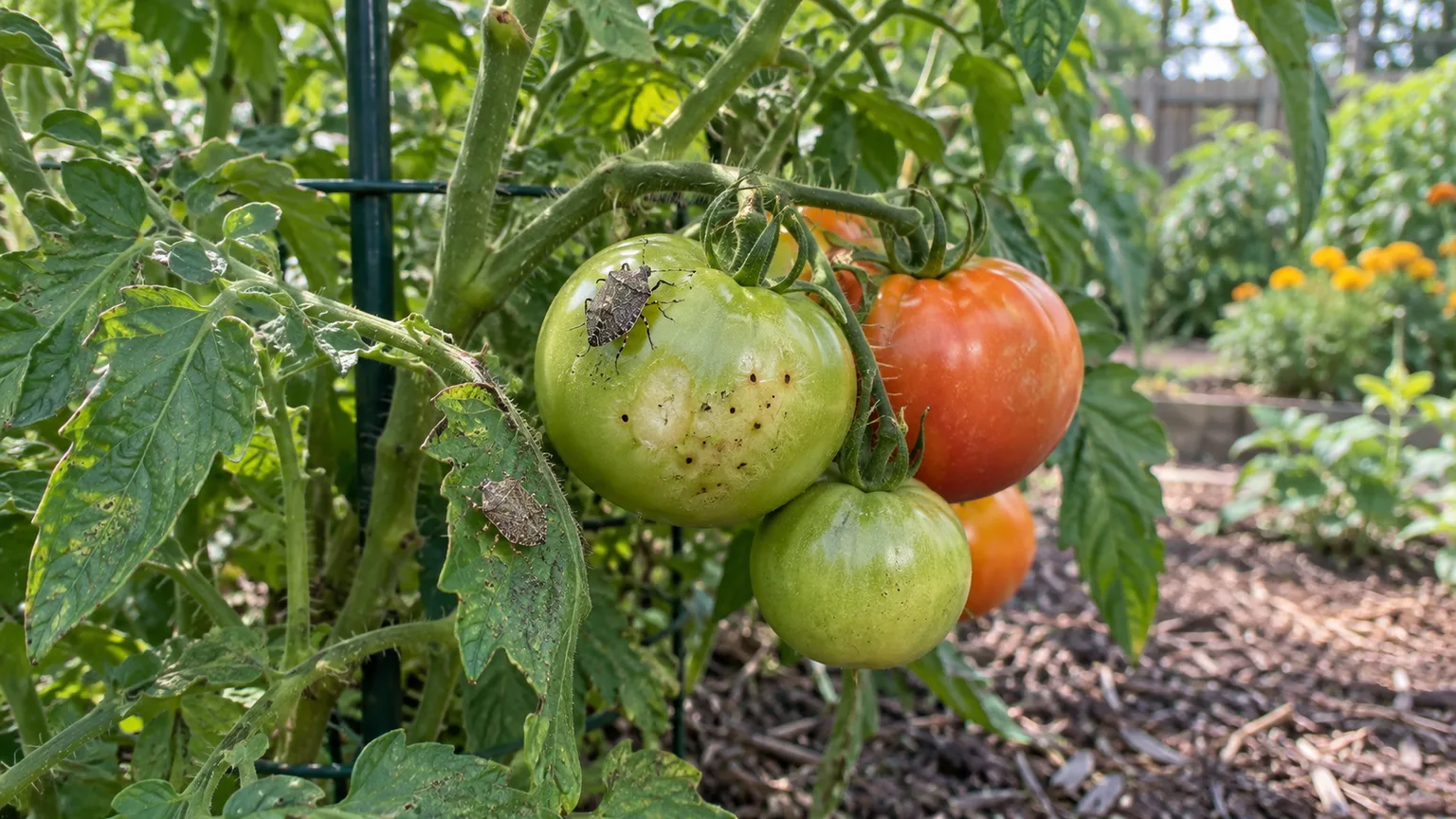
Look more closely if you see pinpricks, cloudy spots, corky scarring, distorted patches, holes, or fruit that softens before coloring. Stink bug feeding can leave pale, corky areas and uneven ripening; a magnifying glass and inspection of the undersides of leaves can reveal the cause. This tomato damage image is a useful visual reminder that the fruit may be compromised rather than merely late.
Disease changes the harvest rule. Fruit from a plant with severe blight or other spreading disease may rot indoors even if it appears unripe; the RHS specifically warns that attempting to ripen green fruit from heavily blighted plants can lead to substantial losses (Tomato blight). Remove diseased fruit from the harvest batch, improve sanitation, and do not compost infected material unless your composting system reliably reaches pathogen-killing temperatures.
Set up next season for a shorter green-to-red wait
Choose cultivars suited to your climate instead of selecting only by flavor or fruit size. In a short season, early varieties and smaller-fruited types often reach harvest more reliably than giant beefsteaks. In a hot climate, look for cultivars described as heat-tolerant and plan afternoon protection before the first heat wave.
Plant where the vine receives strong morning and midday light with enough airflow to avoid a heat trap. Space plants so leaves dry after rain and fruit is accessible without stripping the canopy. Use a sturdy trellis or cage, mulch after the soil warms, and water consistently from the root zone.
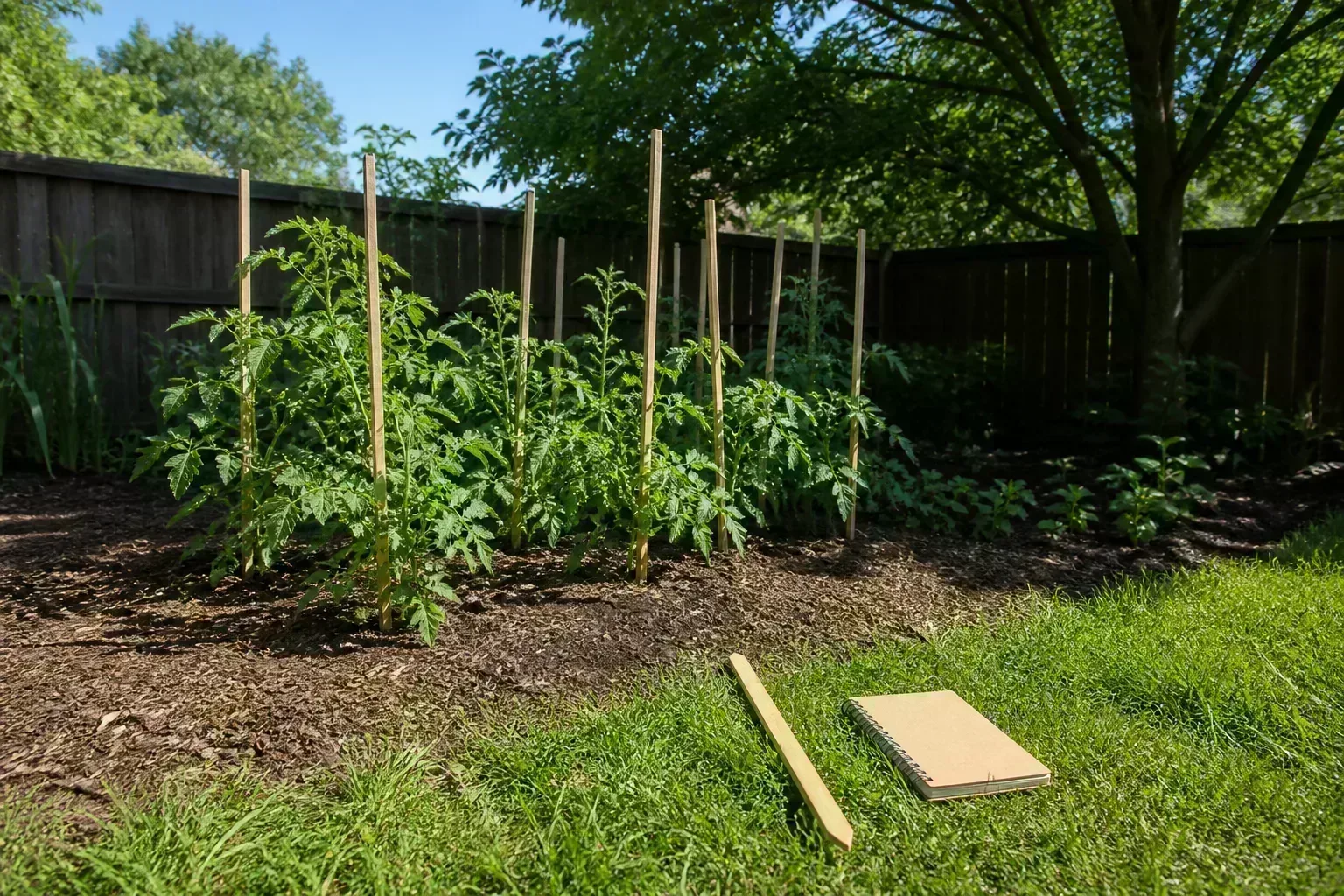
Keep a simple note of transplant date, first flowers, first full-sized fruit, first blush, and the weather during each delay. That record turns “my tomatoes are late” into a useful pattern. If every variety stalls during August heat, weather is the likely bottleneck. If one cultivar remains green while others color, variety or a fruit disorder deserves closer attention.
Conclusion: match the fix to the bottleneck
Tomatoes usually stay green for a reason you can identify by combining fruit stage, cultivar color, and recent temperatures. Heat above the favorable ripening range is a major culprit; cold nights, immature fruit, direct heat, uneven water, excess nitrogen, and plant stress can add to the delay.
Your first move should be diagnostic, not drastic. Protect the canopy from extreme heat, keep moisture steady, avoid blind fertilizer and aggressive pruning, and harvest mature fruit before frost or disease makes the decision for you. A breaker-stage tomato ripened at a stable indoor temperature is often a better harvest than a fully green tomato left outside through a heat wave or freeze.



