Why Hydrangeas Bloom Better Some Years
Why do hydrangeas bloom better some years? Cultivar, bud survival, pruning, spring frost, light and soil moisture shape each display. Learn what to adjust.
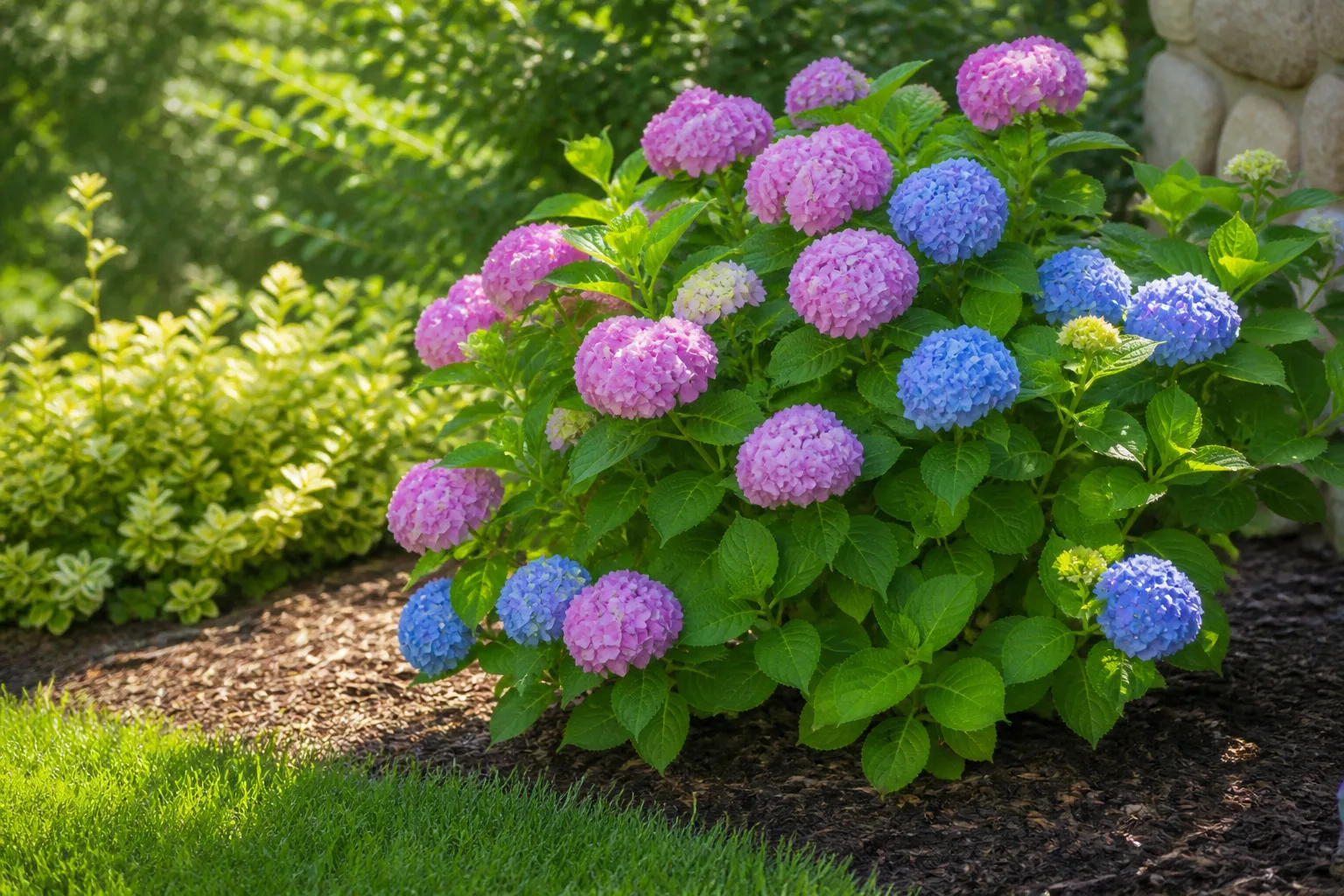
Hydrangeas do not bloom well because of one magic winter or a single watering trick. A heavy display is the result of a chain: the cultivar must be capable of flowering, its buds must form, those buds must survive winter and spring, and the shrub needs enough light and steady root-zone moisture to carry flowers through summer.
That chain explains why two neighboring shrubs can look completely different in the same season—and why one plant can flower lavishly one year and sparsely the next. Weather is part of the story, but species, pruning, site, and a few weeks of frost or drought can matter just as much. Start by identifying which hydrangea you have; then you can tell whether a bare-looking winter stem is carrying next summer’s flowers or whether the shrub will make them on fresh growth.
A standout bloom is a chain of conditions, not a mystery
Big, colorful flower heads attract attention, but the plant’s visible display was often determined months earlier. Bigleaf, mountain, oakleaf, and climbing hydrangeas generally set at least many of their flower buds on stems from the previous season. Panicle and smooth hydrangeas form their flower buds on current-season growth. A winter that preserves old stems may therefore benefit one group more than another, while a harsh winter can reduce flowers on an old-wood type without killing the shrub.
This is why the phrase “hydrangeas are having a good year” needs a location and a plant name attached to it. A warm, sheltered garden with a hardy cultivar may have an excellent display while a colder yard a few miles away loses bigleaf buds to winter cold or a late freeze. Rutgers Cooperative Extension describes both patterns: some species carry buds through winter, while others form them in spring, and severe pruning at the wrong time can remove the next flush (Rutgers Cooperative Extension’s hydrangea guide).
Bloom quantity is not the same as flower size, color, or longevity. A shrub with many clusters can still have smaller individual heads after drought or hard pruning. A flower that turns rose, green, or papery brown may be maturing normally rather than failing. And blue versus pink flowers on a responsive bigleaf cultivar are mainly a soil-chemistry effect, not proof that one plant has received better care.
Weather matters, but the order of events matters more
A gentle winter can help preserve tender stems, but “mild winter” is too simple to predict a hydrangea display. The important questions are whether the cultivar is hardy in that site, whether its flower buds formed on old wood, how cold the exposed stems became, and whether a warm spell pushed buds forward before a late freeze. A plant may come through deep winter intact and still lose swelling buds during a sharp spring cold snap.
Snow also does not have one universal effect. A steady snow cover can insulate soil and roots, while wind, ice, freeze-thaw swings, and severe cold can injure stems and buds above the snowline. Less snow by itself does not mean more flowers. The RHS notes that spring frost can damage tender new growth and blossom, and its hydrangea guidance treats pruning dates differently by species (RHS hydrangea pruning guide, RHS frost-damage guidance).
Rainfall is similarly conditional. Adequate moisture through active growth helps a hydrangea hold leaves and develop strong shoots; severe drought during late summer can stress plants as many old-wood types are forming next season’s buds. Rain that arrives in short storms may run off compacted soil without reaching the roots. And a saturated bed can deprive roots of oxygen even when rain is abundant. The plant responds to moisture in its root zone, not the monthly rainfall total listed for a nearby airport.
| Weather or site factor | What it can affect | What to inspect |
|---|---|---|
| Winter cold and wind | Survival of old-wood stems and buds | Cultivar name, exposed stem tips, recurring dieback |
| A late spring freeze | Swollen buds and tender new shoots | Timing of browning relative to leaf-out |
| Hot afternoons | Leaf water loss and flower-head stress | Sun exposure, soil moisture, evening recovery |
| Dry weeks during growth | Shoot vigor and bud development | Moisture several inches below the mulch |
| Heavy rain or poor drainage | Root health and heavy, drooping heads | Standing water, compacted soil, stem strength |
Winter survival and spring frost affect different buds
An old-wood hydrangea can carry dormant flower buds through the entire winter, then lose them in April or May when they begin to swell. That sequence can leave a shrub looking leafy and healthy but nearly flowerless. Conversely, the stems may be visibly damaged while protected lower buds remain alive. Wait until growth resumes before cutting questionable canes; brown leaves after a freeze do not tell you whether the base of a stem or the whole plant is dead.
Moisture supports growth without guaranteeing oversized flowers
Hydrangeas need reliable moisture, but extra water does not automatically make flowers larger. Deep watering helps when the root zone is dry; it cannot replace lost buds, correct deep shade, or make a waterlogged site healthy. Rain can also weigh down large heads, especially on cultivars with weaker stems. Rutgers notes that smooth hydrangea ‘Annabelle’ may flop after heavy rain and that excess fertilizer can aggravate the problem. The practical target is a root zone that stays evenly moist and drains between waterings.
Identify the hydrangea before changing care
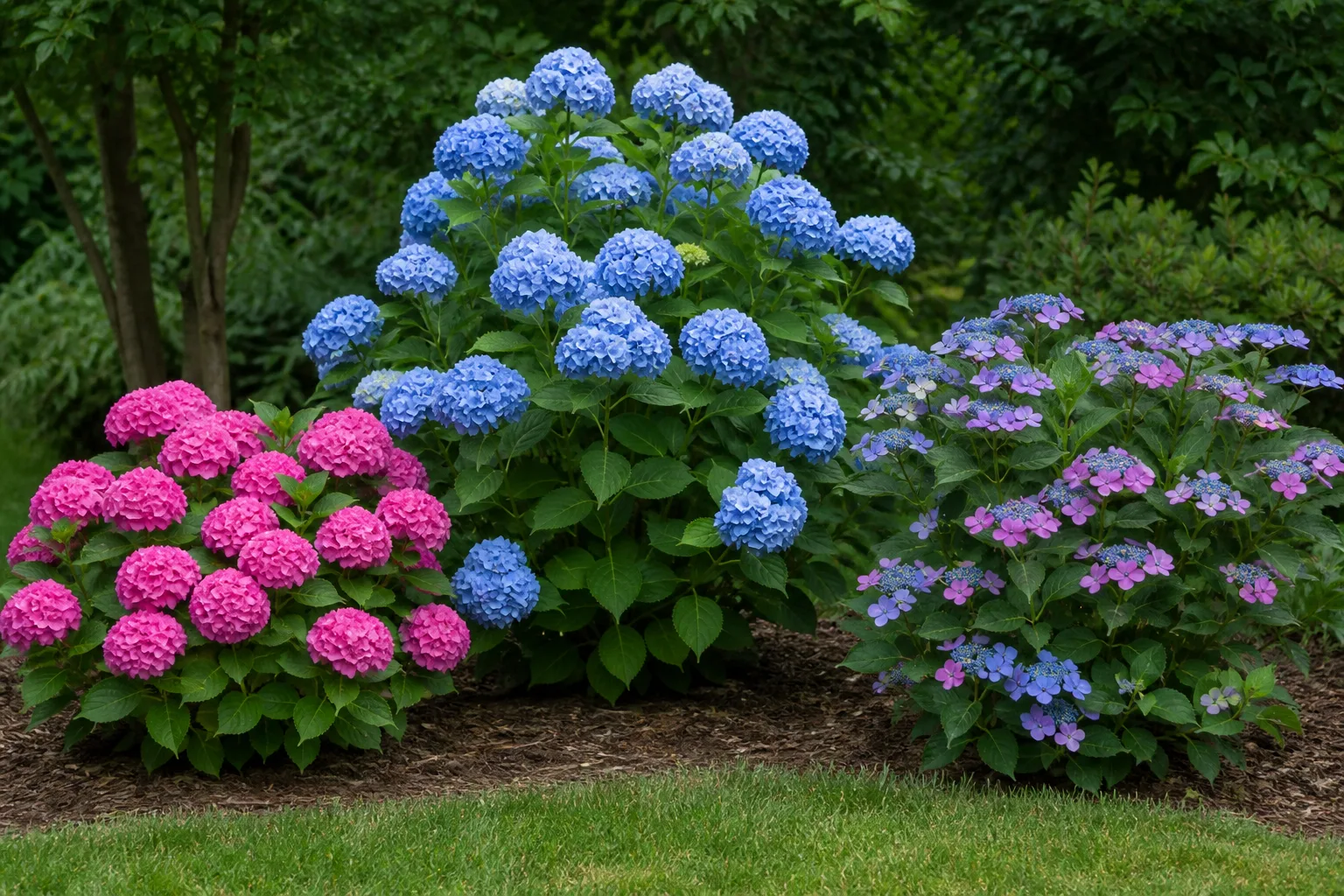
Look at the nursery tag, old photographs, leaf shape, and flower-head form. Mophead and lacecap describe flower shapes, not a complete pruning rule: both are often bigleaf hydrangeas and may bloom on old wood, while smooth hydrangeas can also have round mophead-like heads but bloom on new wood. A cone-shaped flower is a useful clue for panicle hydrangea; deeply lobed leaves point toward oakleaf. If the label is gone, preserve stems until you can identify the plant rather than making a hard cut based on flower shape alone.
| Common group | Typical clue | Where flowers form | Conservative pruning window |
|---|---|---|---|
| Bigleaf (H. macrophylla) | Large leaves; rounded mophead or flat lacecap | Usually old wood; some cultivars rebloom | After flowering, or minimal cleanup after winter damage is visible |
| Mountain (H. serrata) | Often smaller leaves and lacecap clusters | Old wood; some cultivars rebloom | After flowering; protect uncertain stems |
| Oakleaf (H. quercifolia) | Distinctly lobed leaves; cone-shaped clusters | Old wood | Light pruning after flowering |
| Panicle (H. paniculata) | Upright, cone-shaped flower clusters | New wood | Late winter to early spring |
| Smooth (H. arborescens) | Round or lacecap heads; often broad, matte leaves | New wood | Late winter to early spring |
| Climbing (H. anomala subsp. petiolaris) | Clings to walls or trunks; flat white clusters | Primarily old wood | Prune lightly after flowering |
The table is a safe starting point, not a substitute for cultivar instructions. Some bigleaf and mountain varieties rebloom on both old and new wood, but the later flush may be smaller or arrive later than the first. A plant that can rebloom is more forgiving after some bud loss; it is not immune to a mistimed haircut. The RHS separates mophead, lacecap, panicle, smooth, oakleaf, and climbing hydrangeas in its pruning advice, while Epic Gardening’s pruning overview makes the same useful distinction among old-wood, new-wood, and reblooming types (Epic Gardening’s hydrangea pruning guide).
Old-wood bloomers
Bigleaf, mountain, oakleaf, and climbing hydrangeas usually make flower buds on last year’s stems. Their stems may look plain and leafless in winter, but many hold the buds that will open later. A severe fall, winter, or early-spring cut can remove them. In a cold or exposed location, a species or cultivar that blooms on new wood can be a better fit than repeatedly wrapping an old-wood shrub that rarely flowers.
New-wood bloomers
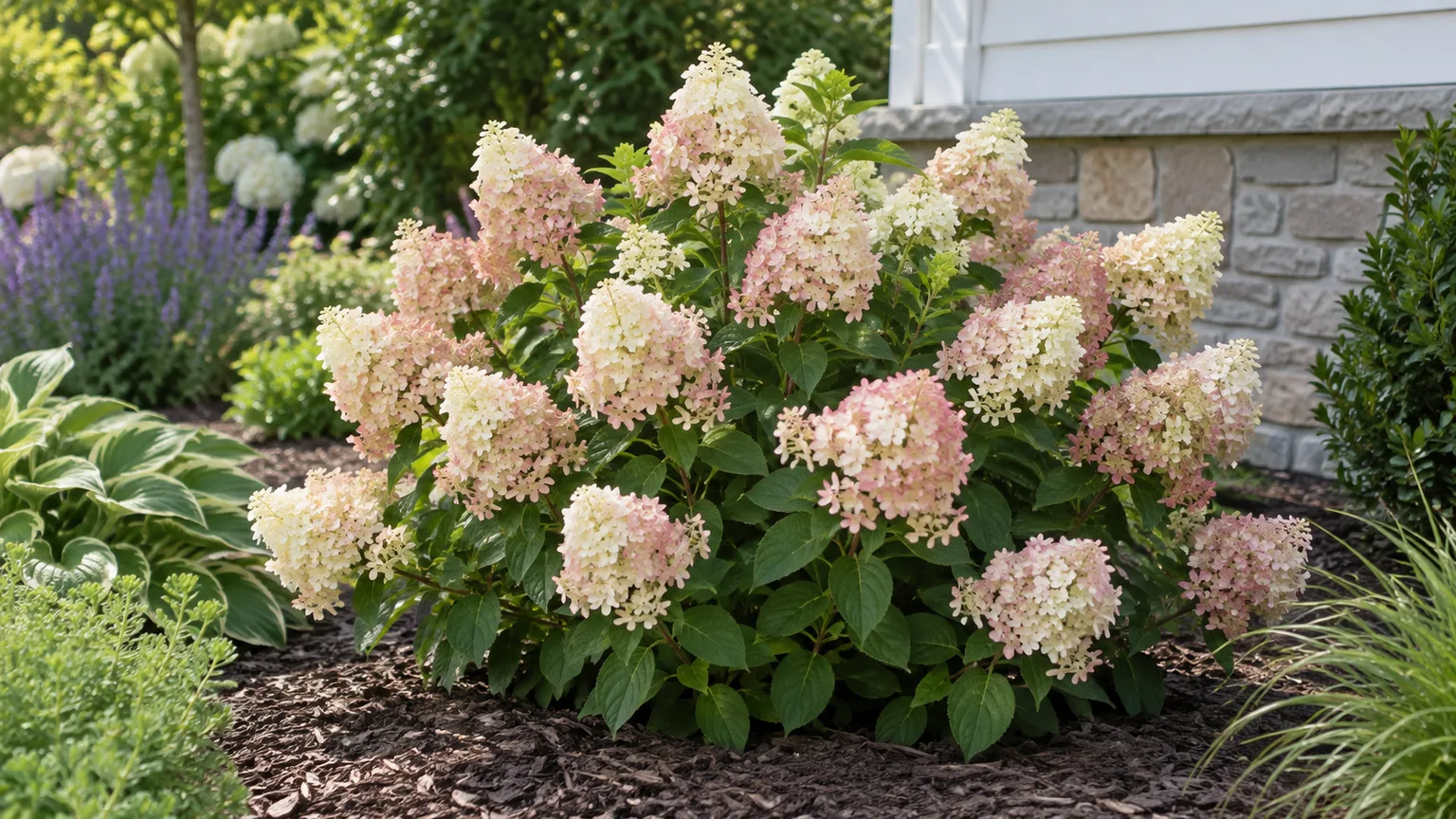
Panicle and smooth hydrangeas form flowers on new growth produced in spring. That makes late-winter or early-spring pruning less likely to remove the coming season’s flower buds. It does not mean every shrub needs a hard cut: heavy pruning can encourage long, weak stems that bend under a dense flower head, and a naturally large cultivar may simply need more room rather than annual reduction. Rutgers’ guide describes how panicle flower density and the amount of pruning can affect stem posture, so preserve a framework when a cultivar tends to flop.
Reblooming cultivars
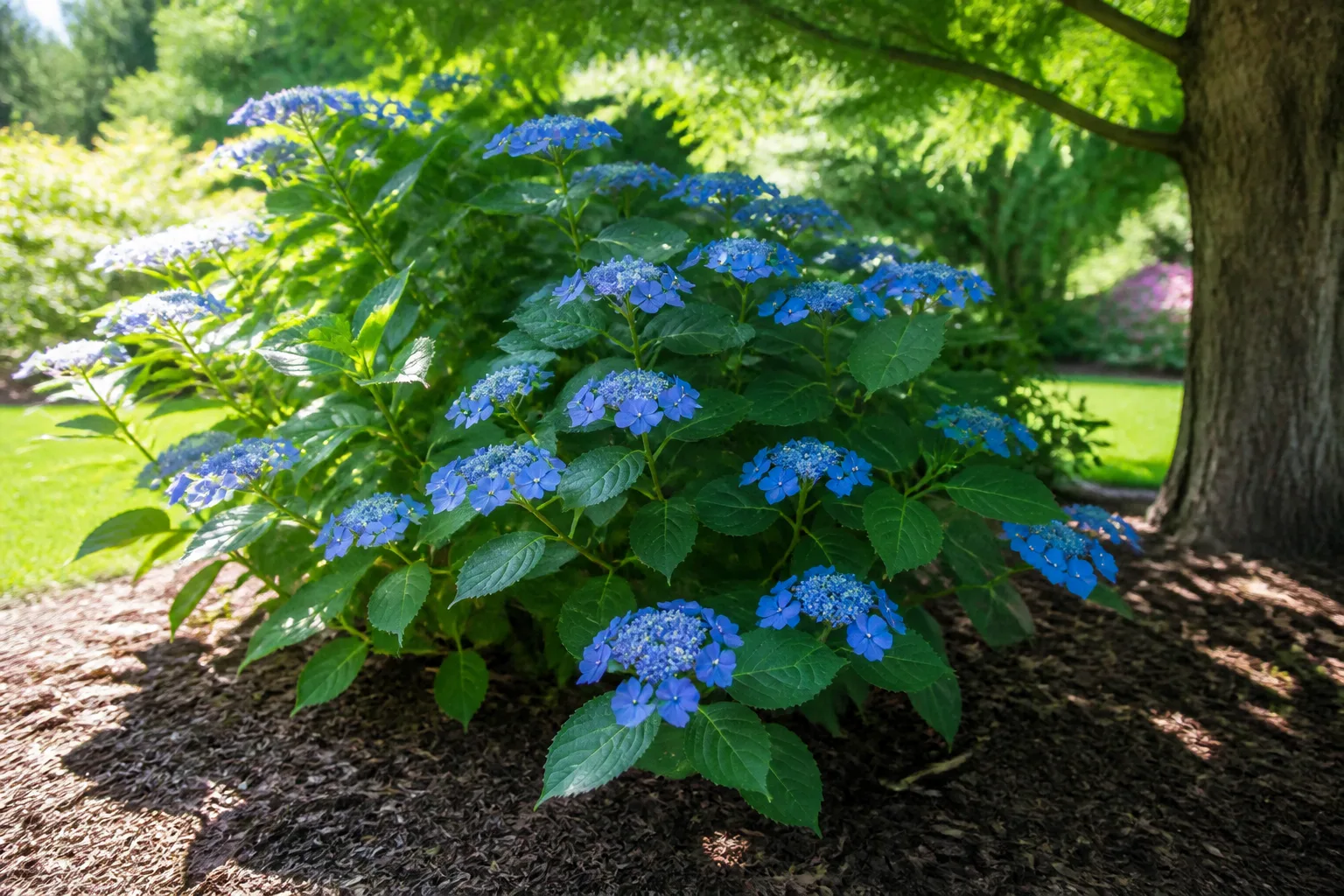
Reblooming bigleaf or mountain cultivars can set flowers on old stems and again on new growth. This can soften the effect of a cold winter, but it does not make pruning irrelevant. Cutting away the old framework may remove the earliest flush, and a short or stressful growing season may limit the later one. If you want reliable flowers rather than a smaller shrub, use selective cuts and follow the cultivar’s own guidance.
Give the shrub enough light without baking it
“Partial shade” is a useful starting point for many bigleaf hydrangeas, not an instruction to plant every hydrangea in deep shade. Morning sun with relief from the hottest afternoon rays often balances flower production and leaf comfort in warm climates. In a cooler region with moist soil, a panicle hydrangea may flower well in more sun. In a hot, exposed yard, afternoon shade can reduce leaf scorch and rapid water loss.
Too little light can mean fewer flowers and soft, stretched stems. Too much intense sun can make large leaves droop, scorch at the edges, and lose water faster than roots can replace it. NC State Extension lists bigleaf hydrangea for dappled sunlight or partial shade and notes its need for moist, well-drained soil (NC State Extension Plant Toolbox). The RHS similarly recommends light shade while noting that established plants can tolerate sun when the soil does not dry out (RHS shrubby hydrangea growing guide).
Before moving a shrub, watch the site over a full day. Note when direct sun hits, whether a building reflects heat, and whether tree roots compete for water. Moving an established hydrangea is a big intervention; first try correcting water delivery or protecting a hot western edge if the plant otherwise has a good structure and healthy growth.
Keep roots evenly moist and well drained
Do not water by a fixed count of days. Feel the soil several inches below the mulch near the shrub’s root zone. If it is drying, soak slowly at the base so moisture reaches roots rather than spraying the flowers. If the soil is still cool and damp, wait and check again. A newly planted shrub, a container, and a mature plant in clay soil all dry at different rates.
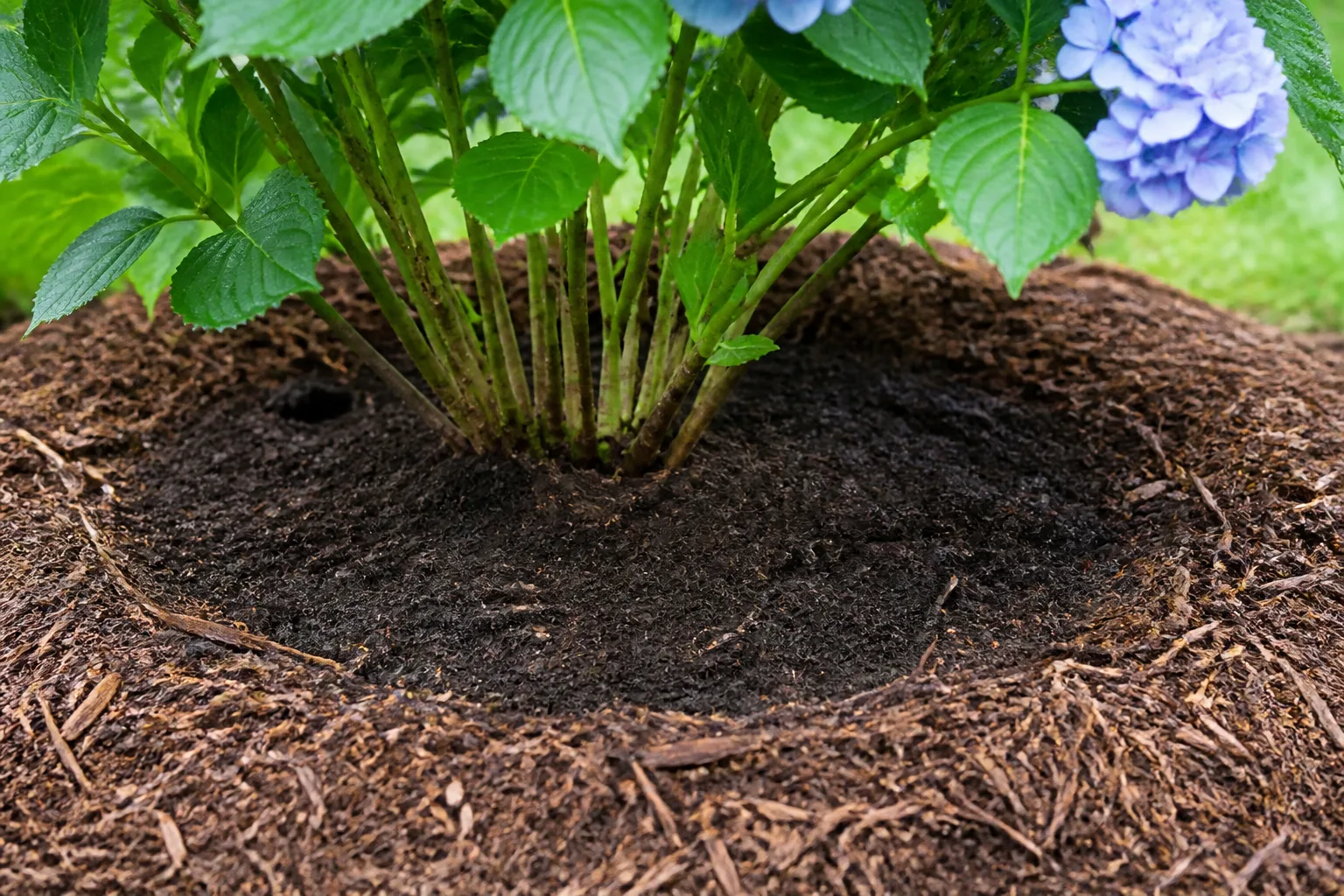
During hot, dry spells, newly planted hydrangeas may need water more often than established shrubs. Use a slow hose or drip line long enough to wet the root zone, then let excess water drain. A two- to three-inch mulch layer can moderate soil temperature and slow evaporation; keep it a few inches away from the stems. Do not pile compost or bark against the crown, and do not keep a hydrangea in a basin that remains saturated after rain.
A useful diagnostic separates wilting from thirst. If the leaves droop during hot afternoon sun but recover by evening and the soil below the surface is damp, heat stress may be the cause; giving more water could create a drainage problem. If the soil is dry several inches down and the plant remains limp after sunset, water deeply. If the ground is persistently wet, yellow leaves and weak growth point toward poor drainage rather than a need for fertilizer. Rutgers identifies consistent moisture as a shared need across hydrangeas but also stresses differences among species and soil conditions (Rutgers Cooperative Extension).
Treat flower color as a separate question
On many bigleaf hydrangeas, soil chemistry can shift flowers between pink, purple, and blue. In acidic soil, aluminum is more available to the plant and some cultivars turn blue; in less acidic soil, those cultivars tend toward pink. The response depends on cultivar, pH, and aluminum availability, so changing color is not instantaneous or guaranteed. White varieties generally remain white, and pH adjustments do not make a shrub set more flower buds.
If color matters, identify the cultivar and test the soil before adding sulfur, lime, or an aluminum product. Follow a product label and local extension guidance; very alkaline soil can be difficult to shift, and unneeded amendments may create other nutrient problems. The RHS notes that blue-flowered cultivars need acidic soil and that strongly alkaline or chalky conditions can make color treatment unreliable (RHS hydrangea growing guide). A soil test is a better first step than copying a neighbor’s amendment routine.
Prune for the type, not the calendar
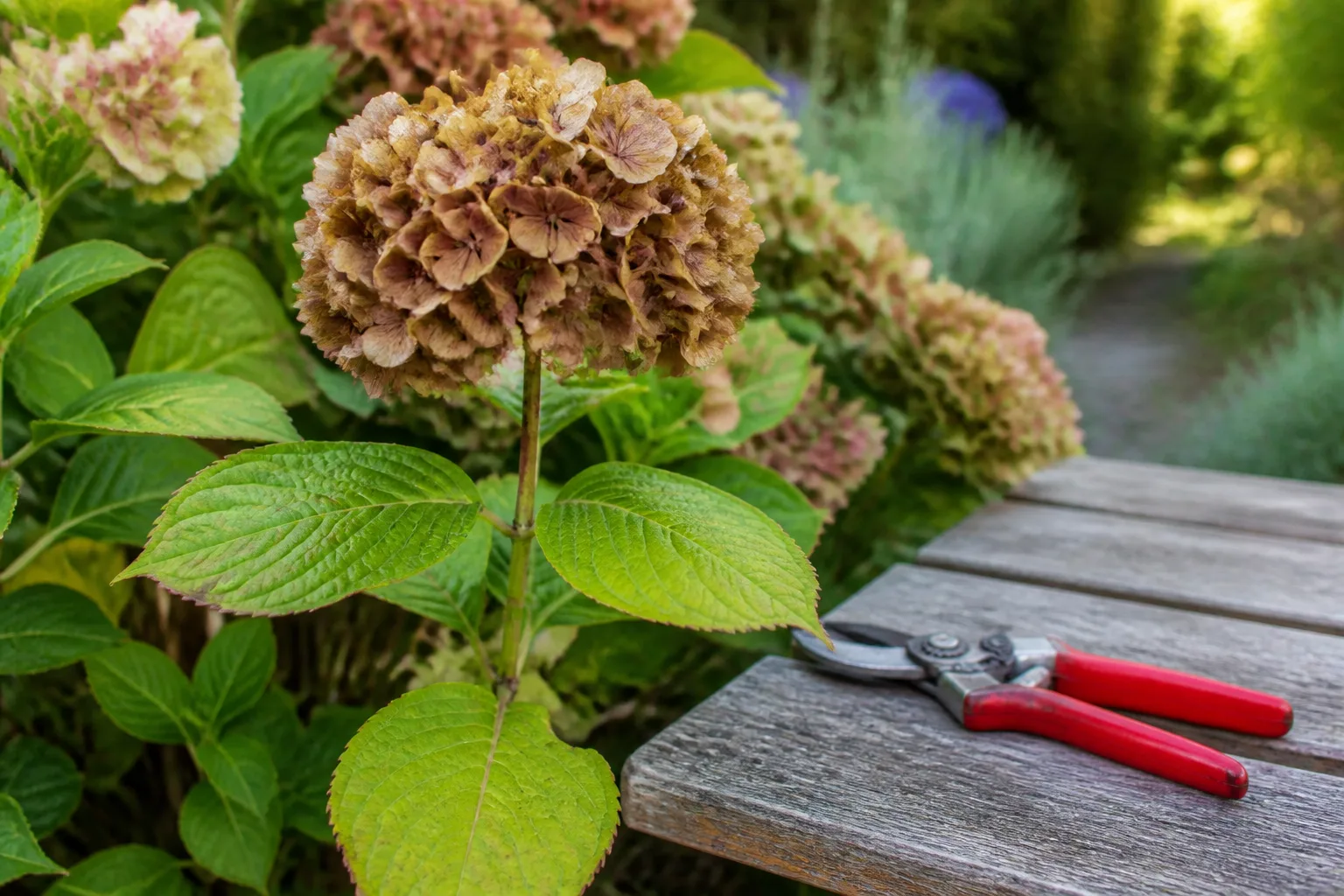
If the plant is flowering adequately, it may not need annual pruning. For an old-wood type, the low-risk time to shape or thin the shrub is soon after flowering, before it begins setting the next crop of buds. Deadheading has a little more nuance: in cold or frost-prone sites, leave mophead flower heads through winter and remove them in early spring just above a healthy pair of buds; lacecaps are often deadheaded after flowering. Remove confirmed dead or broken wood when you can identify it, but avoid shearing an unknown hydrangea in fall or spring. When winter dieback is possible, wait until new growth makes the boundary between live and dead wood clearer.
For panicle and smooth hydrangeas, late-winter or early-spring pruning can remove dead stems and manage size before new growth starts. Preserve a strong framework on cultivars with heavy heads, and thin old stems at the base over time instead of cutting the whole shrub to the ground unless you accept a season with reduced or delayed flowers. The RHS says panicle and smooth types can be pruned back in spring, while mophead and lacecap guidance protects buds on older stems. Savvy Gardening’s fall-care advice also cautions that an autumn cleanup can remove dormant buds on old-wood cultivars (Savvy Gardening’s hydrangea fall-care guide).
Avoid using fertilizer as a pruning substitute. A high-nitrogen lawn product drifting into the bed can push lush leafy shoots while doing nothing to restore flower buds that were cut or frozen. If growth is weak or leaf color is unusual, test the soil and address a demonstrated need. Otherwise, healthy established hydrangeas often benefit more from correct light, water, and pruning timing than from a stronger feed.
Protect buds only where winter injury is recurring
Start with cultivar choice and placement. A sheltered site out of drying wind may be enough for a hardy variety; a tender bigleaf hydrangea in a cold, exposed yard may lose flowers repeatedly even when the roots survive. If a plant has failed to bloom after several winters, switching to a cold-hardy or new-wood type can be more dependable than adding elaborate protection every year.
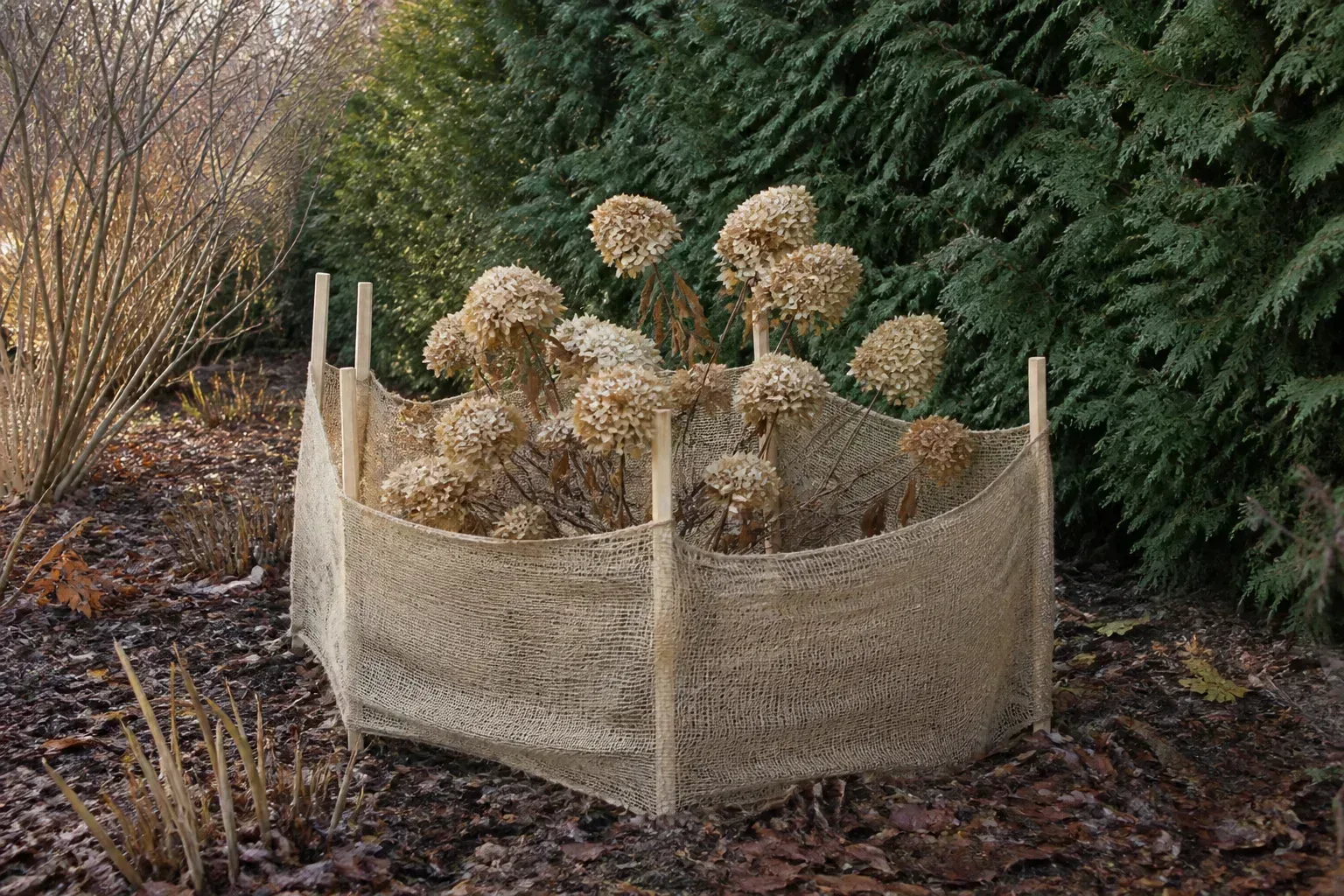
Where old-wood buds are worth protecting, mulch the root zone after the soil cools and use a loose, breathable barrier around the dormant stems if local winters have repeatedly killed buds. Do not wrap the plant tightly in plastic or keep a wet cover pressed against branches. Remove protection when severe cold has passed and before it traps spring heat. For a forecast late frost after buds swell, a breathable frost cloth can reduce exposure for that night; remove it when temperatures rise. Protection lowers risk but cannot override a severe freeze or make every cultivar hardy in every site.
Diagnose a disappointing bloom from the evidence
A weak display is a clue, not a diagnosis. Write down when leaves emerged, whether buds browned before or after leaf-out, when the shrub was pruned, and whether it wilted in heat. Compare notes with last season and inspect the plant tag. These details often narrow the cause faster than adding water or fertilizer.
Leaves but no flowers
Check in this order:
- Pruning: Did you shorten stems in fall, winter, or early spring? If the shrub is bigleaf, mountain, oakleaf, or climbing, that may have removed old-wood buds.
- Cold or late frost: Did stems die back over winter, or did swelling buds turn brown after a spring freeze? Wait until growth begins, then scratch-test a small part of a questionable stem; green tissue under the bark is alive.
- Cultivar: Is it a standard old-wood type or a rebloomer? New-wood cultivars can recover from old-stem injury more readily, though they still need time to grow.
- Light and age: Deep shade and a young or recently transplanted shrub can produce a smaller display while the plant establishes.
- Fertilizer and browsing: Excess nitrogen favors leaves, while deer can remove buds and stem tips without leaving an obvious pruning pile.
Correct the cause before trying to stimulate blooms. More fertilizer cannot replace buds lost to frost or pruning; a hard cut to “reset” the shrub may delay flowering another season. If the plant is healthy but only lightly flowered in its first few years, give it time and protect the stems it has already grown.
Wilting, brown heads, or floppy stems
Check soil before watering. Afternoon droop that resolves overnight while the root zone remains moist often reflects temporary heat stress. Persistent wilting with dry soil suggests a deep soak; persistent wilting in soggy soil points to root stress or drainage. Brown petals can be normal aging, heat scorch, drought, or damage from a frost, so look at timing and leaves rather than cutting every brown cluster immediately.
Floppy flower stems often reflect the cultivar, large heads made heavier by rain, too much shade, or soft growth encouraged by excess nitrogen. Temporary support can help after a storm, but staking every year is a sign to reassess cultivar, light, and feeding. If a plant is declining in a wet bed, improve drainage or move it while dormant rather than repeatedly treating the foliage.
Set up next year’s display after this year’s flowers
During bloom, take a quick record: photograph the flower shape and leaves, note whether the plant blooms early or late, and save the cultivar tag. After flowering, remove only the stems you need to shape on old-wood types. During the rest of summer, keep newly planted shrubs from drying out and renew mulch if the root zone is exposed. In fall, avoid an unnecessary cleanup that shortens every cane.
In late winter or spring, prune only after checking the type and assessing winter injury. If the shrub is consistently too cold-sensitive for its spot, choose a hardier cultivar or a new-wood species when replacing it. This sequence is less dramatic than a “bigger bloom” treatment, but it works with the plant’s biology: preserve the right buds, reduce avoidable stress, and let the cultivar set the ceiling for the display.
Conclusion
Hydrangeas look spectacular in some seasons because several conditions line up: the cultivar can bloom in that climate, flower buds form successfully, winter and spring leave those buds intact, and the shrub gets enough light and moisture without sitting in wet soil. A mild winter or a rainy summer may contribute in one location, but neither explains every plant or guarantees a repeat performance.
For a better display, identify the hydrangea first, protect old-wood stems from unnecessary pruning, water according to the root zone, and correct site problems before adding fertilizer. Then use this season’s flowers and growth as evidence. A few careful observations will tell you whether next year calls for a different pruning date, more shade, better drainage, or simply a cultivar that fits your winter.



