Why Is My Succulent Dying? 6 Causes and Fixes
Learn how to tell underwatering from root rot, adjust light safely, spot pests, and decide when a dying succulent can recover or should be propagated.
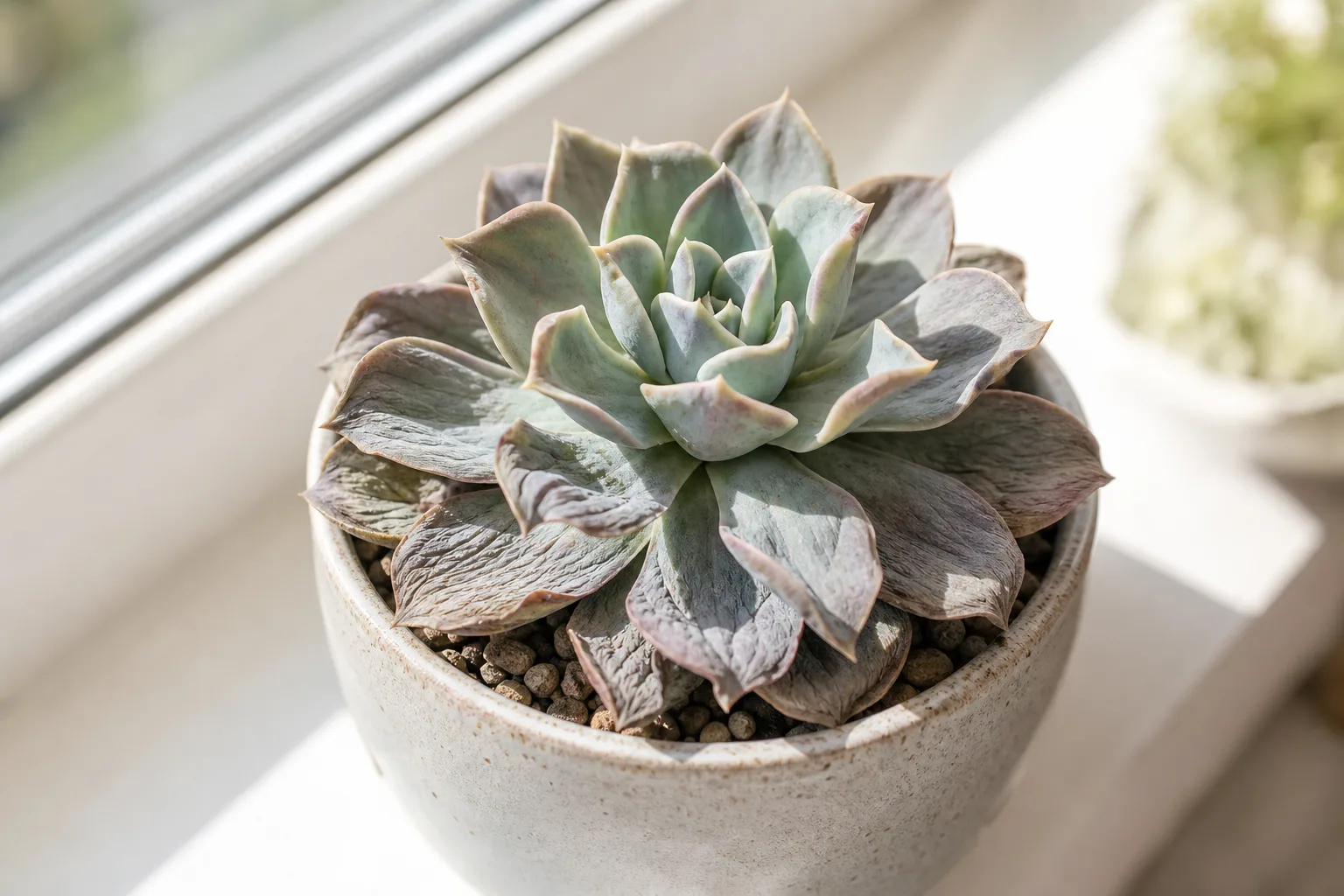
A succulent that is wrinkled, yellowing, dropping leaves, or leaning is asking for a closer look—but the symptom alone does not tell you what to do. A thirsty plant and a plant with rotted roots can both look limp; watering the second one makes the damage worse. Check the mix, the affected part of the plant, and what changed recently before reaching for the watering can or pruning shears.
Most succulents store water in leaves or stems, so their decline often begins below the surface. The fastest useful diagnosis combines three clues: how wet the root zone is, whether the tissue is firm or soft, and whether damage is limited to older leaves or spreading through new growth. The guide below uses those clues to narrow down six common causes and choose a measured response.
First, decide whether it is dying or shedding old leaves
A few dry leaves at the very bottom of a succulent’s stem can be normal. As a rosette or branching plant grows, it may shed older leaves while producing a firm center and new growth. If the change is slow, limited to the oldest leaves, and the soil dries normally, remove only leaves that release easily; pulling a firmly attached leaf can tear healthy tissue.
Decline looks different when leaves in the center or at the top are turning translucent, soft, or black, when several leaves drop in a short time, or when the stem at soil level is collapsing. Sudden wilting or wrinkling also deserves a check, especially if it affects new growth. Succulents and Sunshine’s succulent troubleshooting guide makes a useful distinction between ordinary lower-leaf loss and damage affecting newer leaves; the root-zone check below helps determine whether watering is actually responsible.
Run a quick triage before changing care
Start by checking the whole plant rather than diagnosing from one leaf. Look at the crown, stem base, newest leaves, undersides, and soil surface; note whether damage is on the window-facing side, only on old lower leaves, or scattered across the plant. Then consider any recent change: a move into stronger sun, a cold night, a new pot, several weeks of rain, or a different watering routine.
Use this quick comparison to choose what to inspect next:
| What you see | What to check | Safer first move |
|---|---|---|
| Soft, translucent leaves and a heavy or wet pot | Mix below the surface; drainage hole; roots if decline is spreading | Pause watering; remove standing water; inspect roots if the mix stays wet |
| Thin, wrinkled leaves and a very light pot | Root ball several centimeters down; whether water runs around dry soil | Rehydrate the root zone once, then let excess water drain |
| Long bare stem or widely spaced leaves | Direction of lean; light available over the day | Increase bright light gradually |
| Tan or bleached patches on the exposed side | Recent move, midday sun, hot glass | Return to filtered light and acclimate more slowly |
| Cottony clusters, bumps, fine webbing, or sticky residue | Leaf joints, crown, undersides, and drainage holes | Isolate the pot and identify the pest before treating |
The most useful first action is often to wait long enough to confirm the soil condition. Succulents do not follow a reliable weekly schedule: a small terracotta pot in a warm, bright room dries differently from a large plastic pot in cool, weak winter light. The RHS recommends checking succulent compost before watering and letting excess drain away; its growing guide for houseplant cacti and succulents also notes that rainforest succulents need different conditions from many desert types.
Check moisture below the surface
Feel the mix a little below the top, push a dry wooden skewer toward the lower part of the root ball, and lift the pot to learn its weight. A dry crust does not prove the center is dry, while a wet saucer or cachepot can keep the bottom of the root zone saturated after the surface looks pale. If the container has no drainage hole, the moisture reading matters even more because excess water has nowhere to escape.
A meter can help you compare the same pot over time, but a single reading is not a diagnosis. Coarse grit, bark, a narrow pot, and a dense root mass can make one probe spot misleading. Use the reading alongside the pot’s weight, the skewer, and the texture of the leaves.
Match leaf clues with the plant’s recent history
A plant that looks thirsty after you moved it next to a radiator may be losing water faster than usual; one that looks thirsty after weeks in wet mix may have damaged roots. The Virginia Cooperative Extension’s indoor-plant chapter explains that similar symptoms can have different causes and recommends evaluating the growing environment along with the visible damage. Treat a symptom as a clue to test, not as an instruction to automatically water, fertilize, spray, or repot.
1. The roots are staying wet too long
Overwatering is not simply “using too much water once.” The persistent problem is a root zone that stays wet long enough for roots to lose access to air, often because frequent watering is combined with a fine, moisture-retentive mix, a pot that is too large, poor drainage, low light, or cool weather. A decorative cachepot with water trapped inside can create the same problem even if you are not watering often.
Early clues include leaves that feel unusually soft or look yellow and translucent, lower leaves that detach with a light touch, and a pot that stays heavy for many days. A succulent may even wrinkle while the mix is wet because damaged roots cannot take up water normally. That is why “wrinkled equals thirsty” is an unsafe shortcut: check the soil first.
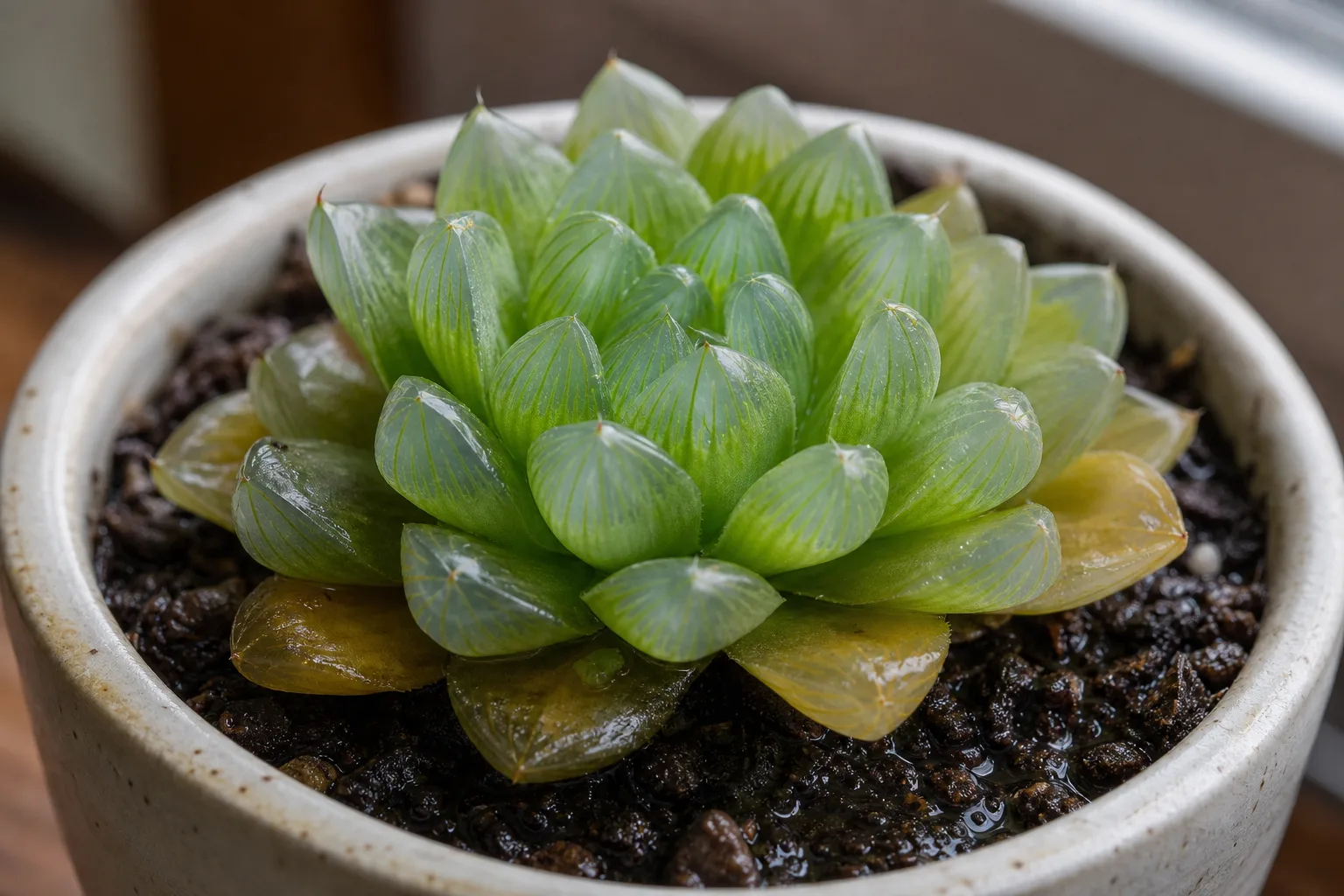
If the pot is still wet but the plant has no collapsing stem and the leaves remain mostly firm, empty any standing water and let the mix dry. Move it to bright, indirect light with good air movement while it recovers, but do not place a waterlogged plant in harsh sun to force it dry. If the mix remains wet, smells sour, or the crown is softening, inspect the roots instead of waiting for visible recovery.
Confirm root rot before cutting
Slide the root ball out gently when a pot has stayed wet or the plant is rapidly declining. Healthy succulent roots may be tan, cream, or darker from the potting medium, so color by itself is not enough. Rot is more likely when roots are soft, slimy, hollow, or when the outer layer slips off with a light touch; a dark, soft stem base is a more urgent warning than a single yellow lower leaf.
Virginia Cooperative Extension’s indoor-plant diagnosis table describes brown, mushy roots as one possible sign of root trouble while emphasizing that aboveground symptoms vary. If the roots are mostly firm, preserve them and correct the conditions that kept them wet. If a few sections are clearly rotten, remove only that tissue with a clean blade; cutting healthy roots merely because they are not white can reduce the plant’s remaining ability to recover.
2. The root ball is dry—or water cannot reach it
A genuinely underwatered succulent often has thinner, wrinkled leaves that gradually lose firmness while the mix is dry well below the surface. The pot feels light, and the plant may have been in bright heat, an unglazed pot, or a small container for a long time. This pattern differs from wet-root stress, but the two can look similar when root damage prevents water uptake.
If the plant is firm at the stem base and the entire root ball is dry, water slowly and thoroughly until the mix is evenly moist and water drains from the bottom. Empty the saucer, then allow the mix to dry again before watering. Succulent-specific guidance from Succulents and Sunshine also cautions against light, frequent sips: water needs to reach the roots, not just dampen the surface.
Very dry peat-based mix can become water-repellent. You may see water run down the gap between the soil and pot while the center stays dry. In a pot with a drainage hole, set the pot in shallow room-temperature water briefly so the mix can rewet from below, then lift it out and drain it fully. Do not use this method if there is no drainage hole; repotting into an appropriate container is safer than leaving the roots standing in water.
After a thorough drink, do not keep adding water because the leaves have not plumped by the next morning. Some leaves take several days to respond, and severely depleted or old leaves may not recover their shape. Look for firm new growth and stable stems over the following weeks.
3. Low light is stretching and weakening growth
A succulent short on light may grow toward a window, lengthen its stem, and leave wider gaps between leaves. This stretched growth is called etiolation. Leaves may become smaller, paler, or less compact, and the plant can look weak even when the soil and roots are healthy. A few lower leaves dropping does not always mean thirst; the pattern of elongated new growth is a stronger light clue.
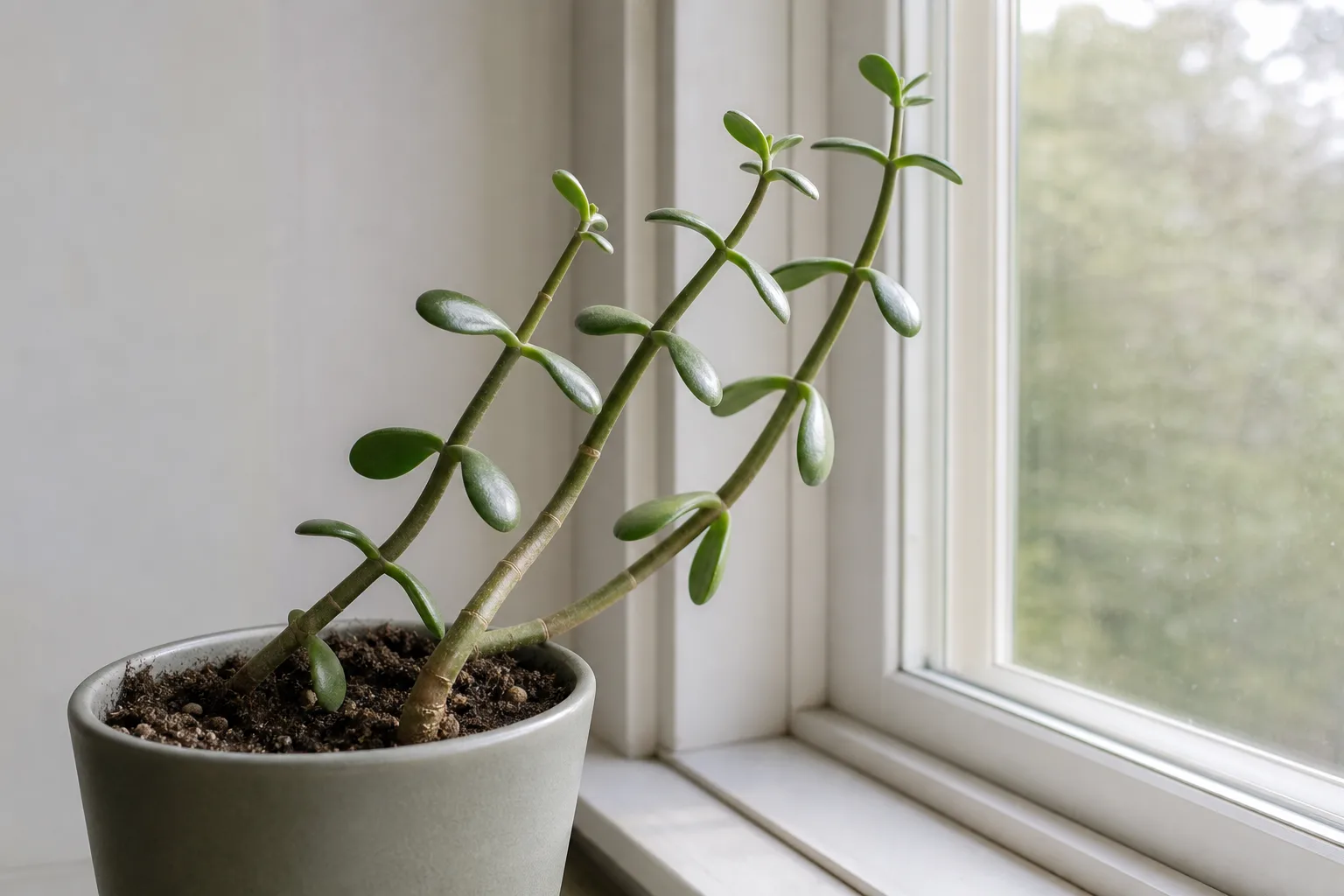
Move the plant closer to a bright window or provide a suitable grow light, but change exposure in stages. The RHS notes that most indoor cacti and succulents prefer bright conditions while some rainforest succulents tolerate more filtered light. North-facing windows, deep rooms, shaded balconies, and winter days can all provide less usable light than they appear to.
Increasing light may help future growth become more compact, but it will not shorten a stretched stem or restore leaves already lost. Once the plant is growing well again, you can decide whether to prune and propagate the top; do not cut a stressed plant just to make it look tidy.
Increase light without adding sunburn
Start with bright filtered light, then introduce direct morning sun for a short period and lengthen exposure over several days to a couple of weeks. The exact pace depends on how shaded the plant was, the season, the window, and the species. A recently purchased greenhouse plant can burn even if that same species eventually grows well in direct sun.
Watch the side facing the light. New bleached, tan, or crisp patches after a move are a reason to pull back, not to increase exposure further. Keep the plant away from hot glass and avoid moving it from a dim shelf to intense afternoon sun in one step.
4. Sudden sun, heat, or cold damaged the leaves
Sunburn usually appears on the most exposed side as a bleached, tan, or dry patch after a sudden change in light. The damaged area will not turn green again, but the plant may be healthy if its stem and growing point remain firm. Move it to filtered light and acclimate more gradually; remove a damaged leaf only if it is fully dry or beginning to rot.
Heat can add stress when a pot sits against hot glass or above a radiator. Cold injury may leave leaves limp, translucent, or blackened, especially after a cold draft, frost, or contact with a chilly window. Move the plant to stable conditions, but do not put cold-damaged tissue under strong sun or immediately soak cold, wet mix.
Make one main correction at a time where possible. If the plant is both wet and sunburned, first keep it out of standing water and stabilize its light; changing its pot, soil, watering, and location all at once makes it harder to know what helped and can add transplant stress.
5. Pests are hiding in leaf joints or roots
Mealybugs look like small white cottony deposits, often tucked where leaves meet the stem. Scale insects may resemble fixed brown or tan bumps, while spider mites can cause fine stippling and delicate webbing. Aphids tend to gather around tender new growth; fungus gnats hovering around soil may signal persistently damp mix, though the adult flies themselves usually are not the main cause of a succulent’s decline.
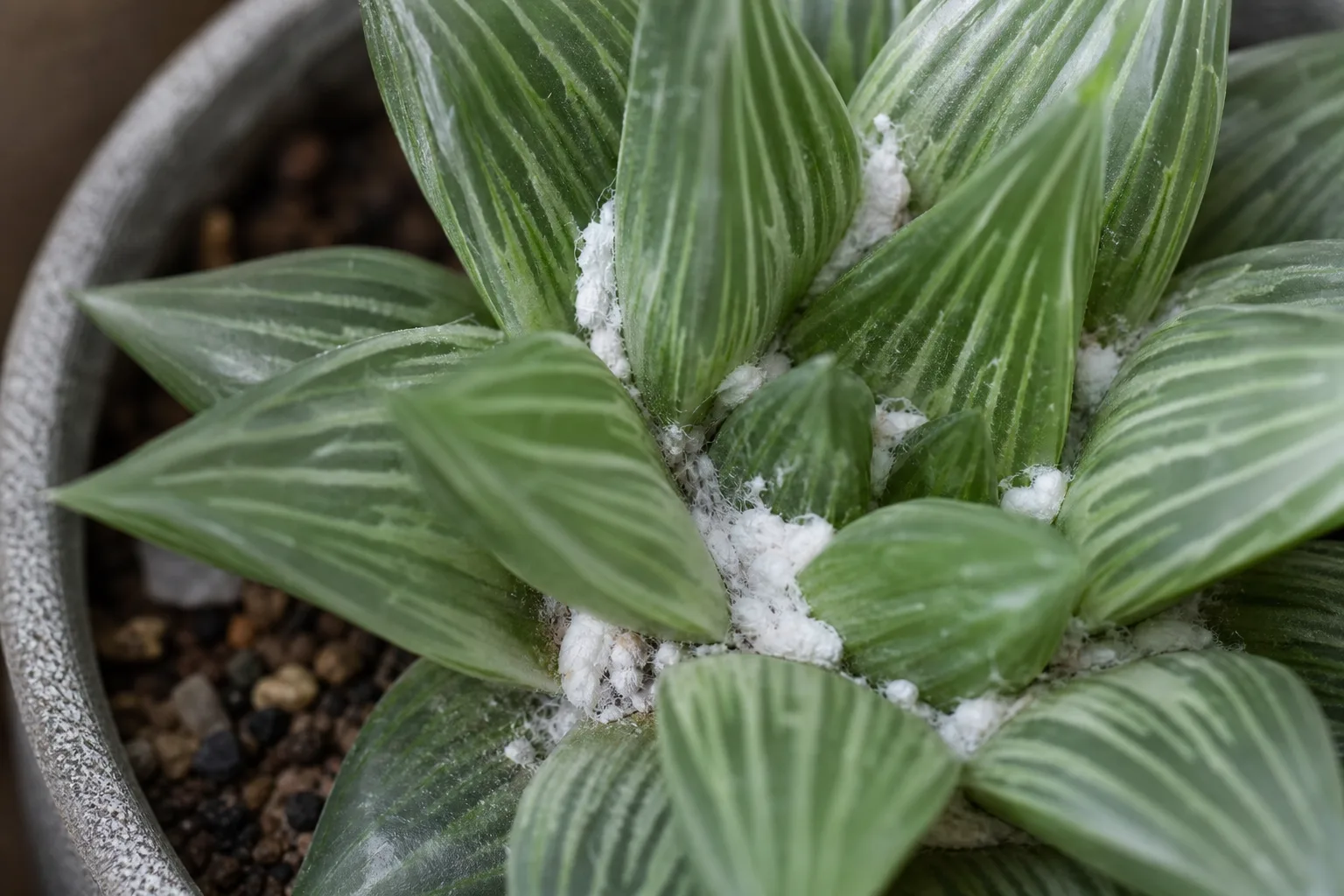
Inspect the crown, leaf undersides, stem joints, and the pot rim with a bright light. If symptoms persist after the visible foliage is clear, check around the root ball for root mealybugs or other hidden pests. The University of Alaska Fairbanks Cooperative Extension guide to houseplant pests recommends identifying the pest first and combining early detection, monitoring, and physical or biological controls.
Isolate and treat only after identifying the pest
Move an infested plant away from the rest of the collection and inspect nearby plants. Remove a small number of insects mechanically with a cotton swab or a gentle rinse if the plant’s leaves can tolerate it; avoid rubbing away a powdery natural leaf coating. Recheck every few days because one cleaning may miss insects in tight leaf joints or eggs that hatch later.
If an infestation is widespread, choose a product labeled for that pest, plant, and indoor use, and follow the label exactly. Test a small area first because some succulents are sensitive to sprays, especially in bright light or heat. Avoid blanket pesticide use when the insect has not been identified; extension guidance stresses that a diagnosis and ongoing monitoring are more reliable than treating a symptom blindly.
6. The species or season does not match the routine
“Succulent” describes water-storing tissue, not one universal care schedule. Most familiar rosette, aloe, jade, and haworthia types prefer bright light and a drying interval, but Christmas cactus, Rhipsalis, and other epiphytic succulents come from different habitats and can prefer filtered light and more regular moisture. The RHS specifically distinguishes rainforest-dwelling succulents from desert types, so identify the plant before applying a desert routine to every fleshy-leaved plant.
Season also changes what a pot can use. During short, dim winter days, many succulents grow slowly and the mix takes longer to dry; watering at a summer interval can leave roots wet for too long. In a warm, bright summer window or outdoors, the same pot may dry much faster. Do not translate a month on the calendar into a fixed watering rule; check the root zone and observe new growth.
A dormant or recently moved plant may pause without being dead. If the crown remains firm and there is no spreading rot, stabilize its conditions and wait rather than fertilizing or repeatedly disturbing it. If you cannot identify the species, use the plant’s label or a reputable botanical identification resource and make conservative changes until you know its needs.
Choose rescue, cuttings, or a clean restart
A succulent is worth rescuing when it still has a firm growing point, at least some healthy roots, or a clean section of stem that can root. If only a few roots are damaged, remove the rotten sections and reset the mix and pot. If the base is soft but the upper stem or a rosette is firm, propagation may preserve healthy tissue even when the original root system is failing.
For a cutting, use a clean blade and cut above any discolored, soft tissue. Keep trimming until the cut surface is uniformly firm and clean; if brown or translucent tissue remains inside, cut a little higher. Let the cut surface dry and callus before placing the cutting in a fresh, airy mix. The exact callusing time depends on stem thickness and humidity, so judge by a dry sealed surface rather than a rigid number of days.
Do not propagate soft, rotting leaves or place a fresh cutting into wet soil. If the cutting has no roots yet, keep it in bright filtered light and avoid repeated watering while the cut heals. Specialist horticulture writer Gardener’s Report’s succulent rescue guide describes rescuing plants from leaf loss, drought stress, sun damage, and cold; the same practical principle applies here: preserve firm tissue and remove the condition that caused the decline.
If the entire crown and stem are mushy, the roots have disintegrated, and no firm offset or cutting remains, recovery is unlikely. Discard badly rotted material rather than putting it into a shared pot or composting it near healthy succulents. Clean the container before reusing it and correct the drainage or watering setup before replacing the plant.
Repot only when the root zone needs it
Repot when the mix stays wet, drainage is blocked, the container has no drainage hole, the medium has collapsed into dense sludge, or roots need inspection. Choose a clean pot with a drainage opening that is only modestly larger than the remaining roots. Too much unused mix can stay damp long after the small root system has finished using water.
Use a gritty cactus or succulent medium that drains freely but still holds enough moisture to support roots. Remove soggy old mix from around damaged roots, but do not scrub or pull at every healthy root. The RHS recommends free-draining gritty compost for cacti and succulents and cautions against oversized pots because surplus wet compost can contribute to rot.
If the plant is healthy and the mix dries properly, repotting “just in case” may set it back. Roots disturbed during an unnecessary repot can take time to resume water uptake, and a new pot is not a substitute for better light or a corrected watering routine. Fix the cause you confirmed, not every possible cause at once.
Monitor recovery over the next four weeks
During the first few days, keep the plant in stable bright light and confirm that its pot drains. If you removed rotten tissue or took a cutting, avoid keeping fresh wounds wet. Do not fertilize a plant that is actively recovering; fertilizer cannot rebuild lost roots and can add salts to a small root zone.
Over the next one to two weeks, look for a firm crown, no new black or translucent areas, and no rapid spread of leaf drop. The oldest damaged leaves may remain wrinkled, scarred, or discolored even after conditions improve. Judge recovery by whether deterioration has stopped and whether new growth is healthy—not by whether old damage disappears.
At around a month, review how quickly the pot dries in its current location and whether new growth is compact or stretched. If the soil remains wet for an unusually long time, revisit the pot size, mix, light, and drainage rather than increasing the interval blindly. If a plant continues collapsing despite a dry mix and stable conditions, inspect the roots and stem again; pests, disease, or hidden damage may have been missed.
Conclusion
The safest answer to “why is my succulent dying?” starts with the root zone, not the watering schedule. Check whether the mix is wet or dry below the surface, compare that with leaf firmness and the pattern of damage, then correct the likely cause one step at a time. Wet soil with soft tissue calls for a root check; dry soil with a firm base may need one complete drink; stretched growth needs more usable light; and spots or cottony deposits call for pest inspection.
A succulent can recover if it still has firm roots, a healthy crown, or viable stem tissue, but not every damaged leaf or plant will bounce back. Stabilize the growing conditions, watch the newest growth, and take a healthy cutting when the original roots or stem are failing. Those checks give the plant its best chance while keeping guesswork from causing another round of stress.



