Potassium Deficiency on Alocasia Zebrina: Causes, Checks &
Quick answer
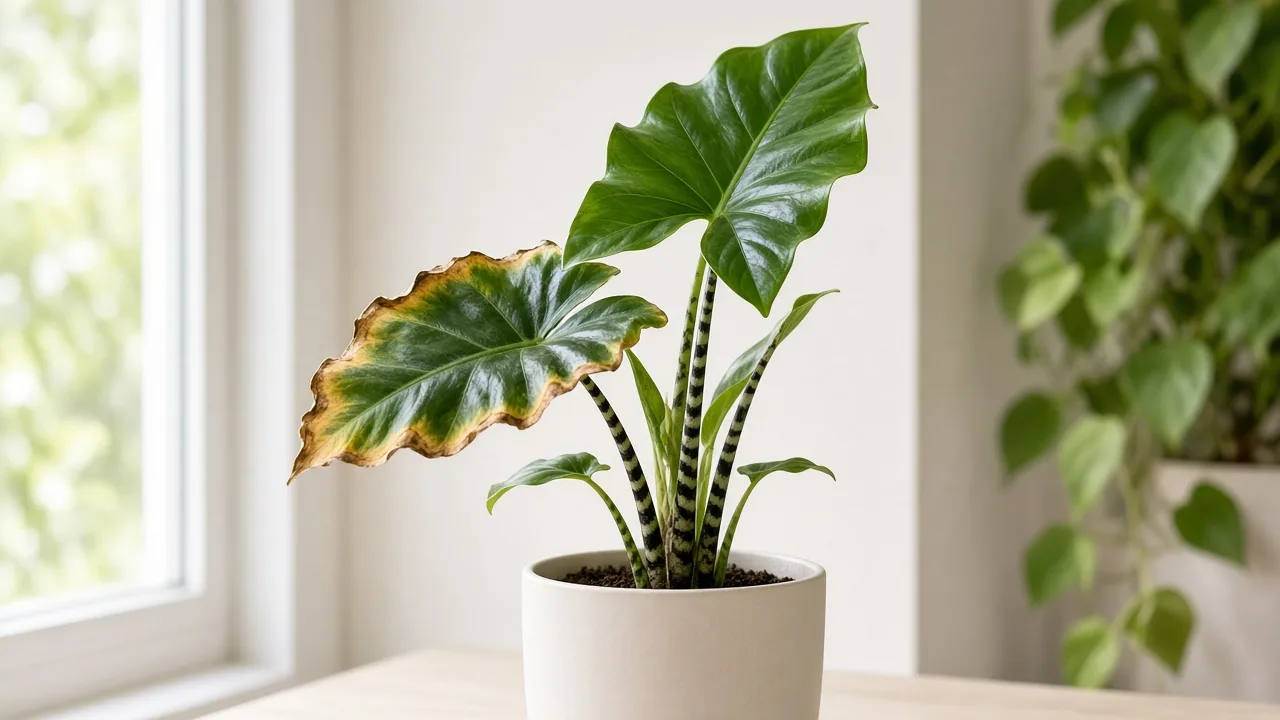
Potassium deficiency on Alocasia Zebrina shows as dry brown scorch along the margins of the oldest glossy arrow leaf on a zebra-striped petiole while the newest crown blade may still look acceptable. First step: read your fertilizer N-P-K label and inspect the lowest mature leaf together—not the calendar alone.
Potassium Deficiency on Alocasia Zebrina: Causes, Checks & Fixes
This guide covers potassium deficiency on Alocasia Zebrina. See also the general Potassium Deficiency guide, watering, and light pages for this plant.
Potassium Deficiency on Alocasia Zebrina: Causes, Checks & Fixes
Quick answer
Potassium deficiency on Alocasia Zebrina (Alocasia zebrina) usually shows on the oldest glossy arrow leaf first—dry brown scorch along the margins while the newest blade unfurling from the corm crown on a zebra-striped petiole may still look acceptable. Potassium is mobile in plants, so the Philippine aroid strips it from lower mature tissue to fund the tall arrow leaf it pushes every two to three weeks in warm bright conditions.
See our potassium deficiency guide for general marginal scorch mechanics. On Alocasia Zebrina, inspect the lowest mature arrow blade on a striped petiole—crisp edge burn there with a greener new crown unfurl above fits potassium before iron deficiency, which yellows new tips with green veins.
First step: read your fertilizer N-P-K label and inspect the lowest mature arrow leaf together.
When to use this page vs other Alocasia Zebrina guides
| Pattern | Read next |
|---|---|
| Brown scorch on oldest lower arrow leaf margins | Potassium deficiency (this page) |
| Yellow new arrow blade with green veins at crown | Iron deficiency |
| Interveinal yellowing on older mid-canopy leaves | Magnesium deficiency |
| Uniform pale lower old leaves without edge scorch | Nitrogen deficiency |
| Cupped or margin-burned newest crown unfurl | Calcium deficiency |
| Crispy tips without old-leaf-first marginal pattern | Brown tips or Low humidity |
| Yellow lower leaves on wet mix | Overwatering or Root rot |
| General yellowing with multiple causes | Yellow leaves |
What potassium deficiency looks like on Alocasia Zebrina
Healthy Alocasia Zebrina pushes glossy arrow-shaped leaves on long zebra-striped petioles from an underground corm. Indoors it often holds only two or three leaves at a time, so marginal burn on the lowest mature blade is immediately visible while the crown may still look dramatic. Potassium regulates water movement and stiffens cell walls; when soil reserves run low, the plant remobilizes potassium upward and the oldest arrow tissue scorches first.
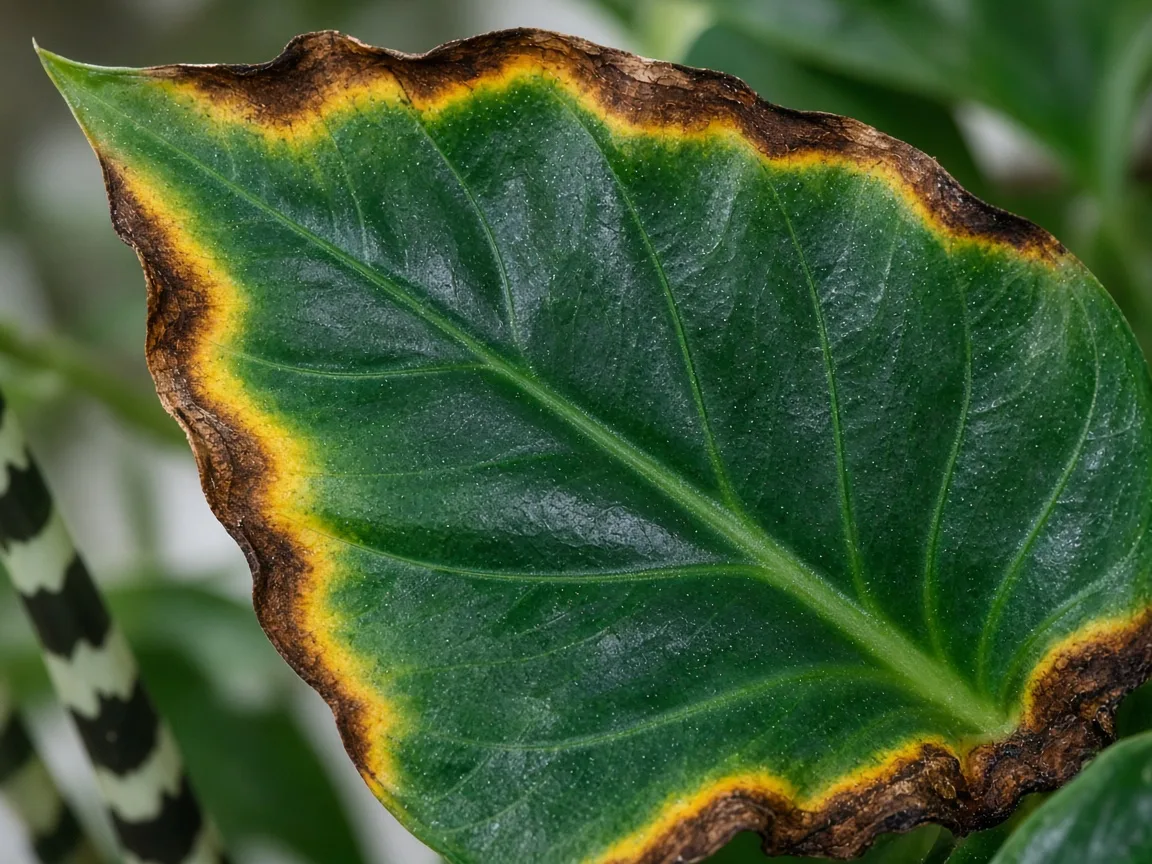
Oldest glossy arrow blade with dry brown necrosis along the outer margin—newer striped petiole and crown blade above may still look green.
Typical signs:
- Dry brown scorch along outer margins of the oldest lower arrow leaf on a zebra-striped petiole
- Yellow band just inside the scorched edge before tissue turns fully brown and papery
- New crown blade on a tall striped petiole may stay green in early stages while the lowest leaf scorches
- Weak or soft-feeling striped petioles on a plant with otherwise damp, plump soil
- Smaller new arrow blades or slower unfurl speed when deficiency is advanced
- Firm tan corm if roots are healthy—soft collapsing petioles at the soil line point to overwatering instead
Not potassium deficiency:
- Yellow new arrow leaves with dark green veins at the crown — iron deficiency
- Interveinal yellow between green veins on older mid-canopy blades — magnesium deficiency
- Uniform pale lower old leaves without sharp marginal scorch — nitrogen deficiency
- Cupped or hood-like margin burn on the newest unfurling crown blade — calcium deficiency
- Crispy tips on many blades without predictable old-leaf-first progression — brown tips from dry air or hard water
- One outer arrow yellowing while a green blade unfurls above — normal aging on yellow leaves
Missouri IPM notes that potassium deficiency causes leaf margins to turn chlorotic and then necrotic, with tip and marginal burn starting on mature leaves—on Zebrina that mature tissue is the lowest glossy arrow on the plant, not the crown unfurl still opening.
Why Alocasia Zebrina gets potassium deficiency
Alocasia Zebrina is a fast-growing Philippine aroid that can push a tall new arrow leaf every two to three weeks in bright indoor light during summer. Each large glossy blade and long striped petiole draws potassium from the limited root zone. Every thorough watering through chunky bark-perlite mix flushes soluble minerals through drainage holes. After one to two seasons in the same pot without complete feeding—or with nitrogen-heavy products—the lowest arrow leaf scorches at the margins while the crown keeps growing.
Alocasia Zebrina-specific causes:
- Leached chunky aroid mix — Bark and perlite blend that started airy drains potassium with each soak per the Alocasia Zebrina watering rhythm. Zebrina outgrows its nutrient reserve even when older leaves look dramatic and glossy.
- Nitrogen-heavy fertilizer without adequate potassium — Summer feeding that greens new blades while older arrows scorch at the edges fits a mobile-nutrient pattern where the plant remobilizes potassium from mature tissue.
- Salt buildup from excess feed or hard tap water — White crust on the pot rim injures roots and mimics marginal burn. Excess fertilizer can cause marginal browning separated from green tissue by a yellow halo—timing after a strong dose differentiates salt burn from slow depletion.
- Winter dormancy without spring mineral plan — Zebrina may drop every leaf while the corm rests. The first spring unfurls can scorch at margins if potassium was not replenished during the prior growing season per the fertilizer guide.
- Blocked uptake from wet roots — Chronic saturation in an oversized pot or cachepot reduces potassium absorption even when it is in the bottle; see overwatering before dumping more fertilizer on soggy mix.
- Calcium and potassium competition — High potassium levels can contribute to calcium and magnesium deficiencies; the reverse also matters—depleted K after seasons of incomplete feeding shows on old leaf margins first.
Do not diagnose potassium deficiency on sour wet soil with soft collapsing petioles at the soil line—that is corm failure from chronic saturation until you unpot and see mostly white firm roots.
Scorched margins on the lowest zebra-striped petiole
Zebrina’s signature black-and-white banding makes the lowest mature arrow leaf easy to spot against a taller striped petiole still holding a greener crown blade above. When potassium runs short, dry brown necrosis tracks the outer margin of that oldest glossy blade—a pattern that would be nonsense on a snake plant rosette or a fern frond crown where symptoms would read differently.
That old-leaf-first locus distinguishes potassium from iron, which appears on the arrow blade still opening at the crown tip with green veins. It also differs from magnesium, which shows interveinal yellow between green veins on older mid-canopy blades without primarily crisp edge scorch. Because Zebrina often holds only two or three leaves indoors, one scorched lower arrow is enough to anchor your diagnosis before changing fertilizer, mix, or pot size.
Summer feeding in a two-leaf crown
The diagnostic trap on Alocasia Zebrina is a plant that looks healthy at the crown while the lowest arrow silently scorches. Zebrina invests heavily in each new tall striped petiole during warm months—potassium demand spikes even when you water on schedule through chunky aroid mix.
Leaching in fast-draining mix: Each deep watering when the top 2–3 cm dries flushes soluble potassium through drainage holes. Seasons of flushing without complete fertilizer—or with nitrogen-only products—leave marginal burn on the lowest blade while the crown still pushes glossy arrows every few weeks.
Heavy feeder, small root zone: The RHS Alocasia growing guide recommends general liquid fertilizer during the growing season from April to October. Skipped feeds on a fast summer grower in an unchanged pot depletes potassium faster than slow succulents in the same room.
Post-dormancy first unfurl: After winter leaf drop, the first spring arrow can emerge with scorched margins if the corm spent months without replenishment. Wait until striped petioles are several inches tall and dry-down rhythm is stable before correcting potassium—not on a dormant corm that has not yet opened a firm unfurl.
Chunky mix exhaustion and salt crust overlap
Alocasia Zebrina wants slightly acidic, moist, well-drained soil in a chunky aroid blend—not dense peat alone. Over seasons, hard alkaline tap water, incomplete fertilizer, and breakdown of bark and perlite leave the root zone mineral-depleted. Marginal scorch on the lowest arrow leaf with a white rim crust often means both leached potassium and accumulated salts blocking uptake.
Indoor growers sometimes chase low humidity leaf edge burn while the pot stays wet too long in an oversized container. The plant looks lush at the crown, but root uptake falters. Closing the gap means consistent dry-down through the top 2–3 cm of mix and complete balanced fertilizer at half strength during active growth, not more nitrogen to force wider blades the cell walls cannot support.
If scorch appeared within days of a strong fertilizer dose on dry soil, treat as fertilizer toxicity first—University of Maryland Extension describes brown crispy margins from soluble salt accumulation. Slow marginal burn developing over months on the lowest leaf with inadequate K on the label fits deficiency instead.
Lookalike symptoms
| Pattern | Check | Likely cause |
|---|---|---|
| Brown scorch on oldest lower arrow margins | Blade position | Potassium deficiency (this page) |
| Yellow new blade, green veins at crown | New vs old tissue | Iron deficiency |
| Interveinal yellow on old leaves | Vein pattern | Magnesium deficiency |
| Pale lower leaves without edge scorch | Uniform wash | Nitrogen deficiency |
| Cupped newest crown unfurl | Expanding tip | Calcium deficiency |
| Scorched margins days after heavy feed | Timing | Salt burn — flush per fertilizer guide |
| Crispy tips on many blades | Humidity / water | Brown tips |
| Soft corm, wet soil, mushy base | Corm feel | Overwatering |
How to confirm
Work through this checklist before flushing, repotting, and fertilizer changes in the same week:
- Old vs new leaf pattern — Scorched lowest mature arrow margins with relatively healthy new crown blades strongly suggest mobile nutrient shortage, including potassium.
- Fertilizer label — Read the N-P-K ratio on the last product used. A high-first-number feed with modest K fits Zebrina that looks lush at the crown but keeps scorching the lowest blade.
- Feeding history — Note how often you fed during the last spring and summer. Months without any feed in an old container, or only occasional weak doses, depletes potassium even when nitrogen still produces green crown tips.
- Salt crust check — White or tan crystalline deposits on the soil surface suggest salt stress that mimics or worsens potassium problems.
- Corm and root inspection — Firm tan corm and white roots support nutrition fixes; brown mushy roots need drainage first per root rot.
- Pot weight and moisture — A heavy, wet container with marginal burn on the lowest leaf fits salt or nutrition stress more than underwatering.
- Repot timeline — Has the plant stayed in the same chunky mix for more than two years? Root-bound Zebrina in exhausted soil often shows marginal burn even when you feed.
If the lowest arrow leaf scorches at the margins, the label lacks meaningful potassium, and salts or old soil are present, you have enough evidence to treat for potassium imbalance without waiting for a lab test.
First fix for Alocasia Zebrina
Read the fertilizer label and stop any nitrogen-heavy feed until you confirm potassium is supplied.
This single step prevents the most common mistake—adding more nitrogen to a Zebrina that already has a tall glossy crown blade but scorched margins on the lowest arrow leaf. Photograph the N-P-K panel, note the last application date, and set nitrogen-rich products aside. You are not starving the plant; you are stopping the imbalance that keeps pulling mobile potassium away from mature tissue.
Do not repot on day one unless the mix smells sour or roots are clearly rotting. Do not flush or fertilize until you have confirmed the label and leaf pattern—blind flushing on a drought-stressed corm wastes time, and feeding before diagnosis can add salts to an already crusted pot.
Step-by-step recovery
Once the label confirms low or missing potassium—or high nitrogen relative to K—work through these steps in order:
- Flush salts if crust is visible — Move the pot to a sink. Run lukewarm water slowly through the mix until water flows freely from drainage holes for several minutes. Let the pot drain fully before returning it to its saucer. Repeat once after the soil begins to dry normally. Hold all fertilizer for four to six weeks after a heavy flush per the Alocasia Zebrina fertilizer guide.
- Switch to a complete balanced feed — During active growth (spring through early autumn), use a balanced soluble houseplant fertilizer diluted to half label strength every two to four weeks with adequate potassium in the middle N-P-K number. The RHS recommends general liquid fertilizer during the growing season.
- Water on Zebrina’s normal rhythm — Allow the top 2–3 cm of mix to dry before watering per the watering guide. Even moisture helps roots take up potassium after salts are leached.
- Repot if soil is exhausted — If roots circle the pot and the plant has not been repotted in two or more years, move it in spring into fresh chunky aroid mix per the soil guide. Do not fertilize for two weeks after repotting while roots settle.
- Trim damaged lower leaves — Once new crown growth shows clean margins, remove the worst scorched lowest arrow for appearance. Those burned edges will not revert to green.
- Improve light if unfurls stay small — Move to bright indirect light per the light guide so new blades can use the potassium you supply.
Skip Epsom salt unless you also see classic magnesium interveinal yellowing on older mid-canopy blades. Random supplements without symptoms can skew soil chemistry further.
Recovery timeline
Expect no change on already scorched arrow margins—that tissue is dead. Within two to four weeks of corrected feeding and salt management during the growing season, the next one or two crown unfurls should emerge with intact margins if potassium was the main issue. Striped petiole firmness often improves over the next growth cycle.
If marginal burn keeps climbing to new crown blades despite a complete low-salt feeding program, reassess for root rot (sour soil, soft petioles at the soil line), chronic overwatering in low light, or magnesium deficiency rather than potassium alone. Full recovery on a large container plant can take one growing season when soil was heavily depleted.
Mistakes to avoid
- Do not respond to marginal burn with more nitrogen—it greens crown tips while the lowest arrow keeps scorching.
- Do not fertilize a bone-dry or water-stressed Zebrina. Water first, then feed on the next watering cycle at diluted strength.
- Do not use full-strength outdoor fertilizer in a small indoor pot. Concentrated salts burn margins faster on container alocasias.
- Do not assume every brown edge needs potassium without reading the label. A single recent overdose needs flushing and a feed pause, not more minerals.
- Do not repot, fertilize, and move to new light the same week unless roots are clearly failing. Stack one stressor at a time on a plant that may only hold two leaves.
- Do not confuse green-vein chlorosis on new crown blades with potassium—see iron deficiency instead.
- Do not feed during winter dormancy when the corm has dropped every leaf—the salts accumulate without uptake.
Prevention
- Feed lightly with complete balanced fertilizer during spring through early autumn at half strength per the Alocasia Zebrina fertilizer guide—not nitrogen-only products or years of no feed at all.
- Flush container soil once or twice a year if you use synthetic fertilizer regularly or have hard tap water.
- Repot every one to two years or when roots circle the pot and marginal burn returns despite good light per the repotting guide.
- Always dilute indoor feeds to half strength or less. Zebrina in a pot has nowhere for excess salts to go except the root zone and leaf margins.
- Pause feeding when the plant is newly repotted, drought-stressed, or sitting in soggy soil. Feed only when striped petioles are actively elongating and the top 2–3 cm of mix dries predictably.
Related Alocasia Zebrina guides
- Alocasia Zebrina overview
- Alocasia Zebrina problems hub
- Alocasia Zebrina fertilizer
- Alocasia Zebrina watering
- Alocasia Zebrina soil
- Iron deficiency — new leaves yellow with green veins
- Magnesium deficiency — interveinal yellow on older leaves
- Nitrogen deficiency — old leaves pale first
Conclusion
Potassium deficiency on Alocasia Zebrina is a pattern problem as much as a numbers problem: the lowest glossy arrow leaf scorches at the margins, the crown keeps pushing new striped petioles, and stems stay weak after incomplete or nitrogen-heavy feeding in leached chunky aroid mix. Read the label first, flush salts if needed, then feed with adequate potassium through the growing season. Burned margins will not heal, but clean new arrow blades and firmer striped petioles tell you the corm is back on track.
Related tool
Use the Fertilizer Dilution Calculator to narrow causes for potassium deficiency on this plant before changing multiple variables at once.