Alocasia Zebrina Wilting: Wet-Soil vs Dry Checks
Quick answer
First, probe the top 2–3 cm of mix and lift the pot before adding any water. A heavy wet pot with limp leaves points to uptake failure or rot; a light dry pot with firm striped petiole bases points to thirst. Do not water until you know which pattern you have.
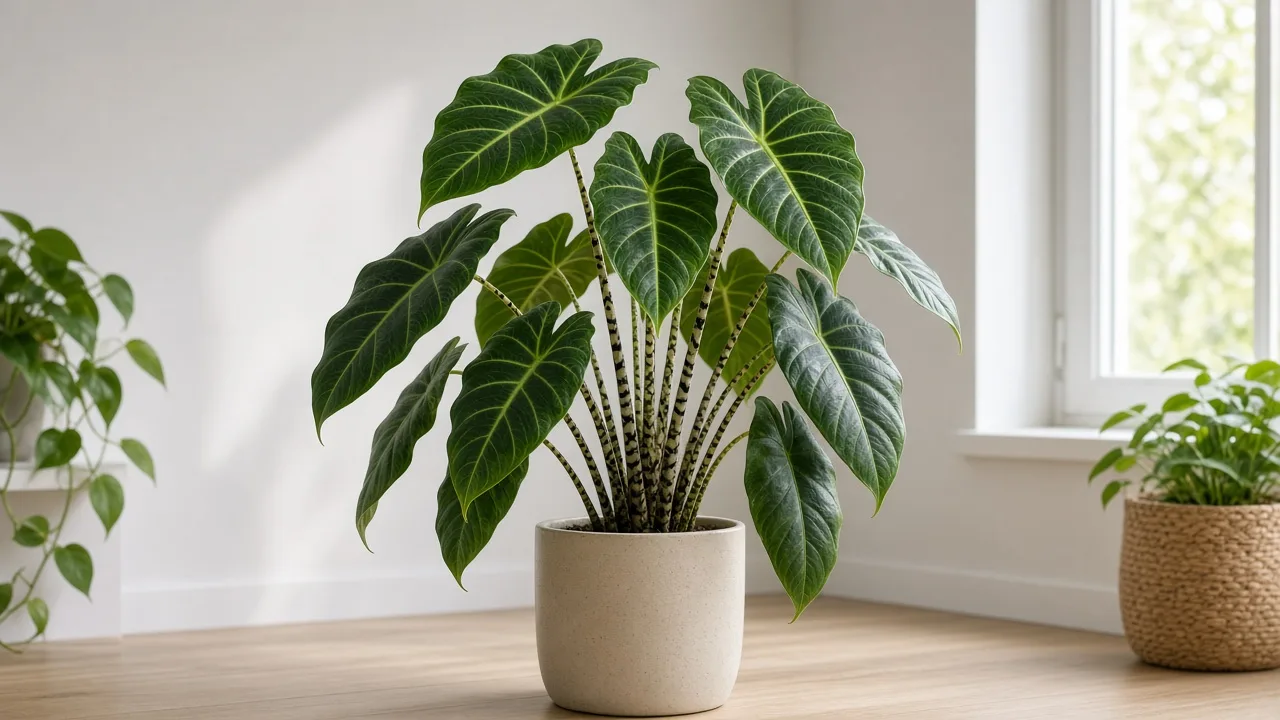
Wilting on Alocasia Zebrina: Causes, Checks & Fixes
This guide covers wilting on Alocasia Zebrina. See also the general Wilting guide, watering, and light pages for this plant.
Wilting on Alocasia Zebrina: Causes, Checks & Fixes
Quick answer
First, probe the top 2–3 cm of mix and lift the pot before adding any water. Wilting on Alocasia Zebrina is a loss of turgor—limp arrow-shaped blades and bowed zebra-striped petioles that no longer hold themselves upright. It is more urgent than a single older leaf angling down beside a fresh spear.
For how turgor loss works in general, see our wilting guide. On Zebrina, the split that matters most is pot weight: a heavy wet pot with limp leaves is not thirst; a light dry pot with firm petiole bases usually is.
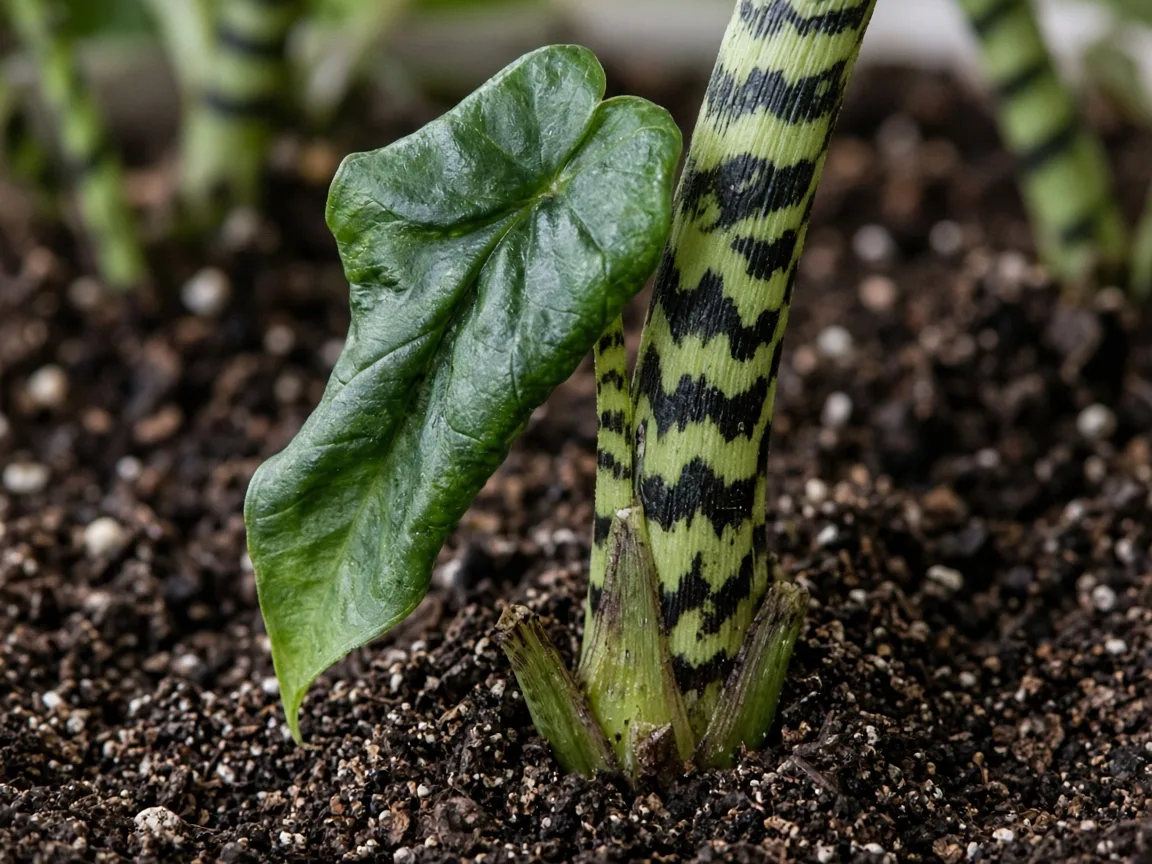
Illustrative generated diagnostic image, not a photograph of a documented case. Limp tissue at the petiole base is the key clue—compare firmness and pot weight before watering.
Slide a finger or chopstick to 2–3 cm depth—the same check described on the Alocasia Zebrina watering guide—then lift the nursery pot off its saucer. If the mix is dry at depth, the pot feels light, and the striped petiole bases are firm, water slowly until evenly moist and let it drain. If the mix is wet, the pot stays heavy, or the bases feel water-soaked, do not add water yet.
When to use this page vs other Alocasia Zebrina guides
Wilting means flaccid tissue across the canopy, not a posture change on otherwise firm petioles.
| Pattern | Read next |
|---|---|
| Petioles angle down but feel firm; one old leaf beside a new spear | Drooping leaves |
| Wet heavy pot, limp leaves, sour smell, or soft petiole bases | Overwatering or root rot |
| Very light dry pot, crispy edges, firm bases | Underwatering |
| Yellowing is the main symptom before collapse | Yellow leaves |
| Fine stippling or webbing under glossy blades | Spider mites |
| Several care variables overlap | Overview or problems hub |
What wilting looks like on Alocasia Zebrina
Healthy Zebrina holds a small number of large, glossy arrow leaves on long petioles with bold black-and-white banding. The RHS profile describes it as rhizomatous and notes that dropping an older leaf as a new one opens can be normal. Wilting is different from that turnover.
Watch for these Zebrina-specific patterns:
- Several blades hang limp at once, not just the lowest leaf lowering while a spear rises
- Petioles lose rigidity—they bow, crease, or fold rather than simply leaning toward the light
- Tissue feels soft or waterlogged at the lowest inch of the striped petiole above the soil line
- The whole canopy collapses within days while the pot remains heavy—classic wet-soil wilt
- Blades look dull and flaccid on a feather-light pot with dry mix pulled slightly from the sides—severe thirst during active growth
Because Zebrina often keeps only two to four leaves indoors, losing more than one at the same time is a meaningful warning. One fading leaf with a firm crown is turnover; two or more going limp together needs the triage below.
The wet-pot wilt paradox on a rot-sensitive corm
This is the mistake that kills more Zebrinas than underwatering. Damaged or oxygen-starved roots cannot move water, so the plant wilts while the mix stays wet. Wisconsin Horticulture lists wilting despite wet soil among root-rot findings, and NC State Extension links overwatering with root rot in Alocasia.
The general overwatering guide explains saturated-root mechanics. On Zebrina, the early warning often shows at the striped petiole crown: bases stay firm during mild stress, but uptake failure produces limp blades on a pot that has not dried for many days. Dense peat-heavy nursery plugs inside decorative cachepots are a common trigger—the surface looks acceptable while the core stays saturated around the corm.
Do not water a wilted Zebrina because the leaves look thirsty. Confirm weight and moisture at depth first.
Two-minute triage: moisture, weight, and petiole bases
Work in this order before repotting, pruning, or feeding:
- Probe 2–3 cm down near the pot edge, not only the surface crust.
- Lift the pot off the saucer or out of its cachepot. Heavy and wet days after the last drink points away from thirst.
- Feel the lowest inch of each striped petiole through a paper towel. Firm banding that bends without squishing is less alarming than a base that feels hollow, pinched, or mushy.
- Smell at the drainage holes. Sour or musty odor with wet mix and soft tissue supports rot; odor alone is not enough to cut tissue.
- Count how many leaves failed together. One old leaf plus a new spear is a different story from three limp blades on a heavy pot.
| Finding | Likely cause | First action |
|---|---|---|
| Dry at depth, light pot, firm petiole bases | Underwatering during active growth | Slow rehydration; then review watering |
| Wet at depth, heavy pot, firm bases so far | Early overwatering / uptake stress | Stop watering; empty runoff; see overwatering |
| Wet mix, limp leaves, soft bases or bad smell | Root rot likely | One careful inspection per root rot |
| Limp after cold window, draft, or delivery | Cold shock | Warm stable spot; do not compensate with extra water |
| Limp with crisp margins, firm corm, adequate moisture | Low humidity stress | Raise humidity; see low humidity |
Striped petiole crown vs normal leaf cycling
Trace each black-and-white petiole to where it meets the soil. On Zebrina, rot often announces itself at that junction before the whole blade yellows: the banding looks wrinkled, the tissue feels wet, or the petiole pulls away with little resistance.
Normal cycling looks like this instead: the oldest leaf softens or yellows while a new spear with tight rolled tip emerges from a firm crown. The failing leaf may wilt briefly, but neighboring petioles stay rigid and the pot dries on its usual schedule. If every petiole loses turgor together, treat it as canopy failure—not seasonal replacement.
Wear gloves if you need to handle cut or damaged tissue. The RHS Alocasia guide advises gloves because alocasia sap can irritate skin and the plants contain toxic compounds.
Dormant bare pot vs a dying corm
In cooler, shorter days, Zebrina may shed all foliage and look like a failed plant. The RHS growing guide describes winter dormancy with reduced watering and possible leaf loss while the plant rests above about 10–15°C.
Tell dormancy from decline by touch, not leaf count:
- Dormant corm: firm, dry to lightly moist mix, no foul smell, petiole crown intact even if no spear is visible
- Declining corm: soft or yielding storage tissue, sour pot, wet mix that never dries, petiole bases collapsing into the crown
Do not keep watering a leafless dormant Zebrina on its summer rhythm. Do not discard a firm bare corm in winter—reduce water to every few weeks and wait for spring warmth. If softness spreads while the mix stays wet, move to the root-rot workflow instead of waiting.
Other causes after the root zone is ruled out
Once moisture and petiole bases are clear, consider these secondary triggers:
Heat and transpiration stress
On a bright windowsill in summer, Zebrina can lose water faster than roots replace it, especially right after repotting. Epic Gardening notes that environmental stress—including heat and rapid moisture loss—can wilt alocasia foliage even when rot is not present. Move the plant out of direct sun, keep humidity up, and confirm the root ball is evenly moist—not bone dry and not saturated.
Recent repotting or shipping
Alocasias are sensitive to root disturbance. Wilting within a week of repotting, division, or delivery often reflects transplant or transport stress when tissue remains firm and rot signs are absent. Keep conditions stable, avoid a second repot, and review the repotting guide. The RHS warns that low temperatures during transport can damage tropical alocasias—warmth matters more than extra water after a cold journey.
Low humidity in heated rooms
The RHS explains that low air humidity increases transpiration and can leave plants at risk of wilting if roots cannot keep up. Dry winter air often pairs with limp blade edges before full collapse. A humidifier beats misting for this tall Philippine species; grouping alone rarely reaches the 60–75% range Zebrina prefers.
Choose one recovery path
Dry root ball, firm petiole bases
Water slowly across the surface until a little runoff appears, then stop. Empty the saucer. Keep bright indirect light per the light guide and relearn how many days this pot now needs before the next drink. Do not fertilize a stressed canopy.
Wet mix, firm corm and bases
Stop watering immediately. Remove the nursery pot from any cachepot and pour out trapped water. Place the plant in stable warmth and bright indirect light. If the pot stays heavy for more than a few days or yellowing spreads, inspect roots once—do not water on schedule while waiting.
Wet mix with soft tissue or odor
Follow the root-rot guide for a single corm-and-root inspection. Wisconsin Horticulture emphasizes moderating moisture because many root-rot organisms prefer wet soil. Do not stack repotting, pruning, pesticide, and fertilizer on the same day.
What recovery can—and cannot—look like
A limp blade that has creased, chilled, or fully yellowed will not return to perfect posture. Judge progress by stopped spread and new firm growth, not by old leaves standing up again.
Early success after thirst correction: petioles regain tension within hours to a couple of days, no new limp leaves appear, and the pot resumes a predictable dry-down. Early success after wet-soil correction: the mix begins drying at a normal rate, the corm stays firm, and the next emerging spear opens without a soft base.
If the corm softens again, odor returns, or every new petiole collapses at the soil line, repeat inspection once or seek local extension or aroid grower help. A leafless but firm corm in dormancy can still produce striped petioles in spring—that is possible, not guaranteed.
Prevent repeat wilting on Zebrina
- Learn pot weight, not a weekday calendar—the soil guide explains why chunky aroid mix dries faster than dense peat plugs.
- Empty cachepots after every watering so the nursery pot never sits in runoff.
- Reduce water 60–70% when spear production stops or leaf area shrinks in autumn.
- Keep above 15°C and away from air-conditioning vents; cold shock wilts fast on this species.
- Maintain humidity during active growth; dry air plus marginal watering produces limp blades before crisp tips.
- Inspect leaf undersides weekly when indoor air is dry—pest stress weakens foliage before webbing is obvious.
Related Alocasia Zebrina guides
Use this wilting page when several leaves lose turgor together or wet-soil wilt is suspected. For a single firm petiole angling down, start with drooping leaves. For confirmed decay at the corm, go directly to root rot. For seasonal moisture timing through dormancy, see watering.