Caterpillars on Banana: Causes, Checks & Fixes
Quick answer
Caterpillars on Banana chew irregular holes in the emerging cigar leaf, young paddle edges, and sometimes rolled midrib tissue on pseudostem sheaths, leaving dark frass pellets behind. First step: isolate the plant and handpick every larva you find from the pseudostem top and sheath folds, dropping them into soapy water.
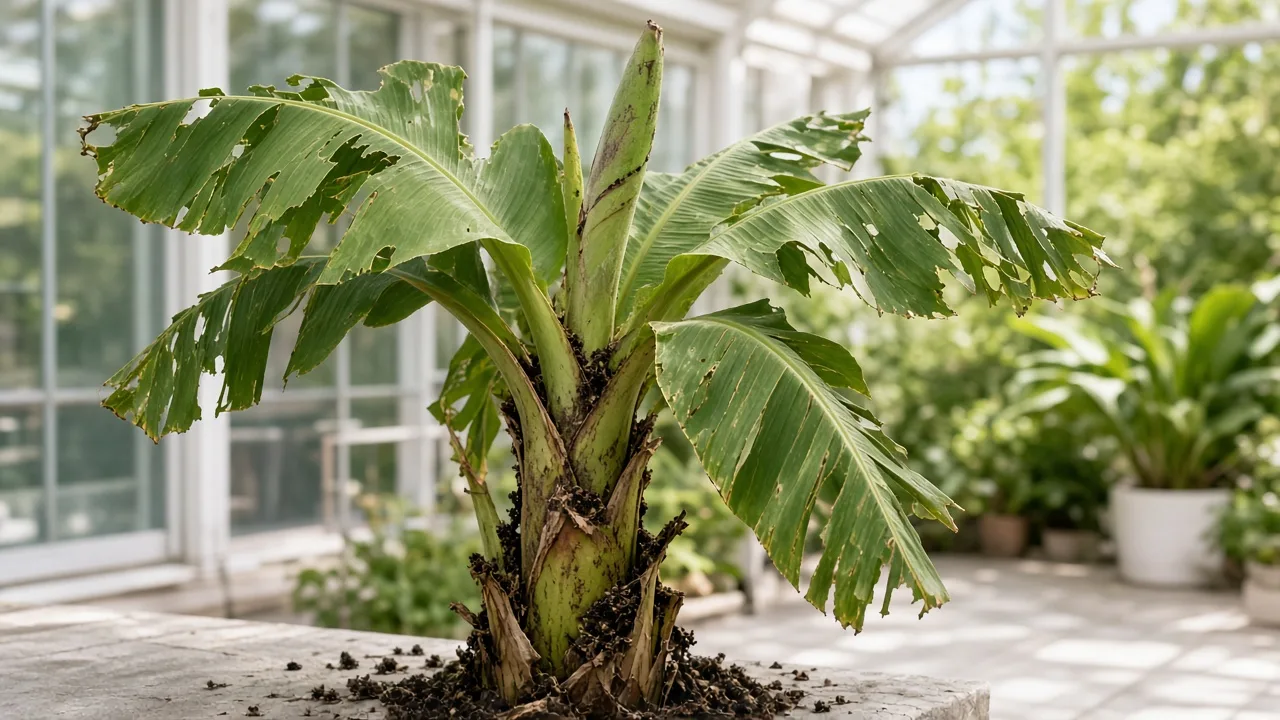
Caterpillars on Banana: Causes, Checks & Fixes
This guide covers caterpillars on Banana. See also the general Caterpillars guide, watering, and light pages for this plant.
Caterpillars on Banana: Causes, Checks & Fixes
Quick answer
Caterpillars on Banana are larvae of moths and butterflies that chew leaf tissue with their mouthparts, leaving irregular holes, notched paddle margins, and dark frass pellets on leaves, pseudostem sheaths, or the pot rim below. On container Musa acuminata, they most often appear on the cigar leaf pushing from the pseudostem top, on young paddle edges, and tucked in overlapping leaf sheaths where the trunk-like stem forms.
First step: isolate the plant and handpick every caterpillar you find from the pseudostem top, sheath folds, and affected leaf undersides, dropping them into soapy water. Banana paddle leaves are large, but the insects themselves are usually visible once you peel back the top sheath. Confirm live larvae or frass before spraying anything — broad pesticide drenches on huge wet paddles cause more leaf burn than one or two hand-removed larvae.
For how caterpillars feed, leave frass, and respond to handpicking and Bt in general, see our caterpillars guide. On Banana, the diagnostic pattern concentrates at the pseudostem growing point and sheath seams, not evenly across old lower paddles.
What caterpillars look like on Banana
Damage starts where the plant is softest. A banana looks fine from across the terrace while larvae chew the cigar leaf you cannot see without parting sheaths. Early chew marks on huge paddles are easy to dismiss as wind damage until frass pellets appear on a sheath below.
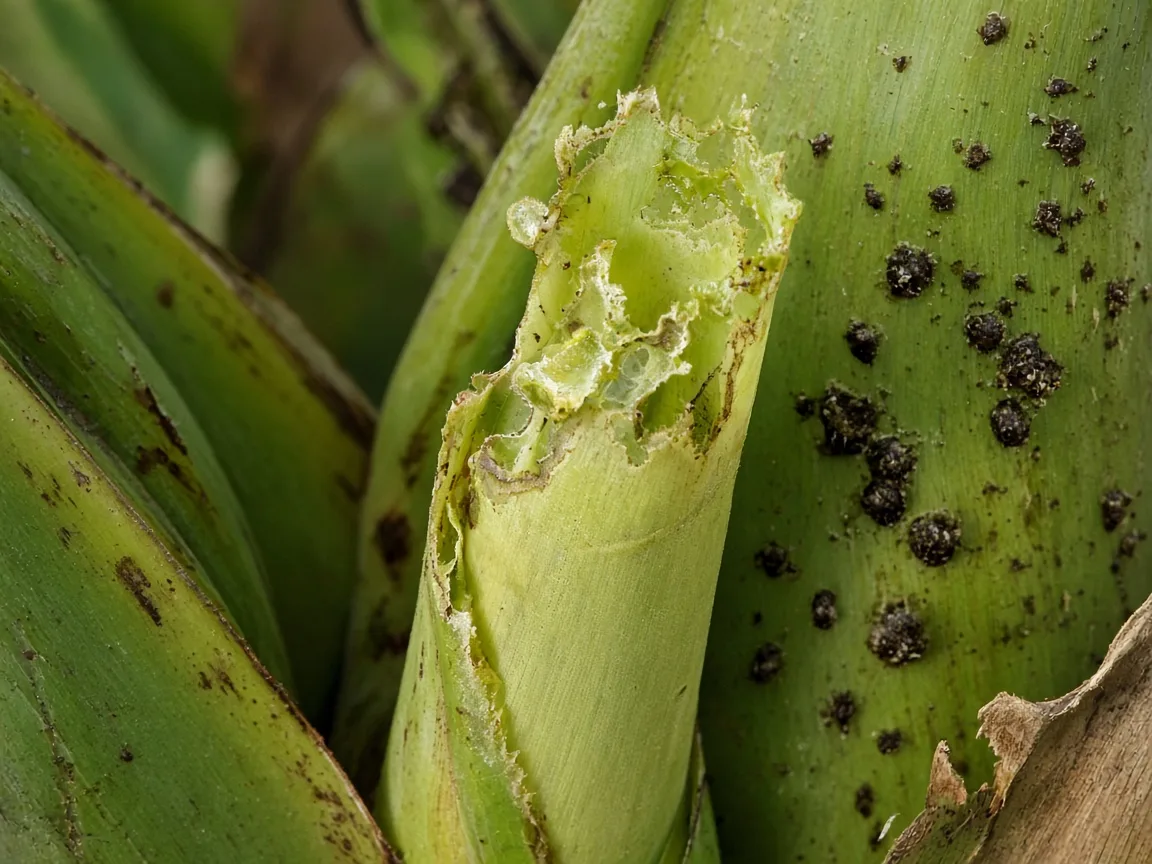
Irregular chew marks and dark frass pellets on the emerging cigar leaf and overlapping pseudostem sheaths — compare torn tissue with intact paddle margins on the same plant.
On Banana they gather where tender tissue is exposed:
- Cigar leaf — the tightly rolled new blade emerging from the pseudostem center; caterpillars often chew the tip before it unfurls into a full paddle
- Young paddle edges and midribs — soft margins on the newest one or two leaves above the pseudostem
- Overlapping pseudostem sheaths — shaded seams where sheaths wrap the trunk-like stem; larvae rest here by day
- Rolled leaves from the midrib — in warm tropical and subtropical regions, banana skipper larvae shred and roll banana leaves from the midrib to feed inside, which can cause severe defoliation on outdoor mats
- Pot rim and terrace floor below — dark pellet-like frass that falls from sheath colonies above
- Young sword suckers — narrow shoots at the rhizome; soft sucker leaves attract larvae after outdoor exposure
Supporting signs include irregular ragged holes (not clean vein splits), dark frass pellets, visible larvae that move when touched, and accelerating damage over several warm days as one caterpillar consumes a large area of soft tissue. Caterpillars leave fecal deposits on damaged leaves — that frass is one of the fastest confirmations on a plant whose torn paddles could otherwise be blamed on wind.
Unlike wind shredding, caterpillar holes have chewed, irregular margins and often cluster on the softest tissue at the top. Unlike leaf miners, the damage is full-thickness with pellets outside the blade, not pale serpentine trails enclosed between leaf surfaces.
Why Banana gets caterpillars
Banana is a fast-growing tropical herb that constantly produces huge new paddles when warmth, sun, and moisture align. That growth rhythm creates reliable feeding sites: every cigar leaf and young paddle is softer than hardened lower foliage.
Common introduction routes:
- Outdoor summer placement on a patio, balcony, or terrace, then carried indoors in fall without a sheath inspection
- New nursery plants that sat outside where moths laid eggs on leaf undersides or sheath joints
- Open windows and porch doors near a banana in active growth — night-flying moths are attracted to lights and lay eggs on susceptible crops
- Neighboring outdoor plantings — bananas grouped with other tropical foliage share pest pressure
- Tropical and subtropical gardens where banana skipper (Erionota thrax) is established and rolls leaves from the midrib
Stressed bananas do not attract caterpillars the way soft new growth does, but a plant in too little light recovers slowly after feeding damage. Chronically wet soil does not cause caterpillars directly, but a weakened rhizome cannot replace stripped paddles as quickly during recovery.
The pseudostem structure works against casual inspection. Larvae tucked between overlapping sheaths or inside a rolled midrib can feed for days before the damage is obvious on the broad paddles below. That is why peeling back the top sheath during warm growth season matters more on Banana than on compact houseplants.
How to confirm the cause
Work through these checks in order:
- Frass search — dark pellet-like droppings on sheaths, paddle surfaces, or the pot rim below strongly indicate caterpillars, not fungal spots or mite stippling.
- Cigar leaf and top sheath exam — gently part the outer sheath at the pseudostem tip. Live larvae on the rolled leaf confirm caterpillars. Clean splits along main veins with no frass suggest wind shredding or mechanical tears.
- Rolled midrib check — leaves rolled from the midrib outward, with chewing inside the roll, point to banana skipper outdoors in warm regions rather than a generic indoor hitchhiker.
- Movement test — touch a larva with a stick or gloved finger. Caterpillars move or curl; dried debris alone is not enough.
- Night inspection — if you see fresh holes but no daytime larvae, check at dusk with a flashlight along sheath seams and the cigar leaf.
- Leaf miner rule-out — serpentine pale trails inside the blade without external pellets mean leaf miners, not caterpillars.
- Entry route review — recent outdoor placement, nursery arrival, or open-window season supports caterpillars over chronic indoor sap feeders like scale or mealybugs.
If you find chew marks but no frass and no larvae after two inspections, compare hole edges carefully before treating — see the holes in leaves guide for wind, humidity split, and mechanical causes.
First fix for Banana
Isolate the plant and handpick every caterpillar you find from the pseudostem top, sheath folds, and affected leaf undersides, dropping them into soapy water.
Move the pot away from other plants immediately. Handpicking and destroying caterpillars early prevents excessive damage on a plant whose single cigar leaf can lose a large share of its tissue in one night.
Work from the growing point down:
- Peel back the top sheath slightly and remove any larva on the cigar leaf inside
- Check overlapping sheath seams along the pseudostem
- Inspect the undersides of the newest paddle leaves and any colonized sword sucker bases
- Drop larvae into soapy water or crush them; do not toss them onto nearby soil where they can return
Wear gloves if you are unsure of the species — some hairy caterpillars can irritate skin. On outdoor mats with rolled midrib leaves, prune off the rolled section and destroy it rather than leaving larvae inside folded tissue.
Do not apply insecticidal soap, horticultural oil, or Bt in the same session as your first handpicking unless the infestation is heavy and you have already isolated the plant. Confirm live larvae remain after removal before adding chemicals. Strong sprays on large wet banana paddles in hot sun scorch easily.
Step-by-step recovery
After the initial handpicking, continue in this order based on severity:
- Repeat inspections every two to three days for two weeks on light infestations. Focus on the cigar leaf and sheath joints each time.
- Night follow-ups when damage continues but daytime larvae are hidden in sheath folds or rolled leaves.
- Shower rinse if needed — after visible larvae are removed, use a firm lukewarm stream on sheath seams and the cigar leaf to dislodge tiny larvae or eggs you missed. Let the plant dry in bright light the same day; wet paddles in harsh afternoon sun burn quickly.
- Apply Bt (Bacillus thuringiensis kurstaki) if feeding persists — Bt kills only caterpillars and works when larvae eat treated leaves. Spray the cigar leaf, sheath seams, and young paddle undersides. Repeat per label intervals because Bt breaks down quickly and newly hatched larvae may appear in waves. Test one lower paddle first if you are concerned about leaf sensitivity.
- Prune only heavily damaged tissue — remove a paddle that is mostly consumed once insects are gone, or cut a weak infested sword sucker at the rhizome per your pruning routine. Keep one or two strong sword suckers for replacement growth.
- Hold fertilizer until new growth looks clean for two weeks. Feeding during an active infestation pushes soft tissue caterpillars prefer.
For outdoor banana mats with banana skipper rolls spreading up multiple pseudostems, treat every colonized stem on the same schedule so larvae do not move to clean plants beside them.
Recovery timeline
Within three to five days of the first thorough sheath and cigar-leaf inspection, fresh chew marks should stop if you are reaching the larvae.
One to two weeks of consistent handpicking or follow-up Bt usually clears moderate infestations on a single container plant. Watch for a clean cigar leaf unfurling without new holes — that is the best sign the pseudostem is recovering.
Older chewed paddles will not regain intact margins. Do not expect cosmetic recovery on leaves that were heavily fed upon; judge success by clean new blades above.
Worsening signs include new chew marks daily after three treatment rounds, rolled midrib damage climbing multiple pseudostems outdoors, or a cigar leaf that fails to unfurl while frass keeps appearing. If the rhizome base softens and smells sour, that is a root problem — see root rot — not caterpillar damage alone.
Lookalike symptoms
| What you see | Likely cause | Where to read next |
|---|---|---|
| Ragged holes with frass on cigar leaf or sheaths | Caterpillars | This page |
| Leaves rolled from midrib with chewing inside | Banana skipper (outdoor tropical/subtropical) | This page |
| Clean splits along veins, no frass | Wind shredding or snag | Holes in leaves |
| Serpentine pale trails inside the blade | Leaf miners | Leaf miners |
| Silver stippling, tiny scrape marks | Thrips | Thrips guide |
| Sticky honeydew, dark sheath colonies | Aphids | Aphids guide |
| Fixed brown bumps on stems | Scale insects | Scale guide |
What not to do
Do not ignore the pseudostem sheaths and only scan the broad lower paddles — that misses the main banana feeding sites.
Avoid drenching the entire canopy with oil or soap without a patch test; large banana leaves show burn faster than small houseplant foliage.
Do not assume wind damage when frass pellets are present on sheaths or the pot rim below.
Skip heavy nitrogen fertilizer during an active infestation; lush new shoots feed the next generation.
Do not leave rolled midrib leaves intact on outdoor mats when banana skipper larvae are inside — pruning and destroying rolled tissue is part of control.
Avoid treating with Bt or soap in hot direct sun on the same day you soaked the foliage — wet, coated paddles scorch easily.
Banana care cross-check
Caterpillar recovery goes faster when baseline care is stable:
- Water — keep the root zone evenly moist per the Banana watering guide; drought-stressed plants replace stripped paddles slowly
- Light — bright, warm conditions support fast clean growth from the cigar leaf
- Soil — rich, well-drained mix per the Banana soil guide; soggy rhizomes slow recovery even after insects are gone
- Sucker management — remove weak water suckers and keep selected sword suckers; fewer soft shoots means fewer hiding spots after outdoor exposure
- Season — expect more pressure during spring and summer growth; reduce scouting frequency when cool weather slows the plant
How to prevent caterpillars next time
Quarantine new bananas and outdoor-return pots for about two weeks, inspecting cigar leaves and sheath joints weekly before mixing them into a display.
Scout every warm week while a cigar leaf is emerging. One missed sheath check can restart damage on a fast-growing pseudostem.
When moving containers outdoors for summer, rinse foliage and inspect sheaths before bringing them back indoors in fall — caterpillars are common hitchhikers on outdoor banana collections.
Keep Banana firm and well-lit rather than overfed. Feed during active growth per the Banana fertilizer guide, and skip feed on stressed plants.
If you grow bananas outdoors in regions with banana skipper, remove and destroy rolled midrib leaves early before larvae defoliate entire pseudostems.
When to worry
Most single-container caterpillar problems are manageable with isolation, sheath-focused handpicking, and one to two weeks of follow-up. Escalate when:
- Multiple bananas or nearby large plants show fresh chew marks and frass at the same time
- Rolled midrib damage is spreading up several outdoor pseudostems
- The cigar leaf stops unfurling while new holes and frass appear after three treatment rounds
- You cannot reach larvae hidden deep in rolled tissue without pruning — remove the rolled section rather than waiting
- The rhizome base softens or smells sour — that points to rot or wet soil, not chewing pests alone
A colonized pseudostem with a firm rhizome can still recover if the cigar leaf resumes clean growth. Discard only when the rhizome is rotting or the growing point is completely stripped with no healthy sword suckers remaining.
When to use this page vs other Banana guides
- Banana overview — Start here for general care context before assuming pests are the main issue.
- Banana problems hub — Browse all common issues on this species.
- Holes in leaves on Banana — Use when hole edges are clean splits along veins without frass.
- Leaf miners on Banana — Use when damage is an enclosed pale trail inside the blade.
- Aphids on Banana — Use when you see dark moving insects and sticky honeydew on sheaths, not chew holes with frass.