Thrips on Banana: Causes, Checks & Fixes
Quick answer
Thrips on Banana rasp the soft cigar leaf and newest paddle tissue, leaving silvery scars and black varnish-like frass specks. First step: isolate the plant and shake the cigar leaf over white paper to confirm live thrips before rinsing or spraying.
Thrips on Banana: Causes, Checks & Fixes
This guide covers thrips on Banana. See also the general Thrips guide, watering, and light pages for this plant.
Thrips on Banana: Causes, Checks & Fixes
Quick answer
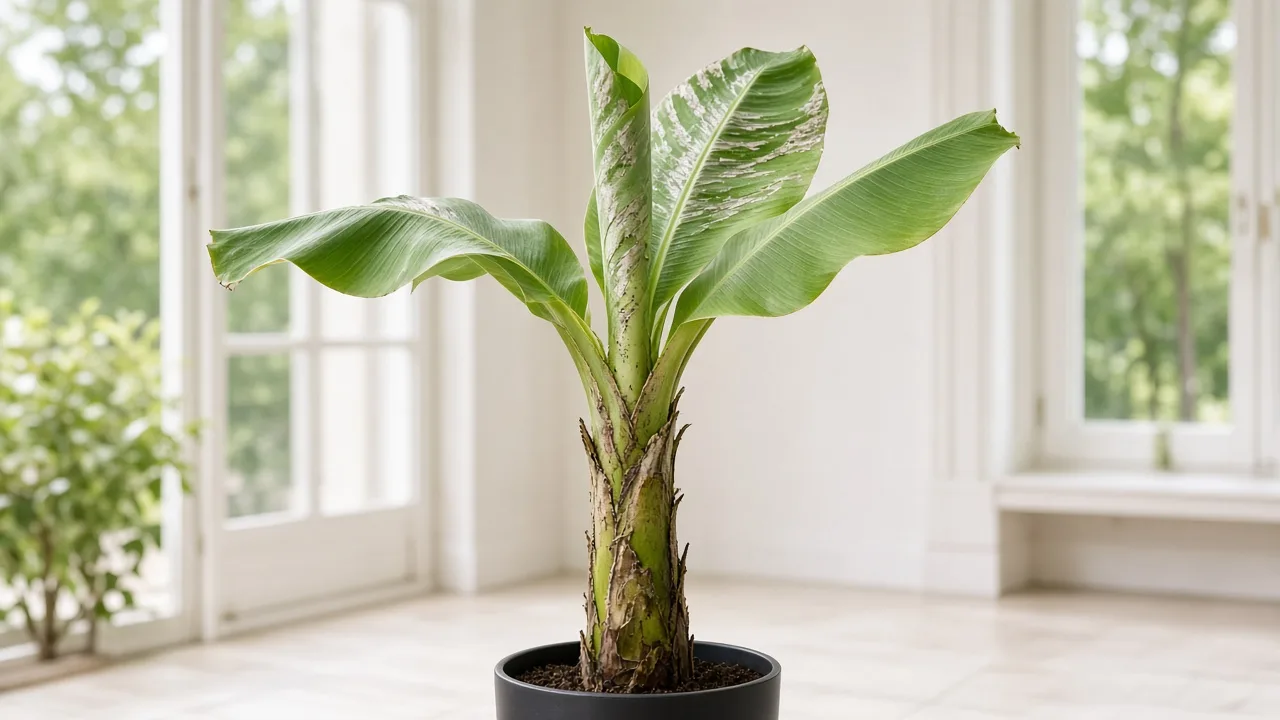
Thrips on Banana are tiny, slender insects that rasp plant tissue and leave silvery scars, stippling, and black varnish-like frass on tender growth. On container Musa acuminata, damage concentrates on the cigar leaf emerging from the pseudostem top and on the newest paddle leaves — not evenly across the whole canopy.
First step: isolate the plant and shake the cigar leaf or newest paddle over white paper to confirm live thrips. If slender insects fall onto the sheet, follow with a targeted rinse of the shoot tip and leaf undersides. Do not spray the entire plant before you know thrips are present.
For how thrips feed, reproduce, and spread in general, see our thrips pest guide. On Banana, the diagnostic pattern is scarred new tissue at the pseudostem tip and upper paddles, often before you spot the insects themselves.
What thrips look like on Banana
Adult thrips are less than 1/20 inch long, elongate, and often pale yellow to dark brown depending on species. They are fast enough to vanish when disturbed, which is why the shake test matters more than a casual glance at a broad paddle.
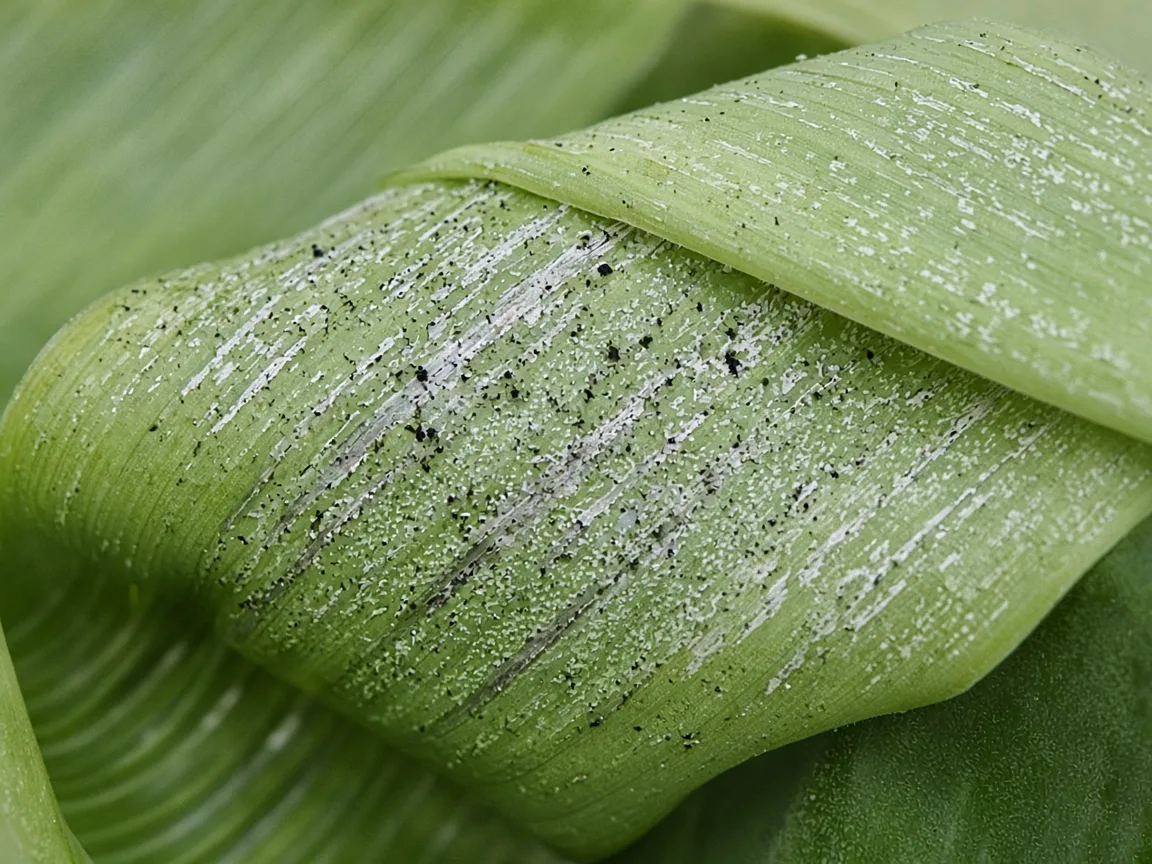
Silvery feeding scars and black varnish-like frass on soft cigar-leaf tissue and the margin of a newly unfurled paddle — classic thrips signatures on fast-growing banana shoots.
On Banana, thrips damage shows up where tissue is softest:
- Cigar leaf — silvery streaks, scabby patches, or rippled scarring on the rolled blade before it fully opens; the leaf may unfurl with permanent silver bands
- Newest paddle margins and midribs — pale stippling, bronze streaks, or water-soaked-looking scars that later dry silvery
- Black frass specks — varnish-like droppings scattered on scarred tissue; wipe them and they often smear
- Distorted or narrow new growth — heavy feeding on the cigar leaf can leave distorted or scarred shoot tips that resemble pest stress rather than nutrient deficiency
- Pseudostem petiole marks outdoors — banana rust thrips can leave dark V-shaped marks on outer petiole surfaces and reddish stains where fruit fingers touch; this is mainly a field-fruiting issue, not typical on a single indoor ornamental
Lower, older paddles on a healthy pseudostem are often untouched until damage from above becomes severe. That top-heavy pattern distinguishes thrips from spider mites, which more often stipple drought-stressed blades across several leaf ages.
Why Banana gets thrips
Banana is a fast-growing tropical herb that constantly produces soft new tissue when warmth, light, and moisture align. Every emerging cigar leaf is a feeding site thrips can exploit before the blade hardens.
Common introduction routes:
- Outdoor summer placement on a patio or terrace, then carried indoors in fall with hitchhiking thrips
- New nursery plants placed beside the collection without quarantine
- Nearby infested ornamentals — thrips move readily on air currents and shared bench space
- Blooms and bracts outdoors — flower-feeding species target floral tissue on fruiting mats; container plants rarely fruit indoors but outdoor-return plants can carry populations in sheath crevices
- Overfed, soft growth — excess nitrogen can increase thrips populations on susceptible plants; lush shoots are easier to scar
The pseudostem’s overlapping sheaths hide insects the same way they hide aphids. Thrips often feed inside the sheltered cigar leaf or along sheath seams, so silver scarring on the first unfurled inch of new blade may appear days before you see live insects.
How to confirm the cause
Work through these checks in order:
- Shake test on the cigar leaf — hold white paper under the pseudostem tip and tap or gently shake the emerging leaf. Dislodged thrips confirm the pest. Empty paper with only silver scars still suggests thrips, but verify twice on separate days before heavy spraying.
- Inspect the two newest paddles — look at undersides and margins for silver streaks plus black frass. Uniform yellowing of older leaves in wet soil points to overwatering, not thrips.
- Magnified look — a 10× lens shows slender, winged or wingless insects and frass specks. Mealybugs leave white wax; aphids are pear-shaped and often produce sticky honeydew on sheaths.
- Pattern on the plant — thrips concentrate on new growth at the top. Leaf miners leave pale tunnels with a dark frass line inside the blade, not surface silvering.
- Whole-group scan — check every banana and nearby broad-leaf plant on the same shelf. Thrips disperse quickly in warm, dry indoor air.
- Rule out unfurl injury — a cigar leaf stuck in dry air can tear or scar without insects. If the paper shake is negative and scars are only mechanical splits, address humidity and gentle manual unfurling instead of pesticides.
If scars are old and no live thrips appear after two shake tests, you may be seeing past damage. Focus on protecting the next cigar leaf rather than re-treating healed tissue.
First fix for Banana
Isolate the plant and shake the cigar leaf over white paper, then rinse the shoot tip and newest paddle undersides with lukewarm water.
Move the pot away from neighbors immediately. Confirm pest thrips are present before taking control action — many abiotic issues scar new banana tissue too.
Aim the stream at sheltered sites, not the entire canopy at once:
- Gently part one outer sheath and rinse inside around the cigar leaf
- Spray the undersides of the two newest paddles where silver scars appear
- Let excess water drain fully; do not leave water pooled between sheaths in a dark corner
Keep the plant in bright light the same day so rinsed tissue dries quickly. Banana paddles burn when wet leaf meets harsh afternoon sun — dry the plant before returning it to direct outdoor sun.
Do not apply horticultural oil, insecticidal soap, or spinosad in the same session as your first rinse unless thrips are confirmed and the infestation is heavy. Large banana leaves show chemical burn faster than small houseplant foliage.
Step-by-step recovery
After isolation and the first rinse, continue in this order based on severity:
- Repeat shake tests every three to four days for two weeks. Falling thrips counts should drop if you are reaching the cigar leaf.
- Rinse the shoot tip again when live insects reappear on white paper. Focus on the cigar leaf and newest paddle undersides.
- Apply insecticidal soap if thrips persist — use a product labeled for ornamental plants, spray until insects are wet, and cover sheath seams and leaf undersides. Repeat every four to seven days for two to three cycles. Test one lower paddle first; avoid soap on hot, sunny afternoons.
- Consider spinosad for stubborn populations — spinosad may be more effective than soap alone on some thrips species, but still requires direct contact. Follow label directions and keep treated plants out of direct sun until dry.
- Trim only heavily scarred sword suckers — if a young sucker at the rhizome shows silvery, distorted blades and live thrips after two treatment rounds, cut it at the rhizome with a clean blade per your pruning routine. Keep one or two strong sword suckers for replacement growth.
- Hold fertilizer until new paddles push without fresh scarring for two weeks. Feeding a stressed banana produces soft tissue thrips prefer.
Pesticides alone rarely provide good thrips control; combine rinsing, scouting, and selective sprays with stable baseline care.
Recovery timeline
Within three to five days of the first shoot-tip rinse, live thrips counts on white paper should drop if you are reaching the cigar leaf.
One to two weeks of consistent rinsing or follow-up treatment usually clears moderate infestations on a single container plant. The best sign is a cigar leaf unfurling without new silver bands or black frass.
Older scarred paddles will not turn green and smooth again. Judge success by clean new growth, not cosmetic repair on damaged blades.
Worsening signs include fresh scarring on every new paddle for two weeks, thrips on multiple plants in a group, or a cigar leaf that stops unfurling while live insects remain after three treatment rounds. Outdoor fruiting mats with reddish rust-thrips stains on fingers need field IPM beyond container rinsing.
Lookalike symptoms
| What you see | Likely cause | Where to read next |
|---|---|---|
| Silvery streaks and black frass on cigar leaf or new paddles | Thrips | This page |
| Sticky honeydew and dark aphids on sheaths | Aphids | Aphids guide |
| Fine stippling and webbing on dry paddles | Spider mites | Spider mites guide |
| Pale tunnels with a dark line inside the blade | Leaf miners | Leaf miners guide |
| Chewed holes and ragged margins | Caterpillars or holes in leaves | Caterpillar or holes guides |
| Warped newest paddle without surface silvering | Distorted leaves | Distorted leaves guide |
| Uniform yellowing of older leaves in wet soil | Overwatering | Watering stress |
What not to do
Do not spray the entire canopy on day one without confirming thrips on white paper — you may burn large paddles without solving a misdiagnosed problem.
Avoid drenching the crown repeatedly or leaving water pooled between sheaths after rinsing. Banana likes moisture at the root zone, but a wet crown in stagnant air invites rot.
Do not assume one rinse worked — thrips reproduce quickly in warm conditions and several generations can occur per year.
Skip heavy oil drenches without a patch test; broad banana leaves scorch easily.
Do not treat silver scars on old lower paddles when the cigar leaf is already clean — that is past damage, not an active infestation.
Avoid high-nitrogen fertilizer during an active outbreak; soft new shoots feed the next generation.
Banana care cross-check
Thrips recovery goes faster when baseline care is stable:
- Water — keep the root zone evenly moist per the Banana watering guide; drought-stressed plants recover slowly after pest damage
- Light — bright, warm conditions support fast clean growth; weak light produces soft tissue pests scar easily
- Soil — rich, well-drained mix per the Banana soil guide; soggy rhizomes slow recovery even after insects are gone
- Humidity — very dry indoor air can stick cigar leaves during unfurl; that mechanical scarring mimics thrips but lacks frass specks
- Season — expect more pressure during spring and summer growth; reduce scouting frequency when cool weather slows the plant
How to prevent thrips next time
Quarantine new plants and outdoor-return pots for about two weeks, inspecting cigar leaves and sheath joints weekly before mixing them into a display.
Scout every warm week while a cigar leaf is emerging. One shake test at the pseudostem tip prevents a terrace-wide outbreak later.
Keep Banana firm and well-lit rather than overfed. Feed during active growth per the Banana fertilizer guide, and skip feed on stressed plants.
When moving containers outdoors for summer, rinse foliage before bringing them back indoors in fall — thrips are common on outdoor tropical collections.
Reduce nitrogen pushes on stressed plants; lush, soft shoots are easier for thrips to scar.
For outdoor growers, monitor flowers and young fruit on fruiting mats — species such as banded greenhouse thrips can scar fruit peel in the field.
When to worry
Most single-container thrips problems are manageable with isolation, shoot-tip rinsing, and one to two weeks of follow-up. Escalate when:
- Multiple bananas or nearby plants show live thrips at the same time
- Every new paddle scars for two weeks despite treatment
- The cigar leaf fails to unfurl while black frass and live insects remain after three treatment rounds
- Outdoor fruit fingers develop rust-thrips staining or corky scab — field-level IPM is needed, not just rinsing
A colonized pseudostem with a firm rhizome can still recover if the cigar leaf resumes clean growth. Discard concern only when the rhizome is soft and rotting — that is a root problem, not thrips alone.
When to use this page vs other Banana guides
- Banana overview — Start here for general care context before assuming pests are the main issue.
- Banana problems hub — Browse all common issues on this species.
- Distorted leaves on Banana — Use when paddles are misshapen without silver surface scarring or frass.
- Holes in leaves on Banana — Use when tissue is removed or torn, not just silvered.
- Aphids on Banana — Use when you see dark, pear-shaped colonies and sticky honeydew on sheaths.