Custard Apple Fertilizer: NPK, Timing & Doses
Custard Apple Fertilizer: NPK, Timing & Doses
Custard Apple Fertilizer: NPK, Timing & Doses
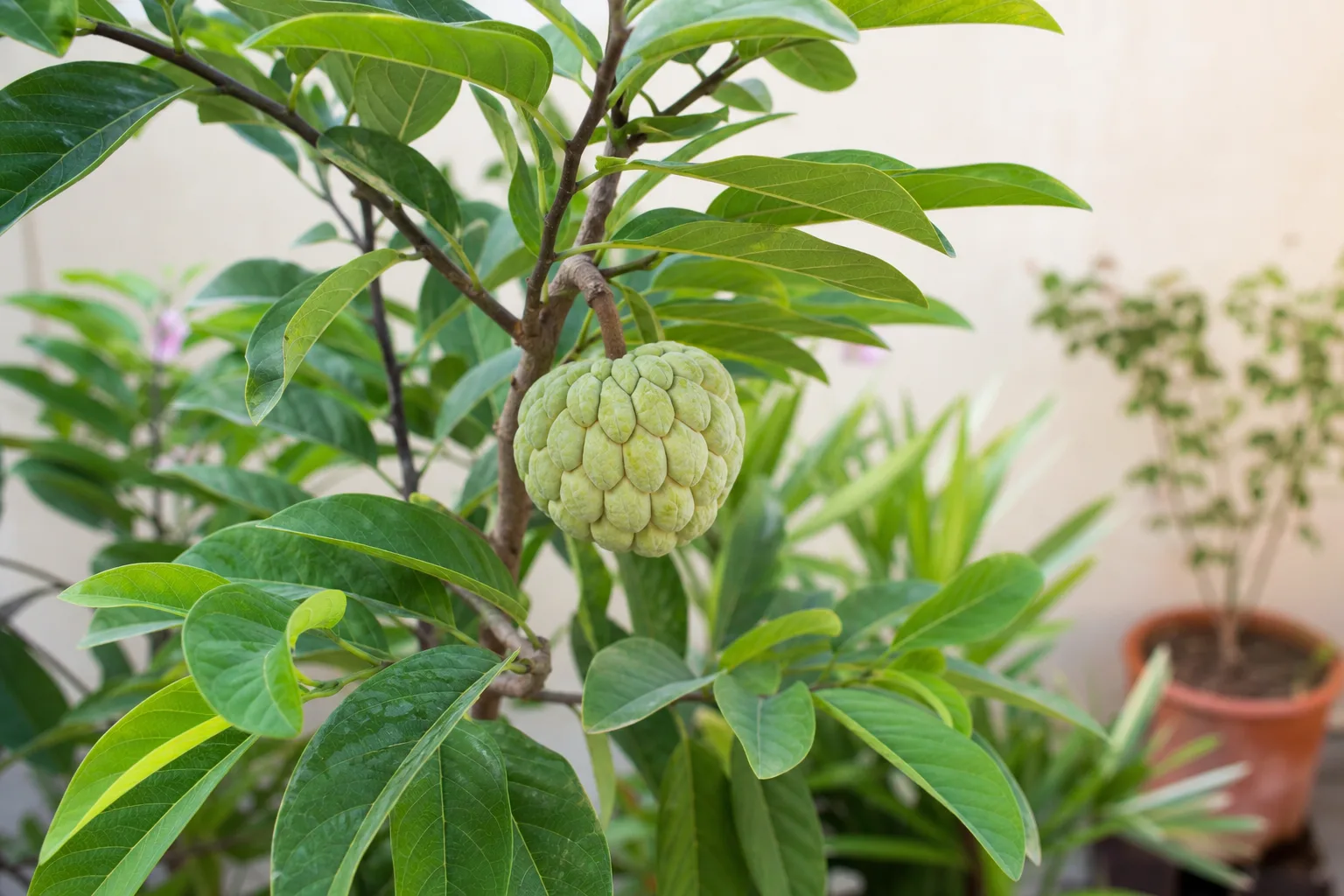
Custard Apple (Annona squamosa), sold in India as Sitaphal or sugar apple, is a small tropical fruit tree—not a foliage houseplant that wants a monthly tonic. Feed it to support leaf canopy first, then flowering and fruit swell, and stop when the tree drops leaves for seasonal rest. For terrace pots and home gardens, the safest starting plan is a complete NPK fertilizer only during active growth, beginning lightly, then reducing nitrogen frequency once the tree is mature enough to crop. Excess nitrogen is the nutrition mistake that most often trades fruit for soft leafy shoots.
That plan matches how sugar apple actually grows. The species is shallow-rooted, drought-tolerant once established, and intolerant of waterlogging, so fertilizer only helps when roots have oxygen and a wet–dry rhythm. Pair feeding with the Custard Apple watering guide and Custard Apple soil guide before you increase any dose.
Custard Apple fertilizer: the quick answer
For home growers in India and similar warm climates, fertilize Custard Apple from the first steady spring flush through the main growing and fruiting season, then taper as shoot growth slows and leaves begin to yellow and drop. UF/IFAS sugar apple guidance recommends frequent small applications of a complete nitrogen–phosphate–potassium fertilizer while young trees are building structure, then fewer NPK applications after about the third year so cultural effort shifts toward flowering, fruit set, and fruit fill. Suitable example analyses include 6-6-6, 8-3-9, 2-8-8, 4-8-8, or similar complete mixes, often with magnesium included.
Julia Morton’s sugar apple culture notes add a species-specific yield signal: on light soils, growers applied roughly 60–80 kg manure per tree annually and recommended adding nitrogen, while a commercial fertilizer near 3% N, 10% P, and 10% K significantly increased flowering, fruit set, and yield. Use Morton’s field figures as proof that phosphorus and potassium matter for cropping—not as a literal recipe for a 40-litre balcony pot.
What to feed and how often in a pot
Restricted roots concentrate salts quickly. In a container, prefer a measured liquid or water-soluble complete fertilizer at half the label’s potting rate every four to six weeks only while new leaves and shoots are expanding and the mix is draining freely. If your fresh potting mix already contains controlled-release fertilizer, wait several weeks after repotting before adding liquid feed. Skip weeks when the pot stays saturated after monsoon rain or when the tree is heat-wilted on dry mix—water first, then feed on a cooler morning when leaves are firm.
A practical Indian terrace rhythm: one light feed after the spring flush, another mid-season if growth and drainage look good, and a potassium-aware fruit-tree or balanced feed while fruit is sizing—then stop as leaf fall begins. Do not chase weekly calendar doses on a resting, leafless tree.
In-ground vs terrace dose logic
UF/IFAS scales in-ground young sugar apples from about ¼ lb (100 g) per application, increasing with age, with mature trees often receiving 1.5–4 lb per application across two to four applications per year. That is orchard and landscape logic for a full root zone. A courtyard tree in Indian sandy loam can follow the same idea—light, frequent feeds while juvenile; fewer, larger seasonal feeds when bearing—but start below published Florida rates until you see canopy color, shoot strength, and fruit set. A terrace pot is not a scaled-down field table: convert by label container directions and plant response, not by dividing pounds per tree into tablespoon guesses.
Keep lawn or ornamental “weed-and-feed” products away from the drip line. UF/IFAS notes that heavy fertilization of lawn adjacent to sugar apple can reduce fruiting or fruit quality, which matches the excess-nitrogen problem described below.
Why Annona squamosa needs measured, seasonal feeding
Custard Apple builds an open crown of irregular branches and, in many climates, behaves as a seasonally deciduous small tree that drops leaves when cool or dry rest arrives. Nutrients support new shoots on which flowers and fruit form; they do not replace the full sun the species needs for a sweet crop. Confirm light before treating sparse growth as hunger—see the Custard Apple light guide. Fertilizer also cannot rescue roots in soggy mix. Morton records that waterlogging is intolerable even though established trees bridge drought; feed only when drainage is reliable.
Deciduous rest and the fruit-first goal
UF/IFAS calendar practice for bearing sugar apples places NPK in the active months (commonly around April and July in the Florida home-landscape table) and lists no fertilizer work in mid-winter dormancy while leaves are falling. Watering is reduced once leaves mostly drop because watering a leafless tree in cool rest can encourage root rot. Nutrition should follow the same cue: uptake aligns with expanding leaves and developing fruit, not with bare twigs. Hand pollination and humidity at bloom still matter more for set than any fertilizer brand—the Custard Apple overview covers flowering and fruiting behavior for home growers.
Excess nitrogen, leafy shoots, and weaker fruiting
UF/IFAS observes that sugar apples on high-nitrogen muck soils may grow more vigorously yet produce less fruit. After the third year, the recommended strategy is to reduce the number of nitrogen-containing applications so effort shifts to flowering and fruit development. That is the opposite of pouring high-N lawn or foliage feed onto a Sitaphal hoping for more knobby fruit. Morton’s low-N, higher P and K (about 3-10-10) result for flowering and yield reinforces the same fruit-first logic: keep nitrogen available for canopy building when the tree is young, then avoid chronic soft, dark-green vegetative push once you want crop.
India seasonal fertilizer schedule for Custard Apple
India has no single Sitaphal calendar. A dry Deccan terrace, a humid coastal courtyard, and a north Indian plant that sees cooler winters will not flush on the same week. Use growth stage—not the month name alone—to decide.
| Seasonal cue | In-ground Custard Apple | Container / terrace Sitaphal |
|---|---|---|
| Late winter–spring flush | First light complete feed after bud break / new leaves | Begin half-rate feed after steady new leaves |
| Flowering–early set | Keep moisture steady; avoid heavy high-N spikes | Water first; light feed only if actively growing |
| Hot dry fruit fill | Feed only if irrigation is reliable | Skip fertilizer during severe wilt |
| Sustained monsoon wetness | Pause if soil stays saturated | Usually pause while pot stays wet |
| Post-monsoon active growth | Resume if canopy is growing and drainage is good | One measured half-rate application if needed |
| Leaf yellowing and fall | Stop NPK; reduce water | Stop all fertilizer for rest |
Spring flush through early flowering
Begin feeding only after you see expanding buds or leaves, especially on a plant recently moved, hard-pruned, or repotted. UF/IFAS advises removing fruit that sets in the first year or so so the tree can establish a strong framework—nutrition in those early seasons is for structure, not maximum crop. If spring pruning is due, remember Morton’s warning that sugar apple should be pruned only in spring when sap is rising; do not stack heavy fertilizer, hard cuts, and a sudden move into harsh afternoon sun in the same week. Use the Custard Apple pruning guide for timing, then resume light feeding after new growth appears.
Hot dry fruit fill and monsoon pause
Morton notes that irrigation in the dry season and once during ripening increases fruit size; UF/IFAS similarly stresses watering from flowering through fruit development in dry spells. Fertilizer is secondary when the tree is wilted. Water thoroughly, let excess drain, then feed later if the schedule still calls for it. During prolonged monsoon saturation, pause soluble fertilizer. Applying feed to an airless root zone wastes nutrients and raises root-stress risk on a species that already refuses waterlogging.
Leaf fall and dormant-season rules
As Custard Apple sheds leaves for cool or dry rest, stop routine fertilizer. Leafless roots in a cool terrace corner use little nitrogen. Resume only after the next clear flush of shoots and leaves. Do not “catch up” with a double dose after a monsoon pause or a dormant stop—one measured application is safer.
Best fertilizer type and NPK for Sitaphal
Choose a product with a declared NPK analysis and clear directions for trees or containers. For landscape sugar apples, UF/IFAS lists complete mixes such as 6-6-6 or 8-3-9 (and similar), and also notes formulations like 2-8-8 or 4-8-8 among suitable options—useful when you want relatively more phosphate and potash during the cropping years. Morton’s 3-10-10 observation is another species-specific clue that phosphorus and potassium support flowering and yield when nitrogen is kept modest.
Many Indian home growers combine well-rotted farmyard manure or mature compost as a spring top-dressing with a measured complete fertilizer. Morton’s annual manure rates are for in-ground trees on light soils; in a pot, use only a thin layer of finished compost away from the trunk and rely on labeled fertilizer for predictable NPK. Fresh, hot manure and undegraded mulch mixed into the root ball are poor ideas—UF/IFAS separates finished compost (small amounts) from raw mulch, which belongs on the surface only.
On alkaline or calcareous soils, UF/IFAS favors foliar magnesium, zinc, and manganese during the growing season and chelated iron soil drenches matched to soil pH. Pale new leaves with green veins on high-pH mix are a micronutrient clue, not an automatic call for more nitrogen.
Container feeding, dilution, and salt buildup
Terrace Sitaphal lives in a closed root volume. Clemson Extension notes that dilute water-soluble fertilizers reduce fertilizer-burn risk, and that a white crust on the soil surface or pot rim can signal salt buildup from overfertilizing and/or overwatering patterns. Salt injury shows up as reduced growth, brown leaf tips, lower-leaf drop, and wilting even when the mix is moist. Prevent buildup by watering thoroughly so excess drains, emptying saucers, and feeding less often rather than stronger.
If crust and tip burn appear after recent feeds, stop fertilizer, leach the pot with several thorough plain-water waterings if drainage is excellent, and correct the soil mix if the medium stays soggy. Do not add more “tonic” to a plant with damaged roots.
Warning signs of underfeeding and overfertilizing
Underfed Custard Apple in strong sun may show pale overall foliage, short weak flushes, and poor fruit size despite decent watering—especially in sandy, frequently leached pots. Confirm light and root health first; hunger is less common than wet feet or shade.
Overfed trees lean the other way: very dark, soft leafy growth with disappointing flower or fruit performance (the high-N pattern UF/IFAS describes), leaf-edge burn, white salt crust, and wilting on wet mix. When those appear, pause fertilizer for several weeks, fix watering, and restart at half rate only after new growth looks normal.
Common Custard Apple fertilizer mistakes
Do not pour high-nitrogen lawn feed onto a bearing Sitaphal and expect more fruit. Do not fertilize a leafless resting tree “for winter strength.” Do not feed a waterlogged pot. Do not convert Florida pounds-per-tree tables into heaped tablespoons for a balcony container. Do not stack controlled-release mix, liquid feed, and heavy manure in the same month after repotting. Each of those mistakes either burns roots or steers the tree toward leaves instead of Sitaphal fruit.
When to use this page vs other Custard Apple guides
Use this page for what to feed, when to feed, which NPK logic fits Sitaphal, and how to spot fertilizer stress. Use the watering guide when leaves yellow on wet mix or fruit splits after drought-then-rain. Use the soil guide when drainage fails or pH-related chlorosis persists. Use the light guide when growth is sparse in shade. Use repotting when roots circle and the pot dries in a day. Use pruning for spring structural cuts timed with rising sap. Start with the Custard Apple overview if you are still placing the tree in the home landscape.
Related Custard Apple guides
- Custard Apple care overview — habit, fruiting, and placement
- Custard Apple watering — dry-season irrigation and monsoon caution
- Custard Apple soil — free drainage and pH context for nutrients
- Custard Apple light — sun needs before feeding for growth
- Custard Apple repotting — refresh mix and delay stacked feeds
- Custard Apple pruning — spring timing with rising sap
- Custard Apple propagation — seedlings vs grafts and early care
Conclusion
Feed Custard Apple like a tropical fruit tree with a seasonal rest: complete fertilizer during active growth, lighter nitrogen once the tree is cropping, and a full stop at leaf fall. Lean on UF/IFAS complete-mix guidance and Morton’s manure plus modest-N, higher P–K lesson for flowering and yield, then scale hard for pots so salts never outrun the shallow root system. If you take only one action this season, wait for steady new leaves, apply a half-strength complete feed to moist, free-draining mix, and skip the next dose if monsoon water or dormancy takes over.