Custard Apple Propagation: Seeds & Grafting
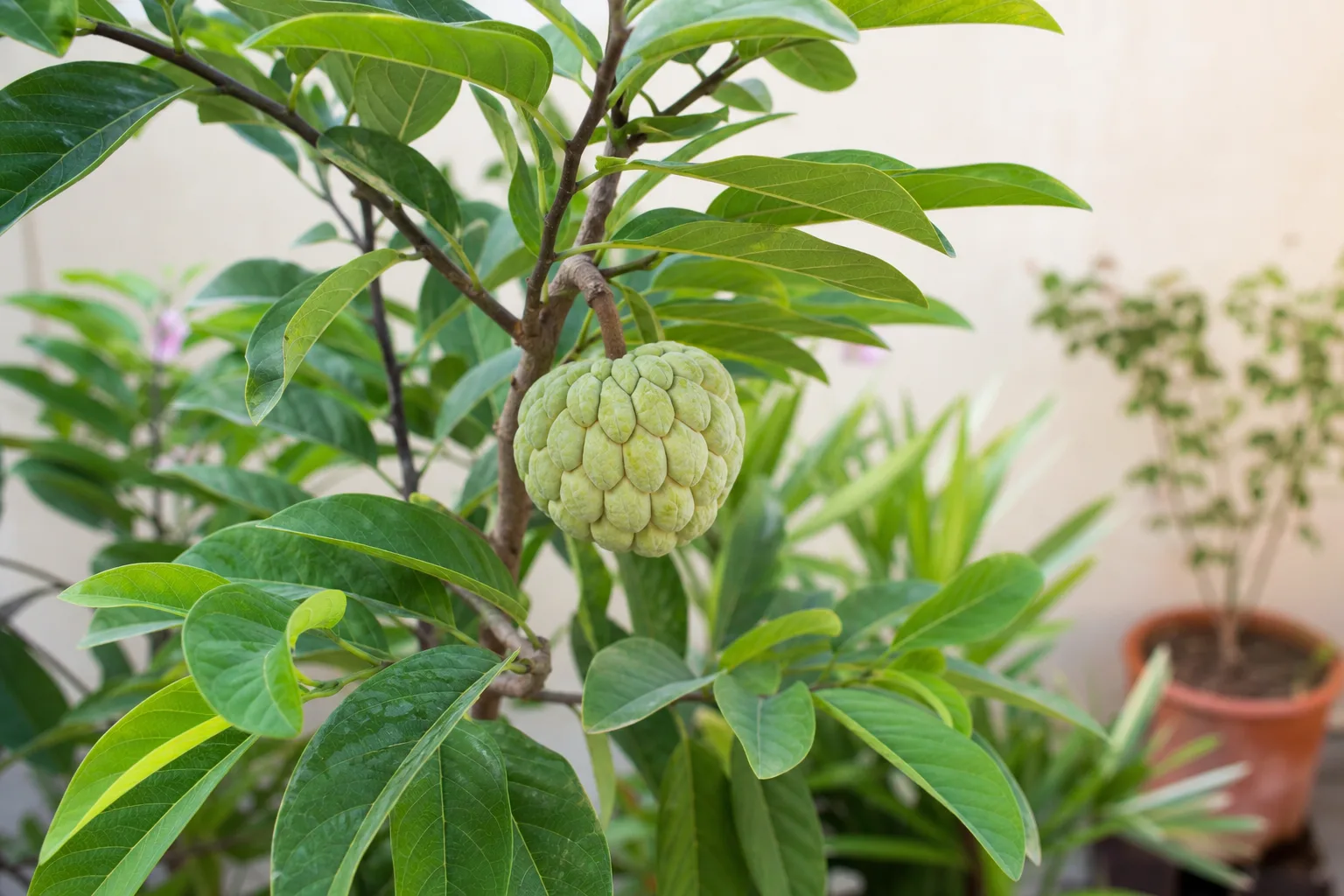
Custard Apple Propagation: Seeds & Grafting
Custard Apple Propagation: Seeds & Grafting
Custard Apple (Annona squamosa), also sold as Sitaphal, sugar apple, or sweetsop, is a small tropical fruit tree—not a stem-cutting houseplant. Home growers usually start it from seed, then use budding or grafting when they want earlier, more uniform fruit from a known tree. Cuttings and air-layers are poor first choices for this species because success rates are low and the resulting root systems stay shallow.
This guide covers seed sowing, grafting choices, India-friendly timing, and aftercare that matches Custard Apple’s shallow roots and intolerance of waterlogging. Pair it with the Custard Apple watering and Custard Apple soil guides once new plants leave the nursery pot.
Choose seed or graft for your goal
Seed is the easiest home method. Fresh Sitaphal seed germinates reliably in warm conditions, and many trees come reasonably true to type. The trade-off is time: seedlings commonly take 2–4 years before fruiting, and fruit quality can still vary between trees.
Grafting or budding is the practical route when you want a named cultivar, less seediness, more even fruit size, or a much shorter wait. Julia Morton records that selected clones grafted onto Annona reticulata seedlings in India have flowered within about 4 months and fruited within about 8 months after planting out, versus years for seedlings (Purdue NewCROP / Morton). ECHO likewise notes that sugar apple is often shield-budded or inarched onto seedling sugar apple or bullock’s heart (A. reticulata) rootstock (ECHOcommunity).
Buy a nursery graft when you lack budding skill and early fruit matters. Grow from seed when you want many plants for rootstocks, hedging, or a backyard experiment and can wait for first harvest.
When to use this page vs other Custard Apple guides
Use this page for starting new Custard Apple plants—seed collection, sowing, budding, grafting choices, and early establishment. Switch guides when the question is ongoing culture of an existing tree.
- Custard Apple overview — whole-plant identity, climate fit, and care map.
- Custard Apple light — full-sun placement for seedlings leaving shade.
- Custard Apple watering — dry-down checks that protect shallow roots.
- Custard Apple soil — free-draining mixes for nursery pots and final containers.
- Custard Apple repotting — potting-up without crushing young roots.
- Custard Apple pruning — spring-only structural cuts once the tree is established.
Propagating Custard Apple from seed
Seed is how most Custard Apple trees are raised worldwide. NParks lists seed, grafting, and budding as methods and notes seed as the most common route, with grafting used when you want high-quality fruit sooner (NParks Flora Fauna Web).
Collect, dry, and handle seeds safely
Scoop seeds from fully ripe fruit when rind segments begin to separate. Rinse pulp thoroughly, then dry the seed surface. Morton and NParks both recommend letting cleaned seed rest about one week before sowing for stronger germination than perfectly fresh seed (Purdue NewCROP / Morton; NParks Flora Fauna Web). Stored sugar apple seed can remain viable for 3–4 years under dry conditions.
Treat seeds as toxic plant material, not a snack. Morton records Custard Apple seeds as acrid and poisonous, with bark, leaves, and seeds containing alkaloids such as anonaine; keep seed paste away from eyes and away from pets and children (Purdue NewCROP / Morton toxicity). Wash hands after handling, and never crush seed near food prep surfaces.
Soak, scarify, and sow
Germination may take 30 days or more, though warm sowing often finishes sooner. Morton notes that soaking for about 3 days or scarifying can hasten sprouting, while some reports find higher germination percentage with unsoaked seed—so treat soaking as a speed aid, not a required ritual (Purdue NewCROP / Morton). ECHO similarly promotes soaking 3–4 days or scarification to speed germination that otherwise often needs a month or more (ECHOcommunity).
Useful Tropical Plants / RHS-based guidance recommends sowing in individual pots, no deeper than 2 cm, at about 21°C, with many Annona seeds benefiting from careful scarification when the coat is hard (Useful Tropical Plants). Use a free-draining nursery mix—sandy loam or potting mix amended with coarse grit or perlite—and keep it lightly moist, never swampy. Label each pot; Sitaphal seedlings look similar for months.
Germination timeline and seedling care
Expect sprouts in roughly 2–4 weeks under warm conditions, with slower batches stretching past a month. Useful Tropical Plants notes seedlings are often ready for planting out after about six months of nursery growth (Useful Tropical Plants). Keep young plants in bright, warm light with airflow; Custard Apple wants full sun as it hardens, but tender new flushes can scorch if you jump straight from deep shade into harsh midday terrace sun.
Water when the top few centimetres begin to dry, then drain fully. A soggy seedling tray is the fastest way to lose a batch. When roots fill the small pot, step up once using the approach in the Custard Apple repotting guide rather than jumping into a huge container.
Grafting and budding for earlier fruit
Vegetative propagation is standard where early fruiting and clone fidelity matter. Desert Tropicals summarizes the pattern clearly: seedlings usually bear at 3–4 years, while improved selections are propagated by grafting or budding (Desert Tropicals). Morton notes seedlings can be budded or grafted when about one year old.
Rootstocks that work for Sitaphal
In India, Annona reticulata (bullock’s heart / ramphal) seedlings are a preferred rootstock for selected sugar apple clones. Sugar apple on its own seedling rootstock ranks next; A. senegalensis is used in Egypt; A. glabra can work but is less hardy (Purdue NewCROP / Morton). Grow healthy, straight seedling stocks in free-draining pots for a year before budding if you are building your own nursery line.
Match caliper between stock and scion as closely as practical. A thin bud on a pencil-thick stock is easier to wrap and heal than a mismatched pair.
Shield budding and inarching
Morton’s India-facing summary is still the clearest success-rate guide for home growers aiming at commercial methods: shield budding about 75% successful and commercially feasible; inarching essentially complete success when done correctly; side-grafting limited to roughly December–May with success not exceeding about 58% and requiring more skill (Purdue NewCROP / Morton). Useful Tropical Plants adds that budding is best when sap flows freely at the start of the growing season, and that cleft grafting is commonly used among graft styles (Useful Tropical Plants).
Take scion wood from a healthy, correctly identified fruiting tree. Defoliate planned scions ahead of poor months when Morton recommends advance defoliation and waiting for petioles to drop before cutting—especially if you must work outside the preferred budding window.
Best months for budding in India
For Indian conditions, Morton reports budding results are best in January, March, and June. Results are poor in July, August, November, and December unless scions are prepared by advance defoliation and delayed cutting after petiole abscission (Purdue NewCROP / Morton). Align your budding day with warm growth, not the coldest foggy weeks or peak monsoon saturation.
After the union takes, remove competing shoots below the graft so the scion becomes the leader. Keep the wrap clean and watch for ants or soft scale that can invade tender unions on young Annona wood.
Why cuttings and air-layers disappoint
Custard Apple can be listed under “cuttings” on generic plant cards, but Morton is blunt: cuttings, layers, and air-layers have a low success rate, and trees produced that way develop shallow root systems that endure drought poorly compared with seedlings (Purdue NewCROP / Morton). For a terrace Sitaphal that must bridge dry spells between irrigations, that is a structural disadvantage—not just a nursery inconvenience.
If a cutting does root, treat it as a fragile container plant with excellent drainage and closer watering attention than a seedling of the same age. Prefer seed for resilient backyard trees, and prefer budding/grafting when you need a clone.
Aftercare for new seedlings and grafts
New Custard Apple plants need warmth, bright light, and free drainage more than rich feeding. Follow the Custard Apple light guide for hardening into full sun over several days. Keep the mix moist but aerated using the dry-down habit in the Custard Apple watering guide—never leave a saucer of water under a nursery pot.
Hold heavy fertiliser until roots occupy the pot and new leaves are advancing; then use light seasonal feeding from the Custard Apple fertilizer guide. Avoid hard pruning on a newly grafted or freshly potted plant. Morton advises pruning only in spring when sap is rising, because off-season cuts can kill the tree—save structure work for the Custard Apple pruning guide once the plant is established.
Common propagation failures and first fixes
No sprouts after a month. Confirm warmth (near 21°C+), sowing depth under 2 cm, and that seed dried about a week after cleaning. Try a second batch with gentle scarification or a short soak, and discard any seed that smells sour or stays rock-hard after soaking.
Seedlings collapse overnight. Usually damping-related stress from constant wet media or poor air. Remove dead plants, improve drainage, water less often but thoroughly, and give brighter light with airflow.
Graft dries and fails. Timing, cambium contact, and wrap hygiene matter more than fancy tools. Retry in a preferred budding month with fresh scion wood and a matching-caliper stock.
Young tree wilts after potting up. Check for circling roots and soggy mix first. Shelter from wind and harsh afternoon sun for a week, keep the root ball evenly moist without waterlogging, and delay fertiliser until growth resumes.
You used cuttings and got weak drought response. Expect that outcome on this species. Restart from seed for a deeper-rooted tree, or graft a preferred scion onto a seedling stock.
Related Custard Apple guides
- Custard Apple plant hub — species profile, toxicity notes, and the full care cluster.
- Custard Apple overview — climate fit and whole-tree care summary.
- Custard Apple soil — free-draining mixes for nursery and landscape planting.
- Custard Apple watering — irrigation for shallow Annona roots.
- Custard Apple light — full-sun hardening for young plants.
- Custard Apple fertilizer — light feeding once new trees are growing.
- Custard Apple repotting — pot size steps without root damage.
- Custard Apple pruning — spring structural pruning only.
Conclusion
Propagate Custard Apple by matching method to goal. Sow cleaned seed after a short dry rest for an easy, drought-capable seedling tree, knowing fruit may wait a few years. Use shield budding or inarching onto healthy seedling rootstock—especially A. reticulata or sugar apple itself—when you want earlier, more uniform Sitaphal fruit.
Skip cuttings as a primary plan. Protect every new plant with free-draining mix, warm full light, and careful watering, and keep toxic seeds away from eyes, pets, and children. Once the young tree is established, move on to soil, watering, and spring pruning guides so the first fruiting seasons have a strong framework.