Custard Apple Watering Guide: How Often & When
Custard Apple Watering Guide: How Often & When
Custard Apple Watering Guide: How Often & When
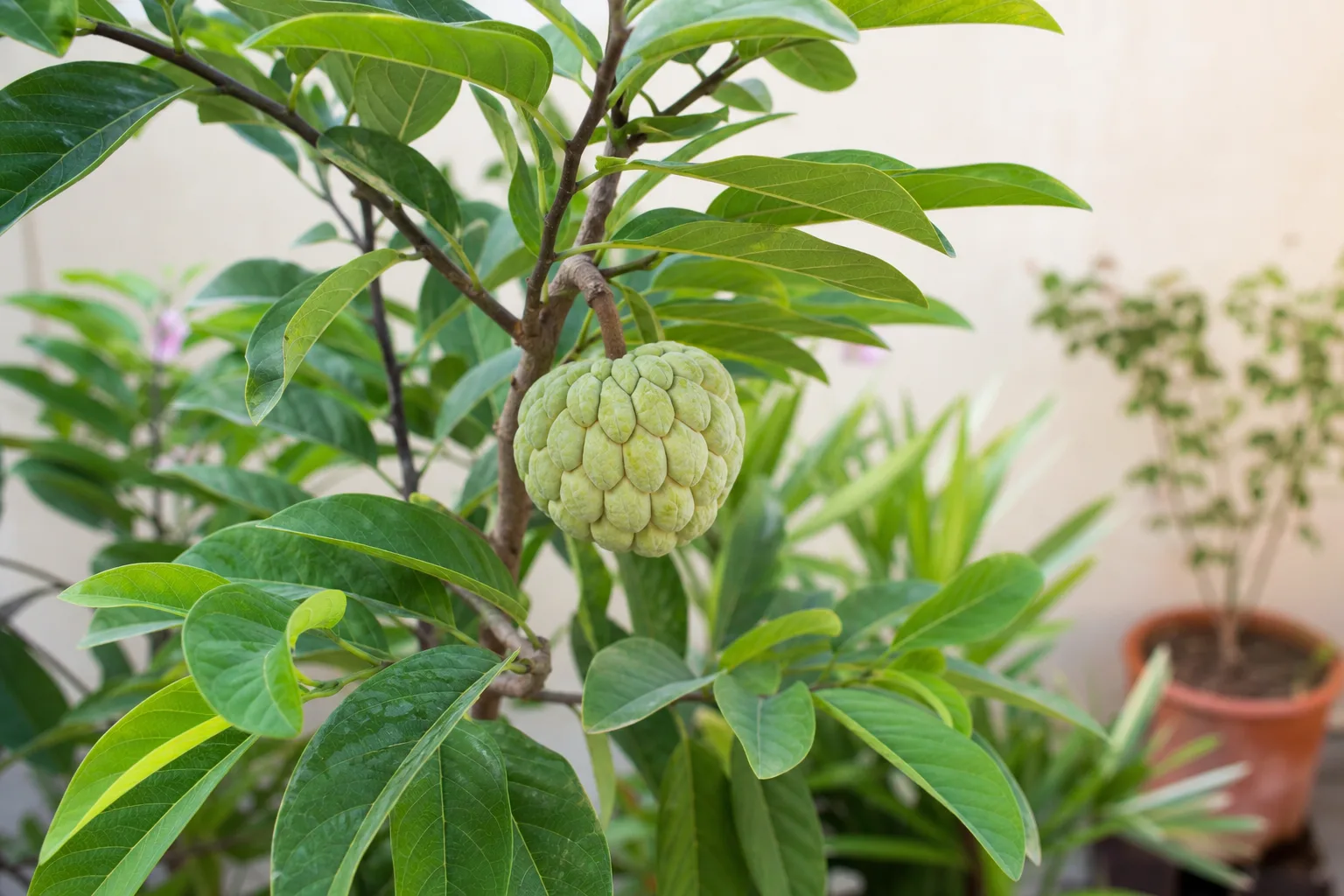
Custard Apple watering succeeds when you treat Annona squamosa as a shallow-rooted tropical fruit tree — not a constantly damp houseplant and not a cactus. Sold across India as Sitaphal, sugar apple, or sweetsop, this open-crowned tree bridges dry spells with leaf fall, yet it declines fast when roots sit in stagnant water. Julia Morton’s classic account notes high drought tolerance in dry climates, while also recording that water-logging is intolerable and that irrigation in the dry season (and once during ripening) increases fruit size (Purdue NewCROP — Sugar Apple).
This guide covers how often to water container and garden Custard Apple, how to check the top soil before every soak, how monsoon and cool leaf-fall rest change demand, and what to do when leaves yellow over wet mix or fruit splits after drought. Pair it with the Custard Apple overview for whole-plant context, and use Custard Apple soil when drainage — not calendar watering — is the real problem.
Why Custard Apple Watering Is Not “Keep It Always Wet”
Custard Apple evolved for warm climates with distinct wet and dry phases. Useful Tropical Plants notes that the Indian reputation of Sitaphal as a hardy drought crop is only partly true: leaf fall helps the tree bridge a severe dry season, but it still needs adequate moisture during the growing season (Useful Tropical Plants — Annona squamosa). Morton adds that the species generally does best in dry areas with high drought tolerance, yet severe drought sheds leaves and hardens the fruit rind so that rain later can split the fruit (Purdue NewCROP — Sugar Apple).
The non-negotiable limit is oxygen at the roots. Morton describes the tree as shallow-rooted and not particular about soil type — sand, limestone, or heavy loam — as long as drainage is good, because waterlogging is not tolerated (Purdue NewCROP — Sugar Apple). Useful Tropical Plants prefers a moist but well-drained sandy loam near pH 6, while noting success on rocky alkaline soils when structure stays open (Useful Tropical Plants — Annona squamosa).
Missouri Botanical Garden’s overwatering guidance explains the physiology that kills many Sitaphal pots: roots in waterlogged soil cannot absorb oxygen, die back, and then cannot take up water or nutrients even though the mix looks wet (Missouri Botanical Garden — Overwatering). That is why yellow, wilted Custard Apple foliage over sour, soggy mix is an overwatering emergency, not a reason to water again.
How Often to Water Custard Apple
There is no honest fixed calendar for every Sitaphal tree. Pot size, mix texture, sun, wind, monsoon rain, and whether the tree still has leaves all change how fast the root zone dries. Use dryness of the upper soil as the trigger, then water deeply and let excess leave the pot or bed.
As a starting framework — not a rule — many container Custard Apples in hot, dry Indian weather need a thorough soak about every 3–5 days once the top 3–5 cm (about 1–2 inches) feels dry. In cooler, humid, or cloudy spells, the same pot may wait 7–14 days. Young trees and plants still establishing roots want more even moisture than mature in-ground trees that have already bridged dry seasons with leaf fall.
Container Sitaphal on terraces and rooftops
Large pots on concrete heat fast and dry from the sides as well as the surface. Check the top 3–5 cm and lift the pot: a light container after a prior soak is a better signal than “it has been four days.” Water until runoff exits the drainage holes, then empty the saucer. Never leave Sitaphal standing in a tray of water overnight — that recreates the waterlogging Morton says the species cannot tolerate (Purdue NewCROP — Sugar Apple).
If the mix stays dark and heavy for many days after a soak, improve drainage through Custard Apple soil and Custard Apple repotting rather than watering less forever while roots sit anaerobic.
In-ground trees in Indian gardens
Established garden trees use a wider soil volume and often need deep irrigation only during dry growth and fruit fill, then little or none when monsoon rain keeps the root zone moist. Water at the drip line and outward a little, not as a daily splash against the trunk. Morton’s culture notes are clear: irrigation during the dry season and once during ripening will increase fruit size (Purdue NewCROP — Sugar Apple). Skip the hose when rain is already keeping the profile moist; standing water in low clay pockets is as harmful as drought at fruit swell.
How to Check Dryness Before You Water
Surface color lies on both pots and beds. Peaty top layers can look pale while the core stays wet, or crust dry while deeper roots still have moisture. Always test into the upper root zone before you soak.
Finger or knuckle test: Push a finger 3–5 cm into the mix. Cool, clinging soil means wait. Dry, crumbly soil at that depth means you can water. On small pots, tip gently and compare weight to the day after a full soak.
Skewer or chopstick test: Insert a dry wooden stick toward mid-pot depth. Soil sticking or darkening means moisture remains. Clean, dry wood supports watering.
Saucer and smell check: Water that never exits drainage holes, or a sour smell when you dig near roots, points to chronic saturation. Missouri Botanical Garden advises digging into the root zone when overwatering is suspected — soil kept too long without oxygen often smells sour or rotten (Missouri Botanical Garden — Overwatering).
Never water because an app said Tuesday. Never water because the top millimetre looks dusty while the pot still feels heavy. Never water a Custard Apple sitting in yesterday’s runoff.
The Soak-and-Drain Method for Annona squamosa
The method that matches this species is simple: one deep soak, full drainage, then a dry-down of the top layer before the next drink. Partial cups every day keep the surface wet, starve deep roots of oxygen, and hide the waterlogging risk that shallow Annona roots cannot survive.
Apply water slowly across the whole surface until it runs freely from drainage holes (containers) or until you have wet the active root zone under the canopy (garden trees). Stop. Empty saucers. Wait until the top 3–5 cm dries again. That dry phase is part of the care, not a failure of attention.
Deep, infrequent watering also matches general good practice against overwatering stress: water thoroughly so roots explore moist soil, then let conditions return toward aeration rather than keeping the profile permanently saturated (Missouri Botanical Garden — Overwatering). For Sitaphal, that pattern is especially important because the tree is shallow-rooted and intolerant of standing water (Purdue NewCROP — Sugar Apple).
Signs You Are Overwatering Custard Apple
Overwatering usually looks “thirsty” to beginners because leaves yellow and droop while roots are dying. Catch it before stem tissue softens.
Watch for yellowing leaves while the mix stays wet, sour-smelling or soggy soil, soft dark roots when you check the root ball, and stalled flushes after long wet periods. MoBot lists stunted growth, yellowing, leaf scorch, and crown or root decay among classic overwatering outcomes, and notes that damaged roots become more vulnerable to rot pathogens such as Phytophthora in periodically waterlogged soils (Missouri Botanical Garden — Overwatering).
If several of these appear together, stop watering immediately. Do not give a “small drink to perk it up.” Move the pot out of a water-holding saucer, improve airflow, and inspect roots. If the mix is anaerobic, refresh drainage via Custard Apple soil and careful Custard Apple repotting once the plant is stable enough to handle the stress.
Signs Your Custard Apple Needs Water
Underwatering is less common than drowning on poorly drained pots, but it matters for fruit quality and young trees.
Expect limp new leaves, paused growth, dry brown leaf margins in hot containers, and premature leaf drop in severe drought. Morton records that in severe droughts the tree sheds leaves and the fruit rind hardens, then splits when rain returns (Purdue NewCROP — Sugar Apple). That splitting is a moisture-swing injury: drought followed by sudden rewetting, not “the fruit was bad luck.”
Rehydrate with one full soak, drain completely, then return to the dry-down cycle. Do not compensate with daily sips; that swings the problem toward overwatering within a week. If leaves are limp and the mix is wet, you are not underwatered — you are overwatered.
Seasonal Watering: Dry Growth, Monsoon, and Leaf-Fall Rest
Active dry-season growth: Keep young and container trees evenly moist through flushes of leaves and early fruit set. Check the top 3–5 cm often in heat. Irrigate garden trees deeply when rainfall is absent.
Monsoon / reliable rain: Ease off. Let rain do the work when the profile stays moist. Protect pots from continuous overflow by raising them on feet and ensuring holes stay open. The danger in monsoon is not drought — it is chronic saturation of a shallow root system.
Cool leaf-fall rest: When Sitaphal drops leaves to bridge a dry or cooler spell, water demand falls. Useful Tropical Plants notes that rest and leaf fall help the tree bridge a severe dry season (Useful Tropical Plants — Annona squamosa). Water only when the upper root zone has dried; do not keep leafless pots wet “just in case.”
Light and heat still matter: A tree in full sun on a windy terrace uses water faster than one in a sheltered courtyard. Confirm the schedule with Custard Apple light placement — more sun usually means faster dry-down, not a wetter mix.
Watering During Bloom and Fruit Fill
Bloom and fruiting change what “good watering” looks like. Morton concludes that during flowering the sugar apple wants high atmospheric humidity but no rain, because drought interferes with pollination (Purdue NewCROP — Sugar Apple). That is humidity of the air — not a soggy root ball. Keep soil on the moist-but-draining side during bloom without flooding the crown.
Once fruit is set and filling, dry-season irrigation and a watering during ripening help size (Purdue NewCROP — Sugar Apple). Avoid letting containers swing from bone-dry to flood during fruit swell; that is the pattern linked to hardened rinds that split when moisture returns. Steady soak-and-drain beats extreme swings.
Feeding is separate from watering. If you are pushing growth with fertilizer while the mix never dries, salt and rot risks rise together — see Custard Apple fertilizer for timing, and keep irrigation decisions based on root-zone dryness.
Soil, Pot, and Drainage Choices That Change Watering
Watering advice fails when the container cannot drain. Prefer a pot with open holes, a free-draining sandy-loam style blend, and no decorative outer cachepot that traps runoff. Useful Tropical Plants’ preference for moist but well-drained sandy loam is the target texture (Useful Tropical Plants — Annona squamosa). Morton’s warning that waterlogging is intolerable is the hard stop (Purdue NewCROP — Sugar Apple).
Oversized pots hold wet mix for weeks after a soak, which is dangerous for shallow Annona roots. Upsize gradually when Custard Apple repotting is due. If you keep correcting frequency but the mix never dries, fix the medium first on the Custard Apple soil page.
First Actions When You Are Unsure
When you do not know whether Sitaphal needs water, do this in order:
- Feel the top 3–5 cm and lift the pot (or dig a small probe hole at the drip line for garden trees).
- If that layer is dry and the pot is light, soak thoroughly and drain. Empty the saucer.
- If the mix is wet, heavy, or sour, do not water. Improve drainage and airflow; inspect roots if yellowing and wilt continue.
- After any correction, wait for the next dry-down before the following soak — do not “catch up” with daily cups.
If you are choosing between slightly too dry and slightly too wet for an established Custard Apple, slightly too dry is safer than standing water. Young nursery plants still need more even moisture while they establish, but never at the cost of a waterlogged core.
When to use this page vs other Custard Apple guides
Use this watering page when your question is when to soak, how to check dryness, seasonal irrigation, or over- vs underwatering symptoms on Sitaphal.
Use Custard Apple soil when water never drains, mix stays sour, or you need a freer-draining recipe. Use Custard Apple light when dry-down is slow because the tree is shaded, or leaves scorch in harsh afternoon sun. Use Custard Apple fertilizer for feeding schedules — do not solve nutrient questions by watering more. Use Custard Apple repotting when roots circle, the pot dries in a day, or you must refresh a failed mix. Use Custard Apple propagation and Custard Apple pruning for new plants and structure; pruning timing is separate from irrigation, and Morton warns against pruning at the wrong season.
Related Custard Apple guides
- Custard Apple overview — identity, climate fit, and whole-plant care summary
- Custard Apple light — full-sun placement that drives watering demand
- Custard Apple soil — drainage and mix that make soak-and-drain work
- Custard Apple fertilizer — feeding without compounding wet-root stress
- Custard Apple repotting — when to refresh pots that never dry
- Custard Apple propagation — moisture care for seedlings and grafts
- Custard Apple pruning — structure and spring timing, separate from watering
Conclusion
Water Custard Apple by checking the top 3–5 cm, soaking deeply, draining fully, and waiting for that layer to dry again. Give young and container Sitaphal more even moisture through dry growth and fruit fill, ease off in monsoon and leaf-fall rest, and never leave shallow Annona squamosa roots in standing water. Watch for yellow leaves over wet soil as an overwatering alarm, and for limp growth or fruit splitting after drought as signs you swung too dry. Master that rhythm and the rest of Sitaphal care — soil, light, and feeding — becomes much easier to get right.