Custard Apple Soil Guide: Mix, Drainage & pH
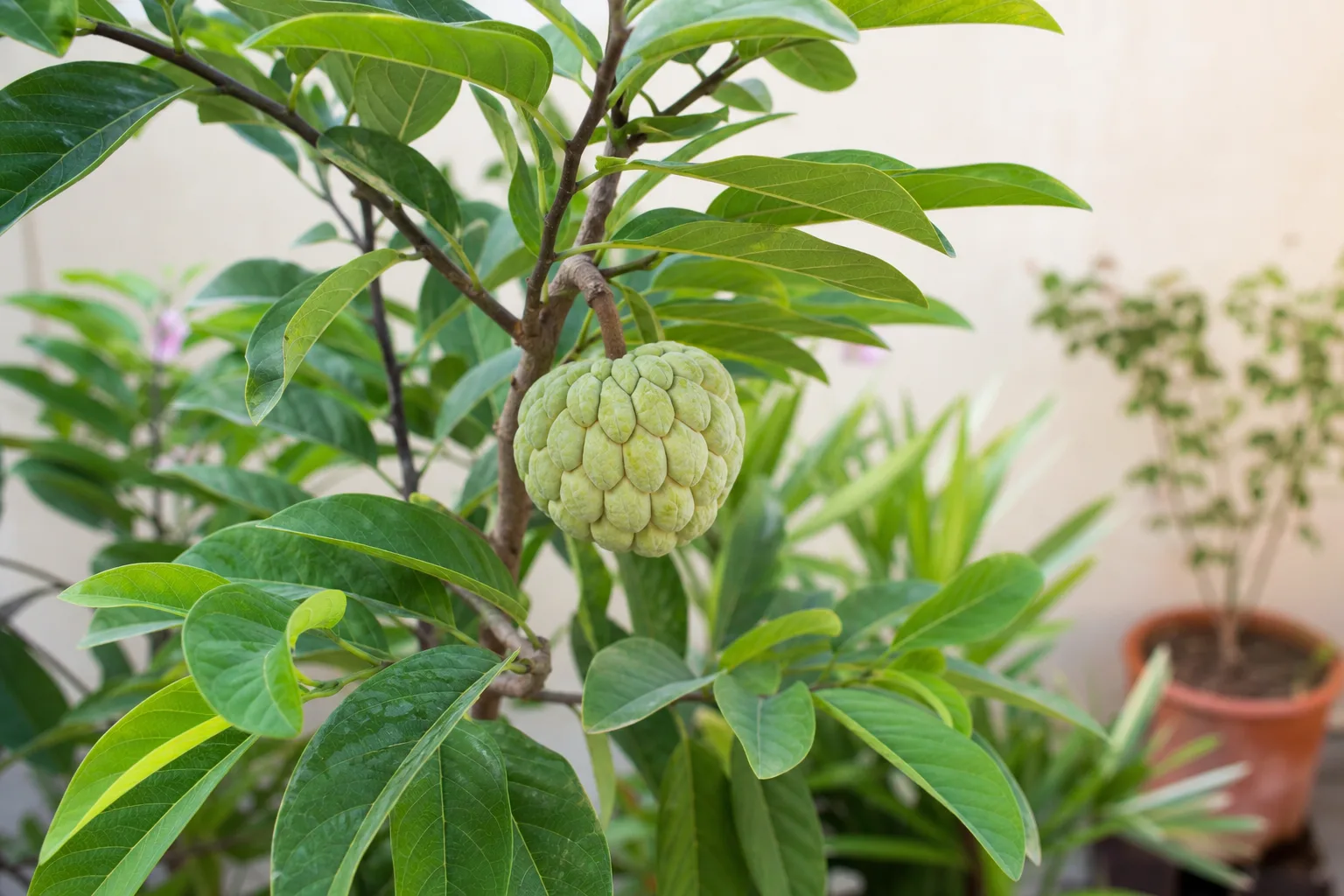
Custard Apple Soil Guide: Mix, Drainage & pH
Custard Apple Soil Guide: Mix, Drainage & pH
Custard Apple soil succeeds when the root zone stays moist between rains or irrigations yet never sits drowned. Annona squamosa—the Sitaphal, sugar apple, or sweetsop grown across tropical India—is forgiving about soil type and unforgiving about standing water. Julia Morton’s classic account records good performance on sand, oolitic limestone, and heavy loam when drainage is reliable, while stating plainly that water-logging is intolerable. University of Florida guidance for sugar apple in the home landscape repeats the same rule: trees are well-adapted to most well-drained soils, including sands and limestone, and are intolerant of continuously wet or flooded soils.
That biology matters on Indian terraces and monsoon gardens more than any bag labelled “fruit tree mix.” Custard Apple is a small, open-crowned tropical fruit tree with a relatively shallow root system. It can bridge dry spells by shedding leaves, but a few days of saturation in heat can tip the plant into chlorosis, dieback, and root rot. This guide covers the mix recipes, pH range, container and in-ground drainage tactics, and early warning signs so you fix structure before you chase fertilizer or change your watering calendar.
The short answer: what soil does Custard Apple need?
The best Custard Apple soil is moist but freely draining sandy loam—or a container blend that behaves the same way. Aim for a mix that soaks thoroughly, drains within minutes through open outlets, then dries gradually through the upper few centimetres rather than staying glossy-wet for days. Useful Tropical Plants summarises the preference as moist but well-drained sandy loam with a pH around 6, while noting success on rocky alkaline soils toward pH 8 when structure stays open. A practical container starting point is 50% quality potting mix or sandy loam, 25% mature compost, and 25% coarse perlite, grit, or pine bark—then increase the coarse fraction if your terrace stays humid through monsoon.
Free-draining first—texture is flexible
Morton’s line that sugar apple is “not particular as to soil” is often misread as “any mix is fine.” The clause that follows is the real rule: performance holds on sand, limestone, or heavy loam only with good drainage. Texture can vary; oxygen at the root zone cannot. If you must choose between a richer, denser blend and a slightly leaner, coarser one on a rainy balcony, choose the coarser blend and feed thoughtfully during growth rather than trapping roots in saturated organic matter.
Why Custard Apple soil is about oxygen, not depth
Custard Apple does not need a deep soil profile the way some orchard trees do. Morton notes the tree is shallow-rooted and does not need deep soil. UF/IFAS likewise describes a relatively shallow and weak root system that can topple in extreme winds—useful context for heavy pots and staking, and for understanding why the top 30–45 cm of mix quality matters more than digging a metre-deep pit of amended earth that still floods at the base.
What the roots do need is continuous access to air after each wetting. Saturated pores shut down root respiration; dead roots invite pathogens; the canopy then yellows and wilts while the mix still feels wet—the classic trap that sends growers into another round of watering. Align your irrigation rhythm with the Custard Apple watering guide only after the physical medium can re-aerate between drinks.
Shallow roots and flood intolerance
UF/IFAS flood-stress guidance for sugar apple is blunt: seedling trees are not tolerant of excessively wet or flooded soil, and flooding for as little as 7 to 10 days may result in root rot and plant death. Symptoms listed there include leaf yellowing, stunted shoots, wilting and browning, leaf drop, stem dieback, and tree death. A broader Florida tropical-fruit environmental guide rates sugar apple flood tolerance as intolerant (rootstock dependent)—so grafted plants may differ slightly by rootstock, but you should still design beds and pots as if prolonged saturation is lethal.
Drought is a different story. Established trees can shed leaves through dry spells, but prolonged dry soil still reduces growth and fruit development. Soil design should therefore store plant-available water without trapping free water—the opposite of a sealed cocopeat brick or a clay pan with no outlet.
Ideal soil texture for pots and garden beds
In the ground, aim for loam or sandy loam that accepts a deep soak and then releases excess into surrounding soil or a drainage slope. Heavy clay can work only if you break structure with organic matter and coarse grit and keep the planting site above seasonal water tables. Pure sand drains well but holds little nutrient or moisture; add mature compost so young trees do not swing from bone-dry to stressed between irrigations.
In containers, field soil alone usually collapses into a dense, anaerobic mass. The entire oxygen and water budget lives inside a few cubic feet of mix, so visible coarse particles (perlite, pumice, bark, grit) are non-negotiable. Fine-only blends—unbuffered cocopeat, unfinished manure, or bagged “black cotton soil”—stay wet at the core long after the surface looks ready for another drink.
Container vs in-ground drainage
Garden trees can sometimes escape a bad week if surrounding soil wicks moisture sideways. Potted Sitaphal cannot. A decorative cachepot without holes, a flat terrace tile sealing outlets, or a saucer of monsoon runoff recreates the flooded condition UF/IFAS warns against. Choose a stable, heavy container with several open drainage holes, elevate it slightly so water can exit, and empty saucers after storms. Refresh compacted mix on the schedule in the Custard Apple repotting guide rather than hoping extra fertilizer will compensate for stale, airless media.
Soil pH for Annona squamosa
Target roughly pH 5.5–7.5, with a sweet spot near pH 6. Useful Tropical Plants’ “around 6” preference matches that mild-acid to neutral window for nutrient availability. The same source notes success on rocky alkaline soils up to about pH 8 when drainage is excellent—consistent with Morton’s limestone performance note and with UF/IFAS culture on south Florida calcareous soils.
pH matters because it changes which nutrients stay soluble. On very alkaline media, iron and manganese deficiencies often show as yellowing new leaves even when fertilizer is present. On extremely acid mixes, other imbalances can appear. Test the mix you actually use—especially terrace fill and local red soil—before assuming the bag’s printed “ideal for all plants” claim matches reality. General soil-health guidance from USDA NRCS reminds growers that soil pH affects nutrient availability and biological activity, so a cheap meter or lab test beats guessing.
Alkaline terrace fill and calcareous soils
Many Indian rooftops and courtyards sit on construction rubble, plaster dust, or limestone-influenced fill. Custard Apple can tolerate alkaline conditions better than acid-loving ornamentals if water moves freely. UF/IFAS notes that on highly calcareous, high-pH soils, foliar micronutrients and iron chelates formulated for high-pH soils are often more effective than broadcasting the same micronutrients into the ground alone. Fix drainage and refresh media first; then address micronutrients through the Custard Apple fertilizer guide if chlorosis persists on an open, well-tested mix.
Also avoid saline irrigation water and salt-loaded media. UF/IFAS lists sugar apple as not tolerant of saline soil and water, with tip burn, leaf drop, and dieback as stress symptoms—another reason to skip unfinished manure and salty “instant compost” products in containers.
A practical Custard Apple potting mix
Container soil must anchor a woody tropical tree, survive hot dry weeks, and recover air after monsoon downpours. Start with a blend that matches the LeafyPixels Custard Apple profile:
- 50% quality potting mix or sandy loam for fine water-holding material and baseline structure;
- 25% mature compost for organic matter and slow nutrient release;
- 25% coarse perlite, horticultural grit, or pine bark for durable air space.
Mix ingredients throughout the pot—do not stack a “drainage layer” of stones under dense media. Stones steal root volume and do not fix a waterlogged mix above them. In humid coastal or monsoon months, shift a few percentage points from the fine fraction toward bark or grit. In very hot, windy inland terraces, keep enough fine material so the pot does not dry into a hydrophobic brick between waterings.
Substituting materials available in India
Buffered cocopeat can replace part of the potting-mix fraction, but it should not be the entire medium on a rainy balcony—coir alone often stays uniformly wet and shrinks as it ages. Pair it with sandy loam or a loam-based potting blend plus a coarse mineral component. Use fully finished compost that smells earthy and feels cool; unfinished farmyard manure continues decomposing, consumes oxygen, and can spike salts.
Where perlite blows away on rooftops, use coarse pumice, crushed brick grit screened of dust, or expanded clay. Composted bark or coir chips can stand in for pine bark when softwood bark is scarce—keep visible coarse pieces distributed through the root ball. Red garden loam is fine in moderation after clods are broken; never fill a closed pot with unamended field clay.
Garden beds, monsoon waterlogging, and raised planting
In-ground Sitaphal thrives where the site sheds water. Avoid low pockets that pond after storms. If your plot has a high water table or hardpan, UF/IFAS recommends planting tropical fruit on a raised mound of native soil—commonly about 2 to 3 ft (0.6–0.9 m) high and several feet across in flood-prone Florida landscapes—so roots sit above short-term inundation. Indian monsoon gardens can adapt the same idea: a broad berm, raised bed, or gently crowned planting hole beats burying the root flare in a clay sump.
Do not create a deep amended pit surrounded by impermeable clay. That “bathtub” holds water at the interface even when the surface looks dry. Instead, loosen a wide area, plant at the correct depth, and improve structure gradually with surface compost and mulch that does not seal against the trunk. Keep lawn sprinklers on timers from soaking the root zone daily; UF/IFAS warns that timer-driven overwatering can cause sugar apple trees to decline through root rot.
Mulch helps moderate surface temperature and moisture, but pull it a few centimetres back from the trunk so bark stays dry. Water long enough to wet through mulch into the soil beneath—then wait for the upper layer to dry before the next irrigation, per your watering guide.
How to choose a ready-made fruit-tree mix
Ignore vague labels until you inspect texture. A Custard Apple-ready bag should show visible coarse particles and spring back when squeezed moist rather than forming a sticky ball. Avoid mixes dominated by fine black compost, fresh wood chips, or dense “garden soil in a bag” with no grit.
Run a ten-minute drain test before a full repot: fill a nursery pot, soak thoroughly, and watch. Water should exit freely within minutes. Leave the test pot overnight in warm weather; if it remains heavy and glossy-wet the next day, amend with coarse material before trusting it with a grafted Sitaphal. Seed-starting mixes are too fine and temporary for a fruiting tree; choose a longer-lasting potting or fruit-tree blend and customise drainage yourself.
Warning signs of wrong soil or poor drainage
Act on pattern, not a single yellow leaf. Watch for yellowing while the mix stays wet, sour or swampy odours, fungus gnats breeding in constantly moist organic matter, soft dark roots when you tip the plant, stalled flushes after monsoon weeks, and dieback that starts after a period of saturation. UF/IFAS flood-stress symptoms—chlorosis, wilting on wet soil, leaf drop, stem dieback—map closely to chronic poor drainage in pots.
Surface mould or algae often means the top stays wet too long; that is a structure and watering-frequency problem, not a signal to add more rich compost. If the pot dries within a day in warm weather and roots circle densely from drainage holes, the issue may be an exhausted, root-bound mass rather than a wet mix—step into repotting and root pruning rather than adding another cocopeat top-dress.
When several wet-soil signs appear together, stop automatic watering, improve outlets, and plan a media refresh. Do not “perk it up” with another deep soak or a heavy fertilizer dose on anaerobic roots.
When to use this page vs other Custard Apple guides
Use this soil page when you are choosing or correcting the physical medium—texture, drainage, pH, container recipes, raised beds, and wet-soil warning signs. Switch to the Custard Apple watering guide when the mix is already free-draining and you need soak-and-dry timing, monsoon irrigation cuts, or drought-versus-flood symptom sorting. Use the Custard Apple repotting guide when roots are circling, the pot is unstable, or the mix has collapsed and needs full replacement. Turn to the Custard Apple fertilizer guide after structure is sound and growth still shows nutrient-limited patterns. For sun placement and canopy health that affect how fast soil dries, see the Custard Apple light guide. For a whole-plant orientation, start at the Custard Apple overview.
Related Custard Apple guides
- Custard Apple overview — habit, climate fit, and how soil fits the full care picture
- Custard Apple watering — how often to irrigate once drainage is correct
- Custard Apple fertilizer — feeding after the root zone can breathe
- Custard Apple repotting — when and how to refresh compacted mix
- Custard Apple light — sun exposure that drives pot drying rates
- Custard Apple propagation — seed and graft starts that need free-draining nursery media
- Custard Apple pruning — canopy work timed for spring sap rise, not wet-season stress
Conclusion
Custard Apple (Annona squamosa) asks for a simple soil contract: hold moisture without trapping floodwater. Morton’s sand-to-loam flexibility and UF/IFAS well-drained landscape guidance both collapse into one home-grower rule—build open structure, protect shallow roots from saturation, and aim near pH 6 while accepting alkaline sites only when drainage is excellent. Use a sandy-loam or 50/25/25 container blend, raise beds where monsoon ponds, keep pot outlets clear, and treat prolonged wet feet as an emergency rather than a cue to fertilize. Get the medium right, then let watering and feeding guides fine-tune the rest.