How to Prune Custard Apple: When, Where & What to Cut
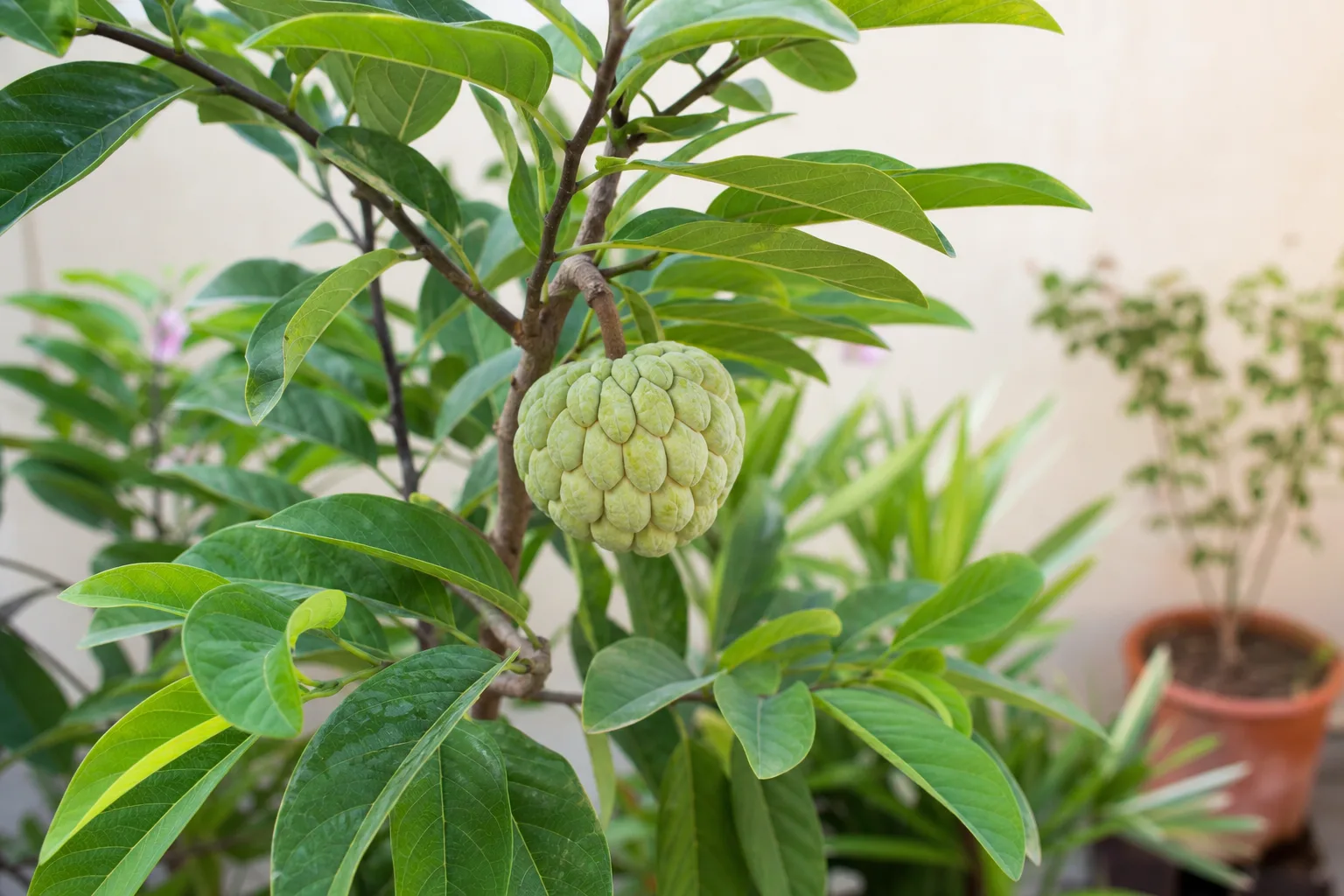
How to Prune Custard Apple: When, Where & What to Cut
How to Prune Custard Apple: When, Where & What to Cut
First, remove only dead, broken, or clearly diseased wood with clean sharp bypass pruners—cut back to healthy tissue or to the branch collar. Do not start heading live shoots for height or shape until that cleanup is done and the tree is entering spring bud break. For whole-plant context—sun, watering rhythm, and container limits—see the Custard Apple overview.
Reviewed by LeafyPixels Review Board · Author: sai-ananth
Quick answer
Prune Custard Apple (Annona squamosa, Sitaphal / sugar apple) for structure in early spring as sap rises and buds begin to break, not in deep dormancy or mid-fruit fill. Julia Morton warns that judicious shaping cuts should be made only in spring when the sap is rising—otherwise pruning may kill the tree (Purdue NewCROP / Morton). University of Florida guidance for sugar apple is to remove about one-third of the previous year’s vegetative growth in early spring (February–March in Florida calendars) as trees commence bud break, aiming for lower-canopy fruit, better light into the crown, and a manageable height of about 8–12 ft (2.4–3.7 m) (UF/IFAS EDIS MG330). Start with deadwood, then head long shoots and thin crowded wood. Pruning improves pickability and light; it cannot fix chronic shade, waterlogging, or a shallow root system that is already stressed—pair cuts with solid light and watering habits.
What pruning does for Custard Apple
Unpruned Custard Apple becomes a small open-crowned tree about 10–20 ft (3–6 m) tall with irregular, somewhat zigzag branches (Purdue NewCROP / Morton). On a terrace or small yard that height is awkward to spray, thin, and harvest. Flowers form singly or in small clusters from leaf axils on year-old shoots or new growth, so where you leave last season’s wood matters for next season’s bloom (UF/IFAS EDIS MG330).
Pruning on this species mainly does four jobs:
- Cleanup — remove dead, broken, rubbing, or pest-killed twigs so you can see the live framework.
- Training — on young trees, encourage evenly spaced scaffold branches with wide crotch angles after the first establishment season.
- Annual heading and thinning — shorten overly long shoots and open the canopy so fruit stays lower and light reaches the interior.
- Size control — keep garden and container trees in the pickable 8–12 ft band rather than letting them climb toward 20 ft.
Pruning will not create a heavy crop by itself. Set still depends on warmth, humidity at bloom, pollination, and irrigation during dry fruit fill. Use cuts to keep wood productive and reachable, then manage water and sun as separate levers.
When to prune Custard Apple
Best window for structural cuts
Make heading, thinning, and height-reduction cuts when the tree is leaving cool-season leaf drop and sap is rising—typically early spring as buds swell and new shoots begin. In Florida home-landscape calendars, that coincides with February–March bud break, with March work listed as removing dead wood and reducing long shoots by one-third to one-half (UF/IFAS EDIS MG330). In much of India, Sitaphal fruit finishes in late autumn to early winter; growers often time main pruning for the quiet period after harvest and before the strong spring flush—still aligning with Morton’s spring sap-rising rule rather than cutting hard in cold, dry midwinter with no root activity.
Delay heavy live-wood cuts if the tree was recently transplanted, is waterlogged, or is still carrying a heavy unripe crop. Young nursery trees should establish through their first season before you force branching with a hard cutback the following early spring (UF/IFAS EDIS MG330).
What you can remove anytime
Dead wood, snapped limbs, and tissue that is clearly diseased or pest-killed can come off whenever you see it—those cuts remove failed tissue rather than redirecting live growth. Do not treat “anytime cleanup” as permission for a summer renovation that removes a large share of live canopy while fruit is sizing.
What to check before cutting
Before your first live structural cut, check:
- Bud stage — tips swelling or just breaking is safer than deep leafless dormancy with no sap movement (Purdue NewCROP / Morton).
- Last year’s shoots — identify long, whippy laterals you will shorten versus balanced scaffolds you will keep.
- Light and airflow — Custard Apple needs full sun for strong flushes; a shaded, tangled crown stays weak even after thinning (UF/IFAS EDIS MG330). Fix placement using the light guide before expecting a hard prune to “bush it up.”
- Root and watering stress — yellowing while the mix stays wet, sour soil, or recent toppling risk means pause major cuts and review watering and soil drainage. The species is shallow-rooted and intolerant of waterlogging (Purdue NewCROP / Morton).
- Recent repotting — do not stack a hard prune with a same-week repot unless you are only removing dead wood.
The first cut to make
Remove dead, damaged, and diseased wood first. Work from the outside in: cut dead twigs to the nearest live lateral or to the collar of the parent branch. Clear rubbing pairs and inward-crossing stems that will never fruit well in shade. Only after the canopy is readable should you decide how much live wood to head for height or open for light.
How to prune Custard Apple step by step
Young tree training
- Plant and leave the young tree alone through the first growing season so roots establish (UF/IFAS EDIS MG330).
- In early spring of the following year, either cut the leader back to force branching along the main trunk, or selectively head some shoots and remove others so remaining scaffolds are evenly spaced with wide branch-to-trunk crotch angles (UF/IFAS EDIS MG330).
- Prefer wide angles over narrow V-crotches that split under fruit load and wind.
Annual size and fruit-wood pruning
On established trees (about four years and older in UF calendars):
- Sanitize tools, then finish deadwood cleanup.
- Selectively prune so that about one-third of the previous year’s vegetative growth comes off as trees commence bud break (UF/IFAS EDIS MG330).
- Reduce especially long shoots by roughly one-third to one-half while removing dead wood in the spring flush window (UF/IFAS EDIS MG330).
- Thin crowded interior twigs so light reaches lower fruiting wood—the goal is fruit production in the lower canopy, better penetration, and limited tree size (UF/IFAS EDIS MG330).
- On terrace and container trees, repeat yearly so the canopy stays in the 8–12 ft working height rather than climbing toward the unpruned 15–20 ft range (UF/IFAS EDIS MG330).
Make heading cuts just above an outward-facing bud or lateral so new growth angles away from the trunk. Avoid leaving long stubs that die back into the branch.
How much you can safely remove
For routine annual work, treat about one-third of last year’s vegetative growth as the UF/IFAS benchmark for productive sugar apple trees, with longer shoots reduced by one-third to one-half in the March-style window (UF/IFAS EDIS MG330). That is selective thinning and heading—not cutting the entire live canopy to stubs in one day.
If a neglected tree is far over height, stage size reduction across two seasons rather than removing most live leaf area at once, especially on shallow-rooted container plants. After a heavy session, expect a flush of new shoots before you judge final shape.
What not to cut
- Do not hard-prune live wood in deep dormancy or when sap is not rising—Morton records that out-of-season pruning may kill the tree (Purdue NewCROP / Morton).
- Do not strip every year-old shoot if you want bloom on that wood; flowers arise from leaf axils on year-old shoots and new growth (UF/IFAS EDIS MG330).
- Do not remove the only healthy scaffolds just to force a topiary look—keep a balanced open framework.
- Do not prune away a large live canopy while fruit is filling unless storm damage forces emergency cleanup.
- Do not treat cuttings as easy free plants—Morton notes cuttings, layers, and air layers have a low success rate and weaker drought endurance than seedlings; use the propagation guide if you try vegetative methods rather than assuming every pruning stick will root.
Tools, sanitation, and pruning-waste safety
Use sharp bypass pruning shears for pencil- to finger-thick shoots and a clean pruning saw for larger wood. Dull blades crush Annona wood and leave ragged stubs. Wipe blades with 70% isopropyl alcohol before you start and between trees when disease is present (Iowa State Extension).
Ripe pulp is edible for people, but seeds are poisonous, and bark, leaves, and seeds contain alkaloids such as anonaine (Purdue NewCROP / Morton). Wear gloves if sap or crushed leaf juice bothers your skin, bag pruning waste, and keep leaves, bark, and seeds away from pets and children. Do not grind seeds into powder near the eyes—Morton notes seed powder is highly irritant.
Aftercare and recovery timeline
After structural pruning:
- Keep the root zone draining freely—do not flood the pot or basin “to help it recover.” Follow the watering guide.
- Resume normal dry-season irrigation once new shoots are active; UF calendars pair spring growth with watering in dry spells and later fertilizer, not same-day heavy feeding as a pruning fix (UF/IFAS EDIS MG330).
- Give full sun and airflow so the flush hardens instead of stretching.
- Watch for new leaf and shoot growth within weeks of a correctly timed spring cut. Full canopy fill-in may take the rest of the warm season.
Signs pruning worked: new shoots from buds below heading cuts, interior light reaching lower wood, and a canopy you can reach for fruit without a tall ladder.
Signs it went poorly: large live stubs that die back, no bud break for many weeks after a midwinter hard cut, sudden wilt of remaining canopy, or soft decline if roots were already waterlogged. Pause further cuts and stabilize moisture and drainage first.
Mistakes to avoid
- Pruning hard when the tree is fully dormant and sap is not rising
- Removing far more than about one-third of last year’s growth in one session on a healthy fruiting tree
- Leaving the first-year nursery tree untrained forever, then hacking it back midsummer
- Ignoring deadwood so pests and dieback hide in the crown
- Stacking hard pruning with repotting and fertilizer the same week
- Leaving toxic seeds, leaves, and bark where pets can chew them
When not to prune
Skip structural pruning when:
- The tree is in deep cool-season rest with no rising sap
- Roots are soggy, sour-smelling, or newly transplanted and unstable
- A heavy green crop still needs every leaf for sizing (cleanup-only is fine)
- You have not fixed chronic deep shade—cuts alone will not create compact fruiting wood without sun (light guide)
Emergency removal of broken or diseased limbs is always allowed; delay elective shaping until spring.
Related Custard Apple guides
- Custard Apple overview — growth habit, fruiting, and pet-safety context before you reshape the crown
- Custard Apple light — full-sun placement so thinned wood reflushes strongly
- Custard Apple watering — dry-season irrigation without waterlogging shallow roots after cuts
- Custard Apple soil — free-draining mixes that support recovery
- Custard Apple fertilizer — feeding after the spring flush, not as a same-day prune substitute
- Custard Apple repotting — when container trees need root refresh separate from pruning day
- Custard Apple propagation — grafting and seed options if you want new plants rather than relying on cuttings
Conclusion
Custard Apple pruning is spring-timed, deadwood-first work aimed at a reachable open crown—not year-round hard cutting. Remove failed wood, then selectively head and thin about one-third of last year’s vegetative growth as buds break so fruit stays lower and light enters the canopy. Respect Morton’s sap-rising rule, keep tools clean, bag toxic pruning waste, and let watering and sun finish the recovery.