Custard Apple Underwatering: Dry Pot & Shallow Root Checks
Quick answer
Underwatering on Custard Apple (Annona squamosa) usually hits container Sitaphal in hot dry weather—not mature in-ground trees that bridge drought with leaf fall. First step: press your finger 3–5 cm into the mix and lift the pot; if it is dry and light, give one slow soak-and-drain until water runs from the holes, then empty the saucer.
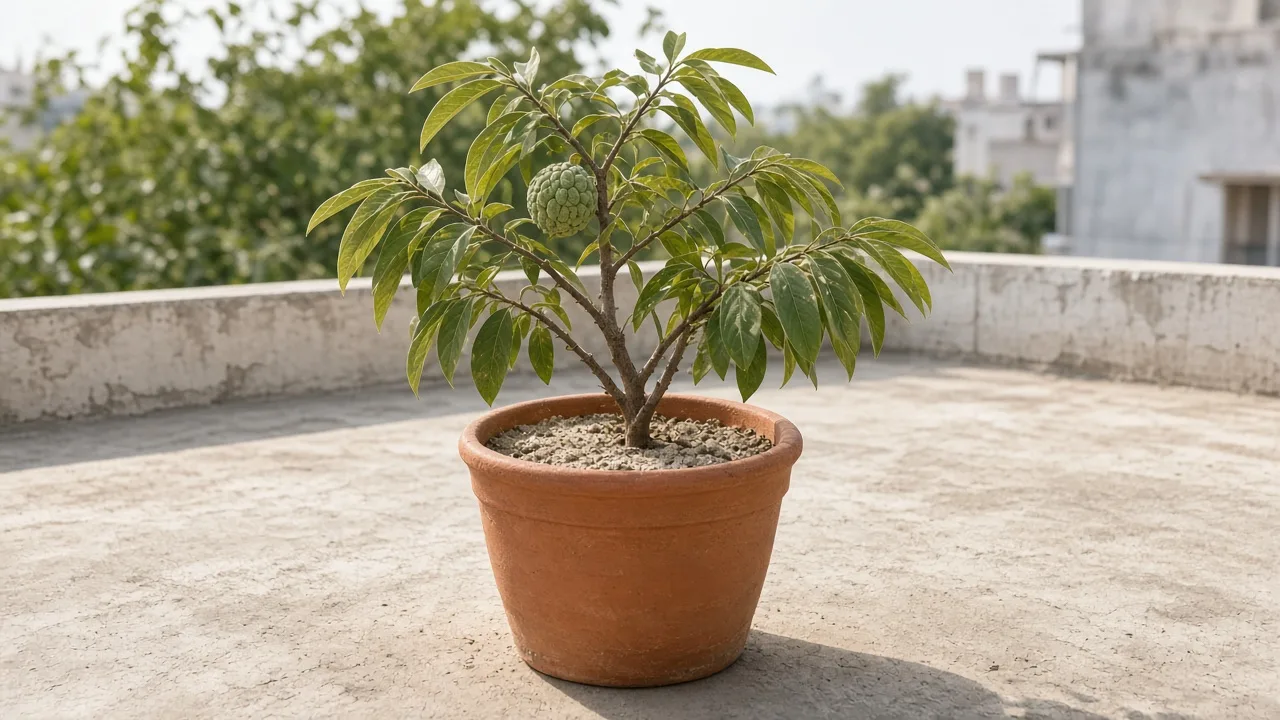
Underwatering on Custard Apple: Causes, Checks & Fixes
This guide covers underwatering on Custard Apple. See also the general Underwatering guide, watering, and light pages for this plant.
Underwatering on Custard Apple: Causes, Checks & Fixes
Quick answer
Custard Apple (Annona squamosa—Sitaphal, sugar apple, sweetsop) is famous for surviving dry spells, and mature trees truly can shed leaves and wait for rain. That reputation causes the most underwatering mistakes on young and container trees on hot terraces: growers treat a shallow root ball like a ten-year-old orchard while the top 3–5 cm of mix bakes dry in one sunny afternoon.
For how chronic root-zone dryness limits water uptake in general, see our underwatering guide. On Sitaphal, thirst usually shows as a light pot, dusty dry mix at 3–5 cm, limp newest lanceolate leaves on zigzag branchlets, and stalled reddish flush—often while fruit is still sizing on the same branches.
First step: press your finger 3–5 cm into the mix and lift the pot. If it is dry and noticeably light, give one slow soak-and-drain until water runs from drainage holes, then empty the saucer. Do not fertilize, repot, or hard-prune until you see how the canopy responds over the next 48 hours. Full rhythm: Custard Apple watering.
When to use this page vs other Custard Apple guides
| What you see | Read next |
|---|---|
| Sudden soft collapse across the crown | Wilting |
| Gradual leaf hang, not just dry crispness | Drooping leaves |
| Mix stays wet, sour smell, yellow lower leaves | Overwatering or root rot |
| Yellowing before crisp dry margins | Yellow leaves |
| Long bare stems, pale small new leaves | Not enough light or leggy growth |
| Whole care picture | Custard Apple overview |
What underwatering looks like on Custard Apple
Healthy Sitaphal holds narrow, dull-green lanceolate leaves stiffly along irregular zigzag twigs. Underwatering steals turgor from the newest flush first: petioles soften, blade tips curl inward or hang, and outer canopy leaves may show dry bronze or tan margins while the trunk and older wood still feel firm.
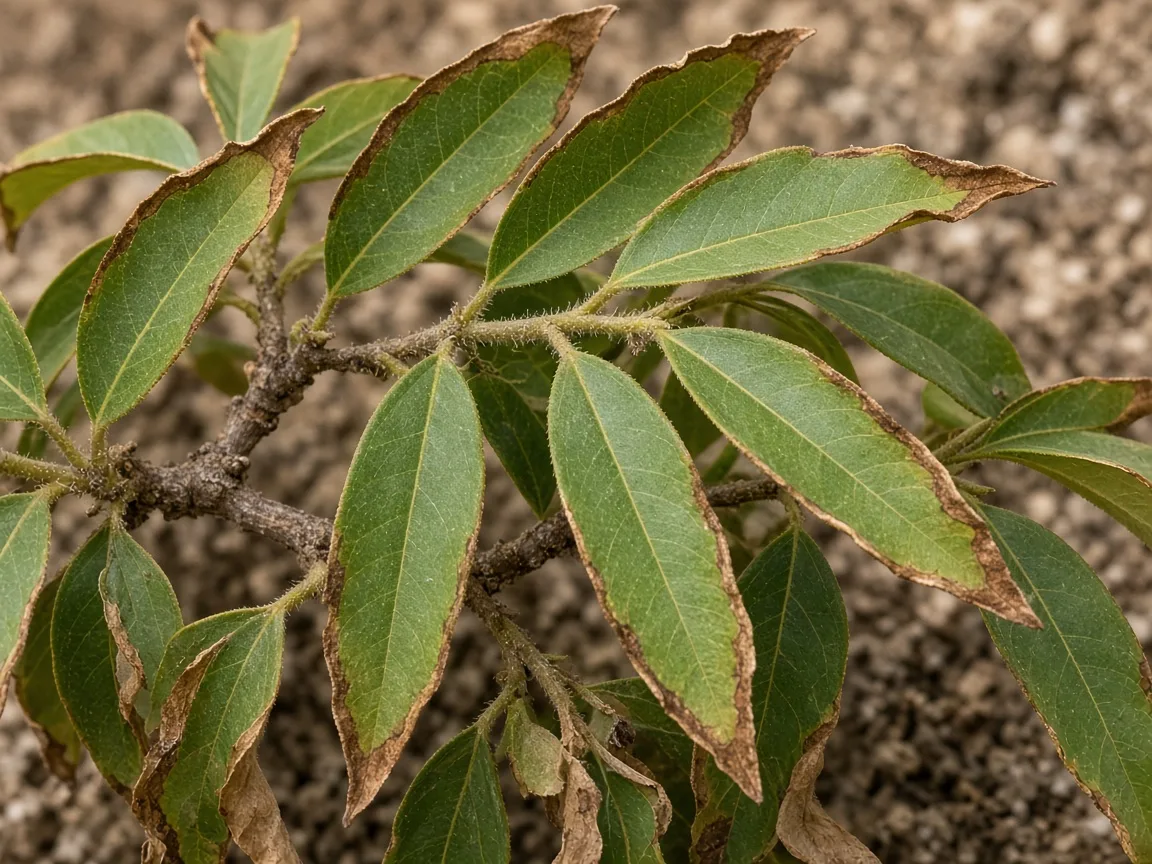
Crispy margins on lanceolate Sitaphal leaves with dusty dry potting mix—confirm depth moisture before a second soak.
Container terrace pattern (most common):
- Top 3–5 cm of mix is dusty and pulls away from the pot edge
- Pot feels light when lifted compared with the day after a full soak
- Newest leaves go limp before older inner foliage; zigzag twigs may look dull olive rather than fresh green
- Often follows travel, a heat wave, or a small pot that dried in one afternoon on concrete
- May coincide with young knobby fruit still sizing on the same branch—roots pull hard for fruit fill
In-ground garden pattern:
- Less common on established trees with wide soil volume
- Prolonged dry spell during flowering or fruit development can reduce fruit size; growers recommend irrigation through that window without keeping soil saturated
- Morton notes irrigation during the dry season and once during ripening will increase fruit size
Severe drought bridge (not the same as a fixable dry pot):
- Severe drought sheds leaves; the tree may look bare while wood stays alive
- Gradual drop through cool or dry rest differs from acute limp flush on a light pot in peak growth
- Fruit rind can harden in drought and split when rain returns—steady soak-and-drain during fruit fill prevents drought-then-flood swings
Why “drought tolerant” misleads Sitaphal pots
Morton describes sugar apple as doing best in dry areas with high drought tolerance—true for established trees with spread roots. The same reference stresses the tree is shallow-rooted and doesn’t need deep soil and that water-logging is intolerable. In a terrace pot, shallow roots mean the upper ball dries in days, not weeks, while you still cannot safely keep the mix wet 24/7.
Growables notes that mild to severe drought stress can reduce fruit size and cause defoliation, and recommends periodic watering from flowering through fruit development during dry periods. Vegetative propagules with shallow weak root systems cannot endure drought as well as seedlings—many nursery Sitaphal are grafted or budded, so “tough tree” labels may not match your young pot.
Useful Tropical Plants adds that while Sitaphal can bridge a severe dry season with leaf fall, it still needs adequate moisture during the growing season—underwatering in active flush is a growth-season problem, not only a summer vacation mistake.
Fruiting-season thirst vs everyday dry-down
From bloom through fruit fill, a light pot with limp flush while fruit swells often means roots cannot supply water as fast as the crop demands—still confirm with the 3–5 cm test rather than flooding daily. Morton’s dry-season irrigation guidance targets fruit size, not soggy mix.
If the tree is in cool rest with gradual leaf drop and firm wood, hold off on heroic watering until you distinguish rest from a rooftop pot that has been dry for two weeks. Cross-check Custard Apple overview for seasonal rhythm in your climate.
How to confirm underwatering (order matters)
Work from the pot upward—Sitaphal rarely needs an emergency unpot for thirst alone.
- Finger + weight: Push a finger 3–5 cm into the mix. Dry and light → dry path. Wet and heavy → not underwatering; see overwatering.
- Flush check: Are reddish new leaves at branch tips limp, or is growth paused with only old crisp margins?
- Fruit context: Is fruit sizing on branches with the limpest leaves?
- Drainage sanity: Saucer dry and holes open? (Thirst is not fixed by leaving a full tray.)
- Season: Acute summer terrace dry-down vs slow rest leaf-fall
- Trunk base: Softening on wet soil escalates to root rot—do not soak again blindly
The first fix to try
Run the 3–5 cm moisture test and lift the pot—then give exactly one correction matched to dry soil.
- Water slowly across the whole surface until excess runs from drainage holes
- Empty the saucer immediately—standing water recreates the waterlogging Morton says Annona cannot tolerate
- Wait 24–48 hours before judging re-firming; do not re-soak while the top 3–5 cm still feel moist
- Do not fertilize, hard-prune, or repot on the same day
If the pot was dry but leaves stay limp on wet mix after this soak, roots may already be damaged—switch to the wet-soil path on drooping leaves or root rot.
Step-by-step recovery
After a single dry spell on firm roots
- Confirm dryness at 3–5 cm, not just surface dust
- One deep soak; ensure water penetrates the whole shallow ball
- Light surface mulch on rooftop pots (not against the trunk) to slow evaporation
- Adjust schedule using Custard Apple watering—hot dry weather may mean every 3–5 days for containers once the top layer dries
- Expect old crispy margins to stay tan; watch new flush for firmness
After repeated shallow splashes (dry core, damp surface)
- Probe deeper with a dry skewer toward mid-pot—if only the top was wet, repeat one slow soak
- Break any crust on peat-heavy mix so water enters
- Consider repotting into freer-draining soil only if the root ball has been chronically hydrophobic—not on day one of thirst
During flowering and fruit fill in a dry spell
- Keep soak-and-drain rhythm when the 3–5 cm test is dry—fruit size suffers in prolonged drought
- Avoid long drought followed by heavy rain that risks fruit rind split
- Do not keep mix constantly wet to “prevent” thirst—that invites overwatering
Recovery timeline and signs of progress
| Timeframe | What improves | What may not |
|---|---|---|
| 24–48 hours | Newest petioles firm; pot weight stable after soak | Old crispy margins stay brown |
| 1–2 weeks | Reddish flush holds angle; fruit may resume sizing with steady moisture | Some older leaves may drop after stress |
| 1+ month | Crown fills with new lanceolate growth | Fully desiccated blades rarely re-green |
Getting worse: all-canopy collapse despite wet soil, soft trunk base, or continued limp flush on a heavy pot—treat as wilting or root failure, not more drought logic.
Lookalike symptoms on Custard Apple
| Looks like underwatering | Actually | Quick tell |
|---|---|---|
| Wilting | Acute turgor loss | Hours, soft whole crown |
| Drooping leaves | Posture change on wet or dry roots | Gradual hang; split pot weight |
| Overwatering | Root oxygen loss | Heavy pot, wet 3–5 cm |
| Seasonal rest | Drought bridge leaf-fall | Gradual, firm wood |
| Spider mites | Feeding stress | Fine webbing, stippling |
Mistakes to avoid
- Skipping the 3–5 cm test because Sitaphal is “drought tolerant”
- Daily teacups of water that never rewet a dry shallow ball on a rooftop
- Soaking a heavy wet pot because leaves look limp—roots may be drowning
- Fertilizing a thirsty tree to “push growth” before moisture stabilizes
- Hard-pruning in the wrong season—Morton warns ill-timed pruning can kill Annona; fix water first
- Letting fruiting containers go bone dry through a heat wave, then flooding—split rind risk
Prevention on terrace and courtyard trees
- Learn each pot’s dry-down speed across monsoon and dry summer
- Use gritty, free-draining mix per soil guidance; shallow roots need air between soaks
- Irrigate through flowering and fruit development when dry periods persist, still on dry-down logic
- Empty saucers after every watering
- Scout weekly at branch tips where the newest flush shows thirst first
- Acclimate nursery stock to full light before peak heat increases evaporation demand
Browse all issues on the Custard Apple problems hub.
Related Custard Apple guides
- Custard Apple overview — Sitaphal habit, seed toxicity, and fruiting basics
- Custard Apple watering — 3–5 cm dry-down and monsoon rhythm
- Custard Apple soil — sandy mixes for shallow roots
- Drooping leaves on Custard Apple — limp foliage on wet vs dry mix
- Overwatering on Custard Apple — heavy pot patterns
- Root rot on Custard Apple — sour mix escalation
- Wilting on Custard Apple — acute collapse
Conclusion
Underwatering on Custard Apple is usually a container and growing-season moisture problem, not permission to ignore a fruiting terrace tree all summer. Read pot weight and 3–5 cm dryness, give one deep drained soak as the first fix, and judge recovery on new reddish flush along zigzag twigs. Crispy old margins may stay tan; firm wood and steady fruit sizing after stable moisture are the wins that matter.
Related tool
Use the Plant Watering Calculator to narrow causes for underwatering on this plant before changing multiple variables at once.