Low Light on Custard Apple: Sun Checks & Fixes
Quick answer
Not enough light on Custard Apple shows as dull pale lanceolate leaves, a stalled spring flush, and few or no fragrant flowers along zigzag branch tips—even when the mix feels damp on schedule. First step: move the container to the brightest frost-free outdoor spot with direct sun on the canopy and acclimate gradually over 7–14 days if the tree lived in deep shade.
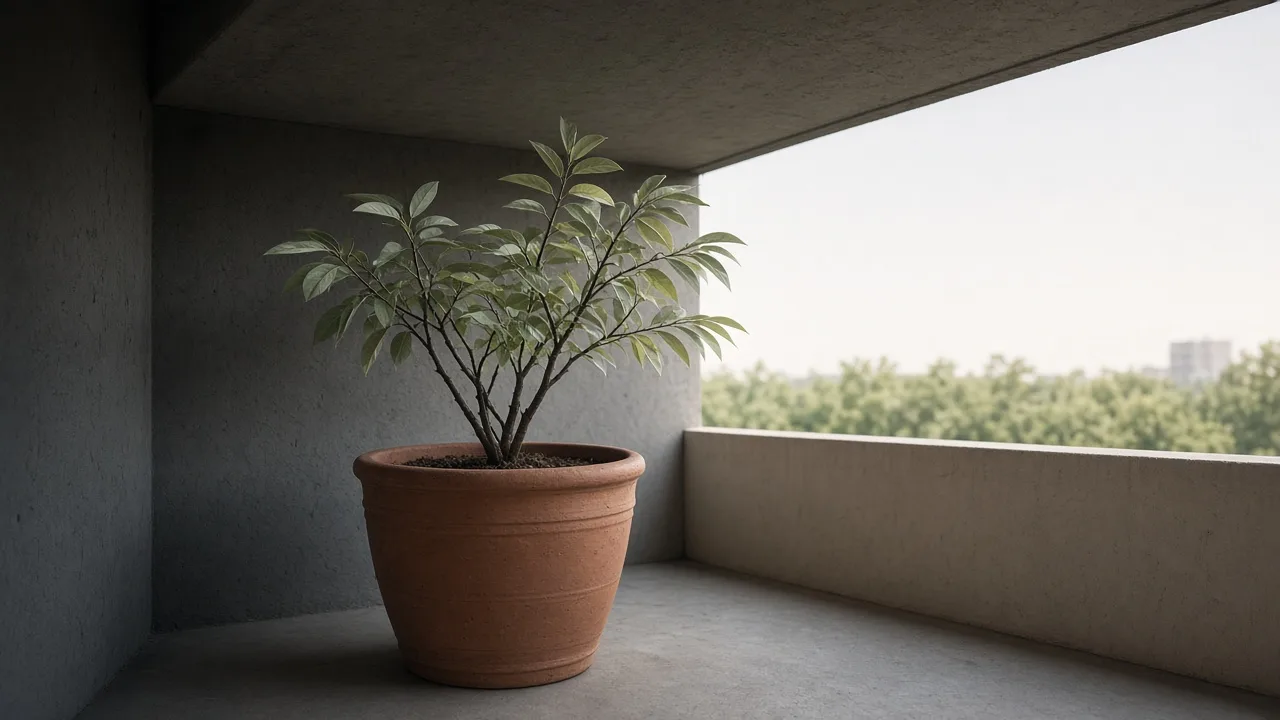
Not Enough Light on Custard Apple: Causes, Checks & Fixes
This guide covers not enough light on Custard Apple. See also the general Not Enough Light guide, watering, and light pages for this plant.
Not Enough Light on Custard Apple: Causes, Checks & Fixes
Quick answer
Custard Apple (Annona squamosa), sold as Sitaphal or sugar apple, is a small tropical fruit tree with dull-green lanceolate leaves on zigzag twigs—not a shade-tolerant houseplant. In too little light, foliage stays pale and small, the spring flush stalls, and fragrant flowers fail to open along branch tips even when watering looks “on schedule.”
For how chronic shade limits photosynthesis in general, see our not enough light hub. On Custard Apple, the decisive check is direct sun on the canopy for most of the day—not whether the room or balcony feels bright to you.
First step: move the container to the brightest frost-free outdoor location where direct sun hits the leaves, acclimating over 7–14 days if the tree came from nursery shade or a dim interior.
When to use this page vs other Custard Apple guides
This page is the symptom-first entry for shade-stressed Sitaphal—pale leaves, weak flushes, and missing flowers before you assume pests or feed problems.
| Pattern | Read next |
|---|---|
| Long bare zigzag shoots and hard lean | Leggy growth |
| Firm tree, cool weather, little new wood | Slow growth |
| Placement, acclimation, grow-light backup | Light guide |
| Yellow leaves on wet mix | Yellow leaves or overwatering |
| Limp canopy, light pot weight | Wilting or underwatering |
| All problem pages | Custard Apple problems hub |
What not enough light looks like on Custard Apple
Healthy sugar apple in strong sun builds an open crown with dull-green lanceolate leaves 2–6 in (5–15 cm) long spaced along zigzag twigs, plus yellow-green fragrant flowers opposite the leaves at shoot tips when warmth returns. Shade-stressed plants break that pattern in ways that differ from a dry succulent or a fern:
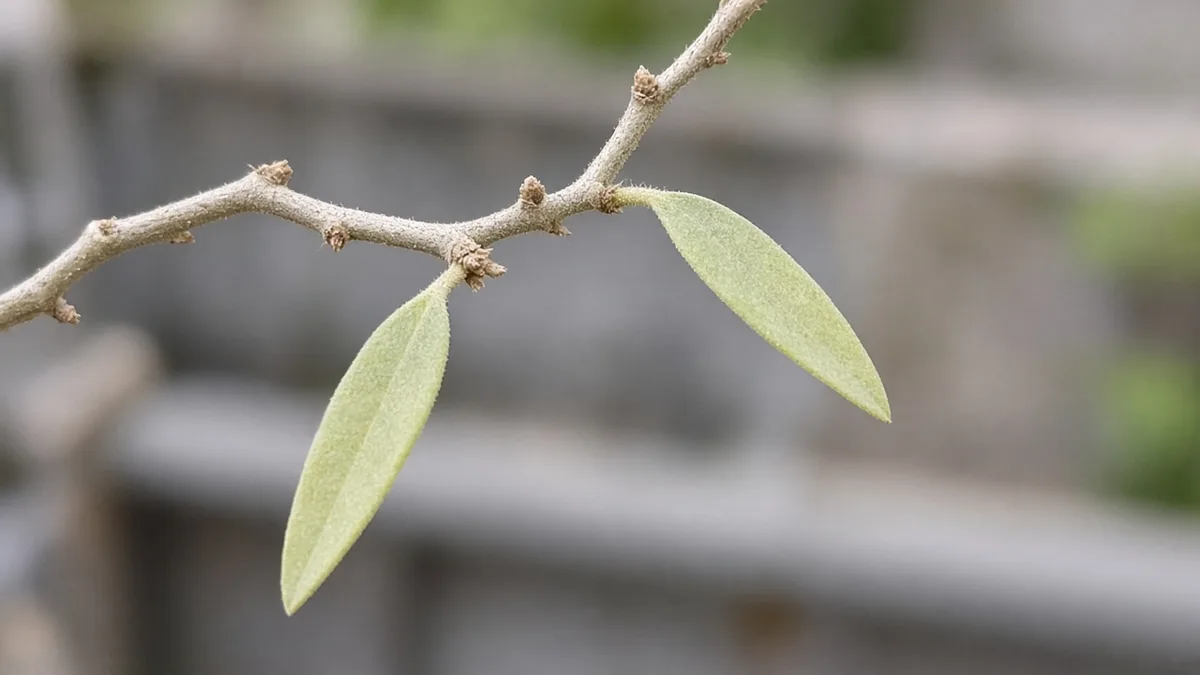
Pale, undersized lanceolate leaves on a zigzag Annona shoot—compare blade size and color with wood that grew in a sunnier season.
- Dull yellow-green or pale leaves that never deepen to the matte green Morton describes, especially on the newest flush
- Undersized blades compared with leaves the same tree produced after a sunny monsoon or terrace season
- Stalled or sparse spring flush—new zigzag growth pauses while the pot still feels slightly damp for days
- No flowers on branch tips during warm months, or buds that never fully open—UF/IFAS notes hand pollination works best in morning sun on slightly open female-stage flowers
- Pot or crown leaning toward one wall, terrace opening, or the only patch of direct sky
- Soft, thin new shoots that aphids colonize more easily than firm sun-grown tips
- Years without fruit on an otherwise healthy-looking young graft—often the clearest long-term light signal on Annona squamosa
This differs from drooping leaves when the canopy collapses from drought, from overwatering when the base softens on heavy wet soil, and from low humidity when crisp margins appear on otherwise well-lit foliage.
Why Custard Apple gets not enough light
UF/IFAS recommends planting sugar apple in full sun for best growth and fruit production and warns that trees planted too close to buildings or other trees may not grow normally or produce much fruit due to shading. Spacing guidance—at least 15 to 20 ft (4.6–6.1 m) from structures and other trees—exists because the open, irregular crown needs light from more than one angle.
Morton describes a tree that requires a tropical or near-tropical climate with high drought tolerance once established, but cool winters can still limit success even when summers are bright. Useful Tropical Plants places Annona squamosa in subtropical to tropical areas where warmth and drainage align—light without heat is not enough in marginal winters.
Sitaphal-specific triggers:
- “Bright” room, no direct sun — University of Georgia Extension notes that open sunny outdoor sites reach far higher light than typical interiors; a custard apple can keep leaves indoors while flushes and flowers stall.
- Balcony under a deep slab — common in Indian apartments: the space feels hot while the canopy sees only a short sun band or reflected glare without a long direct beam.
- Nursery shade holdover — grafted trees sold under net shade stay pale until they are hardened to terrace sun.
- Winter indoors without supplemental light — UF/IFAS Miami-Dade notes sugar apple can look terrible in winter as leaves brown and drop before a new flush—that seasonal rest is not permission to keep the pot in a dim room all year.
- Neighbouring trees and monsoon cloud — a courtyard that was sunny in March can be partially shaded by June without you moving the pot.
- Grouping with taller bananas or papayas — lower pots may still look lit at soil level while the Sitaphal crown sits in permanent shade.
Do not blame shade alone when the mix stays waterlogged. Shallow Annona roots in dim light use water slowly; chronic wet soil invites decline that looks like “the plant hates sun.”
The hand-shadow test at canopy height
This quick check is more reliable on a terrace tree than judging brightness from your sofa.
On a clear day at mid-morning and again near solar noon, stand beside the pot and hold your palm at the height of the top leaves, not at the railing:
| Shadow on your hand | What it usually means | First move |
|---|---|---|
| Sharp, dark shadow | Direct sun is reaching the canopy | If growth is still pale, look at water, roots, or pests—not placement |
| Faint, fuzzy shadow | Mostly reflected or filtered light | Relocate to open sky; expect 1–2 flushes to show improvement |
| No real shadow | Deep shade for a full-sun fruit tree | Move outdoors to the sunniest frost-free edge; acclimate if leaves were nursery-soft |
Compare the test at the current pot position with a spot one metre closer to the open parapet. Custard Apple does not need a compass label—it needs hours of direct rays on the leaves themselves, as detailed in the light guide.
Reading flowers and fruit set in dim light
Sugar apple flowers form along branch tips, opposite the leaves—Morton’s description of fragrant, barely opening yellow-green blooms is your species-only diagnostic. In adequate sun and warmth, you should see female-stage flowers with slightly parted petals and a glistening stigma surface, followed by male-stage flowers with wider petals later the same day or next morning.
In chronic shade:
- Buds form late or abort before opening
- Flowers open weakly and fail to set, even when humidity is high
- Hand pollination—UF/IFAS describes collecting pollen and transferring it in the early to mid-morning hours—still depends on healthy female-stage blooms that shade often suppresses
If you have no flowers at all on a mature graft in warm weather, fix sun before buying pollen tools or stacking fertilizer.
Shallow roots, dim light, and the slow-drying trap
Annona squamosa is shallow-rooted and intolerant of standing water, yet a pale tree in a dim corner often sits in mix that stays damp too long because transpiration is low. That combination produces yellow lower leaves and sour-smelling soil that mimics overwatering—even when your calendar says you are watering “correctly.”
After you improve light, expect the top 3–5 cm to dry faster during active flushes. Cross-check soak timing with the watering guide rather than keeping the old dim-corner schedule.
Press the trunk 10–15 cm above the soil line. Firm wood with pale slow tips points to placement first. Soft, waterlogged base on a heavy pot demands dry-down and drainage checks regardless of sun plans—see root rot if tissue is black and mushy.
How to confirm the cause
Work through these checks in order before repotting, feeding, or spraying:
- Sun hours on leaves — three clear days of notes: when direct sun first hits the canopy and when shade returns.
- Newest zigzag flush — compare leaf size and color to wood from last sunny season on the same branch.
- Flower presence — inspect branch tips at dawn for unopened buds versus active blooms during warm weeks.
- Pot weight and moisture — lift the container; light weight with pale leaves may be drought, but pale leaves on heavy wet mix often mean low light plus slow water use.
- Seasonal context — winter leaf drop on an otherwise firm tree may be normal rest; months of indoor holding without sun is not.
- Pest cross-check — sticky shoots in shade still need aphid inspection, but fix placement if stretch and missing flowers dominate.
Confirmed shade stress matches: pale undersized foliage, stalled flush, missing or weak flowers, lean toward the brightest gap, and firm roots without rot smell.
The first fix to try
Relocate the container to full outdoor sun on the warmest frost-free spot available—open terrace, rooftop, or courtyard edge with the widest sky view. UF/IFAS landscape guidance is explicit: full sun for best growth and fruit.
If the tree lived in deep nursery shade or a dim room:
- Days 1–3: morning sun and bright open shade midday
- Days 4–7: lengthen direct exposure toward afternoon
- Days 8–14: hold in the target sunny position unless leaves scorch; then pull back one step and extend again
Do not hard-prune, repot, or fertilize in the same week as a major light jump. Morton warns that pruning at the wrong season can kill sugar apple—save structural cuts for spring after light is stable, using the pruning guide.
Step-by-step recovery after sun improves
Once the canopy receives strong direct light and the trunk stays firm:
- Hold feeding until new leaves deepen in color—usually two to three weeks after a visible flush.
- Water when the top 3–5 cm dries, then soak until excess drains; empty the saucer within 30 minutes per everyday watering logic, adjusting upward as transpiration rises in sun.
- Rotate the pot weekly on narrow balconies so one side does not dominate growth toward a single wall.
- Watch branch tips for the next flower cycle; consider morning hand pollination only after blooms open reliably.
- Thin crowded shoots in spring if self-shading inside the crown blocks light—UF/IFAS pruning goals include helping light penetrate the lower canopy while keeping fruiting wood low.
If stretch is already extreme with long bare zigzag sections, read leggy growth for heading cuts after light is fixed.
Recovery timeline
Mild shade stress on a young container tree often shows deeper green on the next flush within two to four weeks after stable full sun and warm nights. Flower and fruit recovery may wait until the next warm season even after foliage improves—do not expect a crop the same month you move the pot.
Existing pale leaves rarely re-darken fully; success means new blades look like last summer’s sun-grown wood and the lean stops worsening. Persistent wilt on wet soil or blackening branches needs escalation beyond light correction.
Lookalike symptoms
| What you see | Often confused with | How to tell them apart |
|---|---|---|
| Pale small new leaves, firm trunk | Slow growth from cool soil | Slow growth improves when nights warm; shade paleness persists in hot weather under a slab |
| Yellow lower leaves, sour wet mix | Overwatering | Overwatering softens the base; shade + slow water use keeps wood firm while top leaves stay pale |
| Winter leaf drop, bare look | Not enough light | Seasonal rest on a firm tree in cool weeks vs year-round dim placement |
| Long bare zigzag shoots | Not enough light (early) | Advanced stretch belongs on leggy growth |
| Crisp brown leaf edges | Low humidity | Humidity damage on well-lit tips; shade shows pale whole blades first |
Mistakes to avoid
- Keeping a fruit tree in a “bright” living room as a permanent home—indoor foliage is holding, not fruiting culture.
- Watering on a calendar in a dim corner while mix stays wet and roots suffocate.
- Fertilizing pale wood before sun and moisture rhythm stabilize—salt burn on weak leaves is common.
- Moving from shade to harsh afternoon sun in one day—scorched leaves can look like “too much sun” when the real error was zero acclimation.
- Pruning hard before light is fixed—you remove the few photosynthesizing leaves that remain.
- Assuming drought because leaves are pale—confirm pot weight; underwatering usually pairs with very light dry mix, not week-long dampness.
How to prevent it next time
Site new grafts in the sunniest frost-free pocket from the start, matching UF/IFAS spacing away from shade sources. On balconies, track the sun path each season and move pots before neighbouring trees steal midday rays. Keep a grow light only for short indoor holding, as explained on the overview and light pages—not as a substitute for terrace sun if you want Sitaphal fruit.
When you repot, choose wide drainage over deep shade “to protect roots”—shade the pot wall in extreme heat, not the canopy, per container guidance in the soil and light cluster.
Related Custard Apple guides
- Custard Apple overview — climate fit, size, and first-month setup
- Custard Apple light — hours, balcony placement, acclimation, grow lights
- Custard Apple watering — finger-test depth when sun increases transpiration
- Custard Apple soil — drainage for shallow roots after a brighter move
- Custard Apple pruning — spring thinning once exposure is stable
- Custard Apple problems hub — full symptom index
Related tool
Use the Plant Problem Diagnosis Tool to narrow causes for not enough light on this plant before changing multiple variables at once.