Brown Tips on Custard Apple: Causes, Checks & Fixes
Quick answer
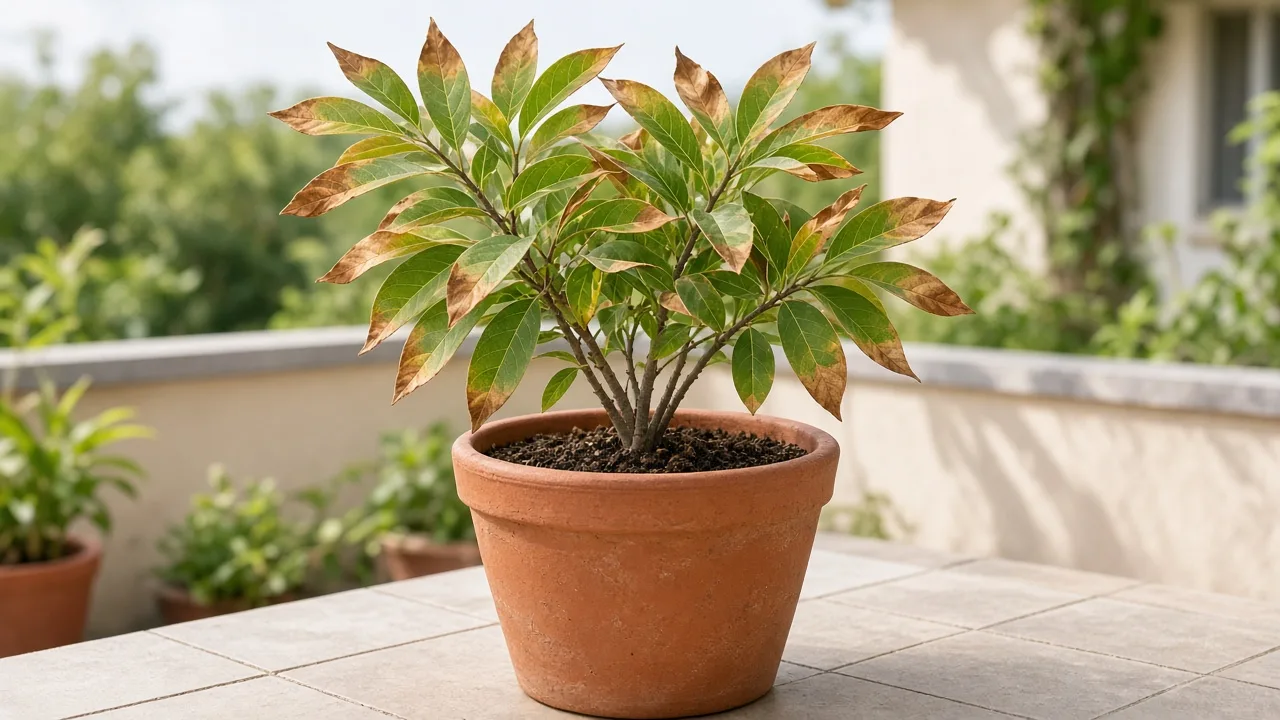
Brown tips on Custard Apple are usually dry, crispy necrosis at the pointed ends of lanceolate leaves—not mushy spots across the blade. On young terrace pots, missed dry-season watering, fertilizer salt buildup, or a harsh sun move after nursery shade are the usual causes; chronic wet shallow roots can crisp margins too. First step: press into the top 3–5 cm of mix, lift the pot, and note whether it is light and dry or heavy and sour before you water or feed again.
Brown Tips on Custard Apple: Causes, Checks & Fixes
This guide covers brown tips on Custard Apple. See also the general Brown Tips guide, watering, and light pages for this plant.
Brown Tips on Custard Apple: Causes, Checks & Fixes
Quick answer
Brown tips on Custard Apple (Annona squamosa, Sitaphal or sugar apple) show up as dry tan-to-brown crispy tissue at the pointed end of each dull-green, lanceolate leaf—often on outer canopy leaves, not as water-soaked spots across the blade. Houseplant articles blame brown leaf tips on dry indoor air; Custard Apple is a full-sun tropical fruit tree with deciduous leaves that drop in severe drought and a shallow root zone that cannot tolerate waterlogging. On home terraces and young grafts, the pattern usually splits four ways: dust-dry mix and a light pot after a hot dry spell points to underwatering, white crust on soil with even margin burn tracks salt or heavy fertilizer in a container, outer leaves crisp while inner canopy stays green follows harsh terrace sun after a move from shade nursery stock, and tip necrosis on a tree that is watered daily but stays wet may match injured shallow roots—see overwatering instead of drought rescue.
A few dry tips on sun-exposed leaves while new flush along branch tips stays green is often cosmetic. Spreading crisp margins on the newest leaves, or wilt with a heavy wet pot, needs action the same week—not another dose of NPK.
First step: press into the top 3–5 cm of mix and lift the pot. If soil is dust-dry and the container feels light, deep-soak at the soil line until water runs from drainage holes—do not mist the canopy. If the pot stays heavy and smells sour, route to root rot before you treat “dry tips.”
When to use this page vs other Custard Apple guides
| Your question | Best page |
|---|---|
| Dry tan crispy tips or margins on otherwise firm leaves | This page |
| Whole leaves turning yellow, often with wet mix | Yellow leaves |
| Pot stays wet, dull canopy, sour smell | Overwatering |
| Dust-dry mix, light pot, wilt in afternoon heat | Underwatering |
| Someone blames dry air or misting | Low humidity |
| Angular spots with borders, not just dry tips | Problems hub |
What brown tips look like on Custard Apple
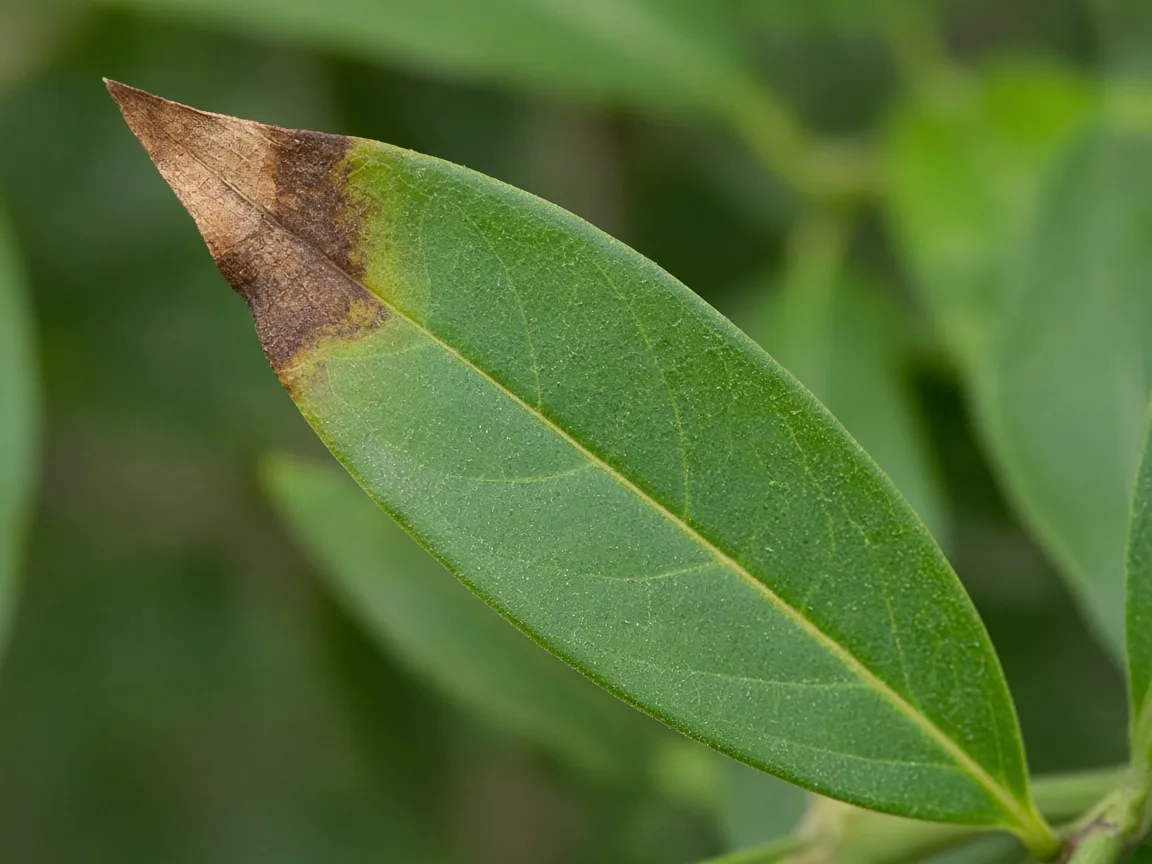
Symptoms on custard apple—compare with healthy tissue on the same plant.
Healthy Sitaphal carries dull-green, lanceolate leaves along somewhat zigzag twigs—often aromatic when crushed. Tip burn breaks that pattern in recognizable ways:
- Dry tan-to-brown crispy tips on individual leaves — Tissue is papery and breaks when rubbed; the midrib and base may stay green. Common on outer leaves after missed summer watering in a terrace pot.
- Brown tips with brown or whitish crust on soil or pot rim — High soil salts damage roots and accumulate in leaf tissues, producing tip and margin necrosis while you may still be watering on schedule.
- Margins and tips brown on several leaves at once after feeding — Container trees concentrate minerals when evaporation leaves a crust; salts in tissues cause dieback of tips and margins.
- Tips brown only on the sun-facing side of the canopy — Often tracks afternoon terrace exposure after a move from partial shade—environmental scorch, not disease.
- Soft dark tips with yellow halos on wet mix — Less typical for simple tip burn; compare with yellow leaves or wet-root decline instead of drought rescue.
Tips on newest leaves along branch tips are more urgent than a few dry margins on older sun-exposed foliage.
Seasonal leaf-fall bridges vs tip burn
Morton describes sugar apple as doing best in dry areas with high drought tolerance, yet in severe droughts the tree sheds its leaves and fruit rinds can harden (Purdue NewCROP — Sugar Apple). That is different from a few brown tips on an otherwise full canopy: total leaf drop is a drought alarm, while isolated tip necrosis often means the root ball dried unevenly in a hot pot or salts built at the surface.
During normal dry-season rest, some growers see older leaves yellow and drop while new shoots pause—normal seasonal rhythm on a tree that is not a year-round rainforest houseplant. Tip burn on firm wood with leaves still attached usually points to a fixable watering, salt, or sun issue this week—not inevitable dormancy.
Shallow Sitaphal roots in terrace pots
The sugar apple is shallow-rooted and does not need deep soil, but Morton stresses that water-logging is intolerable (Purdue NewCROP — Sugar Apple). Terrace culture stacks two risks:
Young grafts that dry fast
Large terracotta or plastic pots on concrete heat up and dry the top 3–5 cm of free-draining mix faster than in-ground soil. Established trees tolerate drought, but a one- or two-year graft cannot coast through a missed week the way a mature garden tree might. Outer lanceolate leaves lose moisture from the distal tip first—tip necrosis while the branch still looks fine from across the terrace.
Wet shallow roots from daily shallow sprinkling
Chronic surface moisture without dry-down injures feeder roots in the upper layer where Annona drinks first. Tips may brown as the canopy cannot hydrate margins even though you “water every day.” That pattern belongs with overwatering triage, not deeper drought soaks.
| Setup | Pot / soil signal | Leaf pattern | Likely cause |
|---|---|---|---|
| Terrace pot, age 1–3 years | Light, dry at 3–5 cm | Crispy tips on outer leaves | Drought → underwatering |
| Terrace pot after feed | Moist possible; white crust | Even tip/margin burn on many leaves | Salt burn → fertilizer review |
| Daily sprinkles, heavy pot | Wet upper mix, sour smell | Dull canopy, tip/margin necrosis | Wet shallow roots → overwatering |
| Post-move to full sun | Variable | Sun-side tips bronze first | Sun scorch after shade nursery |
Fruit-fill drought and why margins crisp before the rind splits
Morton notes that irrigation during the dry season and once during ripening will increase fruit size (Purdue NewCROP — Sugar Apple). When growers let a fruiting container go bone-dry through a heat wave, you may see dry leaf tips first, then hardened rind segments that can split when rain returns—a pattern tied to uneven moisture, not a separate “tip disease.”
If brown tips appear while knobby fruit is sizing on the same tree, treat steady soak-and-drain through dry fruit fill as part of the fix, not only cosmetic leaf care. Gardenia’s sugar apple profile likewise recommends keeping soil evenly moist during growth and fruit development while avoiding waterlogged conditions (Gardenia.net — Annona squamosa).
Why Custard Apple gets brown tips (not low humidity)
Summer drought in shallow terrace pots
The most common cause on Indian balconies: several hot dry days without a deep soak while a young tree leafs out or holds fruit. Morton records high drought tolerance in mature trees, but severe drought triggers leaf shed—young stock in small root volumes crisp at tips long before that extreme.
Salt stress, heavy feed, and saline water
Sugar apple performs on varied soils when drainage is good, but salts from fertilizer or irrigation still injure container roots. WSU Extension notes excess fertilizer salts accumulate in leaves, producing tip and margin necrosis—especially when a whitish crust rings the pot.
Sun and wind on exposed lanceolate leaves
Full-sun terrace culture is correct for Sitaphal, but moving a shade-grown nursery plant to blazing afternoon sun without hardening can crisp exposed tips in days. Windy railing corners accelerate desiccation on the farthest leaf edges before the whole shoot wilts.
Lookalikes to rule out
- Leaf blight or fruit rot lesions — Morton describes serious leaf blight and fruit rot in production settings; these are usually patchy or spreading lesions, not uniform dry tip necrosis on firm leaves. Escalate to the problems hub when spots have borders or wet tissue.
- Mealybug or scale honeydew — Sticky residue and sooty mold on twigs point to mealybugs or related pests, not drought alone.
- Normal ageing — A few older inner leaves with dry tips before seasonal drop is lower urgency if new branch-tip flush is clean.
How to confirm the cause
Work through these checks in order:
- Tree age and site — Young pot on terrace versus mature garden tree changes the likely cause immediately.
- Pot weight and soil dryness — Dry at 3–5 cm with a light pot supports drought; unexpectedly heavy after “no watering for days” suggests wet lower soil.
- Last fertilizer date — Tip burn within 7–10 days of full-strength feed or slow-release at label rate in a small pot strongly suggests salt injury.
- Salt crust — White or brownish deposits on mix surface or inner pot rim support excess minerals; absence does not rule out recent liquid overfeed.
- Stem firmness at the base — Firm wood with only dry tips fits drought or salt; mushy base on wet mix is rot until proven otherwise.
- Sun and move history — Recent relocation to the sunniest corner without gradual exposure supports scorch on sun-facing tips only.
Confirmed tip burn = dry crispy tips on firm stems with drought, salt, or scorch pattern above—not soft crown tissue on soggy mix.
The first fix to try
Pick one primary action based on what you confirmed:
If the pot is light and dry at depth: Deep-soak at soil level until water drains freely, empty the saucer, then wait until the top 3–5 cm feel dry before the next soak per the watering guide. Do not foliar mist as a substitute.
If salt crust or recent heavy feeding fits: Stop fertilizer immediately. For containers, leach salts by watering heavily several times and letting wastewater drain away—WSU notes this helps for quick-release or liquid excess—then resume feeding at half strength only after new growth looks healthy.
If daily irrigation keeps the root zone wet: Reduce frequency and soak deeply when dry instead of shallow daily sprinkles. Review overwatering and confirm soil drains freely for shallow roots.
If sun scorch after a move: Provide afternoon shade cloth for one to two weeks while gradually increasing exposure; do not hard-prune healthy green tissue in panic—Morton warns that pruning only in spring when sap is rising matters on Annona; off-season cuts can kill branches.
Recovery timeline
Burned tips do not turn green again. Judge success by clean margins on the next flush along branch tips within two to four weeks after you fix the primary stressor. Mild drought cases often stabilize after one or two proper deep soaks through a dry spell; salt cases may need a full growing season of modest feeding after leaching.
Worsening signs: tips spreading to most new leaves within days, wilt despite wet mix, stem softening, or widespread leaf drop matching Morton’s severe-drought description—escalate off this page to root-zone triage.
Mistakes to avoid
Do not fertilize a stressed Custard Apple to “green it up” before you confirm dryness versus salts versus wet roots. Do not run daily shallow sprinkles that keep the surface damp while tips crisp from uneven root uptake. Do not assume a humidifier will fix terrace tip burn—see low humidity for why that is usually the wrong frame for Sitaphal.
How to prevent brown tips next time
Monitor terrace pots with depth and weight checks during pre-monsoon heat using the watering guide. Feed modestly per the fertilizer guide and flush containers when evaporation concentrates salts. For fruiting trees, keep soak-and-drain steady through dry fruit fill when rainfall is absent. Harden nursery stock into full sun over two weeks before peak summer.
When to worry
Low urgency for cosmetic tip burn on firm wood and clean new flush. Escalate if browning races through new branch-tip leaves, if branchlets wilt on wet soil, or if stems soften at the soil line. Chronic tip burn every heat wave in the same undersized pot suggests the container or watering rhythm—not humidity—is the bottleneck.
Related Custard Apple guides
Start with the Custard Apple overview and watering guide for shallow-root moisture rules that prevent most terrace tip burn. When symptoms overlap wet soil, salt-heavy feeding, or whole-leaf yellowing, use the comparison table above rather than stacking fixes from this page.
Related tool
Use the Plant Problem Diagnosis Tool to narrow causes for brown tips on this plant before changing multiple variables at once.