Slow Growth on Fairy Castle Cactus: Causes, Checks & Fixes
Quick answer
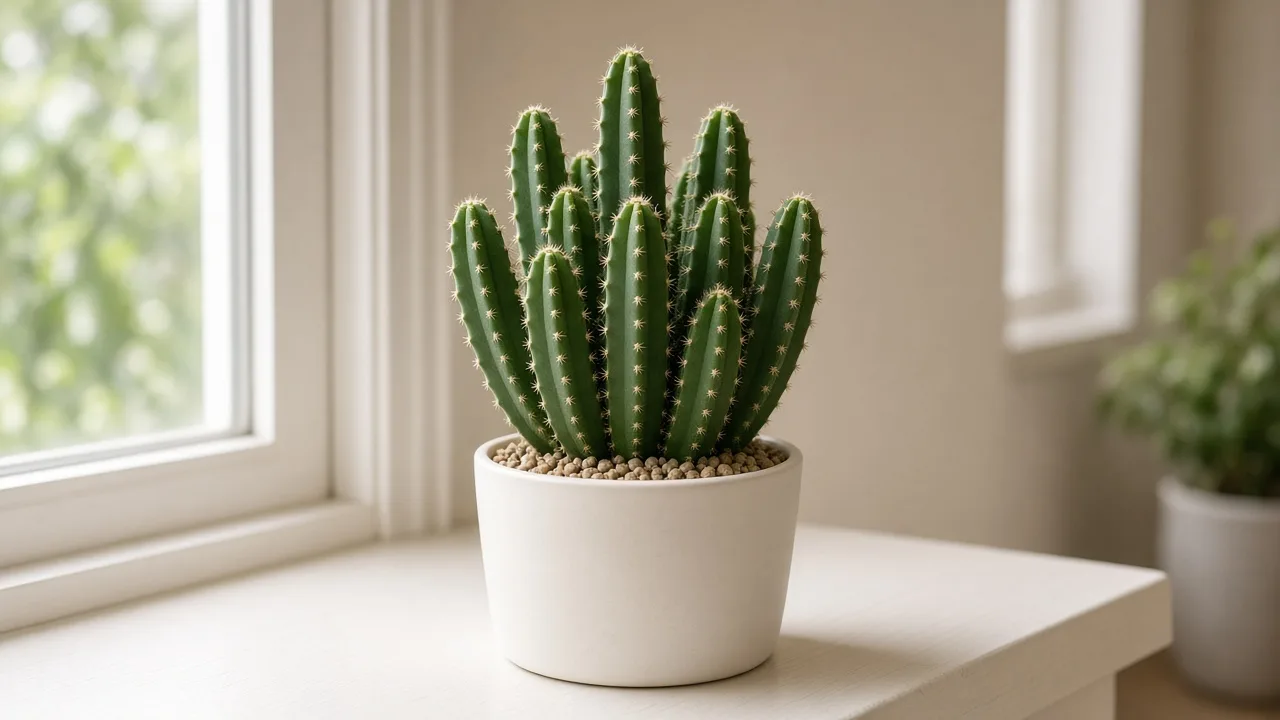
Slow growth on Fairy Castle Cactus is often normal—this cultivar is a naturally slow columnar cactus—but stalled new turrets in warm bright weather usually trace to weak light, winter rest, or root-zone stress. First step: on a fully dry mix day, mark the tallest turret and check whether any ribbed tip pushed new height in the past month while every column stays firm from base to spine.
Slow Growth on Fairy Castle Cactus: Causes, Checks & Fixes
This guide covers slow growth on Fairy Castle Cactus. See also the general Slow Growth guide, watering, and light pages for this plant.
Slow Growth on Fairy Castle Cactus: Causes, Checks & Fixes
Quick answer
Slow growth on Fairy Castle Cactus (Acanthocereus tetragonus ‘Fairy Castle’) is often expected. The miniature castle form was selected for clustered upright columns that stay compact indoors, and sources list it as a slow grower that may take years before it is mature enough to bloom. Stalled growth becomes a care problem when warm bright weather returns and you still see no new turret tips, no rib extension, and no gradual cluster widening for many weeks.
For how chronic stagnation works across houseplants in general, see our slow growth hub. On Fairy Castle Cactus, the decisive check is whether ribbed column tips pushed new height while every stem stayed firm—not whether the whole green castle still looks fine from across the room.
First step: on a day when a dry skewer confirms the full root zone is dry, mark the tallest turret and inspect every column tip for fresh rib length in the past month. Firm columns with no tip growth in cool short-day months usually mean winter rest; firm columns with no tip growth through warm months on a pot that stays heavy for weeks need dry-down correction before fertilizer.
When to use this page vs other Fairy Castle Cactus guides
This page is the stall-without-collapse entry—firm castle columns, little new height, no obvious mush—when you are unsure whether to wait or intervene.
- Not Enough Light on Fairy Castle Cactus — Start here when columns pale, lean toward the glass, or stretch thin between ribs while still adding weak height.
- Leggy Growth on Fairy Castle Cactus — Use when the plant is actively elongating but looks sparse and top-heavy, not frozen in place.
- Overwatering on Fairy Castle Cactus — Use when the base softens, mix smells sour, or columns lean while the pot stays wet.
- Fairy Castle Cactus light guide — Routine sun placement and acclimation before you assume slow growth is the main issue.
What slow growth looks like on Fairy Castle Cactus
On this cactus, “slow” means little change in turret height and rib length, not yellow mushy collapse. Wild Acanthocereus tetragonus can grow tall outdoors; the fairy-castle cultivar is described as a compact miniature with a slow growth rate that typically stays much smaller indoors even at maturity.
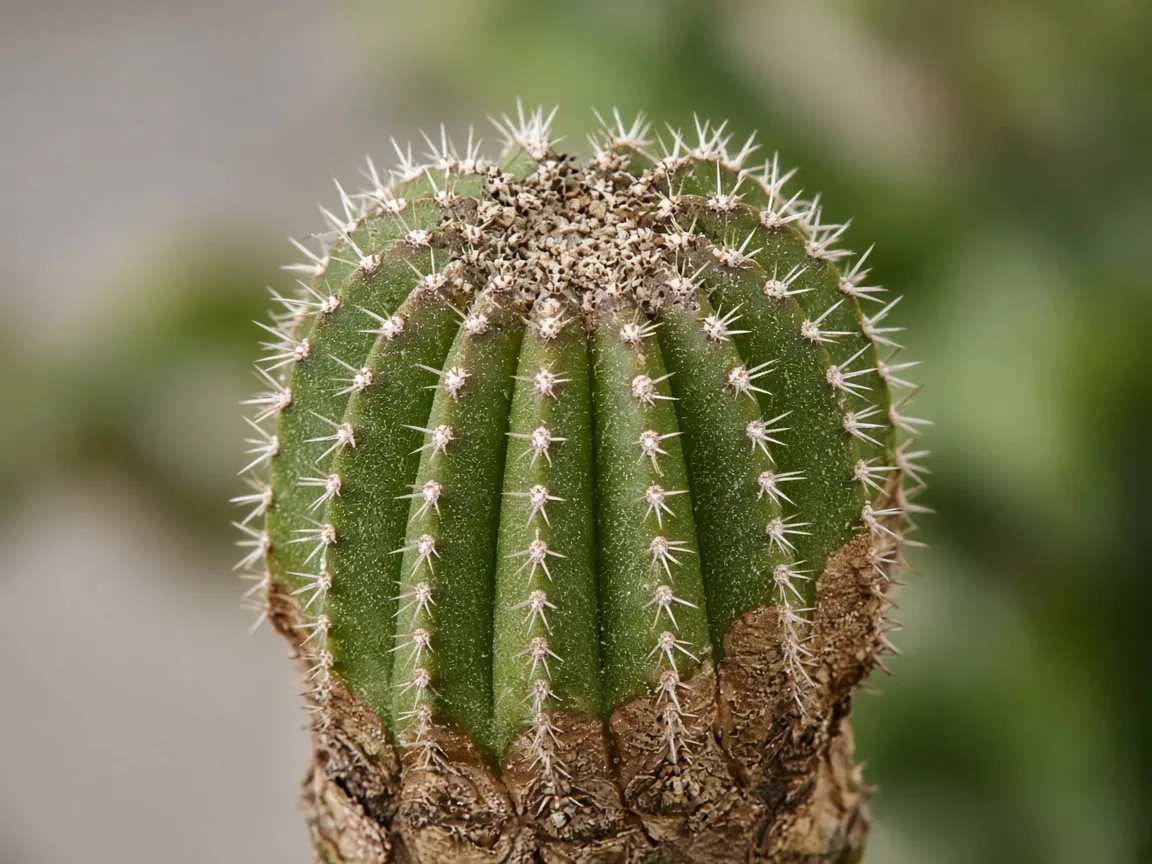
Ribbed tips with no fresh extension above older spine clusters—compare with season, sun hours, and column firmness before assuming the plant is failing.
Typical slow-growth patterns:
- No new turret tips for weeks during warm spring or summer while every column stays firm and green
- Cluster width frozen—side branches that should fork into new castle spires simply do not appear
- Ribs look static—no visible lengthening at the growing point between spine rows
- Pale green columns in a dim room without the thin stretch of true etiolation
- Winter quiet—little to no tip movement from late fall through early spring while mix stays dry longer
Normal slow periods you should not panic over:
- Winter dormancy—water sparingly in winter and expect minimal top growth while days are short
- First month after repot—root disturbance pauses tips even when care is correct
- Young nursery plants—a small castle may add only millimeters of rib per month; photograph monthly rather than judging daily
- Post-bloom recovery—rare night flowers drain energy; tip pause afterward is common
Compare firm versus soft bases every time. Slow growth with a soft blackening base and wet mix is root stress. Slow growth with wrinkled ribs and bone-dry mix is drought holding growth back.
Reading turret tips and rib extension
Fairy Castle Cactus grows as five-sided ribbed columns with short white spines along each rib. New growth shows up at the terminal tip of each turret: fresh rib tissue, tighter spine clusters, and sometimes a slightly brighter green band above older wood.
Use this tip-first read instead of measuring overall pot size:
- Mark the tallest turret with a small dot of tape or a photo dated today.
- Count active tips—how many column ends look “open” with new spine pads versus blunt old tips.
- Feel rib firmness—healthy extension stays rigid; drought-stalled tips may look dull but ribs should not buckle.
- Log monthly in warm season—indoor castles often add height in spring and fall active growth windows more than mid-winter.
If tips are active but the whole plant leans and gaps widen between ribs, switch to the leggy growth page— that is stretch, not true stagnation.
Why Fairy Castle Cactus gets slow growth
This species stores water in ribbed stems and grows in bursts when heat, light, and dry roots align—not on a tropical foliage schedule.
Naturally slow cultivar
The fairy-castle form is a miniature cultivar discovered in cultivation with a slow growth rate suited to small pots. Comparing your plant to fast-growing euphorbias or pothos will always make it look stalled.
Winter rest and cool rooms
Planet Desert notes winter dormancy with sharply reduced water. Gardenia lists hardiness where temperatures should not drop below 50°F (10°C). Cool dim rooms in heating season mimic dormancy and pause tip growth even if you still water on a summer calendar.
Weak light during active months
Indoor castles need bright light with at least six hours of sun daily for best color and vigor. Inadequate sun can fade stem color toward yellow and stall rib extension before obvious leaning appears. Spike & Bloom notes that cacti in too much shade may grow slowly and look floppy until light improves.
Wet mix and early root stress
Overwatering on Fairy Castle Cactus keeps roots oxygen-starved in peat-heavy mix. Growth stalls while columns still look green. Planet Desert warns that excess moisture leads to soft mushy stems—catch the stall before the base fails.
Drought during warm growth
The soak-and-dry method means allowing soil to dry completely between waterings. Extended drought in hot bright weather wrinkles ribs and stops new turrets until the plant rehydrates.
Heavy soil and poor drainage
Mineral gritty mix that never dries in a low-light corner creates chronic slow growth without immediate rot symptoms.
Recent repot or move
Repotting every two to three years in spring is enough; unnecessary repots pause tips for two to four weeks while roots settle.
Low-level pests
Mealybugs and spider mites at spine axils drain energy from new tips. Growth slows on the highest turrets while lower columns look unchanged.
How to confirm the cause
Work through this order before repotting, feeding, or watering heavily:
- Season and temperature — Is it winter rest with short days, or warm active growth above roughly 70°F (21°C)?
- Skewer dry-down — Does a dry skewer pull clean from the bottom of the pot? Chronic wetness points to root stress.
- Direct sun hours — Count sun on the pot, not just bright ambient room light. Fewer than six hours in warm months strongly implicates light.
- Column base firmness — Soft or blackening tissue means stop watering and inspect roots; firm bases support patience or a light fix.
- Tip activity — Any new rib length or spine pads in the last month?
- Pot weight trend — A pot that stays heavy for weeks while you barely water suggests poor drainage or oversize cachepots.
- Recent changes — Repot, fertilizer burst, or window move within the last month explains a short pause.
- Spine axils — Check for cottony mealybugs or fine webbing with a lens.
Confirmed cultural stall: firm columns, appropriate season, dry mix on schedule, but weak sun or cool rest. Confirmed stress stall: wet mix, heavy pot, or soft base with no tip growth.
First fix for Fairy Castle Cactus
If room temperatures are warm, the mix is fully dry, and every column base is firm, move the pot to your brightest stable location—six or more hours of direct or very bright light daily—before you change water, feed, or repot.
- Dim warm-season room: shift to the sunniest south or west window, or add a grow light; acclimate over one to two weeks if moving from deep shade.
- Exiting winter rest: resume soak-and-dry only when days lengthen and tips show early green; keep maximum light as warmth stabilizes.
- Wet mix with stalled tips but firm bases: improve airflow and light first, then let the mix dry through completely before the next drink—do not water to force growth.
- Dry mix with wrinkled firm ribs: one deep soak after the light move, then return to full dry-down per the watering guide.
Do not stack repotting, pruning, fertilizer, and pesticide on the same day. This cactus responds best to one correction, then a four-to-six-week watch on turret tips.
Step-by-step recovery
Once the first fix matches what you confirmed:
- Hold placement stable — Pick the sunniest spot and leave the pot there through the next growth flush.
- Match water to season — Soak-and-dry in warm active growth; reduce sharply in winter. Empty saucers after every watering.
- Feed only after tips restart — Half-strength cactus fertilizer monthly during spring and summer active growth, not on dormant or stressed roots.
- Treat pests if confirmed — Dab mealybugs with alcohol on a swab; rinse spider mites from tips before soap sprays on spiny columns.
- Repot only when mix fails — Heavy peat, no drainage holes, or black mushy roots need gritty cactus soil and trimmed rot—not a larger pot on day one for mild slowness alone.
- Track tips, not pot diameter — Monthly photos of the highest turret show progress when overall size changes slowly.
Recovery timeline
Light correction in warm weather often produces the first visible rib extension within three to six weeks; noticeable cluster widening may take a full warm season on this slow cultivar.
Winter rest may show little tip movement for two to four months with firm columns—that is normal if water stayed minimal.
Repotting pause usually breaks within two to four weeks when sun is strong and bases stay firm.
Early root stress from overwatering can take several weeks of dry-down; advanced soft bases may not fully restore lost tissue.
Drought-related stall often turns around within one to two weeks after one thorough watering on wrinkled firm ribs.
Signs you are on track: new spine clusters at turret tips, slightly brighter green growth bands, and firm columns from base to tip—not just unchanged color from a distance.
Lookalike symptoms
Slow growth on Fairy Castle Cactus overlaps with other issues:
- Leggy growth — Thin stretching between ribs means the plant is growing, just badly; true slow growth means little new tissue anywhere.
- Not enough light — Pale yellowing columns and lean toward windows often precede a full stall.
- Wilting or drooping — Soft limp columns with wet mix is rot, not slow growth. Firm ribs with dry mix is drought.
- Yellow leaves — On cactus, yellow often means light or water stress on the whole column, not separate foliage.
- No flowers — Blooms are rare indoors and require years of strong sun; lack of flowers does not mean the plant is dying.
Always pair growth rate with season, sun hours, skewer moisture, and base firmness.
What not to do
Do not fertilize heavily to “wake up” a castle in weak light or wet soil—salt buildup stresses sparse roots. Do not repot into a much larger pot hoping for a growth spurt; excess wet soil around slow roots invites rot. Do not keep a winter water schedule through a warm sunny window. Do not judge daily progress on a cultivar bred to stay small. Do not handle columns without gloves—spines are dense along every rib.
How to prevent slow growth next time
Match care to this cactus rhythm: bright light, gritty mineral mix, and long dry intervals with sharply reduced winter watering. Resume light feeding only during warm active growth. Rotate the pot a quarter turn weekly in strong sun for even turret development. Quarantine new cacti and inspect spine axils monthly.
Accept that Fairy Castle Cactus is inherently gradual—consistent sun and dry-down matter more than chasing rapid size with excess water or feed.