Brown Tips on Fairy Castle Cactus: Column-Tip Checks
Quick answer
Brown tips on fairy castle cactus are dry corky caps on the growing ends of five-ribbed columns—not separate leaves. First step: pinch the browned tip; if it is firm and papery on a light dry pot, reset soak-and-dry watering; if the base is soft on wet soil, stop watering and inspect roots.
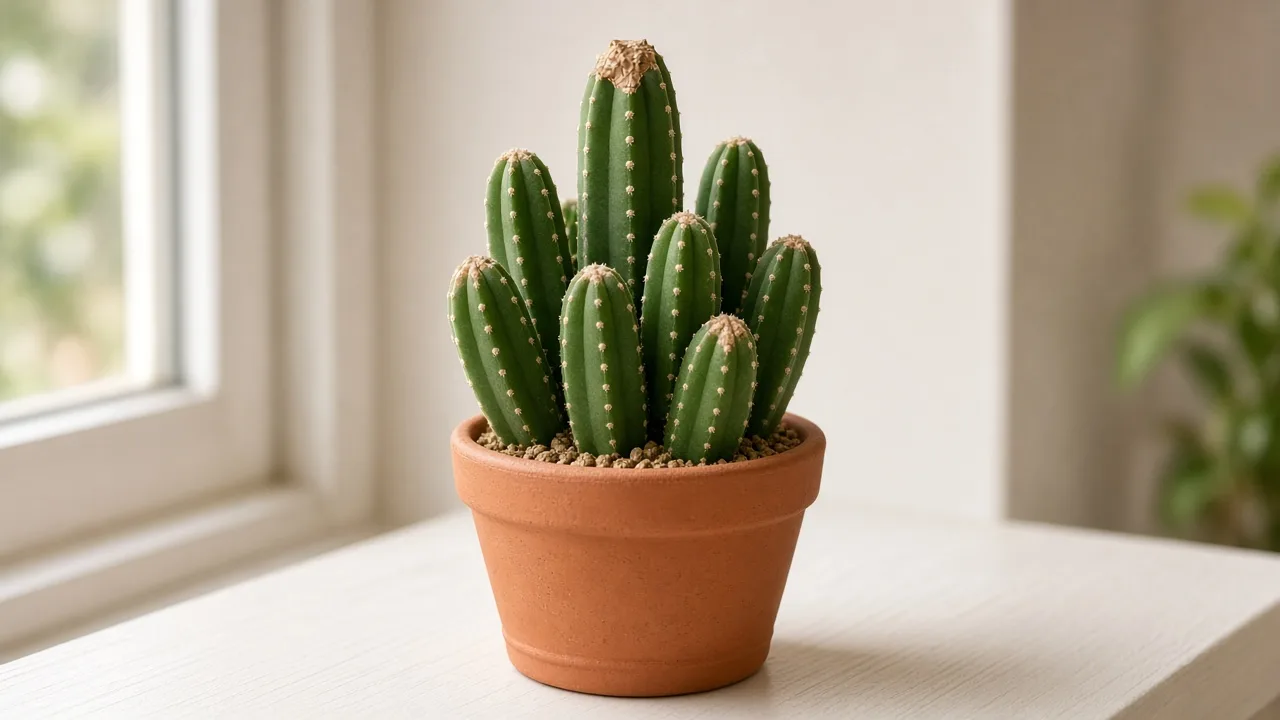
Brown Tips on Fairy Castle Cactus: Causes, Checks & Fixes
This guide covers brown tips on Fairy Castle Cactus. See also the general Brown Tips guide, watering, and light pages for this plant.
Brown Tips on Fairy Castle Cactus: Causes, Checks & Fixes
Quick answer
Brown tips on fairy castle cactus (Acanthocereus tetragonus) show on the growing ends of clustered five-ribbed columns—the miniature “turrets” that give the plant its name—not on broad leaves. The plant is a stem succulent: photosynthesis happens on green ribs, so tip color tells you whether the apex is corking from sun or drought, or rotting from wet roots.
For how marginal tip necrosis works on foliage houseplants in general, see our brown tips hub. On fairy castle, the fork you want early is firm dry brown caps on a light pot (sun or thirst) versus soft brown bases on sour wet mix (overwatering)—and whether the damage is only on the tallest south-facing turrets.
First step: pinch the browned tip gently. Firm and papery → hold water until the mix is fully dry, then soak and drain once; pull back from harsh afternoon glass if you recently moved the pot. Soft and spreading → stop watering and read overwatering on Fairy Castle Cactus before soaking again.
When to use this page vs other Fairy Castle Cactus guides
| Pattern | Read next |
|---|---|
| Bleached patches on sun-facing ribs | Sunburn scorched leaves |
| Whole columns wrinkled, very light pot | Underwatering |
| Soft base, wet soil, spreading dark tissue | Root rot |
| Yellowing columns with heavy wet pot | Overwatering |
| White cotton in rib crevices | Mealybugs |
| Pale stretched new turrets in a dim room | Not enough light |
What brown tips look like on Fairy Castle Cactus
Fairy castle forms upright branching columns with short white spines along five ribs Gardenia. Damage reads on stem tips and rib edges:
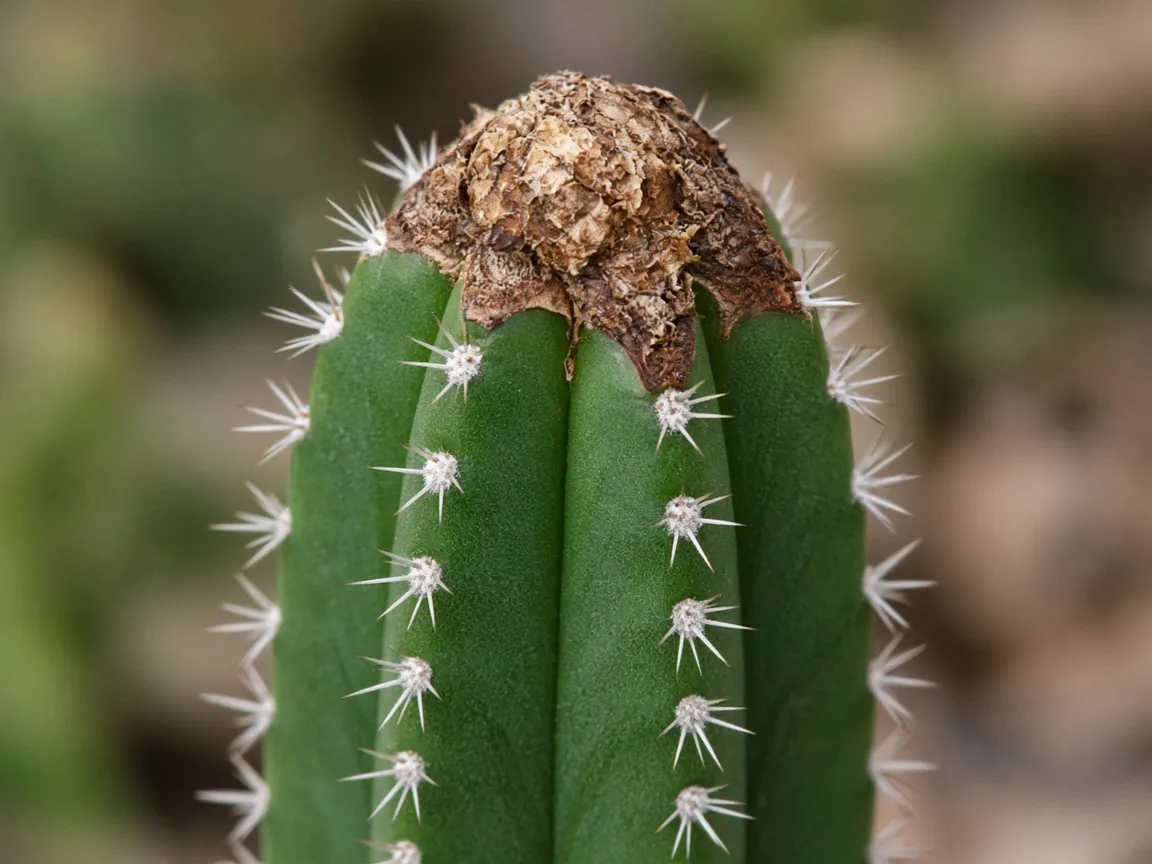
Dry corky brown at a column tip—the scar tissue will not re-green; watch for firm new growth from areoles below.
- Dry tan to chocolate cap on the highest turret — Often sun scorch or drought on the fastest-growing tip.
- Brown patch along one sun-facing rib — Localized scorch before the whole apex corks; common after a sudden move to south glass.
- Thin, slightly shrunken column with crispy tip — Long dry spell; pot feels very light.
- Brown-black soft tip with wet cool mix — Rot advancing from the apex or failed roots; not cosmetic burn.
- Brown callus on a cut stem — Normal after pruning or a broken turret until new shoots break.
- Bright pink or yellow “flowers” with brown glue scars — Nursery decoration, not biological bloom; remove carefully so you can see real tissue.
Many sold plants carry fake glued flowers Planet Desert. Brown around glue or pin holes is mechanical injury, not a watering diagnosis.
Turret-tip anatomy: why the castle peaks brown first
This section is fairy-castle-specific and does not apply to leafy succulents like jade.
- Each “tower” is a single photosynthetic stem; the meristem at the tip is the only place new height is added on that column.
- The tip is farthest from the root zone and loses water first when uptake lags during heat or drought.
- Tallest outer turrets in a bright window receive the most direct sun and scorch before shaded inner columns.
- Five-rib geometry means one rib can burn while the opposite side stays green—pattern matters more than color alone.
- Slow overall growth means a corky tip can sit unchanged for months; judge health by new areole buds, not old scar color.
Compare the lead tip on each major branch. Symmetric browning only on the highest points usually means light or dry-down stress, not disease.
The pot-weight and turret-tip check
Compact castle pots hide drought and rot. Before fertilizer, pesticide, or repotting:
- Lift the pot when you think it is dry versus one day after a full soak. Learn your dry weight.
- Probe the top 2 inches with a skewer. Soak-and-dry means water only when the mix is dry throughout that zone, then drain fully RHS.
- Feel the lowest 3 cm of each column above soil. Firm green = tip-level stress. Soft or sunken = stop water and inspect roots per Fairy Castle Cactus watering.
- Scan rib crevices at the tip with a loupe for mealybug wax before assuming environmental burn.
Use tongs or gloves when handling spiny columns near damaged tips.
Why Fairy Castle Cactus gets brown tips
Sun scorch on upper turrets
Fairy castle likes bright light but indoor plants can burn when intensity jumps. Planet Desert notes dry brown spots from sunburn that cannot be reversed, and recommends moving plants away from harsh midday sun or using sheer curtains. West-facing afternoon glass after a dim nursery shelf is a common trigger.
Drought at column apices
This cactus stores water in stems yet still needs periodic deep watering in the growing season. Succulents and Sunshine advises soak-and-dry with less water in winter. Weeks of bone-dry mix in hot dry air can cork the leading tip while lower columns stay green.
Wet feet and tip rot
Overwatering keeps roots oxygen-starved. Missouri Botanical Garden explains that waterlogged roots cannot absorb oxygen, leading to decline that is often mistaken for pests. Planet Desert links excess moisture to soft mushy stems and browning at the base—quite different from firm scorch caps.
Salt or fertilizer burn
Heavy or frequent feed on dry mix can injure roots and show on young upper growth. Fairy castle needs light feeding at most once in spring Planet Desert. White crust on the pot rim plus tip browning after feeding supports salt stress—flush with plain water during active growth, then pause feed.
Pests at growing points
Mealybugs favor cactus crevices and column tips Colorado State University. Feeding weakens the meristem and can brown the newest tissue. Rule out white wax and honeydew before soaking a sun-stressed plant.
Cold drafts and physical knocks
Columns bruise when bumped; damaged epidermis browns as it calluses. Frost below about 30°F (-1°C) damages outdoor plants Succulents and Sunshine—bring pots in before tips blacken from cold.
How to confirm the cause
| What you see | Likely cause | Quick check |
|---|---|---|
| Firm dry brown only on tallest sun-facing tips | Sun scorch | Recent window move; shade afternoon sun |
| Crispy tips, very light pot, dry skewer | Drought | Soak once, then wait for full dry-down |
| Soft brown base, wet mix, yellow lower columns | Overwatering / rot | Sour smell; stem squeeze test |
| Tips after heavy fertilizer | Salt injury | White crust; flush, pause feed |
| Wax in crevices, sticky residue | Mealybugs | Isolate; see mealybug guide |
Colorado State reminds growers to separate pest feeding injury from brown tips from improper watering or fertilization—the fix differs.
First fix for Fairy Castle Cactus
If tips are firm and dry: move the pot to bright indirect light or morning sun only, then reset soak-and-dry—one thorough watering with full drainage, then no water until the mix is dry deep down Succulents and Sunshine. Do not mist columns; humidity trays do not heal corky tips on cacti.
If stems are soft and mix stays wet: withhold water, improve airflow, and follow root rot steps before the next soak.
Hold fertilizer until new growth looks stable. Trim only fully dead cork if you need to see whether fresh browning continues—cosmetic cutting does not fix wet roots.
Recovery timeline
- Week 1–2: Stop the trigger (shade, dry-down, or dry-out for rot). Old brown caps remain.
- Week 3–8: Watch for new green tissue or side shoots from areoles below damage. Fairy castle is a slow grower; patience is normal.
- Months: Corky tips persist; success means no new browning on the leading edge and firm columns throughout.
What not to do
Do not soak a sunburned plant on schedule “to help it recover.” Do not repot on day one unless roots are clearly failing. Do not peel glued fake flowers without care—you can tear epidermis. Do not stack repotting, heavy feed, and pesticide the same week on a stressed castle.
How to prevent brown tips next time
- Match watering to season: more in spring and summer, minimal in winter Succulents and Sunshine.
- Use gritty, free-draining mix and pots with drainage holes RHS.
- Acclimate before stronger direct sun; watch tallest turrets first.
- Feed lightly at most once yearly in spring; flush if salts build.
- Review baseline care on Fairy Castle Cactus overview, light, and soil when multiple symptoms stack.
Related Fairy Castle Cactus guides
- Fairy Castle Cactus overview — Whole-plant baseline and growth habit.
- Fairy Castle Cactus problems hub — All common issues on this species.
- Fairy Castle Cactus watering — Dry-down timing and winter rest.
- Fairy Castle Cactus light — Bright indirect vs direct sun.
- Wilting on Fairy Castle Cactus — When whole columns droop, not just tips.
- Slow growth on Fairy Castle Cactus — Normal pace vs stress stall.
Severity note: This issue is marked medium for fairy castle—firm tip cork alone rarely kills a plant, but soft spreading brown on wet mix signals root failure.
Related tool
Use the Plant Problem Diagnosis Tool to narrow causes for brown tips on this plant before changing watering, light, and fertilizer at once.