Mealybugs on Fairy Castle Cactus: Rib-Groove Checks & Fixes
Quick answer
Mealybugs on Fairy Castle Cactus hide as white cottony clusters in rib notches, areole pockets, and forks between branching castle columns. First step: isolate the pot, use tongs or a folded paper barrier, and dab every visible cluster with 70% isopropyl alcohol before spraying the whole cluster.

Mealybugs on Fairy Castle Cactus: Causes, Checks & Fixes
This guide covers mealybugs on Fairy Castle Cactus. See also the general Mealybugs guide, watering, and light pages for this plant.
Mealybugs on Fairy Castle Cactus: Causes, Checks & Fixes
Quick answer
Mealybugs on Fairy Castle Cactus (Acanthocereus tetragonus) are small, soft, wax-covered insects that look like tiny white cotton balls tucked into vertical rib grooves, areole pockets, and forks between branching castle columns. They suck sap, leave sticky honeydew that can feed sooty mold, and thrive in the protected angles where spines and ribs meet—spots a casual glance at the tallest turret misses.
For how mealybugs reproduce, why ants defend them, and when alcohol dabs work in general, see our mealybugs pest guide. On Fairy Castle Cactus, the practical pattern is cottony tufts along rib lines and in column forks, sticky shine on lower castle arms, and extra patience because slow indoor growth means recovery shows up on the next firm tip—not overnight height.
First step: isolate the pot if other succulents share the shelf, steady the cluster with tongs or a paper wrap, and dab every visible cottony cluster with a cotton swab soaked in 70% isopropyl alcohol—then re-inspect in three days before spraying anything.
When to use this page vs other Fairy Castle Cactus guides
This page is the pest-first entry for white cottony sap feeders in rib grooves and column forks.
| Pattern | Read next |
|---|---|
| Soft pear-shaped insects on new column tips | Aphids |
| Fine webbing and pale stippling on ribs | Spider mites |
| Tiny flying insects from wet soil surface | Fungus gnats |
| Stretched pale columns without cottony wax | Not enough light or leggy growth |
| Soft base at soil line, no cotton above | Root rot or overwatering |
| Wrinkled ribs, dry mix, no stickiness | Underwatering |
What mealybugs look like on Fairy Castle Cactus
Mealybugs are oval, segmented insects covered with wax, often gathered in colonies in somewhat protected areas of the plant. On this slow, clustering column cactus they settle where rib geometry creates pockets:
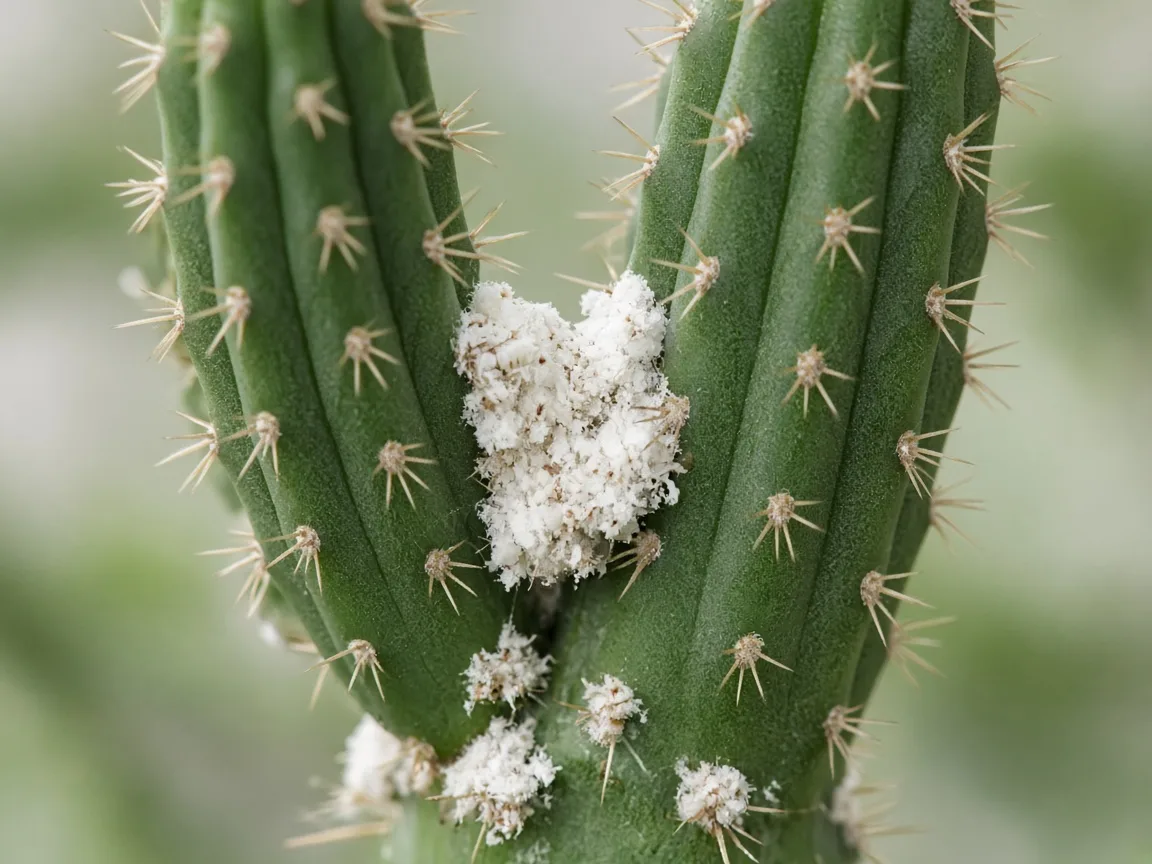
Cottony mealybug masses in a rib notch—compare with firm green column tissue below.
- White cottony tufts in rib grooves — Wax-covered clusters along vertical ribs and in forks between turret-like arms
- Sticky shine on lower castle arms — Honeydew collects on rib faces where mealybugs feed
- Black sooty coating on lower columns — Fungus growing on dried honeydew, not stem rot
- Ant trails on the pot rim or shelf — Ants harvest honeydew and protect colonies from lady beetles and lacewings
- Slowed tip growth on branching columns — Heavy feeding on soft new areoles while older ribs stay firm
- Pale crawlers before wax builds — Newly hatched nymphs are mobile and orangish until they settle and produce cottony coating
Healthy Fairy Castle columns are firm, ribbed, and branching like stacked turrets with spines at areoles—not uniformly fuzzy. A little mineral dust on sun-facing ribs is not mealybugs until you confirm discrete cottony clumps that smear when dabbed with alcohol.
Where mealybugs hide on ribbed castle columns
Acanthocereus tetragonus grows as clustered upright columns with narrow ribs and spine pairs. Mealybugs follow protected grooves, not the open flat faces you see from across the room.
Mealybugs often live in protected areas such as branch crotches, crowns, and stems near soil. On Fairy Castle Cactus, the equivalent hot zones are:
- Vertical rib notches — Wax hides pests from casual rinsing between spine pairs
- Forks between branching turrets — Where a new column splits from an older arm
- Upper growing tips — Softest areoles on the tallest castle points attract egg-laying females
- Soil line and inside pot lip — Crawlers travel between nearby succulents on benches
- Underside of tight column clusters — Inner arms against siblings stay humid after watering
This rib-and-fork inspection pattern is plant-specific. A fern guide tells you to search frond crowns; on Fairy Castle Cactus you trace each rib line on every branching column with a swab, lens, or soft brush—using tongs so spines do not force you to drop the plant mid-treatment.
Root mealybugs in mineral cactus mix
Foliar tufts are obvious; root mealybugs are not. They live in soil and on upper roots, often with little cotton showing above the mix surface until columns stop growing or feel lighter than expected.
Some mealybug species feed on roots, weakening plants before you see white wax on ribs. On Fairy Castle Cactus in gritty mineral mix, suspect root-zone pests when:
- Ribs stay firm but new tips stall for weeks in warm bright light
- White wax or fine meal appears on the mix surface or drainage holes
- Ants concentrate at the pot base without obvious colonies on upper columns
- Slow growth continues after you cleared visible foliar mealybugs
Slide the plant partly out of the pot and inspect upper roots and the soil line before repotting on day one. Root mealybugs need a different salvage path than a few tufts on one outer arm.
Why Fairy Castle Cactus gets mealybugs
Mealybugs are common houseplant pests that thrive in warm indoor air year-round without cold winters or natural enemies. Cactus is among the plants commonly attacked, including woody ornamentals and indoor succulents. What makes this species vulnerable is its geometry and bench placement, not necessarily bad culture alone.
Rib grooves trap wax and crawlers. The same turret-like branching that makes fairy castle distinctive creates sheltered pockets a rinse misses. Their waxy coating repels contact sprays, so colonies in grooves survive one casual wipe.
Clustered pots share crawlers. Mealybugs hitchhike on nursery stock and move slowly between pots on the same shelf. One infested column beside clean neighbors is a common indoor pattern.
Ant protection keeps colonies rebounding. Ants on pot rims defend honeydew sources on upper ribs, blocking lady beetles and lacewings that would otherwise control numbers.
Nitrogen plus water pushes soft tips. Over-application of nitrogen combined with regular irrigation stimulates tender new growth where mealybugs prefer to lay eggs. Fairy Castle grows slowly indoors—heavy feeding during an infestation makes new areoles softer and more attractive.
Indoor stability favors overlapping generations. Where all life stages persist year-round on houseplants, populations can build without outdoor biological control.
Colorado State Extension notes mealybugs on cactus among common houseplant pests to monitor, alongside jade and other succulent-leaved plants.
How to confirm the cause
Work through these checks before treating:
- Cottony wax test — White tufts that smear pink-orange when dabbed with alcohol confirm mealybugs; mineral dust or dried sap wipes away dry
- Groove focus — Colonies sit in rib notches and column forks, not evenly across every spine tip
- No webbing — Fine silk with stippling points to spider mites, not mealybugs
- No fast pear-shaped clusters — Green or black soft insects on new tips without heavy wax suggest aphids
- Honeydew and ants — Sticky shine with ant trails supports sap feeders; wrinkled firm ribs without stickiness fits underwatering
- 10× lens on areoles — Slow oval insects with wax filaments versus fast pear-shaped aphids on soft new tips
- Stem base firmness — Press the lowest columns. Firm ribs with dry mix suggest a foliage pest. Soft base with sour soil is rot—see root rot, not mealybugs alone
Re-check in three days if you see wax residue but no live insects—crawlers resettle quickly in the same grooves.
First fix for Fairy Castle Cactus
Isolate the pot if needed, steady spiny columns with tongs or a paper wrap, and dab every visible cottony cluster with a cotton swab soaked in 70% isopropyl alcohol.
Move the cluster away from other succulents. On houseplants, a 70% or less alcohol solution dabbed directly on mealybugs can kill or remove them—but test on a small rib patch first and watch for burn, especially if the plant sat in harsh direct sun. Work rib groove by groove on each branching arm, not only the tallest turret.
Repeat alcohol dabs every week until two inspections a week apart find no live cottony clusters. You will need to repeat weekly until the infestation is gone because eggs and crawlers hide under wax the first pass misses.
Only after dabbing, if live mealybugs remain:
- Apply insecticidal soap or horticultural oil labeled for mealybugs, coating grooves until runoff—soaps and oils work better on younger nymphs with less wax
- Patch-test one rib and wait 24 hours before full treatment
- Treat in early morning or evening, not on a sun-scorched windowsill
Do not soak the pot repeatedly while treating column tips. Wet mineral mix on a slow cactus invites overwatering stress on top of sap loss—follow soak-and-dry watering after any rinse step.
Do not repot, fertilize, or break apart the castle cluster on day one. Focus on removing colonies from rib grooves first.
Step-by-step recovery
Once mealybugs are confirmed, work in this order:
- Isolate — Keep the pot separate until two clean weekly inspections show no cottony tufts
- Alcohol dab — Hit every visible cluster in rib notches and column forks on all arms
- Rinse sturdy upper columns — A strong stream of water can reduce exposed populations on firm ribs; let the pot drain fully and dry before the next soak
- Soap or oil — Apply labeled product after patch test if dabs alone miss hidden crawlers
- Manage ants — Break ant trails on pot rims so natural enemies can reach colonies
- Monitor neighbors — Inspect every succulent that shared the bench
Hold fertilizer until new column tips look firm for two weeks after the last live mealybug. Nitrogen pushes soft shoots that attract the next generation.
Recovery timeline
Mild cases on one outer branch often stabilize within three to four weeks of weekly alcohol dabs and careful scouting—slower than fast-growing succulents because Fairy Castle tips grow gradually indoors. Moderate infestations coating several arms may need five to eight weeks with dabs plus two soap or oil cycles at five- to seven-day intervals.
Old ribs that yellowed or pitted stay marked—they will not smooth back to perfect green. Judge recovery by:
- No new cottony tufts on previously clean grooves
- Firm green columns without soft spots at the base
- Clean new spine tips on the next flush at branch forks
- Honeydew and sooty mold stop spreading down the cluster
Escalate if columns soften at the soil line while pests are present—that pattern needs root rot diagnosis, not more foliar dabs alone.
Lookalike symptoms
| What you see | Likely cause | Quick check |
|---|---|---|
| White cottony tufts in rib grooves | Mealybugs (this page) | Smears orange-gray; wax coating |
| Soft pear-shaped clusters on new tips | Aphids | No heavy wax; honeydew |
| Fine webbing + stippling | Spider mites | Shake test on white paper |
| White dust on sun-facing rib only | Mineral or hard-water residue | Wipes dry; no smear |
| Wrinkled firm ribs, no stickiness | Underwatering | Dry deep mix; pot light |
| Sooty soil surface, no stem cotton | Mold on soil | Fungus on mix, not grooves |
Mistakes to avoid
Do not assume one alcohol dab clears a dense multi-column cluster. Hidden egg sacs and crawlers in inner fork angles restart colonies within days.
Do not spray horticultural oil on a sun-scorched or drought-stressed column without a test patch. Oils can damage sensitive plants and require phytotoxicity testing.
Do not ignore ants while treating mealybugs only with water. Ant protection keeps colonies rebounding on rib tips.
Do not increase fertilizer during an active infestation. Nitrogen stimulates tender growth where mealybugs lay eggs.
Do not soak the root zone repeatedly while rinsing upper columns. Wet mix plus succulent stems invites overwatering stress on top of pest damage.
Do not grab spiny columns bare-handed while dabbing—dropping the pot spreads crawlers to the floor and neighboring plants.
How to prevent mealybugs next time
Scout rib grooves weekly during warm growth—before cottony tufts reach every castle arm.
Quarantine new cacti for two weeks and inspect grooves before placing them on a shared bench.
Preserve beneficial insects when possible. Tolerate small colonies when lady beetles, lacewings, or mealybug destroyer larvae are present and damage is cosmetic.
Manage ants on pot rims in patio and windowsill setups.
Keep the plant in bright light with fast-draining mineral mix so columns stay firm before mealybugs build large colonies in rib pockets.
Avoid heavy nitrogen feeds that push soft tips—follow the seasonal schedule in the fertilizer guide.
Inspect plants thoroughly before bringing them indoors after summer outdoors or from a nursery bench. Gardening Know How recommends isolating new plants and repeating organic controls until crawlers are gone—the same patience applies to slow castle clusters.
When to worry
A few cottony tufts on one outer groove during warm growth are common on otherwise firm Fairy Castle Cactus and rarely threaten the cluster if you dab early. Escalate when white masses coat multiple arms, ants protect large colonies on every rib, sooty mold blankets lower columns, or new tips fail to open across the whole plant.
Consider discarding severely infested small specimens rather than months of repeat sprays—when infestations become severe, replacing houseplants may be more practical than endless treatment on a shared shelf.
Act urgently if columns soften at the soil line while pests are present—switch to root rot diagnosis rather than assuming insects alone are the problem.
Related Fairy Castle Cactus guides
- Overview — culture and spine safety
- Watering — avoid wet mix during rinse treatments
- Light — firm growth vs pale stretched columns
- Soil — drainage and root-zone inspection
- Aphids — soft clusters on new tips
- Spider mites — webbing and stippling on ribs
- Problems hub — full symptom index
Conclusion
Mealybugs on Fairy Castle Cactus are a rib-groove and column-fork problem in most homes—not a mysterious whole-cluster collapse. Trace each rib on every branching turret, dab cottony clusters with spines managed safely, and keep mineral mix dry while you treat. Firm columns and clean new areoles on the next slow flush are the recovery signal; old scarred ribs can stay marked without killing the castle shape.
Related tool
Use the Pest Identifier Tool to narrow causes for mealybugs on this plant before changing multiple variables at once.