Root Rot on Fairy Castle Cactus: Turret-Base Rescue
Quick answer
Root rot on Fairy Castle Cactus starts in the crowded root zone under many short turrets while upper green columns still look fine. First step: stop all watering and press the lowest inch of every castle column with tongs—soft tissue on a heavy wet pot means unpot the same day.
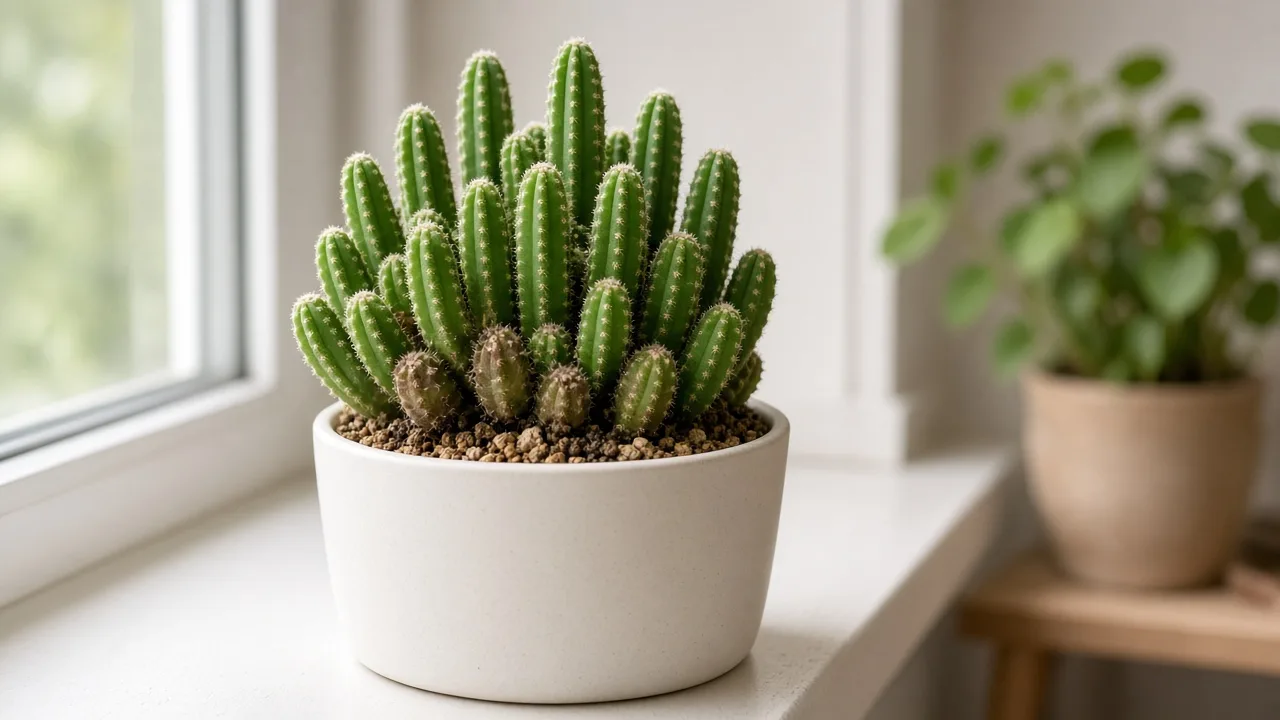
Root Rot on Fairy Castle Cactus: Causes, Checks & Fixes
This guide covers root rot on Fairy Castle Cactus. See also the general Root Rot guide, watering, and light pages for this plant.
Root Rot on Fairy Castle Cactus: Causes, Checks & Fixes
Quick answer
Root rot on Fairy Castle Cactus (Acanthocereus tetragonus ‘Fairy Castle’) is turret-base failure from chronic wet mix—not a leaf disease. The trade form is a slow monstrose cluster of short ribbed columns that stores water in stem tissue; when soil stays saturated, roots lose oxygen and die, then decay climbs the lowest castle towers long before the whole plant looks obviously sick.
For how chronic wet soil destroys roots in general, see our root rot guide. On Fairy Castle Cactus, the tell is a heavy wet pot, sour smell from drainage holes, turrets leaning from root loss, and—most critically—a soft or dull lowest inch on one or more columns while upper green spires still stand upright.
First step: stop all watering immediately. Then press the lowest inch of every turret above the soil line with tongs or a folded towel. Soft or squishy tissue on wet mix means unpot and inspect roots the same day—do not add water, fertilizer, or fungicide first.
When to use this page vs other Fairy Castle Cactus guides
| Pattern | Read next |
|---|---|
| Heavy wet pot, firm turret bases, no sour smell yet | Overwatering — dry-down pause may be enough |
| Soft bases + wet soil + mushy roots (this page) | Stay here for unpotting and salvage |
| Light dry pot, wrinkled but firm ribs | Underwatering |
| Whole castle limp on wet soil | Advanced rot—start surgery below |
| Fungus gnats + surface mold only | Fungus gnats or mold on soil — moisture alarm, not always base rot yet |
| Columns etiolated, firm bases | Not enough light |
What root rot looks like on Fairy Castle Cactus
Unlike leafy houseplants, Fairy Castle Cactus photosynthesizes through its upright ribbed columns. Root rot hides in the dense cluster at soil level while the green turret tops still look fine. Because this cultivar is cutting-grown and naturally slow indoors, owners often mistake early rot for “it just grows slowly.”
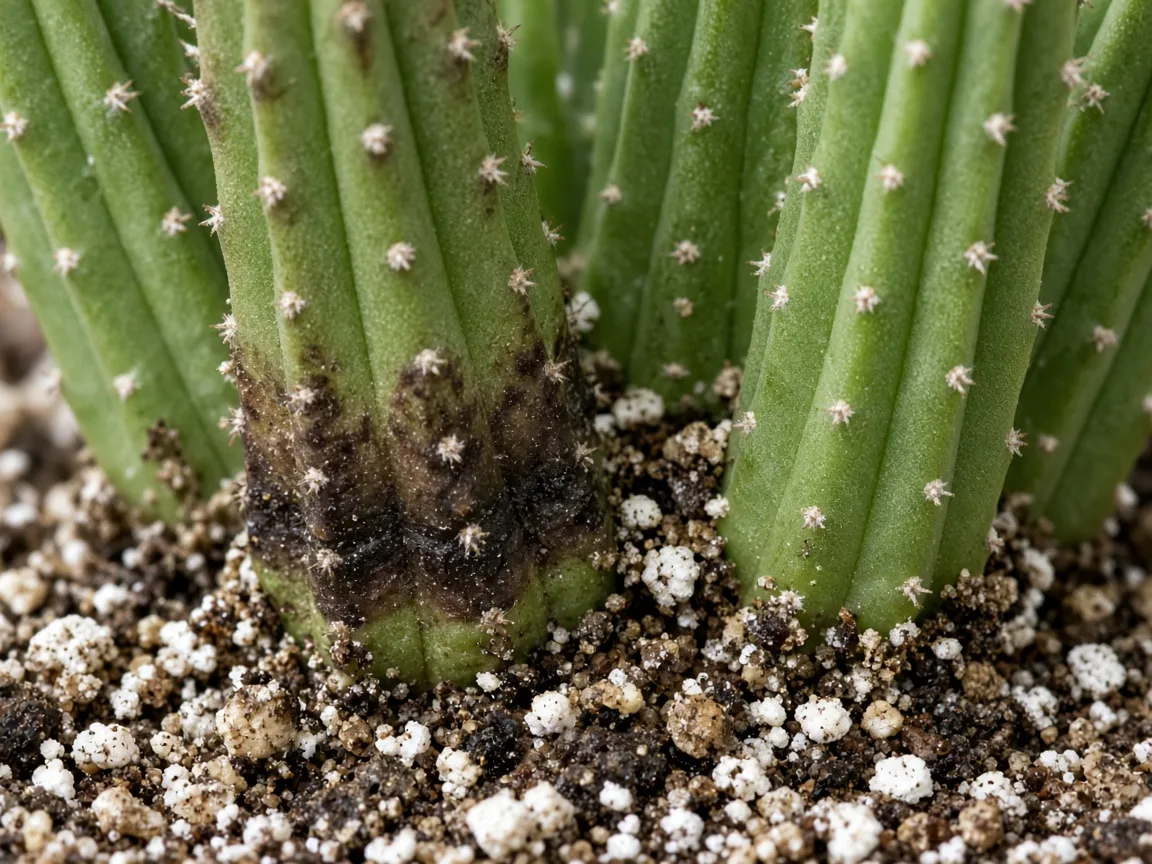
Root rot at the soil line—dull brown-black softening on the lowest ribbed turret faces while damp mineral mix clings to the crowded column bases.
Early signs (roots failing, turrets still mostly firm)
- Heavy pot days or weeks after watering; mix never fully dries through the crowded root ball
- Sour or rotten smell from drainage holes or when you tilt the pot
- One or more short turrets leaning while neighbors stay upright—uneven root loss in the cluster
- Dull, slightly softened rib tissue at the soil line on the shortest columns first
- Stalled new tip growth on individual towers for a month or more in warm bright weather
- Fungus gnats over persistently wet surface mix between turrets
- Unpotting reveals brown, mushy, or translucent roots while most stem bases still feel mostly solid
Advanced signs (rot climbing the turrets)
- Mushy, hollow, or black bases spreading up one or more ribbed faces
- Wilt paradox—limp or wrinkled upper columns despite wet soil because damaged roots cannot move water
- Several turrets collapsing inward as the shared root crown fails
- Black tissue above the soil line with no firm green flesh left at the cluster base
A wrinkled but firm turret on light, dusty mix is not root rot—see underwatering. Root rot adds wet mix + soft lowest inch + sour smell + progressive leaning to the picture.
Skewer-and-turret triage in a crowded pot
This plant-only check does not apply to a single snake plant rosette. Fairy Castle pots pack many uneven-height columns into one root zone, and the shortest turret often rots first while taller neighbors mask the problem.
- Map each visible turret before unpotting so you know which tower failed after surgery.
- Run a dry wooden skewer along the outside of the cluster and through open gaps—if it exits cool and stained deep in the ball on a heavy pot, the center is still wet (Clemson HGIC notes cacti need very well-drained mix and must not stand in water).
- Press the lowest inch of every column with tongs—rot often hits the shortest castle tower tucked behind taller ones.
- Compare dry pot weight weekly; this slow grower should feel noticeably lighter before the next soak per the watering guide.
- If one turret is soft and others are firm, you may salvage healthy columns separately after unpotting—do not discard the whole plant because one branch failed.
Trust stem firmness at the soil line over how green the upper spires look. A foot-tall fairy castle can still photosynthesize through firm ribs while the crown is already hollow.
Why Fairy Castle Cactus gets root rot
Acanthocereus tetragonus in the wild is a heat-loving columnar cactus; the Fairy Castle form is a monstrose cultivar with softer tissue and slower indoor growth. Clemson HGIC reports that root and stem rots on indoor cacti usually result from mix that does not drain quickly or from overly frequent watering. Root rot happens when the crowded castle base sits in saturated, low-oxygen mix until tissue breaks down from the roots upward.
Calendar watering on a novelty cactus. Watering every Sunday ignores how long your specific pot dries. A cluster in bright sun and terracotta may need a soak every three to five weeks in summer; the same plant in a dim room inside a glazed cachepot may stay wet six weeks—see the watering guide.
Winter rest mismatch. During dormancy, desert cacti should get very dry between waterings—often only a light drink every few weeks. A summer rhythm in a cool November room keeps roots wet while uptake has already dropped.
Oversized pots and peat-heavy mix. Extra soil volume around a small clustered root ball holds moisture at the stem bases where rot starts. Dense indoor mix in a decorative pot without drainage stays damp far longer than the mineral blend this species needs—see the soil guide.
Escalation from overwatering. Mild chronic wet mix often shows up first as overwatering—heavy pot and dull rib color. Root rot is confirmed once roots turn mushy and the lowest turret softens. Dry-down pauses only work while tissue is still firm.
Fungal pathogens in wet soil can accelerate breakdown, but the trigger is almost always excess moisture at the root crown—not airborne disease on the spires.
How to confirm the cause
Work through these checks in order. Root rot is confirmed by mushy roots and soft turret bases in wet mix—not by slow growth alone.
- Stop watering — Every additional soak spreads decay through stored stem tissue.
- Lift the pot — Heavy days after watering means saturation; learn your dry weight.
- Smell drainage holes — Sour or rotten odor means anaerobic decay, not a surface issue.
- Skewer the full root zone — Wet, cool, stained probe on a heavy pot supports rot risk.
- Press each turret base — Soft, hollow, or squishy on wet mix confirms rot has climbed from roots.
- Unpot and inspect roots — Healthy roots are pale and firm. Rotted tissue is brown, black, mushy, or slips off the stem.
- Compare to underwatering — Wrinkled firm ribs, light pot, dusty dry mix means thirst, not surgery.
If mix is wet, roots are mushy, and the lowest columns soften, you have confirmed root rot. No fungicide replaces removing wet soil and decayed tissue.
First fix for Fairy Castle Cactus
Stop all watering immediately. Move the pot to bright light with good airflow—do not blast damaged roots with harsh direct sun through glass.
Then unpot the same day if any turret base is soft, black, or smells sour:
- Wear gloves and use tongs—spines line every rib.
- Knock the cluster out gently and shake off all wet mix. Discard foul soil entirely.
- Rinse roots lightly with lukewarm water only if mix is heavily compacted between columns—work quickly so tissue does not sit wet longer.
- With sterilized shears, cut away every mushy root and any soft black stem tissue at the soil line. Keep cutting until you reach firm green rib flesh.
- If rot has entered the lowest inch of a turret, bevel-cut above firm tissue on that column only.
- Let cut surfaces air-dry uncovered in bright indirect light for 24–48 hours so wounds callous.
- Repot remaining firm turrets into dry fast-draining cactus mix in a pot sized to trimmed roots—not the original oversized container. See repotting.
- Wait one to two weeks before the first light soak at the pot edge.
That single sequence—stop water, remove decay, dry repot—is the rescue. Do not stack fertilizer, misting, or pesticide on the same day.
Turret-cut salvage when rot climbs the cluster
When the shared root crown is hollow but upper sections of individual columns are still firm and green, beheading individual turrets beats saving the base. This monstrose salvage path does not apply to ferns or peace lilies.
- Identify the highest firm green tissue on each affected column—press along ribs; rot feels soft under the areoles.
- Cut above the rot with a sterile knife. Fairy Castle is kept true only from stem cuttings of castle tissue, so labeled cuttings are your backup plant.
- Lay firm cuttings on dry newspaper in bright indirect light for 3–7 days until cut faces callous and no longer look wet.
- Plant callused sections upright in dry gritty mix—see the propagation guide.
- Do not water for the first week; then give a light edge soak only when mix is fully dry throughout.
- Discard mushy lower sections and contaminated soil—do not compost wet rot tissue indoors.
One healthy 8–10 cm turret can slowly rebuild a miniature castle over a season. A collapsed multi-column base rarely recovers once several ribs have turned translucent.
Step-by-step recovery
Week 1–2: Stabilize without water
Keep the plant in bright light, not deep shade. Do not water—the columns are your stored water supply. Wrinkled ribs may appear; judge by whether soft spots stop spreading.
Week 3–4: First cautious drink
If mix is completely dry throughout the pot, give a light soak and empty the saucer immediately. Clemson HGIC advises letting cacti dry between waterings in the growing season and keeping them much drier in winter.
Month 2–3: Watch for new tip growth
Tiny fresh spines or a slightly brighter green tip on a turret are the best sign rot has stopped. A firm cluster base with no new soft spots is positive even when lower ribs look scarred.
Month 3+: Resume minimal care
Resume sparse feeding only after new tip growth looks normal for two weeks and every turret base stays firm. Follow the watering guide skewer dry-down rhythm strictly—one wet spell can restart rot on weakened roots.
Recovery timeline
| Stage | What to expect | Positive sign | Warning sign |
|---|---|---|---|
| Days 1–14 | Plant looks unchanged or slightly more wrinkled | Turret bases stay firm; soft spots do not spread | Sour smell returns; bases soften further |
| Weeks 3–4 | First dry-down cycle completes | Mix dries evenly; no new black tissue | Pot stays heavy; mix never fully dries |
| Months 2–3 | Possible new tip flush on individual columns | Firm ribs + fresh spine growth | Additional leaning with wet-feeling mix |
| Month 3+ | Gradual fill-in if salvage succeeded | Multiple firm turrets producing new tips | Hollow bases after repotting |
Realistic expectation: mild cases caught while most roots remain firm often stabilize within one to three months. Severe crown loss usually means turret-cut propagation, not a quick return to the original dense castle shape.
Lookalike symptoms
| What you see | Likely cause | Key check | First action |
|---|---|---|---|
| Soft bases, wet soil, mushy roots | Root rot | Lowest inch gives under pressure | Stop water, trim, dry repot |
| Heavy wet pot, firm bases | Early overwatering | Roots still firm on unpotting | Dry-down pause |
| Wrinkled ribs, light pot, dry mix | Underwatering | Stem firm; roots pale and dry | Soak when skewer dry |
| Pale stretched towers, firm bases | Not enough light | No sour smell | Increase light gradually |
| Limp columns, wet soil, soft bases | Advanced rot (this page) | Black tissue at soil line | Same-day surgery |
| Wilting on wet mix | Root uptake failure | Press bases; sniff holes | Stop water; unpot |
Root rot specifically means mushy roots and soft turret bases in wet mix. Firm columns on dusty dry soil point elsewhere even when growth looks stalled.
Mistakes to avoid
- Keep watering limp turrets when soil is already wet. Wilting with saturated mix often means rotting roots cannot take up water—not thirst.
- Wait for the whole castle to collapse before unpotting. Green upper spires hide base failure; press the lowest inch of every column.
- Repot into standard potting soil. Moisture-retentive peat repeats the conditions that caused rot.
- Repot into a larger container. A bigger wet zone makes recovery harder—size to trimmed roots.
- Fertilize a stressed cluster before bases stay firm for two weeks.
- Water immediately after repotting. Fresh wounds on trimmed roots and stems need callous time in dry mix.
- Assume fungicide replaces surgery. Wet soil and mushy tissue must be removed physically.
- Mist the castle or run a humidifier. Root rot is a root-zone moisture problem; extra humidity does not help.
Fairy Castle Cactus care cross-check
Root rot is almost always a stacking failure of water, soil, and pot choice—not bad luck.
Watering. Use a dry skewer to confirm the full root zone is dry before soaking—surface dust on mineral mix lies easily. Full rhythm details are in the watering guide.
Soil. Use coarse cactus mix with pumice or perlite. Dense peat holds moisture around crowded turret bases for days.
Light. Bright light helps mix dry predictably. Dim corners slow water use—stretch intervals accordingly.
Pot and drainage. Open drainage holes, right-sized terracotta, and empty saucers within 30 minutes of every watering. The plant must never be permitted to stand in water.
Season. Reduce watering when growth slows in cool, short-day months per winter dry-down guidance.
How to prevent root rot next time
- Water only when a dry skewer confirms the full root zone is dry—not on a calendar.
- Use fast-draining cactus mix in a pot with open drainage holes.
- Size pots to the clustered root ball; avoid large decorative containers that hold excess soil moisture.
- Check the lowest inch of every turret whenever you water.
- Learn dry pot weight by lifting weekly.
- Reduce watering frequency in winter when rooms cool and growth slows.
- Empty saucers and cachepots after every soak.
Missouri Botanical Garden notes that waterlogged soil causes roots to die from lack of oxygen—that single dry-down habit prevents most root rot cases on a cactus built for long dry intervals.
When to worry
Treat as urgent when multiple turrets soften at once, the mix smells sour, or black tissue climbs above the soil line with no firm tissue left at the crown. Same-day trimming and dry repotting gives the best chance.
Salvage is unlikely when every column base is hollow and mushy. Before discarding the plant, take cuttings from any firm upper turret—Fairy Castle is propagated only from castle stem cuttings once callused.
Mild cases caught while turret bases are still mostly firm recover well if you act before decay reaches the rib core. If rot has already hollowed the shared crown, turret-cut propagation is often more realistic than saving the original root ball.
Related Fairy Castle Cactus guides
- Overview — culture and spine safety
- Overwatering — dry-down pause before rot advances
- Watering — skewer dry-down rhythm after recovery
- Soil — gritty mix that dries fast
- Repotting — downsizing after root trim
- Propagation — turret-cut salvage protocol
- Fungus gnats — wet-mix follow-on pest
- Problems hub — full symptom index
Conclusion
Root rot on Fairy Castle Cactus is a crowded turret-base and root-crown problem hidden by upright green spires. Stop water, press the lowest inch of every column, and unpot when tissue softens on wet mix. Firm ribs, dry gritty soil, and fresh tip growth on individual towers are the recovery signals; scarred lower ribs will not revert to perfect green, and that is normal once the root zone stabilizes.
Related tool
Use the Root Rot Risk Checker to narrow causes for root rot on this plant before changing multiple variables at once.