Wilting on Fairy Castle Cactus: Wet vs Dry Column Checks
Quick answer
Wilting on fairy castle cactus shows as shrunken or dull green turrets—lost turgor in the ribbed columns, not limp leaves. First step: lift the pot and gently press the lowest stems above soil with tongs or a folded towel; a heavy wet pot with soft base tissue means stop watering, while a feather-light dry pot with firm bases points to drought.
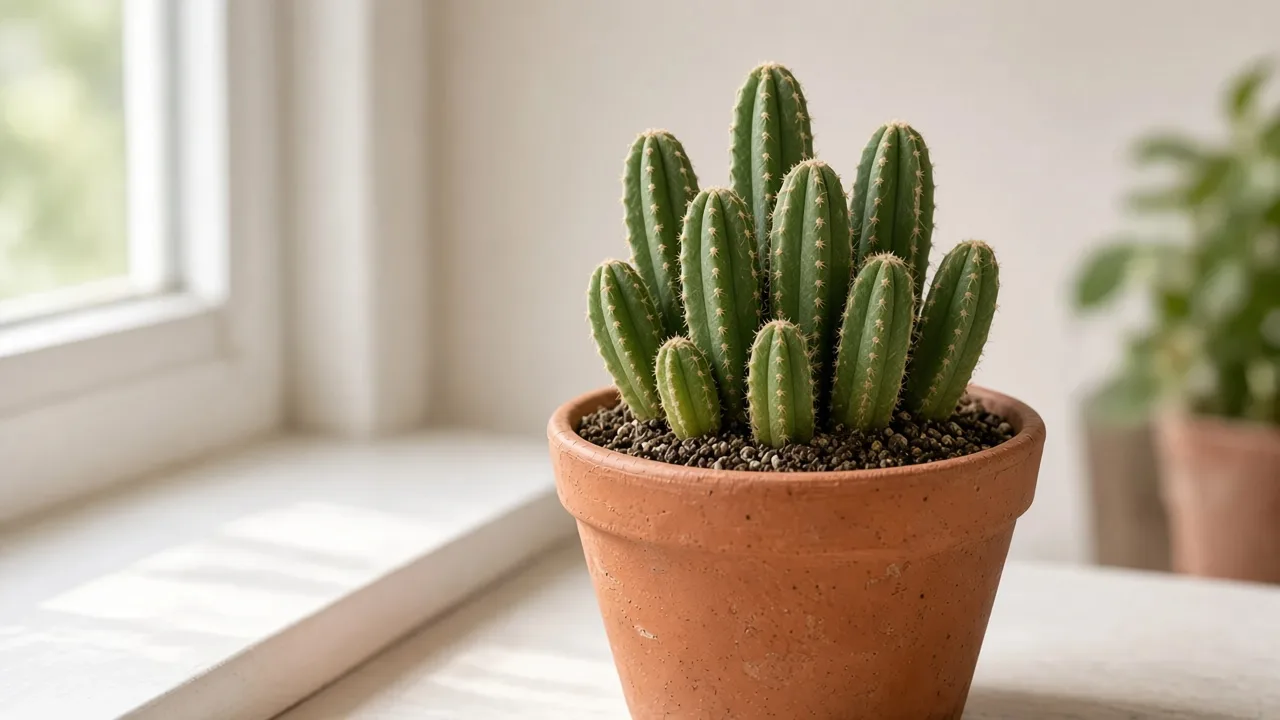
Wilting on Fairy Castle Cactus: Causes, Checks & Fixes
This guide covers wilting on Fairy Castle Cactus. See also the general Wilting guide, watering, and light pages for this plant.
Wilting on Fairy Castle Cactus: Causes, Checks & Fixes
Quick answer
A healthy fairy castle cactus (Acanthocereus tetragonus “Fairy Castle”) stores water in its clustered ribbed green columns—upright turrets with short white spines along five-sided ribs. Wilting here means lost turgor: ribs look flattened, skin turns dull, or the whole cluster leans—even though this plant has no leaves to hang limp.
For how wilting works when roots lose access to water or oxygen in general, see our wilting symptom hub. On fairy castle cactus, the emergency split is the wilt paradox: shriveled turrets on heavy wet soil mean failed roots, while shriveled turrets on a feather-light dry pot mean drought.
First step: lift the pot and press the lowest columns above the soil line with tongs or a folded towel. Do not add water until you know which side of that split you are on.
When to use this page vs other Fairy Castle Cactus guides
Wilting is the deflation and collapse entry—when the castle looks shrunken, dull, or structurally defeated.
| Pattern | Read next |
|---|---|
| Shrunken columns on heavy wet soil, soft base | Stay here; escalate to overwatering or root rot |
| Pinched ribs on light dry pot, firm base | Underwatering after one careful soak |
| Cluster leans but ribs still feel firm | Drooping leaves — posture, not turgor loss |
| Yellow translucent tissue at soil line only | Overwatering |
| Long stretch toward dim window | Leggy growth or not enough light |
| Black mush climbing multiple columns | Root rot — same-day protocol |
What wilting looks like on Fairy Castle Cactus
Unlike a peace lily, fairy castle cactus does not drop leaf blades. Wilting shows up on the stem columns themselves:
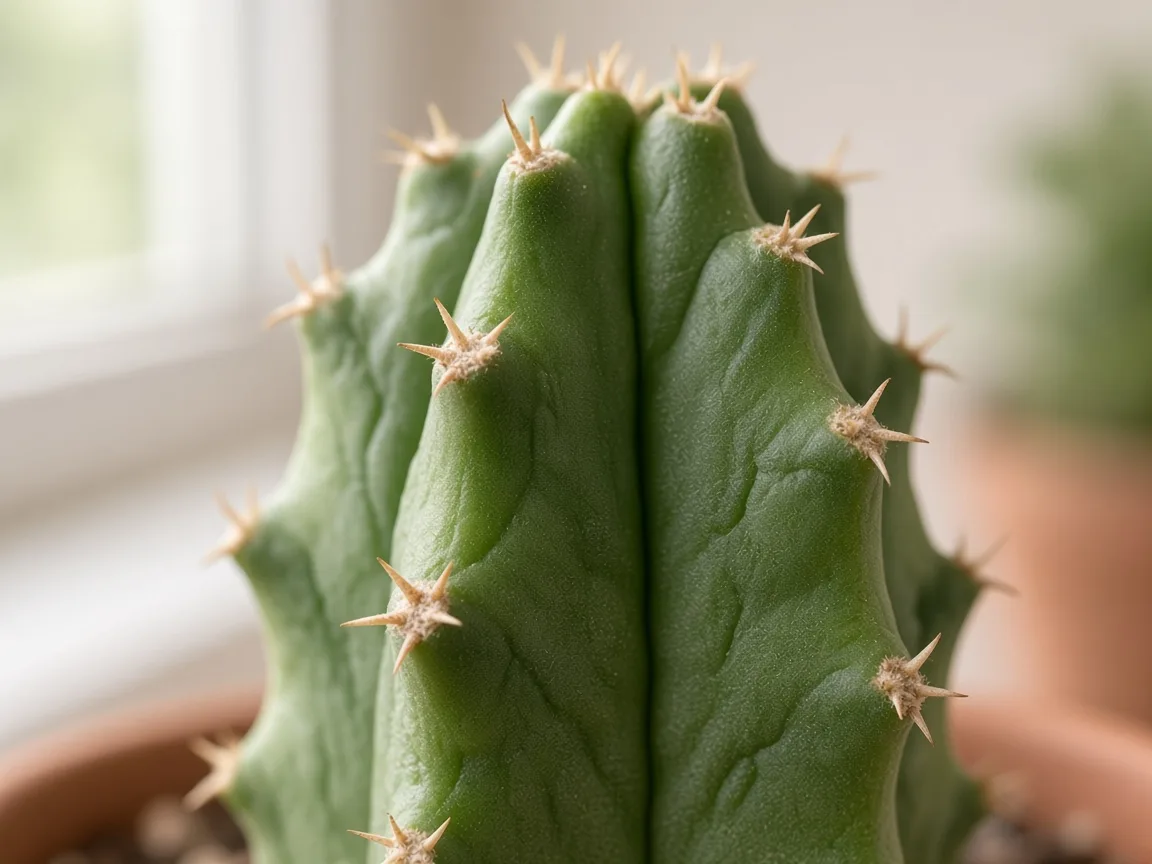
Sunken rib pleats and dull green skin between spines—the columns store water internally, so turgor loss reads on the ribs, not on leaves.
Early signs
- Ribs look flattened or sunken between spines while the cluster still sits mostly upright
- Dull, slightly wrinkled skin on upper turrets—not the glossy firm look of a hydrated plant
- Pot feels noticeably lighter than usual after weeks without water
- One outer column tilts slightly when roots are still firm but internal stores are depleted
- No new tip growth at the crown during a long dry spell in a warm room
Advanced signs
- Whole cluster slumps sideways in the pot—roots can no longer anchor the mass
- Soft squishy tissue at the soil line while mix stays damp—the wilt paradox
- Yellow or translucent lowest columns climbing upward on wet mix
- Sour smell from the pot—soil too long without oxygen often smells rotten
- Upper turrets still look green while the base collapses—classic failing roots on chronically wet mix
A slight rib pinch on a light dry pot with a firm base is stressful but usually reversible. A shrunken cluster on heavy wet soil with a soft base is urgent.
The wilt paradox: wet soil vs dry soil
This section is fairy-castle-specific and would mislead you on a fern or pothos.
| Pot signal | Base columns | What wilting usually means | First move |
|---|---|---|---|
| Heavy, wet skewer | Soft or hollow | Root failure—roots cannot move water despite wet mix | Stop watering — see overwatering |
| Heavy, wet skewer | Still firm | Early root stress—act before base softens | Dry-down pause; press bases daily |
| Light, dry skewer | Firm | Drought—columns depleted stored water | One deep soak when skewer confirms dry-through |
| Light, dry skewer | Soft | Advanced rot after long drought masking failure | Unpot same day — root rot |
Roots in waterlogged mix lose oxygen and die; the castle deflates because uptake failed, not because the plant ran out of soil moisture. Adding water deepens the cycle.
On the dry side, fairy castle cactus tolerates drought by storing water in ribbed stem tissue. Ribs contract as reserves drop—the same soak-and-dry rhythm other succulents use—and the cluster looks wilted even though roots are still alive. Clemson Extension notes that during winter dormancy cacti should be allowed to get very dry, with just enough water to keep them from shriveling.
Never water a deflated cluster only because it looks thirsty. Read pot weight first.
Crown-firm vs base-soft collapse
Fairy castle cactus fails from the soil line upward, not from the tip down. This crown/base split is the fastest severity read on spine-covered columns:
- Firm base + deflated upper ribs + light pot — Drought stress. Roots work; reserves ran low. One soak after full dry-down confirmation.
- Firm crown spines + soft lowest columns + heavy pot — Root zone failing while upper tissue still holds shape briefly. Stop water immediately.
- Soft base climbing + dull crown — Advanced rot starting underground before crown damage shows. Same-day unpotting or stem salvage.
- Whole cluster pancakes sideways — Mechanical collapse when anchoring roots are gone. Treat as root rot emergency.
UW–Madison Extension describes the classic pattern: wilt on wet soil when roots have failed—even when the surface still looks moist.
The skewer, weight, and column-press triage
Fairy castle cactus in deep ceramic pots hides both drought and rot. Surface dust does not tell the story.
- Lift or tilt the pot — Learn your dry weight versus two days after a soak.
- Push a dry wooden skewer through the entire pot to the drainage hole. Damp, cool, or soil-stained means do not water.
- Press the lowest columns above soil through a towel with tongs. Firm = follow skewer. Soft or hollow = stop water regardless of how deflated the upper turrets look.
- Sniff the drainage hole — Sour odor means treat as confirmed rot; unpot the same day.
- Check planting depth — Columns buried too deep in peat-heavy mix stay wet at the base and mimic wilting after every watering.
Wear tongs or thick gloves—short spines are the handling hazard on this plant.
Why Fairy Castle Cactus wilts
Acanthocereus tetragonus “Fairy Castle” is a slow indoor columnar cactus grown for clustered upright turrets. Wilting usually traces to one of these mismatches:
Chronic overwatering and root death. Mix stays wet while owners see shriveled columns and add more water. Clemson Extension states that root and stem rots usually result from soil that does not drain quickly or overly frequent watering. Damaged roots cannot refill stem stores.
Winter watering on a resting plant. Gardenia recommends reducing watering in winter to prevent root rot—only when soil dries completely, often every four to six weeks indoors. Cool rooms plus summer soak rhythm keep roots wet while uptake has stopped—deflation follows.
Extended drought in a warm bright window. Gardenia advises allowing soil to dry completely between waterings during spring and summer growth. A cluster in direct sun can deplete internal stores faster than owners expect, especially in small pots.
Repot shock or root damage. Fresh trim wounds plus immediate soaking can stall uptake. The castle deflates while mix looks appropriately dry.
Peat-heavy mix in a large pot. Clemson warns that if the container is too large, soil may stay moist and lead to rot—a common fairy castle setup mistake when repotted into rich “cactus soil” that still holds water.
Mechanical tip-over after root loss. A top-heavy cluster in lightweight plastic falls when anchoring roots rot away, even before upper ribs look severely discolored.
How to confirm the cause
Match three signals before you change care:
| Your observation | Likely cause | Confidence |
|---|---|---|
| Wet skewer + soft base + sour smell | Active root/stem rot | High — unpot today |
| Wet skewer + firm base + dull ribs | Early overwater stress | Medium — dry-down week |
| Dry skewer + firm base + pinched ribs | Drought | High — one soak |
| Dry skewer + soft base | Masked rot or cold damage | Medium — inspect roots |
| Firm ribs + sudden lean after repot | Physical/root tear | Medium — support, dry rest |
Cross-check light and soil if skewer and weight disagree—dim rooms slow dry-down; peat mix holds water even when the surface looks dusty.
First fix for Fairy Castle Cactus
Make one correction, then wait a full dry-down cycle before stacking changes.
If the pot is heavy and bases feel soft
- Stop all watering immediately.
- Move to the brightest spot the plant already tolerates—do not sun-shock a stressed cluster.
- Slip the pot out if it lifts easily; sniff roots. Mushy roots → follow root rot.
- If roots are white and firm but mix is sodden, leave the plant out of the wet core and repot into dry mineral mix only after trimming any black tissue.
If the pot is light and bases are firm
- Confirm dry-through with a skewer, not fingertip dust.
- Water deeply until runoff exits drainage holes; discard saucer water within minutes.
- Do not water again until the skewer runs clean and dry at depth—allow soil to dry completely between waterings.
- Expect ribs to re-plump over several days if tissue stayed hard.
If only one outer column wilts
Isolate whether that stem was bumped, sun-scorched, or rotting at its own base. Firm siblings with one soft column often mean localized stem rot at a joint—cut back to hard tissue with a sterile blade and let the wound callous dry.
Recovery timeline
Judge progress by firm new tip growth and a stable root zone, not by old scarred ribs.
- Drought wilt on firm bases: ribs often look fuller within 3–7 days after one proper soak; new spine tips may follow in warm bright conditions.
- Early wet wilt with firm bases: allow 2–3 weeks of dry-down before expecting turgor return; do not fertilize during this pause.
- Soft base tissue: lower columns will not re-firm—recovery means the problem stops climbing and remaining turrets stay hard.
- Winter rest: Clemson allows very dry soil in dormancy; slight shrinkage can be normal if bases stay firm—resume soak-and-dry only when growth and light increase.
What not to do
- Do not fertilize a deflated fairy castle cactus before roots and light are stable.
- Do not repot, prune, and soak on the same day—you will not know which step helped or hurt.
- Do not mist columns to “hydrate” them—surface moisture does not refill ribs and can invite rot at the base.
- Do not upsizing the pot to fix wilt; larger wet cores worsen the paradox.
- Do not assume thirst because the plant is a cactus—wet-soil wilt is more common indoors than drought wilt.
How to prevent it next time
Align watering with light, season, and mix texture:
- Use mineral cactus soil and a pot only slightly larger than the root ball.
- Follow soak-and-dry in growth months; stretch to “just enough to prevent shrivel” in winter per Clemson indoor cactus guidance.
- Keep the cluster in bright light so roots can use each drink safely.
- Lift the pot weekly during problem seasons—weight change beats calendar reminders.
- Never let the pot stand in runoff saucer water; waterlogged soil quickly rots roots.
Fairy Castle Cactus care cross-check
Before you label the plant “weak,” verify recent changes:
- Watering frequency — Did winter soaks match summer habits?
- Light move — A shift to a dim corner slows uptake even if you did not change water volume.
- Repotting — Fresh peat mix holds moisture longer than the old gritty core.
- Heating or AC — Dry air increases evaporation from ribs; wet mix plus cool room does the opposite.
- Cluster density — Inner columns shade each other; outer ribs may shrivel first while bases stay firm.
Pair fixes with the overview baseline so you are not tuning one variable while three others drift.
Practical checks
Treat as urgent if stems soften, damage spreads quickly, or several columns fail at once. Inspect newest crown growth, column bases, and roots—in that order.
Severity note: Wilting is marked medium for fairy castle cactus in our symptom matrix—a triage clue, not a guarantee of rot or drought. The pot-weight split above is the decisive read.
Related Fairy Castle Cactus pages
- Overview — culture and spine-safe handling
- Watering — soak-and-dry rhythm after recovery
- Soil — mineral mix that dries fast
- Light — brightness that matches each drink
- Overwatering — wet-side wilt and base yellowing
- Root rot — mushy base and unpotting protocol
- Underwatering — rib contraction on dry mix
- Drooping leaves — lean and posture vs deflation
Conclusion
Wilting on fairy castle cactus is a pot-weight and column-firmness problem disguised by spine-covered ribs with no leaves. Lift the pot, press the lowest turrets with tongs, and split wet-root failure from dry drought before the next soak. Firm tissue and fresh tips at the crown are the recovery signal; dull scarred lower ribs may never re-gloss, and that is normal once the root zone stabilizes.
Related tool
Use the Plant Watering Calculator to narrow causes for wilting on this plant before changing multiple variables at once.