Drooping Leaves on Fairy Castle Cactus: Column & Pot Checks
Quick answer
Drooping leaves on Fairy Castle Cactus usually means leaning or softening column segments—not limp foliage, because Acanthocereus tetragonus is spine-covered stem tissue. First step: lift the pot, run a dry skewer through the mix, and press the lowest turrets above soil; a feather-light dry pot with firm but wrinkled ribs points to thirst, a heavy wet pot with mushy bases points to rot.
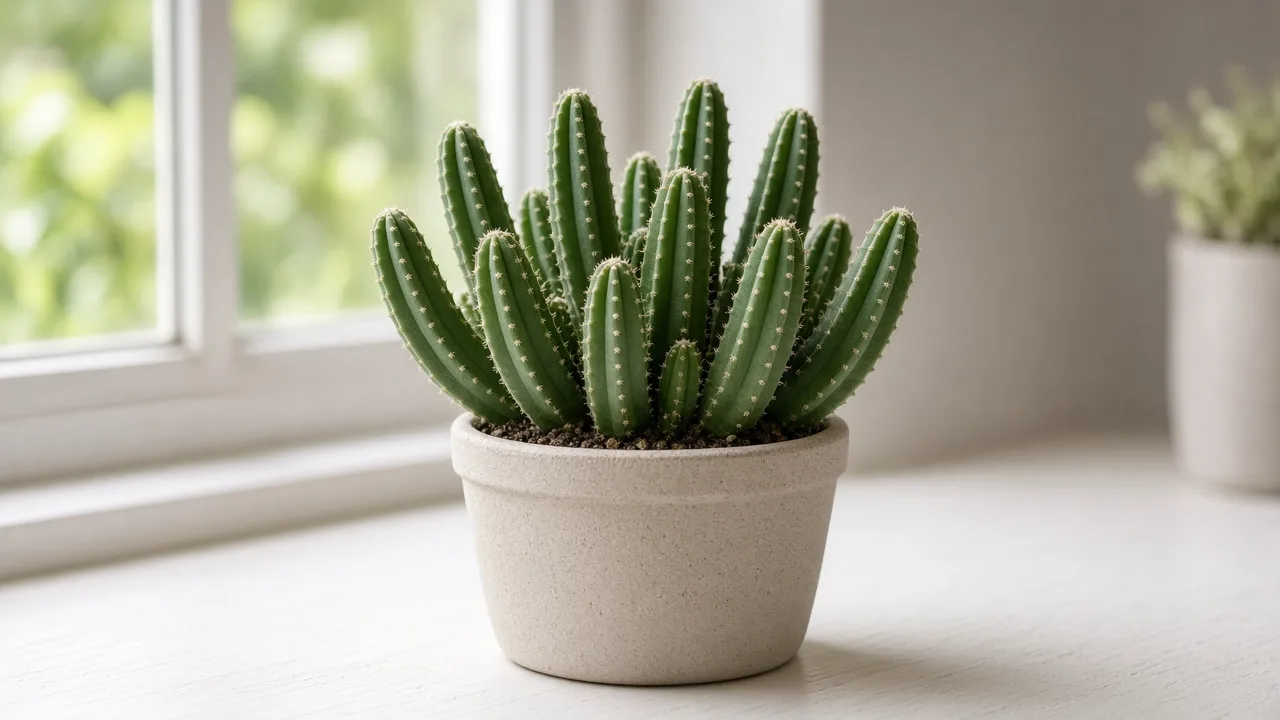
Drooping Leaves on Fairy Castle Cactus: Causes, Checks & Fixes
This guide covers drooping leaves on Fairy Castle Cactus. See also the general Drooping Leaves guide, watering, and light pages for this plant.
Drooping Leaves on Fairy Castle Cactus: Causes, Checks & Fixes
Quick answer
Picture two nursery-table scenes. In the first, the fairy-castle cluster tilts a few degrees toward the glass, ribs along each green turret look slightly pinched, and the pot feels feather-light—a dry skewer pulled from the drainage hole comes out dusty while the lowest columns still feel firm. That is drought posture on a leafless cactus stem, not “drooping leaves.” In the second, several turrets slump outward, the lowest segments yield to gentle pressure through a folded towel, and the pot stays heavy days after watering—that is wet-root failure, and more water will make it worse.
Acanthocereus tetragonus “Fairy Castle” builds its castle silhouette from hundreds of branching green columns with five sides and short white spines along each rib—there are no blades to hang limp. For how turgor loss works on leafy houseplants in general, see our drooping leaves guide. On fairy castle cactus, translate “drooping leaves” to turret lean, rib pinch, base firmness, and pot weight before you soak, repot, or move the plant.
First step: lift the pot and run a dry skewer through the mineral mix to the bottom. Do not water, repot, prune, or feed until you know whether you are on the dry-thirst side or the wet-rot side.
When to use this page vs other Fairy Castle Cactus guides
This page is the column-posture entry when the cluster looks limp, leans, or ribs look sunken—even though the plant has no foliage.
| Pattern | Read next |
|---|---|
| Whole turrets lose stiffness and feel deflated lengthwise | Wilting |
| Soft mushy base with wet soil | Root rot or overwatering |
| Wrinkled firm ribs, very light pot | Underwatering |
| Long bare gaps between tiny new tips | Leggy growth |
| Slow pale lean toward window over months | Not enough light |
| Yellowing bases without urgent mush | Yellow leaves |
What drooping leaves look like on Fairy Castle Cactus
Healthy indoor fairy castle cactus holds upright turrets—clustered columns that look like miniature castle towers. When something goes wrong, owners still search “drooping leaves” because the whole silhouette sags. On this species, watch these patterns instead:
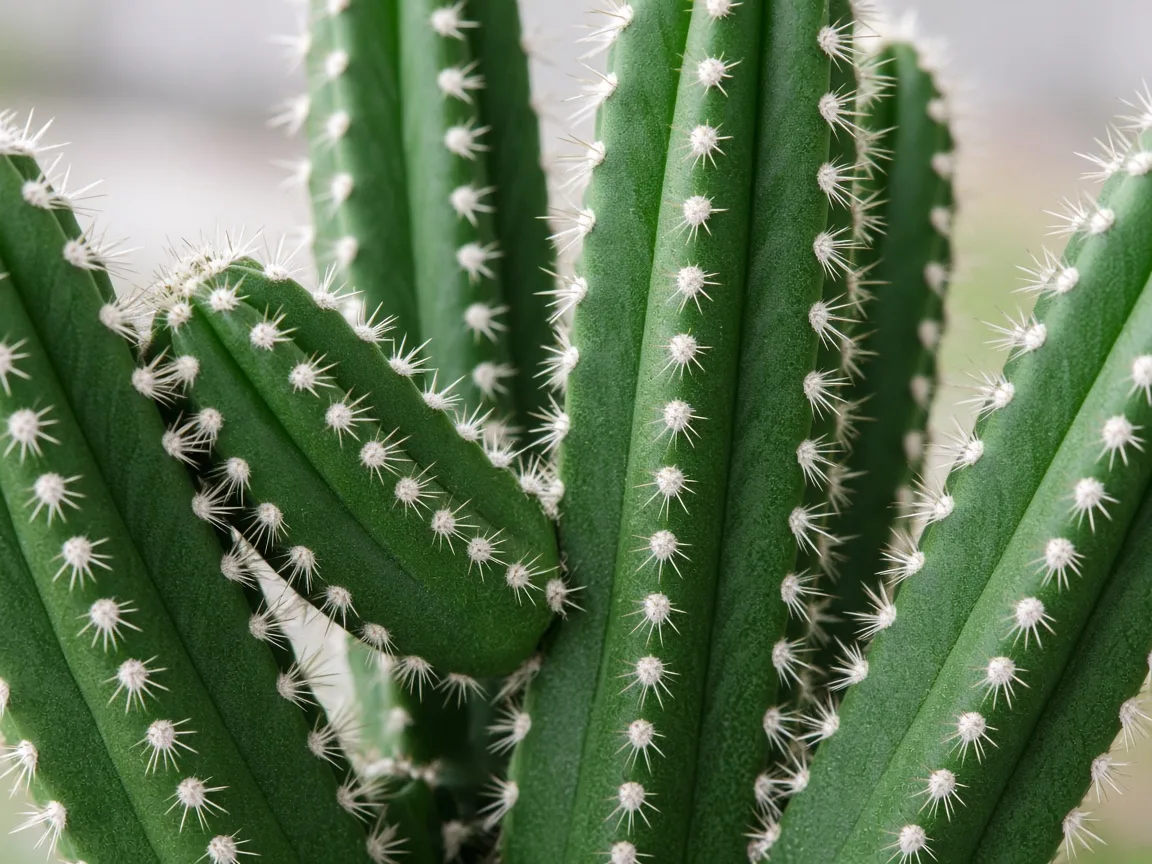
Pinched rib pleats and a slight lean—the plant has no leaves; posture and base firmness tell the story.
- Rib pinch with mostly upright turrets — Pleats between spines tighten while columns stay mostly vertical and bases feel firm. Common after long dry-down in a warm bright room; see underwatering.
- Cluster leans toward the window — Whole castle tilts on firm ribs, often with pale stretched growth on the shaded side. Usually low light or a top-heavy cluster in a light plastic pot—not thirst.
- Lower turrets soften while upper tips look normal — Bases yield to pressure; pot stays heavy. Classic failing roots on wet mix—see overwatering.
- Dull, slightly wrinkled skin on very light pot — Extended drought; ribs may pinch before the base softens because stem tissue stores water briefly.
- One outer column aging while neighbors stay firm — Often normal senescence on a slow-growing plant; several turrets failing together is a care-pattern problem.
A firm base with pinched ribs on a light pot is stressful but usually fixable with one proper soak. A soft sunken base on damp mix is urgent.
Turret lean vs rib pinch (no leaves to droop)
Searchers lump both as “drooping,” but on fairy castle cactus they are different problems.
Rib pinch (contraction) affects the pleats between spines while turrets may still sit upright. When internal water stores drop, ribs tighten before the base collapses. Causes are usually dry soil or seasonal drought stress, not “limp leaves.”
Castle lean is the whole cluster tilting. Causes include:
- Light chase — Dim corners produce weak growth that cannot support a spiny top-heavy cluster; turrets lean toward the brightest pane before ribs look severely pinched.
- Mechanical topple — Tall clustered columns in a narrow lightweight pot tip when soil is dry and the center of gravity sits high. That looks like drooping but fixes with a wider heavier container and rotation, not extra water.
- Root failure — Wet mix damages roots; columns lean on heavy soil even when upper tissue still looks green. Overwatering can cause root rot, soft mushy stems, drooping, and browning at the base.
If ribs pinch on a light dry pot with a firm base, treat thirst. If the castle leans on a heavy wet pot with a soft base, stop water and see root rot. If it leans with firm ribs and normal pot weight, check light and pot stability first.
The skewer dry-down and base-firmness test
Fairy castle pots are often shallow but wide, so surface dust means nothing. The mineral mix can look dry on top while the core stays wet—a classic setup for lower-column slump on firm-looking turrets until roots fail.
Pot weight: Lift the container off the saucer. A light pot with pinched ribs and firm bases fits drought. A heavy pot days after watering fits saturation or poor drainage.
Skewer depth: Push a dry bamboo skewer through the mix to the drainage hole—the same full-pot check described on the watering guide. Dusty throughout during warm growth fits thirst. Cool and damp for a week or more during slow winter growth fits overwatering.
Base press: Gently press the lowest inch of green column above the soil line through a folded towel over the spines. Firm and solid: roots may still be functional. Soft, squishy, or darker: suspect rot; do not water.
UC IPM notes that cactus pads and joints are modified stems that store water and recommends letting soil dry completely before watering again once roots are established—tall columns punish calendar watering because stored stem water masks root trouble for weeks.
Why Fairy Castle Cactus gets drooping leaves
Fairy castle cactus is a drought-adapted Cactaceae succulent grown for clustered upright columns indoors. Brief drought is safer than chronic wet mix, but the stem shows stress through rib posture and lean—not hanging foliage.
Overwatering and root failure (most serious cause)
When mix stays saturated—especially in cool weather or inside a cachepot—roots suffocate. Roots growing in waterlogged soil die because they cannot absorb oxygen, and damaged roots cannot anchor or hydrate columns. The castle slumps or leans on heavy wet soil even though upper turrets may still look green. Winter overwatering is especially dangerous when you should water sparingly and keep the plant dry until spring.
Underwatering and rib contraction
The species uses typical succulent soak-and-dry timing—allow soil to dry completely between waterings. Months without water in a warm bright room can pinch ribs and dull skin while bases stay firm—the plant looks “droopy” without any leaves to wilt.
Low light and etiolated lean
Partial sun to partial shade indoors still means enough brightness that wet soil dries predictably. Weak light produces thin, stretched turrets that tilt toward the pane. Ribs may look less plump on the shaded side before severe drought pinch appears.
Nursery peat and cache pots
Store-bought fairy castles often arrive in dense organic mix inside a decorative pot with no drainage. The surface dries while the core stays wet—a recipe for lower-column slump on a firm-looking cluster until roots fail. If your plant drooped within two weeks of purchase, slide it out and check whether the root ball is a wet brick before you assume thirst.
Repotting and transplant stress
Root disturbance limits uptake for one to two weeks even when watering looks correct. Slight lean or dull ribs after spring repotting can be temporary if bases stay firm and you avoid keeping fresh mix soggy—see the repotting guide.
How to confirm the cause
Work through these checks in order:
- Base firmness — Firm lowest turrets: roots may still work. Soft, squishy, or sour-smelling mix: suspect rot; do not water.
- Soil moisture at depth — Skewer to the pot bottom. Wet for many days after your last drink strongly suggests overwatering. Bone-dry throughout fits underwatering.
- Pot weight — Light with pinched firm ribs fits drought. Heavy with slump fits saturation.
- Season — Cool months plus firm bases and gradual lower-column loss may be rest, not emergency collapse. Active warm growth with dry soil fits thirst.
- Recent changes — Repotting, a move to a dim bathroom, or winter watering on a summer schedule explains droop without pests.
- Cluster pattern — One outer column leaning beside firm neighbors points to mechanical tip or local damage. Every turret at once points to root-zone water.
| What you find | Likely cause | Next move |
|---|---|---|
| Firm bases, dry skewer, warm season | Underwatering | Deep soak, then watering dry-down |
| Soft base, wet soil, cool or slow growth | Overwatering / rot | Stop water; unpot if base keeps softening |
| Firm bases, droop 3–10 days after repot | Transplant stress | Hold water briefly; keep bright |
| Firm lean toward window, normal weight | Low light / top-heavy | Light + stable pot |
| Heavy wet pot, spreading mush | Root rot | Root rot rescue |
First fix for Fairy Castle Cactus
Lift the pot and skewer the mix to the bottom—then act on what you find, not on what the silhouette looks like.
- Firm bases + bone-dry skewer during active growth: Water thoroughly until a little runs from drainage holes, drain the saucer, then wait until the mix is completely dry throughout per the watering guide.
- Soft base + wet soil: Stop watering immediately. See overwatering and root rot before repotting unless tissue is clearly rotting.
- Firm ribs + lean toward window + normal pot weight: Improve light gradually and rotate; use a wider heavier pot if the cluster tips mechanically.
- Recent repot, firm base, slightly dull ribs: Hold water until the skewer reads dry through the new mineral mix; avoid keeping repot soil constantly moist.
Do not carve or brace soft rotting tissue for cosmetics. Do not fertilize a leaning stressed cactus to push growth. Do not repot on day one unless roots are clearly failing and you have a dry recovery plan.
Recovery timeline
Mild underwatering pinch often corrects within one to two soak cycles once the mix fully rehydrates and bases stay firm. Overwatering recovery takes two to four weeks minimum after you stop water and dry the root zone—longer if large stem sections were removed. Columns that went soft from rot do not straighten; watch for new firm turret tips instead.
Fairy castle cactus is naturally slow, so give each correction at least ten days before changing light, pot size, or watering again.
What not to do
Do not water a leaning fairy castle by reflex—adding water to already wet mix accelerates rot. Do not mist the cluster to “perk up drooping leaves”; surface moisture without root uptake worsens decay in cacti that prefer dry intervals between drinks. Do not fertilize before moisture and roots are stable. Do not repot into a much larger container “to help it recover”—extra wet soil volume slows dry-down. Wear gloves when squeezing bases; spines along every rib make inspection painful bare-handed.
How to prevent drooping posture next time
Match watering to full-pot dry-down with a skewer, use gritty cactus mix in a container with drainage holes, and give bright light so new turrets stay compact. Cut winter watering sharply when growth slows—soak and dry, with soil fully dry between waterings, and much longer intervals in cool rooms.
Learn your pot’s weight when fully dry versus two days after a proper soak—that baseline beats any calendar reminder. Empty saucers after every drink and never let cachepots trap standing water. Rotate occasionally so the castle does not lean permanently toward one pane.
When to worry
Escalate immediately if:
- Multiple turrets collapse within a few days while soil stays wet.
- Lowest columns feel soft and mix smells sour—start root rot rescue the same day.
- New tips yellow or mushify—not just one aging outer column.
- Drooping follows repotting into a much larger pot and soil has not dried in two weeks.
Slow lean of one outer column, or firm ribs leaning toward a window, gives you time to adjust care without emergency surgery.
Related Fairy Castle Cactus guides
- Overview — culture and spine safety
- Watering — soak-and-dry rhythm and winter rest
- Light — compact turrets vs stretched lean
- Wilting — lost stiffness workflow
- Root rot — soft base rescue
- Underwatering — rib pinch on firm columns
- Problems hub — full symptom index
Conclusion
Drooping leaves on fairy castle cactus is really turret lean and rib pinch on a leafless columnar stem. Match soak, stop-water, light, or stability fixes to what pot weight, skewer moisture, and base firmness tell you. Dead or mushy tissue will not straighten cosmetically; watch for re-expanded ribs, a stable upright cluster, and firm lowest turrets as your success markers.
Related tool
Use the Drooping Leaves Diagnosis Tool to narrow causes for drooping leaves on this plant before changing multiple variables at once.