Underwatering on Fairy Castle Cactus: Causes, Checks & Fixes
Quick answer
Underwatering on Fairy Castle Cactus shows as shrunken, wrinkled ribs on firm green columns, stalled tip growth in warm bright weather, and mix that has pulled away from the pot. First step: push a dry skewer to the bottom to confirm the whole root zone is dry, then soak until water runs from the drainage holes and drain the saucer fully.
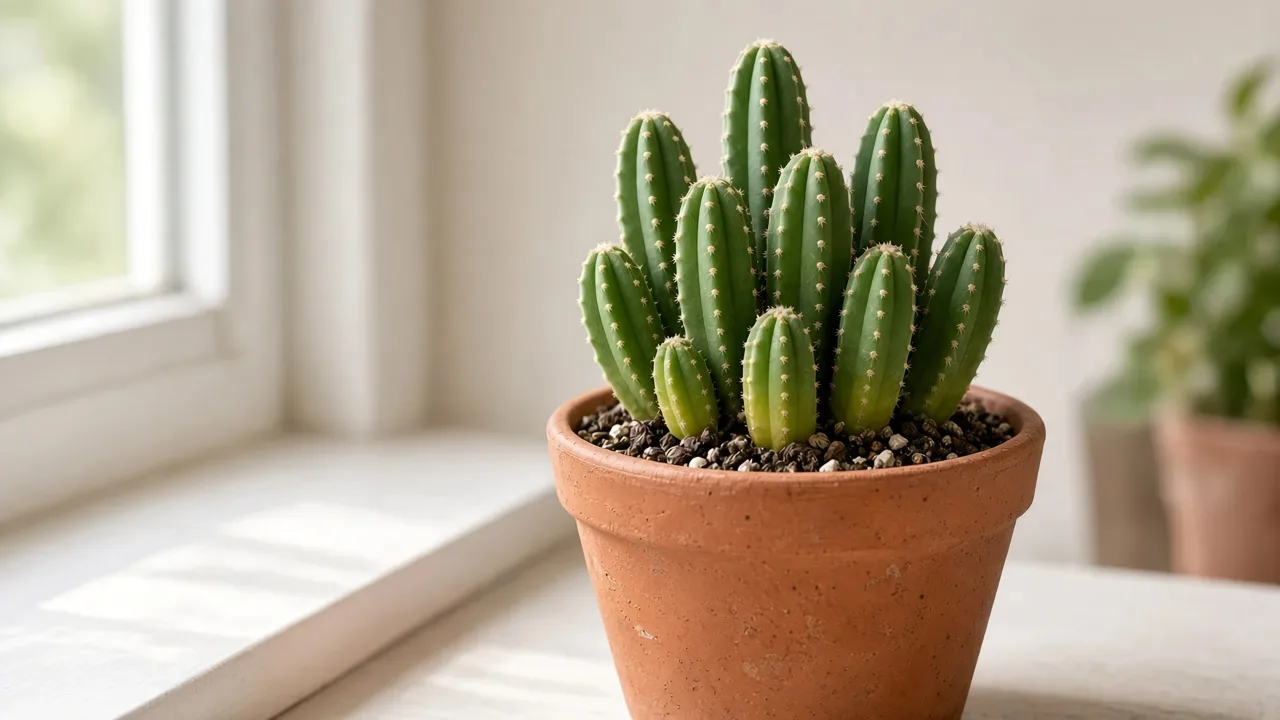
Underwatering on Fairy Castle Cactus: Causes, Checks & Fixes
This guide covers underwatering on Fairy Castle Cactus. See also the general Underwatering guide, watering, and light pages for this plant.
Underwatering on Fairy Castle Cactus: Causes, Checks & Fixes
Quick answer
Fairy Castle Cactus (Acanthocereus tetragonus) stores water in its clustered, five-ribbed columns, so thirst shows up slowly—then suddenly as vertical wrinkles between ribs, a feather-light pot, and mix that has shrunk away from the clay wall. That pattern is different from the soft, blackened bases you see with chronic wet soil.
First step: slide a dry skewer through the drainage hole until it reaches the pot bottom. If it comes out clean and dusty throughout, give one deep soak until water runs freely from the holes, then empty the saucer. For how prolonged dry spells stress roots in general, see our underwatering guide—on this cactus, the tell is rib shrinkage on firm green towers, not floppy tropical leaves.
When to use this page vs other Fairy Castle Cactus guides
- Overwatering — soft, mushy stem bases, sour mix, or leaning columns from root loss
- Root rot — blackened bases that stay wet after you stop watering
- Wilting — when columns droop but you are unsure whether the mix is too wet or too dry
- Not enough light — pale, stretched towers without deep rib wrinkles
- Sunburn — dry brown patches on sun-facing ribs while the rest of the column stays plump
- Watering guide — long-term soak-and-dry rhythm after you fix acute drought
What underwatering looks like on Fairy Castle Cactus
On this plant you are reading stems, not leaves. Each turret is a ribbed column with short white spines along the edges. When internal water drops too low, the ribs pinch inward and the stem looks slightly deflated—like a firm accordion—while color often stays green.
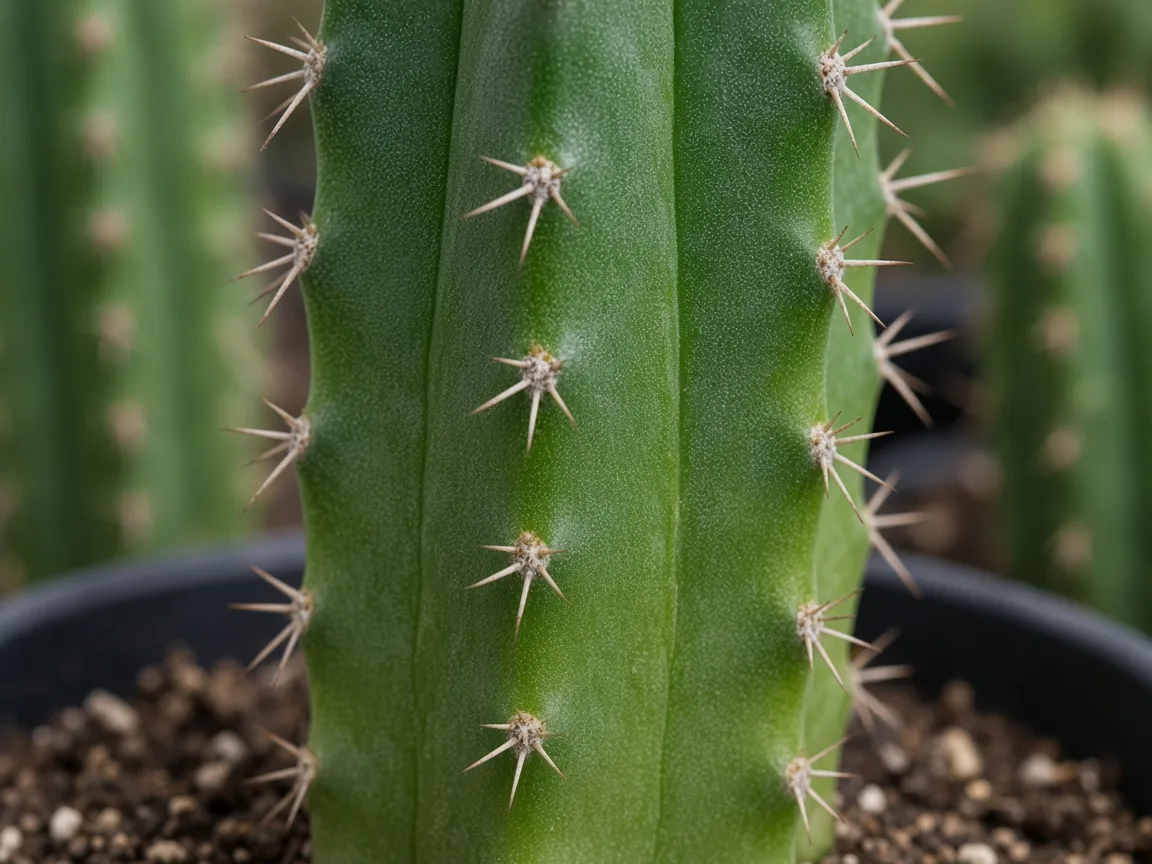
Underwatering symptoms on Fairy Castle Cactus — compare wrinkled ribs with plump tissue on the same cluster.
Typical drought signs on Fairy Castle Cactus:
- Vertical wrinkles between the five ribs, especially on the tallest towers
- Slow or stalled tip growth during warm, bright weather when you would expect new turrets
- Pot weight that feels hollow and mineral mix that has pulled away from the pot wall
- Firm, green columns without the sour smell or black mush at the soil line that signals rot
- No improvement after a light surface sprinkle because grit channels water around a dry root ball
Gardenia notes that Acanthocereus tetragonus survives long dry periods by storing moisture in fleshy stems—wrinkling means those reserves are running low, not that the plant is dead.
Reading rib wrinkles vs castle architecture
The fairy-castle form branches into stacked towers. Underwatering usually hits outer, older columns first while inner young tips still look square-shouldered. Press a spine-free face gently: drought tissue is dry and slightly sunken but still solid. Rot tissue is soft, translucent, or weeping at the base.
Spines stay white; color fade toward yellow often points to low light or stress stacking, not thirst alone. If only the sun-facing rib is brown and crisp, compare with sunburn before you soak.
Why Fairy Castle Cactus gets underwatering
This cactus is built for drought—Planet Desert describes it as drought-resistant with typical Cactaceae soak-and-dry needs—so underwatering is usually a schedule mismatch, not a mysterious disease.
Common triggers indoors:
- Winter fear of rot leads to zero water for months while the plant still sits in a hot, bright window and uses internal stores
- Calendar watering copied from leafy houseplants instead of Fairy Castle Cactus watering dry-down rules
- Fast-draining mineral mix in small terracotta that legitimately dries in ten days during summer growth
- Hydrophobic old mix after a long dry spell—water runs down the sides while the core stays dusty
- Root-bound pots where fine roots exhaust moisture faster than a “cactus monthly” rule suggests
- Recent move to stronger light without shortening the interval between full dry-down checks
Succulents and Sunshine recommends the soak-and-dry method and less frequent water in winter—skipping every check, not merely watering less, is how ribs wrinkle in heated rooms.
How to confirm the cause
Work through these checks before you change light, repot, or fertilize:
- Skewer or chopstick to the bottom. Dry wood emerging clean and dusty supports drought. Damp wood with a sour smell points to overwatering or root rot.
- Base firmness. Pinch the lowest inch above the mix. Firm green or light cork is fine; mush is not underwatering.
- Pot weight and gap. Lift the container. A very light clay pot plus soil shrinkage fits drought; a heavy pot does not.
- Tip growth calendar. In spring and summer under good light, stalled new turrets with wrinkled ribs strongly fit thirst.
- Watering history. Count weeks since the last deep soak, not since you misted the gravel top dressing.
The RHS advises checking moisture a few centimetres down rather than watering on autopilot—on mineral cactus mix, the surface can look dry while the core still holds moisture, or the opposite after hydrophobic shrinkage.
First fix for Fairy Castle Cactus
Make one correction: rehydrate the entire root zone.
Place the pot in a sink. Water slowly with room-temperature water until it flows steadily from the drainage holes—often several passes for very dry grit. Stop when the mix darkens throughout, not only at the rim. Let the pot drain 15–30 minutes, then empty the saucer.
If water instantly tunnels around a shrunken root ball, bottom-soak instead: set the pot in a basin of water to the rim height for 20–30 minutes, then drain fully.
Planet Desert notes that underwatering is easier to correct than overwatering on this cactus—one proper drink beats repeated shallow sprinkles that never reach fine roots.
Do not fertilize, repot, or prune heavily the same day. Spines make rash handling dangerous—use tongs or a folded newspaper collar when moving a soaked pot.
Step-by-step recovery
For mild to moderate rib wrinkling with firm bases:
- Deep soak or bottom-soak as above.
- Return the plant to its usual bright indirect spot—avoid baking dehydrated ribs in new hot afternoon sun.
- Wait until the full root zone dries before the next drink, following soil that drains fast.
- Watch the tallest tips for new square growth over the next two to four weeks.
- If the pot dries out again within a few days after a good soak, plan a spring repot into slightly larger mineral mix—but only after ribs plump and growth stabilizes.
Recovery timeline
Ribs often begin to smooth within three to seven days after a thorough soak if roots are intact. Severe summer neglect—many columns deeply wrinkled—may need two to four weeks before new turret tips look normal.
Brown corky faces or old spine scars do not plump again; success means firm columns, filled ribs, and clean new growth, not reversing every blemish. If columns stay shriveled while mix stays wet, unpot and inspect for rot before the next watering.
What not to do
- Do not mist ribs instead of soaking the mix. Surface moisture does not refill stem tissue.
- Do not water on a weekly leafy-plant schedule. Gardenia suggests sparse intervals with full dry-down between—frequency varies by season and pot.
- Do not keep a drained pot in a full saucer after recovery watering.
- Do not assume yellow towers mean thirst—pair color change with rib texture and light levels.
- Do not pour fertilizer on shriveled columns hoping for a boost; feed only after recovery during active growth per the fertilizer guide.
Lookalike symptoms
| What you see | Likely cause | First action |
|---|---|---|
| Wrinkled ribs, dusty skewer, firm bases | Underwatering | One deep soak; drain saucer |
| Soft black base, sour wet mix | Overwatering / rot | Stop water; inspect roots |
| Brown sun-facing patch, plump other ribs | Sunburn | Filter light; do not over-soak |
| Pale stretched towers, few wrinkles | Not enough light | Brighten gradually |
| Columns lean, wet heavy pot | Root loss from wet feet | Dry-down and root check |
| Slow growth only, firm plump ribs | Normal slow habit or cool winter rest | Adjust expectations; verify dry-down |
Fairy Castle Cactus care cross-check
Align recovery with how this species actually lives indoors:
- Watering: Deep soak only after complete root-zone dry-down—see the dedicated watering guide.
- Soil: Mineral, fast-draining mix; water-repellent old peat top layers worsen channeling—see soil.
- Light: Bright light drives faster dry-down; dim rooms stretch growth without rib wrinkling.
- Winter rest: Cut frequency sharply in cool, dark months—but heated bright windows still need occasional full soaks.
When plants cannot absorb water from dry media, stems lose turgor; cactus ribs show that loss as wrinkles rather than leaf wilt.
How to prevent underwatering next time
- Check the pot, not the calendar. Lift weight and skewer the bottom monthly; terracotta in summer may need water every two to three weeks, winter every six to ten weeks or longer in a cool room.
- Soak until runoff, then let the mix go bone dry throughout before repeating—the soak-and-dry pattern this genus expects.
- Refresh hydrophobic mix if water repeatedly races around the root ball.
- Watch tallest turrets during spring growth; stalled tips are early drought warnings on slow cacti.
- Pair light changes with check frequency when you move the castle closer to a window.
Practical checks
Urgency
Underwatering is usually medium severity on Fairy Castle Cactus—weeks of reserve buy you time. Escalate if many columns are deeply shriveled after a hot, dry summer, or if new branches collapse. Soft wet bases same day mean rot, not drought.
Inspection order
Skewer dry-down at pot bottom, rib firmness and wrinkle depth, pot weight, then stem bases for mush, then recent light or vacation gaps.
Escalation point
If ribs stay wrinkled after two proper soaks separated by a full dry cycle, unpot and look for dead fine roots or compacted grit blocking uptake—repot into fresh mineral mix in spring if needed.
Related Fairy Castle Cactus guides
- Fairy Castle Cactus overview
- Fairy Castle Cactus watering
- Fairy Castle Cactus light
- Fairy Castle Cactus soil
- Overwatering on Fairy Castle Cactus
- Wilting on Fairy Castle Cactus
- Root rot on Fairy Castle Cactus
- Fairy Castle Cactus problems hub
Related tool
Use the Plant Watering Calculator to narrow causes for underwatering on this plant before changing multiple variables at once.