Not Enough Light on Fairy Castle Cactus: Turret Checks &
Quick answer
Fairy Castle Cactus without enough light fades to yellow-green, leans toward the brightest gap, and pushes thin floppy turrets while the pot still looks alive. First step: move the cluster within a foot of your brightest south or west window and confirm several hours of direct or very bright light on the tallest columns before changing water or soil.
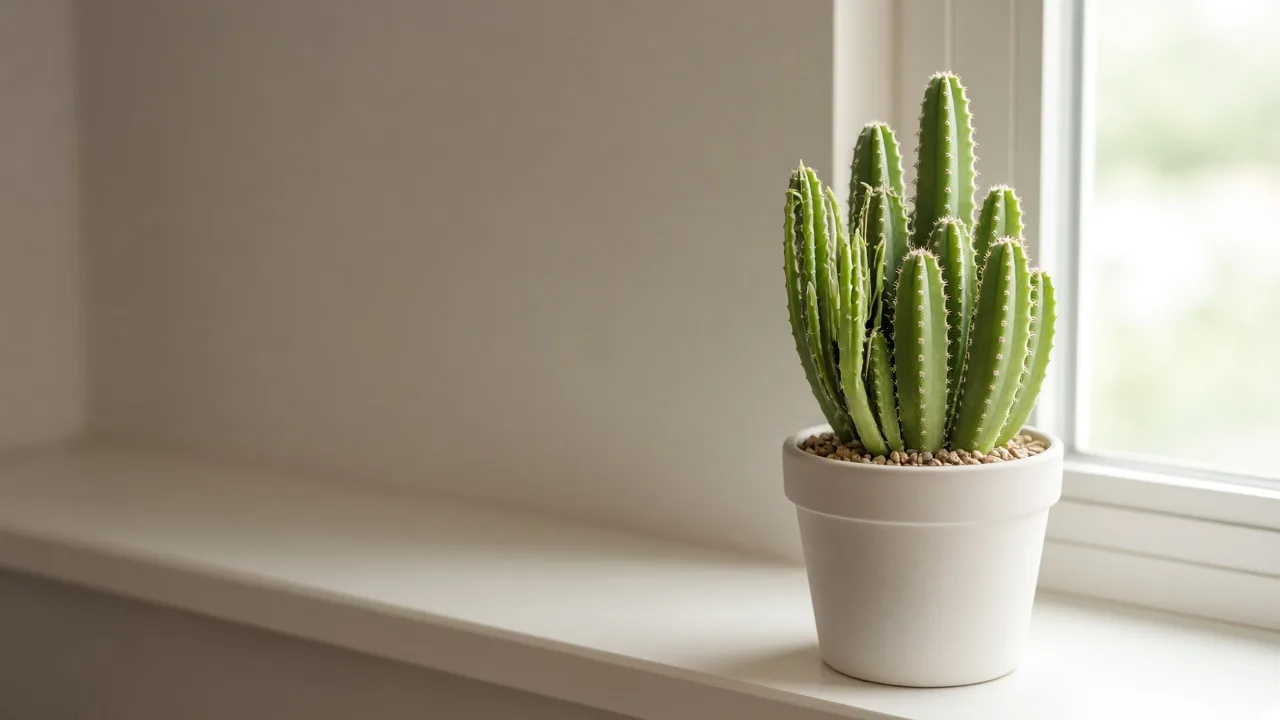
Not Enough Light on Fairy Castle Cactus: Causes, Checks & Fixes
This guide covers not enough light on Fairy Castle Cactus. See also the general Not Enough Light guide, watering, and light pages for this plant.
Not Enough Light on Fairy Castle Cactus: Causes, Checks & Fixes
Quick answer
Acanthocereus tetragonus “Fairy Castle Cactus” is a cluster of slow, five-ribbed columns that needs real photons to stay compact—not the “any bright room” tolerance of many foliage houseplants. When light falls short, the turret-like branches fade, lean toward the brightest gap, and add thin floppy segments while the plant still looks green enough to hide the problem for months.
For how chronic low light limits photosynthesis in general, see our not enough light hub. On fairy castle cactus, the decisive check is direct or very bright light on the tallest turrets—not whether the living room feels adequate to your eyes.
First step: move the pot within 12 inches (30 cm) of your brightest south- or west-facing window and confirm sun or very bright light reaches the top columns for several hours on clear days (or add a close grow light—details below). Do not repot, prune, or fertilize until placement is fixed.
When to use this page vs other Fairy Castle Cactus guides
This page is the symptom-first entry for shade-stressed fairy castle—pale ribs, directional lean, and weak new turrets without pest webbing or base rot.
| Pattern | Read next |
|---|---|
| Extreme bare stem with tiny new turrets everywhere | Leggy growth |
| Growth stalled but columns still compact | Slow growth |
| Lower columns yellow while tips stay green | Yellow leaves |
| Soft base at soil line after dim-corner watering | Overwatering or root rot |
| Wrinkled ribs in a bright window | Underwatering |
| Red-brown patches on sun-facing ribs | Sunburn |
| Long-term placement and acclimation | Light guide |
| Full problem index | All fairy castle problems |
What not enough light looks like on Fairy Castle Cactus
Healthy fairy castle in strong light builds short rib segments, deep green five-sided columns, and firm turrets that branch like castle towers. Shade stress breaks that silhouette in ways specific to this clustered cactus:
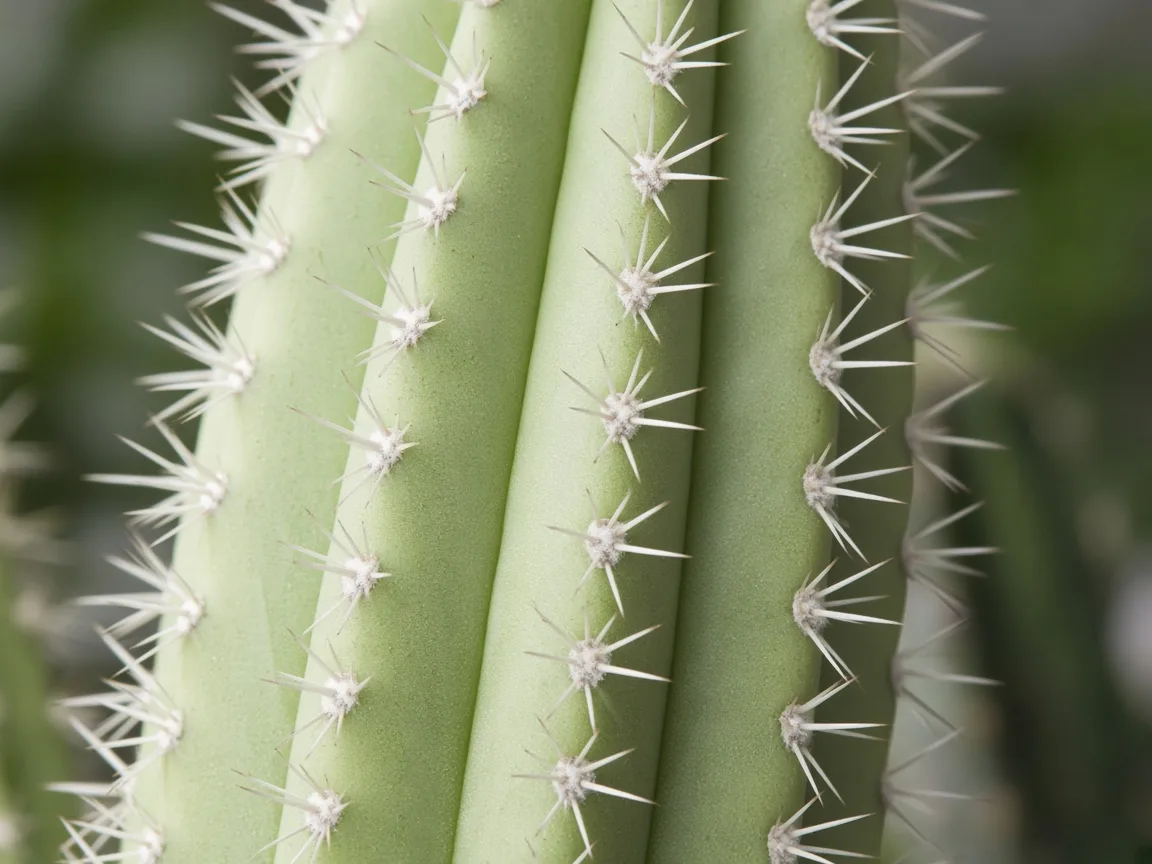
Etiolated rib flush: longer pale green segments between white spines—compare with tighter ribs lower on the same turret.
- Directional lean — the whole cluster or individual turrets angle toward one window gap, skylight, or hallway opening
- Long gaps between ribs — visible inches of smooth green stem between spine rows that used to sit closer together
- Thin, soft new turrets — fresh vertical shoots feel pliable rather than firm and woody
- Yellow-green or washed-out color — stems can fade and turn yellow when sunlight is insufficient, even before collapse
- Floppy height without girth — tall castle shapes wobble in light pots because stretch outpaces stem thickening
- Tip growth that never “fills in” — slow species already; in shade, new tips stay pencil-thin for seasons
This differs from leggy growth when stretch is extreme and structural, from yellow leaves when color washes out on older columns without dramatic internode length, and from overwatering when the base turns mushy even though you recently moved the plant.
Why Fairy Castle Cactus gets not enough light
Fairy castle evolved in hot, arid regions with intense sunlight—scrublands and rocky coasts where open light is normal. UF/IFAS notes that cacti prefer a sunny indoor location and grow only a few inches per year even when conditions are good, which makes shade stress easy to miss.
Castle-specific triggers:
- Room brightness vs turret brightness — a living room that feels fine may deliver soft ambient light at the base while the tallest turret sits in shade. Light intensity drops quickly with distance from glass.
- North windows and interior shelves — pots more than a few feet from south or west glass rarely get enough energy for compact rib spacing. The plant survives on stem reserves longer than a fern would, delaying obvious wilt.
- “Bright indirect only” advice — many retail tags suggest indirect light; Gardenia still recommends bright light near south or west windows and warns that too little light causes leggy growth. Fairy castle often needs more sun than that generic label implies.
- Seasonal shade creep — winter sun that was strong becomes partially blocked once outdoor trees leaf out, producing mid-season pale flushes and lean.
- Nursery-to-home drop — greenhouse stock grown under high light looks tight; stretch often appears two to eight weeks after a move to a dim desk or bathroom shelf.
- Competing decor — sheers, tinted film, and tall furniture that block the strip of glass where the highest column reaches.
Do not assume a green castle means light is fine. Planet Desert describes floppy, too-tall growth when shade is excessive—the plant can look “healthy” while etiolating.
Turret-by-turret lean audit
Fairy castle branches into many vertical columns. Low light rarely hits every turret equally, so inspect each tower separately—a step that does not apply to rosette succulents or single-stem snake plants.
- Stand behind the pot and sight along each column toward the window. The turret leaning farthest is your light compass.
- Compare rib spacing within the same column—newest six inches vs growth from last year. Widening gaps confirm etiolation, not normal slow growth.
- Check whether only the tallest turret stretches while lower forks stay compact. That pattern means the upper canopy outgrew the light pool, not that the whole plant is diseased.
- Rotate the pot 90° and watch for correction over two weeks. Turrets that keep bending to the same compass point confirm directional shade.
- Note dry pot weight. A dim plant uses water slowly; a heavy pot plus stretch often means you are watering for sun that is not there—cross-check the watering guide.
Five-sided rib spacing as a light gauge
Each fairy castle stem has five ribbed faces with short white spines. In adequate light, new segments stay relatively short and the “castle” looks densely stacked. In chronic shade:
| Rib pattern on newest growth | What it usually means | First adjustment |
|---|---|---|
| Tight ribs, deep green, firm tip | Adequate light for this window | Maintain placement; rotate weekly |
| Long smooth gaps between spine rows | Etiolation from low light | Move closer to glass or add grow light |
| Pale yellow-green along full column | Insufficient sun for color depth | Increase hours of bright light; rule out overwatering separately |
| Lean on one face only | Directional light—one side of the turret gets sun | Shift pot or remove window blocker |
| Red-brown patches on sun-facing ribs only | Too much unacclimated direct sun | See sunburn guide—not “more shade” by default |
Plain green fairy castle will not show red stress colors, so rely on rib spacing and lean rather than pigment alone.
How dim light tightens the overwatering trap
Light is the throttle for water use on columnar cacti. A bright fairy castle photosynthesizes actively, dries its gritty mix on the rhythm in our soil and watering guides, and stays firm. A shaded plant grows slowly, holds moisture longer in the root zone, and is more vulnerable to rot if you keep watering on a “sunny windowsill” calendar.
That coupling is especially dangerous on multi-turret pots: the top looks fine while the base sits in wet mix. If you see stretch and the pot stays heavy for weeks after a soak, fix placement first, then lengthen dry intervals per watering—not the reverse. Succulents and Sunshine recommends soak-and-dry with complete dry-down between drinks, which is harder to judge when the plant is barely using water in shade.
How to confirm the cause
Work through these checks before repotting or feeding:
- Log sun on the tallest turret for three clear days—note first direct sun and when shade returns.
- Compare rib spacing on the newest segment vs one-year-old growth on the same column.
- Feel tip firmness — etiolated tips bend; underwatered ribs wrinkle in bright light (see underwatering).
- Probe the base — soft, blackened tissue at the soil line points to overwatering or root rot, not light alone.
- Inspect for pests — webbing, cottony clusters, or sticky honeydew mean spider mites or mealybugs need treatment before you blame shade.
Confirmed low light: lean + long rib gaps + pale color without base mush, pest signs, or chronic wet mix.
The first fix to try
Move the entire pot to the brightest legal spot in your home—within a foot of unobstructed south or west glass—and leave everything else alone for two weeks.
Planet Desert suggests at least six hours of bright indoor light for fairy castle, and Gardenia recommends bright light with some direct morning sun. Rotate a quarter turn every week once turrets start growing evenly toward the window.
If no window qualifies:
- Hang a full-spectrum grow bulb 12–18 inches above the tallest turret for 12–14 hours daily (same timing many succulent growers use for winter supplementation).
- Avoid plunging a dim-grown plant into harsh midday summer glass without acclimation—watch for sunburn and pull back or diffuse if ribs bronze.
Do not fertilize, repot, or prune etiolated columns on day one. Extra nitrogen on a shaded cactus often produces more soft stretch, not a tighter castle.
Recovery timeline
Fairy castle is naturally slow; light correction shows up on new growth, not old stretched segments.
| Timeframe | What improvement looks like |
|---|---|
| 1–2 weeks | Lean stops worsening; newest tip may begin to darken |
| 4–8 weeks | Next rib flush shorter and firmer on at least one turret |
| 2–4 months | Multiple columns show tighter stacking; pot dries on a realistic rhythm |
| 1+ years | Old etiolated length remains; castle silhouette slowly densifies from the top |
Judge success by rib spacing and tip firmness, not by shrinking old stem length.
Mistakes to avoid
- Watering more because the plant “looks thirsty” in shade — floppy etiolation is not wilt from drought unless ribs wrinkle in a bright window.
- Repotting into fresh mix before fixing light — wet, organic-heavy mix in a dim corner worsens mold on soil and root stress.
- Pruning every stretched turret at once — you remove photosynthetic surface the plant needs to recover; trim only if a column is unstable or diseased.
- Assuming a bathroom or office fluorescent is enough — unless a dedicated grow lamp sits close to the columns.
- Ignoring winter — short days plus drawn curtains can trigger pale winter flushes even if summer placement was fine.
How to prevent it next time
Anchor care to the light guide and the plant hub at /plants/fairy-castle-cactus/:
- Keep the brightest turret within a foot of glass or under a close grow light.
- Re-check sun path each spring and after you rearrange furniture.
- Match watering to actual dry-down with a skewer to the bottom of the pot, especially after light increases.
- Buy or receive new plants? Quarantine in bright light for a month before assuming the nursery compact shape will hold in a dim room.
Related Fairy Castle Cactus guides
- Overview — species baseline and care rhythm
- Watering — soak-and-dry after light is adequate
- Soil — gritty mix that dries fast once the plant uses water again
- Leggy growth — when stretch is extreme and structural
- Slow growth — normal slowness vs shade-limited tips
- Drooping leaves — when limp columns may involve water stress too
Related tool
Use the Plant Problem Diagnosis Tool to separate light stress from watering and pest patterns before you change multiple variables at once.