Yellow Leaves on Fairy Castle Cactus: Column Color Checks
Quick answer
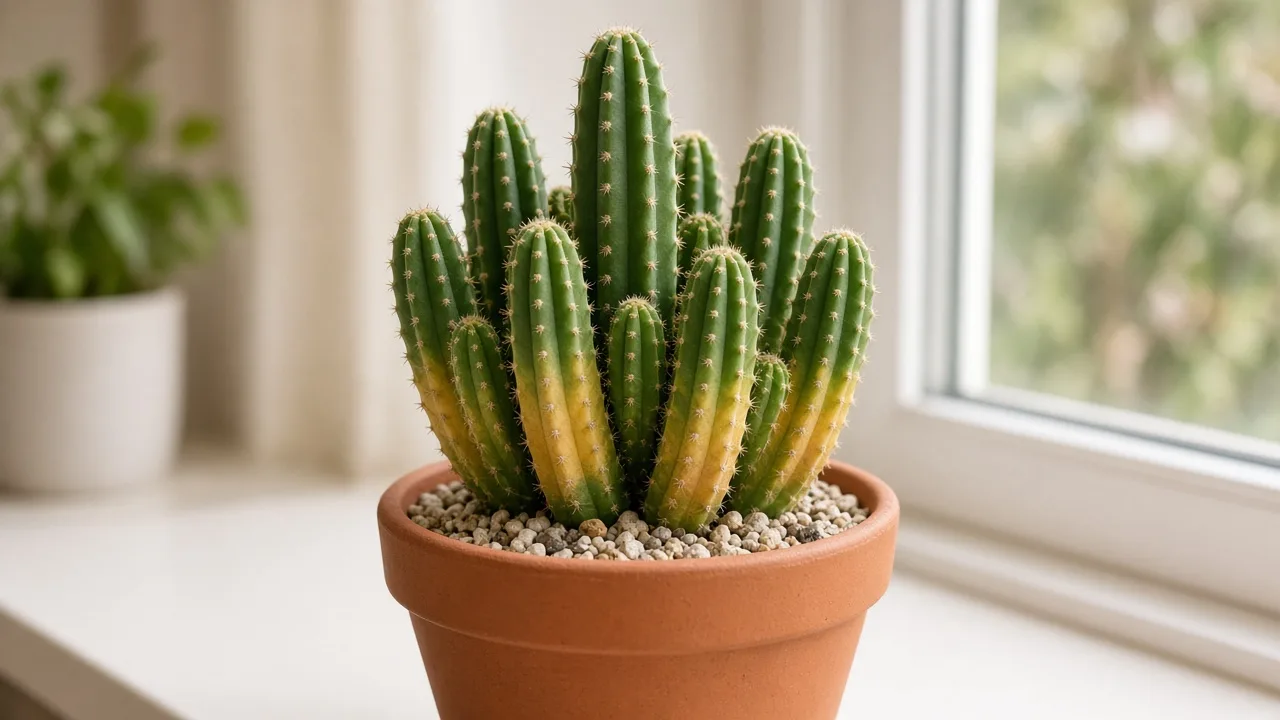
Yellow leaves on fairy castle cactus usually means yellowing ribbed columns—not foliage—most often from wet mix at the soil line, too little light fading green stems, or normal corky aging on lower turrets. First step: lift the pot and press the lowest column segment above the soil with a folded paper towel before you water, repot, or fertilize.
Yellow Leaves on Fairy Castle Cactus: Causes, Checks & Fixes
This guide covers yellow leaves on Fairy Castle Cactus. See also the general Yellow Leaves guide, watering, and light pages for this plant.
Yellow Leaves on Fairy Castle Cactus: Causes, Checks & Fixes
Quick answer
Fairy castle cactus (Acanthocereus tetragonus ‘Fairy Castle’) has no true leaves—only branching, castle-like green columns with five ribs. When owners search “yellow leaves,” they usually mean columns turning yellow-green, dull, or translucent, often starting on the lowest turret by the soil or on pale, stretched arms in a dim room.
This cactus stores water in fleshy stems and wants long dry intervals between soaks. Chronic wet mix can make stems soft with yellowing or browning at the base, while too little light can fade stem color toward yellow. Watering on a calendar without checking dryness can produce yellow-brown bases on mushy stems.
For how chlorosis and root stress yellow foliage on leafy plants, see our yellow leaves hub. On fairy castle cactus, split the pattern by pot weight and which turret yellows first—wet heavy pots with soft lower ribs are not the same as light dry pots with wrinkled firm ribs or one sun-facing bleached face.
First step: lift the pot and press the lowest column segment above the soil line (use a folded paper towel or tongs because of spines). Note firm vs soft ribs before you add water, fertilizer, or repot.
When to use this page vs other Fairy Castle Cactus guides
| Pattern | Read next |
|---|---|
| Soft yellow base + heavy wet pot | Overwatering — then root rot if mushy |
| Firm wrinkled ribs + light dry pot | Underwatering |
| Bleached or tan patch on one sun-facing rib | Sunburn |
| Columns stretch toward window, pale all over | Not enough light |
| Whole cluster limp on wet soil | Wilting or drooping leaves |
| Brown dry tips on columns | Brown tips |
| White cottony patches in rib notches | Mealybugs |
| Sticky new growth, fine webbing | Spider mites |
What yellow “leaves” look like on Fairy Castle Cactus
Yellowing here is stem color change on ribbed columns, not a canopy of leaf blades. Learn the three patterns growers confuse most often.
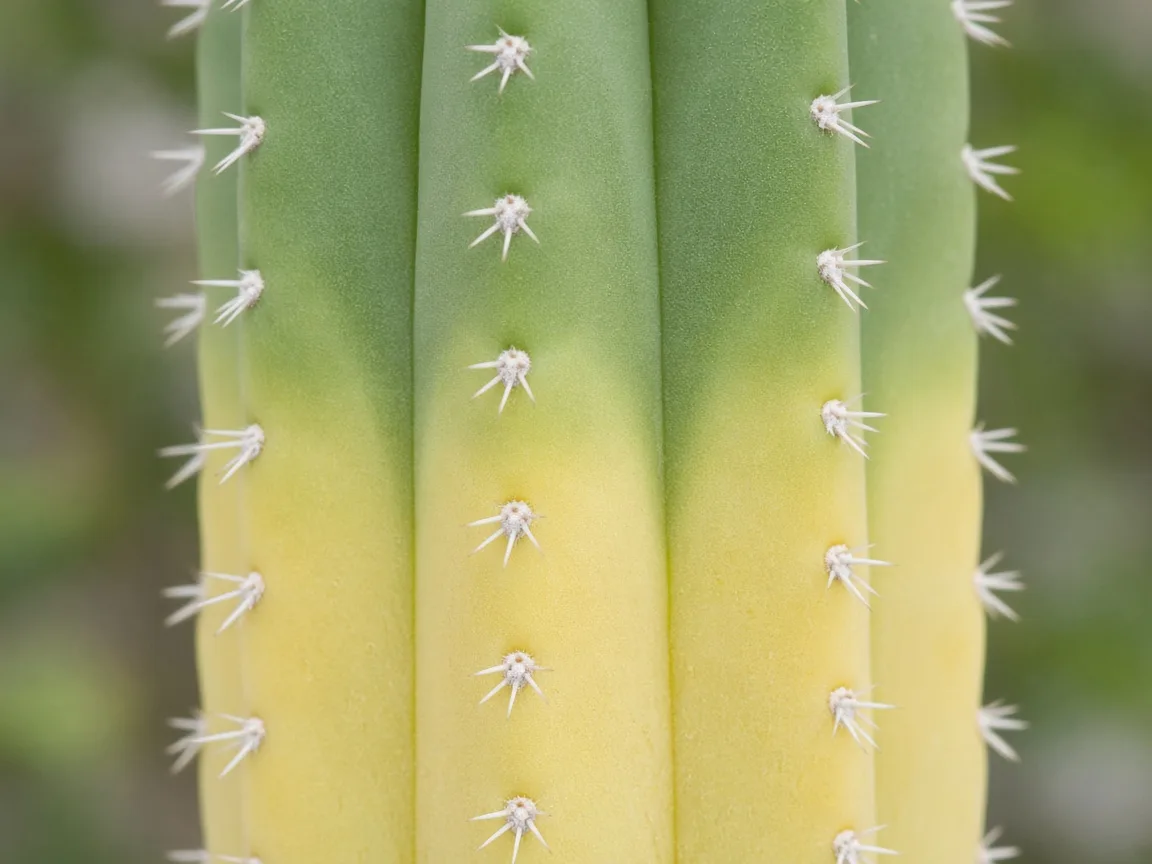
Yellow column tissue on fairy castle cactus—compare dull lower ribs with still-green upper turrets on the same cluster.
Wet-soil yellowing (most common indoors)
- Lowest turret at the soil line turns yellow-green, translucent, or brown-yellow while upper castle arms still look green
- Pot stays heavy many days after the last soak; skewer probe through the full depth emerges damp
- Ribs feel soft or yielding when pressed—not just visually pale
- Often follows winter watering at summer frequency in a cool dim room; reduce winter drinks sharply to avoid rot
- May pair with fungus gnats or mold on soil when mix never dries
Low-light fade (whole-plant dulling)
- Several columns lose deep green and look uniformly yellow-green or olive, especially on the side away from the window
- New side branches stretch with longer gaps between turret tips—see leggy growth
- Pot may be moderate weight with normal dry-down; ribs stay firm, not mushy
- Matches guidance that insufficient light fades stem color toward yellow
- Fix is brighter placement, not more water—light guide and gradual acclimation
Corky lower aging (often harmless)
- One or two oldest lower arms turn woody brown or tan-yellow while tips keep pushing firm green growth
- Tissue is hard and dry, not translucent; pot weight and skewer match your normal rhythm
- Common on slow, drought-tolerant columns that have been in the same pot for years
- No sour smell, no spread up the stack in a week
Turret-by-turret map: where yellow starts tells the story
This plant-only check fails on a pothos or peace lily. On fairy castle cactus, each branching turret is its own water tank fed from shared roots:
- Soil-line yellow on one lowest column only — Often localized rot or a wet pocket; compare to overwatering.
- Yellow climbing from soil up one stack — Escalate to root rot same day if soft.
- Pale color on every turret tip in a dim room — Light before water; see not enough light.
- Yellow-green with deep vertical wrinkles + light pot — Thirst after long dry-down; underwatering.
- Flat yellow-tan patch on one rib face after a bright move — Sunburn, not root failure.
Spines hide subtle color shifts—rotate the pot and compare the same rib in window light vs shade.
Fake flowers vs real stem yellowing
Many nursery fairy castle plants ship with bright pink, red, or yellow paper or straw flowers glued to ribs—not botanical blooms. Those decorations are not living tissue and can trap moisture against the epidermis.
- Glued flower: Color sits on a flat disk or pin; stem underneath may stay green or show a small scar when you remove it gently with tweezers
- Real stress yellow: Color follows rib furrows on living tissue, often with softness (wet roots) or uniform fade (light)
- Removing fake flowers is cosmetic first aid; it does not replace fixing wet mix or dim placement
Real flowering is uncommon indoors and appears as large white or pale night blooms on mature columns—not year-round glued dots.
How to confirm the cause
Work in order so you do not treat thirst like rot or vice versa.
| Check | Overwatering likely | Underwatering likely | Low light likely | Normal aging |
|---|---|---|---|---|
| Pot weight | Heavy days after water | Very light | Moderate | Stable |
| Skewer full depth | Damp | Clean dry | Normal cycle | Normal |
| Lowest rib feel | Soft / yielding | Firm + wrinkled | Firm, not wrinkled | Hard corky |
| Spread speed | Days on wet mix | After long drought | Weeks in dim room | Months on one arm |
| Smell at soil | Sour if advanced | None | None | None |
University of Minnesota Extension groups cacti with succulents that need dry-down, not the keep-moist habit used on tropical foliage plants—indoor growers often overwater first, then misread yellow columns as “hunger.”
If mealybugs or scale drain sap, yellowing may appear with sticky spots or white cotton—inspect areoles along ribs before assuming culture alone; see mealybugs and aphids.
The first fix to try
One action: Stop guessing and classify wet vs dry vs dim using pot weight plus the lowest-turret press test above.
- Heavy + soft yellow base: Stop all water immediately. Do not repot or fertilize until mix is dry throughout on a skewer—follow overwatering recovery.
- Light + firm wrinkled ribs: One deep soak through watering guide rhythm after confirmed dry-down—not a daily mist.
- Firm pale towers in low light: Move to brighter indirect or morning sun over two weeks; do not compensate with extra water.
- Single hard corky lower arm: No emergency—monitor tips; optional cosmetic trim of fully dead tissue only.
Only after the first branch matches should you escalate to unpotting, pesticide, or repotting.
Step-by-step recovery by confirmed cause
After overwatering yellowing
- Withhold water until skewer is dry top to bottom—often several weeks in winter.
- Keep bright light and airflow; empty saucers and cachepots.
- If base softens further, switch to root rot salvage—trim mush, callus, repot into dry mineral mix.
- Resume soak-and-dry only when ribs plump and pot weight drops consistently after each drink.
After drought-related yellow-green ribs
- Confirm full dryness, then one thorough soak until runoff; drain completely.
- Wait for ribs to smooth—often days to two weeks on healthy roots.
- Adjust schedule using watering and season, not leaf droop (there are no leaves).
After low-light fade
- Increase light gradually—RHS notes bright conditions for this species without frost exposure indoors.
- Hold feed until color on new tips looks stable for two weeks; stressed columns do not need fertilizer first.
- Prune only stretched weak arms if they fail to re-green after a month of better light—see pruning.
Recovery timeline and what improvement looks like
- 24–72 hours after stopping water on wet yellow bases: Softness should not spread; mix begins drying
- 1–2 weeks after correct soak for thirst: Vertical rib wrinkles often smooth; yellow-green may persist on old tissue
- 2–6 weeks after brighter placement: New turret tips should look deeper green even if old pale ribs stay dull
- 3+ months with no firm new tips: Reinspect roots or consider propagation from healthy upper columns
Yellow or corky lower segments rarely re-green. Success is firm new growth, stable pot weight cycles, and no upward march of soft tissue.
Mistakes to avoid
- Watering because columns look yellow without checking weight—often worsens rot
- Fertilizing a faded cluster before fixing light or wet roots
- Repotting into fresh wet mix on the same day you discover a soft base
- Removing glued nursery flowers with force—slice adhesive carefully to avoid gouging ribs
- Treating all yellow as sunburn when only the window-facing rib should be tan and dry
Fairy Castle Cactus care cross-check
Review overview culture: bright light, gritty soil, and long dry intervals especially when rooms cool below typical active growth. Gardenia warns that waterlogged soil damages this cactus; soak-and-dry with complete dry-down matches how stems store and release water.
If yellowing appeared right after repotting on wet mix, pause water and read slow growth expectations—this species is naturally slow and may sit idle while roots settle.
How to prevent yellow columns next time
- Skewer the full pot depth before every soak; surface dust is not enough on deep mineral mix.
- Stretch winter intervals when light drops and rooms cool—reduce watering in winter.
- Bright light without hot glass shock—acclimate before south-window summer sun.
- Terracotta or unglazed pots when you tend to overwater; see soil drainage.
- Weekly spin of the pot to catch pale sides and lower-turret color early.
When to worry
Escalate same-day if:
- Lowest columns feel squishy or smell sour
- Black tissue moves above the soil line
- Multiple turrets soften within a week on damp mix
- Yellowing pairs with rapid lean of the whole castle
Cosmetic cork on one old lower arm with firm green tips can stay on the watch list.
Related Fairy Castle Cactus guides
- Overview — placement and spine safety
- Problems hub — full symptom index
- Watering — soak-and-dry after you know wet vs dry
- Light — fixing fade without rot
- Overwatering — soft yellow soil-line pattern
- Underwatering — wrinkled ribs on dry mix
Conclusion
Yellow leaves on fairy castle cactus is really yellowing ribbed columns—usually wet roots at the lowest turret, too little light fading green stems, or harmless cork on old arms. Lift the pot, press the base ribs once, and choose dry-down, one soak, or brighter light—not all three at once. Firm new turret tips are the recovery signal; stressed yellow ribs below them may stay dull, and that is normal once the root zone is stable.
Related tool
Use the Yellow Leaves Diagnosis Tool to narrow causes for yellow leaves on this plant before changing multiple variables at once.