Fungus Gnats on Fairy Castle Cactus: Causes, Checks & Fixes
Quick answer
Fungus gnats on fairy castle cactus almost always signal moist peat-heavy mix at the clustered base—often from watering a slow Acanthocereus tetragonus on a summer schedule in a cool winter window, or from a decorative cachepot. First step: confirm larvae with a potato slice on the surface, let the top 2–3 inches dry before the next soak, and place a yellow sticky trap between the turret stems while you fix the watering rhythm.
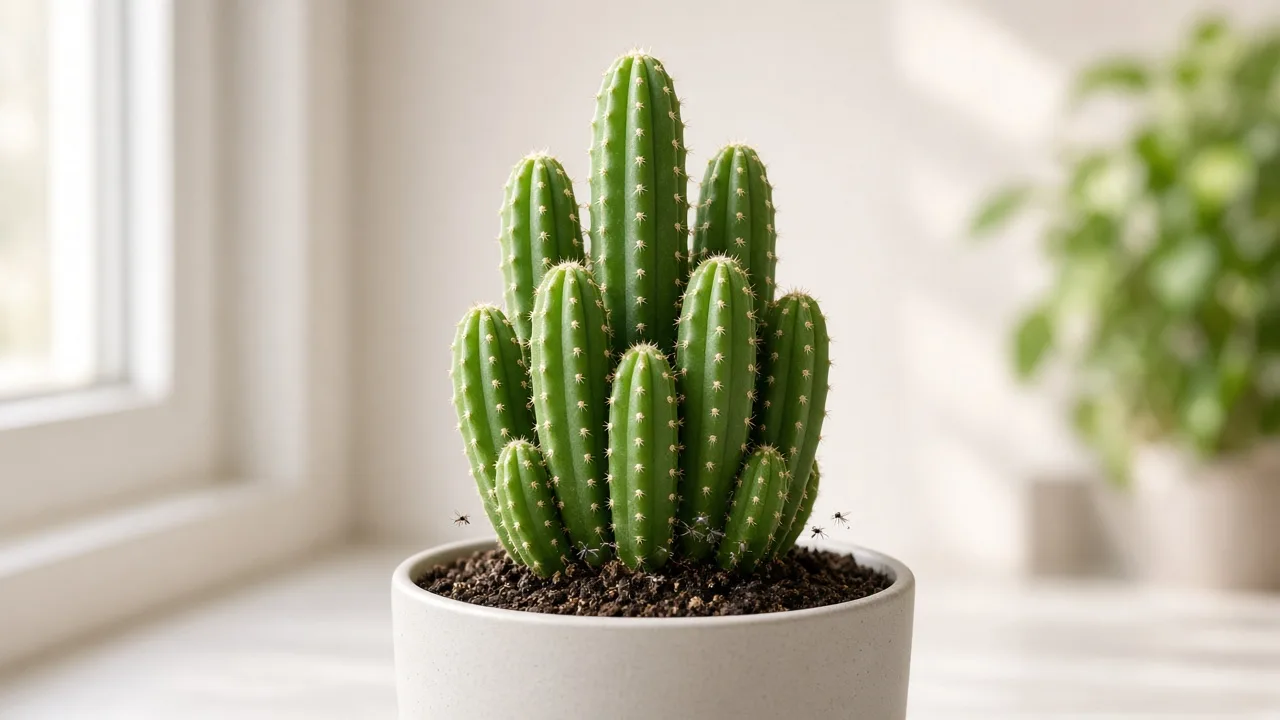
Fungus Gnats on Fairy Castle Cactus: Causes, Checks & Fixes
This guide covers fungus gnats on Fairy Castle Cactus. See also the general Fungus Gnats guide, watering, and light pages for this plant.
Fungus Gnats on Fairy Castle Cactus: Causes, Checks & Fixes
Quick answer
Fungus gnats on Acanthocereus tetragonus “fairy castle cactus” are almost always a soil-moisture and mix problem at the clustered base, not insects attacking the ribbed green turrets. The slow columnar habit stores water in its stems; the mix should dry between sparse soaks. When it stays damp and organic, adult females lay eggs in moist debris and larvae feed on fungi, decaying matter, and fine roots.
For how fungus gnats behave in moist potting media in general, see our fungus gnats hub. On fairy castle cactus, the useful clues are flies between the turret stems at a heavy pot rim while columns still look firm, a dark damp surface layer that never lightens, calendar watering on a naturally slow grower, and a gift cachepot holding wet unused soil—not chewed spines.
First step: press a raw potato chunk cut-side down on the mix for 48 hours to confirm larvae, let the top 2–3 inches dry before the next soak, and set a yellow sticky trap at the pot rim. Make that one correction before repotting, systemic drenches, or spraying the whole room.
When to use this page vs other Fairy Castle Cactus guides
This page is the soil-line and moisture entry when tiny flies appear around the pot.
| Pattern | Read next |
|---|---|
| White or gray fuzz on soil surface without many flies | Mold on soil |
| Soft black base, sour smell, column collapse | Root rot or overwatering |
| Wrinkled firm ribs, light pot, no flies | Underwatering |
| White cottony patches in stem axils | Mealybugs |
| Fine webbing on new tips | Spider mites |
| Mix stays wet despite sparse watering | Soil guide — drainage and pot size |
What fungus gnats look like on fairy castle cactus
On this plant you usually notice adults at the pot rim and windows before any stem damage. The castle-like cluster often looks untouched while the soil story is wrong.
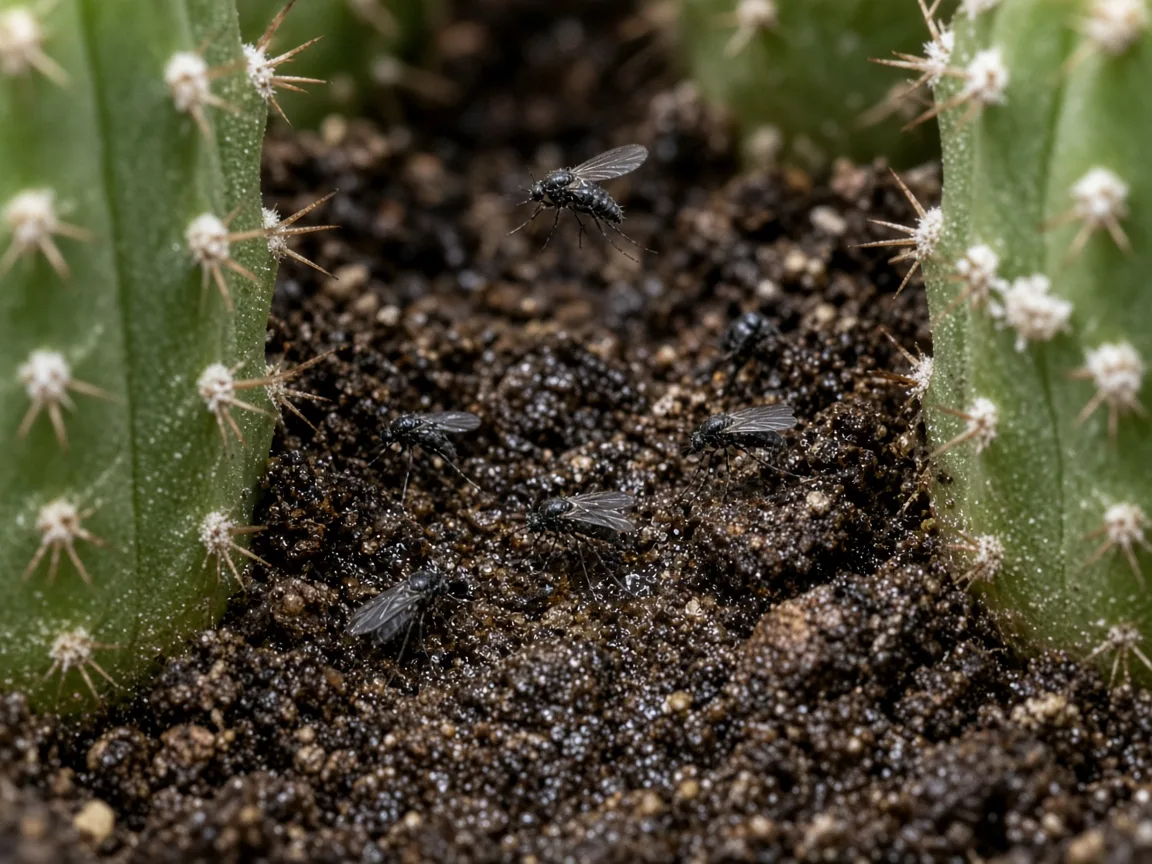
Tiny dark flies on moist organic soil between clustered turret stems—larvae need this damp layer; the ribbed columns above can stay firm while gnats breed below.
Typical signs:
- Small dark, mosquito-like flies about 1/16 to 1/8 inch long with long segmented antennae
- Flies that rise when you disturb the soil surface or water the pot
- Adults resting on windows, walls, or the outside of a cachepot—not crawling on spiny ribs
- Slender translucent larvae with black head capsules under a potato slice on the mix
- Optional shiny slime trails on the soil surface when larvae are abundant, as UC IPM describes on container media
What the columns look like when gnats are only part of the story:
- Firm green turrets and occasional new tips in warm bright months—gnats are likely a surface-habitat nuisance tied to wet mix
- Soft translucent patches at the soil line between columns—prioritize root rot over insecticide
- Slow tip growth with dry deep mix and no flies—see slow growth or not enough light before blaming larvae
Mature fairy castle clusters are thick water-storing stems. Larval root chewing is more serious in seedlings and young plants than on a firm multi-turret specimen—though chronic wet soil still deserves correction. Gardening Know How notes that larvae can damage delicate root hairs, which matters on slow-rooting cacti more than on mature columns.
Gnats between clustered turrets
Fairy castle cactus is sold as a dense cluster of upright columns that share one root ball. Adults do not live on the ribs—they breed in the narrow gaps at the soil line where peat stays shaded and slow to dry.
When you water, runoff often runs down between stems and keeps that wedge damp longer than the open surface looks. Flies hover in that pocket, not on the spines. Sticky traps wedged at the rim between two turrets catch adults better than traps floating above the foliage.
If you only inspect the outer rim of the pot, you can miss larvae under the central crown where organic matter collects from fallen bits of old mix or nursery tags.
Fungus gnats vs. other small flies near cactus pots
Several tiny flies share windowsill space with columnar succulents. Identifying the adult prevents the wrong fix.
| What you notice | Likely insect | Where it breeds | First check |
|---|---|---|---|
| Slender dark fly, long antennae, Y-shaped wing vein | Fungus gnat | Damp potting mix, peat surface | Skewer dry test, potato slice, sticky trap at rim |
| Stockier fly, short bristle-like antennae, green algae on saucer | Shore fly | Algae on wet saucers, fouled cachepots | Clean saucer; compare antennae |
| Fly on fruit or kitchen waste | Fruit fly | Fermenting food | Remove food source |
| Fly from floor drain | Drain or moth fly | Drain biofilm | Clean drain—not the cactus pot |
Fungus gnats are weak fliers often seen near infested houseplants and window frames; vinegar traps that catch kitchen fruit flies will not monitor gnats on your cactus pot.
Why fairy castle cactus gets fungus gnats
Moist organic mix below dry-looking turrets. Owners see firm ribbed columns and assume the pot is fine. Peat-heavy media can stay damp at the bottom while the top inch looks acceptable—exactly where fungus gnat larvae feed in the top 2 to 3 inches.
Calendar watering on a slow indoor grower. Fairy castle cactus uses the soak-and-dry method with the soil drying completely between waterings, with much longer intervals in winter. Watering every week because the cluster still looks green, without a deep dry test, keeps the lower profile permanently moist.
Nursery peat plugs and gift cachepots. This species is often sold in small plastic pots inside decorative sleeves with no drainage. Runoff sits in the outer pot, the inner mix never airs out, and gnats breed in the hidden wet zone—especially on moist-growing media containing high amounts of peat moss.
Oversized stability pots. Wide shallow bowls for tipping resistance dry slowly; paired with standard houseplant mix, they behave like fungus gnat incubators.
Neighboring leafy houseplants. Adults are weak fliers that often stay near breeding media but drift to windows and shared benches. A constantly wet fern or pothos nearby can supply flies that seem to belong to the cactus.
Skewer dry-down through a slow cactus root ball
Surface finger tests lie on fairy castle cactus because the cluster shades the mix and winter growth is slow. Use the same skewer method from the watering guide:
- Insert a dry bamboo skewer to the bottom of the pot.
- Pull it out—any cool, dark, or clinging crumbs mean the center is still wet.
- For gnat control, you need the top 2–3 inches dry before the next soak, per Colorado State Extension, and a full root zone dry cycle over time—not one skipped watering followed by a deep soak.
A light pot plus a clean dry skewer is your green light to water deeply and drain fully. A heavy pot with flies at the rim means larvae still have habitat even if ribs look fine.
How to confirm the cause
Work through these checks before reaching for sprays:
- Potato slice test — Insert 1/4 inch raw potato wedges into the mix; check the underside in a few days for larvae.
- Surface moisture — The top 2–3 inches should not stay damp for days after you thought you watered lightly.
- Fly behavior — Tap the pot. Fungus gnats rise from the soil surface between columns, not from ribs.
- Yellow sticky trap — UC IPM recommends traps at the soil line to catch adults and track trends.
- Column firmness — Press bases where stems meet soil. Firm green tissue with wet mix points to correctable moisture; soft black bases overlap overwatering.
- Season — Indoor plants consume less water in fall and winter while media stays wet if the calendar does not change—common gnat season indoors.
Confirmed diagnosis: fungus gnats breeding in persistently moist top soil on a cactus that should dry down between soaks.
First fix for fairy castle cactus
Let the top 2–3 inches of mix dry completely before the next watering.
Do not mist. Do not “give it a little drink” because the turrets still look green. Ribbed stems store water; a short dry spell at the roots will not harm a firm cluster the way continued wetness will.
This single change:
- Kills larvae when the surface layer dries, breaking the life cycle
- Reduces egg-laying on dry mix
- Lowers root rot risk as oxygen returns to the upper root zone
Place a yellow sticky trap between the columns at the rim to catch adults and track progress—traps alone are not the fix.
Wait until the top profile is fully dry, then resume soak-and-dry per the watering guide. In cool dim winter rooms that may mean several weeks between drinks.
Step-by-step recovery
After the surface has dried once, continue in this order:
1. Align watering with light and season
Match intervals to the light guide and room temperature. Bright warm growth uses water faster; cool winter windows need much longer dry windows.
2. Empty saucers and improve airflow
Pour out standing water within 30 minutes of watering. Give the cluster slight space from crowded shelves so air reaches the soil surface between stems.
3. Trap adults for two to four weeks
Replace sticky cards as they fill. Falling catch rates mean fewer egg-layers. Steady adults mean the surface is still too wet—recheck the skewer.
4. Consider bottom watering temporarily
Set the pot in a tray of water briefly so roots drink from below while the surface stays dry. Remove promptly; do not leave the bottom sitting in water.
5. Apply Bti only if larvae persist after drying
If gnats remain heavy after three to four weeks of proper dry-down, use a product containing Bacillus thuringiensis subsp. israelensis (Bti) labeled for fungus gnat larvae in houseplant soil. Follow label rates; repeat at labeled intervals because Bti does not persist indoors.
6. Repot only when mix is the bottleneck
Repot into mineral cactus mix in spring if soil stays damp for weeks despite correct watering, the pot has drainage, and you are using an appropriate container. Do not repot on day one just for gnats; drying the surface usually resolves mild infestations. See the repotting guide when the profile has broken down.
Recovery timeline and signs of progress
Expect adult numbers to drop within several days once the surface stays dry. Full suppression often takes two to six weeks because overlapping life stages hatch in waves—consistent dry cycles matter more than a single dry spell.
Signs you are winning:
- Fewer flies on traps each week
- Top 2–3 inches dry predictably between waterings
- Columns remain firm; no new soft bases
- New tips appear in warm bright months
Signs the problem is deepening:
- Flies increase weekly despite traps
- Bases soften at soil line while mix stays damp
- Sour smell from pot; roots brown and mushy when inspected
- Columns lean from root loss
If rot signs appear, stop treating this as a gnat-only issue—address root rot before worrying about flies.
Mistakes to avoid
- Spraying insecticide into the air around the plant—UC IPM stresses soil-focused control rather than fogging flight paths indoors
- Watering more because you see flies, thinking the cactus is stressed—extra water feeds larvae
- Using heavy peat mix or oversized pots “so you water less often”—large wet zones dry slowly
- Stopping after one dry week when adults briefly decline—resume watering too soon and the next larval wave hatches
- Ignoring soft bases while focusing on traps—gnats are low severity until wet soil is rotting roots
- Repotting into fresh peat-heavy mix without grit while larvae are active—you may spread insects without fixing drainage
How to prevent fungus gnats next time
Use fast-draining mineral cactus mix in a pot with a drainage hole only one size larger than the cluster.
Match watering to season—longer dry intervals in cool months.
Empty cachepots and saucers immediately after every soak.
Quarantine new nursery pots for two weeks before placing them beside established castles.
Scout the soil line weekly after repotting or moving the plant to a dimmer room.
Top-dress with coarse grit if peat surfaces stay dark and damp in humid rooms.
Spines and safety while treating
Fairy castle cactus is best treated as pet-caution because of spines and mouth injury risk, not as a chew-safe plant. Keep sticky traps, potato slices, and treated soil where dogs, cats, and children cannot reach them. Wear gloves when tilting a spiny pot to inspect drainage. For baseline culture, see the fairy castle cactus overview.
When to worry
A few fungus gnats on an otherwise firm fairy castle cluster with correctable wet surface soil are common in mixed collections and rarely threaten mature columns once moisture is fixed.
Escalate when bases soften at the soil line, several columns wilt together, larvae stay abundant on potato tests after three dry cycles, or flies persist while the skewer never dries—those patterns overlap root rot and need root-zone triage, not another sticky trap alone.
Related Fairy Castle Cactus guides
- Overview — culture and placement
- Watering — soak-and-dry depth for slow columns
- Soil — mineral mix and drainage
- Overwatering — when wet mix damages cactus roots
- Mold on soil — surface fuzz without flying adults
- Root rot — soft base and collapse
- Problems hub — full symptom index
Conclusion
Fungus gnats on fairy castle cactus are a pot-base moisture signal in most homes—not insects eating ribbed turrets. Confirm larvae at the soil line, dry the top profile before the next soak, and trap adults while you align watering with a slow water-storing columnar cactus. Firm columns and a stable dry-down rhythm are the recovery markers; persistent wet mix with a soft base means root problems, not flies alone.
Related tool
Use the Plant Problem Diagnosis Tool to narrow causes for fungus gnats on this plant before changing multiple variables at once.