Leggy Growth on Fairy Castle Cactus: Rib-Spacing Checks
Quick answer
Leggy Fairy Castle Cactus is etiolation—branchlets stretch toward dim light with wider gaps between spine clusters on each rib and a loose, wand-like castle instead of tight turrets. First step: move the pot to your brightest south- or west-facing glass and watch whether the next rib segment tightens within two weeks before you cut anything.
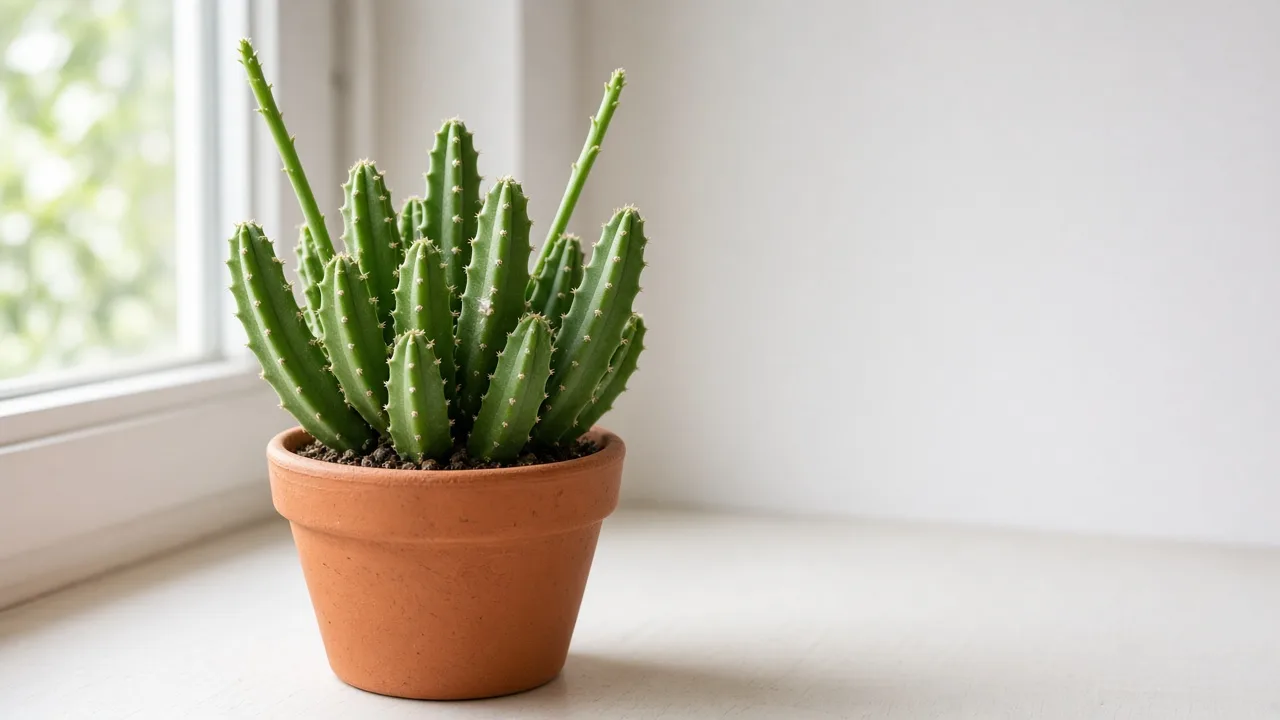
Leggy Growth on Fairy Castle Cactus: Causes, Checks & Fixes
This guide covers leggy growth on Fairy Castle Cactus. See also the general Leggy Growth guide, watering, and light pages for this plant.
Leggy Growth on Fairy Castle Cactus: Causes, Checks & Fixes
Quick answer
When growers say a Fairy Castle Cactus looks leggy, they usually mean Acanthocereus tetragonus has lost its tight turret-like cluster and grown long, thin branchlets with visible gaps between spine clusters along each rib. Botanically, that is etiolation—the plant stretching toward whatever light it can find. On this slow columnar cactus, leggy growth is almost always a low-light response, not a watering puzzle or fertilizer deficit.
For how stretch works across houseplants in general, see our leggy growth hub. On Fairy Castle Cactus, the telltales are widening gaps between white spine clusters on five-sided ribs, a hard lean toward glass, and new branchlets noticeably thinner than the compact base below—not the normal vertical inches a sun-fed specimen adds across a warm season.
First step: move the pot to the brightest south- or west-facing window you can offer—within about a foot of the glass where several hours of direct sun is realistic. Do not repot, fertilize, or cut on day one. Watch whether the next rib segment tightens within about two weeks. If the cause is light, the diagnosis overlaps not enough light on Fairy Castle Cactus—this page focuses on the leggy stretch pattern in grower language.
When to use this page vs other Fairy Castle Cactus guides
| Pattern | Read next |
|---|---|
| Firm columns, little new height, no obvious stretch | Slow growth |
| Window audit and grow-light setup first | Not enough light |
| Bleached or scorched ribs after a sudden sun move | Light guide — acclimation |
| Heavy wet pot, soft base on stretched columns | Overwatering or root rot |
| Ready to shorten branchlets after light improves | Pruning guide |
| Full problem index | All Fairy Castle Cactus problems |
What leggy growth looks like on Fairy Castle Cactus
Healthy Fairy Castle Cactus builds clustered upright columns—hundreds of green branchlets that stack into turret-like shapes, each stem with five sides and short white spines along the ribs. In bright warmth it stays naturally slow indoors but keeps a dense miniature-castle silhouette. Leggy growth breaks that architecture in stages:
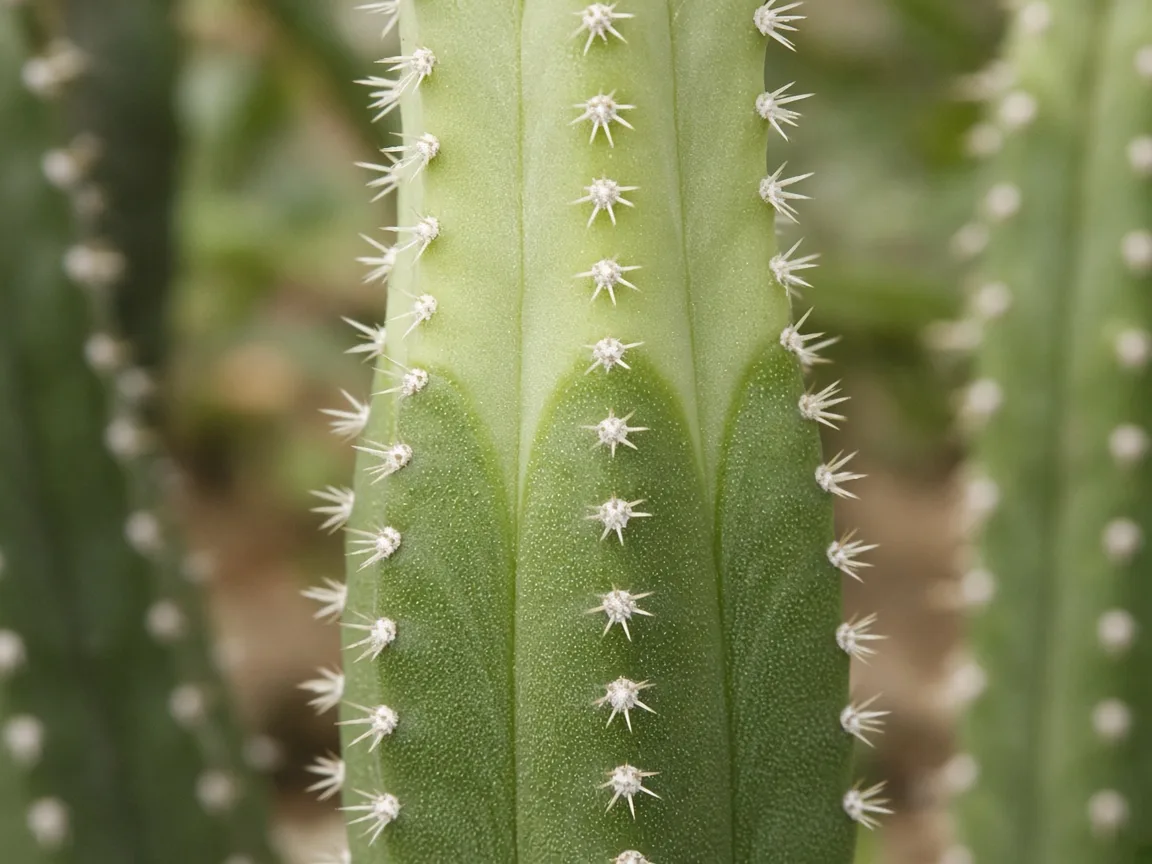
Leggy rib detail: spine clusters spaced farther apart on the newest section, with thinner green stem between ribs compared with the compact turret base below.
- Stage 1 — Widening gaps between spine clusters on the uppermost rib before the branchlet looks obviously thin
- Stage 2 — New branchlets or extensions noticeably slimmer than six-month-old tissue on the same column
- Stage 3 — Strong lean toward the brightest window; the whole castle tilts if the pot is lightweight
- Stage 4 — Loose vertical spacing between turret tiers so the plant looks like thin wands instead of a clustered fortress
- Stage 5 — Top-heavy “flagpole” — a small branching head on a long flexible stalk above a thick compact base
- Pale green wash on newest tissue in marginal light before stretch looks dramatic
Early stretch can look like “finally growing” because Fairy Castle Cactus is tagged as a slow indoor grower. It is not. Etiolation produces elongated, spindly stems and pale leaves when photons are insufficient. This species expects strong sun; a dim office shelf fails that biology within weeks.
Leggy columns often dry slowly. Transpiration drops in weak light, so the pot stays heavy for days after watering even while branchlets lean. That pairing—stretch plus chronically wet mix in a dim corner—is how rot begins at the soil line while the castle still looks green above.
Reading spine spacing on five-sided ribs
Unlike rosette succulents, Fairy Castle Cactus does not form a cup. Your diagnostic ruler is spine-cluster spacing along each rib:
| Rib pattern | Likely meaning |
|---|---|
| Spine clusters stacked tight; fresh tips firm | Healthy active growth in adequate light |
| Newest clusters drifting apart over two weeks | Early etiolation — move toward glass now |
| Upper branchlet half the diameter of lower tissue on same column | Advanced stretch — light fix first, then consider cuts |
| Lean only on the window-facing side | Phototropism — rotate pot after brightening |
| Stretch plus soft base on wet mix | Overwatering in dim room — see overwatering |
Mark the position of the topmost spine cluster with a soft tie or chalk on one rib. Remeasure after fourteen days in a brighter spot. Tightening on new rib flushes confirms light was the bottleneck.
Columnar cacti in uneven light may twist their bodies toward the brighter side to capture more rays. A one-sided lean with widening upper spacing is still etiolation—not a separate “twisted” disease.
Why Fairy Castle Cactus gets leggy
Etiolation for light
Fairy Castle Cactus stores water in ribbed stems and expects bright light to drive compact branching. When intensity is low, the plant stretches toward the window and spaces spine clusters along lengthening ribs. Genetics and occasional missed waterings do not create the classic thin reaching turret arm.
Distance, season, and “bright to humans”
Light falls sharply as you move away from glass. A fairy castle three feet from a south window may stay green but etiolate within weeks. Winter shortens daylight even at the same sill, so an acceptable October spot often triggers stretch by January. Sun-loving succulents are not happy in poor light away from windows—the same mismatch that puts this cactus on bookshelves labeled “low maintenance.”
Low light plus slow water use
Weak light slows water uptake. Soil stays damp longer in dim corners, which pairs poorly with the soak-and-dry rhythm in the watering guide. The same schedule that worked in summer sun becomes excessive in a dark room—and wet cool mix plus weak stretch is how rot begins at the column base while stretch continues upward. Indoor cacti need bright light and careful watering, not tropical-houseplant frequency.
Partial sun labels versus real windows
Care tags often list partial sun to partial shade for this species. Indoors, “partial sun” still means the brightest safe glass you have, not a hallway or north room. A plant that survives there will stretch.
How leggy growth differs from slow growth
These terms describe different branches of the same light stress:
| User language | What you see | This site’s guide |
|---|---|---|
| “Stretched / thin wands / leaning castle” | Etiolation, widened spine spacing | This page |
| “Firm columns, no new height, no stretch” | Dormancy or wet-mix stall | Slow growth |
| “How much sun does it need?” | Cause-first window audit | Not enough light |
| Placement and acclimation | Ongoing requirements | Light guide |
How to confirm the cause
Work through these checks before spine-heavy pruning or repotting:
- Window audit — Note direction and distance. South- or west-facing glass within about two feet is strongest indoors; north rooms rarely keep columns compact without grow lights.
- Shadow test at midday — A sharp hand shadow on the ribs suggests usable direct or bright light. A faint shadow means the spot is too dim for a sun-loving cactus.
- Spine-cluster spacing check — Mark the top cluster; after two weeks in a brighter spot, new clusters should sit closer. If the rib keeps lengthening, light is still insufficient.
- Diameter compare — Feel whether the newest 8–10 cm of branchlet is noticeably slimmer than tissue six months below on the same column.
- Pot weight — Chronic heaviness with lean in a dim room suggests slow evaporation; extend dry intervals when you improve light per the watering guide.
- Base firmness — Soft, dull tissue at soil line on wet mix points to root rot, not etiolation alone.
If the plant already receives several hours of direct sun and still weakens, look elsewhere: mealybugs at the soil line, recent repot shock, or rot from overwatering.
First fix for Fairy Castle Cactus
Move the pot to the brightest appropriate window and leave it there for two weeks before any other intervention.
Place it on a south- or west-facing sill where ribs can receive several hours of bright direct light daily. If the only upgrade is from a dark interior to intense all-day sun, increase exposure gradually over one to two weeks so ribs do not scorch—see sunburn on Fairy Castle Cactus if you moved too fast.
Do not repot on day one. Do not fertilize a stretched plant hoping to “push” compact growth—fertilizer cannot replace light. Do not water heavily because branchlets look weak; confirm soil dryness with a dry skewer per the overview watering rhythm. Do not cut until new growth in brighter light proves the diagnosis, unless the stalk is too weak to support the branching head.
Spine-safe recovery after light improves
Fairy Castle Cactus carries many short spines along each rib. Wear gloves and work over newspaper when shortening stretched arms.
After the next rib flush looks tighter in brighter light:
- Rotate the pot a quarter turn every few days so all sides receive light and the castle stops leaning permanently one direction.
- Add supplemental lighting if windows are weak—full-spectrum LED six to twelve inches above the tallest column through short winter days.
- Stake only after base health is confirmed — a heavy terracotta pot and loose tie can stabilize a tall specimen; spongy base tissue means rot, not balance.
- Shorten severely leggy branchlets — Once new tissue regains thickness, cut into firm green stem below the thin section with a sterile knife. Let cuts callous several days; the plant often branches from the wound. Full technique: pruning guide.
- Propagate only from firm cuttings — Avoid rooting pencil-thin etiolated tips; choose thick healthy sections and callous before planting per propagation.
Old elongated rib sections never shorten. Success means compact new rib flushes at tips—or cleanly shortened arms—not a magically shrinking stalk.
Recovery timeline
Expect tighter spine-cluster spacing on new growth within two to three weeks of truly brighter placement. Color may deepen on fresh ribs over a similar window once light intensity returns.
Existing elongated ribs do not revert—the same plant in brighter light grows compact new tissue, but prior stretch stays visible. Mild early widening is cosmetic until corrected. Advanced flagpole stretch is permanent without cutting, even after light is fixed.
Lookalike symptoms to rule out
| Pattern | Likely cause | Differentiating check |
|---|---|---|
| Widening spine clusters; lean toward window; firm ribs | Leggy growth / etiolation | New clusters tighten after brighter placement |
| Soft translucent base; sour wet soil | Overwatering / stem rot in dim room | Soil stays damp weeks |
| Wrinkled ribs; very light pot | Underwatering | Stretch is not the primary sign |
| White cottony clusters at soil line | Mealybugs | Residue present; not uniform spine spacing |
| Bleached patches on sun-facing ribs | Sunburn from too-fast acclimation | Too much intensity, not too little |
| Firm column, no height gain, no stretch | Slow growth / dormancy | See slow growth |
Mistakes to avoid
Do not keep Fairy Castle Cactus as permanent décor on a bookshelf or north room without grow lights. It may stay green briefly, then stretch beyond recognition.
Do not blast a plant from a dark corner into midsummer all-day sun in one move. Acclimate to increasing sunlight over several days so ribs do not scorch.
Do not increase watering because branchlets look weak—check light and soil moisture first.
Do not cut before light improves and new flushes compact—the regrowth will etiolate again in the same dim spot.
Do not handle cuts without gloves; spines irritate skin and loose spines scatter on floors around pets and children.
How to prevent leggy growth next time
Place columns only where several hours of direct sun through glass is realistic through the year. Install grow lights before winter etiolation if your window weakens from October onward.
Rotate pots weekly and clean glass seasonally. Use weighted pots for tall castles so lean does not become a tip-over.
Match expectations to biology: this is a slow grower indoors that still needs window-grade sun to keep its turret form—not a low-light succulent.
When to worry
Treat as urgent when a branching head wobbles on a thin stalk that could snap—shorten and stabilize before it breaks. Also act when stretch happens alongside wet, sour-smelling soil in a dark room; inspect for stem rot while improving light and drying the mix.
Mild early widening between newest spine clusters is cosmetic, not an emergency—correct light now and skip cutting unless the stretch bothers you after new growth compacts.
Conclusion
Leggy Fairy Castle Cactus is etiolation in plain language: turret branchlets stretch, lean, and lose the compact clustered silhouette that defines the plant. Move to the brightest suitable window first, confirm with tighter new rib flushes, then adjust water and consider spine-safe cuts if old stretch cannot be tolerated. For cause-first diagnosis and grow-light setup, see not enough light and the light guide. Old elongated ribs never shrink back, but proper sun—or honest grow-light supplementation—restores the upright castle habit described on the Fairy Castle Cactus overview.
Related Fairy Castle Cactus guides
- Fairy Castle Cactus overview
- Fairy Castle Cactus watering
- Fairy Castle Cactus light
- Fairy Castle Cactus soil
- Not enough light on Fairy Castle Cactus
- Slow growth on Fairy Castle Cactus
- Fairy Castle Cactus pruning
- Fairy Castle Cactus problems
Related tool
Use the Plant Problem Diagnosis Tool to narrow causes for leggy growth on this plant before changing multiple variables at once.