Insulin Plant Propagation: Division & Cuttings
Insulin Plant Propagation: Division & Cuttings
Insulin Plant Propagation: Division & Cuttings
Insulin Plant propagation works when you treat Costus igneus as a rhizomatous spiral ginger (Costaceae), not a dry succulent cutting or a sun-baked curry-leaf start. Kew accepts the plant under Chamaecostus cuspidatus, with Costus igneus as a heterotypic synonym — the same eastern-Brazil species sold across South India as spiral flag or fiery costus (Plants of the World Online). Missouri Botanical Garden lists it as a part-shade, evenly moist clumper to about 45–60 cm tall, hardy outdoors only in warm Zones 9–11 (Missouri Botanical Garden Plant Finder).
This page covers ID checks, warm-season timing for Indian balconies, step-by-step rhizome division, nodal stem cuttings, optional seed notes, aftercare, and the failures that turn soft stems mushy. Use it when you want more plants. For day-to-day watering, light, and soil once a start is established, switch to those sibling guides instead of stretching this into a full care manual. Leaf use in traditional medicine is a separate topic from cloning the plant — this guide does not replace medical advice.
Confirm You Have Costus igneus Before You Multiply It
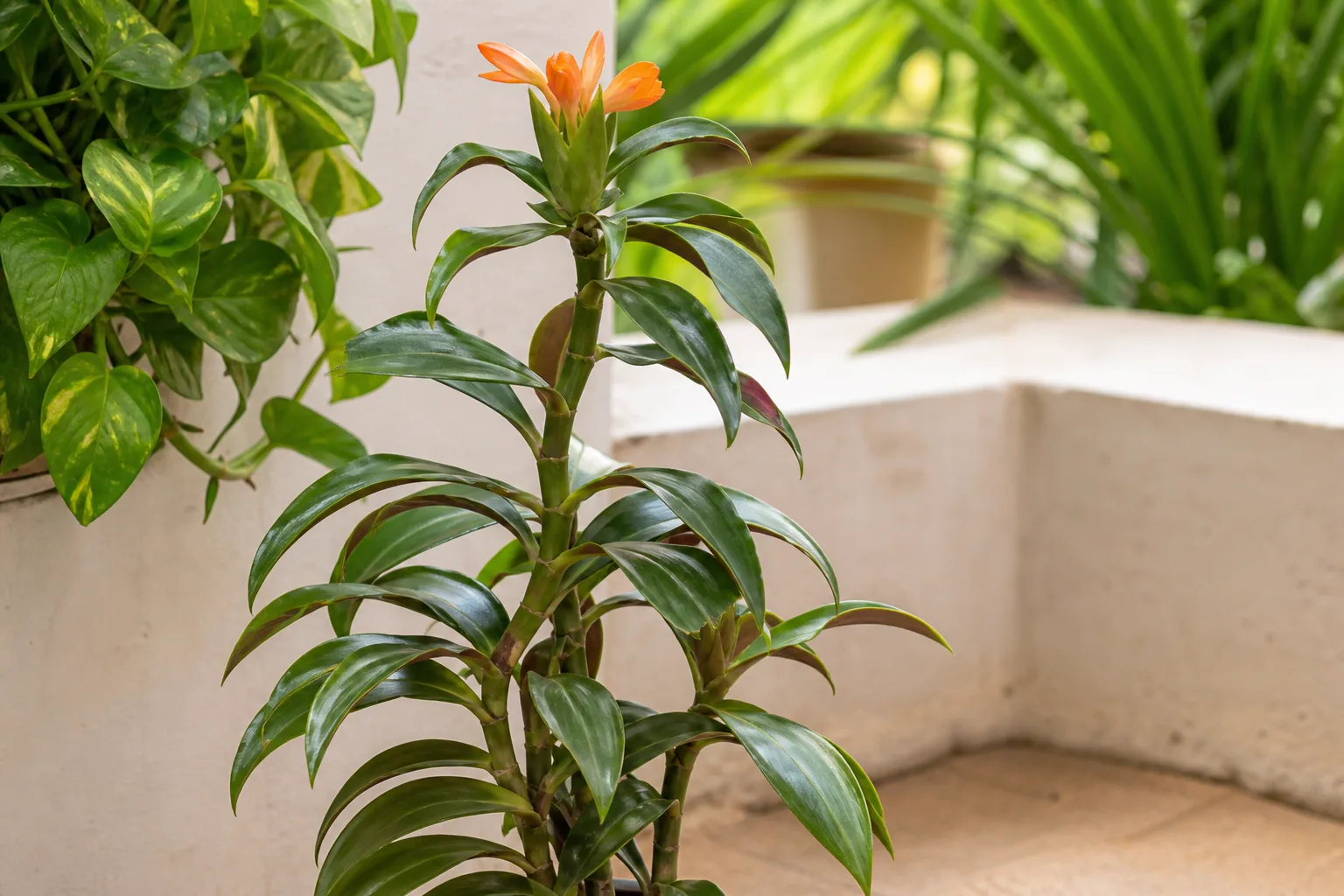
Nursery tags in India often say “insulin plant” for more than one Costus-looking spiral. Confirm the stock before you fill trays. True Chamaecostus cuspidatus / Costus igneus forms arching clumps of spirally arranged, fleshy dark-green leaves — often with lightly purple undersides — from underground rhizomes, typically under about two feet tall, with orange flowers in warm months (Plants of the World Online; Missouri Botanical Garden Plant Finder). Kew places the native range in eastern Brazil (Northeast and Southeast regions) as a rhizomatous geophyte of wet tropical habitats.
If the plant is a tall landscape Costus with different flower colour, much larger stature, or a woody base, you may be multiplying a different species under the same common name. Propagate only stock that matches the spiral-leaf profile above. Cloning a mislabeled pack only multiplies the wrong plant.
Why Insulin Plant Propagates From Rhizomes and Nodes
Biology does most of the work. As a Costaceae rhizomatous geophyte, Insulin Plant stores buds along underground rhizomes and can also root from stem nodes when warmth and moisture stay steady (Plants of the World Online). Division clones the parent immediately because each section already carries roots and a growth point. Stem cuttings clone it without opening the whole root ball — useful when the parent pot is still small or you only have one stem to share.
That same fleshy tissue is why propagation fails when the mix stays anaerobic. Rhizomes and soft stems rot faster than they root if light is weak, nights are cool, and the pot never drains. Success on this species is less about fancy rooting powders and more about warmth, bright filtered light, and moist-but-airy media.
Best Season and Timing in India
Propagate when the parent is actively pushing new spirals — warm days, mild nights, and steady moisture. For most of India that means roughly late spring through monsoon (about March–September), with the cleanest window in early spring just as growth accelerates. Herbaceous cuttings and divisions root fastest while plants are in active growth; cool, dark, dry conditions slow or stall the same process (Virginia Cooperative Extension).
Skip cold North Indian snaps and frost-prone nights. MOBOT notes the species is best suited to warm Zones 9–11 outdoors and can be overwintered indoors where winters are colder (Missouri Botanical Garden Plant Finder). In peak May heat, shade soft trays from midday scorch while keeping the medium evenly moist — heat itself is fine; a dry crust on new divisions is not. Do not divide or cut a plant that is already collapsing from soggy soil; stabilize watering first.
Choose Division or Stem Cuttings for Your Goal
Both methods clone the parent. Pick based on how crowded the clump is and how many new pots you need.
When rhizome division is the better path
Choose division when rhizomes circle the pot, soil dries within a day in heat because the root mass is huge, or you want instant rooted plants rather than waiting for white tips in a jar. For clumping perennials joined by underground stems, clean cuts that leave each piece with shoots and roots are the standard home method (Virginia Cooperative Extension). Division is also the natural moment to refresh sour, compacted centers while reclaiming firm outer rhizomes — often overlapping with repotting.
When stem cuttings make more sense
Choose stem cuttings when you want several starts from one healthy stem, when the parent is not yet crowded enough to split, or when a neighbor offers a tip rather than a whole clump. Soft nodal stem cuttings are a core asexual method for herbaceous plants: cut below a node, strip lower leaves, and root in a clean moist medium (Virginia Cooperative Extension; Missouri Botanical Garden — Propagating Plants by Cuttings). Costaceae spiral gingers root readily from stem sections that include nodes when the substrate stays warm and moist.
How to Divide an Established Insulin Plant Clump
Division is usually the most reliable home method for Insulin Plant because each piece starts with a rhizome bud already attached.
Preparing the parent and tools
Water the parent thoroughly an hour before you work so tissues are plump and roots slide apart more cleanly. Use a clean, sharp knife or shears — Virginia Tech recommends sanitizing blades (rubbing alcohol or a dilute bleach solution) so you do not move soft-rot organisms from one plant to the next (Virginia Cooperative Extension). Have pots ready with a rich, well-draining mix similar to adult Insulin Plant soil — loam or potting mix opened with perlite or coarse sand so moisture stays even without sealing the rhizomes in mud. MOBOT’s culture note for this species is evenly moist, rich, well-draining loam in part shade (Missouri Botanical Garden Plant Finder).
Separating rhizomes with growth points
Tip the plant out and tease or cut the clump into sections. Each keeper piece needs at least one firm growth point (bud or shoot) plus some healthy roots. Discard mushy, black, or foul-smelling rhizome cores — those are rot, not “weak growth.” If cut surfaces are wet and large, let them air-dry for a short time in shade before replanting so raw tissue is less likely to sit wet against cold mix; then plant at the same depth the parent sat.
Firm the mix gently, water until drainage runs clear, and place new pots in bright filtered light — the same part-shade preference MOBOT lists for adult plants. Keep the mix evenly moist for the first two weeks, not bone-dry and not swampy. Hold fertilizer until you see clear new spiral growth.
How to Propagate Insulin Plant From Stem Cuttings
Treat cuttings as soft tropical stems: nodes in contact with moisture, foliage kept out of foul water, and warmth high enough that respiration and rooting can keep up.
Taking nodal stem cuttings
Use clean, sharp scissors or a blade. Extension cutting guides stress cutting just below a node — the point where leaves attach — because roots form most readily there, and a long stub below the node often rots (Missouri Botanical Garden — Propagating Plants by Cuttings; Virginia Cooperative Extension). Aim for roughly 15–20 cm of firm, green stem with two to three nodes and healthy leaves. Strip leaves from the lower node or two so bare nodes can sit in water or mix; submerged foliage fouls jars. Remove flower buds so energy goes to roots, not bloom (Missouri Botanical Garden — Propagating Plants by Cuttings).
Take material only from a healthy, actively growing parent — not from a plant with soft stem bases or sour soil. Leaf-only pieces without a node will not root. Rooting hormone is optional on this soft species; warmth and moisture matter more than powder.
Water rooting vs moist-mix rooting
Water route: Stand cuttings in room-temperature water so at least one node is submerged. Keep the jar in bright, indirect light. Change the water every few days so it does not go stagnant and oxygen-poor — Virginia Tech notes unchanged water becomes inhibitory and that water-formed roots can face more transplant shock than mix-formed roots (Virginia Cooperative Extension). When white roots are a few centimetres long (often within about two to three weeks in warm weather), pot into an airy moist mix and keep humidity and even moisture while the plant adjusts.
Moist-mix route: Fill small pots with a clean, porous mix — for example peat or coir with perlite — kept moist but not sealed. Virginia Tech stresses porous media that hold moisture at the cut surface while still supplying oxygen (Virginia Cooperative Extension). Insert cuttings deep enough to stand, with at least one node buried, firm gently, and keep bright filtered light. Many growers prefer this path because roots are soil-adapted from day one.
Either route works in warm Indian weather. The non-negotiable rule matches adult care: even moisture without waterlogging, under the light the species prefers.
Seed Propagation (Optional and Slower)
Seed is possible but slower and less common for home growers than division or cuttings. Fresh seed in warm, moist, airy mix germinates more reliably than old, cool seed — keep trays warm and evenly moist, not flooded. Crowded, constantly saturated flats invite damping-off, where seedlings collapse at the soil line from fungi such as Pythium and Rhizoctonia. NC State’s prevention list is the right playbook: clean trays, airy mix, sensible density, good light, and avoiding chronically wet anaerobic pockets (NC State Extension — Damping-off).
Use seed when you want many genetically mixed starts or cannot access a healthy mother plant. Use division or cuttings when you want a clone of a known good clump.
Aftercare Until New Spirals Settle
For the first two to three weeks, keep new Insulin Plant pots slightly more sheltered than a tough outdoor clump: bright filtered light, no harsh midday west-facing blast, and mix that stays lightly moist. Hold fertilizer until new spiral leaves push — feeding a barely rooted cutting only burns soft tissue. Match adult Insulin Plant light and watering as soon as roots hold: part shade to bright indirect light, water when the top 2–3 cm dries, never a permanently wet base.
Success looks like firm rhizomes, new spiralling leaves, and stems that stay upright without soft collapse at the soil line. Failure still looks like yellowing lower leaves, mushy stem bases, or a sour smell — diagnose drainage and light before stacking more interventions. When the start outgrows its nursery pot, follow the repotting guide rather than jumping pot sizes in one jump.
Common Propagation Failures and First Fixes
Soft, black rhizomes or stem bases: Usually chronic wetness in low light or cool nights. Unpot, trim to firm tissue, and restart in fresher, airier mix with better light. Do not keep watering on a calendar while the pot stays heavy.
Cuttings that never root: Often no buried node, water left unchanged until slimy, or a dim corner. Recut below a fresh node and move to bright filtered light with warmer days (Virginia Cooperative Extension).
Seedlings collapsing overnight: Classic damping-off pattern — improve airflow, reduce saturation, discard the worst patches, and start clean (NC State Extension — Damping-off).
Wilting after potting water-rooted cuttings: Water roots often struggle in the first soil week. Keep humidity higher, shade from midday sun, and avoid fertilizer until new growth appears (Virginia Cooperative Extension).
When to use this page vs other Insulin Plant guides
Use this propagation page when you are dividing rhizomes, rooting stem cuttings, or starting seed. Use overview for identity, size, and whole-plant expectations. Use watering when established plants yellow or stay soggy. Use light when spirals stretch or scorch. Use soil when the mix stays wet or compacted around rhizomes. Use fertilizer only after new plants are actively growing. Use repotting when the issue is pot size or a full soil refresh rather than making new plants.
Related Insulin Plant guides
- Insulin Plant overview — species profile and care map
- Insulin Plant watering — moisture rhythm that protects rhizomes
- Insulin Plant light — part shade vs harsh midday sun
- Insulin Plant soil — airy loam mixes for rhizomes
- Insulin Plant fertilizer — feeding only after active growth
- Insulin Plant repotting — when crowded clumps need a larger pot
Conclusion
Insulin Plant multiplies cleanly when you match method to plant size: divide crowded rhizome clumps in warm weather, or root nodal stem cuttings when you only have a stem tip to share. Keep new starts in bright filtered light with evenly moist, well-draining mix, and treat soft mushy tissue as a drainage problem first. Once new spirals hold, shift back to everyday watering, light, and soil care — propagation is done when the plant is growing, not when the jar still looks interesting.