Insulin Plant Root Rot: Signs, Rescue & Prevention
Quick answer
If an Insulin Plant is wilting while its mix is still wet, stop watering and empty any standing runoff. Root rot is not confirmed by yellow leaves alone: inspect the roots and rhizomes for soft, dark, deteriorating tissue and a sour odor before unpotting or trimming.
Root Rot on Insulin Plant: Causes, Checks & Fixes
This guide covers root rot on Insulin Plant. See also the general Root Rot guide, watering, and light pages for this plant.
Root Rot on Insulin Plant: Causes, Checks & Fixes
Quick answer
If your Insulin Plant is wilting while its potting mix is still wet, stop watering and empty any standing runoff. That is the safest first move while you check the root zone. Yellowing leaves or a drooping stem by themselves do not prove root rot; confirm it by looking for roots or rhizome tissue that has become soft, dark, and deteriorated, often with a sour or decaying smell. For a broad overview of signs and fixes across houseplants, see the canonical root rot guide; this page focuses on how the Insulin Plant’s underground rhizomes change the inspection and rescue decision.
Insulin Plant is sold under Costus igneus and is accepted by Kew as Chamaecostus cuspidatus, a rhizomatous geophyte from wet tropical eastern Brazil, according to Kew’s species record. That background explains why it appreciates moisture, but it does not mean its pot should stay waterlogged: the Missouri Botanical Garden profile recommends evenly moist, rich, well-draining loam in part shade. The goal is a damp, aerated root zone, not a reservoir around the rhizomes.
What root rot looks like on Insulin Plant
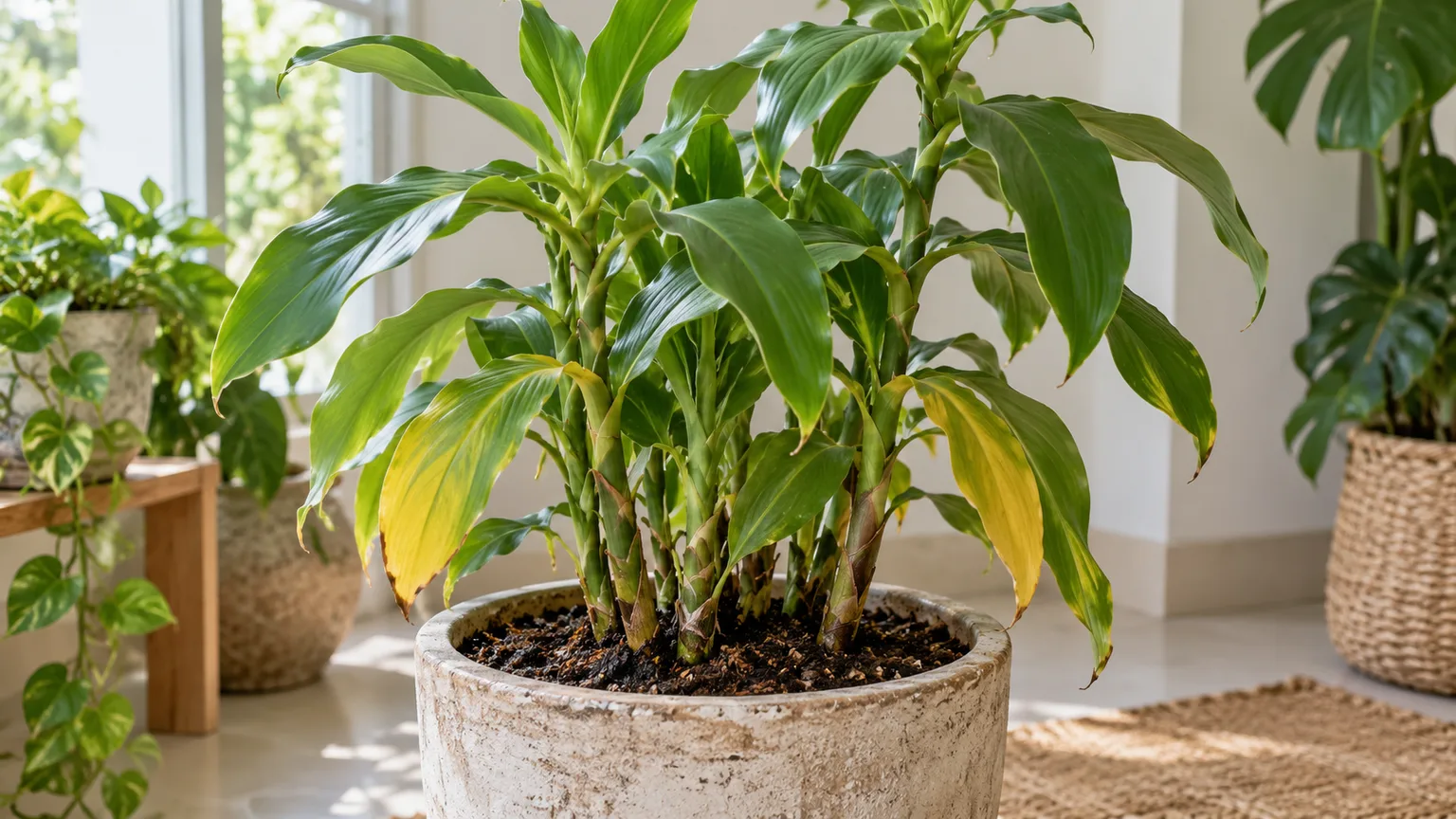
Root trouble often shows above the mix before you see the damaged tissue. A clump may lose firmness, older leaves may yellow or brown, stems may droop, and growth may stall even though the pot remains heavy and damp. Those symptoms are clues rather than a diagnosis. Wisconsin Extension’s root-rot guidance describes wilt despite wet soil, stunting, yellowing, and soft brown roots as a common pattern; it also cautions that very few plant diseases can be identified accurately by appearance alone.
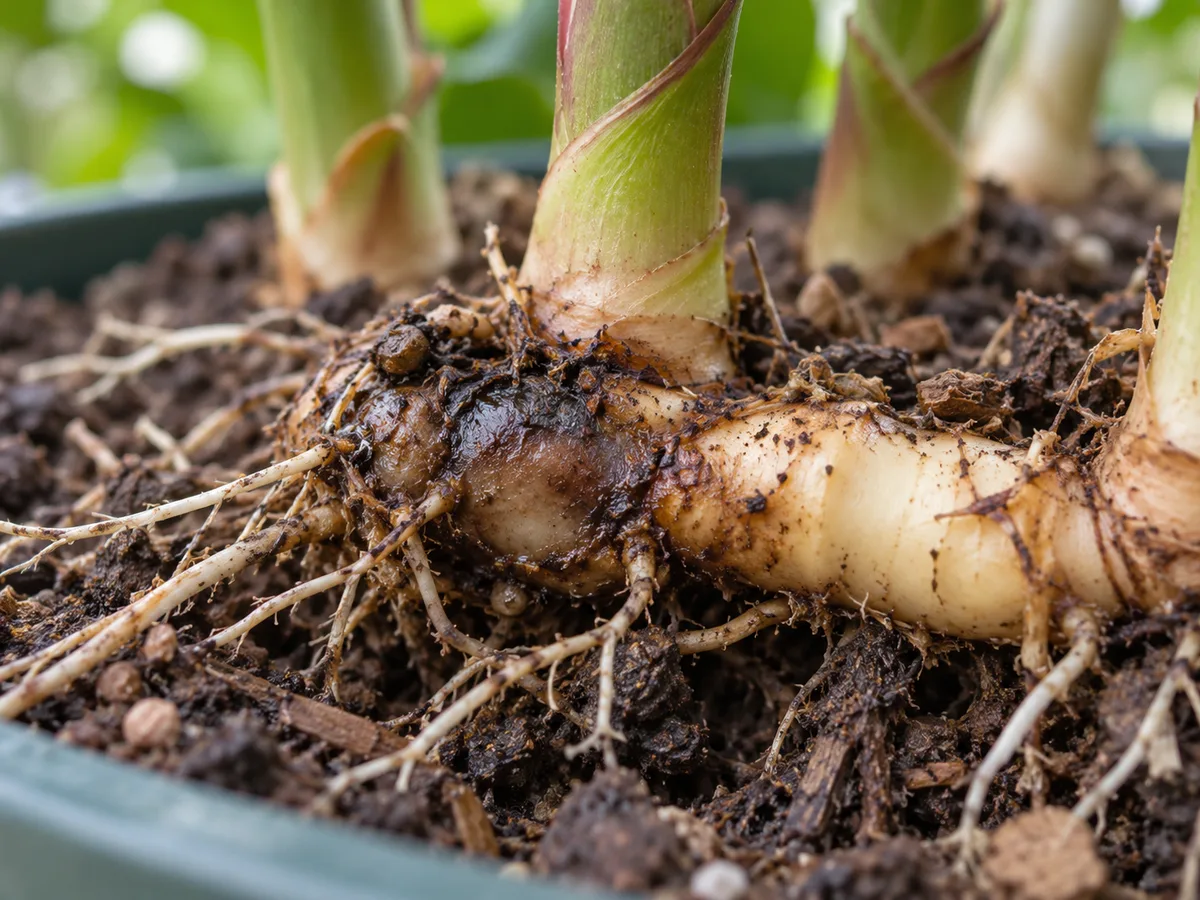
A soft, deteriorating patch deserves attention, but a photo cannot identify the organism or prove how far damage extends inside a rhizome.
For this plant, inspect the underground parts as well as the fine roots. The plant grows from a rhizome, so a damaged section may be at the crown or along a horizontal storage stem below the soil line. Healthy-looking tissue should feel firm rather than collapsing under gentle pressure. Roots affected by rot are often soft and brown and may smell unpleasant; Maryland Extension’s indoor-plant guidance also describes browning or blackening of roots or crown alongside poor growth and wilting. Color alone is less useful than the combination of texture, odor, and the condition of the surrounding tissue.
The pattern matters. A single older leaf that yellows while the rest of the clump stays upright and the mix drains normally is weak evidence for rot. A plant that keeps wilting in a wet pot, develops several declining leaves, and has soft roots or rhizomes is a stronger suspect. If you need a careful inspection method, Better Homes & Gardens’ root-rot steps and Gardening Know How’s root texture guide support checking the root system rather than relying on leaf color alone.
Why a moisture-loving rhizome can still rot
The Insulin Plant’s natural wet-tropical context can be misleading in a container. Kew lists the plant as a rhizomatous geophyte in a wet tropical biome, and UF/IFAS describes spiral gingers as rhizome-forming perennials that prefer rich, moist soil. The Missouri Botanical Garden adds an important qualifier for this species: the soil should also drain well. A naturally moist growing environment is not equivalent to a pot with no air space or water trapped around the crown.
Root and rhizome tissue needs air as well as water. When fine, compacted potting mix stays saturated, air-filled spaces shrink; roots are stressed, and pathogens that cause some root-rot diseases may also thrive in wet conditions. Cornell’s root-rot disease guide lists several distinct pathogens and notes that poorly drained, wet media favor certain diseases. That is general horticultural evidence, not a diagnosis of a pathogen on Insulin Plant. Neither the appearance of a mushy root nor the plant’s care history can tell you whether Pythium, Phytophthora, another organism, or waterlogging alone is responsible.
Several practical conditions can keep this plant’s root zone wet longer than expected:
- A decorative pot with no drainage hole, a blocked hole, or a nursery pot left standing in runoff prevents excess water from leaving.
- A heavy, fine-textured mix can stay saturated around the rhizomes, especially if it has compacted or broken down over time.
- A dim, cool, or seasonally inactive position can slow water use, so the same watering interval that worked in brighter warmth may leave this pot wet; BHG’s light discussion notes that light affects houseplant water use, and the Insulin Plant light guide helps check a dark placement.
- Repeated watering by calendar, rain entering an exposed balcony pot, or a saucer that is never emptied can keep the lower mix wet even when the surface looks dry.
These conditions raise concern; they do not each prove disease. The Insulin Plant watering guide explains how to judge the upper layer and pot moisture before watering, while the soil guide covers the balance between moisture retention and drainage that this rhizome clump needs.
Confirm the root-zone problem before you unpot
Start with the least disruptive checks. Feel the top of the mix, lift the pot to compare its weight with a recently watered pot, look for water in the saucer, and check that runoff can leave through the drainage holes. Notice whether the soil is merely damp or persistently wet and sour-smelling. If the plant has only one old yellow leaf and the pot is drying normally, observe the clump for a short period instead of disturbing every root.
Unpotting is reasonable when several clues line up: the plant is declining, the mix stays wet, the pot has poor drainage, or the stem base and crown feel soft. Slide the plant out carefully and brush away enough mix to see the roots and rhizome surfaces. Avoid pulling the clump apart just to inspect it. If you find firm tissue and no spreading soft area, return it to its pot and address the moisture conditions. If the roots or part of the rhizome are mushy, darkened, or sloughing apart, treat it as active decay and move to the salvage steps below.
Symptoms above the soil cannot tell root rot from thirst with confidence. A dry, light pot and crisp or curled edges point more toward a dry root zone; a wet, heavy pot with ongoing wilt raises concern about damaged roots. Low light can slow growth without causing a soft crown. A single damaged stem can also be mechanical injury. Use the Insulin Plant problems hub to route a symptom that does not fit the root pattern, and reserve the word “confirmed” for what you actually see in the roots or rhizome.
First fix: stop adding water to a wet pot
If the pot is wet and runoff remains in its saucer or outer container, stop watering and pour away the standing water. This is one immediate correction, not a full treatment plan. Do not squeeze the pot, pull healthy stems, or add a fungicide before you have looked at the roots. The Wisconsin Extension guidance emphasizes moderating soil moisture and not allowing plants to sit in drained water; the plant-specific target remains evenly moist soil with free drainage, not a completely dry clump.
Then inspect the plant if its condition or the mix makes rot plausible. If the roots and rhizome are firm, correct the drainage problem and let the upper layer begin to dry before the next watering. If you find rotted tissue, use the salvage sequence below. Making one observation before changing the soil, light, fertilizer, and watering all at once also helps you identify what actually improves the plant.
How to salvage an Insulin Plant with visible rot
Salvage is most reasonable when part of the rhizome clump and enough roots remain firm. Work over a washable surface. Remove loose wet mix so you can see where firm tissue ends and soft tissue begins, and keep the healthy sections together rather than dividing the whole clump. Use a clean, sharp blade to remove only tissue that is clearly collapsed or decayed; clean the blade between cuts. This conservative approach adapts general houseplant root-care guidance to a rhizome-forming species; no Insulin Plant-specific clinical trial establishes a pruning threshold or guaranteed cure.
Discard the old mix instead of packing it back around the plant. Extension guidance recommends not reusing potting mix or drained water from affected plants and cleaning tools and work surfaces before reuse; Wisconsin Extension’s houseplant sanitation advice also cautions against leaving pots in runoff. Wash a reusable pot and the work surface before using them again. If the rhizome clump is extensively soft or the entire crown has collapsed, a clean salvage may not be possible; do not keep planting visibly rotted tissue in fresh mix merely to avoid giving up.
Choose a clean pot that fits the surviving root-and-rhizome mass and has open drainage holes. Fill it with fresh, loose mix that drains freely while retaining some moisture. Do not put gravel or stones beneath dense soil as a substitute for a suitable mix; improve the mix itself and avoid burying the rhizome crown more deeply than before.
After repotting, water only enough to settle the mix and let all excess drain away; do not leave the pot in a saucer of water. The next watering should depend on the mix, pot size, light, and season rather than a fixed number of days. Check the top 2–3 cm before watering, following the plant-specific moisture cue described earlier. The aim is to keep the surviving clump from drying out completely while avoiding another prolonged saturated period.
Avoid using a fungicide, hydrogen peroxide, cinnamon, or a homemade chemical soak as an automatic cure. Root-rot organisms differ, and treatment choices depend on the actual disease and product label. Wisconsin Extension notes limitations around chemical fungicides for houseplants in its root-rot recommendations, while Cornell distinguishes among several pathogen groups. If a valuable clump continues to decline despite corrected moisture and removal of visibly dead tissue, consult a local extension plant clinic or diagnostic service rather than guessing at a pathogen or pesticide.
Recovery: watch surviving tissue, not old leaves
Do not use old yellowed or collapsed leaves as the recovery score. A better sign is that the remaining rhizome stays firm, the root zone no longer smells sour, and the decline stops spreading. New shoots may take time, particularly when light or temperature is low and the plant is not actively growing. No reliable source gives a fixed recovery timeline for Chamaecostus cuspidatus, so avoid promises such as “new growth in seven days.”
Check the pot before adding water and avoid repeated unpotting just to look for growth; compare drainage and the next shoot over time. Keep the plant in bright filtered light, away from harsh midday heat, and do not fertilize a clump that is still losing tissue. Once it is stable and producing healthy growth, resume the usual light feeding routine in the context of the Insulin Plant care overview.
If all rhizomes and the stem bases are soft, the plant has no firm portion left to support growth, or rot continues after a careful cleanup, recovery is unlikely; severe root rot may not recover. If any firm rhizome sections remain, they may still be worth keeping separately in fresh mix, but do not assume that every cutting or division will root. The repotting guide covers healthy clump division and pot sizing; this root-rot page is the right one when damaged tissue and wet-mix history are the central clues.
Prevent another root-rot episode
Set up the pot so moisture can leave. Use a container with working drainage holes, keep those holes clear, and empty the saucer after watering. Do not use a much larger container to compensate for a small surviving clump. A fresh, airy potting mix matters more than a layer of stones at the bottom. These steps match extension recommendations for managing root-rot risk and the Missouri Botanical Garden’s species-specific combination of even moisture and well-drained loam.
Water by checking the plant, not by repeating the same weekday routine. Feel the upper 2–3 cm, consider the pot’s weight, and account for a cooler or darker period when the mix may dry more slowly. Water thoroughly when the plant is ready, then let excess drain. If rain reaches the pot during a wet season, move it where the mix will not be continually refilled; if an inner pot sits in a cachepot, pour off collected water.
During repotting, inspect the clump for firm rhizomes and use clean tools. Do not reuse old mix from a plant with suspected root rot, and clean any pot that held affected roots. Keep newly bought or recently divided plants from sharing runoff with a healthy collection until you know their root zones are sound. These precautions reduce spread from contaminated material without implying that every wet pot is carrying a transmissible pathogen.
When to use this page vs other Insulin Plant guides
Use this page when a wet pot, declining stems, and soft roots or rhizomes make root damage the main concern. If the roots remain firm and the mix is drying normally, use the Insulin Plant care overview to review baseline care, or the problems hub to compare other symptoms. The watering guide is for moisture timing; the soil guide is for mix and drainage; and the repotting guide is for a healthy crowded clump or planned move. If stems are stretched in a dim position rather than soft at the base, compare the leggy-growth guide before treating it as root rot.
Related Insulin Plant guides
- Insulin Plant care overview — use for the plant’s overall growth habit and baseline care.
- Insulin Plant problems hub — use to route leaf and stem symptoms that do not match root damage.
- Insulin Plant watering — use for moisture checks and watering decisions after recovery.
- Insulin Plant soil — use when mix structure or drainage is the underlying issue.
- Insulin Plant repotting — use for pot sizing and healthy rhizome-clump moves.
- Insulin Plant leggy growth — use for stretched stems when roots remain firm.
Related tool
Use the Plant Watering Calculator to compare a starting watering estimate for your Insulin Plant setup; it does not diagnose root rot, so keep using the root and moisture checks above.