Brown Tips on Insulin Plant: Causes, Checks & Fixes
Quick answer
Brown tips on Insulin Plant are a symptom, not a diagnosis. First check whether the mix is dry or still damp 2–3 cm below the surface; water only if that layer has dried, and let excess drain. Then compare the leaf pattern with recent direct sun, fertilizer use, and the condition of the rhizomes.
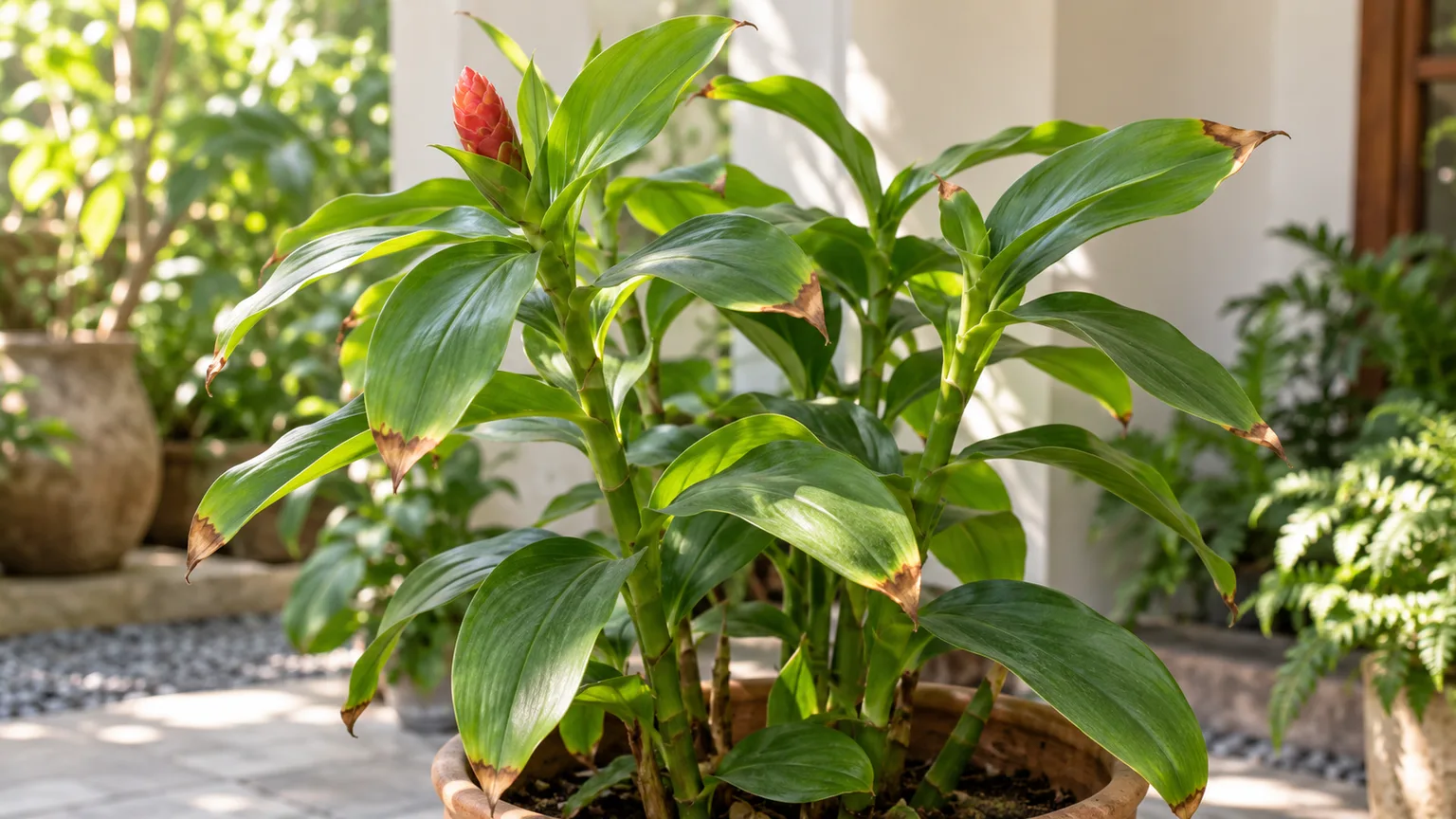
Brown Tips on Insulin Plant: Causes, Checks & Fixes
This guide covers brown tips on Insulin Plant. See also the general Brown Tips guide, watering, and light pages for this plant.
Brown Tips on Insulin Plant: Causes, Checks & Fixes
Quick answer
Brown tips on Insulin Plant are a signal to inspect the growing conditions, not proof of one disease. First check the potting mix 2–3 cm below the surface. If that layer is dry, water the plant thoroughly and allow the excess to drain; if it is damp, wait and continue the diagnosis instead of adding more water. This species grows from rhizomes and prefers steady moisture with drainage, so both repeated drying and a pot that remains wet can lead to trouble.
After that single check, look at where the brown tissue sits and what changed recently. Sun-facing patches after a move to a bright window point toward light stress; a crusted rim and recent heavy feeding make fertilizer salts more plausible. Brown tips on their own cannot identify a cause. Compare them with the root zone, leaf pattern, and care history before making another change.
What brown tips look like on Insulin Plant
The common Insulin Plant name is used for Costus igneus; Kew lists that name as a synonym of Chamaecostus cuspidatus, a rhizomatous plant native to eastern Brazil. Kew’s species record describes it as a wet-tropical geophyte, while the Missouri Botanical Garden describes its leaves as spirally arranged along upright stems and recommends part shade with evenly moist, rich, well-draining soil. Missouri Botanical Garden’s profile
With brown tips, the end of a leaf or a narrow strip along its edge becomes tan, brown, dry, or crisp while much of the blade remains green. On this plant, check several leaves along the spiral stems instead of judging only the most damaged one. A single old lower leaf with a small dry end is less concerning than browning that is spreading across several newer leaves or appearing together with yellowing and soft stems.
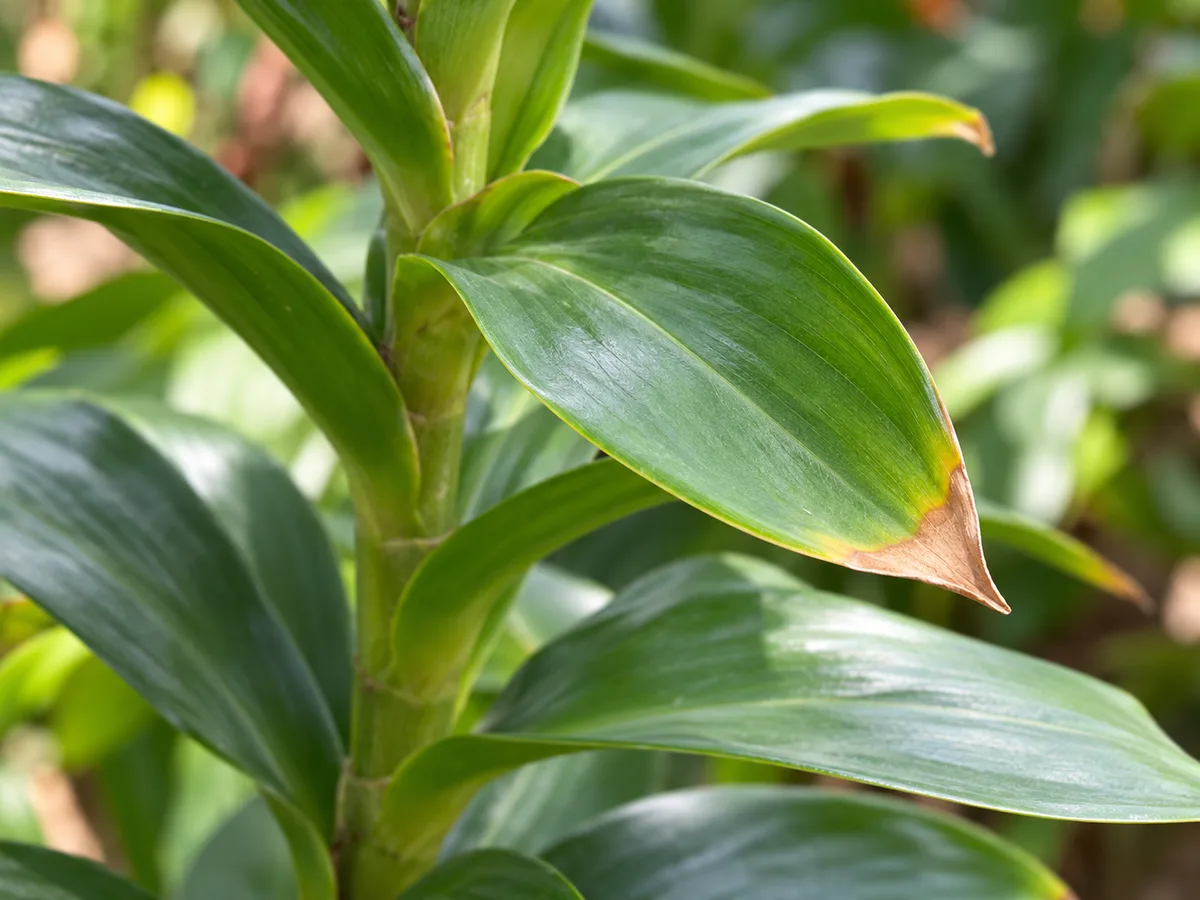
A dry tip can remain brown after the cause is corrected; the next leaves are a better recovery check.
Brown tips alone do not tell you which part of care changed. If other parts of the leaf or stem also look different, record those signs and diagnose them separately before changing the watering routine. The Insulin Plant problem hub can help you find a finished plant-specific guide for a different symptom. For general leaf-tip symptom context, see the brown tips symptom guide.
Why Insulin Plant tips can turn brown
The species-specific sources confirm the plant’s rhizomatous growth and its preference for part shade and evenly moist, freely draining soil. They do not identify one proven, most-common cause of brown tips on Chamaecostus cuspidatus. The following are plausible care-related triggers to test against your plant’s recent conditions; they are clues, not a diagnosis.
Drying too far between waterings
When a pot dries repeatedly beyond the upper layer, the leaf margins may be among the first parts to look dry. General houseplant guidance describes underwatering as one cause of browning at leaf tips and advises checking the mix before watering rather than following a calendar. Epic Gardening’s houseplant troubleshooting guide is useful for that general check, but it does not establish a species-specific watering threshold for Insulin Plant.
This plant’s care profile calls for checking the upper 2–3 cm and keeping the mix evenly moist without leaving the rhizome zone waterlogged. Follow the Insulin Plant watering guide for that species-specific routine. If the mix is dry at the check depth and the pot is unusually light, water until the root ball is wetted and excess leaves the drainage holes. Do not compensate for dry tips by watering every day when the center remains moist.
Repeated alternation between a very dry root ball and a saturated one is harder to read than a steady routine. A pot in strong heat or a small container can dry faster than expected, while a large cachepot or cool, dim location can stay wet for longer. Note how many days the particular pot takes to dry to the check depth; the number is a record for that pot and room, not a permanent schedule for every season.
A wet root zone around the rhizomes
The plant’s preference for moisture is not permission to keep the medium saturated. Kew classifies the species as rhizomatous and associated with a wet tropical biome, and the Missouri Botanical Garden recommends evenly moist but well-drained soil. Kew’s classification and Missouri Botanical Garden’s culture notes describe the plant’s habitat and container-growing preference. In a container, that means water should reach the root ball and then drain away; a pot left standing in runoff does not provide useful “steady moisture.”
Inspect drainage and the plant’s overall behavior before assuming root trouble. A wet pot plus wilt, yellowing, stunted growth, a sour smell, or soft brown roots is more concerning than crisp tips alone. Wisconsin Extension notes that houseplants with root rot may wilt while the soil is wet, and that affected roots can be soft, brown, and malodorous; many root-rot fungi also prefer wet soil. The University of Wisconsin–Madison Extension root-rot guide supports those general warning signs, but it does not diagnose this species from leaf tips.
Do not unpot a healthy, firm Insulin Plant solely because a few tips are brown. First confirm that the container has working drainage and that the mix is not remaining wet much longer than usual. If you do inspect because the stem base is soft or the plant is wilting in wet mix, handle the rhizomes gently; discard only tissue that is clearly soft and deteriorating. For the broader distinction between watering injury and root damage, use the plant problems hub to choose an available, indexable guide.
Direct sun or a hot, exposed position
Insulin Plant is described as a part-shade plant, so a move from filtered light to strong midday or afternoon sun is a meaningful clue. The Missouri Botanical Garden recommends part shade. General houseplant guidance also notes that intense direct sun can scorch sensitive foliage, leaving bleached or crispy brown areas on the leaves closest to the light. Epic Gardening’s light-stress discussion describes that general pattern; the species-specific part-shade recommendation is the stronger guide for placement here.
Sun injury often has a different distribution from a whole-pot watering problem. Look for a bleached patch or crisp edge on the side facing the window, especially if it appeared after the pot was moved or the season changed. If the whole leaf is evenly dry, inspect moisture and fertilizer history too. Move the plant into bright filtered light or add a sheer curtain to the hottest exposure; avoid shifting it into a dark corner, because this is still a leafy, actively growing plant. The Insulin Plant light guide explains how to keep useful brightness while avoiding harsh exposure.
Excess fertilizer or accumulated salts
Think about fertilizer when brown tips appeared after a stronger dose or repeated feeding. In container-grown plants, too much fertilizer can build salts in the potting medium and cause leaf browning or stunted growth. UF/IFAS Gardening Solutions explains this container risk. The timing of the last dose is a clue to weigh alongside the root-zone and light checks, not proof that fertilizer is the cause.
Pause feeding while you check the label and your recent doses; do not add fertilizer in an attempt to “green up” the tips. The Insulin Plant fertilizer guide covers the plant’s feeding context. UF/IFAS supports the general container risk, but that evidence cannot diagnose the cause in this particular pot. Review the dose history and drainage before changing anything else. If the mix is already saturated, compacted, or slow to drain, avoid adding more water in an attempted flush; correct the drainage problem first or ask a local horticulture extension service for diagnosis.
Some houseplants are sensitive to particular water minerals, but that sensitivity is not interchangeable across species. Gardening Know How describes fluoride-related tip browning on Dracaena specifically; that article is not evidence that Insulin Plant has the same sensitivity. The Dracaena example is a reason to avoid importing another plant’s diagnosis, not a reason to switch this plant to distilled water without other evidence.
Dry air and drafts: a secondary clue
Low humidity or a hot air stream may contribute to leaf-edge drying in some tropical houseplants, but the sources reviewed for this article do not establish a brown-tip humidity threshold for Insulin Plant. Treat this as a secondary possibility, especially if the pot sits beside an air conditioner, heater, or frequently opened exterior door. Check the room with a hygrometer if you already have one, then compare the reading with the plant’s care profile rather than misting the leaves repeatedly.
Avoid placing the pot directly in a draft just to raise humidity elsewhere. A stable warm room and filtered light are easier to maintain than daily misting, which does not provide lasting humidity control. If air is very dry and several leaves are affected, improve the room conditions gradually and watch new growth before making another change. For general context only, Epic Gardening’s houseplant guide discusses dry air as one of several possible stressors in tropical houseplants; it is not Insulin Plant-specific proof.
Confirm the likely cause before changing care
Use one inspection pass and record what you find. You do not need to repot, prune, flush, and move the plant in the same afternoon.
- Check moisture at the correct depth. Push a finger or clean wooden stick 2–3 cm into the mix. A dry surface above a damp center is not a reason to water, and a damp surface does not prove the entire root ball is wet. Lift the pot and compare its weight with how it feels after watering.
- Look at the pattern on the spiral stems. Compare the newest leaves, middle-aged leaves, and the oldest lower leaves. Tips damaged only on the window-facing side point toward sun or heat; tips on many leaves after a missed watering or fertilizer dose call for checking the root zone and feeding history.
- Check the base without disturbing a sound plant. Press gently near the stem base and smell the soil surface. A soft base, persistently wet mix, or sour odor raises concern about root or rhizome decline. If the base and leaves are firm and the mix drains, brown tips alone do not justify unpotting.
- Review changes from the last few weeks. Note a move to a brighter window, heatwave, air-conditioning, a new pot, a different potting mix, or a fertilizer dose. A timing match is supporting evidence, not proof by itself.
- Inspect the leaf surface. Look for tiny moving pests, fine webbing, sticky residue, or stippling. If those appear, treat that as a separate pest diagnosis rather than applying water or fertilizer fixes to the tips.
Do not use the color alone to diagnose a nutrient deficiency or disease. Brown, dry tissue is a final visible symptom shared by several stresses. The useful diagnosis comes from whether the soil is dry or wet, whether the damage faces a light source, and whether the rest of the Insulin Plant remains firm and is still making healthy leaves.
The first fix for brown tips
Start by checking the mix 2–3 cm below the surface before the next watering. This is the safest first step because Insulin Plant needs moisture but can suffer when the rhizome zone stays wet. If the mix is dry at that depth, water slowly until the root ball is evenly moistened and water exits the drainage holes; then empty the saucer or cachepot. If it is damp, do not water today. Let the plant continue drying at its normal pace and move to the light, fertilizer, and root checks above.
Make only the correction supported by that inspection. If sun-facing tips followed a window move, filter the direct light. If a strong fertilizer dose preceded the browning and the mix drains well, pause feeding and consider a careful flush. If wet soil is paired with wilt or a soft base, prioritize root health and drainage rather than adding water. Each correction should have a reason you can state from what you observed.
Recovery: what can improve and what cannot
Brown leaf tissue is already damaged. It will not become green again, so a clean-looking old leaf is not the measure of success. The more useful signs are that no additional leaves develop new brown edges, the stems remain firm, the soil returns to a predictable dry-down, and the next spiraling leaves open without fresh damage. General houseplant guidance likewise cautions that discolored leaves do not return to normal after the underlying condition is corrected. Epic Gardening’s recovery guidance supports judging the next growth rather than expecting damaged tissue to reverse.
Give the plant time to produce another leaf before deciding a modest correction failed. Growth can slow when light or warmth falls, so a cold or dim period may delay the next visible signal. Avoid escalating to repotting simply because the old tips remain brown. If you must trim for appearance, use clean scissors and remove only the dry portion, leaving a thin brown edge rather than cutting deep into healthy green tissue. Do not remove multiple otherwise functional leaves at once; the leaves still support the rhizome and new shoots.
If the plant has soft brown rhizomes, a soft stem base, persistent wilt in wet mix, or a foul odor, recovery is less certain. Remove the pot from standing water and assess the root system. Wisconsin Extension notes that root rot can lead to plant death and that discarding a badly affected plant is often the most practical option. Its root-rot guidance supports treating extensive decay as a serious limit on recovery. A firm section with healthy roots may still be worth keeping in fresh, airy mix, but do not promise recovery from extensive rot. The Insulin Plant repotting guide is relevant when the container or mix has failed, not as a response to every brown tip.
Prevent brown tips on this rhizomatous plant
Keep the plant in bright filtered light or gentle morning sun with protection from harsh afternoon exposure. Its part-shade classification makes an exposed west-facing sill a poor default; the Missouri Botanical Garden profile lists it for part shade. Adapt the placement gradually if you need to move it. The Insulin Plant overview summarizes the care baseline, while the Insulin Plant soil guide covers a rich, airy medium that can hold useful moisture without staying saturated.
Use a moisture check, not a fixed number of days, to decide when the pot needs water. Let the upper layer begin to dry while keeping the full root ball from repeatedly becoming bone dry. Always use a pot with open drainage holes and discard runoff rather than allowing the bottom to sit in it, as Wisconsin Extension recommends for root-rot prevention.
Feed conservatively and only when the plant is actively growing. Follow the fertilizer label and avoid doubling up with a rich potting mix plus frequent concentrated feeding. If the fertilizer history suggests excess, pause feeding and review the label before applying more. Keep the mix airy as it ages, and repot when the medium has compacted, drainage has failed, or the rhizomes have outgrown the container—not on a calendar alone.
Make one change at a time and write down the date. That simple record helps distinguish a response to light, water, or feeding from normal seasonal variation. If browning stops on new leaves after one targeted correction, keep the stable routine instead of continuing to adjust every part of the setup.
When to use this page vs other Insulin Plant guides
Use this page when the leaf ends or narrow margins are dry and brown while most of the leaf remains green. If the plant is limp and the mix is dry, diagnose the watering pattern before treating the leaf tips; if the mix remains wet and the plant wilts, use the plant’s problem hub to locate an appropriate root or watering guide. For pale, yellow leaves across the blade, the diagnosis is different from isolated brown tips. Do not follow an unfinished guide simply because its slug sounds relevant.
The Insulin Plant problems hub lists the available plant-specific guides, and the general brown-tips symptom guide explains the shared symptom category. This article focuses on how the plant’s spiral leaves, rhizomes, filtered-light preference, and steady-moisture needs change the checks you should make first.
Related Insulin Plant guides
- Overview: use the Insulin Plant care overview for the whole care baseline and the plant’s growth habit.
- Light: use the light guide when marks face the window or appeared after a placement change.
- Watering: use the watering guide when the top layer and pot weight suggest a dry-down problem.
- Soil: use the soil guide when the mix stays soggy, compacts, or drains slowly.
- Fertilizer: use the fertilizer guide when crust or recent feeding points to salt buildup.
- Repotting: use the repotting guide only when roots, rhizomes, or the mix show that the pot needs intervention.
Related tool
Use the Plant Problem Diagnosis Tool to compare brown tips with the plant’s recent watering, light, and fertilizer changes before stacking treatments.