Insulin Plant Care Guide: Light, Water & Growth
Costus igneus
Insulin plant (Costus igneus) needs bright filtered light, evenly moist well-draining soil, and 60–80% humidity. Water when the top 2–3 cm dries out. A spiral-leaved tropical perennial for warm Indian homes and balconies.
Insulin Plant Care Guide: Light, Water & Growth
Start with wateringThe most common care mistake for Insulin PlantWatering guide →Insulin Plant care essentials
Light
part shade to bright indirect light — morning sun with afternoon shelter is ideal
Water
Water when the top 2–3 cm of soil is dry, keeping the mix evenly moist but never waterlogged. In hot Indian summers this is usually every 2–4 days; reduce to every 5–7 days in cooler months.
Soil
Rich, well-draining loam-based mix with perlite or coarse sand. pH 6.0–7.0. Avoid heavy peat blends that stay soggy around rhizomes.
Humidity
60–80%
Temperature
18–35°C (65–95°F); protect below about 10°C (50°F)
Fertilizer
About Insulin Plant
Insulin Plant is native to Eastern Brazil (Bahia and Espírito Santo); widely cultivated in South India and tropical Asia, typically reaches 45–60 cm tall; 45–60 cm clump spread indoors, with moderate to fast in warm, humid conditions growth. Insulin Plant has a herbaceous growth habit and part of the Costaceae family. It is also known as Spiral Flag, Fiery Costus, Chamaecostus cuspidatus, Costus cuspidatus, and Step Ladder Plant.
| Detail | Information |
|---|---|
| Also known as | Spiral Flag, Fiery Costus, Chamaecostus cuspidatus, Costus cuspidatus, Step Ladder Plant |
| Native region | Eastern Brazil (Bahia and Espírito Santo); widely cultivated in South India and tropical Asia |
| Mature size | 45–60 cm tall; 45–60 cm clump spread |
| Growth rate | Moderate to fast in warm, humid conditions |
| Growth habit | Herbaceous |
| Scientific name | Costus igneus |
| Family | Costaceae |
Insulin Plant Care Guide: Light, Water & Growth
Insulin Plant care starts with one honest framing: Costus igneus is a shade-leaning spiral ginger in the Costaceae family, not a sun-baked culinary grass and not a windowsill succulent. Get placement right—bright filtered light, an airy moist mix, and watering only after the top few centimetres dry—and the plant keeps its spiralling leaves and firm rhizomes. Treat it like a plant that wants full afternoon sun and bone-dry soil, and you will see scorched edges, yellowing lower leaves, and soft stem bases long before fertilizer matters.
This overview covers identity, size, light, water, soil, temperature, feeding, repotting and propagation basics, common mistakes, pet notes, and medicinal-use limits. Use it as the hub, then open sibling guides when you need depth on one topic. Start from the Insulin Plant hub if you are still confirming the label.
What Is Insulin Plant?
Insulin Plant is a compact tropical perennial grown for spiralling foliage, warm-season orange flowers, and—in parts of India—traditional leaf use. Kew’s Plants of the World Online accepts the species as Chamaecostus cuspidatus, listing Costus igneus as a heterotypic synonym, and places its native range in eastern Brazil as a rhizomatous geophyte of the wet tropical biome. A Pharmacognosy Reviews paper describes it as a perennial, upright, spreading plant about two feet tall with spirally arranged leaves, noting wide ornamental and dietary-supplement use after introduction into southern India.
If you are deciding whether this plant fits your home, match it to a warm balcony, bright filtered-light room, or part-shade garden bed—not a hot west sill or a dry, dark corner.
Botanical Identity and Common Names
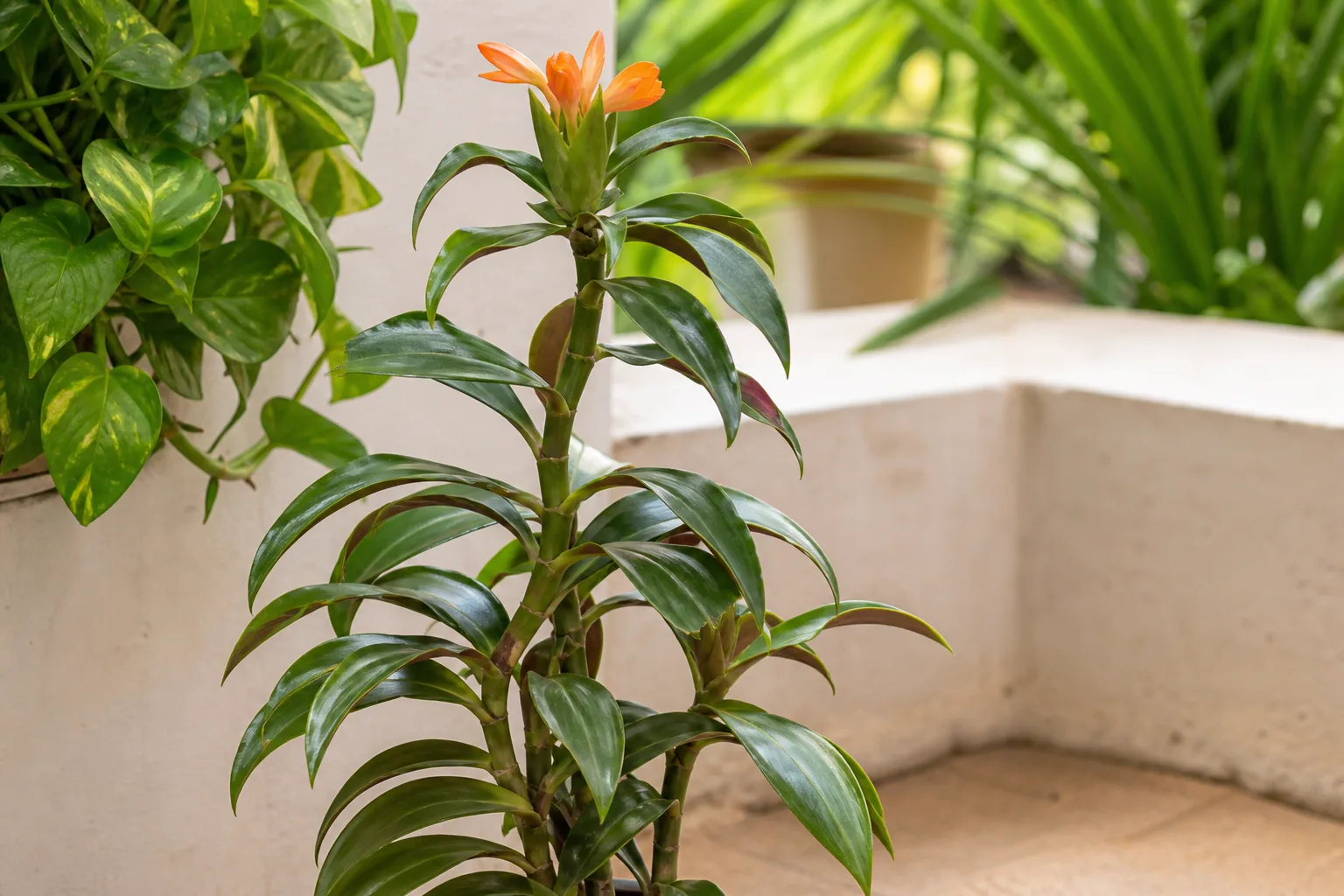
Trade and nursery labels often say Costus igneus, insulin plant, spiral flag, fiery costus, or step ladder plant. Botanically, Kew treats Chamaecostus cuspidatus (Costaceae, order Zingiberales) as the accepted name, with Costus igneus and Costus cuspidatus among synonyms. For care purposes those names usually mean the same plant, but related Costus species are sometimes mis-sold under the same common name—confirm spiralling dark-green leaves with often lightly purple undersides and a fleshy rhizome base rather than relying on the sticker alone.
Do not confuse Insulin Plant with culinary lemon grass or with larger landscape costus such as crepe ginger. Those share a broad “ginger-relative” look but need different light and size budgets.
Mature Size in Pots vs Ground
Expect roughly 45–60 cm (about 1.5–2 ft) of height with a similar clump spread in containers when growth is steady—matching the roughly two-foot habit described in the pharmacognosy review. Tallest stems may arch and lean as the clump fills. In warm frost-free ground with moisture and part shade, clumps can spread wider via rhizomes and act as a leafy accent or low ground-cover mass.
In pots, plan to repot Insulin Plant every one to two years when rhizomes circle the container, the mix dries within a day of watering, or the plant topples from a narrow base.
Best Growing Conditions for Insulin Plant
Four variables decide almost every outcome: light, temperature and humidity, soil drainage with steady moisture, and watering rhythm. Align those four and feeding, pruning, and propagation become routine. Misalign any one—especially harsh midday sun or chronically soggy rhizomes—and the plant stalls or declines no matter how often you fertilize.
Light and Placement
Insulin Plant wants part shade to bright filtered light. Gentle morning sun with afternoon shelter works well on Indian balconies; harsh midday or west-facing blast often scorches leaf edges even when watering seems fine. Indoors, place it near an east window or a few feet back from a bright south/west exposure with a sheer curtain. Deep shade stretches growth and keeps the mix wet too long, which raises rhizome-rot risk.
For window choice, intensity, and warning signs of too little or too much light, use the dedicated Insulin Plant light guide.
Temperature, Humidity, and Cold Limits
Comfortable day-to-day growth sits roughly around 18–35°C (65–95°F) with 60–80% humidity. [Flagged: no authoritative source found for this claim] Protect plants from extended periods near or below about 10°C (50°F)—growth stalls and rhizomes become vulnerable. [Flagged: no authoritative source found for this claim] In North India and other cool-winter regions, move containers indoors or under cover before nights stay consistently cold. Dry indoor air shows up as crispy margins; group plants, use a pebble tray, or raise ambient humidity without trapping stagnant, wet foliage against cold glass.
Good airflow matters because scale, mealybugs, and spider mites worsen when damp foliage, weak light, and crowded placement overlap.
Soil, Drainage, and pH
Use a rich, well-draining loam-based mix that holds even moisture without staying waterlogged around rhizomes. Target roughly pH 6.0–7.0. [Flagged: no authoritative source found for this claim] A practical container blend is about 40% potting mix or garden loam, 30% perlite or coarse sand, 20% cocopeat or orchid bark, and 10% compost or worm castings. Avoid heavy peat blends that stay soggy in low light. If the pot remains heavy for days, smells sour, or sheds lower leaves after watering, fix the Insulin Plant soil before changing fertilizer.
How to Water Insulin Plant Without Rotting Rhizomes
Water when the top 2–3 cm of soil is dry, keeping the deeper mix lightly moist—not swampy. In hot Indian summers that often means every 2–4 days; in cooler months every 5–7 days is a common range, but always finger-check depth rather than obeying a calendar. Empty saucers so roots and rhizomes are not sitting in standing water.
Rhizomes rot quickly when the pot stays wet in dim or cool conditions. Extension guidance on houseplant moisture stress emphasizes that chronically wet media drives root and crown decline—Wisconsin Extension notes that root rots of houseplants thrive when soil stays saturated far more often than a missed drink causes failure. Overwatering signs on this species include yellowing lower leaves, a soft mushy stem base, and sour-smelling soil. Underwatering shows as inward-curling margins, brittle petioles, and stalled new spirals.
When unsure, wait one more day and probe depth rather than adding a “little sip.” Full seasonal cadence and rescue steps live in the Insulin Plant watering guide.
Feeding, Repotting, and Propagation Snapshot
Fertilizer Timing
Feed every three to four weeks during active growth from spring through early autumn with a balanced liquid fertilizer diluted to about half strength, or top-dress lightly with compost and worm castings. Pause if the plant is stressed, newly repotted, or not actively growing. Clemson Extension’s fertilizer guidance stresses matching nutrient applications to real plant need and avoiding excess that harms plants and the environment—see their fertilizer factsheet for dilution and timing principles. Overfeeding in small pots can burn leaf tips without fixing bad light or wet feet. Details belong in the Insulin Plant fertilizer guide.
When to Repot and How to Multiply
Repot every 1–2 years, preferably spring through early summer, when rhizomes crowd the pot. Keep the crown at the same depth and use the same airy moist mix. After repotting, hold fertilizer and keep light bright but soft until new growth resumes.
Propagation is easiest from a stable parent. Take a 15–20 cm stem cutting with two to three nodes, strip lower leaves, and root in moist perlite-rich mix or water in a warm shaded spot for two to three weeks. Mature clumps also divide cleanly in spring—separate rhizome sections with at least one growth point and replant at the same depth. In warm months, established plants may show terminal clusters of bright orange flowers.
Common Mistakes That Stress Insulin Plant
Full afternoon sun on a west balcony scorches leaf edges. Move to morning sun or filtered light before diagnosing nutrient deficiency.
Watering on a fixed calendar while the mix is still wet—especially in winter or a dim room—invites rhizome rot. Finger-check the top 2–3 cm every time.
Dense, soggy peat mix holds water against fleshy rhizomes. Rebuild the mix when pots stay heavy for days or smell sour.
Cold exposure near or below about 10°C for extended periods. Cover or move pots before North India cold snaps.
Stacking fixes—repotting, fertilizing, and relocating on the same day—when yellow leaves appear. Correct light and moisture first.
Assuming every “insulin plant” label is Costus igneus / Chamaecostus cuspidatus. Verify leaf spiral, purple-tinged undersides, and rhizome habit.
Pet Safety and Medicinal-Use Limits
Costus igneus is not clearly listed in the major ASPCA toxic and non-toxic plant database used for this review. Treat it as unverified rather than chew-safe. Keep pots out of reach of pets that graze houseplants, and contact a veterinarian if ingestion occurs. This is plant-safety guidance, not veterinary advice.
The common name reflects traditional and researched interest in blood-sugar support, not a prescription. A medically reviewed consumer summary notes that while leaves may be studied as a supplement, the plant is not a replacement for insulin or diabetes medications. If you harvest leaves for personal use, take only one or two mature leaves at a time from a well-established plant and consult a healthcare professional. Do not stop prescribed treatment based on a houseplant.
When to Use This Page vs Other Insulin Plant Guides
Use this overview to confirm identity, choose placement, set a moisture rhythm, and decide whether a balcony pot or garden bed fits your climate.
Open sibling guides when you need depth:
- Insulin Plant light — window/balcony choice, scorch and stretch signs
- Insulin Plant watering — dryness checks, seasonal cadence, rot vs drought
- Insulin Plant soil — mix recipes, drainage failures, pH notes
- Insulin Plant fertilizer — when to feed, dilution, pause rules
- Insulin Plant repotting — timing, pot size, post-repot care
- Insulin Plant propagation — cuttings, rhizome division, aftercare
- Insulin Plant pruning — cleanup cuts and clump shaping
Related Insulin Plant Guides
Build out the full cluster as you grow:
- Hub: Insulin Plant
- Care: light, watering, soil, fertilizer, repotting, propagation, pruning
Start with light and watering if the plant is new; add soil and repotting when the pot stays wet or rhizomes circle the drainage holes.
Conclusion
Insulin Plant rewards growers who treat it as a warm, humidity-loving spiral ginger: bright filtered light, evenly moist but never waterlogged soil, and protection from cold and harsh afternoon sun. Keep rhizomes firm, watch for yellowing lower leaves and soft stem bases as early rot signals, and use fertilizer only after light and water are stable. Confirm the botanical label when you can, keep pets from grazing unverified foliage, and never treat the plant as a substitute for prescribed diabetes care. With those boundaries clear, Costus igneus is a manageable, handsome container plant for Indian balconies and tropical rooms.
How to care for Insulin Plant?
How much light does Insulin Plant need?
part shade to bright indirect light — morning sun with afternoon shelter is ideal
- part shade to bright indirect light — morning sun with afternoon shelter is ideal - part shade to bright indirect light — morning sun with afternoon shelter is ideal.
When should you water Insulin Plant?
Water when the top 2–3 cm of soil is dry, keeping the mix evenly moist but never waterlogged. In hot Indian summers this is usually every 2–4 days; reduce to every 5–7 days in cooler months.
- Check the top 2–3 cm of soil - Water when the top 2–3 cm of soil is dry, keeping the mix evenly moist but never waterlogged.
- rhizomes rot quickly if the pot stays wet in low light - Water when the top 2–3 cm of soil is dry, keeping the mix evenly moist but never waterlogged.
- Drain excess water - Water when the top 2–3 cm of soil is dry, keeping the mix evenly moist but never waterlogged.
What soil works best for Insulin Plant?
Rich, well-draining loam-based mix with perlite or coarse sand. pH 6.0–7.0. Avoid heavy peat blends that stay soggy around rhizomes.
- 40% potting mix or garden loam - Rich, well-draining loam-based mix with perlite or coarse sand.
- 30% perlite or coarse sand - Rich, well-draining loam-based mix with perlite or coarse sand.
- 20% cocopeat or orchid bark - Rich, well-draining loam-based mix with perlite or coarse sand.
Grower notes for Insulin Plant
What matters most with Insulin Plant
Insulin Plant is a shade-loving spiral ginger (Costaceae), not a sun-hungry culinary grass. Bright filtered light, airy soil, and steady moisture matter more than heavy feeding. In practice, the care checkpoint is simple: part shade to bright indirect light — morning sun with afternoon shelter is ideal. Pair that with rich, well-draining loam (pH 6.0–7.0), and avoid changing water, pot size, and placement all at once.
Best placement in a real home
Insulin Plant belongs where bright filtered light or gentle morning sun is realistic for most of the day, not a hot west-facing sill. Water when the top 2–3 cm of soil is dry, keeping the mix evenly moist but never waterlogged. If the pot stays wet longer than expected, move the plant into better light or reassess the mix before watering again. Humidity target: 60–80%. Temperature comfort zone: 18–35°C (65–95°F); protect below about 10°C (50°F).
Before you buy this plant
Choose Insulin Plant with firm spiralling leaves, clean leaf undersides (often lightly purple), and soil that does not smell sour or feel compacted. Be cautious if you see collapsed stems, sticky residue, scale on stems, or a pot that is wet in poor light. Verify the label reads Costus igneus or Chamaecostus cuspidatus — related Costus species are often mis-sold under the same common name.
First month after bringing it home
Do not repot Insulin Plant on day one unless the mix is failing or pests are obvious. Quarantine it, learn how fast the pot dries, and keep care boring while it adjusts. Watch especially for yellowing lower leaves, leaf scorch from harsh midday sun, and soft rhizomes. If problems appear, correct light and watering first rather than stacking fertilizer, repotting, and pruning together.
Pet-aware note for Insulin Plant
Insulin Plant is not clearly listed in major pet-toxicity databases used for houseplant safety reviews. Treat it as unverified rather than chew-safe, especially if pets graze leaves. Keep pots on shelves or in rooms pets cannot reach until you confirm suitability with your veterinarian.
How to tell Insulin Plant is settling in
Also sold as Spiral Flag, Fiery Costus, and Chamaecostus cuspidatus, this plant should be judged by stable new spiralling leaves and firm rhizomes rather than label names alone. If you plan to multiply it later, common methods include stem cuttings with two to three nodes and rhizome division in spring. Repot only when you see rhizomes circling the pot and soil drying out within a day of watering. If yellowing lower leaves shows up early, inspect light, watering, and rhizome firmness before assuming the plant is permanently weak.
Is insulin plant safe for pets?
Insulin plant (Costus igneus) is not clearly verified in major pet-toxicity databases. Treat it as unverified and keep out of reach of pets that chew houseplants.
Costus igneus (syn. Chamaecostus cuspidatus) does not have a confirmed species-specific listing in the ASPCA toxic and non-toxic plant database reviewed for this guide. Prevent routine chewing and confirm the exact plant with your veterinarian if your pets graze foliage.
Watering Insulin Plant
For Insulin Plant, check the top 2–3 cm of soil; rhizomes rot quickly if the pot stays wet in low light and water every 2–4 days in summer; every 5–7 days in cooler months. Water more often during active warm-season growth; cut back in winter when growth slows.
| Detail | Information |
|---|---|
| How often | Every 2–4 days in summer; every 5–7 days in cooler months |
| How to check | Check the top 2–3 cm of soil; rhizomes rot quickly if the pot stays wet in low light |
| Seasonal changes | Water more often during active warm-season growth; cut back in winter when growth slows |
Signs of overwatering
- yellowing lower leaves
- soft, mushy stem base
- sour-smelling soil
Signs of underwatering
- inward-curling leaf margins
- brittle petioles
- stalled new growth
Soil & potting for Insulin Plant
Use a mix of 40% potting mix or garden loam, 30% perlite or coarse sand, 20% cocopeat or orchid bark, 10% compost or worm castings for Insulin Plant. Fast drainage with steady moisture retention. Target soil pH around 6.0–7.0. Repot every 1–2 years, or when rhizomes crowd the pot, ideally in spring through early summer.
| Detail | Information |
|---|---|
| Recommended mix | 40% potting mix or garden loam, 30% perlite or coarse sand, 20% cocopeat or orchid bark, 10% compost or worm castings |
| Drainage | Fast drainage with steady moisture retention |
| Soil pH | 6.0–7.0 |
| Repotting frequency | Every 1–2 years, or when rhizomes crowd the pot |
| Best season to repot | Spring through early summer |
Signs it needs repotting
- rhizomes circling the pot
- soil drying out within a day of watering
- plant toppling from a narrow base
Humidity & temperature for Insulin Plant
Insulin Plant prefers 60–80%, though normal home humidity is usually fine. Keep temperatures around 18–35°C (65–95°F); protect below about 10°C (50°F).
| Detail | Information |
|---|---|
| Humidity | 60–80% - normal home humidity is fine. |
| Ideal temperature | 18–35°C (65–95°F); protect below about 10°C (50°F) |
Fertilizer & pruning for Insulin Plant
Common problems on Insulin Plant
Yellow Leaves
MediumLikely cause: Common on this plant type; confirm with recent watering, light, and root checks.
Quick fix: Inspect the plant and correct the most likely care stressor before stacking treatments.
Full fix guide →Brown Tips
MediumLikely cause: Common on this plant type; confirm with recent watering, light, and root checks.
Quick fix: Inspect the plant and correct the most likely care stressor before stacking treatments.
Full fix guide →Root Rot
MediumLikely cause: Common on this plant type; confirm with recent watering, light, and root checks.
Quick fix: Inspect the plant and correct the most likely care stressor before stacking treatments.
Full fix guide →Overwatering
MediumLikely cause: Common on this plant type; confirm with recent watering, light, and root checks.
Quick fix: Inspect the plant and correct the most likely care stressor before stacking treatments.
Full fix guide →Underwatering
MediumLikely cause: Common on this plant type; confirm with recent watering, light, and root checks.
Quick fix: Inspect the plant and correct the most likely care stressor before stacking treatments.
Full fix guide →Spider Mites
MediumLikely cause: Common on this plant type; confirm with recent watering, light, and root checks.
Quick fix: Inspect the plant and correct the most likely care stressor before stacking treatments.
Full fix guide →Mealybugs
MediumLikely cause: Common on this plant type; confirm with recent watering, light, and root checks.
Quick fix: Inspect the plant and correct the most likely care stressor before stacking treatments.
Full fix guide →Aphids
MediumLikely cause: Common on this plant type; confirm with recent watering, light, and root checks.
Quick fix: Inspect the plant and correct the most likely care stressor before stacking treatments.
Full fix guide →Leggy Growth
MediumLikely cause: Common on this plant type; confirm with recent watering, light, and root checks.
Quick fix: Inspect the plant and correct the most likely care stressor before stacking treatments.
Full fix guide →Slow Growth
MediumLikely cause: Common on this plant type; confirm with recent watering, light, and root checks.
Quick fix: Inspect the plant and correct the most likely care stressor before stacking treatments.
Full fix guide →Wilting
MediumLikely cause: Common on this plant type; confirm with recent watering, light, and root checks.
Quick fix: Inspect the plant and correct the most likely care stressor before stacking treatments.
Full fix guide →Drooping Leaves
MediumLikely cause: Common on this plant type; confirm with recent watering, light, and root checks.
Quick fix: Inspect the plant and correct the most likely care stressor before stacking treatments.
Full fix guide →Low Humidity
MediumLikely cause: Common on this plant type; confirm with recent watering, light, and root checks.
Quick fix: Inspect the plant and correct the most likely care stressor before stacking treatments.
Full fix guide →Not Enough Light
MediumLikely cause: Common on this plant type; confirm with recent watering, light, and root checks.
Quick fix: Inspect the plant and correct the most likely care stressor before stacking treatments.
Full fix guide →Fungus Gnats
MediumLikely cause: Common on this plant type; confirm with recent watering, light, and root checks.
Quick fix: Inspect the plant and correct the most likely care stressor before stacking treatments.
Full fix guide →Mold on Soil
MediumLikely cause: Common on this plant type; confirm with recent watering, light, and root checks.
Quick fix: Inspect the plant and correct the most likely care stressor before stacking treatments.
Full fix guide →