Leggy Growth on Insulin Plant: Causes, Checks & Fixes
Quick answer
Leggy growth on Insulin Plant usually means newer stems are sparse, stretched, or leaning toward a light source. First move the pot gradually into brighter filtered light or gentle morning sun, because this species prefers part shade. Do not move it straight into hot afternoon sun or prune the whole clump before correcting the light.
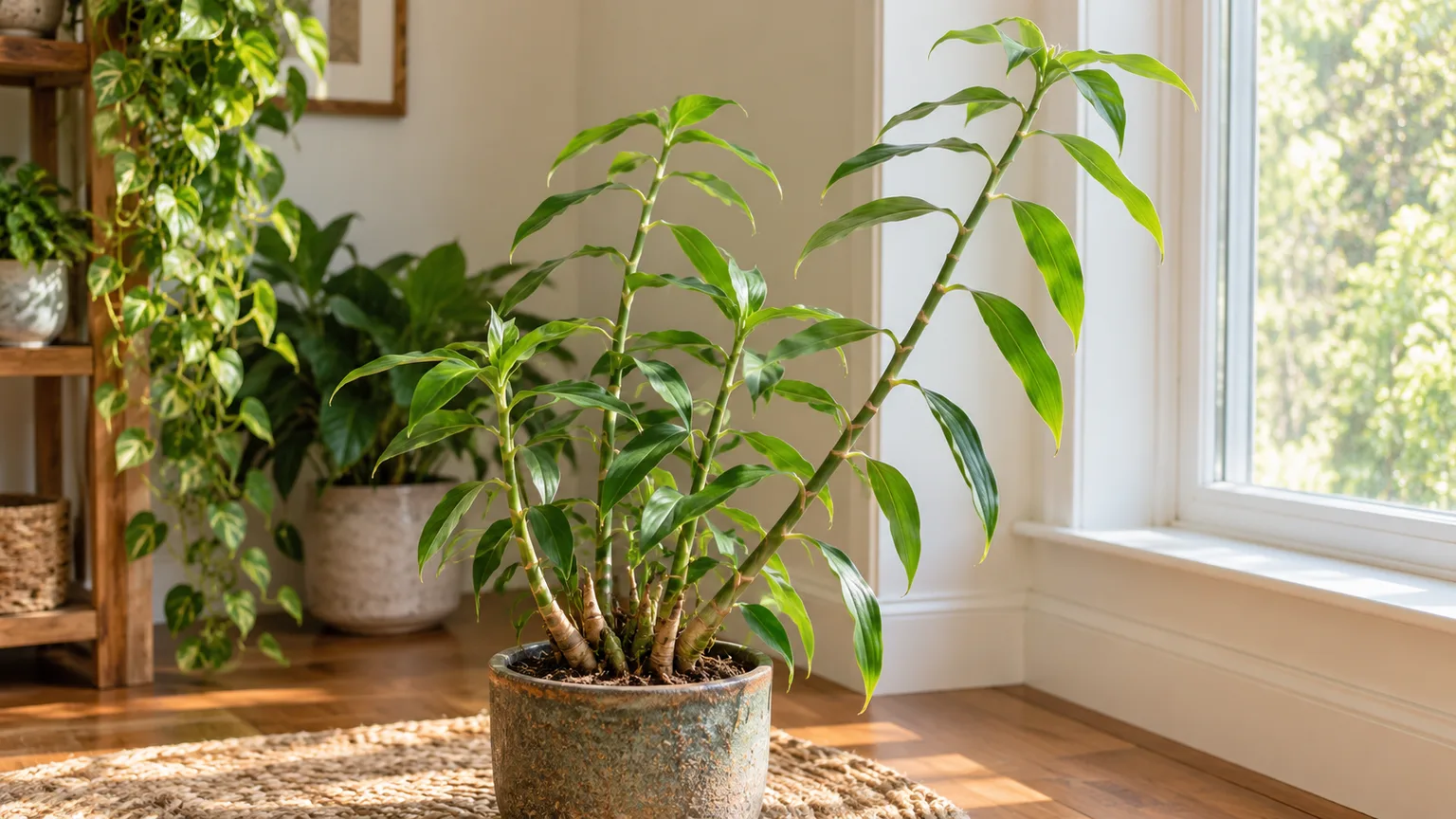
Leggy Growth on Insulin Plant: Causes, Checks & Fixes
This guide covers leggy growth on Insulin Plant. See also the general Leggy Growth guide, watering, and light pages for this plant.
Leggy Growth on Insulin Plant: Causes, Checks & Fixes
Quick answer
First check the newest Insulin Plant stems, not just the tallest old cane. If the fresh spiral leaves are separated by long bare sections and the clump leans toward a window, move the pot gradually into brighter filtered light or gentle morning sun. Do not jump straight to harsh afternoon sun: Missouri Botanical Garden lists this species for part shade, and a quick move from a dim room can scorch leaves that have not acclimated.
Legginess is a shape change, not a diagnosis by itself. The plant’s rhizomatous habit can produce a cluster of upright stems, and mature stems may naturally be tall. Compare the spacing of new leaves with the older growth and check whether the plant is reaching toward one direction before deciding to prune.
What leggy growth looks like on Insulin Plant
Insulin Plant is commonly sold as Costus igneus; Kew treats that name as a synonym of Chamaecostus cuspidatus, a rhizomatous species native to eastern Brazil. Kew’s species record identifies the plant as a wet-tropical geophyte. Missouri Botanical Garden describes its leaves as spirally arranged along upright stems, lists it for part shade, and gives a typical mature height around 1.5–2 feet. The Missouri Botanical Garden profile
True legginess shows up as a change in the plant’s proportions: stems lengthen while the leaves become widely spaced or concentrate near the upper part of each stem. The newest growth may angle toward a window, and the whole clump can look open or uneven instead of full. The Royal Horticultural Society lists weak, pale, spindly growth as a possible sign that a plant is not receiving enough light. RHS light guidance
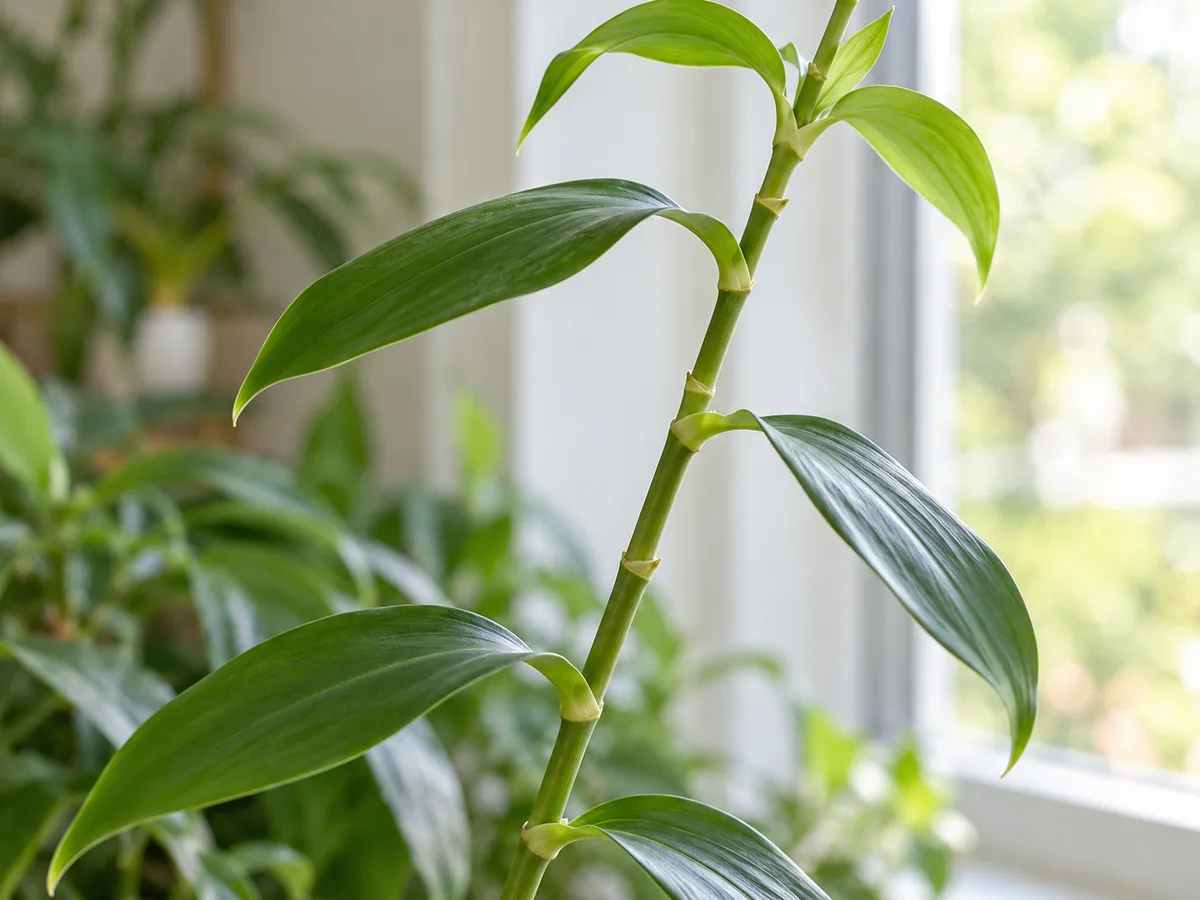
On this rhizome-forming clump, compare the spacing on new stems with older canes rather than judging height alone.
Houseplant references describe legginess as stretched stems with fewer leaves, large gaps, and often a lean toward the closest window. Epic Gardening’s description and Ideal Home’s examples support those general signs. Neither source establishes a species-specific legginess threshold for Insulin Plant, so use them alongside this plant’s documented part-shade preference rather than copying a light number from another species.
A tall Insulin Plant is not always leggy
The silhouette of this Costaceae plant differs from a trailing vine. UF/IFAS describes spiral gingers as upright leafy stems with spirally arranged leaves and underground rhizomes; the group can grow in part sun, filtered sun, or shade. UF/IFAS spiral ginger guidance Because the stems rise from a shared rhizome clump, a few tall canes may be normal even when the plant is healthy.
Height by itself does not prove the plant needs more sun. A compact clump with evenly spaced leaves and firm stems may simply be reaching its ordinary size. A crowded pot may also look irregular because older stems lean outward while fresh stems emerge from the base. The more reliable comparison is whether new stems are becoming progressively longer and sparser under the same indoor conditions.
Use the plant’s care overview if you are still confirming its growth habit and normal placement. If the stems are firm but only one side leans toward the window, the problem may be directional light rather than a whole-plant decline. If the base is soft or the plant is yellowing while the mix stays wet, do not treat that as legginess alone; inspect the root zone before pruning.
Why Insulin Plant becomes stretched indoors
The most likely explanation is too little usable light for the position. A room can feel bright to a person while the plant receives much less light several feet from its window. When light is limited, many plants produce weak, pale, or spindly shoots; the RHS describes those patterns as a cue to reassess light. Penn State Extension also emphasizes that indoor plants differ in how much light they tolerate, so “low light” should not be treated as a universal setting for every species. Penn State Extension’s light overview
For Insulin Plant, the species-specific baseline is part shade or bright filtered light, not deep interior shade. Missouri Botanical Garden places it in part shade, while UF/IFAS says spiral gingers generally tolerate part sun, filtered sun, or shade. Those descriptions allow shelter from harsh rays; they do not mean that an Insulin Plant in a dim hallway will keep producing compact stems. The Insulin Plant light guide translates that distinction into window placement and filtered-light choices.
One-sided light can make the clump lean
If the newest stems all tilt toward the same window, compare the plant’s front and back. A pot pushed against a wall may receive light from just one side, so new stems can develop an uneven silhouette even if the room is not especially dark. That pattern differs from a plant that is uniformly sparse on every side.
Rotate the pot a small amount every week or two while keeping the same filtered-light exposure. Ideal Home’s horticulture experts recommend regular rotation to encourage more even houseplant growth. Their leggy-plant guide also cautions that moving a struggling plant directly to strong sun can scorch foliage. For Insulin Plant, use an east-facing window, bright indirect light, or a filtered south-facing position rather than an exposed west window.
Crowding and old stems can mimic legginess
A dense clump can look uneven when older outer stems lean away from the center or are crowded by newer shoots. That is not automatically a light failure. Check whether the newest stems are themselves long and thin. If the new growth is compact but older stems remain floppy, the plant may need selective thinning after the light problem is ruled out.
Also check whether the pot was recently moved, repotted, or placed beside an obstruction. A change in window exposure or a seasonal shift can alter the light reaching the leaves without changing how bright the room appears. Note what changed and when; a matching timeline helps, but it does not prove the cause by itself.
Wet roots and soft bases are a different problem
Low light can slow water use, so a dimly placed Insulin Plant may stay wet longer than expected. That does not make extra watering a fix for weak stems. Keep the mix evenly moist but well drained and use the watering guide to check the top layer before each drink. If the pot stays heavy for days, reassess drainage and the Insulin Plant soil mix before changing the watering cadence.
Leggy stems are usually elongated but still firm. Soft or mushy stem bases, sour-smelling soil, persistent wilt in wet mix, or brown soft roots suggest a root-zone problem instead. Wisconsin Extension notes that root rot can cause a plant to wilt even when the soil is wet and that affected roots may be soft, brown, and odorous. Its houseplant root-rot guide provides those broader warning signs. If you see several together, use the plant problems hub to find an indexable guide for the underlying symptom rather than pruning first.
First fix: give the new stems brighter filtered light
If the plant is reaching toward a window or has been kept far inside a dim room, move it closer to bright filtered light before you prune. Keep the same basic part-shade exposure: bright ambient daylight or gentle morning sun, with protection from hot afternoon rays. Make the move in stages over about a week, especially if the plant has been in low light for a long time. Ideal Home’s experts recommend a gradual shift, and the Penn State Extension guide explains that low-light tolerance varies by species.
Do not place it in direct hot sun as a shortcut. This plant is a part-shade spiral ginger, and a sudden jump to an exposed sunny sill may create bleached or scorched patches on the leaves. If a bright window is not available, consider supplemental grow lighting in line with the fixture’s instructions and monitor the leaves for heat or scorch. The goal is enough consistent light to support the next stems, not maximum sun exposure.
Hold fertilizer until the plant’s light and root conditions are clear. Extra feed does not correct a dark position, and the plant profile prioritizes filtered light, airy mix, and steady moisture over heavy feeding. Use the Insulin Plant fertilizer guide only when the plant is actively growing and you have ruled out a wet or failing root zone.
Pruning a rhizome clump without scalping it
Better light prevents the next stems from stretching, but it does not shorten the gaps already present on an old cane. Epic Gardening notes that moving a leggy plant will not reverse existing stretched growth; pruning is a separate choice for the silhouette. Its pruning guidance recommends keeping cuts conservative rather than removing most of a plant at once.
Insulin Plant grows as a rhizome-based clump, not as a vine that needs every tip pinched. If one or two old stems remain awkward after the light is corrected, thin those individuals at the soil line instead of shearing every stem to the same height. Keep most of the firm green canes and avoid digging into the rhizome. The Insulin Plant pruning guide covers where to cut and how to limit a thinning session.
If the whole clump is weak, newly moved, cold-stressed, or sitting in soggy mix, postpone shaping cuts. Remove only clearly dead or collapsed tissue and correct the underlying care first. Do not combine a hard prune, repot, and heavy fertilizer application in one session; that makes it harder to tell which change helped and adds avoidable stress.
What recovery looks like
The stretched sections already formed will stay elongated. Do not expect a taller stem to become shorter or its leaves to move closer together after you change the lighting. Recovery is visible in what comes next: new basal shoots should be firm, better proportioned, and less inclined to lean toward one window. Compare the distance between leaves on those new stems with the previous growth.
Give the plant enough time to make new growth before judging the move. In cooler or darker periods, it may grow slowly, so a short wait without a fresh leaf is not proof that the change failed. Keep the plant in its improved position, maintain the normal moisture check, and avoid repeatedly changing the pot’s location. If the older canes continue to lean but new ones are compact and firm, the light correction has helped even if the original silhouette remains uneven.
If new stems are still thin and widely spaced after the plant has had a sustained period in brighter filtered light, check for an obstruction, a dark seasonal window, overcrowding, or poor root health. Do not keep moving it closer to direct sun without watching for scorch. If growth becomes soft, yellow, or unstable rather than simply elongated, use the problems hub to reassess the root-zone or watering issue.
Prevent leggy growth on Insulin Plant
Choose a stable position with bright filtered light from a window or a bright open room. Because the species is suited to part shade, avoid both extremes: a dark corner with little plant-facing daylight and a hot, unfiltered afternoon exposure. The light guide explains how to adapt a window position while protecting the leaves.
Turn the pot periodically if light comes mainly from one side. A small rotation every week or two is enough to keep the clump from continually orienting in one direction; avoid moving it to a completely different light level each time. When seasons change, recheck the light at leaf level instead of assuming that a familiar windowsill is unchanged.
Keep watering responsive to the actual mix. A plant in dim light may use water more slowly, while a brighter position can change how often the top layer dries. Check the soil rather than adding water on a fixed schedule, and preserve the free-draining conditions this rhizome-forming species needs. The soil guide and repotting guide are useful when the mix has compacted or the rhizomes have crowded the container.
Inspect new growth as it opens. A photo from the same angle every few weeks makes leaf spacing and direction easier to compare than memory does. If the clump stays firm and the newest stems remain compact, leave it alone; pruning is for older stems that remain too tall or crowded after the light is suitable.
When to use this page vs other Insulin Plant guides
Use this page when new stems are elongated, sparse, or consistently angled toward a light source. Use the Insulin Plant light guide when you need to select a window or adjust filtered light. If stems are soft or the pot remains wet, diagnose root-zone conditions with the watering guide and the plant problem hub rather than treating the symptom as legginess.
For the general difference between leggy growth and other stretched-stem causes, see the leggy growth symptom guide. This article focuses on how Insulin Plant’s spiral leaves, part-shade preference, and rhizome clump change the light check and pruning choice.
Related Insulin Plant guides
- Overview: use the Insulin Plant overview for the whole care baseline and growth habit.
- Light: use the light guide to correct a dim or one-sided position.
- Pruning: use the pruning guide when selected older stems still need thinning after light improves.
- Watering: use the watering guide when the pot stays wet or dries unevenly.
- Soil: use the soil guide if drainage or compaction is affecting the rhizomes.
- Repotting: use the repotting guide when rhizomes have crowded the pot or the mix has failed.
Related tool
Use the Plant Problem Diagnosis Tool to compare sparse stems with recent changes in light, watering, and pot placement.