Mealybugs on Monstera Dubia: Checks and Fixes
Quick answer
First isolate the Monstera Dubia, then inspect its leaf-stem joints and exposed board-facing edges for live, wax-covered insects. Remove confirmed colonies in targeted passes; do not peel attached leaves away from the support.
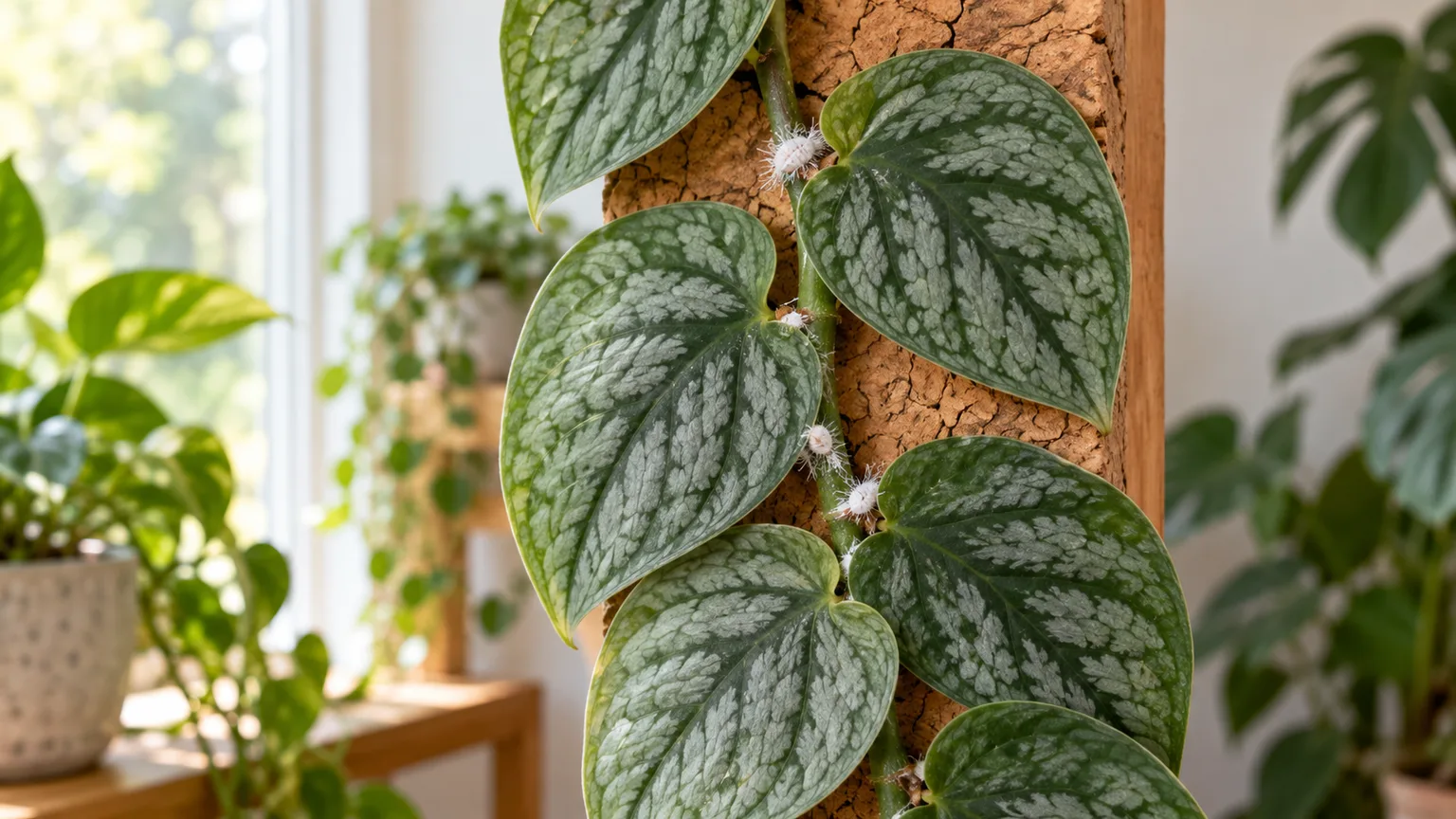
Mealybugs on Monstera Dubia: Find Hidden Colonies and Treat Them
This guide covers mealybugs on Monstera Dubia. See also the general Mealybugs guide, watering, and light pages for this plant.
Mealybugs on Monstera Dubia: Find Hidden Colonies and Treat Them
Quick answer
First isolate the Monstera Dubia, then inspect its leaf-stem joints and exposed edges for live mealybugs. The plant’s overlapping shingle leaves and close contact with a board can make a colony easy to miss from the front. Remove confirmed insects in deliberate passes; do not peel attached leaves away from the support to reach every hidden surface at once.
The general mealybugs guide covers pest biology and broad control options. This page focuses on the practical problem a Dubia owner faces: locating insects along a flat, node-by-node vine while keeping its leaves and aerial roots attached to their support.
What mealybugs look like on Monstera Dubia
A confirmed colony looks like a small white, cottony or waxy patch with insects underneath it. Look for oval, segmented bodies, tiny crawlers moving nearby, or an egg mass tucked into a joint. A few insects may sit along the green vine or petiole rather than on the middle of a leaf. Mealybugs feed on plant sap; sticky honeydew, yellowing, slow growth, or sooty-looking residue may appear as a colony grows, but none of those symptoms alone proves that mealybugs are present. These traits match the UC IPM identification guide, which describes wax-covered insects, honeydew, and protected feeding sites.
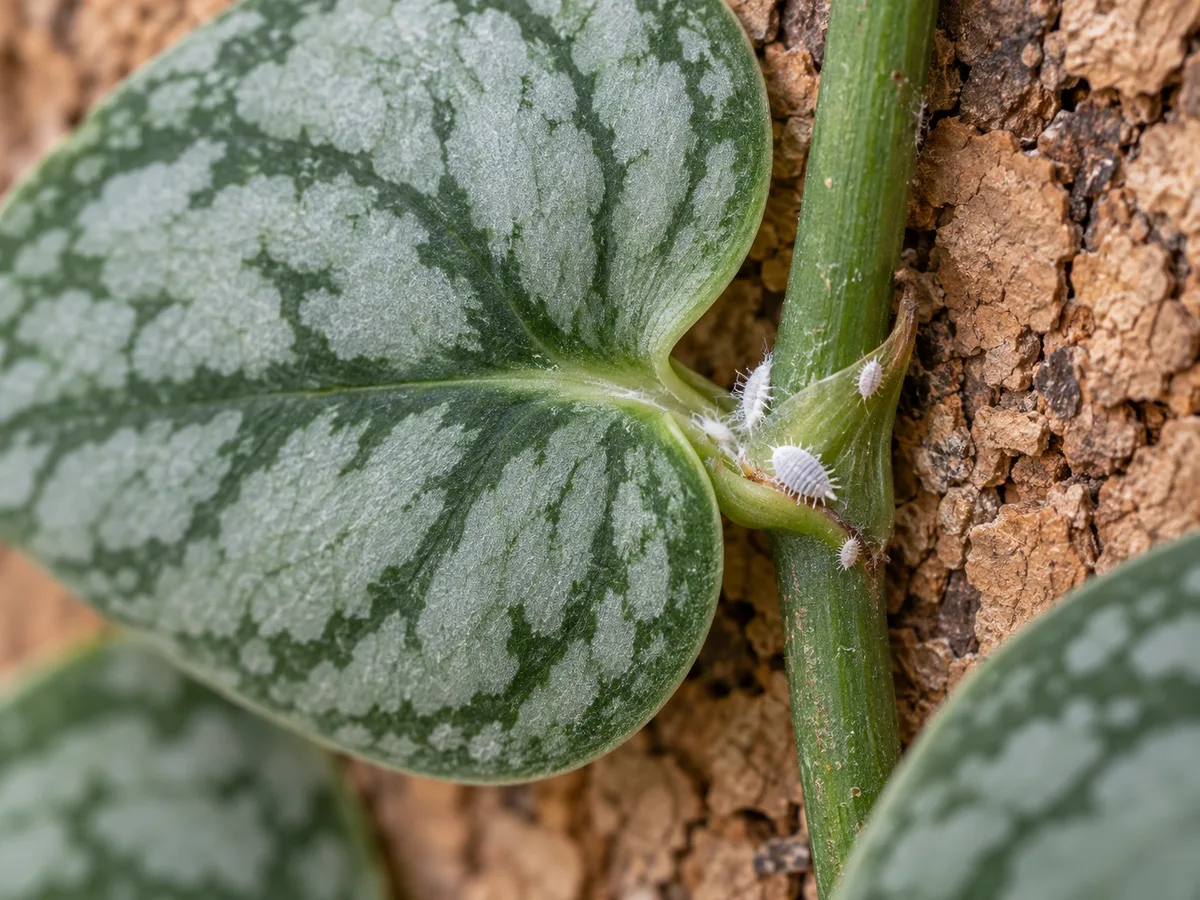
On a shingling Dubia, begin at the exposed leaf-stem joints and edges before trying to lift an attached leaf.
The first visible clue can be a cottony speck at one node, a sticky spot below a leaf, or a new leaf that unfurls with insects nearby. Mealybugs do not always cover a whole plant before they are noticed. One clean-looking front view is not enough to rule them out because the first insects can sit in a narrow seam or behind an overlapping leaf.
Why a shingling Dubia changes the inspection
Monstera Dubia is often grown as a juvenile vine whose overlapping leaves press close to a flat board or panel. That growth form gives the plant its shingled appearance, but it also means a quick glance at the leaf faces can miss the actual feeding sites. The useful inspection unit is the node: the point where a leaf stalk and the climbing stem meet, along with the narrow edges around it.
Check in layers rather than trying to see the entire hidden surface at once. Start at the newest open leaf and trace down the vine, pausing at every visible leaf-stem joint. Turn your head or use a small mirror to see the edges where leaf and support meet. A flashlight held at a low angle can make raised wax and moving crawlers easier to spot. If a leaf is already loose enough to move, look behind it gently; if it resists, leave it attached. Monstera Dubia’s aerial roots may be gripping the board, and pulling a leaf free can damage the growth you are trying to save.
The board is a place to inspect, not evidence that the board caused the infestation. Mealybugs commonly arrive with new plants, tools, or pots. A Dubia can be carefully watered and still acquire them from a neighboring purchase; UC IPM describes these common introduction routes and notes that females do not fly and crawl slowly. Do not respond by changing its light, watering, humidity, and fertilizer all at once.
The flat arrangement also changes what full coverage means. A contact spray can only reach surfaces the liquid touches, so spraying the visible leaf faces does not treat a colony hidden behind a tightly attached node. That is why locating the vine’s seams first matters more than using a stronger mixture. NC State Extension notes that small mealybug populations wedge into crevices and gather near stem bases, a mealybug hiding habit; the same principle makes the Dubia’s visible node joints worth checking closely.
Confirm the pest before treating the vine
Use bright light and a hand lens if you have one. Examine several nodes, the newest leaf, the underside of the leaves that can be reached without force, the pot rim, and the area where the stem enters the support. Look for a combination of signs: waxy cotton, a body underneath, fresh crawlers, or sticky residue below a suspected group. Mealybugs may be white and slow-moving, while newly hatched crawlers are smaller and less covered in wax. NC State Extension describes mobile crawlers and wax-covered adults; movement under magnification helps distinguish a live colony from old lint.
Honeydew is a useful clue because mealybugs excrete a sticky liquid as they feed. It can collect below an infested joint, attract ants, or support dark sooty mold when an infestation is established, as summarized in NC State Extension mealybug notes. The residue is supporting evidence, not a diagnosis by itself: other sap-feeding insects can also leave sticky deposits. If the Dubia has sticky leaves but no visible insects or cottony masses, inspect the whole vine and neighboring plants before choosing a pesticide.
Check the location and texture of white material. Mealybug wax usually forms discrete tufts or egg masses that sit around a joint, vein, or stem. Dust and mineral spots tend to sit more evenly on exposed surfaces and do not crawl when disturbed. Webbing stretched between leaves points toward a different pest than a cottony egg sac. Cottony cushion scale and woolly aphids can look similar, so do not treat a pale patch as a mealybug solely because it is white. UC IPM lists wax-producing lookalikes that can be confused with mealybugs.
If you cannot confirm movement or an insect body, take a close photo and compare it with an extension identification page or ask a local plant clinic. Do not use alcohol or pesticide as a diagnostic test. An unconfirmed treatment can burn a Dubia leaf while leaving the real cause untouched, and it makes later inspection harder because dust, residue, and dead insects can all look like pale marks.
First fix: isolate the whole support
Move the entire Monstera Dubia away from other plants as soon as you find a live mealybug. Keep the vine and its board together during the move; do not brush it against nearby foliage or carry it through the collection with insects exposed. Place the pot on a washable tray or surface so loosened crawlers and wax can be cleaned up. Isolation is the first action because it reduces contact with neighboring plants while you identify how far the colony has spread.
Keep the plant in a stable location with its usual bright, indirect light and normal airflow. Do not put it in a dark closet or bag it in plastic. Those changes add heat, stagnant air, or low light without reaching insects hidden at the nodes. Continue to water according to the mix’s actual dry-down rather than withholding water as a pest treatment; the insects live on the plant, and a thirsty Dubia is harder to assess. Its watering guide explains the separate checks for the potting mix and climbing surface.
Before returning to other plants, wash your hands and clean the tools, tray, or cloth used during inspection. If the plant sits near other Dubias or a shared display board, inspect those plants too, but do not automatically spray every neighboring plant. Look for evidence first. When the source is a newly purchased plant, keep it separate until repeated inspections show no live insects or new cottony masses.
Remove visible colonies without peeling the vine away
For a small, reachable colony, remove the insect and its wax with a damp cotton swab or soft cloth. Work from the top of the vine downward, using a clean swab for each colony so you do not smear insects across the leaf surface. Catch any loose material on the tray. Use light pressure around petioles and nodes; do not scrape a leaf edge or pull a small aerial root off the board just to make the area look spotless.
If a mealybug remains attached to a narrow joint, a cotton swab with isopropyl alcohol can be used as a targeted spot treatment. First, test alcohol on one leaf as described in The Spruce guide, then wait to check for discoloration or burn. UC IPM advises a one-to-two-day patch test because alcohol can injure foliage. Apply it to the insect with a swab rather than misting the whole Dubia; avoid runoff into the potting mix or onto a large area of fresh leaf.
A gentle rinse can dislodge exposed insects and remove honeydew; The Spruce describes this rinse method, but it is not a substitute for checking the joints. If you choose to rinse, support the vine so water pressure does not flex the stem or tear a node from its attachment. Keep water from pooling between dense leaves and the support. Dry the pot exterior and catchment tray, then let the leaves and board surface return to their usual condition before moving the plant back into its display area. A forceful shower is not automatically better on a flat-mounted vine because it can miss the concealed side while soaking the support.
After the first pass, return to the same nodes with a fresh light and lens. Wiping away visible wax can expose tiny crawlers that were hidden inside the mass. If you find another live insect, remove it and continue the inspection; a single clean pass is not evidence that the infestation has ended. NC State Extension notes that some species lay eggs in conspicuous waxy ovisacs while others produce live young, so a Dubia can show new crawlers even after an adult has been removed; see its description of mealybug reproduction.
When a labeled contact treatment makes sense
Use a plant-labeled contact product only if repeated manual removal leaves live insects or the colony is too widespread for careful swabbing. An insecticidal soap or horticultural oil labeled for indoor ornamentals may suppress mealybugs that the spray directly contacts. UC IPM explains the limits of contact control, so a product cannot replace inspection of the nodes and leaf edges. Choose a product whose label includes the plant setting and pest, and follow its dilution, application, and reapplication directions exactly.
Test the label-approved product on a small, unobtrusive leaf area and wait the interval stated on the label before treating the whole plant. Keep the leaf surfaces fully exposed during application; a spray that lands on the front leaves but misses the vine joints has not reached the colony. Follow label cautions for stressed plants, and do not combine alcohol, soap, oil, or another pesticide in one homemade mix. Soap products formulated for plants are not interchangeable with kitchen detergent. Gardening Know How warns that dish soap can strip plant oils, so use a product intended for plant treatment rather than a guessed recipe.
Apply the product where live insects are confirmed, including reachable joints and leaf undersides. Avoid soaking the board or flooding the potting mix. Let treated foliage dry in the shade or in its usual indirect light, and keep the plant separated during follow-up. Repeat only as often as the label allows and only while inspections show a reason to continue. UC IPM notes that available treatments may not eliminate every mealybug at once, which is why inspection and retreatment as needed are part of control.
Do not reach immediately for a systemic pesticide, a soil drench, or a fertilizer spike. A visible colony on the leaves and vine is an aboveground pest problem; adding a root-zone pesticide without evidence of root mealybugs can expose roots and soil organisms unnecessarily. Avoid pushing nitrogen-rich fertilizer during an active infestation as well; UC IPM’s nitrogen caution for mealybugs notes that unnecessary nitrogen can encourage tender growth and egg production. Extra feeding is not a pest treatment and may encourage soft new growth before the insect population is controlled.
Keep board moisture separate from pest control
The Dubia’s support and its pot have different jobs. The board may be kept lightly moist to help the climbing roots maintain contact, while the airy aroid mix in the pot should be checked independently before watering. Treating mealybugs is not a reason to soak the whole board or keep the mix wet. If a swab or spray dampens a small joint, remove excess liquid from the pot rim and let the exposed foliage dry; keep the usual watering decision tied to the mix, not to whether a pest treatment was just applied.
This separation matters most when the plant is fixed flat against cork, cedar, or another panel. A hidden colony can tempt you to repeatedly mist or rinse the surface, but wetting every seam will not make a contact product reach a completely sealed underside. It can also leave residue in folds that are difficult to inspect. Use small, local treatment passes and return with a light after the plant dries. If the support is already saturated, pause further rinsing and let it return to its normal moisture level before using a product.
If a board-mounted leaf is firmly rooted to the panel, do not detach it as a routine full-coverage method. The Dubia’s attractive shingle pattern depends on leaves and nodes staying close to their support. Loosen only removable ties or clips if they block access and can be released without tugging the stem. When the only reachable route would require tearing a healthy leaf or aerial root, treat the exposed colony carefully and ask a plant clinic or experienced aroid grower how to expose that node safely.
A board may need replacement only when the infestation is widespread through inaccessible joints, the panel cannot be cleaned or inspected, or the plant’s attachment has already failed. Replacing it is a high-disturbance step, not the first response to one cottony patch. Take a photo of the infestation before you alter the arrangement. That record helps distinguish a colony that is shrinking from one that has simply shifted behind another leaf.
Check roots only when the signs point below the mix
Most visible mealybugs on a shingling Dubia are on stems, nodes, or leaves. Do not unpot a healthy-looking plant just because you saw a cottony insect above the soil. Root disturbance can break fine roots and aerial-root attachment, while it still may not reach insects hidden in the foliage. Start below the canopy only if you have persistent decline, white fluffy patches around drainage holes or on the root ball, or no aboveground insects despite repeated checks.
Root mealybugs are a different inspection problem from the visible canopy colony. Gardening Know How describes white fluffy root-ball patches as a sign of root-feeding mealybugs and suggests checking roots when a plant remains wilted despite regular watering. If you find that pattern, work over a washable tray and inspect the root ball without spreading old mix around other plants. Do not reuse the old potting mix or move a suspect plant to a shared shelf while you seek an identification.
If the Dubia’s roots are firm and the mix smells normal, close the pot and return to canopy inspection rather than escalating to a drench. If roots are soft or the mix smells sour, compare the symptoms with the plant’s root-rot guide before making a second diagnosis. Root rot and root mealybugs can both leave a plant weak, but one is a root-health problem and the other is an insect colony. Treat the evidence you can see rather than assuming that every yellow or drooping leaf is caused by the same issue.
Lookalikes that matter on a shingling aroid
Cottony cushion scale, woolly aphids, and some other sap-feeders can make white or waxy patches. A mealybug colony usually contains separate oval insects beneath the wax, while lint or mineral residue does not crawl when disturbed. Scale insects may form a more fixed shell or waxy shield on a stem; woolly aphids tend to appear as clusters of insects with a fluffy coating. If the white material is isolated and you cannot see a body, use a magnifier and compare a clear photo before applying a treatment.
Sticky leaves alone are not enough to call a mealybug infestation. Honeydew can be produced by multiple sap-feeding pests, and sticky residue can remain after the insects have left. Search both sides of the vine, including the freshest growth, before choosing a pest treatment. If you find no live insects but the Dubia continues to yellow, follow the separate yellow-leaves guide and check the plant’s recent light and watering changes. Do not use an alcohol swab on every pale mark in an attempt to see if it works.
A spider mite web is usually fine and threadlike between surfaces rather than a discrete cottony egg sac at a node. If you see webbing, stippling, or tiny moving specks but no mealybug bodies, inspect the leaf undersides carefully and compare with the plant’s spider-mites guide. Treat that as a separate pest diagnosis; a soap or alcohol spot test chosen for mealybugs will not confirm spider mites.
Recovery: what changes first, and what does not
A treated Dubia should show fewer live insects at the same nodes before it shows new leaves. Existing yellow, sticky, scarred, or distorted leaves will not become clean simply because the pests are gone. Wipe away honeydew where you can reach it so a fresh sticky patch is easier to recognize. The most useful signal is no live insect, new crawler, or newly formed cottony mass at the inspected joints on repeated visits.
Set a repeat inspection date about a week after the first manual removal or label-approved treatment, then check weekly while you are seeing activity. The interval is for finding survivors and new crawlers, not permission to reapply pesticide earlier than its label allows. Inspect the same nodes and a few farther down the vine so you can compare like with like. Keep the board and leaves in their normal position between checks; moving the plant repeatedly can make it harder to tell whether the infestation is shrinking.
Once you stop finding live insects, continue checking the new leaf and older nodes for several more weeks before returning the plant to its normal collection space. A new leaf that opens without fresh wax or sticky residue is a better recovery sign than the condition of a leaf already marked by feeding. If the plant remains stable but grows slowly, do not force a flush with fertilizer. The Monstera Dubia light guide and soil guide can help you check those separate growing conditions after the pest problem is under control.
When to escalate or discard the plant
Ask for help identifying the insect if repeated close-up checks show white material but no clear bodies, or if the treatment leaves damage that is hard to separate from pest injury. Send the plant clinic a focused image of the node, the whole vine, and the leaf surface. If the colony is centered behind a firmly attached leaf, include a side-view photo rather than pulling the leaf free for a better picture.
Escalate when the infestation spreads across most nodes, when the newest leaves keep emerging with live insects, or when the plant declines despite careful, label-compliant treatment. Inspect nearby houseplants and board-mounted vines before deciding the Dubia is the only source. If every section of the support is infested and you cannot reach it without dismantling the plant, weigh the value of the collection against the time and disturbance needed to save it.
Discarding a plant can be reasonable when a heavy infestation persists, the vine has little healthy growth left, or treating it would repeatedly expose other plants to crawlers. UC IPM advises considering discarding severely infested plants rather than continuing ineffective pesticide applications. If you discard it, contain the plant and loose material before carrying it through the room; do not compost infested leaves or reuse a contaminated board without cleaning it.
Prevent a repeat infestation in a Dubia collection
Quarantine incoming plants before placing them beside a board-mounted Dubia. Inspect the underside of each leaf, the stem joints, the pot rim, and the support or stake on the new plant; pests can hide on the plant and on materials that move with it. Gardening Know How recommends a two-week quarantine for new arrivals. Treat that time as a period for repeated inspection, not as a guarantee that every pest has been ruled out.
During weekly care, spend a few seconds tracing the newest Dubia node and the exposed margins of the shingled leaves. Look at the back of the board or panel if it is accessible without lifting attached growth. Check the base where the vine meets the pot and inspect a few older nodes as well as the newest leaf. This routine is more useful than a distant glance across the face of the plant because the first colony may fit into one small crevice.
Clean pruning shears, support clips, and trays after they touch an infested vine. Keep new purchases and plants recently returned from outdoors separate while you inspect them. If a neighboring plant develops a sticky spot or cottony mass, isolate it and identify the pest rather than waiting for the same sign to appear on the Dubia. Avoid unnecessary high-nitrogen feeding during an active infestation; return to the plant’s normal feeding plan only after the colony is controlled and growth resumes.
Keep the board, potting mix, and display area in their normal care range. A pest response should not turn into repeated soaking, dark quarantine, or sudden repotting unless the inspection points to a real root or support problem. If the leaves lift from the board or the pot dries unusually fast, compare those signs with the Dubia watering and light guides as separate care questions rather than assuming mealybugs explain them.
When to use this page vs other Monstera Dubia guides
Use this guide when you can confirm wax-covered insects or crawlers on the Monstera Dubia. If you have only yellowing, a leaf pulling away from the board, or a slow-growing vine with no pest evidence, start with the Monstera Dubia overview and its care checks instead. If the mix is staying wet or the roots are failing, use the root-rot guide rather than treating an unconfirmed insect problem.
The Monstera Dubia problems hub routes symptoms when more than one pattern is present. Use the Pest Identifier Tool if the white material may be scale, woolly aphids, or another pest. The tool can help narrow the identification, but confirm visible insects before choosing a treatment.
Related Monstera Dubia guides
Use this mealybug page for confirmed colonies at nodes, leaf joints, or reachable root-ball surfaces. Use the Dubia care pages when the concern is pot dry-down, light, or substrate, and use the yellow-leaves or root-rot pages when those symptoms appear without a confirmed pest. The Dubia problems hub can route a mixed symptom pattern, but return to the specific guide that matches the evidence you find.