Monstera Dubia Overwatering: Signs, Root Checks & Recovery
Quick answer
On Monstera Dubia, overwatering is most likely when the base pot stays wet between waterings, not when its board or moss support dries. Pause pot watering until the top 2–3 cm of mix is dry, then check drainage and the plant’s newest growth before changing the setup.
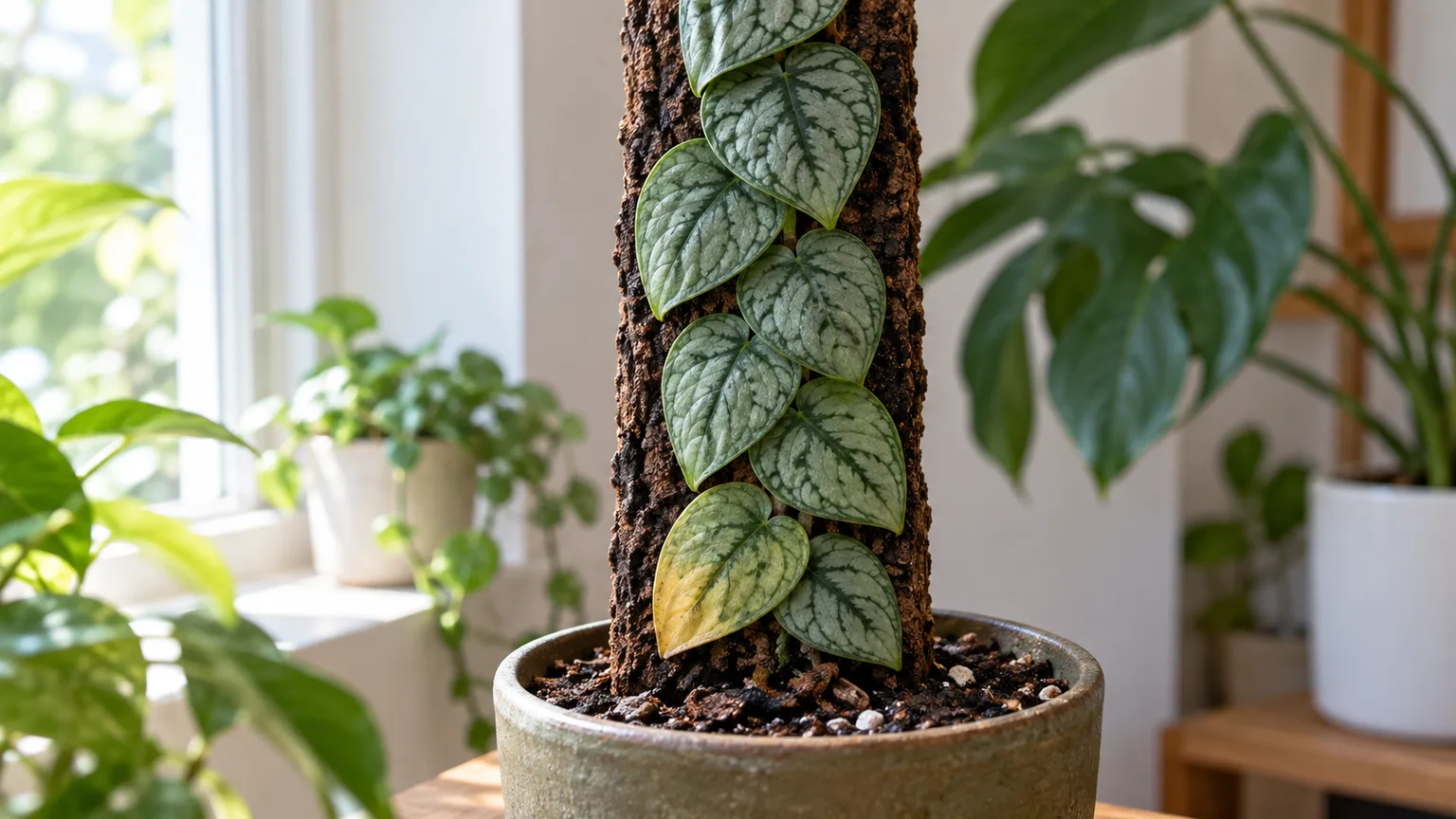
Overwatering on Monstera Dubia: Signs, Root Checks & Recovery
This guide covers overwatering on Monstera Dubia. See also the general Overwatering guide, watering, and light pages for this plant.
Overwatering on Monstera Dubia: Signs, Root Checks & Recovery
Quick answer
Overwatering on Monstera Dubia is about the moisture around the roots in the base pot, not whether the climbing surface looks dry. A board-mounted plant can have dry cork, cedar, or moss while the root ball below is still wet. Conversely, the support can feel damp while the potting mix is ready for water.
First, pause watering at the base until the top 2–3 cm of mix is dry. Then check the pot’s weight, drainage, and the newest leaves before deciding whether the plant needs a simple longer dry-down or a root inspection. For general causes and symptoms shared across houseplants, see our overwatering guide; this page focuses on how the pattern differs on Monstera Dubia.
What overwatering looks like on Monstera Dubia
A Dubia with a wet root zone may begin with one lower shingle turning yellow, followed by more yellowing, limp leaves, or a stem that feels softer than usual. Soft, mushy stems and discolored leaves can also occur with root rot, so treat the combination as a reason to check the root zone rather than as proof by itself, as described in this houseplant root rot guide. The leaf can lift away from the board instead of lying flat, but lifting is not proof of excess water on its own. A dry support, low humidity, low light, and normal aging can produce overlapping changes.
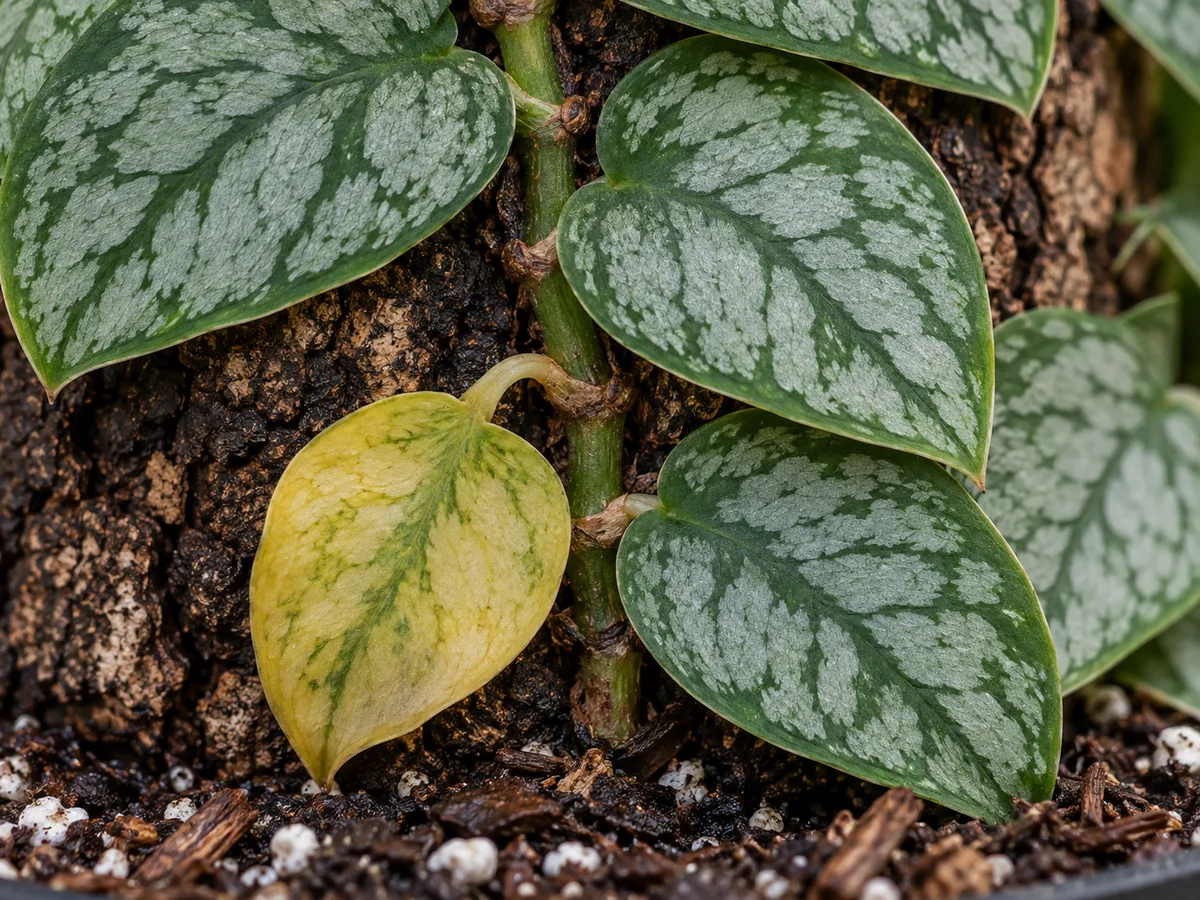
One older shingle is yellowing while nearby leaves remain firm; check the potting mix before blaming the support.
Look at the sequence rather than a single mark. Overwatering becomes more likely when the root-zone mix is still wet several days after watering, the pot remains unusually heavy, and yellowing or soft growth keeps spreading. Potted Well’s Dubia guide also warns that sustained excess moisture can lead to root rot risk. That is a reason to inspect carefully, not a diagnosis from leaf color alone.
Once a shingle has yellowed or become translucent, stop using that leaf’s color as a recovery measure. Recovery means that the decline stops, the remaining vine stays firm, and new leaves unfurl without the same soft, yellow pattern. This plant’s juvenile leaves overlap and hug a support, so compare leaves along the vine instead of judging the whole plant by the oldest leaf at its base. The Cafe Planta Dubia support guide describes the plant’s climbing habit and aerial roots; those features make it especially important to read the support and the pot separately.
Why a Dubia’s support and base pot need separate checks
Monstera Dubia is usually grown for its juvenile shingling form: a climbing vine attaches to a flat surface and sends aerial roots toward that support. The board is a growing surface, not a substitute for the root ball. A dry slab may prompt an owner to mist or soak the whole plant even though the base pot has not dried. That is one of the easiest ways for a Dubia setup to accumulate more water than the roots can use.
Treat the setup as two moisture zones. The base mix supports most of the plant’s water uptake and needs a repeatable dry-down before you water again. The board or moss pole may need occasional moisture for root contact, but its surface can be tended independently. If you moisten the support, direct that moisture to the support itself and keep runoff from collecting inside the pot or its cachepot.
This distinction matters most with a moss pole or a thick, enclosed support; Cafe Planta notes that moss poles can hold moisture, so do not treat a damp support as proof that the base pot is wet. A wet surface can be normal if the vine is attached there; a persistently wet root ball is the issue to solve. If you use a flat board, do not use its color, coolness, or surface feel as a watering signal for the pot. Check the base mix directly and note whether the pot becomes lighter between waterings.
What usually keeps the root zone wet
A calendar routine is the first suspect. Watering every few days because the plant is tropical, because a leaf is lifting, or because the support feels dry can keep the lower mix wet through successive cycles. A Dubia’s top surface may dry before the center of a deep pot does, so a quick glance at the surface is not enough if the container remains heavy.
A dense or broken-down mix can also stay saturated longer than the airy aroid mix this climbing Monstera is grown in. The plant record for Monstera Dubia calls for a chunky blend with bark, perlite, and coco coir, and notes excellent drainage. If a formerly loose mix has collapsed into fine particles, water may drain slowly and air spaces can shrink. The fix is not automatically to repot; first establish whether the mix is actually retaining water too long and whether the plant is declining.
Pot size and container design change the dry-down as well. A root ball in a pot much wider than its roots can leave unused mix wet for longer. A cachepot, saucer, or decorative outer vessel can hide standing drainage water, while a pot without an open drainage path prevents excess from leaving. Penn State Extension’s houseplant drainage advice recommends a pot with drainage holes inside a cachepot and removing water that collects in the outer vessel. Check the container before attributing every symptom to the plant itself.
Light, season, and room temperature also affect how quickly the plant uses water. When growth slows in winter or light is reduced, the same watering interval that worked in a brighter growing period may leave the mix wet longer. Gardening Know How lists pot size, growing medium, temperature, light, and humidity among the factors that change watering needs. This is why the Monstera Dubia watering guide is organized around a top-layer dryness check and seasonal adjustment rather than a universal number of days.
Confirm overwatering without unpotting first
Begin with the base pot. If it sits inside a decorative cover, lift out the nursery pot and empty any water that has collected underneath. Feel the top 2–3 cm of mix with a clean finger; if that layer is still cool and damp, wait. Then lift the pot and compare its weight with how it feels after a normal dry-down. Potted Well describes pot-weight and top-soil checks as practical ways to decide whether a Monstera Dubia needs water; use them together rather than trusting either as a precise meter.
If the pot is large, a wooden skewer inserted near the edge can help you judge moisture below the surface. Penn State Extension recommends a finger or stick moisture check when the surface does not tell you whether the soil needs water. Pull the skewer out after a short pause: dark, damp particles stuck to it mean the lower mix is not ready for another drink. Avoid repeatedly probing in the same spot, especially if roots are close to the surface. A moisture meter can be a secondary tool, but its reading depends on the medium and probe placement; use it as one clue, not a verdict.
Next, inspect the drainage path. Confirm that the inner pot has holes, the holes are not blocked by compacted mix, and water can leave the cachepot freely. If you have recently watered, notice whether water ran through and whether the pot was drained before it went back on display. A heavy pot after watering is expected; a pot that stays heavy for an unusually long stretch deserves a closer look at the mix, light, and pot volume.
Finally, compare old and new growth. A single oldest leaf fading while the rest of the vine remains firm and a new shingle is forming may be normal aging. Several leaves yellowing in sequence, a softening stem, or growth that stalls while the pot stays wet makes root stress more plausible. Do not use humidity on the support as a substitute diagnosis: a dry board can explain leaves lifting from it, while the root zone can still be wet.
When to inspect Dubia roots and the climbing stem
Do not unpot the plant for every yellow leaf. Root inspection is justified when the mix remains saturated and the vine is declining, when the potting medium smells sour, when stems are soft at the soil line, or when leaves continue to fail despite a clearly corrected watering routine. A stable plant with one aging leaf is better left in place while you watch its next dry-down.
If you do inspect it, support the vine and board first so the stem is not pulled against the pot. Slide the root ball out as a unit if it releases easily. Check the roots for firmness and the stem base for soft, darkened tissue. A root’s color can vary with age and the material around it, so texture and odor matter more than color alone. Roots that feel slippery or collapse under gentle pressure are more concerning than roots that are simply stained by bark or coir; the root texture and odor signs described by Gardening Know How are useful clues, not a reason to unpot a stable plant.
Keep any attached aerial roots that are firm. They are part of the vine’s grip on its climbing surface, and tearing them away can add an avoidable wound while the plant is stressed. If the mix is wet but the roots and stem remain firm, return the plant to its existing pot and correct the watering conditions instead of cutting or rinsing healthy tissue.
The first fix: pause watering at the base
Stop the next scheduled watering until the top 2–3 cm of the Monstera Dubia’s base mix has dried. That is the first correction for a plant that has been watered before its root zone was ready. Do not compensate for a dry-looking board by soaking the pot, and do not add fertilizer while you are trying to establish whether the root zone is recovering.
While you wait, keep the plant in steady bright, indirect light and leave the vine attached to its support. Do not move it between hot sun, a dark corner, and a humid cabinet in the same week; changing several conditions at once makes it harder to tell whether the pot is drying normally. When watering is due again, water the mix evenly until excess runs from the drainage holes, then empty the saucer or cachepot.
The RHS Monstera Dubia profile recommends watering when the top few centimetres of compost feel dry and keeping the compost moist but not waterlogged. That gives a useful plant-specific threshold, but your room, pot size, and mix determine how often the threshold arrives. Do not turn “top layer dry” into a fixed weekly appointment.
If the roots are damaged, repot only what the evidence supports
If the roots and stem are firm, avoid an emergency repot. Let the mix dry to the plant’s normal threshold and correct any standing water or blocked drainage. Repotting an otherwise stable vine can break its aerial roots, disturb new growth, and replace a simple watering adjustment with transplant stress.
If you find soft or collapsing roots, or the base stem itself is losing firmness, move to a targeted rescue. Set the supported vine on a clean surface, remove the wet mix gently, and trim only roots that are clearly soft or disintegrating with clean, sharp scissors. Keep firm roots and do not cut sound aerial roots simply because they are brown or attached to the board. Choose a pot with clear drainage that is only large enough to hold the remaining root system, then use a fresh, loose aroid mix rather than a dense general-purpose soil. Homes & Gardens’ root rot recovery guidance likewise recommends removing affected roots and returning the plant to fresh, well-draining mix.
Hold the support close to the pot as you replant, and settle the roots without packing the mix tightly around them. The board should remain stable so the vine’s nodes are not bent or scraped. Water once to settle the fresh mix and let all excess drain. After that, return to the moisture check; do not keep the new pot constantly wet in an attempt to replace lost roots.
If most roots are gone but the vine still has firm nodes and leaves, preserving a healthy section above the damaged base may be possible. Treat this as a last-resort salvage, not the default response to an overwatered plant: take a cutting only if the lower stem is failing and there is a sound node to retain. Keep at least one leaf and a viable node on the section, and use a clean tool. A cutting cannot rescue tissue that has already become soft or collapsed, so discard affected sections rather than trying to root them.
For root-specific checks and limits, see the Dubia root rot guide. That page covers the point at which root symptoms deserve their own diagnosis; this article is for finding the watering pattern that may have led there.
Keep the shingle vine steady while it recovers
A Monstera Dubia’s flat-growing juvenile vine is easy to damage if it is untied and pulled away from the board during a routine moisture check. Leave the climbing structure in place whenever the plant can be inspected without removing it. If you have to slide the root ball out, hold the board or support separately and avoid letting the stem hang from its aerial roots.
After repotting, reattach loose nodes gently with a soft tie if needed, leaving room for the stem to thicken. Do not force every leaf flat against the surface or bury a node to make the vine look tidy. A bent or pinched stem can add a new problem that looks like decline, and a freshly disturbed plant is already using energy to re-establish roots.
If the support itself is too wet, allow its surface to dry between maintenance and check whether moisture is dripping into the pot. If it is too dry and leaves have lifted away, moisten only the support or improve ambient humidity; do not change the base-pot watering interval to solve that separate issue. Penn State Extension notes that misting raises humidity only briefly, often only until the droplets evaporate, so routine leaf misting is not a reliable way to create a humid microclimate. A small humidifier or a measured room-level change is easier to control; keep the pot’s moisture decision separate.
Tell overwatering apart from a dry board, underwatering, or low light
| What you notice | More consistent with | What to check next |
|---|---|---|
| Mix is wet below the surface, pot stays heavy, and several leaves soften or yellow | Overwatering or a root-zone problem | Check drainage and the root ball if decline continues |
| Mix is dry, pot is light, leaf edges become crisp, or shingles pull away from the support | Underwatering or a dry climbing surface | Check the root ball and the board separately |
| The board feels dry but the pot is still heavy | Support dryness, not proof the roots need water | Moisturize the support without watering the pot |
| One oldest leaf yellows while stems and newer leaves remain firm | Normal aging is possible | Watch the next leaf and the next dry-down before intervening |
| Growth slows in dim conditions while the mix stays wet longer | Light-related slow dry-down may be contributing | Review the plant’s light guide and avoid compensating with more water |
A dry and light pot with crispy edges fits underwatering better than chronic wet soil; use the Dubia underwatering guide if the root ball is dry when you find those symptoms. Low humidity can make the leaves lift from their support or develop dry margins without making the potting mix wet. If that pattern fits, compare it with the low-humidity guide. Brown edges may also come from the support drying unevenly, so check where the affected leaf touches the board before changing the pot routine.
Overwatering and root rot are related but not interchangeable labels. A plant can be watered too soon without having lost major roots; root rot becomes a stronger concern when wet mix persists alongside soft roots or a failing stem base. A root inspection is the way to confirm suspected root rot, because leaf symptoms can overlap with underwatering. Likewise, yellowing alone does not prove either condition. Use the observations together: moisture, drainage, smell, stem firmness, the number and position of affected leaves, and what new growth is doing.
Recovery: read the next dry-down, not the damaged leaf
The first sign of improvement is that the pot begins to lose weight between waterings and no new leaves soften or yellow in the same pattern. A leaf that has already turned yellow, translucent, or limp will not become a healthy shingle again. Remove it only when it is mostly spent or detached easily; keeping partly green tissue is useful while the plant stabilizes.
A simple overwatering episode may settle over the next few dry-down checks once the watering interval and drainage are corrected. If roots were damaged, recovery is slower: a Dubia may pause while it rebuilds root function, and a new leaf can take weeks or longer to appear depending on season and conditions. Homes & Gardens’ root rot recovery guidance recommends cautious watering for a few weeks after treatment, which is a useful reminder that recovery is measured over time. Do not use a calendar deadline to decide that the plant has failed if the stem remains firm and decline has stopped.
Look for one healthy, unfurling leaf that stays attached, a firm vine at the soil line, and a root ball that dries toward its usual top-layer threshold. If no new growth appears but leaves remain stable, keep monitoring rather than forcing a new flush with fertilizer. If yellowing moves quickly up the vine, the base softens, or the mix stays saturated after you correct the setup, inspect the roots or ask a local extension service or experienced plant clinic for a second opinion.
Prevent another wet cycle in a board-mounted Dubia
Use the same check each time: touch the top 2–3 cm of the base mix, lift the pot to feel its weight, and confirm the last watering drained freely. A short log of those checks can show whether this pot is drying more slowly in winter or after a change to the support. Let the pot and mix set the interval rather than a phone reminder.
Water thoroughly when the check says it is time, then let the water escape. Do not give small daily sips to a pot whose lower mix remains wet; that can keep the root zone damp without giving the whole root ball a clear wet-and-dry rhythm. If the water runs straight down one side of a very dry root ball, wet the mix evenly in a sink, then drain it fully before returning the nursery pot to its cachepot.
Maintain an airy mix as it ages. Bark and perlite help keep the structure open, while coir retains some moisture; if the blend has become fine and compacted, plan a careful refresh when growth is steady rather than waiting for a crisis. The Dubia soil guide explains the loose mix used for this plant. Choose a pot that accommodates its roots without leaving a large volume of unused wet mix, and keep the drainage holes clear.
Separate support care from root care. A dry board or moss pole may be dampened locally; that does not call for a full pot watering. Conversely, if the potting mix is ready for water, do not withhold it only because the support still feels damp. If you need to raise humidity, use a room-level method and continue to base watering decisions on the mix in the pot.
Recheck the routine when you change any one part of the setup: move to a lower-light spot, switch from a small nursery pot to a larger display pot, replace bark with finer mix, or add a moisture-holding moss pole. Each change can alter dry-down speed. Make one change at a time and wait for the next moisture cycle before adjusting again. In winter, expect the pot to reach the dry threshold more slowly than during active growth, and let that observation set the interval.
When to act urgently
Treat it as urgent if the stem at the soil line is soft or collapsing, several leaves fail over a short period while the root ball stays wet, or the plant has a sour smell and no drainage. In that case, inspect roots promptly rather than waiting for another watering cycle. A mostly healthy vine can still be saved if some firm roots or stem nodes remain, but no guide can guarantee recovery after the stem base has collapsed.
If the Dubia is stable, one old leaf has yellowed, and the pot dries normally, take no drastic action. Correct the next watering decision and watch the vine. Cutting, repotting, fertilizing, and moving the plant at once removes useful diagnostic clues and can add stress to a plant that may only be shedding an older leaf.
Related tool
Use the Root Rot Risk Checker to organize what you have observed about soil moisture, pot drainage, and root condition before deciding whether the plant needs a root inspection.
When to use this page vs other Monstera Dubia guides
Use this page when the base pot remains wet between waterings or yellowing, soft growth, and slow dry-down appear together. If the root tissue is already soft or collapsing, move to the dedicated root rot guide. If the root ball is dry and the leaves have crisp edges, compare the underwatering guide; if only the shingling surface dries, check humidity advice and maintain the pot on its own moisture schedule.
Related Monstera Dubia guides
- The Monstera Dubia overview explains the plant’s climbing habit and the separate care needs of its base pot and support.
- The Monstera Dubia problem hub helps compare this watering issue with other symptoms on the same plant.
- Use the watering guide for the routine dry-down threshold after symptoms settle.
- Use the soil guide if the mix is compacted or stays wet too long despite a longer interval.
- Use the light guide when low light appears to be slowing dry-down.