Not Enough Light on Monstera Dubia: Signs & Safe Fixes
Quick answer
If your Monstera Dubia is producing smaller leaves on longer bare stem sections and the board sits in a dim spot, move the mounted plant one step closer to bright, indirect window light. Keep it out of harsh direct sun, then judge the next leaf rather than expecting old internodes or damaged foliage to change.
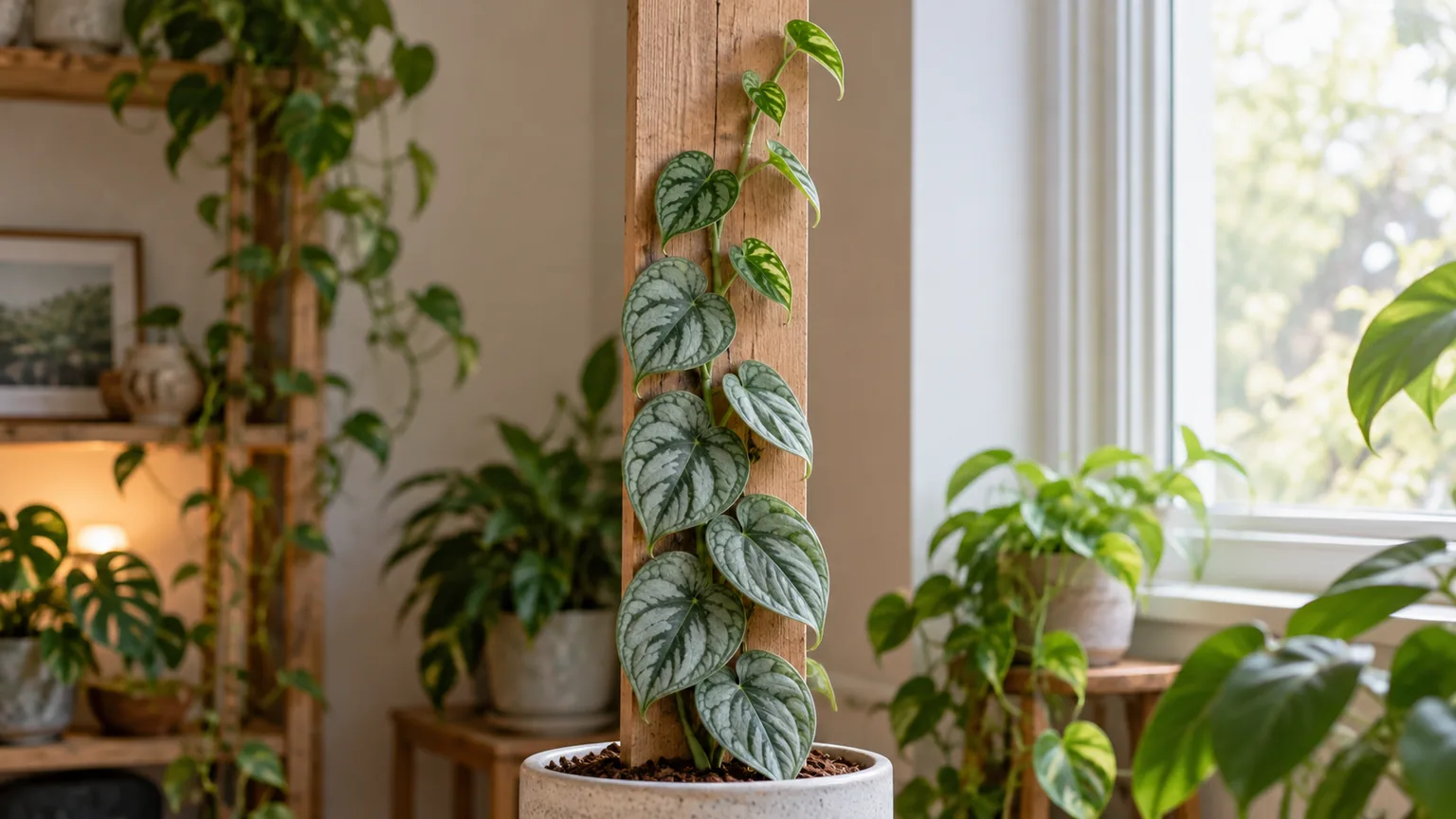
Not Enough Light on Monstera Dubia: Signs, Checks & Safe Fixes
This guide covers not enough light on Monstera Dubia. See also the general Not Enough Light guide, watering, and light pages for this plant.
Not Enough Light on Monstera Dubia: Signs, Checks & Safe Fixes
Search Intent
The reader wants to know whether a sparse, slow, or stretched Monstera Dubia vine is actually underlit, how to change placement without burning the leaves, and how long it will take for compact shingling to return. This page helps them inspect the mounted vine and the light falling on its leaf face before they water, fertilize, prune, or repot.
SEO Title Planning
- Why Monstera Dubia Stops Shingling in Low Light
- Not Enough Light on Monstera Dubia: Signs, Checks & Fixes
- How to Improve Monstera Dubia Light Without Scorching Leaves
Best: Not Enough Light on Monstera Dubia: Signs, Checks & Fixes. It names the plant and problem while promising practical diagnosis and a cautious fix.
Meta Description Planning
- Diagnose low light on Monstera Dubia by checking new leaf size, stem spacing, and board placement, then move it toward bright indirect light safely.
- Learn how to tell low light from water stress on Monstera Dubia, where to place its climbing board, and when a grow light can help.
- Monstera Dubia looks sparse or stretched? Check the newest shingle growth, correct its light gradually, and avoid direct-sun scorch.
Best: Diagnose low light on Monstera Dubia by checking new leaf size, stem spacing, and board placement, then move it toward bright indirect light safely. It gives the reader a diagnostic path and one safe first correction without promising a fast reversal.
Primary and Supporting Keywords
- Primary: not enough light on Monstera Dubia
- Supporting: Monstera Dubia light requirements; Monstera Dubia low light signs; Monstera Dubia leggy growth; Monstera Dubia smaller leaves; Monstera Dubia stretched internodes; bright indirect light for Monstera Dubia; where to place Monstera Dubia; grow light for Monstera Dubia; Monstera Dubia leaves not shingling; Monstera Dubia slow growth; Monstera Dubia board mount; Monstera Dubia winter light
NLP Entities
Monstera dubia; shingle plant; juvenile leaves; silver-green leaf pattern; climbing vine; internode; node; aerial roots; board mount; bright indirect light; canopy-filtered light; window orientation; seasonal daylight; horticultural light; leaf scorch; root-zone moisture; humidity; slow growth.
People Also Ask Questions
- How much light does Monstera Dubia need?
- What are signs that a Monstera Dubia is not getting enough light?
- Why are the spaces between my Monstera Dubia leaves getting longer?
- Can Monstera Dubia live in a north-facing room?
- Will a grow light help Monstera Dubia shingle?
- Can direct sun burn Monstera Dubia leaves?
- Will old stretched Monstera Dubia growth become compact again?
- How do I tell low light from overwatering on Monstera Dubia?
E-E-A-T Signals
The guide compares fresh nodes along the plant’s characteristic shingling vine, separates related-species evidence from Dubia-specific guidance, avoids inventing a universal lux target, gives a single gradual placement change, and sets recovery expectations around new leaves rather than old stem spacing.
Featured Snippet Opportunities
- Paragraph: the first check for low light on Monstera Dubia
- List: visible patterns that support or weaken a low-light diagnosis
- Table: low light versus wet-root stress, dry support, sun scorch, and pests
- List: how to move a board-mounted Dubia without exposing it to harsh sun
Helpful Content Checklist
This page adds a Dubia-specific check based on the spacing and size of new shingling leaves, rather than treating any slow growth as proof of low light. It explains how to inspect the board-facing light, separate lookalikes, make one careful placement change, and assess the next leaf without overwatering or fertilizing in response to a lighting problem.
- Why Monstera Dubia Stops Shingling in Low Light
- Not Enough Light on Monstera Dubia: Signs, Checks & Fixes
- How to Improve Monstera Dubia Light Without Scorching Leaves
Not Enough Light on Monstera Dubia: Signs, Checks & Fixes
- Diagnose low light on Monstera Dubia by checking new leaf size, stem spacing, and board placement, then move it toward bright indirect light safely.
- Learn how to tell low light from water stress on Monstera Dubia, where to place its climbing board, and when a grow light can help.
- Monstera Dubia looks sparse or stretched? Check the newest shingle growth, correct its light gradually, and avoid direct-sun scorch.
Diagnose low light on Monstera Dubia by checking new leaf size, stem spacing, and board placement, then move it toward bright indirect light safely.
- H1: Not Enough Light on Monstera Dubia: Signs, Checks & Safe Fixes
- Quick answer
- What low light looks like on a Dubia shingling vine
- Why the board-mounted growth habit changes the diagnosis
- Check the actual light on the leaf face
- Separate low light from lookalike problems
- First fix: move the whole mount to brighter indirect light
- Use a grow light only when daylight cannot reach the board
- Recovery: judge the next leaves, not the old gaps
- Mistakes that slow recovery or add a second problem
- Prevent another stretch of sparse growth
- When to use this page versus other Monstera Dubia guides
- Related Monstera Dubia guides
- Related tool
Not Enough Light on Monstera Dubia: Signs, Checks & Safe Fixes
If your Monstera Dubia is making smaller leaves with longer bare stretches of stem, first check the light at the face of its climbing board. When that face stays dim for most of the day, move the entire mounted plant one position closer to bright, indirect window light. Keep it out of a hot sunbeam: Dubia’s young leaves need more usable daylight, not sudden unfiltered sun.
A single stretched section is not enough to diagnose the problem. Compare recent leaves, look at how far apart their nodes sit, and consider whether the vine has slowed in the same place where the room became darker. For general room-light checks, our not-enough-light guide explains the broader symptom; this page focuses on how it appears on the shingling Monstera Dubia. The Monstera Dubia care overview and problem hub give the larger care context if more than light appears to be involved.
What low light looks like on a Monstera Dubia vine
A juvenile Dubia grows with small, heart-shaped leaves laid close to the climbing surface, overlapping like shingles. That arrangement gives you a visible record of how the vine has been growing: each leaf emerges from a node, and the bare stem between two nodes is an internode. If the newest few leaves are smaller and the vine now has visibly longer internodes, the new section is less compact than the older section below it.
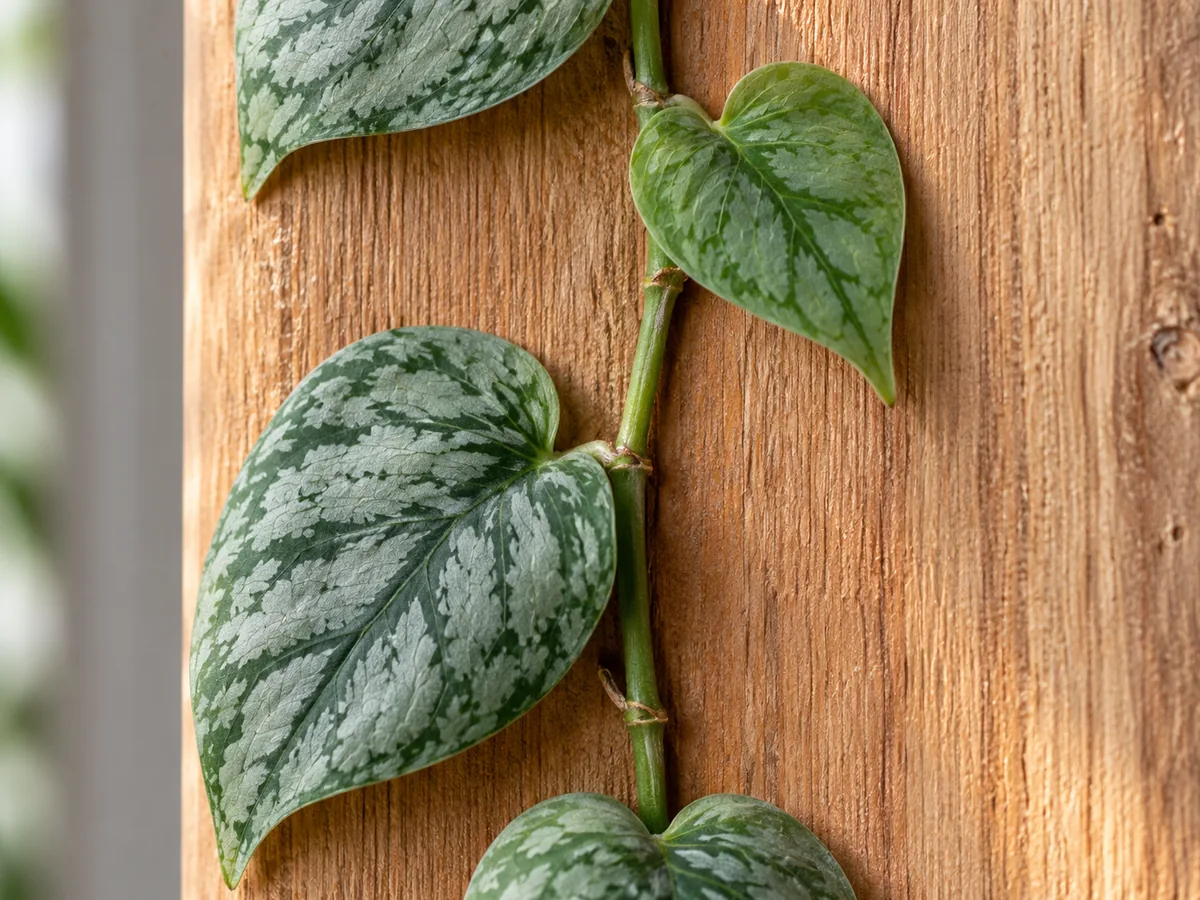
A longer bare stem gap between newer leaves is a useful comparison point; assess it alongside the board’s light and the plant’s recent growth.
Do not diagnose from one leaf alone. A new Dubia leaf is often smaller while it is still unfurling, and an older panel may have formed under a different season, window, or support. Wait until a leaf has opened and firmed, then compare it with the last two fully expanded leaves. A pattern across several new nodes is more informative than a single pale or greenish blade.
Low light is more plausible when the sparse spacing appears together with slow extension of the vine, smaller new leaves, and a board that sits in a dim room or behind other plants. The RHS describes Monstera dubia as a compact, slow-growing climber and recommends bright indirect light; its species profile is a useful baseline for where to grow the plant. The RHS Monstera dubia profile does not set a fixed indoor light-meter threshold, so use the plant’s newest growth and placement together rather than treating one measurement as a pass-or-fail number.
Why the shingle board changes the light diagnosis
Monstera Dubia is not a loose rosette whose leaves all face upward. Its juvenile vine climbs a trunk or board, and the heart-shaped leaves press against that plane. The Spruce’s Dubia profile describes the species as a creeping vine in tropical Central and South America and recommends bright, indirect indoor light to reflect its dappled forest-canopy setting. The board display is the feature you are trying to preserve: if the leaf face is tucked toward a wall or shaded by a neighboring plant, the pot can sit in a bright room while the leaves receive little direct daylight.
Check the mounted plant from the leaf’s point of view. Stand where the newest leaf sits and note whether it has an open view of the window, whether curtains filter it, and whether a shelf, tall plant, or deep alcove blocks the sky. A board that faces into the room may receive less usable light than the pot location suggests. Rotate or reposition only if the board can remain stable and its aerial roots will not be pulled from the surface.
Juvenile shingling also makes leaf spacing easier to read than it is on a sprawling vine. On a Dubia board, you can compare the newest nodes with the compact part of the panel below. Penn State Extension notes that Monstera deliciosa can become leggy in lower light; that is a related-species clue, not a published Dubia-specific measurement. For Dubia, treat longer internodes as evidence only when they coincide with a dim leaf-facing location and a change in recent growth. The Monstera Dubia light guide covers normal placement goals; use this problem page when the plant’s new growth has begun to look more open or weak.
Check the light that reaches the newest leaves
First, look at the plant at the time of day when the room seems brightest. Observe whether the leaf face receives bright window light, filtered daylight, or only ambient room light. A room can feel bright to a person while the mounted vine sits well back from glass, behind a curtain, or below an overhang. Distance is not a dependable rule by itself because window direction, trees, neighboring buildings, tint, and cloud cover all affect what reaches the board.
If you own a light meter, take a reading at the newest leaves rather than beside the window or at pot level. Use it to compare the plant’s current spot with another possible spot in the same room, and repeat at more than one time of day. Do not treat a phone app or one brief reading as a species threshold: the RHS recommends measuring light intensity and quality when setting up artificial lighting, while also emphasizing that plant genera differ in their needs. You are looking for a meaningful improvement in the leaf-facing exposure, not a magic number.
Think about season as well as room layout. A Dubia that grew steadily near a window through long summer days may receive much less useful daylight when days shorten, trees leaf out, or the sun angle changes. If the board sits in a north-facing or obstructed room, check it again on a cloudy day rather than relying only on the clear afternoon when the room looks brightest. A dated photo of the newest node and a short note about the time of day are enough to compare whether the plant’s position is improving.
Also note whether the board and the rooted base pot are in different conditions. Dubia uses the board for its shingling climb and the pot for its root system; light changes can alter how quickly that small pot dries. Record whether the top layer dries more slowly after the plant moves into a dimmer season. Do not water on a fixed schedule to compensate for slow growth. The Dubia watering guide explains how to check the base mix separately from the climbing surface.
Separate low light from similar Monstera Dubia problems
| What you notice | What it suggests | What to check next |
|---|---|---|
| Several new leaves are smaller, internodes are longer, and the board is shaded | Low light is plausible | Compare light at the leaf face and recent growth |
| Yellowing leaves with mix that stays wet | Root stress may be contributing | Check pot weight, drainage, smell, and root firmness |
| Shingles lift from the board but new leaves are not stretched | The support may be too dry or the roots may not be attached | Check the board contact and humidity before moving the plant |
| Bleached or crispy patches appear on the window-facing side after a move | Too much direct sun is more likely | Filter the beam or pull the board back from the glass |
| Fine stippling, webbing, or clustered insects appear | A pest problem needs inspection | Check leaf undersides and nodes before treating |
| One older leaf yellows while the newest growth remains compact | Normal leaf turnover or another isolated stress may fit better | Compare the rest of the vine and the root zone |
Low light or wet roots?
Low light can coexist with root trouble, but it does not prove that the roots are damaged. Check the base pot before changing watering. Penn State Extension notes that overwatering can lead to root rot in Monstera; in Dubia, persistent wet mix, sour odor, or a soft lower stem are reasons to inspect the root zone rather than pour more water or add fertilizer. If the pot is airy and the top couple of centimeters dry as expected, but the newest vine section is stretched in a dim spot, a light correction is more reasonable.
Dubia’s board and pot are two different moisture zones. A board can be dry while the root ball is adequately moist, and a wet pot does not mean the climbing surface is providing good contact for aerial roots. A lifted leaf by itself is not enough to diagnose low light. For wet-mix symptoms, compare with the plant-specific overwatering guide and root-rot guide; for a dry or poorly attached climbing surface, use the low-humidity guide.
Low light or direct-sun scorch?
The right placement is brighter than a dark corner but still protected from prolonged hot sun. The RHS profile lists bright indirect light for Monstera dubia, and The Spruce’s Dubia profile warns that prolonged direct sun can burn young leaves. Penn State’s Monstera guidance similarly advises bright light without direct sun for the related species M. deliciosa. If the pale or brown patch is concentrated on the window side and appeared shortly after the board was moved into a beam, more exposure may be the wrong fix.
A scorched patch will not turn green again, so use the newest leaves to decide whether the new position is helping. Move the board back behind a sheer curtain or out of the direct beam if a leaf surface heats up or develops a bleached, papery patch. The aim is a longer period of bright filtered light, not a quick jump into intense sun.
Low light or a pest?
Before moving the plant, look at the undersides of leaves, the folds around nodes, and the stem where it touches the board. Fine stippling, fine webbing, sticky deposits, cottony clusters, or moving insects are reasons to inspect for pests. A light shortage does not produce visible webs or insects, and more light will not remove them. Keep any pest diagnosis separate from the light assessment so you can change the correct condition first.
If pest signs are absent and the pattern is gradual across several new leaves, compare the growth spacing and the board exposure again. If the plant is rapidly losing leaves, the roots smell sour, or the stem is soft, do not assume a slow light correction is sufficient. Monstera Dubia’s problem hub routes to the relevant plant-specific guides, including yellow leaves when discoloration is the main change and the slow-growth guide when the vine has stopped extending without clear stretch.
First fix: move the entire mount into brighter indirect light
When the board receives little daylight and the newest leaves are spaced farther apart, the first fix is to move the whole mounted plant one position closer to the brightest suitable window. Keep the board and pot together so the vine’s aerial roots stay attached. Choose a place where daylight falls across the leaf face for a larger part of the day, but a sheer curtain or the room’s angle prevents harsh direct sun from hitting young leaves for hours.
Do not make three changes at once. Leave the watering mix, fertilizer, board moisture, and pruning alone for this first adjustment unless one of them is clearly failing. A single change gives you a readable comparison: take a photo of the youngest open leaf and the next node before moving, then check the same features as the new leaf develops. The RHS describes Dubia as slow-growing, so a lack of visible change in a few days is not evidence that the brighter position failed.
If the only brighter place has a strong south- or west-facing beam, soften that exposure rather than placing the plant directly against the glass. The Spruce’s species profile specifically cautions that prolonged direct sunlight can burn young leaves. The broader Monstera care guide from The Spruce also recommends bright, indirect light for Monstera and notes that direct sun can burn leaves. These sources support a filtered-light target, not a fixed distance that fits every home.
When daylight is not enough, use a grow light carefully
A grow light is a sensible supplement when the best available window still leaves the Dubia board dim, such as a room with an obstructed view, a windowless corner, or a darker winter setup. Place a horticultural fixture so its useful output reaches the leaves rather than the wall behind the board. A lamp aimed at the pot while the climbing face stays in shadow may not correct the pattern you are trying to change.
Choose a fixture intended for plant growth and follow its instructions for distance, duration, and heat clearance. The RHS indoor-lighting guidance notes that ordinary domestic bulbs may not provide enough intensity for plant growth and that artificial lighting can help where natural light is limited. It also cautions that plants vary in their light needs and that intensity and quality matter. That is why this guide does not assign a universal hour count or number of inches for every Dubia, fixture, and room.
Use a timer if the lamp is easy to forget, and keep a normal dark period rather than leaving it on continuously. After the light is installed, watch both the leaf face and the room temperature near the board. If the closest leaves bleach, curl, feel hot, or begin to crisp on the side nearest the fixture, increase the distance or reduce the exposure according to the lamp’s instructions. New growth that remains compact without new scorch is a more useful sign than a brighter-looking room.
Recovery: judge the next leaves, not the old gaps
A light correction cannot shrink an old internode or pull a stretched section of Dubia vine back into a tight shingle pattern. Those spaces remain visible on the board, and a damaged leaf does not become undamaged because the plant is moved. Keep healthy leaves in place; they still contribute to the plant’s growth even if their spacing is not the pattern you want.
Look for the next fully opened leaf and node. Improvement is more likely when a new leaf is close in scale to recent healthy leaves, the bare stem gap does not continue getting longer, and the vine resumes steady extension during active growth. The silvery juvenile pattern should be compared on fully expanded leaves, not a leaf that is still unfolding or one formed under a different season. If the next leaf is still small but the room has recently become brighter, give the vine time to produce another node before deciding that the first placement change was useless.
There is no reliable recovery date for every indoor Dubia. The RHS calls the species slow-growing, and a board-mounted plant may pause in winter or after a move. In good active growth, the next leaf may appear over the following weeks, but cooler conditions, a recent repot, an unrooted cutting, or short daylight can extend the wait. Record the date of the move and compare each new node rather than expecting a dramatic change within a week.
If no new leaf appears, check the rest of the plant before increasing lamp intensity. A firm vine with intact leaves and dry-down that still follows the plant’s normal pattern can simply be resting. Soft stems, spreading yellowing, several leaves dropping rapidly, or an increasingly sour pot indicate another problem that should be assessed separately. The goal is stable roots and better-formed new growth, not a fast visual repair to the old panel.
Mistakes that turn a light problem into two problems
The most common overcorrection is moving a Dubia from a dim wall straight into unfiltered afternoon sun. This plant needs bright indirect light, but the young shingling leaves can burn in prolonged direct sun. Increase useful daylight by changing the board’s position or filtering the beam, and judge the plant after the change rather than trying to make one dramatic move.
Do not answer slow growth with extra water. A plant receiving less light may be using moisture more slowly, so calendar watering can keep the base pot wet for longer than expected. Check the top layer and the weight of the pot before watering; follow the Dubia watering guidance and use the species’ existing soil and drainage setup. The soil guide helps when the mix itself stays dense or wet, which is a separate issue from how much light falls on the board.
Do not add fertilizer as a substitute for better light. A nutrient feed cannot make a dim board brighter, and pushing fertilizer while roots are wet or growth has stalled can complicate the diagnosis. Do not cut away every long section of vine either. Pruning can remove healthy leaves and nodes that still support the plant; wait until you have seen the response of new growth before deciding whether a cosmetic trim is worth the loss.
Finally, do not assume that a loss of dramatic mature leaves means the plant is underlit. Most indoor Dubia are grown for juvenile shingling, and the species’ mature form is not a practical short-term target. The relevant question is whether the current vine is growing with a healthier pattern under appropriate light, not whether it has transformed into a different Monstera display.
Prevent another stretch of sparse Dubia growth
Choose the permanent position by looking at the board, not only the pot. The leaves should face the usable window light, and the board should not be hidden behind a curtain fold, shelf, or larger foliage plant. If you move the room’s layout seasonally or bring home a new plant that will shade the mount, repeat the leaf-level check.
Keep a simple record of light and growth. Once a month during active growth, photograph the newest two or three nodes from the same angle and note whether the board has a clear window view. If the plant sits in a room with pronounced seasonal changes, compare the same location in the shorter-day season rather than assuming that last summer’s position still supplies enough light. A meter can help compare two indoor places, but the meter reading is a tool for comparison rather than a universal Dubia pass mark.
Keep the rest of the care stable while you evaluate light. The base mix should be airy and the plant should be watered by its actual dry-down, not by a remembered summer interval. Maintain enough humidity for the board-mounted leaves to lie against their support, but do not keep the potting mix permanently wet just to dampen the board. If the leaves begin lifting, use the Dubia low-humidity guide to check the climbing surface separately.
A healthy Monstera Dubia setup works as a small system: bright indirect light reaches the shingling plane, aerial roots remain attached, and the base pot drains and dries at an appropriate pace. Review the Monstera Dubia care overview when you need the full baseline, or the plant’s light guide when selecting a permanent window or grow-light position. If low light is confirmed, maintain the new exposure and assess future leaves before making another adjustment.
When to use this page versus other Monstera Dubia guides
Use this guide when a series of new leaves has become smaller or more widely spaced and the board receives weak daylight. Use the leggy-growth guide when long gaps are the main symptom even if the room’s light history is unclear; it helps you compare other causes of sparse form. Use slow growth when extension has stopped but leaves remain normally sized and close together.
If yellowing, soft stems, or a pot that stays wet dominates the problem, begin with yellow leaves, overwatering, or root rot instead. When leaf edges are dry or the shingles no longer touch the support, check the Dubia humidity guide before assuming that light is responsible. The problem hub routes between the plant-specific symptoms and care topics.
Related Monstera Dubia guides
- Use the care overview for the plant’s full baseline, including its board-mounted juvenile growth and separate root-zone needs.
- Use the light guide to choose a window or lamp position before a low-light pattern develops.
- Use the watering guide when the base pot dries too slowly or too quickly, especially after a placement change.
- Use the soil guide when drainage or dense mix is the main concern, rather than changing light to solve a root-zone issue.
- Use leggy growth when the vine is sparse but the cause is not yet clear; use this page when low light is the leading explanation.
- Use slow growth when new growth has paused without a stretched shingle pattern.
Related tool
Use the Plant Problem Diagnosis Tool to compare likely light and root-zone causes for this plant before making a second care change.
FAQ 1 Question: How can I tell if my Monstera Dubia needs more light? Answer: Look at the newest two or three nodes, not just the older panel. Smaller new leaves with noticeably longer stem gaps and slow extension are a stronger low-light pattern than one greener leaf by itself.
FAQ 2 Question: Does Monstera Dubia need direct sun? Answer: No. Give the board bright, indirect light and shield young leaves from prolonged direct sun, which can scorch their thin tissue. A brighter position should still feel filtered rather than hot.
FAQ 3 Question: Will a Monstera Dubia recover its old shingling after I move it? Answer: Old internode gaps will not close and a stretched vine will not become compact again. Better conditions can support tighter, healthier new leaves as the plant continues climbing.
FAQ 4 Question: Should I use a grow light for a Monstera Dubia in a dark room? Answer: A horticultural grow light can supplement weak daylight when no brighter window position is available. Follow the fixture’s distance and timing instructions, aim it at the leaf face, and keep watching for bleaching or heat.
FAQ 5 Question: What if my Monstera Dubia is also yellowing or dropping leaves? Answer: Check the base-pot mix and roots before assuming light is the only problem. Persistent wet mix, soft stems, or rapid leaf loss calls for a watering or root-health diagnosis as well.