Monstera Dubia Yellow Leaves: What to Check First
Quick answer
First check the potting mix, not the calendar: if the top 2–3 cm are still damp, pause the next watering and let that layer dry. On Monstera Dubia, a climbing board can feel dry while the pot remains wet, so assess the two moisture zones separately before changing light, fertilizer, or the support.
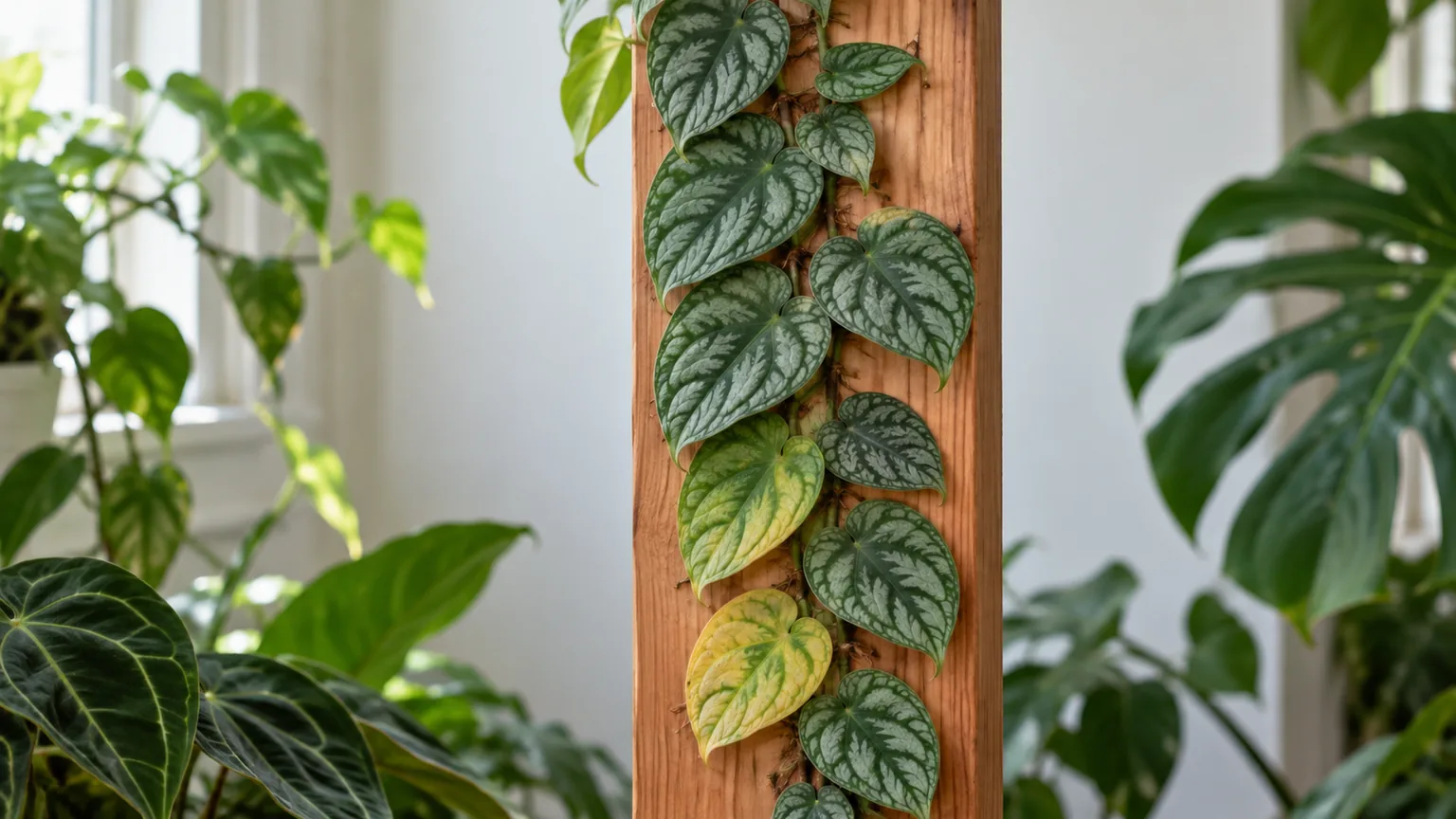
Yellow Leaves on Monstera Dubia: Causes, Checks & Fixes
This guide covers yellow leaves on Monstera Dubia. See also the general Yellow Leaves guide, watering, and light pages for this plant.
Yellow Leaves on Monstera Dubia: Causes, Checks & Fixes
Quick answer
If your Monstera Dubia has yellow leaves, first check the potting mix before watering or changing several parts of its care. When the top 2–3 cm are still damp, let that layer dry before the next watering; a persistently wet mix is more concerning when several leaves yellow together, the base softens, or the pot smells sour. If the mix is dry and the pot feels light, water thoroughly and let excess drain. Yellow leaves alone cannot identify the cause: the age of the affected leaf, the condition of the new shingle growth, and the separate moisture of the climbing board all matter.
Dubia needs two different moisture checks. The pot holds the main root system, while nodes and aerial roots press against the climbing surface. A dry board does not prove that the pot is dry, and a damp board does not prove that the roots in the pot are waterlogged. This separation is central to diagnosing yellowing on a shingle vine.
What yellow leaves look like on Monstera Dubia
Monstera Dubia is usually grown indoors for its juvenile form: small heart-to-oval leaves that lie close against a flat support in overlapping rows. Look at the vine as a panel rather than judging one leaf in isolation. A single oldest leaf near the base may fade while the newer leaves remain firm, silver-green, and attached; a group of leaves turning pale at different nodes deserves a closer look at the root zone. Young Dubia leaves are often naturally silvery patterned, so compare the changing area with the leaf’s earlier color rather than treating every pale patch as chlorosis. The characteristic shingled leaves and aerial-root contact are described in Plant Blueprint’s Monstera Dubia guide, which also distinguishes the climbing habit from the mature form.
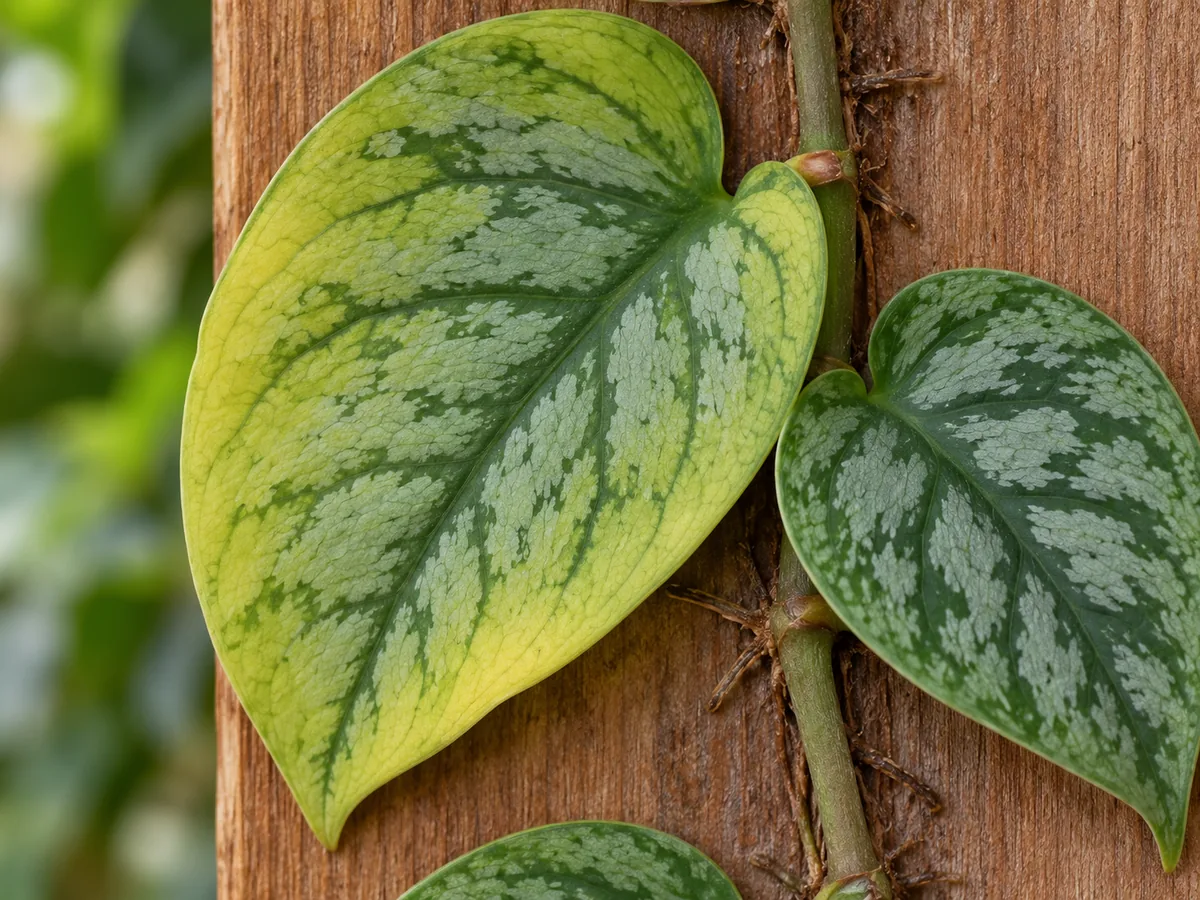
A partly yellow older shingle leaf can be compared with the neighboring leaves before the pot or board is changed.
The location and pace of the change help narrow the cause. Yellowing that begins in one old leaf and stays there is different from several leaves losing color over a short period. A uniformly pale vine with longer gaps between leaves may have a light problem, while yellowing plus a limp or soft stem base raises more concern about roots. Spotting, sticky residue, fine stippling, or webbing is a different pattern from an even leaf fade and should prompt a pest check. Use the broader yellow leaves symptom guide for the general symptom categories; the checks below focus on how those patterns play out on Monstera Dubia.
Check Dubia’s two moisture zones separately
The first moisture reading belongs to the pot. The Dubia care record calls for watering when the top 2–3 cm of mix are dry, then watering thoroughly and allowing the mix to approach dry again; its 6–10 day interval is a seasonal reference, not a schedule to follow while the pot is still damp. Check just inside the pot edge with a finger or wooden stick, then lift the pot if you know what it feels like after watering. A light pot and dry upper layer support the case for watering; a heavy pot and damp upper layer mean another drink would add water without answering why the leaves changed. Potted Well also describes using pot weight and the top layer together as practical checks, rather than relying only on elapsed days.
The second moisture reading belongs to the board or pole. Dubia’s aerial roots need a surface they can contact as the vine climbs; growers commonly keep a board or moss-filled backing lightly moist so those roots can attach. That surface can dry faster than the potting mix, especially in a warm room, but wetting it is not a reason to soak the container. Plant Blueprint’s Dubia care discussion treats the support and the pot as separate parts of the setup, while also noting that the light and watering baseline comes partly from care guidance for a close Monstera relative. Keep that distinction in mind: practical indoor guidance for Dubia is useful, but it is not the same as a controlled species-specific trial.
If you grow the vine on a board, look at the node contacts and the leaves closest to it. A lifted leaf, a dry aerial root, or a vine that has lost contact points to a support issue; it does not by itself explain a soggy pot. If the board feels dry but the pot still feels heavy, lightly moisten only the support and leave the pot alone until its own moisture check says it needs water. If the board is damp and the potting mix is also wet, do not add water to either zone while you investigate drainage and roots.
Why a Monstera Dubia can turn yellow
Wet mix and declining roots
When the pot stays wet, roots have less air available in the mix and may begin to decay. This becomes a stronger diagnosis when yellowing affects several leaves and the container remains heavy, the mix stays damp for longer than usual, or the stem base becomes soft. The University of Florida recommends checking soil and roots before diagnosing overwatering; healthy roots are firm and pale, whereas rotting roots can be soft and brown to black with an unpleasant smell. UC IPM associates yellowing, weak growth, and root discoloration with root health and drainage problems. The Dubia root-rot guide covers the more serious case where root inspection confirms decay.
On a shingling Dubia, the wet-root and dry-board combination can mislead a grower. Leaves that lift from the surface may make the plant look thirsty even when its pot is still wet. Rewatering to encourage attachment can keep the root zone saturated without fixing the contact problem. If several leaves are yellow and the board is dry, inspect the board and pot separately instead of assuming the plant needs a larger drink.
A dry pot or inconsistent watering
Yellowing can also follow a root ball that has dried too far, especially if the leaves feel thinner, curl, or lose their usual firmness and the pot is unusually light. Do not infer underwatering from color alone. Check whether water reaches the center of the root ball when you do water; a very dry, compacted mix can sometimes wet unevenly, while a loose bark-rich mix can drain quickly. The useful clue is the current moisture condition plus the recent watering pattern, not a calendar interval. Cafe Planta’s Dubia troubleshooting article also treats soggy mix and a dry, crisping pattern as different possibilities, but use the plant’s moisture reading to decide which applies to yours.
If the upper layer is dry and the pot is light, give one thorough watering and let the excess drain from the pot. Then return to the 2–3 cm check instead of watering again because another leaf has not changed. If the mix repeatedly becomes bone dry in a warm room, adjust the interval after observing the next cycle; do not keep the substrate continuously wet to protect aerial roots on the board. The lookalike table below separates the Dubia-specific dry-mix and wet-mix branches.
Light changes and seasonal slowdown
Low light can reduce growth and contribute to pale foliage, while a sudden move into direct sun can scorch leaves. NC State Extension’s Monstera deliciosa profile recommends bright light without harsh direct sun and watering after the upper portion of the mix has dried. That is a close-relative baseline, not proof that Monstera Dubia responds identically in every room. Use it as a starting point, then watch the Dubia’s actual pattern: a vine with smaller leaves, longer spaces between nodes, and slow extension toward a window needs a light review; yellowing that coincides with persistently wet mix still calls for a root-zone check first. See Monstera Dubia not-enough-light if the growth pattern, rather than the leaf color alone, points toward dim conditions.
Seasonal change also shifts the pot’s drying rate. In cooler or darker months, a Dubia may use water more slowly, so a previously reliable weekly routine can leave the mix wet for longer. A board near a heater may dry quickly at the same time. Recheck both zones when the room changes; do not carry a summer interval into winter automatically. The relevant cue is how quickly the current pot and support dry under current light and temperature, not a fixed promise that every Dubia needs a drink on a particular day.
Older-leaf turnover, pests, and less likely nutrient issues
If one old leaf turns yellow slowly while the rest of the vine remains firm and fresh growth looks normal, do not jump to a diagnosis from color alone. Leave it attached while it is partly green and firm; once it is fully yellow or dry, remove it with clean scissors if you want to tidy the plant. Check the pot and observe whether the change stays confined to that leaf before considering a repot or fertilizer.
Inspect the underside of leaves, petiole joints, and nodes if the pattern includes stippling, sticky residue, webbing, or distorted new growth. UC IPM lists sap-feeding insects and mites among houseplant causes of yellowing and discoloration; their signs are more informative than color by itself. Dubia’s overlapping leaves and close board contact create sheltered spaces, so separate the vine gently enough to see the leaf backs and node creases without pulling attached aerial roots from the board. If you find pests, use the dedicated Monstera Dubia spider-mite or Monstera Dubia mealybug guide for that confirmed problem rather than treating a pest you have not seen.
Nutrient shortage or accumulated salts is possible, but it is not the first explanation to test when the pot is staying wet or the plant has recently changed light or location. A fertilizer application cannot repair damaged roots, and it adds another variable while the cause is unclear. Consider feeding only after the moisture pattern is stable, the roots are functioning, and the newer leaves show a persistent pale pattern that fits the plant’s growing conditions. If root-bound growth or declining mix structure is visible, review drainage and substrate condition before changing pot size or feed.
How to confirm the likely cause
Make the checks in this order so one observation does not get mistaken for another:
- Count and locate the yellow leaves. Note whether the change is limited to one old lower leaf, appears on several nodes, or is concentrated on the newest growth. Record whether it is even yellowing, crisp at the edge, speckled, or paired with dark water-soaked spots.
- Check the potting mix. Test the top 2–3 cm and compare the container’s weight with its usual dry and watered feel. Note whether water drains freely and whether the mix has become compacted or broken down. Do not water simply because the climbing surface is dry.
- Check the support and vine. Look for dry aerial roots, lifted shingle leaves, or loose nodes. These details can explain a poor display or stalled attachment, but they do not establish that the pot needs water.
- Inspect for pests. Look under leaves and around nodes for moving mites, fine webbing, cottony insects, scale-like bumps, sticky residue, or silvery feeding marks. If you find a definite pest, isolate the plant and identify it before applying any product.
- Inspect roots only when the evidence warrants it. If the mix remains wet and the plant is declining, slide the root ball out carefully. Firm, pale roots are reassuring; roots that are soft, dark, or sour-smelling support a rot diagnosis. Avoid disturbing a stable plant just to confirm a guess based on one yellow leaf.
For Dubia, use the plant, pot, support, and leaf age as evidence before choosing a single correction. Yellowing alone does not identify which of those conditions has changed.
First fix: correct the pot’s moisture only if it is wrong
For the common pattern of several yellowing leaves with a damp, heavy pot, the first correction is to pause the next watering until the top 2–3 cm of mix have dried. Empty any collected drainage water, but do not pull the Dubia from its board or repot it on the same day unless the root evidence points to active rot. This lets you see whether the pot dries normally and prevents a calendar-based watering habit from adding water to an already wet root zone.
If the pot is dry and light instead, water it thoroughly once and allow the excess to drain; do not leave it standing in a cachepot. If only the board is dry while the pot remains moist, lightly moisten the support surface without changing the pot’s schedule. These are separate branches, not steps to stack together. After the first correction, keep light, fertilizer, and support position steady long enough to read the plant’s response.
When a Dubia’s roots need direct intervention
Unpotting is justified when several clues agree: the mix has remained wet, yellowing or wilting is spreading, the stem base feels soft, or the pot has an unpleasant sour smell. Work gently because the climbing vine may be attached to the board at multiple nodes. Support the board and root ball together; do not peel established aerial roots away just to make the pot easier to handle. The board is part of the plant’s climbing structure, while the pot contains the roots most affected by stagnant mix.
If inspection reveals firm roots, return the plant to its existing pot and address the actual moisture or drainage issue. If a portion of the roots is soft and dark, remove only the clearly decayed tissue with a clean tool and move the plant into fresh, airy aroid mix in a container with drainage; Cafe Planta describes checking and removing damaged roots as a practical Dubia response. Keep the board stable and avoid a second major disturbance such as cutting healthy vines or changing light at the same time. If most roots and the vine base have collapsed, recovery may not be possible; a firm stem node can be kept as a cutting only if one remains clean and viable. For more on the confirmed decay branch, use the root-rot guide linked below.
Tell yellowing apart from Dubia lookalikes
| What you see | More useful first explanation | Next check |
|---|---|---|
| One oldest leaf fades; newer shingle leaves stay firm | The change is still limited to one leaf | Keep the care steady and watch whether another leaf follows |
| Several leaves yellow while mix stays damp and the pot feels heavy | Poor root-zone aeration or overwatering | Check drainage and root firmness before watering again; see Dubia overwatering |
| Yellowing follows a long dry interval; pot is light and leaves feel less firm | Underwatering or unevenly wetted mix | Check the center of the root ball and whether water drains through; see Dubia underwatering |
| Small leaves, long gaps between nodes, and slow vine extension | Light may be too weak | Review the window distance and recent seasonal change; see Dubia not-enough-light |
| Fine pale stippling, webbing, sticky marks, or insects at nodes | Sap-feeding pests are possible | Inspect leaf backs and confirm the pest before treatment |
| Brown, crisp edges without widespread yellowing | Dry air, water stress, salts, or other edge damage | Compare with Dubia brown tips rather than treating it as root rot |
The table narrows the next check; it does not diagnose the plant from a photograph alone. In particular, yellowing plus a dry-looking support can tempt a grower to water the pot when only the board needs attention. Conversely, a wet pot with a few lifted leaves can look like thirst even though adding water would worsen the root-zone problem.
Recovery: judge the next shingle leaves, not the damaged ones
After correcting the cause, look for the yellowing to stop spreading and for the vine base and roots to remain firm. A leaf that is already mostly yellow is a poor measure of short-term recovery; compare the next leaf and the condition of the node from which it emerges. Dubia’s indoor growth can be slow when light, temperature, or season limits new extension, so a few days without a new leaf does not prove that the correction failed. Give the plant a stable care cycle and avoid switching between extra water, a move to brighter sun, fertilizer, and repotting before the first change can be evaluated.
If the cause was a dry pot, restored firmness should follow watering sooner than a new leaf appears. If the cause was prolonged wet mix, the pot may need time to dry and roots may need longer to resume growth; continued sour odor, new soft tissue, or expanding yellowing means the root problem is still active. A healthy new leaf, stable stems, and no additional yellowing are better signs than expecting old tissue to regain its earlier color. In cooler or darker periods, recovery may mean stability rather than a visible burst of growth.
Prevent a repeat without overwatering the support
Use the top 2–3 cm dry check as the trigger for watering, and let the Dubia’s own pot size, mix, season, and room conditions determine the interval. The 6–10 day guidance is a starting reference from this plant’s care data, not a promise that the mix will dry on day ten. Water through the whole root ball when it is ready, then let it drain; do not keep the pot constantly wet to compensate for a dry board or a high room temperature. If the mix stops drying evenly, becomes dense, or water pools at the top, review drainage and substrate structure before shortening the interval.
Keep light bright but filtered and make moves gradually; use the Dubia’s leaf and internode pattern to judge whether the location works rather than copying a lux target from another species. In winter or after a room change, check the pot more often at first because its dry-down rate may have changed. Avoid placing the vine against a cold draft or directly beside a heater that dries the climbing surface much faster than the pot.
Give the vine a flat, stable surface with enough contact for its nodes and aerial roots. A board may be lightly moistened when it dries, but do not saturate the container simply to encourage the shingling habit. Secure the stem loosely at nodes while roots begin to grip; do not tie across leaf blades or pull attached roots off the support during routine checks. Dust and inspect the close-set leaves, especially where they overlap, so a pest problem is noticed before it spreads across the panel. If the vine’s support or general care needs a reset, begin with the Monstera Dubia overview and use its problem hub to route a different symptom to the right guide.
When to use this page vs other Monstera Dubia guides
Use this guide when the main change is a leaf turning yellow and you need to decide whether the pot, light, support, age of the leaf, or pests best fit the pattern. Use the dedicated Dubia root-rot guide when roots are confirmed soft or dark, and use the overwatering or underwatering guides when the moisture history clearly points in one direction. If the vine is simply stretching or producing small leaves without a wet-root pattern, the not-enough-light guide is more focused. A dry or discolored edge belongs with the brown-tips guide, while visible stippling or webbing belongs with the spider-mite guide. This separation keeps yellow color from becoming a catch-all diagnosis.
Related Monstera Dubia guides
- Monstera Dubia overview — start here for the plant’s baseline care and climbing setup.
- Monstera Dubia problem hub — use this to choose another symptom-specific guide.
- Monstera Dubia root rot — use when roots or stem bases are soft, dark, or sour-smelling.
- Monstera Dubia overwatering — use when the pot remains wet or the watering interval is too short.
- Monstera Dubia underwatering — use when the root ball dries too far between waterings.
Related tool
Use the Yellow Leaves Diagnosis Tool to organize observations before changing the Dubia’s pot, light, and climbing support.