Underwatering on Monstera Dubia: What to Check First
Quick answer
On Monstera dubia, confirm a dry root zone before watering: feel the top 2–3 cm of mix and compare the pot's weight. If both are dry, water the base pot thoroughly and let it drain; crisp edges or leaves pulling from the board alone can also point to dry air around the shingle surface.
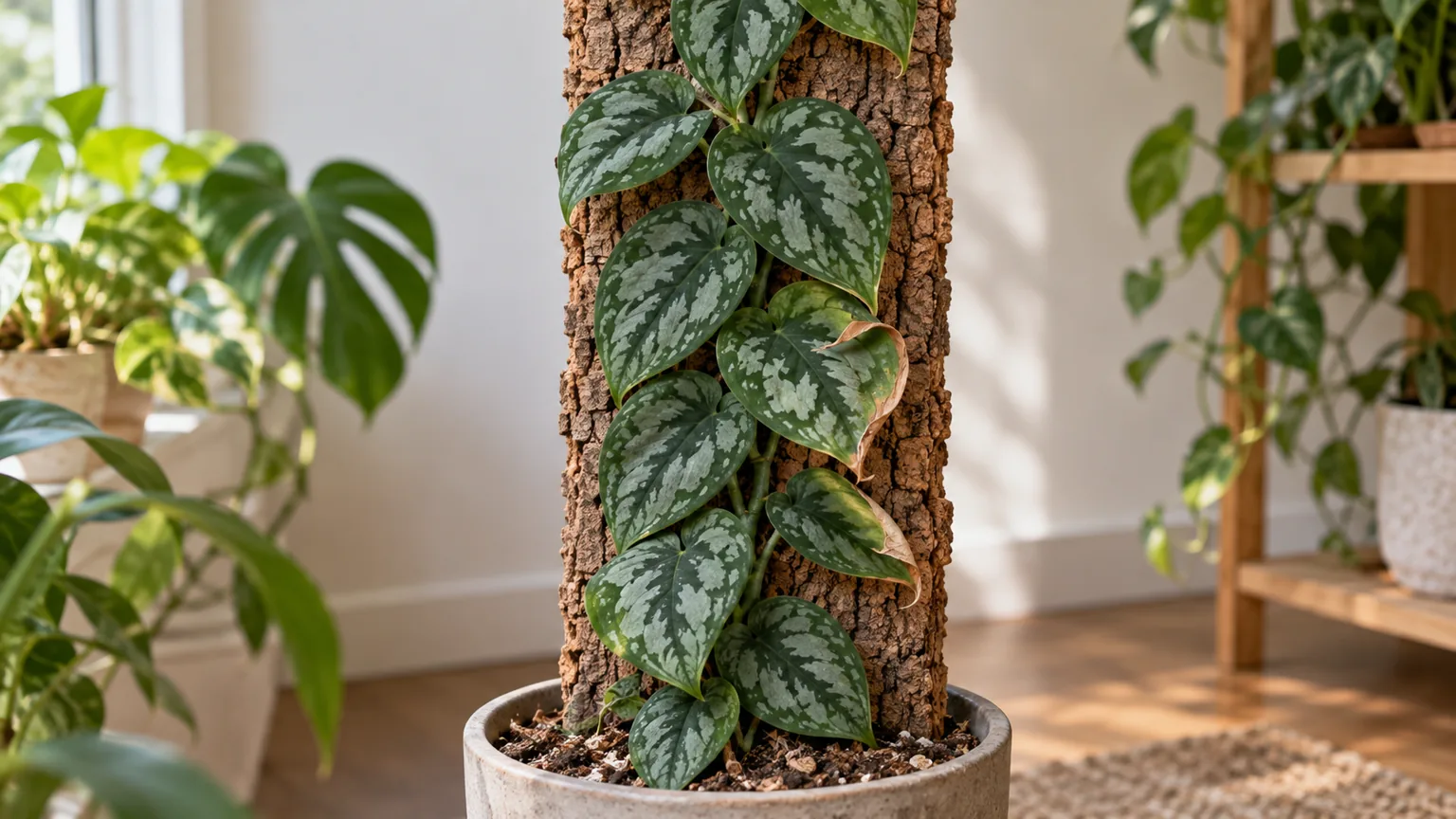
Underwatering on Monstera Dubia: Dry Pot or Dry Board?
This guide covers underwatering on Monstera Dubia. See also the general Underwatering guide, watering, and light pages for this plant.
Underwatering on Monstera Dubia: Dry Pot or Dry Board?
Quick answer
First, check the potting mix rather than reacting to a curled leaf. Feel the upper 2–3 cm of mix and lift the container; if that layer is dry and the pot is notably light, water the base pot slowly until excess runs through the drainage holes. If the mix is still cool or damp, do not add more water just because one of Monstera dubia’s shingle leaves has a crisp edge or is lifting from its board. Dry air at the support can create a similar look, so treat the pot and climbing surface as separate checks.
The RHS Monstera dubia profile says to keep its compost moist but not waterlogged, water when the top few centimetres feel dry, and adjust to conditions rather than letting the mix dry completely. For the general mechanics of underwatering, see the underwatering guide; on a board-mounted Dubia, the key decision is whether the base root zone is actually dry.
What underwatering looks like on Monstera dubia
The Dubia profile at The Spruce describes its juvenile “shingle” leaves as small, heart-shaped blades that lie close to a climbing surface. A dry spell may show up as a few leaves losing their firm, smooth look or curling slightly inward. A general Monstera symptom guide connects curled or wrinkled leaves with dry soil or underwatering, but it covers a different Monstera species; use that pattern as a clue rather than a Dubia-only rule. A narrow tan, papery margin also matters more when it appears alongside a dry, lightweight pot than when it appears alone.
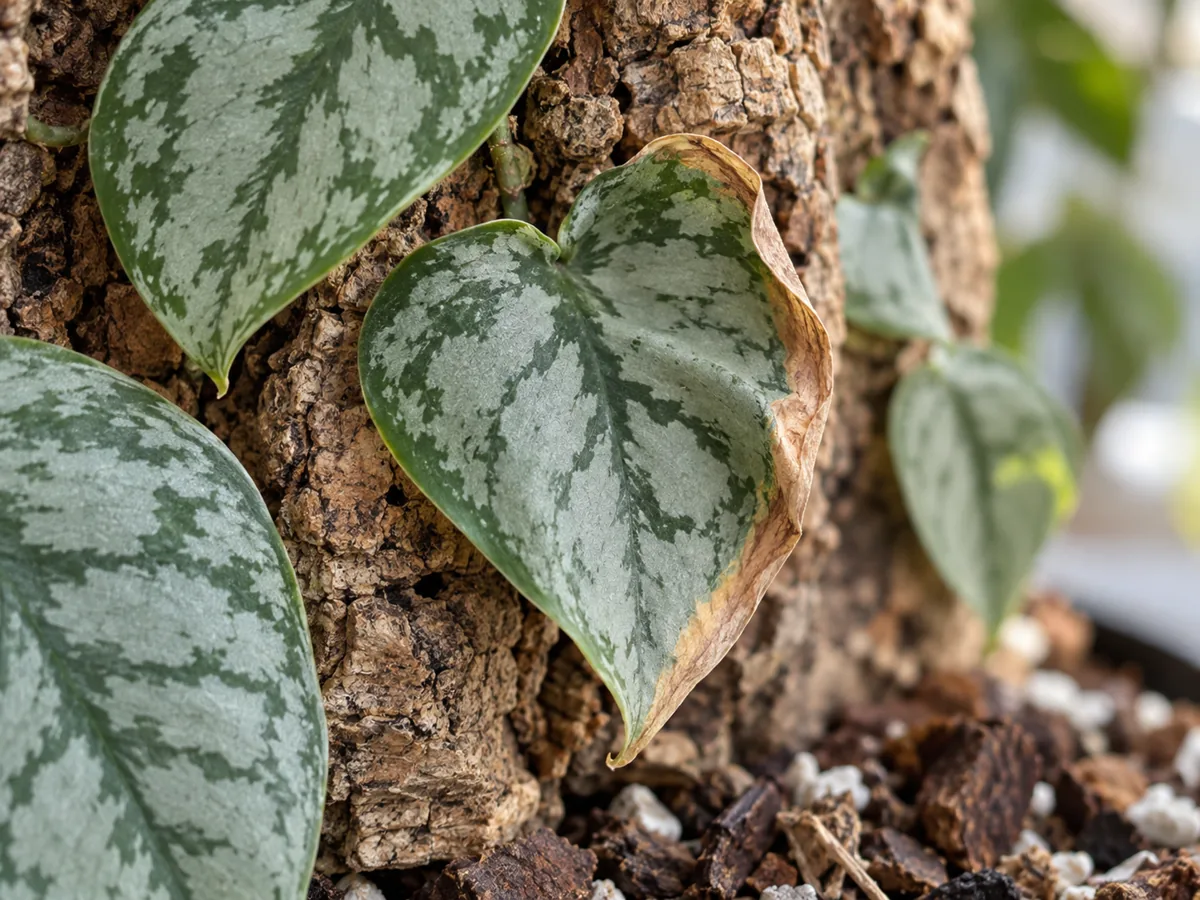
A mildly underwatered Monstera dubia can keep its climbing form while a few shingles curl and develop crisp edges; confirm the base pot is dry before watering.
The board-clinging habit makes one symptom easy to overread. Leaves pulling away from the board can accompany a dry plant, but the gap does not establish that the potting mix needs water. The Spruce’s Dubia profile associates curling leaves off a support and crispy edges with a dry environment, while the RHS profile places this species among humidity-loving houseplants and gives a 60–80% humidity range. That points to a separate possibility: the air or support surface may be too dry even while the base pot remains moist.
Underwatering is more convincing when the leaf changes line up with a dry, light pot and a recent gap in watering. If the leaves look tired but the mix is damp, pause before reaching for the watering can. A Dubia can lose its tight panel shape for reasons that are not a shortage of water in the root zone; the distinction prevents a dry-air problem from becoming waterlogged roots.
Why a Dubia board mount needs two moisture checks
The Dubia profile at The Spruce describes Monstera dubia as a climbing vine whose juvenile leaves press against trees or other supports. Indoors, a flat board, cork slab, or similar panel gives the shingling leaves a surface to climb. That setup creates two different places to observe: the potting mix around the roots, and the humid boundary around the leaves and support. They influence the same plant, but they are not interchangeable reservoirs of water.
The base pot supplies the root zone. When the top 2–3 cm of a chunky aroid mix has dried and the pot is light, water the potting medium. The support surface, by contrast, affects whether aerial roots and leaves stay close to the panel and whether exposed leaf edges dry quickly. A dry board is not a measurement of the potting mix, and a damp base pot is not proof that the air at the shingle surface is humid enough. Neither moisture zone should be used as a substitute for checking the other.
This distinction is especially useful if the plant is attached to cork or a bare board. A dry-looking board does not mean the root ball is dry, and damp potting mix does not guarantee humid air at the leaf surface. Check the mix with a fingertip, then observe the room and mount. If the substrate is dry, water the pot. If it is moist, leave the pot alone and investigate the air and support instead.
For a fuller Dubia setup, the watering guide explains its normal pot routine, while the Monstera Dubia overview covers the board-mounted growth habit. Keep the soil guide nearby if water is repeatedly running around the root ball instead of wetting the mix evenly.
A leaf lifting from the board is not a watering trigger
A shingle leaf can lose close contact with its support when conditions at the climbing surface are too dry, when a node has not attached well, or when the vine is adjusting to a new position. The symptom is useful because it tells you to inspect the mounted section, but it does not tell you which moisture zone needs attention. If the pot is heavy and the mix is damp, giving the roots another soak can make the root zone less healthy without fixing dry air.
Look at the newest leaves and nodes as well as older shingles. If only the exposed edge of one leaf is crisp while the base pot stays moist, treat that as a humidity or local exposure question first. If several leaves are losing firmness and the pot has become light as the mix dries, underwatering becomes more likely. If leaves detach from the panel after a recent move, check that the vine is still gently supported at its nodes; do not tighten ties across the leaf blades or force a leaf flat.
Confirm root-zone dryness before adding water
Use three checks together instead of diagnosing by appearance alone.
- Test at the Dubia’s normal depth. Press a clean fingertip into the upper 2–3 cm of mix, avoiding any exposed roots. If the mix is cool and damp, wait. If it is dry at that depth, continue to the pot-weight check. RHS recommends watering this species when the top few centimetres feel dry, while Penn State Extension’s general Monstera advice similarly uses the upper soil as a cue rather than a fixed date.
- Compare the pot’s weight. Lift the nursery pot or container before and after a normal watering so you learn the difference between wet and dry. A light pot supports the diagnosis, but it is not sufficient by itself if the plant is in an unusually airy mix or a heavy decorative container.
- Look at the whole root-zone pattern. Dry mix should be dry through the checked layer, not merely a dusty surface above damp compost. If water was given recently, check whether it drained out or sat in a cachepot. A dense, compacted, or shrunken mix can channel water along the sides; runoff alone does not prove that the root ball absorbed enough.
Dubia sources differ on how deep the surface should dry: the RHS uses the top few centimetres, while The Spruce says the top few inches. For this plant’s small, airy base pot, use the Dubia-specific RHS threshold as the conservative trigger, then confirm it with pot weight instead of waiting for the whole mix to become bone dry. Record when you last watered, whether the pot was moved, and whether the room has recently become warmer or brighter. A date on a calendar is only a clue: one Monstera reference suggests a one-to-two-week interval for M. deliciosa, but that is a different species and a broad starting point, not a watering rule for Dubia. The Plant Watering Calculator can help organize your conditions, but the final trigger should still be the Dubia’s measured dry-down.
If the test layer is dry but the pot remains heavy, check the pot material and how much of it is decorative weight before drawing a conclusion. If the pot is light but mix feels wet, inspect the drainage setup and avoid adding water until the mismatch is explained. This small pause matters because overly wet roots can also lead to wilting or yellow leaves, and drooping alone does not separate dry roots from wet, damaged ones.
The first fix: water a confirmed dry base pot
When the checked layer is dry and the pot is light, water the base pot thoroughly once. Pour slowly over the surface of the mix, not onto the board, until water reaches the drainage holes and begins to leave the container. If the mix is very dry and the first pour races down the sides, pause briefly and add a second slow pass so the root zone has another chance to absorb it. Let all excess drain away; do not leave the nursery pot standing in water.
This is the first action because it addresses a confirmed root-zone shortage without changing other variables. Do not fertilize, repot, prune healthy leaves, or soak the support at the same time. If the water drains normally and the plant was only moderately dry, return it to its usual bright, indirect position and wait for the mix to approach the dry threshold again. Penn State Extension recommends thorough watering and allowing excess to drain for Monstera generally; the RHS Dubia profile also cautions against waterlogging.
Do not compensate with a rigid weekly schedule. A small pot, active growth, or warmer room can change how quickly the mix dries; a cooler or dimmer location can change the rate in the other direction. The actual check is more dependable than a guessed number of days. If you have to water far more often than before, investigate whether the pot is now too small, the mix has broken down, or the plant’s environment has changed rather than escalating the amount each time.
If the pot is moist but the shingle panel looks dry
When the root-zone test does not confirm underwatering, keep the watering can away from the base pot for now. Check whether the climbing panel is in the path of a heater, air conditioner, open window, or strong sunbeam. The Dubia’s preferred bright indirect light is different from hot direct sun, which can damage juvenile leaves, according to the RHS Dubia profile. If the room humidity is low, the board-mounted leaves may lose firmness or develop dry edges even though the mix still holds water.
Measure room humidity with a hygrometer if available rather than guessing from how the air feels. Use the species-specific 60–80% humidity target noted above as a guide, not as a reason to soak the pot. If the room is consistently dry, a humidifier near the growing area is a more controllable adjustment than repeatedly misting the leaves. Penn State Extension explains that misting raises humidity only until the water evaporates, which can be a matter of minutes, and that pebble trays have little effect on the humidity of an entire room. Its guidance supports using a humidifier when a meaningful increase is needed.
Make one air or support adjustment at a time and watch the next leaf. Keep the base mix on its measured dry-down routine. If the board is bare cork or wood, do not drench it or keep it dripping wet; the care goal is a humid environment for the shingle surface while the pot remains airy and well drained. If the leaves stay attached but only old edges remain brown, the moisture-zone correction may already be enough.
How Monstera dubia’s juvenile leaves show recovery
A damaged shingle does not become perfect again after a watering. Tissue that has turned brown, crisp, or papery has lost that part of the leaf, so trimming the edge is cosmetic and optional. Wait until the leaf is mostly dry or its appearance bothers you before trimming; removing green tissue now does not repair the root zone. Do not pull off a leaf that is still attached simply because its edge is discolored.
For the next one to two weeks, focus on whether symptoms stop progressing rather than expecting a dramatic rebound overnight. A moderately dry plant may regain a firmer feel after the root ball is rehydrated, but an old curled leaf may not flatten completely. More meaningful signs are that no new margins turn tan, the newest shingle opens without a dry edge, and the node remains attached to the support. A newly unfurling leaf can take time to harden, so judge it after it has opened rather than while it is still emerging.
If the plant had been dry for a prolonged period, a few older leaves may continue to decline even after the root zone is corrected. Remove only leaves that are fully dead or detached; do not cut back viable nodes to make the panel look tidy. If the plant keeps declining while the mix is now evenly moist, pause further watering and look for a different cause. Persistent loss of firmness, a sour smell from the pot, or softening at the stem base points away from straightforward underwatering and toward root or stem trouble; mushy, dark roots with a decaying smell are signs associated with root rot.
Lookalikes: dry edges do not prove dry roots
| What you see | What to check next | More likely direction |
|---|---|---|
| Several leaves curl while the mix is dry and the pot feels light | Confirm the top 2–3 cm is dry, then water once | Underwatering is plausible; use this page’s first fix. |
| Leaves droop but the mix is wet or the pot stays heavy | Check whether the mix is wet and the roots need inspection before adding water | Could be overwatering or root rot, not thirst. |
| Crisp edges or leaves lifting from the panel while the pot is moist | Check room humidity and the support’s exposure to dry air | Consider low humidity before changing the pot routine. |
| Leaves droop with a dry pot, but perkiness does not return after watering | Recheck whether water reached the root ball and whether roots are firm | Use the drooping leaves guide to compare other causes. |
| New growth becomes smaller or stretches toward a window while soil stays moist | Review the plant’s placement and recent light changes | Compare the light guide before increasing water. |
This table is for triage, not a substitute for checking the mix. The same Dubia leaf may show more than one stress at once: dry air can crisp an edge, while a dry root ball can reduce leaf firmness. The most useful clue is whether the root-zone evidence agrees with the leaf symptom.
When to use this page versus other Monstera Dubia guides
Use this underwatering guide when the potting mix is dry at the test depth and the container is lighter than usual. If the leaves are soft while the pot remains damp, start with the plant’s overwatering guide or root-rot guide instead. If the pot stays moist but the shingle edges crisp or the vine pulls away from its support, the low-humidity guide is the closer match. The problems hub helps compare issues that do not fit one clear moisture pattern.
Mistakes that turn underwatering into another problem
Watering because a leaf looks dry. On a Dubia, a crisp margin may come from dry air or direct sun rather than dry potting mix. Confirm the root zone before watering; if it is damp, adding water treats the wrong compartment. The light guide can help check whether the shingle panel has been moved into stronger sun.
Copying a weekly calendar. Guides for different Monstera species publish different intervals, and room conditions change how fast a pot dries. Penn State’s general Monstera recommendation is to water thoroughly and let the upper inch or two dry, while RHS’s Dubia profile specifies the top few centimetres. Treat those as checks, not as a license to apply the same schedule to every room or support setup.
Keeping the roots wet to humidify the board. A board-mounted plant can have moist air around its climbing surface and an airy, drying pot at its base. More frequent watering does not create stable room humidity. Penn State Extension notes that misting is short-lived; use the soil guide if the root zone is staying wet too long, and adjust humidity separately.
Repotting before confirming a pot problem. A dry plant does not automatically need a larger container. Repot only if roots have filled the pot, the mix has collapsed and stopped draining properly, or the root ball cannot be evenly rewetted. Unnecessary disturbance can damage the fine roots the plant needs to recover.
Feeding a thirsty plant. Fertilizer does not replace water and can add stress if the root zone is already compromised. Stabilize moisture first; return to ordinary feeding only after the plant is growing steadily again and the mix is drying predictably.
Build a routine around Dubia’s dry-down, not the calendar
Start by learning the wet and dry weight of the actual pot. After a thorough watering and draining, lift it and note how it feels. Check it again when the top few centimetres have dried. Over several cycles, you will learn how long this setup usually takes under your current light, temperature, pot size, and mix. Treat that interval as an observation, not a promise that the next watering date will always fall on the same weekday.
During active growth, new leaves and warmer conditions can change water use. When growth slows or the room becomes cooler and darker, the mix may take longer to dry, so keep checking the pot rather than carrying over a summer routine. The Spruce notes that growth slows in winter for this species; that supports checking the plant’s actual pace rather than watering automatically.
Keep one note for the base pot and another for the mounted section: “mix dry at 2–3 cm” is a watering cue; “leaf edge crisp, pot still damp” is a cue to review humidity or exposure. If the vine is trained on cork, board, or a moss-covered surface, make sure the node remains in contact without wrapping ties tightly around it. Do not use the board’s appearance as a proxy for pot moisture.
A monthly review is enough for a stable plant: check drainage holes, feel the mix, look for new shingle leaves, and note whether the room or support has changed. Increase checks temporarily after moving the plant, changing the pot, or starting a humidifier, because each change can alter the drying pattern. The Dubia watering guide can serve as the routine reference; this problem page is for the periods when the plant’s signs and the normal schedule no longer match.
When to inspect the roots
Do not unpot a plant just to confirm a mild dry spell if the container drains, the mix has rewetted, and the newest leaves are stable. Root inspection becomes reasonable when the plant continues to decline after the root ball has been watered correctly, when water cannot penetrate the mix, or when the base of the vine becomes soft. A sour odor or roots that feel mushy rather than firm suggest a wet-root problem, so adding more water would be the wrong response.
If you do need to inspect, slide the root ball out gently and look for firm roots rather than judging by color alone. Some growing media stain roots; texture, smell, and whether the roots hold together matter more than a single shade. Remove only tissue that is clearly dead or rotten with clean shears, then use a well-draining aroid mix and a pot with open drainage. Do not rinse or strip every root as a routine response to underwatering.
If the plant has lost every viable node or the stem is fully dry and brittle through its length, recovery may not be realistic. If one or more nodes and attached leaves remain firm, keep the plant in stable bright indirect light, avoid further changes, and watch the next growth point. A small panel that stabilizes is a better outcome than an aggressive rescue that adds repotting, pruning, and a new watering schedule all at once.
Prevent repeat underwatering on a shingle plant
Keep the Dubia in bright indirect light, away from long periods of direct sun and strong heating or cooling drafts, as the RHS Dubia profile recommends. If the plant is mounted, keep the support stable and observe the leaves nearest the room’s driest air; those can show edge damage before the whole vine looks wilted. Do not mist by reflex when the pot is already moist, because a brief surface wetting will not correct an ongoing root-zone deficit or reliably raise room humidity.
Choose a loose, well-drained aroid mix and a pot that matches the size of the root ball. A container far larger than the root ball or a crowded root system can change the mix’s dry-down, so a calendar is less reliable than the finger-and-weight check. If water repeatedly races around the root ball instead of wetting the center, note that behavior and review the mix when repotting is warranted. The Dubia profile at The Spruce recommends a loose, chunky aroid mix that holds some moisture without staying waterlogged.
Use the same three checks each time: top-layer dryness, pot weight, and whether water drains through the container. Then keep the humid support question separate. This gives you a repeatable way to distinguish a dry base pot from a dry board without chasing every curled leaf with extra water. If the symptoms do not match the root-zone evidence, compare the problems hub and select the guide that fits the confirmed pattern.
Related tool
Use the Plant Watering Calculator to organize your light, pot, and room conditions into a starting check frequency. It cannot see whether the shingle panel is dry or whether the substrate is still damp, so test the top few centimetres before following any reminder it suggests.
Related Monstera Dubia guides
Use the Monstera Dubia overview for the full board-mounted setup and the watering guide for ordinary care between problem episodes. The soil guide and light guide are better when the mix or growing position is the confirmed cause. For damp-pot symptoms, use the overwatering or root-rot guides; for crisp edges with a moist pot, use the low-humidity guide. The Monstera Dubia problems hub is the route to other plant-specific diagnoses when the moisture checks do not settle the question.