Monstera Dubia Drooping Leaves: Causes and First Checks
Quick answer
On Monstera dubia, a drooping leaf is a symptom, not a watering instruction. First check the potting mix 2-3 cm below the surface: water only if that root zone is dry, and investigate drainage if it is still wet. Also check whether juvenile shingle leaves have simply lifted away from their board.
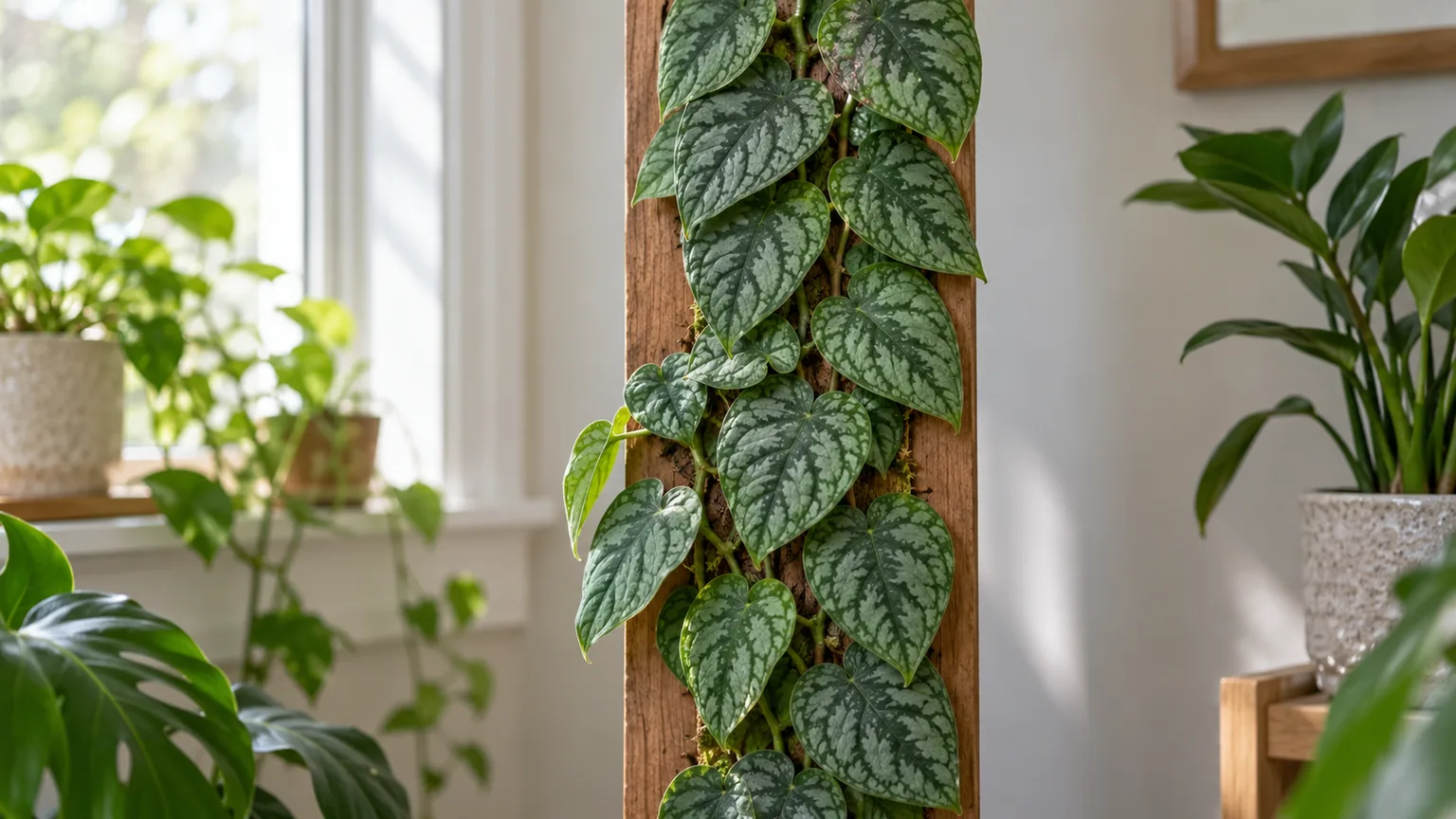
Drooping Leaves on Monstera Dubia: Causes, Checks & Fixes
This guide covers drooping leaves on Monstera Dubia. See also the general Drooping Leaves guide, watering, and light pages for this plant.
Drooping Leaves on Monstera Dubia: Causes, Checks & Fixes
A Monstera dubia leaf hanging low does not tell you to water. First test the potting mix 2-3 cm below the surface; water only if that root zone is dry. If it is still damp, check drainage and the vine before adding more water. Juvenile Dubia leaves normally lie flat against a climbing surface, so a leaf that has lifted from its board may look droopy even when the roots are not thirsty. The global drooping-leaves guide covers the general symptom; this page narrows the checks to the Dubia’s pot, climbing surface and node-by-node vine.
What drooping looks like on a Monstera dubia shingle vine
A healthy juvenile Monstera dubia grows as a climbing vine with small heart-shaped leaves pressed close to a flat surface. Botanical descriptions record the juvenile blades pressed against a support, and The Spruce’s Dubia climbing support guidance describes the same shingling habit. True droop usually looks like a petiole bending down from the stem, several leaves sagging together, or new growth losing firmness. One lower leaf angled away from the board is a weaker clue: it may have lost contact, be turning toward the light, or be an older leaf nearing the end of its life.
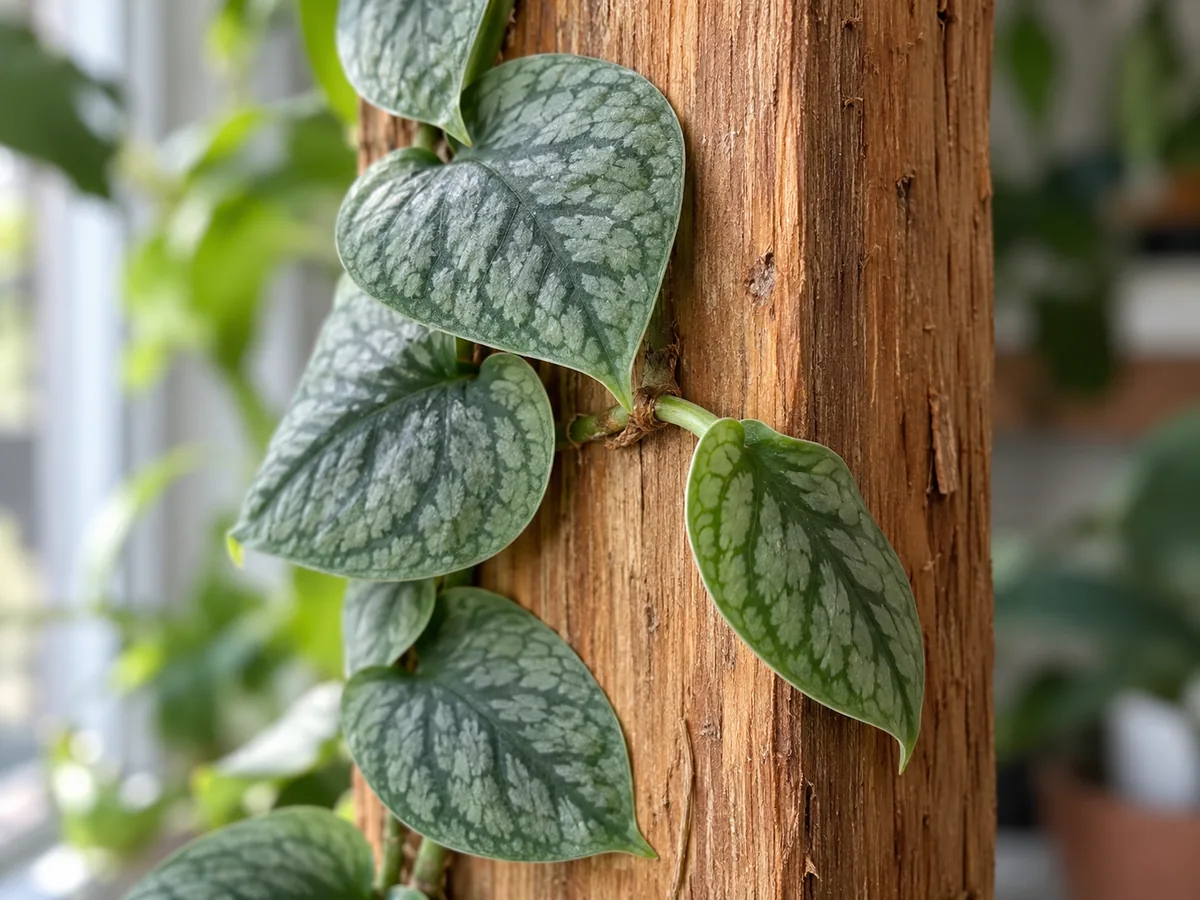
One loose shingle leaf is not enough to diagnose thirst; compare the leaf and node with the moisture in the pot.
Read the pattern along the vine. If a fresh leaf and several established leaves sag at once, a root-zone or environmental change is more plausible than ordinary aging. If the stem and petiole are firm but one leaf has lifted from the board, inspect its node and support contact before changing the watering routine. Do not pull a newly unfurling blade forward to test it; it can crease before it has hardened.
The Monstera dubia two-zone check: potting mix and climbing board
A Dubia mounted to a board has two separate places to inspect. The potting mix supplies the container roots, while the board gives the climbing vine a surface to press against and aerial roots a place to attach. The Dubia profile recommends moist but well-drained mix and waiting until the upper few inches dry; use the plant’s own 2-3 cm dry-down cue and current pot weight rather than a fixed number of days. Light, season, root mass, pot size and room temperature all change how quickly an individual pot dries.
Check the pot first. Press a finger about 2-3 cm into the mix and lift the pot if it is safe to do so. A dry root zone plus an unusually light pot supports underwatering; a cool, damp mix means the surface alone is not enough reason to water. If the mix is already wet, the board’s dryness does not change that diagnosis. The Monstera dubia watering guide covers the normal dry-down routine; this page explains how to use it when leaves are already sagging.
Then check the board without soaking the pot. Is the support loose, leaning away from the vine, or no longer close to the newest nodes? Does only the far end of the panel look affected? A section of dry support can make a shingle lift even when its petiole stays firm. Re-seat a loose board or guide a healthy node toward the surface with a loose tie; do not tape over the leaf or bend a brittle stem flat. If the support is dry, moisten the support itself in a controlled way and let runoff clear of the pot rim.
Humidity is a separate consideration from root watering. A very dry room can encourage Dubia leaves to curl away from their support, but repeatedly spraying the panel is not a lasting correction. Penn State Extension explains that misting raises humidity only briefly, until the droplets evaporate. A measured humidifier or a more enclosed, stable growing area is easier to control than several sprays a day, while the pot still needs its normal dry-down.
Why the shingle vine droops
A dry root ball
Underwatering is plausible when several leaves lose firmness after a missed watering, a warm spell, a move near a heater, or a faster-than-usual dry-down. Confirm it with dry mix below the surface and a light pot, not the calendar. Monstera dubia is grown in airy, chunky aroid mix, so the top can look dry before the deeper root zone is ready for another watering. If the mix is dry through the root ball, follow the underwatering guide for Monstera dubia to rewet it thoroughly and then let it drain.
A dry board alone does not prove the container roots are thirsty. If only the upper leaves or the section away from the support are lifting, check the vine’s contact with the board before adding water to the pot. The two checks often point to different corrections.
A mix that stays wet
Droop can also accompany root damage when the mix remains wet, drains poorly, or has compacted as organic ingredients break down. That can look confusing because the pot is damp while the leaves sag. The Spruce lists root rot among Dubia problems when watering is not managed. A sour smell, soft tissue at the base, or mix that stays heavy for much longer than usual raises concern; dark, mushy roots that smell of decay are root-rot warning signs.
Do not water again just to test whether the plant will recover. Empty standing water and check the drainage opening first. If the pot remains wet and the base softens, use the Monstera dubia root-rot guide for the next inspection. A single damp reading soon after watering is not enough to diagnose rot; compare it with the pot’s normal drying pattern and the condition of the stem.
A shingle that has lost support contact
One leaf lifting from the cedar or cork surface is not automatically a wilt. Check whether its petiole and node remain firm and whether neighboring leaves stay flat. The Dubia care profile reports that leaves can curl away from their climbing support in unusually dry indoor conditions; the clue is stronger when dry edges or several lifted shingles appear while the pot is drying normally. See the low-humidity guide for Monstera dubia when the root zone looks normal but the shingle pattern keeps loosening.
A support that has shifted or dried can also interrupt contact. Secure the board, then attach only a firm node loosely enough to avoid squeezing the stem. Do not soak the base pot to compensate for a dry board; the two zones do different jobs.
A sudden change in light, temperature or handling
A darker position can make a climbing Dubia stretch and space its leaves farther apart over time. A draft, cold window, nearby heating vent, transport or recent unfastening can also coincide with a limp leaf. The Dubia profile recommends bright indirect light and draft protection. If drooping began after a move to a dimmer spot and the mix is neither dry nor saturated, review the not-enough-light guide for Monstera dubia and restore a stable filtered-light position gradually.
Look for a kink or pinch at the node as well. A vine that has been rotated, tied tightly or pressed against a wall may droop below the damaged point even when the roots are sound. Loosen a tie only if it is constricting a firm stem, and avoid moving the board repeatedly while the plant settles.
Confirm the cause before unpotting
Use low-impact checks in order: moisture below the surface, pot weight, drainage, support position, then stem and newest growth. This sequence usually tells you whether the plant is too dry, too wet, or simply losing contact with its climbing surface without disturbing the vine. A different Monstera species profile lists drooping as compatible with both overwatering and underwatering; that is a useful reminder that posture alone is not a diagnosis, not a watering schedule for Dubia.
| What you find | What it suggests | Next step |
|---|---|---|
| Dry mix below the surface, light pot, several slack leaves | Root ball may be too dry | Water thoroughly once and let it drain |
| Damp mix, heavy pot, soft lower stem or sour smell | Drainage or root damage is more likely | Stop watering and inspect drainage; check roots if decline continues |
| One lifted shingle, firm petiole and node, normal pot dry-down | Support contact or dry air may be involved | Adjust the board or room air without watering the pot |
| Drooping began after a move or tie change | Light, draft or physical stress may contribute | Restore a steady position and check for a kink |
Unpot only when the mix stays wet much longer than usual, the base smells sour or becomes soft, or decline continues despite a normal dry-down. If you inspect the roots, healthy ones should feel firm; remove only roots that are clearly dark and mushy, then return the plant to a clean pot with drainage and an airy medium. Avoid washing or trimming firm roots just because one leaf is hanging low. The Monstera dubia overview describes the climbing setup and normal care context if you need to compare the whole arrangement.
First fix for Monstera dubia: test the root-zone moisture
The first action is to test the mix 2-3 cm below the surface. If it is dry through that zone and the pot feels light, water slowly over the potting mix until it is evenly moist and excess drains from the bottom. Empty the saucer or cachepot after runoff stops. If dry bark repels water and the first pour runs down the side, use two slow passes a few minutes apart so the center gets wet; do not leave the pot standing in water.
If the mix is damp, skip watering. Remove standing water, confirm the drainage opening is clear, and let the pot progress through its usual dry-down. Do not move the plant into harsh direct sun to force the mix to dry; that adds another stress and can scorch juvenile foliage. Repot only if the medium has broken down, drainage has failed, or root inspection confirms rot.
If the pot is already moist but one shingle has lifted, correct the support contact instead. Stabilize the board and secure a firm node gently. If several leaves remain slack after a dry root ball has been rehydrated, check for soft roots, a kinked node, or a sudden temperature change rather than repeating the same watering.
Recovery without damaging the Dubia vine
After the first correction, keep the environment steady. Leave the board facing the same direction, provide bright filtered light, and keep the plant away from cold glass and direct airflow. A board-mounted plant has leaves and nodes arranged along a vertical vine, so one section may settle at a different pace from another. Make one evidence-based correction at a time so you can tell whether it helped.
A dry root ball usually needs one thorough watering, not small daily sips. Let it drain fully, then check the mix again as it approaches the normal dry point. If the pot dries unusually quickly each time, inspect for a root-bound plant or a medium that no longer holds water evenly. Repot in a pot sized for the remaining roots only when the mix has failed or the roots are crowded; a much larger pot can hold wet mix around a small root system for too long.
If wet-root decline is confirmed, recovery depends on keeping remaining roots and nodes firm. Remove only clearly dead roots, replace decomposed mix with a loose aroid mix, and keep the climbing stem above the soil line. Do not bury several nodes to compensate for weak roots. Hold fertilizer until the vine resumes stable growth; fertilizer cannot repair damaged roots.
If part of the stem is lost, judge salvage by the node rather than the leaf. A cutting needs a firm node to produce a new vine; the Dubia profile’s node-bearing cutting guidance illustrates why a leaf without a node cannot continue the plant. Cut above soft or blackened tissue with clean shears and keep at least one healthy node on the viable piece. Root it in a clean, lightly moist medium or water, then secure it against a support once roots form. This is for a failing stem, not a routine reaction to one low leaf.
Lookalikes: drooping, lifted shingles and normal aging
A shingle turned away from the board and a wilted leaf can look alike from a distance. A firm petiole and node with one outward-facing leaf point you toward support contact, while several soft petioles call for a root-zone check. A single lower leaf that yellows gradually while the rest of the vine remains firm may be ordinary aging; several leaves sagging together are a different pattern.
Dry edges without a soft petiole can reflect low humidity, inconsistent moisture or rubbing against the support. If you see insects or localized feeding damage, identify that issue separately before choosing a treatment; do not apply a spray just because the Dubia is drooping. A plain, even sag still calls for the moisture and support checks first.
Recovery timeline and when to escalate
There is no dependable hour-by-hour timetable for a limp leaf to firm up. After correcting confirmed dry soil, watch over the next several days to see whether the petiole regains tension and other leaves stop sagging. If the cause was a dry board or loose attachment, a leaf may remain angled even after the contact improves. The aim is stable growth, not a perfectly flat old leaf overnight.
A damaged leaf can stay creased, scarred or permanently angled; it will not become new tissue again. Better signs are firm nodes, no new leaves joining the droop, a normal pot dry-down and a fresh leaf that opens without collapsing. Wet-root damage may take longer because the plant has to restore functioning roots, so avoid repeated unpotting just to check progress.
Escalate when several leaves collapse rapidly, the vine turns soft above the soil line, or yellowing continues while the mix stays wet. If the upper vine still has firm nodes, a cutting may preserve part of the plant. If every node is soft and the roots have broken down, there may be no viable tissue left to save. One sagging leaf with a firm stem does not by itself mean the whole plant is failing.
Prevent drooping and avoid Dubia-specific mistakes
Use the plant’s dry-down instead of a fixed watering calendar: check the top 2-3 cm and the pot’s weight, then water when that zone is dry. The RHS guidance for a different variegated Monstera also says to wait until the top few centimetres dry and avoid waterlogged compost; use it as support for the distinction between moist and soggy, not as an exact Monstera dubia schedule. Replace or refresh mix only when it has broken down, drains poorly or no longer dries predictably.
Keep the climbing surface secure and close enough for nodes to attach. Check ties during routine watering so they do not constrict the vine as it grows. Maintain bright filtered light and keep the board away from drafts and heating vents. If growth stretches, gaps widen or leaves lean away over time, review light and support before adding fertilizer.
If winter heating leaves the room unusually dry, and Dubia’s leaves curl away from the board while the pot’s moisture pattern is normal, measure the room and consider a humidifier or a more enclosed growing area. Penn State Extension notes that winter heating can lower indoor humidity; use a stable humidity source rather than soaking the pot to improve the support.
The mistakes to avoid are watering by leaf angle alone, keeping the mix constantly wet, tightening ties across leaves, and changing light, pot, support and feeding all at once. Choose the correction that matches what you found, then give the vine a stable period to respond. A brief weekly look at the newest node, pot weight and board contact is enough to catch a pattern before several shingles lose firmness.
When to use this page vs other Monstera dubia guides
Use this page when leaves or petioles sag, when several shingles lose firmness, or when it is unclear whether the cause is a dry pot, wet roots or weak support contact. If the pot is behaving normally and only leaves are lifting from the board, focus on support and humidity. If roots or the lower stem are soft, move to the root-rot topic; if the mix is bone-dry, use the underwatering topic.
Related Monstera dubia guides
- Watering: Use the watering guide for the normal dry-down routine; this page explains what to check when leaves already droop.
- Root rot: Use the root-rot guide if roots or lower stems are soft, the mix smells sour or the pot remains wet.
- Underwatering: Use the underwatering guide when the root ball is dry and the pot feels light.
- Overwatering: Use the overwatering guide for a chronic wet-pot pattern rather than a single recent watering.
- Low humidity and light: Use the low-humidity guide for curling or lifted shingles in a dry room, and the light guide when growth stretches or gaps widen.
- Whole-plant context: The Monstera dubia overview covers its climbing form and setup; the problems hub lists the other species-specific diagnoses.
Related tool
Use the Plant Problem Diagnosis Tool to compare drooping with other symptoms you can observe. Select what is actually present, then confirm suggestions against the root-zone and support checks above; the tool cannot feel the mix or assess a soft node for you.