Monstera Dubia Root Rot: How to Confirm and Save the Vine
Quick answer
If Monstera Dubia is wilting or yellowing while its potting mix remains wet, first slide the plant from its nursery pot and inspect the root ball. Root rot is confirmed by soft, brown roots that collapse or smell decayed, not by yellow leaves alone. Remove only clearly damaged roots, then repot the surviving root system in fresh, airy aroid mix and keep the base pot draining freely. Keep the climbing board only lightly moist; never keep the pot wet to compensate for a dry support.
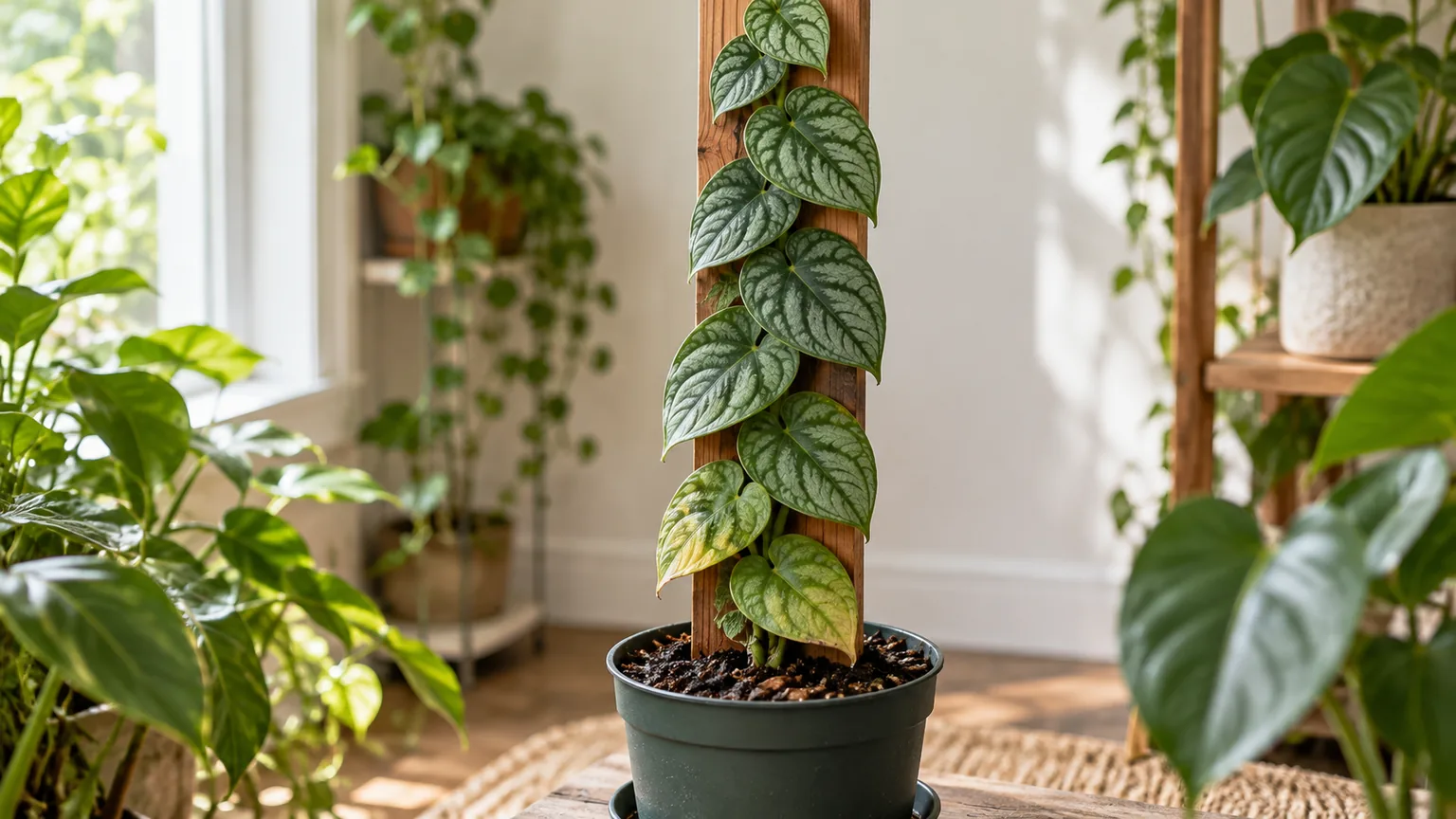
Root Rot on Monstera Dubia: Causes, Checks & Fixes
This guide covers root rot on Monstera Dubia. See also the general Root Rot guide, watering, and light pages for this plant.
Root Rot on Monstera Dubia: Causes, Checks & Fixes
Quick answer
If Monstera Dubia is wilting or yellowing while its potting mix remains wet, first slide it from the nursery pot and inspect the root ball. Root rot is confirmed by soft, brown roots that collapse or smell decayed; yellow leaves by themselves are not enough. Cut away only roots that are clearly dead, then repot surviving roots into fresh, airy aroid mix in a draining pot. Keep the support board lightly moist if needed, but do not keep the base pot wet to make the board feel damp.
Root rot is a root-zone problem. The vine’s flat, shingling display creates a second moisture zone at the board, so check the potting mix and the support separately. For the general disease pattern, see our root rot guide; this page focuses on how to inspect and rescue a Monstera Dubia without confusing a dry board with a thirsty root ball. The Monstera Dubia care guide gives the wider setup context.
What root rot looks like on Monstera Dubia
The earliest visible sign is often a change in the vine’s overall posture rather than a dramatic collapse. Leaves that normally sit close to the support may lose firmness, lift away, turn yellow from the lower part of the vine, or stop progressing at the growing tip. A single old leaf is weak evidence; several leaves declining while the pot remains damp is more concerning. Wisconsin Extension describes wilting despite wet soil, stunting, yellow or red leaves, and soft brown roots as common root-rot clues in houseplants.
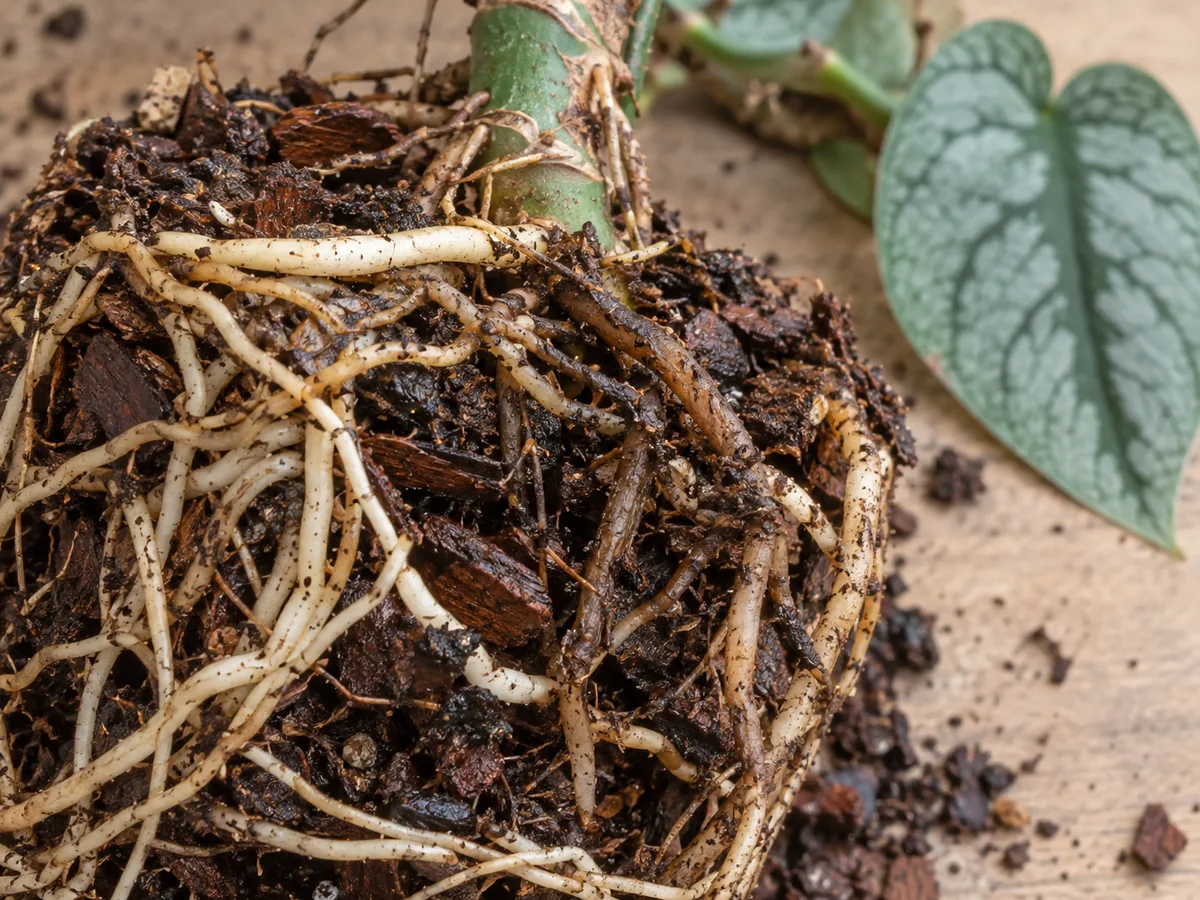
A few soft, dark roots among firmer pale roots can indicate decay; leaf color alone cannot confirm root rot.
Dubia’s small, overlapping shingles make leaf pattern useful. If yellowing starts low and continues upward while the newest leaves become smaller or stay soft, the root system may no longer be supporting the whole vine. A dry board can also make shingles lift or pull away, however, so that sign alone does not diagnose root rot. The more persuasive combination is persistent wetness in the base pot, a plant that keeps losing turgor, and roots that feel soft or shed their outer tissue when gently touched.
Look at the base of the stem and the nodes where the vine meets the board as well as the leaves. A healthy climbing stem should remain firm. A dark, wet-looking patch that expands around the stem base or a node that yields under light pressure raises the urgency because the problem may have moved beyond a few damaged feeder roots. Do not squeeze every root or scrape the vine; handle only enough of the root ball to distinguish firm tissue from tissue that has already collapsed.
Why the base pot and the Dubia board need separate checks
Monstera Dubia is grown for its juvenile leaves pressed flat against a board, cork slab, or similar vertical support. That arrangement can make the plant look as if it has one continuous root zone, but the base-pot mix and the climbing surface dry at different rates. The plant-care record for this species recommends an airy aroid mix and checking the upper 2–3 cm of mix before watering, while the board may stay just damp enough for aerial-root contact. The Royal Horticultural Society’s Monstera Dubia profile likewise says to keep compost moist but not waterlogged and to water when the top few centimetres feel dry.
That distinction matters during diagnosis. A dry board can tempt an owner to soak the pot even though the mix below is still wet; the reverse can also happen, with a dry pot and damp board. Check the pot itself rather than judging moisture by a board, tie, or patch of moss. Adding water to the root zone solely for a dry support can prolong saturation.
Light and growth speed affect how quickly the root zone uses water. A small barky pot may dry faster in a bright, warm growing period than in a cool or dim room. In winter or after a move to lower light, the same interval can leave the mix wet longer. Do not use a calendar reminder as proof that the Dubia is ready for another drink; the watering guide for Monstera Dubia explains how to judge the base pot’s dry-down.
Confirm the root problem before cutting anything
Root rot cannot be confirmed from the leaves alone. A plant with damaged roots may wilt even while the mix is wet, but underwatering and stress can also cause wilt and yellowing. If the pot feels unusually heavy, mix stays wet, water sits in a cachepot, or the base smells sour, inspect the roots rather than adding more water. If the mix is dry and the pot is light, rule out a dry root ball first.
When decline continues in wet mix, remove the inner pot from any cover pot and let free water drain. Slide the Dubia out gently, supporting the board so the vine does not peel off. Brush loose mix from one side of the root ball and examine roots near the center and outer edge. Firm roots that bend without turning mushy are worth preserving; dark, slimy, hollow, or collapsing roots are damaged. A sour smell supports the diagnosis, but smell without soft roots is not conclusive.
Root appearance varies with the material around it, so color by itself is not a reliable reason to prune. In its houseplant root-rot guide, Gardening Know How notes that healthy roots can be firm and pale while rotted ones tend to be dark, soft, or shed their outer sheath. Compare the texture of several roots instead of judging one stained strand. If most roots are firm, reassess watering, light, or board moisture before doing a full repot.
You can also check drainage before disturbing the plant. Confirm the nursery pot has open holes and that the mix does not form a dense, fine plug at the bottom. If the pot is sitting in water, empty it. If a large pot contains a small root system, or the mix has broken down into a compact mass, those conditions explain why the root zone may remain wet for too long. The Monstera Dubia soil guide covers the airy mix and pot setup that this climbing aroid needs.
The first fix: remove confirmed rot from the root zone
If several roots are soft and collapsing, the first fix is to remove the plant from the waterlogged mix and cut away only dead tissue. Do not begin with fertilizer, a fungicide drench, or extra misting. A fresh, airy root zone removes the condition still damaging the plant, but it cannot restore roots that have already died. Homes & Gardens’ root-rot treatment guidance likewise starts with confirming the roots before removing damaged tissue and repotting in fresh mix.
Set the board on a clean surface and work from the root ball, not by pulling the vine away from its support. Use clean, sharp snips to remove roots that are clearly mushy or hollow, cutting back to firm tissue. Wipe the blades between cuts if they pass through decayed roots. Preserve roots that are firm even if they are tan or stained by bark; taking off every discolored root can leave the Dubia with too little healthy tissue to support its leaves.
Discard the old wet mix rather than packing it around the cleaned roots again. Use a pot with drainage holes that is only large enough to hold the remaining root ball without a broad ring of unused, slow-drying mix. Fill around the roots with fresh chunky aroid mix, such as bark, perlite, and coco coir, and settle it gently so the root ball is supported without compressing the air spaces. Do not put gravel at the bottom; it does not replace a draining mix or an open drainage hole.
After repotting, water once to settle the new mix and let all excess drain away. Empty the saucer or cachepot, then pause until the upper couple of centimetres begin to dry before watering again. Keep the root zone evenly monitored rather than bone-dry for a long recovery period. A recovering Monstera Dubia still needs water, but the goal is a moist-to-drying cycle, not prolonged saturation.
Protect the shingling vine while you repot
The board is part of the Dubia’s display and may carry aerial roots and attached nodes along the climbing stem. If the vine is firmly attached, keep the board upright or lay it down as one unit while sliding the pot free. Pulling the stem off the board to reach soil roots can damage healthy attachment points. Repot the base pot while leaving the vine attached when possible, then secure the board again in its original position.
If the vine base has gone soft, trace the damage upward before deciding what is salvageable. A firm node above the affected area is worth preserving; a node that is blackened, slimy, or soft is not a sound recovery point. Do not bury a damaged stem end or keep a collapsing vine in the discarded mix. If no firm node remains, further repotting is unlikely to help.
Keep the board lightly moist only if the aerial roots are actively gripping it or if the surrounding air is very dry. Do not soak the board so heavily that water runs down into the potting mix every day. A humidifier can raise room humidity without repeatedly wetting the base; keep leaves and stem joints dry enough to inspect. If you use a moss-covered support, treat the moss as its own surface and check the potting mix independently.
Tell root rot apart from Dubia lookalikes
Monstera Dubia can show similar above-ground symptoms for different reasons. Use the pot’s moisture state and the root texture as the deciding evidence; do not diagnose from a single yellow shingle or a dry-looking board.
| What you notice | More consistent with | What to check next |
|---|---|---|
| Wilting or yellow lower shingles while mix stays wet | Root damage is possible | Inspect roots for soft, dark tissue; wet soil plus wilt is a warning, not proof. |
| Pot is light, mix is dry through the upper root zone, leaves feel limp | Underwatering | Water the root ball thoroughly and drain it; use the underwatering guide for Monstera Dubia if the mix repeatedly dries too far. |
| Leaves lift from the board but the pot mix is evenly moist and roots are firm | Board contact or humidity issue | Check whether nodes and aerial roots still touch the support; do not soak the base pot to fix a dry board. |
| One oldest leaf yellows while the rest of the vine stays firm | Normal leaf aging or a local issue is possible | Watch the newest leaves and node firmness before unpotting. |
| Several leaves droop after a recent move or repot, but roots remain firm | General stress is possible | Review the Monstera Dubia wilting guide and look for a clear change in light, temperature, or handling. |
| Soil surface has fuzzy growth but the plant and roots are firm | Surface mold is more likely than root rot | Use the Dubia mold-on-soil guide to address the surface without assuming the root ball is diseased. |
Overwatering and root rot are related but are not interchangeable labels. Overwatering describes a moisture pattern; root rot describes diseased or deteriorating root tissue. A Dubia can be overwatered before obvious rot develops, and yellow leaves can occur without confirmed root rot. If the mix repeatedly stays wet but the roots are still firm, correct the watering and drainage pattern using the Monstera Dubia overwatering guide rather than pruning healthy roots.
Adjust the care setup for the next growth cycle
Use the species-specific care routine after the root cleanup. Monstera Dubia is a climbing aroid, so it needs an airy base medium while it builds a flat shingle panel. A chunky blend lets water pass through while leaving space around the roots; a dense, water-retentive mix can stay wet far longer than expected in a small indoor pot. Avoid moving to a much larger container during recovery because the extra mix around a reduced root ball may dry slowly.
Check moisture with a finger or small wooden stick in the potting mix, not by feeling the board. Water when the top 2–3 cm are dry, then water across the root ball until runoff appears and empty the drainage tray. If your room is cool, light is weak, or the plant has stopped pushing new shingles, expect the mix to take longer to dry and check it again before following an old calendar reminder.
Keep the plant in bright filtered light while it recovers, away from harsh direct sun, cold drafts, and heater blasts. Avoid frequent location changes while the root system is rebuilding. Do not feed until the Dubia has resumed stable growth; fertilizer cannot repair damaged roots, and a stronger dose cannot compensate for lost roots. Once a new shingle is expanding and the mix is drying predictably, return to a light growing-season routine that follows the product label.
Recovery timeline and when the vine is unlikely to recover
First look for the decline to stop: no new lower leaves yellowing, the stem remains firm, and the root-zone mix begins to dry between waterings. Damaged roots will not become functional again; recovery depends on new roots replacing them. Penn State Extension states that dead roots do not recover and that plants must grow new roots after root-rot damage.
Judge the Dubia by its newest node and leaves rather than by old shingles. A leaf that has already turned yellow or soft may remain marked or drop after the root problem is corrected. New growth can be slow after root pruning, especially in a cool room or outside the main growing season. Do not unpot it every few days to look for roots; repeated disturbance can damage the fine roots it is trying to replace.
The outlook is better when some roots remain firm and the lower stem is intact. It is poor when nearly the whole root system collapses, the stem softens through several nodes, or decline continues after the wet mix has been replaced. If every node is soft or blackened, discard the plant and old mix rather than keeping a failing root ball in the same container.
If the plant is not improving, revisit the diagnosis before applying another treatment. A firm, dry root ball calls for a different response than a wet one with sound roots. For repeated soft-root problems, an extension diagnostic service can identify a pathogen more accurately than leaf symptoms alone. Do not assume a general-purpose fungicide will cure an unidentified root disease; products differ in the organisms they control, and labels must match the intended use.
Mistakes that make Dubia root recovery harder
Do not water again because the leaves wilt. Root damage can prevent water uptake even while the mix is wet, so another soak can extend the saturated period. Confirm the mix and roots first. If only the board is dry and the pot is moist, address board contact separately rather than flooding the root zone.
Do not cut all tan roots, strip every leaf, or detach the vine from its board as a routine response. Root pruning should stop at firm tissue, and the retained leaves help the plant continue growing while new roots form. Remove leaves only when they are fully dead, badly diseased, or clearly no longer attached to living stem tissue. Keep the healthy climbing portion intact whenever possible.
Do not reuse the contaminated mix or leave standing runoff in a cachepot. Wash a reusable pot and cutting tools before using them again, and use clean fresh mix for the repaired plant. Avoid stacking repotting, heavy pruning, fertilizer, and a pesticide or fungicide treatment on the same day; each extra intervention makes the plant harder to assess, and pesticide is not a root-rot cure.
Prevent another root-rot episode
Before the next watering, lift the nursery pot and learn its weight just after watering and after the top layer dries. The compact base pot can stay wetter inside than the board looks from across the room. Use the dry-down check as the cue and adjust as season, room temperature, and light change. The goal is to avoid watering while the root ball is still saturated, not to leave the plant severely dry.
Keep the potting medium open and drainage holes clear. If bark and coir have decomposed into a tight, fine mass, refresh the mix instead of relying on reduced watering alone. Choose a pot for the root mass, not the size of the board; a broad climbing panel does not require a large soil pot.
Maintain two separate checks: look at the base mix before watering, then assess the board and attached aerial roots on their own. This prevents a Dubia-specific mistake—using the pot as a reservoir for a dry support. Keep the climbing surface accessible for node and leaf inspection, and leave the nursery pot removable from any cachepot.
After repotting, watch how quickly the new mix dries for a few cycles before restoring a calendar reminder. If the pot stays heavy unusually long, check drainage, room conditions, and mix structure before watering again. A timely root inspection at the first persistent wet-soil wilt can prevent further loss of attached roots.
Related Monstera Dubia guides
Use this page when roots are soft, dark, or collapsing and the plant is declining in wet mix. The watering guide is for choosing when to water a healthy root zone; the soil guide is for adjusting mix and drainage before rot is confirmed. If the root ball is firm, compare the wilting guide and the underwatering guide before cutting healthy roots.
For a plant-wide issue list, visit the Monstera Dubia problems hub. If the main issue is a repeated wet-mix pattern, use the overwatering guide; if growth has stopped for reasons that are not clearly root-related, start with the Monstera Dubia overview. The Root Rot Risk Checker can help you organize the symptoms and care conditions to check next.